Planning a second visit to Rome: what to do when you've seen the highlights
Rome: Guided Tour of Colosseum, Roman Forum & Palatine Hill
What should you do on a second visit to Rome?
Focus on the Borghese Gallery, Capitoline Museums, and the city's neighbourhood depth — Testaccio, Monti, Prati, the Appia Antica. Add the Baths of Caracalla, the catacombs, and at least one day trip you skipped on the first visit. The pressure to 'do the big three' is gone, which paradoxically makes the second Rome trip more personal and often more satisfying.
What changes on the second visit
The first time most people visit Rome, they carry a particular anxiety: the fear of missing the canonical sights, of leaving without having seen the Colosseum or standing in the Sistine Chapel. This anxiety is understandable, and the first-visit itinerary serves it well.
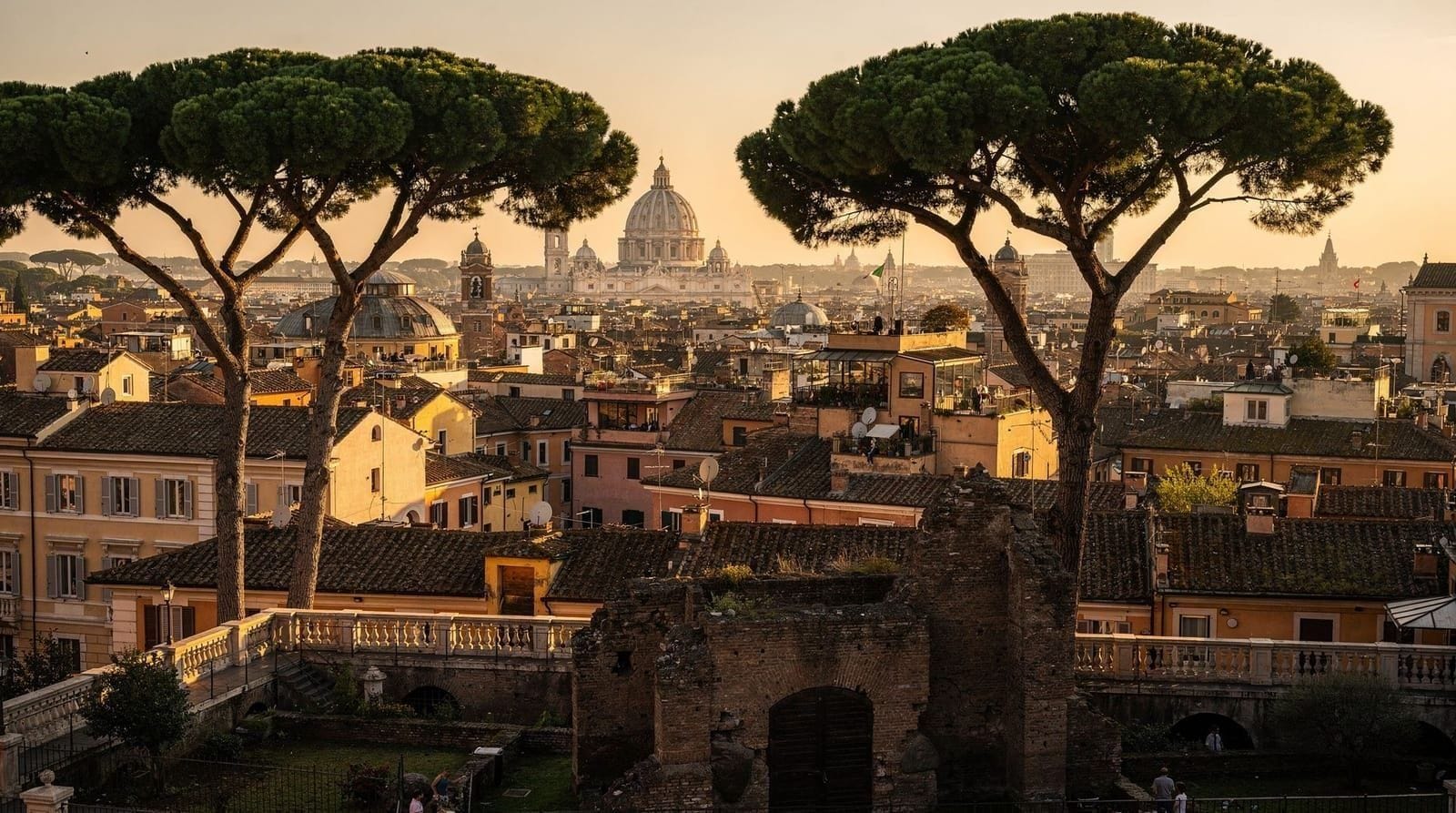
The second visit is freer. You have seen the spine; now you can see the flesh. The Borghese Gallery that you skipped because it was sold out. The Testaccio market that you walked past on the way to somewhere else. The Appia Antica that was always “too far” from the hotel. The catacombs. The Aventino. The lesser-known basilicas with their Caravaggio paintings and Byzantine mosaics.
This guide is for planning that second visit — whether it is 3 days or 7, whether you want museums, neighbourhoods, or day trips into the wider region.
| Lead sight | Borghese Gallery (book 7–14 days ahead) |
| Best neighbourhoods to add | Testaccio, Monti, Appia Antica |
| Best day trip if skipped first time | Pompeii (1hr 10min high-speed train to Naples, then local train) |
| Pacing | Fewer sights per day than a first visit — this trip rewards slowness |
| Where to stay differently | Testaccio or Prati, away from the first-visit Colosseum/Centro Storico axis |
What to lead with: the Borghese Gallery
If you did not visit the Borghese Gallery on your first trip (and most first-time visitors do not, because it fills up and requires advance planning), make it the anchor of your return.
The Galleria Borghese contains Bernini’s great early sculptures — Pluto and Proserpina, Apollo and Daphne, David — in the rooms of the villa for which they were commissioned. They are not gallery pieces extracted from context; they are objects designed for specific spaces, and the experience of moving through those spaces is what Bernini intended. The Caravaggio paintings (Boy with a Basket of Fruit, Madonna of the Palafrenieri) on the ground floor are extraordinary. The upstairs picture gallery adds Titian, Raphael and Rubens.
The capacity limit (180 people per two-hour slot) means the gallery is quiet even in peak season. Book via the official Borghese website (galleriaborghese.it) 7–14 days ahead, or through an authorised tour operator. The 11:00 slot fills fastest; the 09:00 slot offers the quietest experience.
The museums that earn more time
Capitoline Museums
The Capitoline is the world’s oldest public museum (opened 1471) and contains two remarkable collections: the ancient sculpture gallery (including the original Marcus Aurelius equestrian statue, the Capitoline Wolf, the Dying Gaul) and the pinacoteca with works by Caravaggio, Rubens and Titian. The museum’s position on the Capitoline Hill also provides a terrace view over the Roman Forum that rivals the Palatine view. The Tabularium walkway (inside the museum) runs directly above the Forum — the view from here is the single most dramatic vantage in Rome.
Castel Sant’Angelo
First-time visitors often see Castel Sant’Angelo from outside and pass by. It deserves 2–3 hours inside. Originally the mausoleum of Emperor Hadrian, it was converted into a fortress, a papal refuge, and eventually a prison. The spiral ramp inside Hadrian’s original cylinder is extraordinarily engineered. The ramparts offer sweeping views of the Tiber. The papal apartments on the upper levels contain decorated rooms from the Renaissance. See the Castel Sant’Angelo guide.
National Roman Museum (Palazzo Massimo)
The National Roman Museum across four buildings contains one of the world’s greatest collections of Roman art and artefacts. The Palazzo Massimo alle Terme branch (near Termini) has the best concentration: the extraordinary Discus Thrower (Discobolus) Roman copy, exceptional late-Republican portraiture, and the famous Livia’s Garden frescoes (taken from a villa and reconstructed in underground rooms at the museum — a genuinely haunting installation).
The neighbourhoods worth a dedicated day
Testaccio: Rome’s food heart
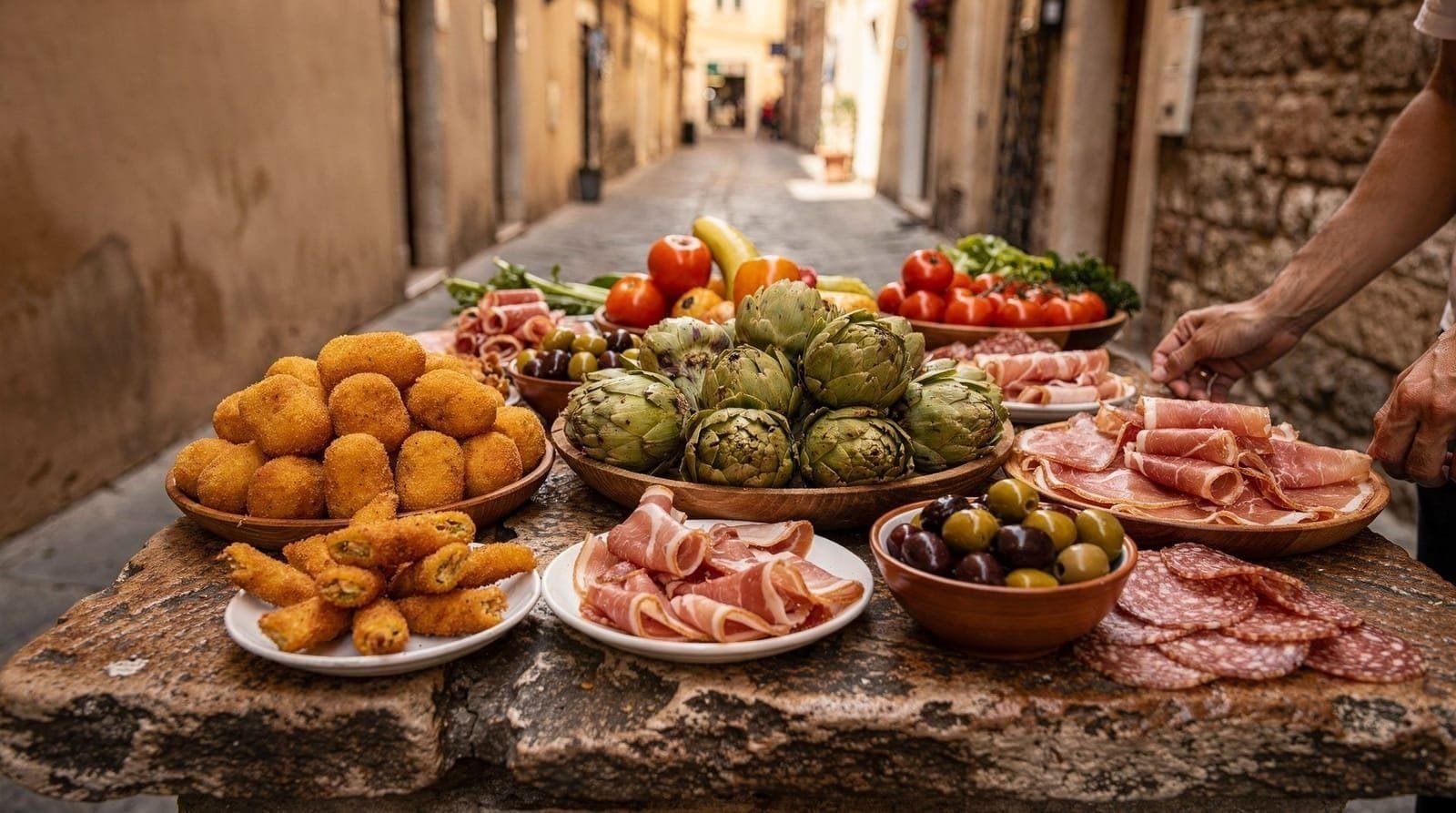
Testaccio was historically Rome’s slaughterhouse district, which gave rise to the cucina povera (poor kitchen) tradition: offal dishes, slow-cooked cuts, dishes that used every part of the animal. The neighbourhood still has the best food culture in the city. The covered market (Campo Testaccio, Tuesday–Saturday mornings) has excellent produce, cheese, and prepared food stalls. The restaurants on and around Via Galvani and Via Giovanni Branca serve Rome’s most authentic food at honest prices.
The neighbourhood’s name comes from Monte Testaccio — an artificial hill made entirely of discarded terracotta amphorae (testae) from the ancient port. The shards still emerge from the soil around the hill’s base.
Monti: the most liveable neighbourhood
Monti is Rome’s most desirable neighbourhood for residents, which tells you something about its quality. Small trattorias, wine bars, vintage shops and independent bookstores fill streets between the Colosseum and the Termini transport hub. The Mercato Monti (weekend market in Via Leonina area) sells vintage clothing and artisan goods. The neighbourhood’s medieval street grid, the church of Santa Maria dei Monti, and the afternoon light on Via del Boschetto are all worth the time.
The Appia Antica: ancient Rome outside the walls
The Via Appia Antica — the ancient Roman road that ran south toward Brindisi and the Empire’s eastern connections — is one of Rome’s most atmospheric experiences and almost completely absent from first-visit itineraries. Its first stretch outside the Aurelian Walls contains the catacombs of St. Callixtus and St. Sebastian, the circular mausoleum of Cecilia Metella, and long stretches of original Roman road surface lined with the ruins of tombs and villas. It is best done by e-bike or with a tour. See the Appia Antica guide and Appia Antica destination.
The churches and underground layers
First-time visitors see Rome’s great basilicas as beautiful buildings. Second-time visitors begin to see them as archives of the city’s history, layered over centuries of rebuilding and decoration.
San Clemente Basilica: A working 12th-century church built over a 4th-century basilica built over a 1st-century Roman building that includes a Mithraeum (temple to the god Mithras). The underground descent through three archaeological layers, each with its own atmosphere and detail, is one of the most extraordinary experiences in Rome. See the San Clemente guide.
Santa Prassede: A 9th-century mosaic cycle in a small church near Santa Maria Maggiore. The apse mosaic and the Chapel of St. Zeno are among the most jewel-like Byzantine works in Rome — and the church sees a fraction of the traffic of the major basilicas.
Caravaggio trail: Rome contains more original Caravaggio paintings than anywhere else in the world, distributed across churches accessible for free or at low cost. The Caravaggio trail guide maps the route through San Luigi dei Francesi (three Caravaggio paintings in the Contarelli Chapel), Santa Maria del Popolo, and Sant’Agostino.
Day trips for second-visit planning
A return to Rome with the major sites covered creates space for the day trips that the first visit’s programme did not allow.
Pompeii: extraordinary at any trip number
Pompeii is not a day trip you should save for a third or fourth visit. If you have not done it, do it now. The preserved streets, houses, temples and public buildings of the city buried by Vesuvius in 79 CE constitute one of the most remarkable archaeological sites in the world. Allow a full day. Take the high-speed train from Termini (1 hour 10 minutes to Naples, then Circumvesuviana train to Pompeii Scavi).
Pompeii day trip from Rome by high-speed train with guided tour — the most efficient way to see the site with expert archaeological context included.Florence: one of the great Italian cities
Florence is 1.5 hours from Rome by high-speed train. For a second Rome visit, a day in Florence offers a sharp contrast: the compact medieval city, the Uffizi’s unparalleled collection of Renaissance painting, Michelangelo’s David at the Accademia, and the extraordinary Cathedral complex (including Brunelleschi’s dome and Ghiberti’s baptistery doors). Florence as a day trip is genuinely satisfying if you prioritise 2–3 key sites rather than trying to cover the whole city.
Day trip to Florence by high-speed train from Rome — includes train and guided city tour, with the Uffizi and Accademia as optional add-ons.See the Florence from Rome day trip guide for how to structure the day.
Tivoli: the Villa d’Este and Hadrian’s Villa
If you did not do Tivoli on the first visit, it belongs near the top of the second-visit list. Villa Adriana (Hadrian’s sprawling country residence, built 117–138 CE) and Villa d’Este (Renaissance gardens with hundreds of fountains) are both UNESCO World Heritage sites within walking distance of each other. Spring is ideal for Villa d’Este’s gardens; autumn gives the best light on Hadrian’s ruins. See the Tivoli day trip guide.
What to deliberately skip on a second visit
A second visit works best with an explicit “not this time” list, not just an “add this” list. If your first trip already covered the Colosseum, Forum, Vatican Museums and Trevi Fountain properly, resist the pull to re-book them at the expense of new ground — unless you specifically want a different angle (a night tour of the Colosseum’s underground level, for instance, is different enough from a standard daytime visit to justify a repeat). Piazza Navona, the Spanish Steps and Campo de’ Fiori are all free and worth walking through again in passing, but do not need dedicated time blocks the way they did on a first visit. Redirect that saved time toward the Borghese Gallery, the Appia Antica, or a day trip — the sights that reward a slower, more deliberate second look rather than a repeat glance at what you already photographed.
An honest note about pacing
One of the greatest risks of a second Rome visit is over-planning it to compensate for what was missed on the first. The impulse is understandable — so much was left unseen — but Rome’s second layer, unlike the first, genuinely rewards slow engagement. The Borghese Gallery in two hours is a completely different experience from rushing through it in 45 minutes. A morning in Testaccio market followed by a long lunch is an experience that requires time to actually happen.
For help structuring the number of days, see how many days in Rome. For the broader planning framework, see how to plan a Rome itinerary.
Specific second-visit itinerary structures
3-day second visit: the deep dive
Day 1 — Borghese Gallery and Monti: Borghese Gallery at 09:00 (booked ahead). Two hours inside. Walk through Villa Borghese park to the Pincian Hill terrace for the panoramic view over Piazza del Popolo and Rome’s skyline. Afternoon in Monti — coffee, browsing, a long lunch at a neighbourhood trattoria.
Day 2 — Capitoline Museums and Jewish Ghetto: Start at the Capitoline Museums at 09:00. Allocate 3 hours — the Marcus Aurelius statue, the Dying Gaul, the Capitoline Venus, and the Tabularium walkway above the Forum are all essential. Lunch in the Jewish Ghetto — the bakeries (Il Forno del Ghetto) sell Jewish-Roman specialties: carciofi alla giudia (fried artichoke), torta di ricotta e visciole. Afternoon at Castel Sant’Angelo.
Day 3 — Appia Antica and Testaccio: Morning e-bike or walking tour along the ancient Appian Way, with the catacombs (book ahead — either St. Callixtus or St. Sebastian). Afternoon at Testaccio market for browsing, then lunch at a market stall or neighbourhood trattoria. Evening at the Circus Maximus (free, evocative in the early evening light).
4-day second visit: with Pompeii
Add day 4 as the Pompeii day trip. Place it on day 3, with a lighter recovery day 4 in Rome combining the Palazzo Doria Pamphilj (private collection, extraordinary, light crowd) and an evening in Trastevere.
The second-visit mindset
The difference between a first and second Rome visit is essentially a difference in what you are looking for. On the first visit, you are filling in the outline — the major monuments that define what Rome is. On the second visit, you are looking for the city’s texture: the way light falls on a specific travertine surface at a specific time of day, the difference between a neighbourhood trattoria and a tourist trattoria (visible within 30 seconds of sitting down), the unexpected depth of a site you visited quickly last time.
This texture is impossible to rush. It rewards the visitor who gives themselves permission to spend two hours at the Borghese Gallery rather than 45 minutes, to eat at the same café twice, to walk back through a neighbourhood at a different time of day and see it change.
Rome is one of the very few cities in the world where a fifth visit is as rewarding as the second. The layers run very deep. Give them time.
What to read before a second visit
A second visit benefits from more focused advance reading than the first. Some useful guides:
For art: The Borghese Gallery guide and Caravaggio trail guide provide the context for the Baroque art that rewards return visitors most.
For neighbourhood depth: The Testaccio neighbourhood guide and Monti neighbourhood guide give the local context that makes these areas more than pleasant streets to wander.
For day trips: The best day trips from Rome and the specific guides for Pompeii and Florence prepare you for the most rewarding regional excursions.
For honest assessment: The Rome overrated and underrated guide and Rome hidden gems are both written with the return visitor specifically in mind.
First visit vs second visit: what actually changes
| First visit | Second visit | |
|---|---|---|
| Priority sights | Colosseum, Vatican, Pantheon, Trevi | Borghese Gallery, Capitoline Museums, Appia Antica |
| Pacing | Packed, sight-per-morning | Slower, 1-2 anchors per day |
| Neighbourhood base | Monti or Centro Storico | Testaccio or Prati |
| Day trips | Skipped or rushed | Prioritised (Pompeii, Tivoli, Florence) |
| Food approach | Guidebook recommendations | Market lunches, Sunday trattoria culture |
If your first visit followed the standard circuit, the Rome for first-timers guide and Rome first visit plan show what a typical itinerary covers — useful as a checklist of what you likely already saw, and by elimination, what belongs on this trip instead. For families returning with children who were too young the first time, the Rome with kids guide covers what changes when the return visit includes a child who can now handle more walking and longer museum visits.
Frequently asked questions about Planning a second visit to Rome: what to do when you've seen the highlights
What is the best museum to prioritise on a second Rome visit?
Are there parts of Rome that most first-time visitors miss completely?
Is Pompeii worth doing as a day trip on a second visit?
What neighbourhood should second-time visitors stay in?
How do I experience Rome more like a local on a second visit?
Top experiences
Bookable activities with verified prices and instant confirmation on GetYourGuide.