Best day trips from Rome — honest guide for 2026
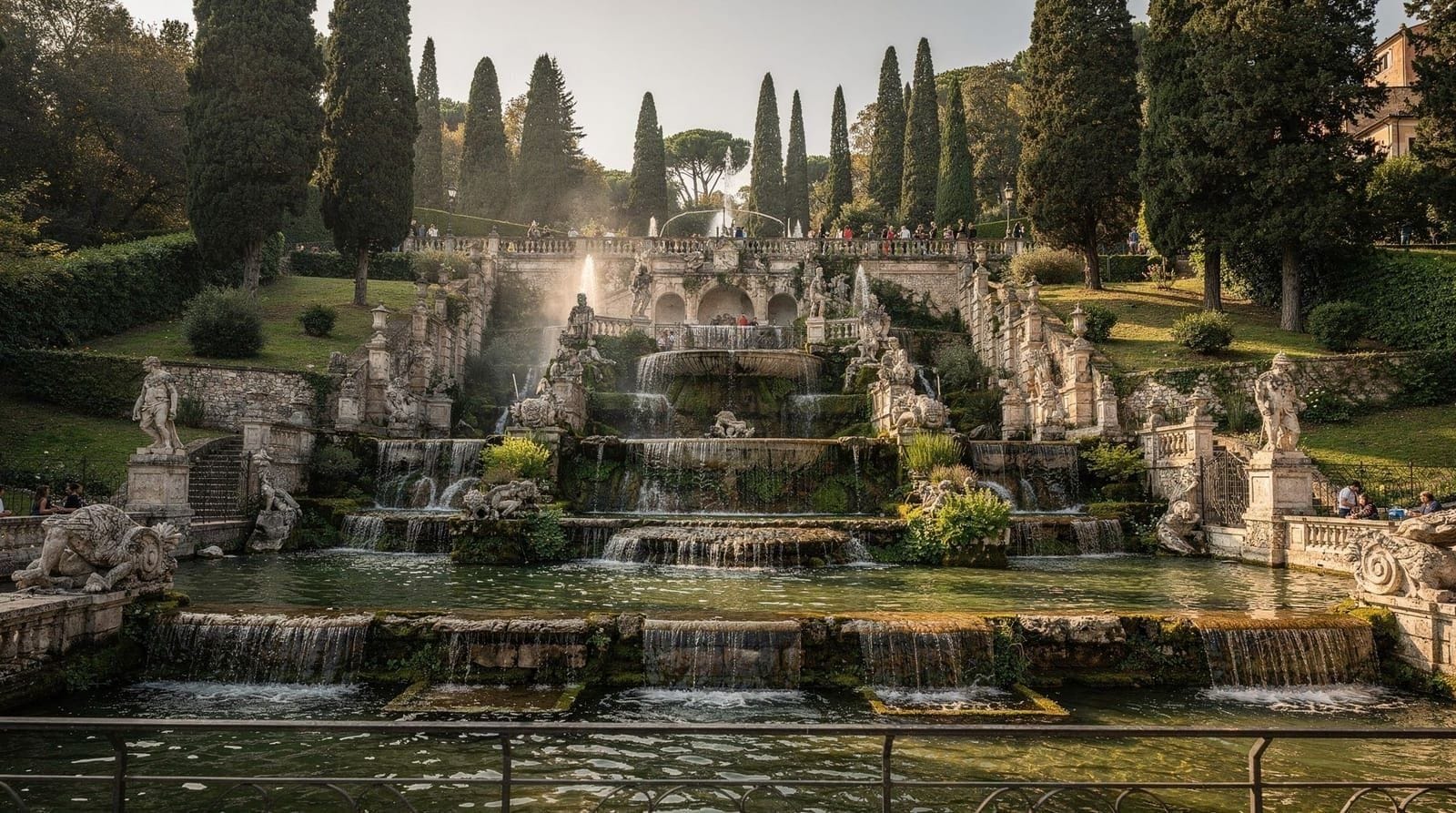
Rome: Tivoli Day Trip with Villa d'Este and Villa Adriana
What are the best day trips from Rome?
Tivoli (40–60 min by train, UNESCO villas), Ostia Antica (45 min, best value for effort), Naples (1h10–1h15 by high-speed train) and Orvieto (under 90 min) are the four genuine day-trips. Pompeii is feasible but long (2h10 each way). Florence is better as an overnight. The Amalfi Coast as a day-trip is mostly transit — recommend 2 nights minimum.
How to judge a day trip honestly
A day trip works when your travel time is proportionate to what you actually see — and when arriving exhausted from three hours of connections doesn’t cancel out the experience. This guide applies that test to every destination reachable from Rome.
The blunt reality: Rome is an excellent base for a handful of genuinely rewarding day-trips. It is a less good base for a dozen others that travel writers list because they are technically reachable, not because they are worth the effort.
| Best overall | Tivoli — two UNESCO sites, 40–60 min, minimal logistics |
| Best value for effort | Ostia Antica — 45 min, one ATAC ticket, big site |
| Best for food/urban energy | Naples — 1h10–1h15 by high-speed train |
| Skip as a day trip | Amalfi Coast — 2h30–3h+ each way, mostly transit |
| Needs a car or tour | Civita di Bagnoregio, Lake Bracciano |
| Booking | Book trains/tours further ahead in April–May and Sept–Oct |
Cost and time at a glance
| Destination | Travel time each way | DIY cost (return) | Best tier |
|---|---|---|---|
| Ostia Antica | 45 min | ~€3 + €12 entry | Excellent |
| Tivoli | 40–60 min | ~€8 + entries | Excellent |
| Naples | 1h10–1h15 | ~€30–50 | Excellent |
| Orvieto | Under 90 min | ~€16–50 | Excellent |
| Castelli Romani | 40 min | ~€10–15 | Good |
| Pompeii | 2h10 | ~€44–60 + entry | Good |
| Assisi | 2h–2h30 | ~€25–45 | Good |
| Viterbo/Tuscia | 1h30 | ~€15–20 | Good |
| Florence | 1h30 | ~€40–70 | Better overnight |
| Capri | 3h+ | ~€60–90 | Better overnight |
| Amalfi Coast | 2h30–3h+ | ~€50–80 | Better overnight |
The honest ranking
Tier 1 — Excellent day trips
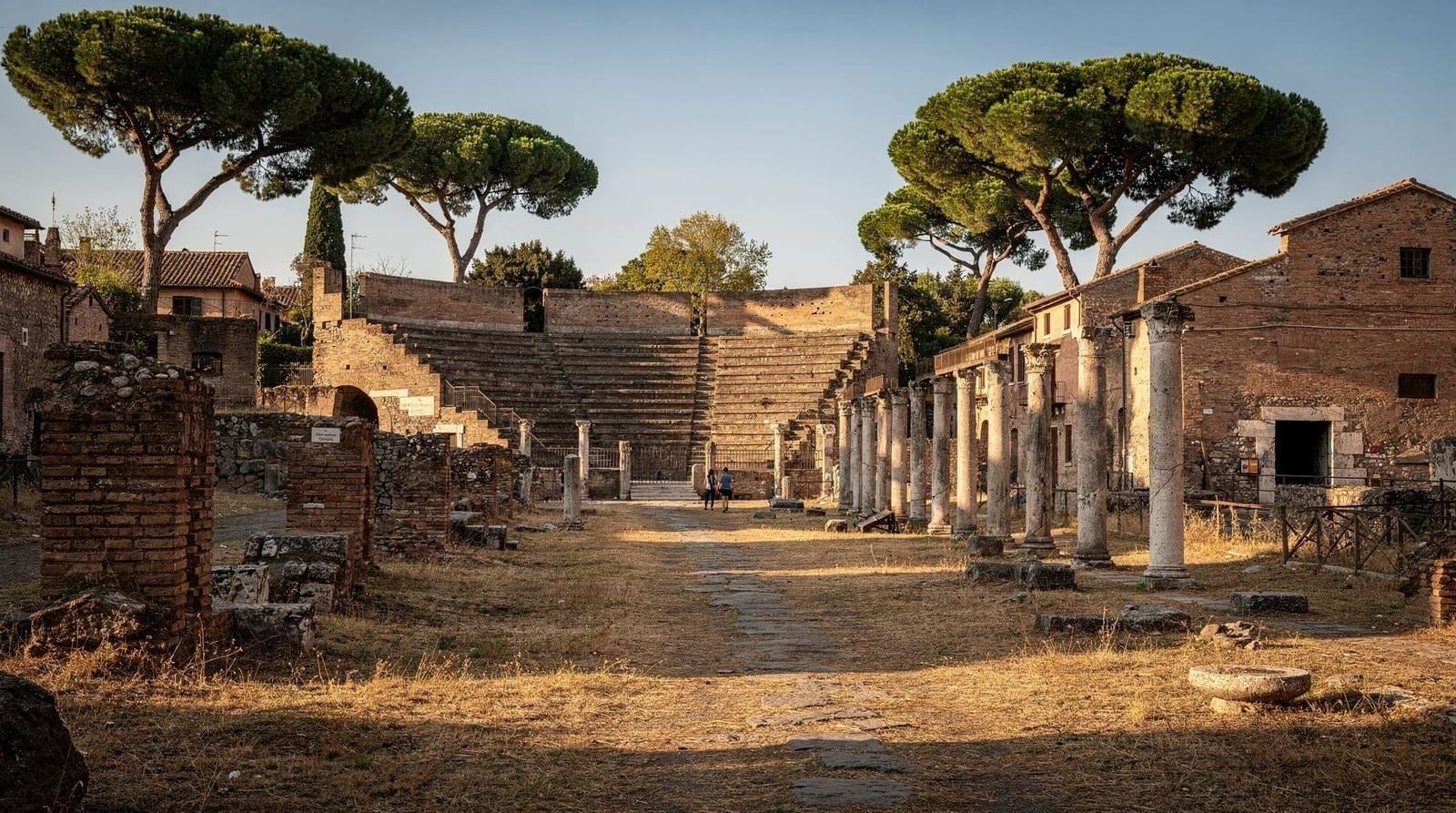
Ostia Antica (45 min) Rome’s ancient port city sits on the edge of the modern suburb of Ostia, reachable by Metro B to Piramide then the Roma-Lido regional train. The site is vast, largely unexcavated by tourist-town standards, and usually far less crowded than Pompeii. A morning departure gives you 4–5 hours among the ruins before the afternoon heat builds. Cost: one ATAC €1.50 ticket covers both legs; site entry approximately €12. See Ostia Antica day trip for the full guide.
Tivoli (40–60 min) Two UNESCO World Heritage Sites in a single day: Villa d’Este, the 16th-century Renaissance villa famous for its extraordinary terraced gardens and hundreds of fountains, and Hadrian’s Villa, the vast imperial retreat spread across a hillside outside town. The regional train from Roma Tiburtina costs approximately €4 one way. A full day covers both sites comfortably. See Tivoli day trip.
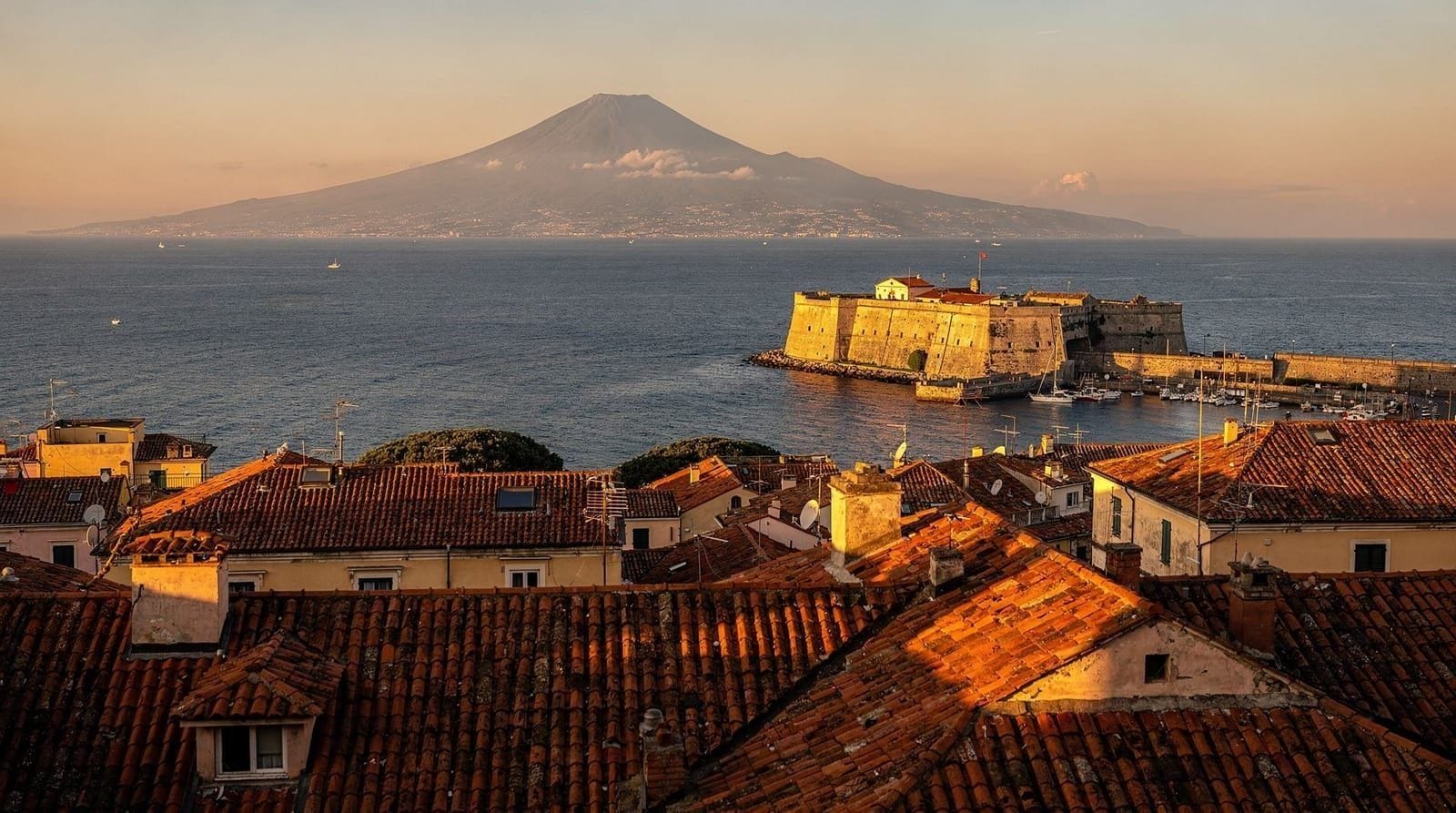
Naples (1h10–1h15) Italy’s third-largest city is one of the most authentic and food-rich destinations reachable in a short train ride. Frecciarossa and Italo services run frequently from Roma Termini from around 06:00; fares start at €14.90 (Italo advance). Naples is genuinely different from Rome — noisier, rawer, more chaotic, with extraordinary pizza (Pizzeria Sorbillo on Via dei Tribunali), the National Archaeological Museum, and the Spaccanapoli neighbourhood. A full day works well. See Naples from Rome.
Orvieto (under 90 min) A clifftop Umbrian town perched dramatically on a plug of volcanic tufa, topped by one of Italy’s most spectacular cathedral facades — polychrome marble with extraordinary Gothic-Renaissance reliefs. The direct regional or intercity train from Termini costs €8–25 depending on service. The town is compact and entirely walkable in a day. Optional extension: Civita di Bagnoregio nearby requires a car. See Orvieto from Rome.
Tivoli guided day trip — Villa d’Este and Hadrian’s VillaTier 2 — Good day trips
Castelli Romani (40 min) The volcanic hills south of Rome — Frascati, Castel Gandolfo, Grottaferrata, Nemi — are 40 minutes by direct train from Termini to Frascati, or by bus to Castel Gandolfo. The rewards are wine (Frascati DOC), porchetta, lake swimming at Lake Albano, and a genuine change of scene without the logistics of longer journeys. See Castelli Romani day trip.
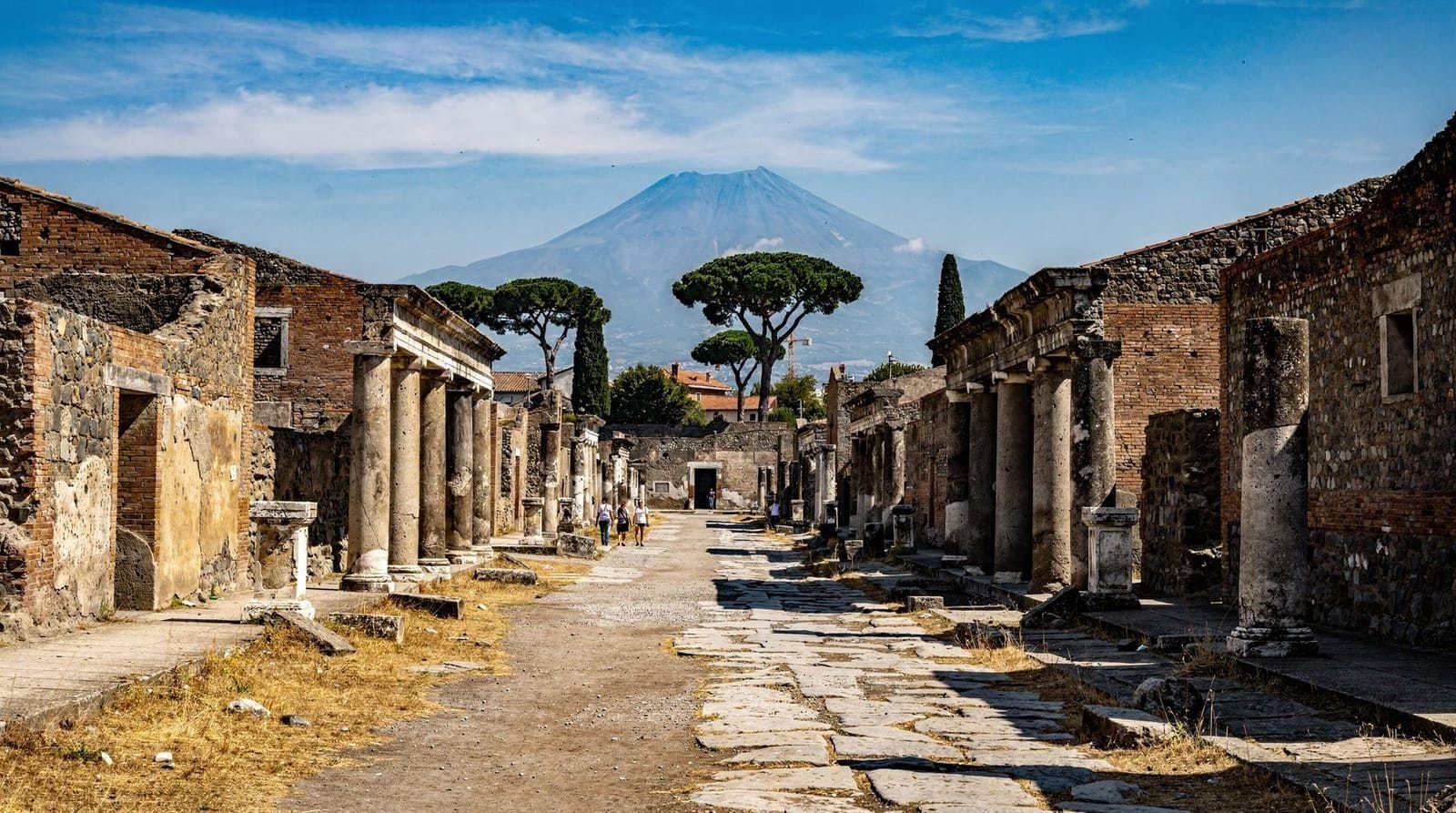
Pompeii (2h10 each way) The ruins are extraordinary — a complete Roman town frozen by the 79 AD eruption of Vesuvius, with intact streets, frescoes, bakeries, and lupanar. The journey is long but not difficult: Frecciarossa or Italo to Napoli Centrale, then the Circumvesuviana regional train to Pompei Scavi-Villa dei Misteri. Leave Rome before 08:00 to have 5 hours on site. See Pompeii from Rome for detailed logistics.
Assisi (2h–2h30) The birthplace of St. Francis is one of the most spiritually significant and visually beautiful towns in Italy — pink-tinged medieval stone, the extraordinary frescoed Basilica of San Francesco (Giotto’s cycle), and a mountaintop position over the Umbrian plain. Train journey involves a change. See Assisi from Rome.
Viterbo and the Tuscia (1h30) Viterbo is a well-preserved medieval papal city less than 90 minutes from Rome — genuinely local, barely on the tourist radar, with intact medieval streets, a Papal Palace, and the nearby Terme dei Papi thermal baths. See Viterbo and Tuscia day trip.
Tier 3 — Technically feasible but better as overnights
Florence (1h30) Florence is 1h30 by Frecciarossa. You can have 5–6 hours if you take an early train. However, the Uffizi alone takes 3–4 hours; Michelangelo’s David at the Accademia has long queues even with pre-booking; the Duomo complex requires another 2–3 hours. For a first visit, plan an overnight. See Florence from Rome.
Capri (3h+ each way) Capri requires a train to Naples, then a ferry to the island — total transit time 3h+ each way. The island is extraordinarily beautiful but better appreciated with an overnight stay in Anacapri or Capri town. A rushed day barely covers the Blue Grotto queue. See Capri from Rome.
Amalfi Coast (2h30–3h+ each way) Genuinely not recommended as a day trip. Two to three hours of transit each way (train to Salerno, then bus or ferry along the coast) leaves you with under 3 hours at your destination. The Amalfi Coast deserves two nights minimum. See Amalfi Coast from Rome for the honest assessment.
Pompeii and Vesuvius full day from Rome — guided with transportTrain vs organised tour: the real choice
For most day-trips from Rome, the question is whether to go independently by train or book an organised tour. Neither is always right — the answer depends on the destination.
Go independently when:
- The destination is simple to navigate (Orvieto town, Ostia Antica, Tivoli)
- You prefer flexibility over timing
- You speak basic Italian or are a confident traveller
- You want to eat at a specific restaurant or visit at your own pace
Book a tour when:
- The logistics are complex (Pompeii needs two trains; Civita di Bagnoregio is only accessible by car or tour)
- You want expert commentary — Hadrian’s Villa and Pompeii are significantly better with a guide who can explain what you are looking at
- Time is limited and you want to maximise the hours on-site
- You are travelling with people who find independent navigation stressful
For Pompeii in particular, a guided full-day tour that includes transport, site entry, and a guide typically costs €80–120 per person — significantly more than the train (€22–30) plus entry (€18), but the difference buys you expert context and zero logistics stress.
Seasons and day trips
Best months for day trips: April–May and September–October. Comfortable temperatures, long daylight, manageable crowds at most sites.
Summer (June–August): Pompeii becomes punishing — dark stone surfaces, no shade, up to 38 °C. Go early and leave by 13:00, or skip Pompeii until autumn. Ostia Antica and Orvieto are more forgiving in summer.
Winter (December–February): Florence in winter is excellent — the Uffizi without August crowds, the Duomo in quiet grey light. Pompeii in winter has minimal crowds and sharp archaeological detail. Tivoli’s gardens are less spectacular without fountain operation.
Getting to Roma Termini for day trips
Nearly all high-speed day-trip trains depart from Roma Termini. If you are staying in the historic centre or Trastevere, budget 25–35 minutes to reach Termini by Metro (line A to Termini, or line B). Taxis from the centre to Termini cost €10–15. The Leonardo Express from Fiumicino airport stops at Termini — so if you are arriving on the morning of your trip, you can go straight to Termini.
For destinations using Roma Tiburtina (some Italo services), take Metro B to Tiburtina station.
For Tivoli, use Roma Tiburtina for the regional train — do not use Termini for this route.
Day trips with children
Not every destination on this list works equally well with kids. Ostia Antica is genuinely one of the best options — wide open ruins to explore, space to run, and a manageable single-ticket journey that removes the stress of train changes. Tivoli works well too, particularly Villa d’Este’s fountains, which hold children’s attention far better than a typical museum. Pompeii and Naples are rewarding but long days — the 2h10 journey to Pompeii is a genuine test of patience for younger children, so consider it only for kids who already travel well on trains. Assisi and Orvieto involve hill-town walking with real elevation change, which is fine for older children but tiring for toddlers in a stroller. If in doubt, Castelli Romani is the easiest short day trip with children — only 40 minutes away, with lake swimming at Lake Albano as a built-in reward for the train ride.
Frequently asked questions about day trips from Rome
What are the most popular day trips from Rome?
Pompeii, Tivoli, and Florence are the three most-visited day trips from Rome. Tivoli is the most effortlessly rewarding; Florence is the most bookable in combination with a longer Tuscany trip; Pompeii is the most dramatic.
Is a day trip to Pompeii worth it?
Yes, genuinely — if you leave early (aim to be at the Pompei Scavi entrance by 10:00) and have at least 4 hours at the site. The ruins are extraordinary, and nothing in Lazio matches the scale. The journey (2h10 each way) is manageable once. See Pompeii from Rome for the complete logistics guide.
How do I get to Tivoli from Rome without a tour?
Take the regional train from Roma Tiburtina station to Tivoli — approximately 45–60 minutes, €4 one way. Tivoli station is a 20-minute uphill walk from Villa d’Este (or take the local bus, line 4 or 4X). Hadrian’s Villa is a 5-minute bus ride from the town centre. No tour required.
Can I combine Pompeii and the Amalfi Coast in one day?
This itinerary exists as a tour product, but it is genuinely rushed. It means leaving Rome by 06:30, reaching Pompeii for 09:30, spending 2–3 hours at the ruins, then bussing to the coast for 2 hours before driving back. Most of the day is transit. If you want both, plan 3 days in the Naples/Amalfi area.
Are there day trips from Rome without a car?
Yes — all the best ones. Tivoli, Ostia Antica, Naples, Orvieto, Castelli Romani (Frascati branch), Pompeii, Florence and Assisi are all reachable by train. Civita di Bagnoregio and lake-based destinations (Lake Bracciano, some Castelli Romani sites) benefit from a car or organised tour.
Which day trip is best for first-time visitors to Italy?
Tivoli or Naples. Tivoli offers two UNESCO sites with minimal logistics. Naples gives you authentic Italian urban life, extraordinary street food, and a clear contrast with Rome — all within a 1h10 train ride.
Florence day trip by high-speed train from RomeHow do I get from Rome to Assisi?
From Roma Termini, take a Trenitalia service to Assisi via Foligno or Perugia — journey time approximately 2h–2h30 with one change. Check trenitalia.com for timetables. Alternatively, organised tours depart from Rome and cover transport, a local guide at the Basilica of San Francesco, and often include Orvieto on the same day.
What is the easiest day trip from Rome for a first-timer?
Ostia Antica is the easiest — one ATAC ticket covers the entire journey, the site is well signposted, and you do not need to book anything in advance. Tivoli is a close second; it requires a separate regional train ticket but is simple to navigate once you arrive.
Top experiences
Bookable activities with verified prices and instant confirmation on GetYourGuide.