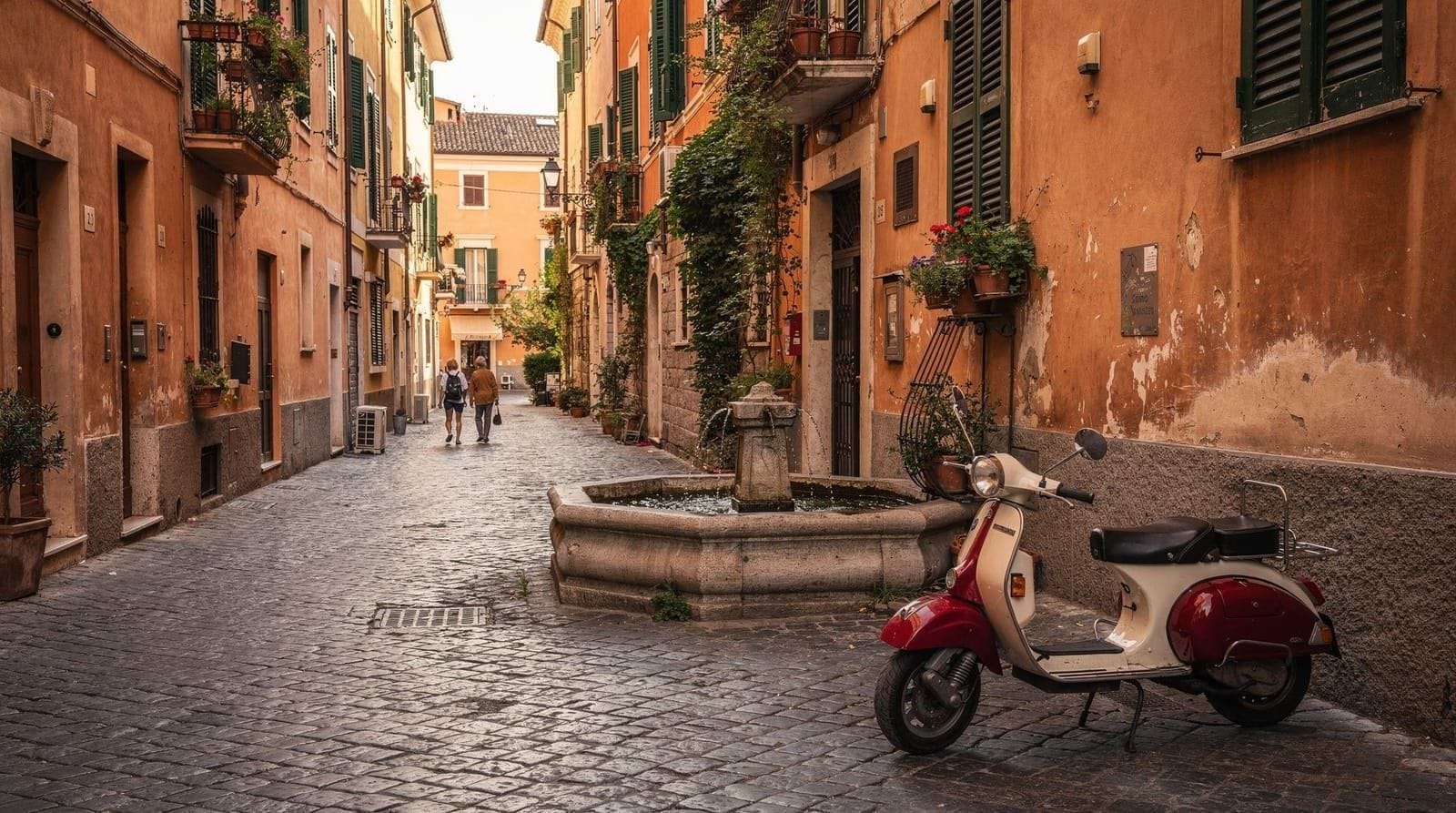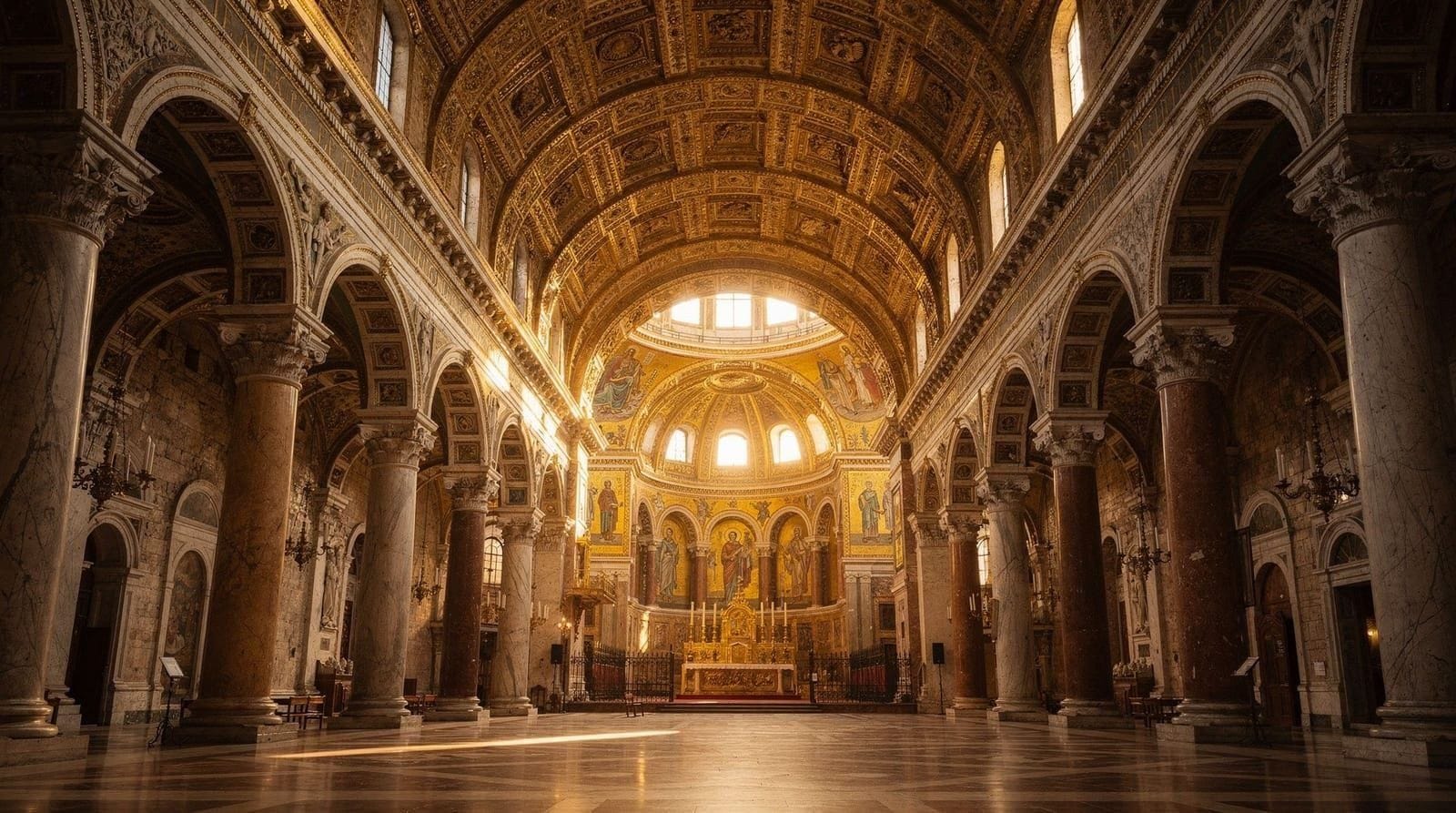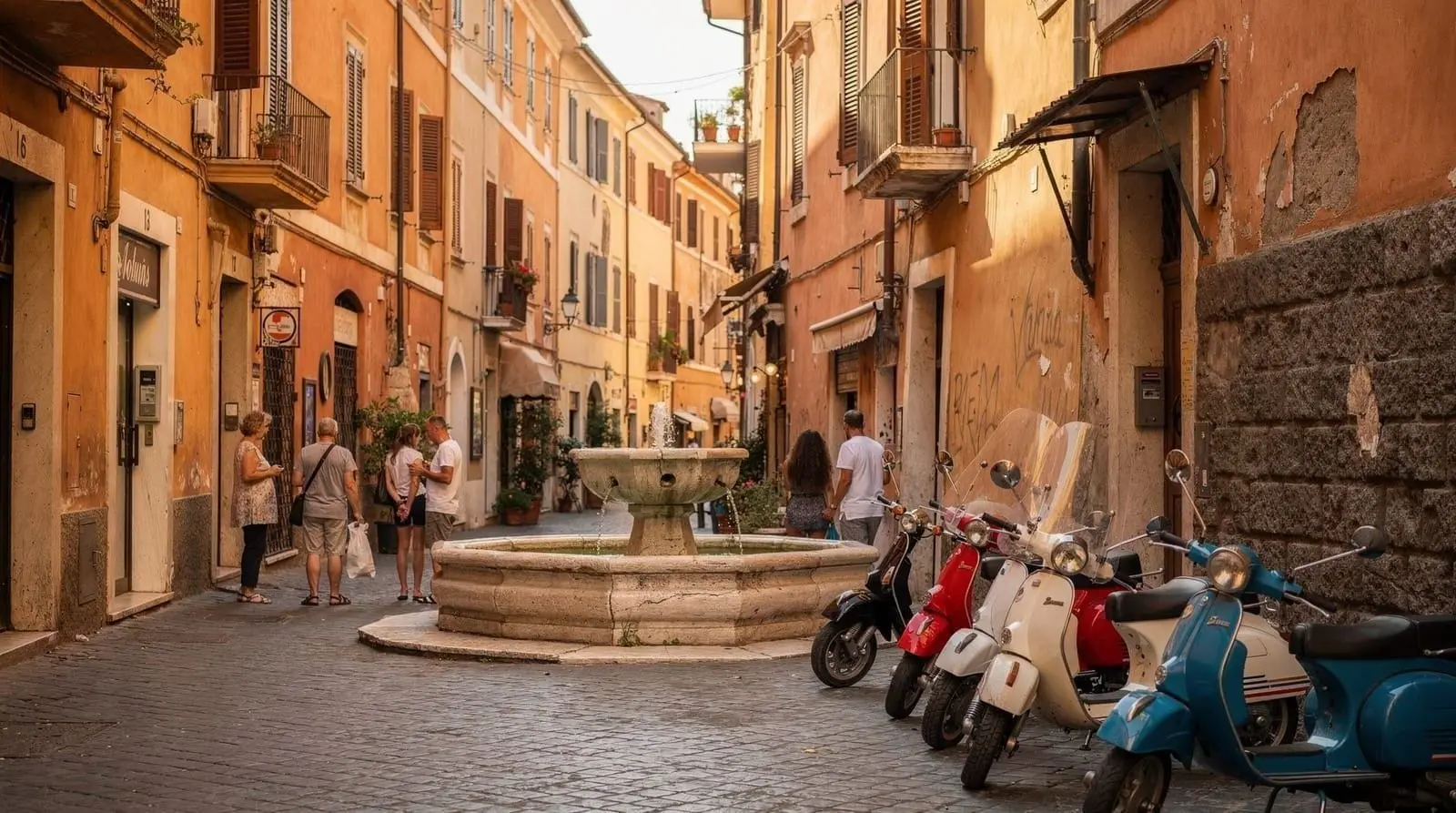
Rome's hidden gems: quiet corners locals actually visit
Rome: Catacomb of St. Callixtus and Appian Way Guided Tour
What are Rome's genuinely hidden gems?
The Aventino keyhole view of St. Peter's, the Protestant Cemetery in Testaccio, the Palazzo Doria Pamphilj gallery, the Baths of Caracalla (vast and rarely crowded), San Clemente basilica with its three layers of history underground, the Capuchin Crypt on Via Veneto, the Jewish Ghetto, and the Pigneto neighbourhood for authentic local bar culture. None of these appear prominently on standard Rome itineraries.
The hidden gems problem
“Hidden gems” has become a broken category in travel writing. The phrase gets applied to anywhere with an Instagram following of fewer than a million — which describes approximately all of Rome except the Colosseum and Trevi Fountain. It also gets applied to genuinely overcrowded places by writers who visited outside peak season and drew the wrong conclusions.
This guide takes a more specific position: these are places that give you a genuinely different Rome experience from the main tourist circuit, that are either always quiet or have reliable low-crowd windows, and that locals actually know about and use. Not all are free. Not all are unknown. But none of them appear on the standard three-day Rome itinerary, and all of them reward the visit.
| Cost | Mostly free to around 16 € per site |
| Time needed | 1-2 hours per stop; a half-day covers a cluster |
| Best time | Weekday mornings, right at opening |
| Getting there | Metro/tram plus walking; no site requires a car |
| Booking | Rarely required — Doria Pamphilj and Domus Romane are the exceptions |
San Clemente: three civilisations in one building
The Basilica di San Clemente is 300 metres from the Colosseum but sees perhaps 2% of its visitor numbers. The ground floor is a functioning 12th-century church with remarkable apse mosaics and a schola cantorum. Below it, reached by stairs, is a 4th-century basilica with frescoes depicting the life of Saint Clement. Below that — the lowest level requiring a ticket — is a 1st-century Roman mithraeum (temple to Mithras) and Republican-era buildings, including an audible underground stream running beneath the floor.
Three complete layers of Roman history, visible in the same visit, in chronological order as you descend. The underground ticket costs around 10 €. Open Monday through Saturday and Sunday afternoons. See our detailed San Clemente basilica guide.
This site is genuinely undervisited because it requires a moment of orientation: it is not on the tourist map handed out at the Colosseum entrance, and its exterior is unremarkable. That is the entire reason to visit it.
Palazzo Doria Pamphilj: the greatest picture no one queues to see
On Via del Corso, a five-minute walk from the Pantheon, is one of the finest private art collections in the world, in a building still owned and lived in by the Doria Pamphilj family. Entry costs around 16 €, which includes an audio guide narrated by the current Prince Doria — a personal, occasionally wry commentary on his own ancestors’ portraits.
The centrepiece is Velázquez’s 1650 portrait of Pope Innocent X. Portraits do not typically stop people cold. This one does. The Pope’s expression — wary, intelligent, slightly suspicious — is so alive that art historians have spent centuries writing about whether he was pleased or angry with the result. Innocent X reportedly said it was “too true.” It hangs in a small room with direct natural light, with a copy by Francis Bacon visible next to it for comparison.
The gallery also has Caravaggio’s Rest on the Flight into Egypt and Penitent Magdalen, Raphael portraits, and several rooms of Flemish masters. The palace itself — gilded halls, 18th-century furniture, family china — is as interesting as the art. See our Doria Pamphilj gallery guide.
The Capuchin Crypt: bones as architecture
The crypt beneath the Santa Maria della Concezione church on Via Veneto is precisely what it sounds like: the bones of approximately 3,700 Capuchin friars arranged into decorative patterns on walls and ceilings. Femur flower arrangements. Vertebrae rosettes. An entire small figure made from bones.
The message carved at the entrance — “What you are now, we once were; what we are now, you will be” — sets the tone. This is not kitsch or a horror attraction; it is a genuine 17th-century meditation on mortality in a Catholic tradition that treated the remains of the dead as sacred matter. The effect is strange, beautiful, and unforgettable.
The crypt is accessed through a small museum on the same street. Entry is around 8.50 €. Via Veneto is otherwise one of Rome’s most tourist-facing streets (the Fellini La Dolce Vita strip), which is why this genuinely extraordinary place gets overlooked. See our Capuchin Crypt guide.
The Baths of Caracalla: massive and uncrowded
The Baths of Caracalla (Terme di Caracalla) were completed in 216 CE and could accommodate 1,600 bathers simultaneously. They are vast — the main hall is taller than the nave of Westminster Abbey — and in substantially better preservation than most ancient Rome sites. The mosaics on the floor include some of the largest ancient mosaic panels in existence.
They receive roughly 600,000 visitors per year. The Colosseum receives 7 million. The practical effect is a site where you can walk through enormous ancient spaces with almost no other people around on most weekday mornings. The site is fully accessible, open daily, and costs around 10 € or is covered by the Colosseum combined ticket on some configurations.
See our full Baths of Caracalla guide. The site is on the southern edge of the Aventino district, combined naturally with the keyhole view and the Rose Garden for a half-day that covers some of Rome’s best quiet experiences.
The Aventino keyhole and Rose Garden
On Piazza dei Cavalieri di Malta on Aventino Hill, an old wooden door in a stone gateway has a keyhole. Looking through it, you see a perfectly composed view: a long garden avenue of hedge-trimmed trees with St. Peter’s Dome framed exactly at the far end. The composition was deliberate — Piranesi designed the priory entrance in 1765 with this view as the focal point.
There is usually a short queue of 5-10 people. The wait is rarely more than five minutes. The experience takes 30 seconds. It is completely free. It is one of the most precisely engineered views in Rome.
Nearby, the Roseto Comunale (Municipal Rose Garden) is open to the public during rose season (approximately May and June) with panoramic views over the Circus Maximus. Free entry. Not open year-round — check before visiting out of season. The Aventino neighbourhood guide has full visiting information.
The Jewish Ghetto: Rome’s longest-inhabited neighbourhood
The area around Via del Portico d’Ottavia in the Centro Storico is Rome’s ancient Jewish quarter, continuously inhabited since the 2nd century BCE — the longest-occupied neighbourhood in the city. The Portico d’Ottavia itself (a massive Roman colonnaded gateway, partially intact) abuts medieval buildings that were constructed using its ruins as foundations.
The neighbourhood has its own distinct food culture — Roman-Jewish cuisine, which predates most of what is considered “Italian” cooking. Supplì al telefono (fried rice balls), carciofi alla giudia (deep-fried artichokes, a specifically Jewish Rome invention), and baccalà (salt cod) fritters are all available at street level from long-established vendors.
The Synagogue (Tempio Maggiore) and Jewish Museum are accessible with a ticket; the neighbourhood itself is free to walk. Tucked behind Campo de’ Fiori and easily missed by tourists following the standard Navona-to-Pantheon route, it deserves a deliberate detour. See our Jewish Ghetto food guide.
An evening walking tour that includes Centro Storico neighbourhoods — a reasonable way to cover the lesser-known quarters with someone who knows where to turn.Pigneto and Garbatella: the neighbourhoods that tourists skip entirely
Pigneto is Rome’s most authentically local nightlife neighbourhood. It has no major monuments, no tourist infrastructure, and no English-language menus visible from the street. What it has is Rome’s most genuine aperitivo culture: small bars where a 3-4 € drink comes with a spread of food and you stand on the pavement watching the neighbourhood go past. Via del Pigneto is the main strip. Reached by tram 5 or 14 from central Rome.
Garbatella is a 1920s planned neighbourhood, built under Mussolini as worker housing, with a distinctive low-rise architecture of courtyards and gardens that looks nothing like the rest of Rome. No tourists, no tour buses, a few excellent neighbourhood trattorie. Metro B to Garbatella stop. See our Testaccio neighbourhood guide for context on Rome’s southern working-class quartieri.
Ostia Antica: Pompeii without the crowds
Technically a day trip from Rome (30 minutes by train from Piramide station, then a regional train to Ostia Antica), but close enough to include here. Ostia was Rome’s ancient port city, abandoned in the medieval period and preserved by sand drifts. The site is comparable in scale and completeness to Pompeii — with a theatre, forum, thermopolium (street food shop), apartment blocks, warehouses, and a Mithraic temple — but sees a fraction of the visitor numbers.
Entry is around 12 €. On a weekday morning, you can walk through entire streets in near-solitude. It is one of the most underrated ancient sites in Italy. See our Ostia Antica day trip guide.
The Catacombs and Appian Way tour covers ancient Rome territory that most visitors entirely miss — underground early-Christian burial chambers and the ancient road above ground, with a guided context that transforms both.The garden and rooftop secrets
Giardino degli Aranci (Garden of Oranges), on Aventino Hill, is a public garden with an orange tree grove and an open terrace over the Tiber and the city beyond. Free, uncrowded even in peak season, extraordinary in the golden hour. It is literally across the road from Santa Sabina basilica (free entry, remarkable 5th-century carved wooden doors — the oldest surviving narrative wooden doors in existence).
Orto Botanico di Roma — Rome’s Botanical Garden — occupies the slope of Gianicolo Hill just behind Trastevere. Around 3,500 plant species, Japanese garden, a grove of ancient holm oaks, and a cactus house. Entry around 8 €. Almost never crowded. Beautiful on a spring morning.
The roof terrace of Trinità dei Monti (above the Spanish Steps) is accessible for free, and the church interior has a remarkable trompe l’oeil Crucifixion by Daniel da Volterra. The terrace itself gives a view down the Spanish Steps that is dramatically better than standing at the bottom in the crowd.
An e-bike tour of Rome’s seven hills covers most of these quieter elevated zones — Aventino, Gianicolo, Pincio — in a single morning at a pace that makes geographical sense of the city.The underground Rome circuit
Much of Rome’s most extraordinary archaeology is underground, literally — the city was built in layers over millennia, and the layers below the current street level are often better-preserved than what is visible above. Several sites allow access to these underground zones and are consistently undervisited.
Domus Romane di Palazzo Valentini: Beneath the Palazzo Valentini on Via IV Novembre (between the Colosseum area and Piazza Venezia) lie the remains of two luxury patrician houses from the 2nd-3rd century CE. The visit uses digital projections to reconstruct the floor mosaics, wall frescoes, and bath complexes as they appeared. The effect is genuinely novel — you are standing above actual ruins while the digital overlay recreates the original space. Entry around 9 €. Booking required. See our Domus Romane guide.
The Mithraeum under Circus Maximus: The Circus Maximus area conceals a well-preserved Mithraic temple in its foundation zone. The Mithraic cult — a mystery religion favoured by Roman soldiers in the 2nd-3rd century — left underground temples (mithraea) throughout Rome. The circus site’s mithraeum is accessible on guided tours and shows the vaulted chamber with carved altar niches precisely as they were used. See our Mithraeum Rome guide.
San Callisto’s catacombs versus the tourist catacombs: The Catacombs of San Callisto on the Appian Way are the most-visited Roman catacombs — correctly famous. The Catacombs of San Sebastiano (adjacent on Via Appia Antica) and the Catacombs of Domitilla (a short distance from both) are significantly less visited, arguably more atmospheric, and cover the same historical ground (early Christian burial practices in underground galleries) with smaller crowds. See our Rome catacombs guide.
What to skip if you only have one afternoon for this list
If time only allows one detour from a standard itinerary, the Aventino keyhole and Rose Garden pair is the best return for the smallest time investment: both are free, both take under an hour combined including the walk between them, and both sit a short taxi or bus ride from the Colosseum or Circus Maximus. The Doria Pamphilj gallery is the second priority — a genuinely major artwork with almost no wait, right beside the Pantheon. Everything else on this list rewards a full half-day or a dedicated return trip rather than a squeezed-in stop, and is better saved for a second visit to Rome. Our Rome overrated and underrated guide has more on which famous sights are worth the crowds and which are not.
Rome’s churches beyond Caravaggio
The three Caravaggio churches are justifiably famous. But Rome has hundreds of churches with significant art, remarkable architecture, or fascinating history that receive almost no visitors. A selection worth seeking:
Santa Maria sopra Minerva: The only Gothic church in the historic centre, directly behind the Pantheon. Contains a Michelangelo statue of Christ Carrying the Cross (often overlooked — it is smaller than expected but technically extraordinary), the tomb of Fra Angelico, and Filippino Lippi frescoes. The Gothic vault is painted with blue and stars — completely different from the baroque interior of most Rome churches.
San Pietro in Vincoli: Near the Colosseum, containing Michelangelo’s Moses (carved for the tomb of Pope Julius II). The Moses is one of the most powerful sculptures in Rome and sits in a church with modest visitor volumes. The chains (vincoli) of Saint Peter are displayed in a reliquary above the altar. Free entry.
Santa Prassede: Near Santa Maria Maggiore. Contains 9th-century Byzantine mosaics, including the famous Chapel of San Zeno — the only complete Byzantine mosaic interior in Rome, all gold and blue and almost never crowded. The technical quality of the mosaics rivals the Ravenna examples.
Sant’Ivo alla Sapienza: Borromini’s extraordinary spiral lantern — one of the most original architectural spaces in Rome — is tucked inside the courtyard of what was once the University of Rome (La Sapienza). The exterior spiral is visible from the courtyard (usually accessible during office hours). The interior is sometimes open for specific visiting hours; check the Archivio di Stato website.
How to combine these into a half-day without rushing
The temptation with a list like this is to try to see everything in one packed day. Resist it — the entire appeal of these places is the absence of a queue and the ability to linger, and rushing recreates the exact crowded-itinerary feeling you are trying to escape. Instead, cluster by geography:
Aventino cluster (half-day): keyhole view, Rose Garden, Giardino degli Aranci, Santa Sabina, and the Baths of Caracalla all sit within a 15-minute walk of each other on or near Aventino Hill. Start at the Baths first thing, then walk up to the garden and keyhole for late morning light. Full details in the Aventino neighbourhood guide.
Centro Storico cluster (half-day): Doria Pamphilj gallery, Sant’Ivo alla Sapienza, and Santa Maria sopra Minerva are all within five minutes of the Pantheon, and the Jewish Ghetto is a ten-minute walk beyond Campo de’ Fiori. This works well as a quiet counter-programme to a Pantheon or Piazza Navona morning — see the Centro Storico guide for the wider area.
A day trip cluster: Ostia Antica works best as its own half-day, ideally combined with lunch in the area rather than squeezed alongside city-centre sights. See the Ostia Antica day trip guide for the full logistics of getting there and back.
Trying to combine all three clusters in one day means roughly 90 minutes of pure transit time and turns unhurried sightseeing into another checklist. Two clusters across two mornings, with an afternoon left open for whatever the city offers that day, is the better trade.
A note on “hidden”
None of these places are secret. The Doria Pamphilj gallery is in every serious Rome guidebook. The Capuchin Crypt is in Lonely Planet. San Clemente appears on countless “best of Rome” lists.
The reason they remain undervisited is that most people visiting Rome for three to five days have a mental itinerary already: Colosseum, Vatican, Trevi Fountain, Spanish Steps, Pantheon. These places exist and are worth seeing. But the itinerary has no slack, no room for detours, and no mechanism for discovering that the neighbourhood behind the Pantheon has some of the most interesting art in the city in a nearly empty gallery.
The actual hidden gem in Rome is free time — a morning without a fixed agenda, in a neighbourhood you have not planned to visit. That is when the city reveals itself.
See our broader Rome hidden churches guide for more specific church recommendations, and our ancient Rome in one day guide for a structure that incorporates both the famous and the overlooked.
Frequently asked questions about Rome's hidden gems: quiet corners locals actually visit
Are there hidden gems near the main tourist areas?
What is the Doria Pamphilj gallery and why is it undervisited?
What are the quieter ancient Rome sites outside the main circuit?
Is there a genuinely local neighbourhood to experience in Rome?
What is the Protestant Cemetery?
What is the best time of day to visit these quieter sites?
Can these hidden gems be combined into a single day?
Top experiences
Bookable activities with verified prices and instant confirmation on GetYourGuide.