Rome for first-timers: the essential orientation guide
Rome: City Sightseeing Hop-on Hop-off Bus with Audioguide
What do first-time visitors to Rome most need to know?
Book the Colosseum, Vatican Museums, and Borghese Gallery in advance — all three have mandatory entry tickets that sell out. Stay in Monti or Centro Storico for easy first-day orientation. Plan by neighborhood to minimize transport time. Give yourself at least 4 days; 3 is tight, 5 is comfortable. Rome rewards walkers who plan geographically rather than trying to hit every sight in a single chaotic loop.
| Book in advance | Colosseum, Vatican Museums, Borghese Gallery |
| Best first-time base | Monti or Centro Storico |
| Trip length | 3 days minimum, 4 comfortable |
| Main compass | East: ancient Rome. West: Vatican. Center: Baroque Rome. |
| Free highlights | Piazza Navona, Trevi, Spanish Steps, most churches |
What Rome actually is — and why it takes adjustment
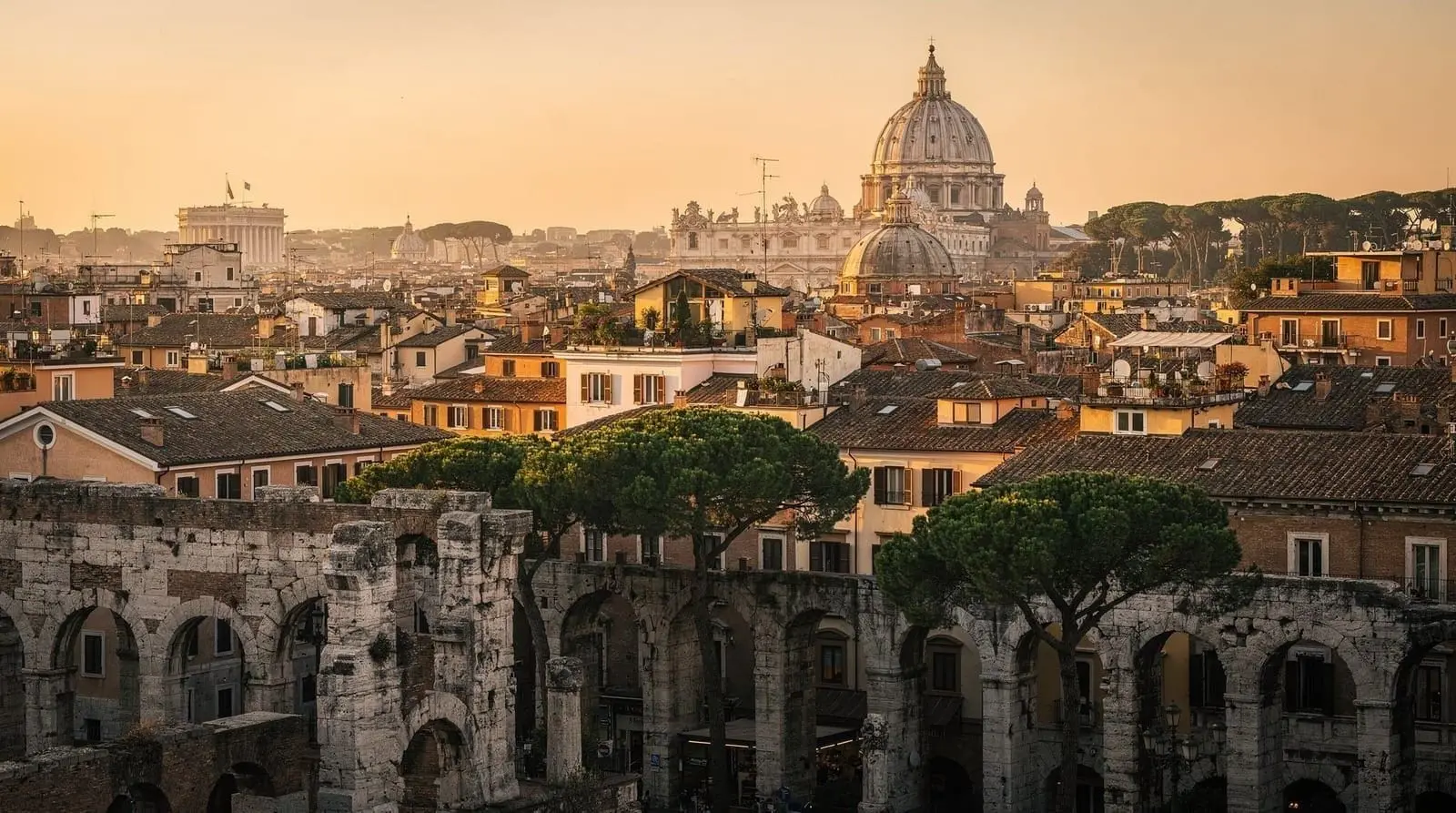
Rome is not one city but several cities built on top of each other. Ancient Rome (forums, temples, aqueducts), medieval Rome (churches, pilgrimage routes), Renaissance Rome (Michelangelo, Raphael, the papal city), and modern Rome all occupy the same streets. A walk from the Colosseum to the Pantheon passes through 2,600 years of continuous urban history.
This creates an orientation challenge that no other city presents in quite the same way. A ruin you assume is background scenery turns out to be the best-preserved temple in the Roman world. A basilica you walk past on the way to lunch contains one of Caravaggio’s most important canvases. First-time visitors who treat Rome as a checklist of monuments miss most of what makes it remarkable.
This guide helps you build the framework — the mental map of how Rome fits together — before you arrive.
The three Romes you need to understand
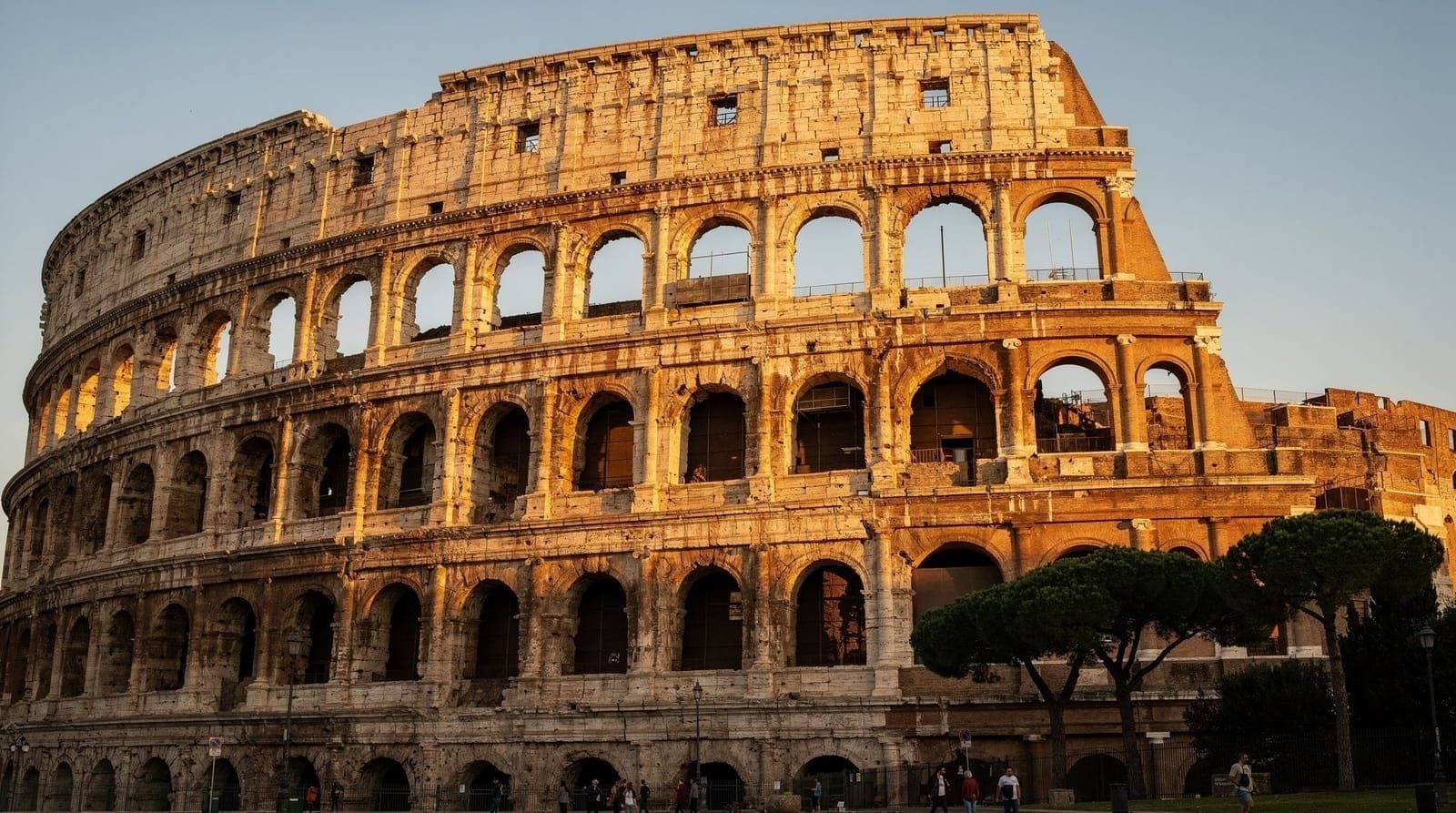
Ancient Rome clusters in a relatively compact zone: the Colosseum, Roman Forum, Palatine Hill, Circus Maximus, Capitoline Hill, and the Baths of Caracalla. These are mostly in the southeastern quadrant of the city center. A good day here involves the Colosseum (buy tickets in advance — named time slot, non-transferable), the Forum and Palatine (included on the same ticket), and optionally the Capitoline Hill for the view and the museums.
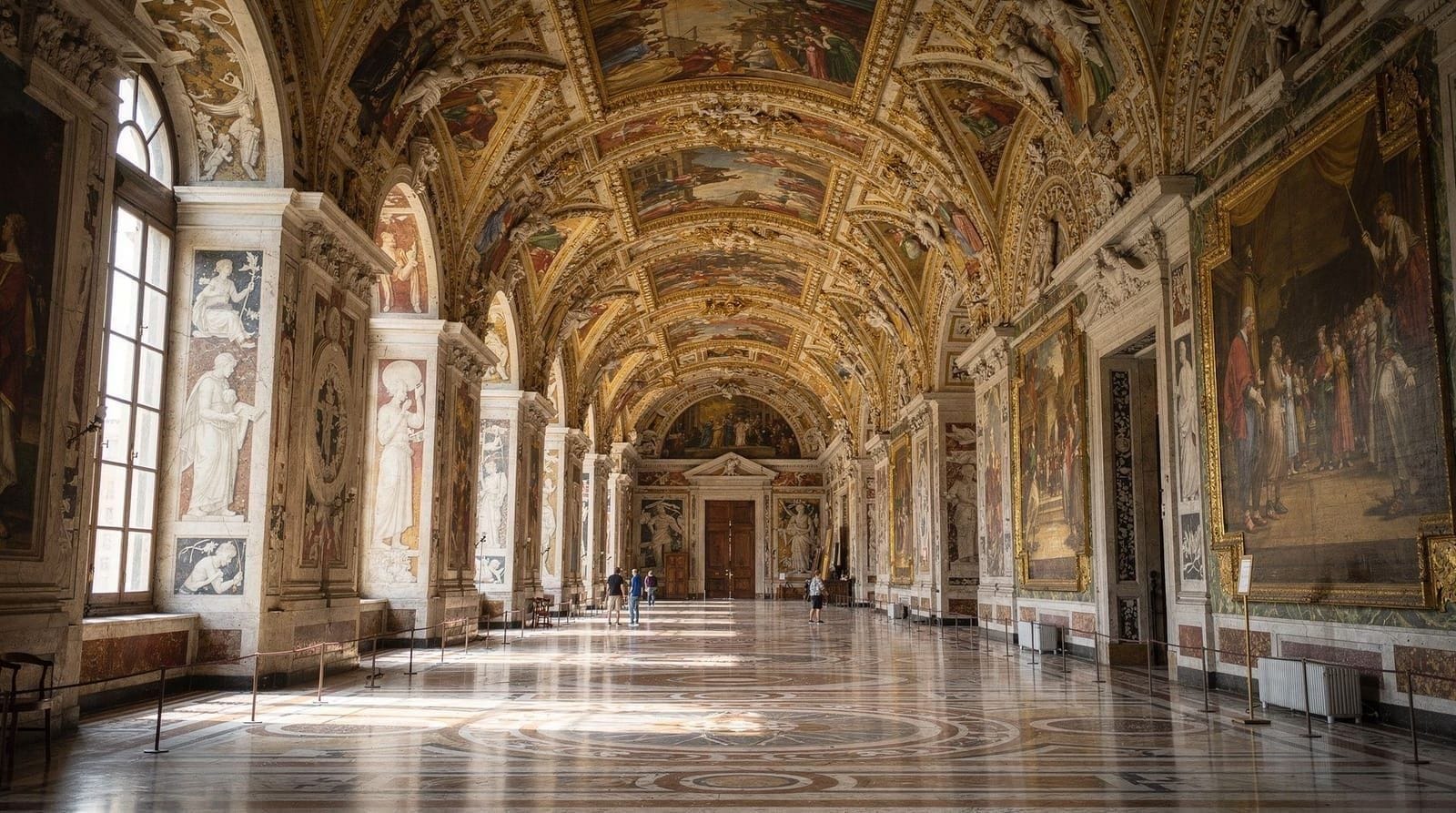
Vatican Rome is concentrated in a single area: the Vatican Museums and Sistine Chapel, St. Peter’s Basilica, Castel Sant’Angelo, and the Prati neighborhood. Cross-referenced with the rest of the city, Vatican is to the northwest — about 35–40 minutes’ walk from Centro Storico, or 20 minutes by bus. The Vatican Museums are separate from the Colosseum both geographically and logistically. Plan them as a full morning or full day, not as an add-on to an ancient Rome day.
Renaissance and Baroque Rome (the Rome that most photography captures) is centered in Centro Storico: Piazza Navona, the Pantheon, Campo de’ Fiori, Piazza di Spagna, Trevi Fountain, and the streets of the historic center. This is also where Trastevere sits — just across the Tiber from Centro Storico, connected by a 15-minute walk over Ponte Sisto. The Borghese Gallery (Bernini sculptures, Caravaggio canvases) sits slightly apart, north of the city center in the Villa Borghese park.
Getting oriented: the city map in your head
Draw a rough compass:
- East: Colosseum, Forum, Monti neighborhood
- West: Vatican, Prati neighborhood
- North: Borghese Gallery, Villa Borghese park, Piazza del Popolo
- South: Testaccio, Aventino, Circus Maximus, Ostiense
Center: Pantheon, Piazza Navona, Campo de’ Fiori (Centro Storico); Trevi Fountain and Spanish Steps (more northeast); Trastevere across the Tiber from Campo de’ Fiori.
The Tiber river runs north-south, roughly dividing “Vatican Rome” (west bank) from “city Rome” (east bank). The river is crossed by multiple bridges — Ponte Sisto, Ponte Mazzini, and Ponte Sant’Angelo are the most useful for tourists on foot.
For a detailed breakdown of all neighborhoods and how they connect, see the Rome neighborhoods overview.
What to book before you arrive: the three mandatory reservations
Colosseum: Timed entry with a named ticket. In peak season (April–June, September–October), this sells out 2–4 weeks in advance. A tour that includes skip-the-line Colosseum entry is often easier to book at shorter notice than individual tickets, and the guided context makes the visit substantially better. The Jubilee year has kept 2026 demand higher than usual.
Vatican Museums: The queue without advance booking can be 1.5–3 hours in peak season. With a pre-booked ticket or guided tour, you walk past the line. This is one of the most significant time-saving bookings you can make for any Rome trip.
Borghese Gallery: This is the one that catches visitors by surprise. The gallery limits visitors to 180 people per 2-hour slot. These slots sell out, typically 10–14 days in advance in peak periods. You cannot walk in without a reservation. The gallery holds Bernini’s Apollo and Daphne, Pluto and Proserpina, Caravaggio’s David and Goliath — among the most important sculptures and paintings in Italy. Do not miss it because you didn’t book.
Everything else in Rome — Pantheon (now paid entry, €5, no advance required), Capitoline Museums, Castel Sant’Angelo, churches, piazzas, and most street sights — can be approached without advance booking.
The right structure for a first visit
Day 1: Orientation and Centro Storico. Land, check in, and take an orientation walk in the afternoon. Centro Storico at dusk — the Pantheon, Piazza Navona, Campo de’ Fiori, and the streets between them — introduces Rome at its most visually striking. Evening in Trastevere for dinner. Day one is for getting your bearings, not checking monuments off a list.
Day 2: Ancient Rome. Colosseum first (with your pre-booked timed entry), then walk through the Roman Forum and up to Palatine Hill. Allow 3.5–4 hours minimum. Lunch in Monti, the neighborhood immediately behind the forums. Afternoon: Capitoline Hill and the view of the Forum from above, then Circus Maximus if you have energy. Evening in Testaccio (excellent Roman trattorias, significantly cheaper than Centro Storico).
Day 3: Vatican. Full morning at the Vatican Museums and Sistine Chapel (pre-booked). Then St. Peter’s Basilica (free entry, no booking required — but dress code enforced). Dome climb optional if you want the view (€8 on foot, €10 by lift). Afternoon: Castel Sant’Angelo exterior walk and the Prati neighborhood for lunch. See the Vatican & Prati destination page.
Day 4 (if you have it): Borghese Gallery and Spanish Steps area. Morning Borghese Gallery (pre-booked). Afternoon: walk through Villa Borghese park to Pincio Hill viewpoint, then down the Spanish Steps to the Trevi Fountain area. Evening: aperitivo in Monti.
Day 5 and beyond: Day trip (Tivoli is the classic, 30 minutes by regional train; Ostia Antica is easy and often overlooked). Or a deeper neighborhood day — Testaccio market and food scene, Aventino hill for calm and the Knights of Malta keyhole view, Appian Way by e-bike.
Rome’s hop-on hop-off bus with audioguide is a practical tool for day one — you get a geographic overview of the city’s layout across 11 stops, which makes the rest of the trip easier to navigate. Good for orientation even if you plan to walk everywhere thereafter.How Rome’s public transport works
Metro: Two useful lines for tourists. Line A (northwest to southeast, Ottaviano/Vatican to Termini to Spanish Steps) and Line B (Colosseum, via Termini, north to Rebibbia). Line C is still expanding and not yet useful for most tourist routes. Tickets are €1.50 single, €7 24-hour pass, €12.50 48-hour pass. Validate before boarding.
Bus: More extensive network. Buses 40 and 64 run from Termini to Vatican — useful but known for pickpockets in peak hours. Tram 8 goes from Largo Argentina to Trastevere (10 minutes, straightforward).
Taxis: Official taxis are white with a meter. Fixed fares from Fiumicino (FCO) to central Rome are €55 by law — refuse any driver who quotes more. From Ciampino (CIA) the fixed fare is €40. Airport taxi fraud is a known issue — only white official cabs with meters.
On foot: Most of central Rome is more efficiently navigated on foot than by transport. The distances look deceptive on a map but are manageable. Colosseum to Pantheon is 2.5 km; Pantheon to Trevi is 600 meters; Trevi to Spanish Steps is 700 meters.
For a full transport breakdown, see the getting around Rome guide.
Rome in summer: what first-timers need to know
July and August are the least pleasant months to visit Rome for the first time. Temperatures regularly reach 32–38°C, often with high humidity. The Colosseum has limited shade. The Forum has essentially none. Afternoon energy levels collapse.
If you must visit in summer: start early (Colosseum at 9 am before the heat builds), break for a long lunch and siesta (1–4 pm), resume in late afternoon, and plan evening activities as the main event rather than the afterthought. Carry water — there are hundreds of free nasoni (small street fountains) throughout Rome, producing clean cold drinking water continuously. This is not a tourist myth; locals use them constantly.
The best months for a first visit are April (avoid Easter week, which crowds the city intensely), May, late September, and October. These months have 18–25°C temperatures, manageable crowds, and optimal light.
Tourist traps a first-timer will encounter
Near the Colosseum: People dressed as Roman gladiators will offer to pose for photos. If you accept, they will demand €10–20 in a confrontational manner. Simply decline and walk on.
Near Vatican and in tourist areas: Men approach offering to put a bracelet on your wrist — this creates a false social obligation to pay. Do not extend your wrist or engage.
Restaurants on Piazza Navona and Campo de’ Fiori: These restaurants exist for tourists. The coperto (cover charge) is typically €2–4 per person on top of food prices, and the quality often doesn’t justify the location premium. One block off the main piazza, prices are 20–30% lower for similar food.
Taxis outside official ranks: Only use official white taxis from designated ranks, or book via app (ItTaxi, FREE Now). Private cars offering rides at Termini are not regulated and overcharge routinely.
The coperto: In Rome, a cover charge of €1–3 per person is normal and listed on menus. This is not a tourist trap — it is standard Italian restaurant practice. Check the menu for it. If it is not on the menu, you do not have to pay it.
For a more detailed rundown of what to watch for, see the Rome tourist traps guide.
Free things that first-timers often miss
Rome has an extraordinary amount that costs nothing. The Pantheon now charges €5 (it was free until 2023), but the following remain free:
- All of Rome’s major basilicas: Santa Maria Maggiore, San Giovanni in Laterano, Santa Maria in Trastevere, San Pietro in Vincoli (Michelangelo’s Moses), Santa Cecilia, San Clemente (ground floor)
- Castel Sant’Angelo exterior and walk
- Piazza del Campidoglio (Capitoline Hill) viewpoint
- Spanish Steps
- Trevi Fountain (no charge to view it)
- Orange Garden on Aventino Hill
- The Knights of Malta keyhole view at Piazza dei Cavalieri di Malta
- Villa Borghese park
- All city piazzas and fountains
- Capitoline Museums are free on the first Sunday of each month (but extremely crowded — not recommended)
Choosing a base: neighbourhood comparison for first-timers
| Neighbourhood | Best for | Trade-off |
|---|---|---|
| Monti | Ancient Rome cluster, restaurants, atmosphere | Slightly further from Vatican |
| Centro Storico | Pantheon, Navona, walkability | Higher hotel prices, noise at night |
| Vatican/Prati | Early Vatican access | Less central for ancient Rome and Trastevere |
| Trastevere | Atmosphere, dining, evenings | Slightly further from major sights, cobblestones |
| Near Termini | Lower hotel prices, transit hub | Least character, longer walks to sights |
Safety, money and connectivity for first-timers
Is Rome safe? Yes, for the overwhelming majority of visitors — violent crime against tourists is rare. The realistic risk is pickpocketing, concentrated on Metro Line A, at Termini station and on buses 40 and 64 between the Vatican and Termini. Use a money belt or a bag worn across the front of your body in these specific spots; elsewhere, ordinary awareness is sufficient.
Money: Cards are accepted almost everywhere, including small trattorias and markets. Carry some cash (€50–100) for cash-only stalls, tips and the rare small business that doesn’t take card. ATMs (bancomat) are widespread; avoid standalone currency-exchange ATMs that offer “no fee” conversion — their exchange rates are poor.
Connectivity: EU visitors can use their home data plan under EU roaming rules. Non-EU visitors should buy a local SIM (TIM, Vodafone, WindTre — kiosks at Fiumicino and Termini) or use an eSIM configured before arrival, both considerably cheaper than international roaming. Free wifi is available at most cafés and all accommodation, sufficient for maps and translation apps between SIM top-ups.
The things Rome rewards you for slowing down
First-time visitors often run a very efficient monument circuit and leave having seen Rome but not experienced it. The things that make Rome memorable are usually not on the itinerary:
Sitting in Piazza della Madonna dei Monti at 6 pm with a €4 glass of wine watching Romans cross paths. Standing in Santa Maria Maggiore at 8 am when it is empty and the morning light hits the 5th-century mosaics. The view of St. Peter’s dome through the keyhole on Aventino — free, slightly surreal, always works. The walk across Ponte Sisto at sunset when the light on the Tiber is the color of old terracotta.
None of these appear on the major sights list. All of them tend to be what visitors remember when they think about their Rome trip five years later.
For a neighborhood-by-neighborhood breakdown of where these slower, realer moments are concentrated, see the Rome neighborhoods overview and the specific guides for Monti, Testaccio, and Aventino.
Frequently asked questions about Rome for first-timers: the essential orientation
How many days do I need for a first visit to Rome?
What should I book in advance for Rome?
Is Rome walkable as a first-time visitor?
What are the most common mistakes first-time visitors make in Rome?
Should I get a Rome city pass?
What is the dress code for Vatican and Rome churches?
Is Rome safe for first-time visitors?
Do I need a local SIM card for a first Rome visit?
Top experiences
Bookable activities with verified prices and instant confirmation on GetYourGuide.