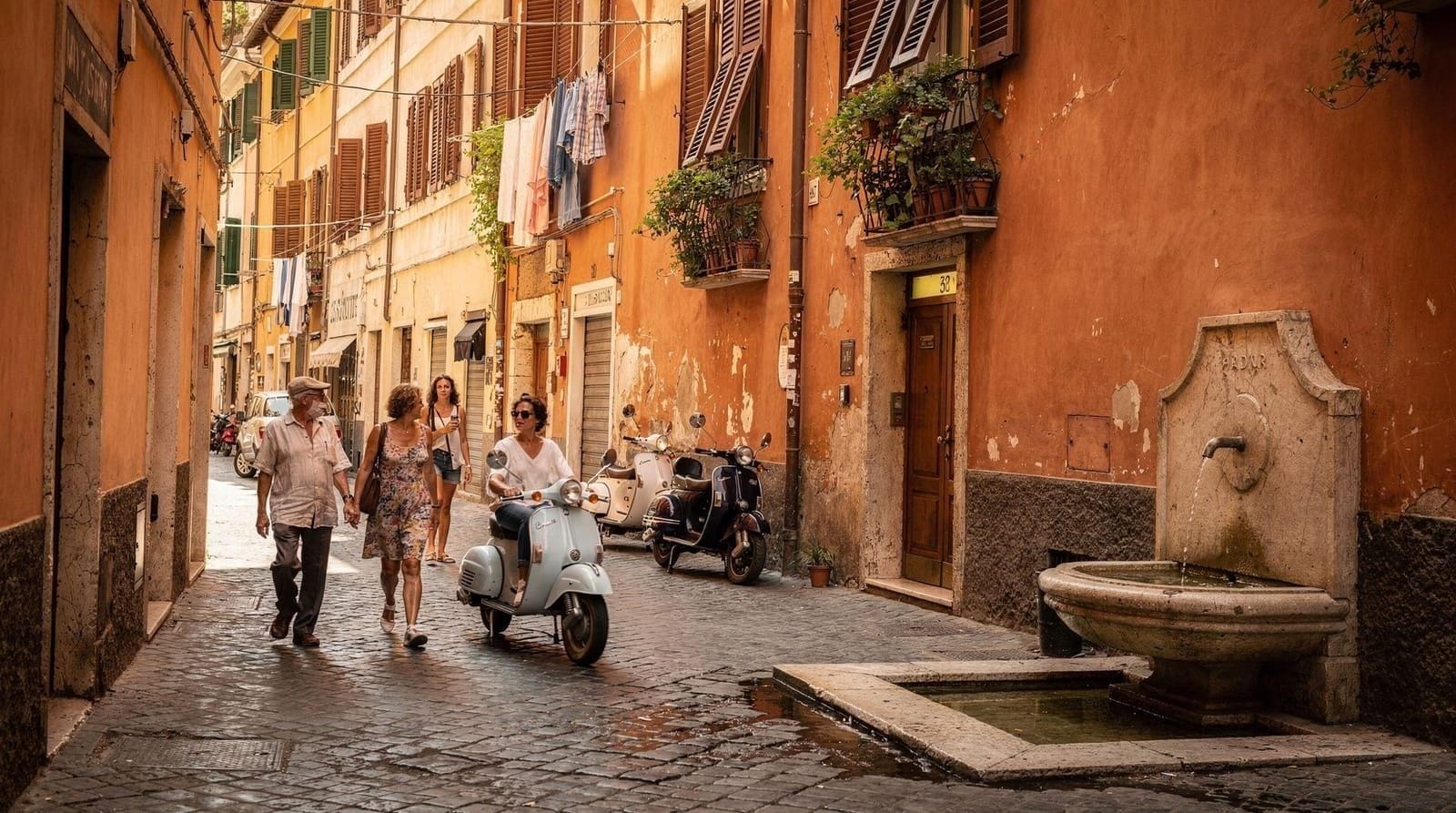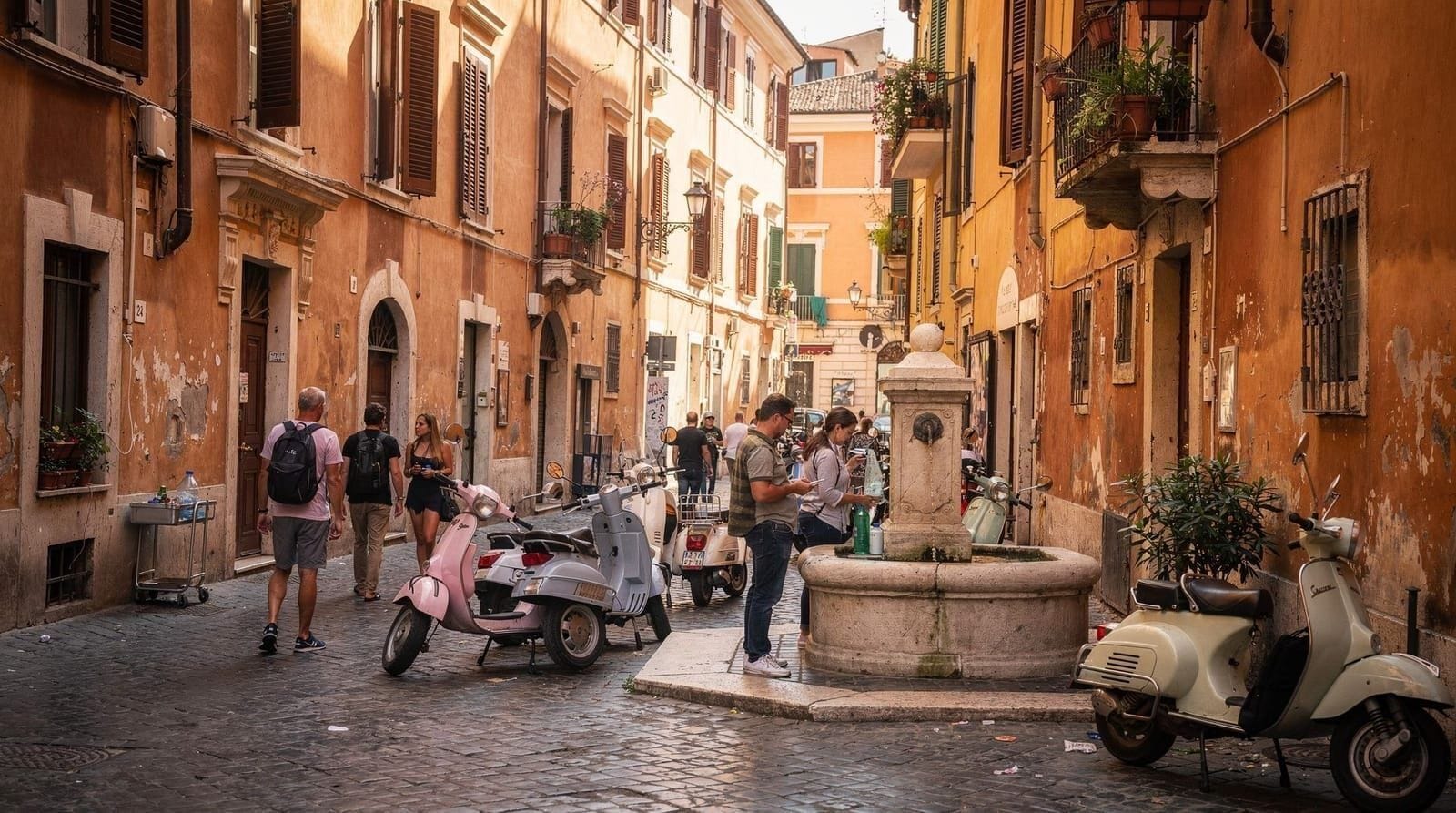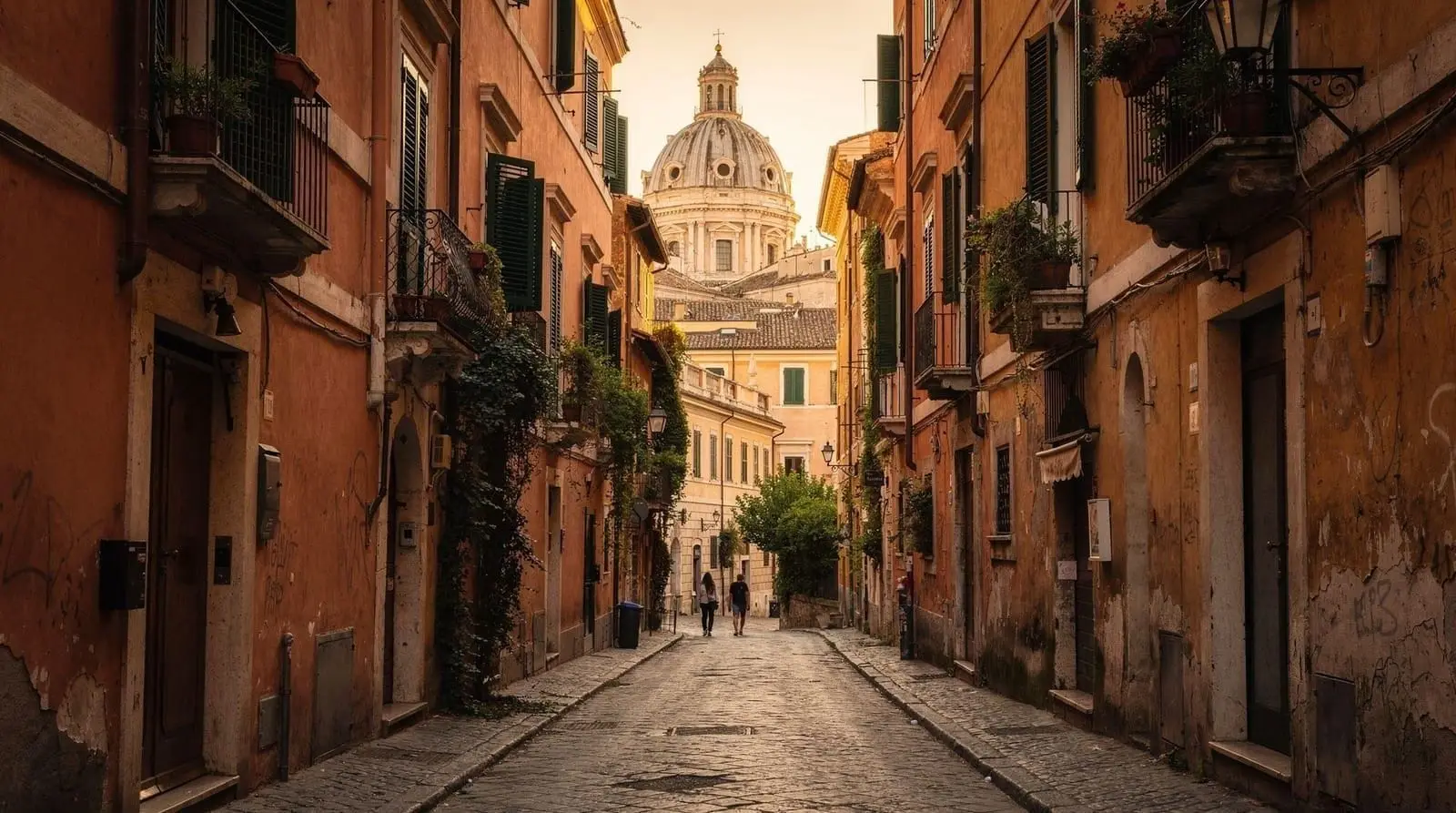
Centro Storico — Rome's historic heart
Explore Centro Storico, Rome's most walkable historic district: Pantheon, Piazza Navona, Trevi Fountain, Campo de' Fiori and honest tips to avoid the
Rome: Pantheon Timeless Marvel Guided Tour with Entry Ticket
Quick facts
- Metro
- No direct stop; walk from Spagna (A) or bus
- Best time
- Weekday mornings before 9 am or after 6 pm
- Dress code
- Covered shoulders & knees for churches
- Free water
- Nasoni fountains throughout — bring a bottle
- ZTL warning
- No cars permitted without permit; walk or bus
Rome’s historic center is not a neighborhood in the residential sense — it is a 2,500-year-old city compressed into about 3 km², where ancient temples stand next to Baroque fountains and Renaissance palaces. You can walk from the Pantheon to Piazza Navona in seven minutes. It is the most-visited square kilometre in Italy, and probably the most photographed.
That density is both Centro Storico’s great strength and its biggest hazard. Every street has an agenda for your wallet, from the €9 aperitivo next to Trevi to the €25 “tourist menu” covering Campo de’ Fiori. This guide cuts through what is worth your time — and what is a polished tourist trap.
What exactly is Centro Storico?
Roughly speaking, Centro Storico covers the bend of the Tiber west of the Piazza Venezia axis: Pantheon, Piazza Navona, Campo de’ Fiori, the Jewish Ghetto, and the streets connecting them down to the river. It does not include the Colosseum area (that is Celio & the Colosseum district), nor the Vatican (Vatican & Prati), nor Trastevere across the river.
The area corresponds roughly to the ancient Campus Martius — Julius Caesar held his legions here before crossing the Pomerium into the city proper. Today, you are walking on layers: medieval buildings built on Renaissance foundations, built on Imperial-era structures, built on the Republic.
The Pantheon
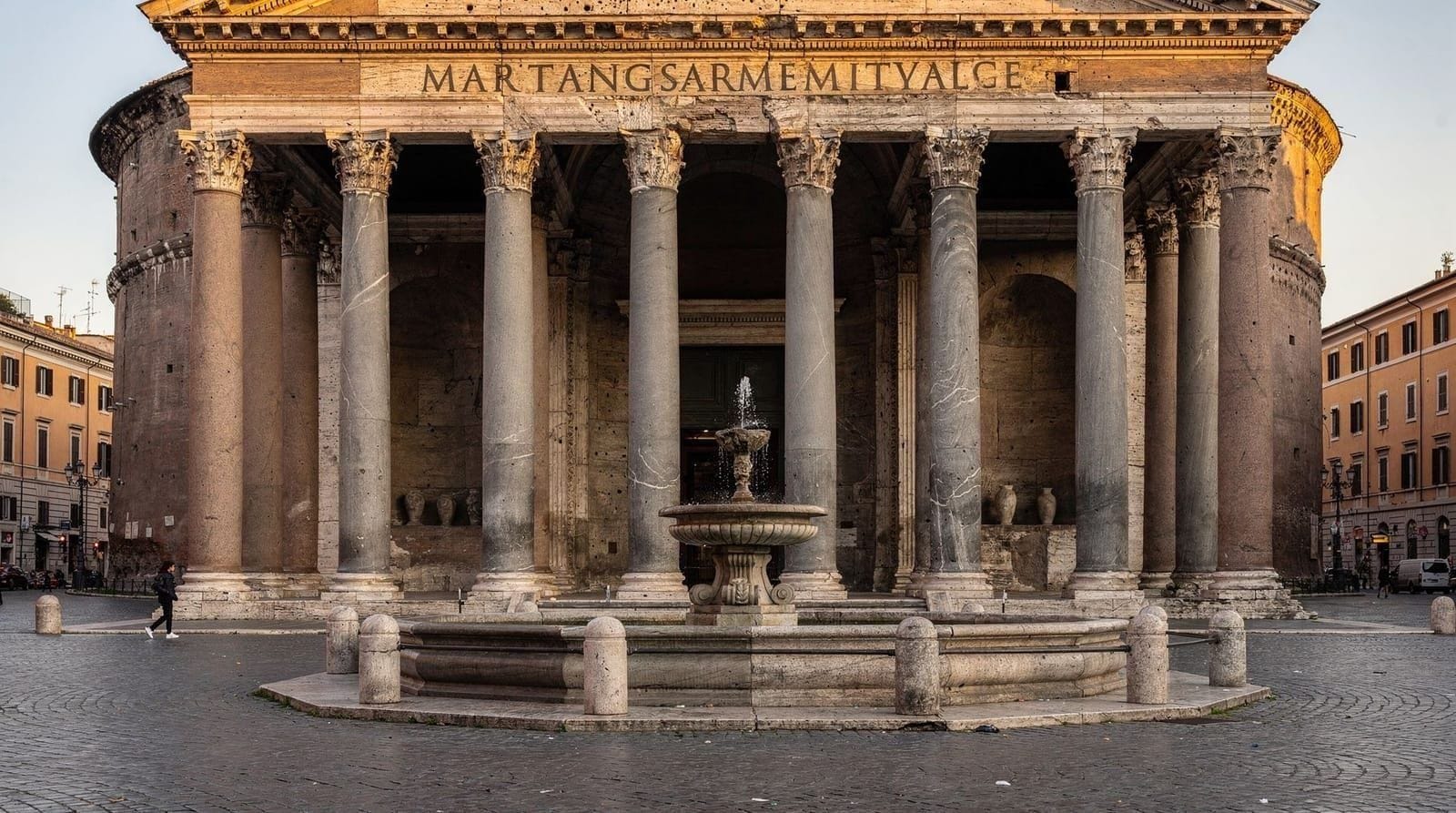
The single most astonishing thing in Centro Storico is not Trevi — it is the Pantheon. Built by Hadrian around 125 CE, it is the best-preserved ancient building in the world. The unreinforced concrete dome (43.3 m in diameter) has never been surpassed in span for 1,300 years. The oculus — an open 9-metre hole at the apex — is the only light source, and the geometry of the building was designed so that on the spring equinox, a shaft of light falls precisely on the entrance.
Practical: Since July 2023, the Pantheon charges admission (€5 standard, free first Sunday of the month — long queues). You must book a timed slot in advance to skip the longest queues; entry without a reservation is still possible but waits can reach 45 minutes at peak times (10 am–2 pm). Book a skip-the-line Pantheon guided tour to get context for what you are looking at — the building’s history is non-obvious without it.
Piazza Navona
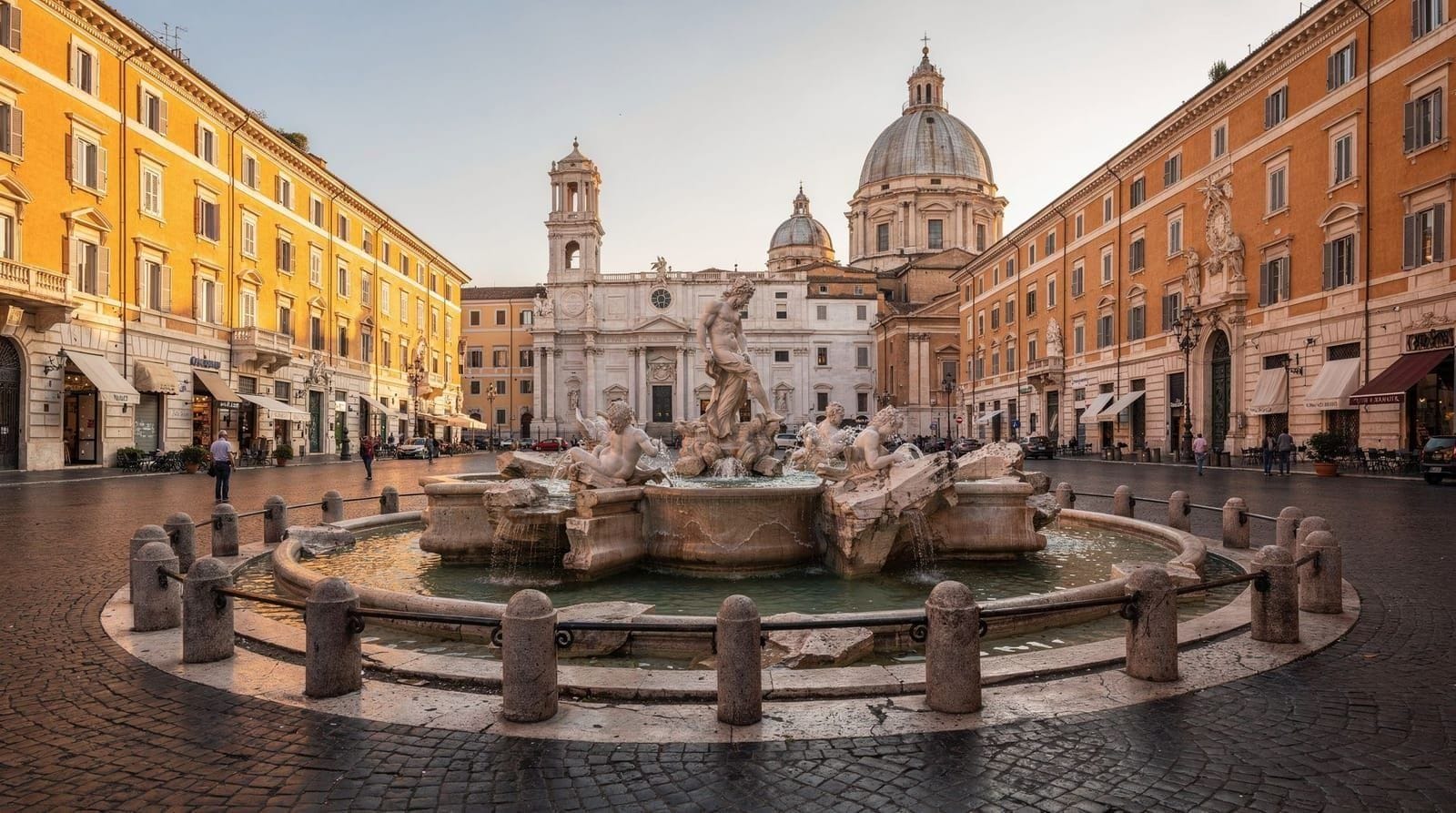
Built over the ancient Stadium of Domitian (you can still see the oval shape), Piazza Navona is the great theatrical space of Baroque Rome. Bernini’s Fontana dei Quattro Fiumi anchors the center; Borromini’s Sant’Agnese in Agone faces it across the piazza in architectural rivalry. It is best experienced at dawn or dusk — at noon it is an open-air merchandise market with overpriced café terraces.
Honest note: The restaurants directly on the piazza charge €5–9 for a coffee at the terrace. The same espresso costs €1.20 at the bar inside. Decide what you are paying for.
Trevi Fountain
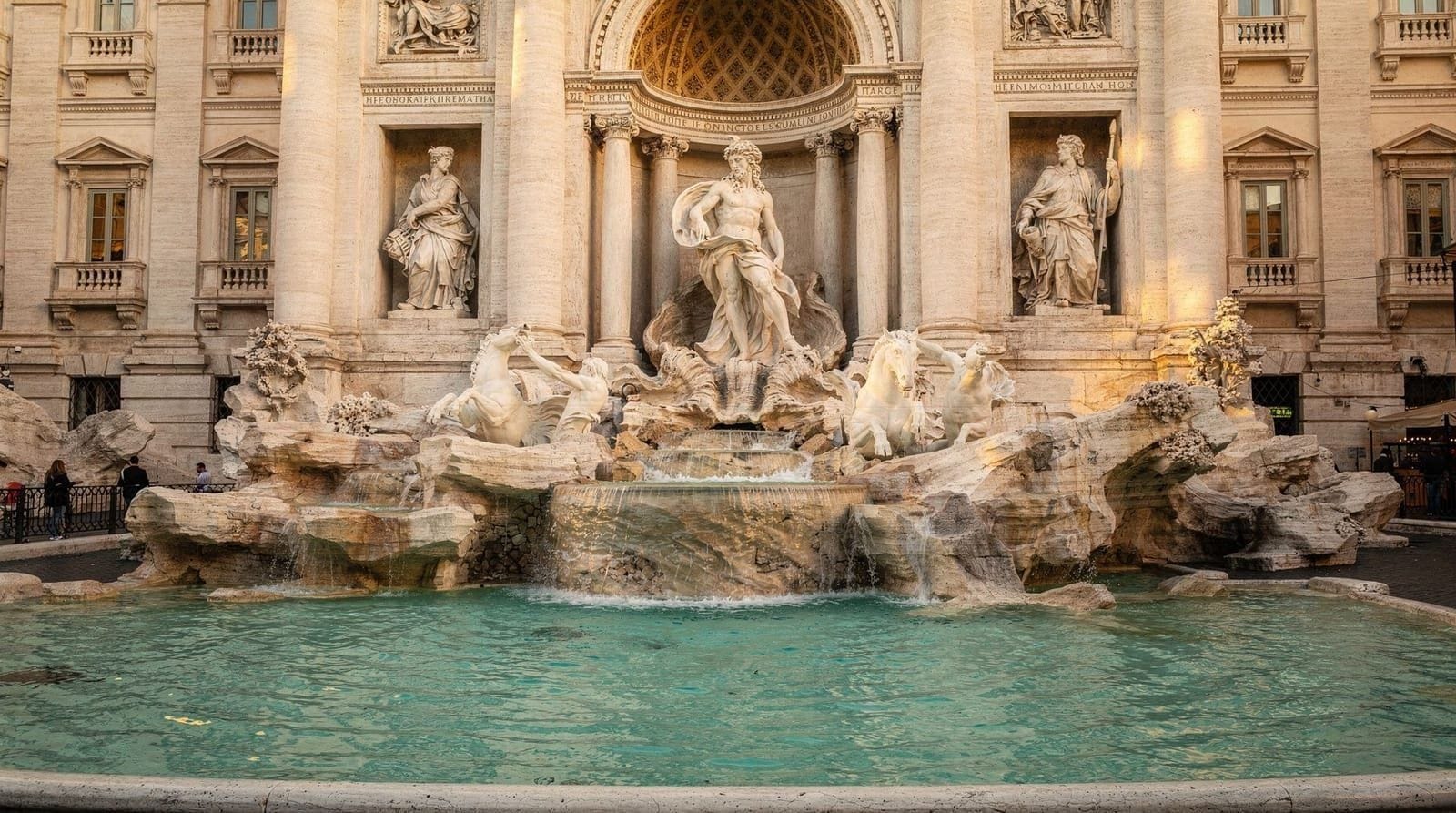
Nicola Salvi’s 1762 fountain is genuinely one of the great set-pieces of world art. It is also perpetually packed. If you want a photograph without 400 strangers, arrive before 7 am (the crowd builds fast after 8 am) or after 10 pm. The tradition of throwing a coin (right hand, over left shoulder) generates millions in charitable proceeds each year — that part is real.
Scam alert near Trevi: Vendors selling “friendship bracelets,” women offering roses, and people asking you to sign petitions are all working the same grift. Accepting anything starts a process that ends with aggressive demands for money. Decline firmly and walk.
Campo de’ Fiori
The morning market (roughly 7 am–2 pm, Mon–Sat) is one of Rome’s best: fresh produce, flowers, cheese, and spices. It is touristy — the nearby covered Mercato di Testaccio is far more authentic and cheaper — but Campo de’ Fiori has genuine atmosphere and local traders selling real goods. The statue of Giordano Bruno at the center commemorates his burning here in 1600 for heresy; the Romans chose exactly that spot for his monument, deliberately.
At night, the campo becomes a drinking hub popular with students and backpackers. It gets very loud after 10 pm and is not suitable if you want quiet. The bars are ordinary; the vibes are the draw.
The Jewish Ghetto
Two blocks south of Campo de’ Fiori, the former ghetto is one of Rome’s most historically layered neighborhoods. Jews have been present in Rome since the 2nd century BCE, making this one of the oldest continuous Jewish communities in the world. The Great Synagogue and its small museum are worth an hour. The key food reason to come is carciofi alla giudia (whole artichoke fried twice until crispy) — it was invented here and is still best here. Try Nonna Betta or Ba’Ghetto. Spring (Feb–Apr) is artichoke season; they are available year-round but at their best fresh.
Getting there and moving around
Centro Storico has no dedicated metro stop. The closest stations are:
- Spagna (line A) — 15 min walk to Pantheon via Via della Croce
- Barberini (line A) — 10 min walk to Trevi Fountain
- Argentina bus stop — the 40, 64, 70, 80 buses stop here, within steps of the Pantheon and Campo de’ Fiori
Bus lines 40 and 64 (Vatican–Termini axis) are infamously pickpocket-heavy. Keep bags in front, zip closed. The Rome metro guide covers ticket options; a single BIT costs €1.50 and is valid for 100 minutes.
A single ATAC ticket covers bus, tram, and metro transfers within 100 minutes. For several days in Centro Storico, walking is almost always faster than the bus.
ZTL: The centro storico ZTL is active Monday–Friday 06:30–18:00 and Saturday 14:00–18:00. Do not accept a taxi driver offering to drive you “right to your hotel” if it requires crossing into the ZTL — the camera catches the plate and the fine (€84–335) arrives weeks later on the rental or your own card. Walk or use a drop point outside the boundary.
Where to eat honestly
Centro Storico has excellent food if you walk 2–3 streets away from the major monuments. General rule: any restaurant with photos on the menu and a greeter standing outside is set up for tourists paying tourist prices. Not always bad — but know what you are paying for.
Trattorias and restaurants worth seeking:
- Osteria dell’Angelo (via Belli) — genuine Roman carbonara and cacio e pepe; book ahead.
- Armando al Pantheon — directly beside the Pantheon but actually decent and not extortionate; reserve.
- Roscioli (via dei Giubbonari) — part-deli, part-restaurant, serious wine list; one of Rome’s best carbonara in a genuinely local setting.
- Forno Campo de’ Fiori — for pizza al taglio by weight; eat standing at the counter.
- Supplì Roma (via San Francesco a Ripa + other locations) — the city’s best supplì (fried rice balls with ragù and mozzarella, €2–3 each).
Coffee: Espresso at the bar costs €1–1.50 throughout. Any café charging €3+ for a standing espresso is a tourist-zone markup. Caffè Sant’Eustachio (near Pantheon) is legitimately excellent and worth the slight premium.
Where to stay
Staying in Centro Storico means everything is walkable. It also means noise (especially near Campo de’ Fiori and Pantheon after 10 pm), high prices (expect to pay €150–350/night for a decent 3–4-star hotel), and narrow streets that cars cannot easily navigate.
Good choices:
- Hotel Nazionale — elegant, classic position on Piazza Montecitorio, central but not in the noisiest zone.
- Hotel Campo de’ Fiori — rooftop terrace, good location; noisy at weekends but popular.
- Boutique hotels on via della Pace / via del Governo Vecchio — quieter streets with character.
If you are on a tighter budget, staying in Monti or Esquilino and walking or taking the bus in is a practical option that saves €50–100/night.
Itinerary suggestions
Half-day (3–4 hours)
Pantheon at opening (9 am) → coffee at Sant’Eustachio → Piazza Navona → Campo de’ Fiori → lunch at Roscioli.
Full day (7–8 hours)
Start with Pantheon (9 am, timed entry booked). Walk south via del Governo Vecchio to Campo de’ Fiori market (before noon). Lunch in the Ghetto (artichokes). Afternoon: Largo di Torre Argentina (free, outdoor ancient temple ruins), then Piazza Navona. Pre-sunset at Trevi. Evening aperitivo near the Pantheon.
As part of a 3-day Rome itinerary
Day 1: Colosseum and Forum + Palatine Hill + Capitoline Museums. Day 2: Vatican and St. Peter’s Basilica. Day 3: Centro Storico — Pantheon, Navona, Trevi, Ghetto, Campo.
See the full 3-day Rome itinerary for hour-by-hour detail.
Rain day option: Pantheon is a fully covered experience. The Doria Pamphilj Gallery on Corso Vittorio Emanuele II is consistently undervisited and takes 2–3 hours.
Honest traps to avoid
Overpriced “tourist menu” restaurants. Any fixed-price menu near major sights for €15–25 is likely low-quality. Spend the same at a trattoria on a side street.
Gladiator/centurion photo-ops near Largo Argentina or the Pantheon. There are none officially; anyone in costume is working for tips and will demand €10–20 for a photo you did not ask for. Avoid eye contact or engagement.
“Free map” kiosks. These are time-shares, excursion sales, or similar. Nothing is free.
Castel Sant’Angelo queues. If you plan to visit Castel Sant’Angelo (10-minute walk from Piazza Navona), book ahead — it is not as famous as the Colosseum but queues can be long at peak times and the view from the top is excellent.
Centro Storico with the GYG tool
A guided walking tour covering Trevi, Navona, Pantheon, and the Spanish Steps covers the main landmarks with historical context in 3–4 hours — useful for first visits when you want orientation before exploring on your own. For the evening, a Rome by night walking tour covers the same piazzas without daytime crowds and with far better light for photos.
Churches and hidden interiors
Centro Storico is one of the most densely churched areas in the world. Almost every block has a church, many of them remarkable, almost all of them free. The ones worth seeking out beyond the obvious:
Sant’Ignazio di Loyola (Piazza Sant’Ignazio) — a Baroque interior with a famous trompe-l’oeil dome painted flat on the ceiling (the real dome was never built). Stand on the marked spot on the floor and the perspective creates the illusion of a three-dimensional structure. Free entry.
San Luigi dei Francesi (Piazza San Luigi dei Francesi) — the French national church in Rome. Contains three Caravaggio paintings of the life of St. Matthew — the Calling of Matthew, Inspiration of Matthew, and Martyrdom of Matthew — in a single chapel. They are lit by a coin-operated illumination system (€1–2 coins work the light). Do not miss these; they are extraordinary and free. See the Caravaggio trail for the full circuit.
Santa Maria sopra Minerva (Piazza della Minerva) — the only Gothic church in central Rome, built over a temple to Minerva, with a Michelangelo statue (Christ the Redeemer, 1521) beside the altar and the tomb of Fra Angelico. Free.
Sant’Agostino (via della Scrofa) — contains Caravaggio’s Madonna di Loreto (1604–1606) in the first chapel on the left: two filthy-footed pilgrims kneeling before a hovering Virgin, the dirt on their feet shocking contemporaries with its realism. Free.
Oratorio del Gonfalone (via del Gonfalone) — a hidden oratory with exceptional 16th-century frescoes depicting the Passion; occasional concerts in the space.
These sites add a full day to the Centro Storico experience and cost almost nothing.
Largo di Torre Argentina
The archaeological site at Largo di Torre Argentina — a sunken complex of four Republican-era temples and part of the Theater of Pompey — is free to visit and frequently overlooked by visitors heading to the paid sights. This is where Julius Caesar was assassinated on the Ides of March in 44 BCE, stabbed 23 times at the base of Pompey’s statue in the theater complex.
The site is outdoors, visible from street level, and can be explored on foot at the lower level (entry via the south side). The resident cat sanctuary has operated here since the 1920s. It is one of Rome’s more unusual juxtapositions: a multi-cat welfare operation inside a Republican-era sacred precinct where an emperor was murdered.
Duration: 20–30 minutes. Free. Good for a brief history stop between the Pantheon and Campo de’ Fiori.
Via del Governo Vecchio and Piazza Farnese
Via del Governo Vecchio runs from Piazza dell’Orologio toward Campo de’ Fiori and is one of Centro Storico’s best shopping streets for second-hand clothing, vintage frames, and independent bookshops. Less tourist-oriented than other streets in the area.
Piazza Farnese — a short walk from Campo de’ Fiori, this piazza is fronted by the Palazzo Farnese, now the French Embassy, one of the most significant Renaissance palaces in Italy (designed partly by Michelangelo). The courtyard is not generally accessible, but the exterior is exceptional. Two monumental granite bathtubs from the Baths of Caracalla serve as the piazza’s fountains. The piazza itself is free, quiet, and one of the most architecturally coherent spaces in the historic center.
Nightlife and evening Centro Storico
The historic center at night is transformed. Crowds thin after 8 pm as day-trippers leave. The piazzas, lit dramatically, acquire a character entirely different from their daytime selves.
Aperitivo culture: The Roman aperitivo is not as structured as the Milanese spritz tradition — it is more about a glass of house wine (€5–7) and small snacks before dinner. Near Piazza Navona, via della Pace has a concentration of wine bars popular with Romans. Near Campo de’ Fiori, the options are mixed.
Wine bars: Rimessa Roscioli (near Roscioli restaurant) is a serious wine bar with rotating by-the-glass selections and a curated cellar. Etablì (vicolo delle Vacche) is a reliable bar-restaurant hybrid popular for early evenings.
Late night: Centro Storico is not Rome’s late-night club destination — that is Testaccio or Pigneto (east). The historic center is good for aperitivo (6–9 pm), dinner (8–10 pm), and evening walks (10 pm–midnight). After midnight it is mostly international tourists and a few remaining locals.
Photography in Centro Storico
The best photo spots in Centro Storico:
- Pantheon, from the south end of Piazza della Rotonda at 6–7 am before crowds: the building fills the frame with no obstruction.
- Trevi Fountain before 7 am or after 10 pm: fewer people, dramatic lighting at night.
- Via della Pace: the curved street with outdoor tables is a classic frame.
- Campo de’ Fiori at market time (8–10 am): vendors, produce color, and movement.
- Piazza Farnese in the late afternoon: western light on the Palazzo Farnese facade, usually near-empty.
For the full photography circuit including golden hour spots, the rooftops of hotels along via del Corso give views east toward the Quirinal Hill.
Centro Storico vs. Trastevere vs. Monti as a base
Deciding where to stay in Rome usually comes down to these three central options. Here’s an honest comparison.
| Centro Storico | Trastevere | Monti | |
|---|---|---|---|
| Character | Grand piazzas, dense sightseeing | Bohemian, riverside, nightlife | Village-like, boutique, quieter |
| Price level | Highest | High | Moderate–high |
| Noise at night | High near Navona/Campo de’ Fiori | High, especially weekends | Lower |
| Walkability to Colosseum/Vatican | Good to Vatican, moderate to Colosseum | Moderate to both | Best to Colosseum, moderate to Vatican |
| Best for | First-timers wanting everything on foot | Evening atmosphere and dining | A calmer base with easy Colosseum access |
There’s no wrong answer among the three — all are centrally walkable — but if quiet nights matter more than being able to roll out of bed onto a famous piazza, Monti is the better trade-off. If evening atmosphere and riverside dining matter most, Trastevere wins. Centro Storico wins on sheer convenience: everything covered in this guide is within a 15-minute walk of anywhere you’d stay here.
Families and light packers sometimes underrate how much the narrow, largely car-free streets of Centro Storico matter in practice: luggage on cobblestones is genuinely unpleasant, and most hotels here have no dedicated parking or drop-off, so arriving by taxi usually means a short walk with bags over uneven paving for the final stretch. This is a minor point compared to the location itself, but worth knowing before booking a hotel advertised as “steps from the Pantheon” — check the exact street on a map rather than assuming step-free access.
Centro Storico off-season and on rainy days
Centro Storico works well outside the April–October peak, and arguably better for photography — winter’s lower sun angle and thinner crowds make the piazzas and fountains easier to shoot without strangers in every frame. Most of the headline sights (Pantheon, the churches, Palazzo Farnese exterior) don’t depend on good weather, and several — Sant’Ignazio, San Luigi dei Francesi, Santa Maria sopra Minerva — are entirely indoors and free.
On a rainy day specifically, the Doria Pamphilj Gallery and the lesser-visited churches along the Caravaggio circuit make a satisfying half-day without stepping outside for long, and the gallery’s café is a genuinely pleasant place to wait out a downpour rather than ducking into the nearest overpriced tourist café. The one real casualty of bad weather is the evening piazza atmosphere itself — via della Pace’s outdoor tables and the passeggiata around Piazza Navona lose much of their appeal in the rain, so shift dinner plans indoors rather than trying to force an alfresco evening.
Frequently asked questions about Centro Storico
Is the Pantheon free to enter?
No. Since July 2023 the Pantheon charges €5 for general entry. The first Sunday of each month is free but draws very long queues. Book a timed entry ticket in advance online to skip the worst waits.
What is the best time of day to visit Trevi Fountain?
Before 7 am for minimal crowds. After 9–10 pm for atmospheric evening visits. Midday and afternoon are the worst — several hundred people are always present. The fountain is fully lit at night.
Can I drive to Centro Storico?
Only if you have an explicit ZTL permit registered to your plate. The zone is camera-enforced (Monday–Friday 06:30–18:00; Saturday 14:00–18:00) and fines of €84–335 arrive weeks later. Do not drive here. Take the bus, metro, or walk from a parking zone outside the boundaries.
Is pickpocketing a real risk in Centro Storico?
Yes. The main hot zones are Trevi Fountain (always crowded), Piazza Navona, Campo de’ Fiori, and buses 40/64. Use a zipped cross-body bag, nothing in back pockets, and stay aware in any stationary crowd. This is more common than violent crime, which is very low.
Which piazza is least crowded in the morning?
Piazza della Rotonda (Pantheon) and Piazza Navona are quietest before 9 am. Campo de’ Fiori market begins around 7 am and is lively but purposeful — vendors selling real goods, not tourist crowds.
How long do I need in Centro Storico?
Two days minimum to see the highlights without rushing. A first-time visitor who also wants the Colosseum and Vatican needs 4–5 days total. See how many days in Rome for a full breakdown by visit type.
Should I stay in Centro Storico or Trastevere?
Centro Storico wins on sheer walkability to the headline sights; Trastevere wins on evening atmosphere and dining variety. Both are noisy at night in their busiest pockets, so the choice comes down to whether you’d rather wake up steps from the Pantheon or a short walk from the river’s best restaurants.
Is Centro Storico worth visiting in winter?
Yes — most of the headline sights are unaffected by weather, crowds are meaningfully thinner, and the low winter light is excellent for photographing the piazzas and fountains. The only real trade-off is that outdoor aperitivo and evening piazza-sitting are less pleasant in the cold or rain.
Top experiences
Bookable activities with verified prices and instant confirmation on GetYourGuide.