Rome in 4 Days
Rome: Guided Tour of Colosseum, Roman Forum & Palatine Hill
Quick answer: Four days lets you do Rome properly: ancient sites day one, Vatican day two, Borghese Gallery and Testaccio day three, and a half-day trip to Tivoli on day four. You’ll leave knowing you saw the essential Rome rather than rushed through it, with time for good meals and genuine neighbourhood wandering. Three bookings are critical: Colosseum (7+ days ahead), Vatican (2-4 weeks ahead), and Borghese Gallery (10-14 days ahead, 180-person cap per slot).
| Where to base yourself | Monti (best for all four days) |
| Cost | Around 1,300-1,600 € per person total, mid-range |
| Time needed | 4 full days, including one day-trip day |
| Booking priority | Borghese Gallery, then Vatican, then Colosseum, then Tivoli tour |
| Extra vs 3 days | A half-day trip to Tivoli’s two UNESCO villas |
Four days is the itinerary that most serious first-time visitors to Rome should aim for. It gives you enough time to cover the three world-class bookable sites — Colosseum, Vatican, Borghese — without feeling like you’re sprinting between monuments. It also gives you a day that goes beyond the city centre, to Tivoli’s two UNESCO villas: Hadrian’s vast second-century retreat and the Renaissance water gardens of Villa d’Este.
Four days vs three days vs five days
| 3 days | 4 days (this guide) | 5 days | |
|---|---|---|---|
| City anchors | Colosseum, Vatican, Borghese | Same three | Same three |
| Day trip | None | Tivoli (half-day) | Tivoli + Appian Way catacombs |
| Pace | Full | Comfortable | Most relaxed |
If a full day trip feels excessive, the 3-day itinerary covers the same three city anchors without Tivoli. If you have a fifth day available, Rome in 5 days keeps this same structure and adds the Appian Way and catacombs as well.
The structure here follows an energy logic: front-load the most physically demanding sites when you’re freshest, and leave the final day lighter. Day one is the biggest walking day (Colosseum, Forum, evening walk). Day two is the most mentally intensive (Vatican). Day three mixes the Borghese Gallery with the more relaxed Testaccio food scene. Day four is a guided day-trip with transport provided.
All three major ticketed sites in Rome require advance booking. Read the booking notes in each day section before you arrive.
Day 1: Ancient Rome and Centro Storico
7:30 — Breakfast in Monti
Begin in Monti, Rome’s best-positioned inner neighbourhood — 10 minutes walk to the Colosseum, 20 minutes to the Centro Storico sites. Standing cappuccino and cornetto at a bar on Via dei Serpenti or Via del Boschetto: 2-3 €.
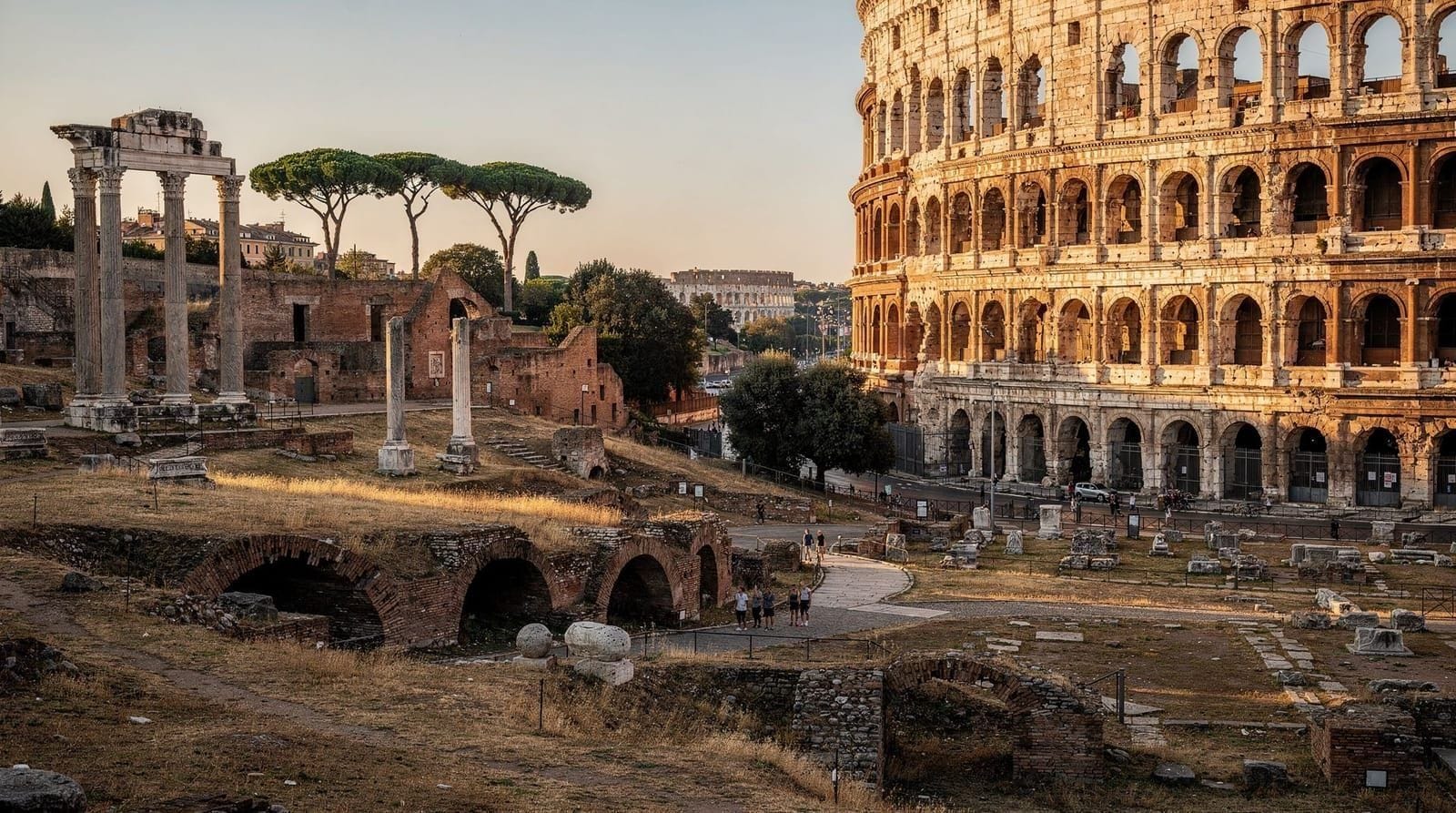
8:00 — Colosseum, Roman Forum, Palatine Hill (3.5 hours)
The Colosseum standard ticket (18 €) covers all three sites on a single timed entry. Arrive at your slot time — the redemption queues are long even with a booking. Spend about an hour in the Colosseum itself, 75 minutes in the Roman Forum (follow the Via Sacra from the Arch of Titus to the Temple of Saturn; the Basilica of Maxentius is the most spectacular surviving ruin), and 30-40 minutes on Palatine Hill for views over the Forum and the Circus Maximus.
A guided skip-the-line Colosseum, Forum and Palatine tour provides timed entry and the historical context that makes the ruins coherent. Worth the upgrade over a self-guided visit if it is your first time in Rome.
12:00 — Lunch in Monti, then Capitoline Hill
Lunch in Monti (18-25 € per person). Then walk to the Capitoline Hill for the free panoramic view over the Roman Forum from above. The Capitoline Museums are excellent but today keep moving — they deserve a dedicated 2-hour visit and are best saved for longer stays.
14:30 — Pantheon, Piazza Navona, Trevi
Walk to the Pantheon (6 € online, book the day before). 45 minutes inside. Then Piazza Navona for Bernini’s fountains — 20 minutes. Then Trevi Fountain — 15-20 minutes. The walk between these three points is about 2.5 km total.
17:30 — Spanish Steps, Pincio, aperitivo
Walk to the Spanish Steps and climb to the Pincio Terrace for the panorama. Back down for aperitivo on Via della Croce: 8-12 €.
20:00 — Dinner and evening in Centro Storico
Dinner in the streets between Navona and Campo de’ Fiori (30-45 € per person). The city at night has a completely different atmosphere — linger over dinner and walk back slowly through Centro Storico.
Day 2: Vatican and Trastevere
7:30 — Early breakfast in Prati
Prati is Rome’s Vatican neighbourhood — wide, calm streets, good bars. Standing breakfast on Via Cola di Rienzo before your Vatican slot.
8:00 — Vatican Museums and Sistine Chapel (3.5-4 hours)
The single most important booking in Rome. Early morning timed entry (8:00) gives you the Sistine Chapel before the tour groups peak. The route through the museums should prioritise: Gallery of Maps → Raphael Rooms → Sistine Chapel. Without guidance it is easy to spend too long in the earlier galleries and arrive exhausted at the Sistine.
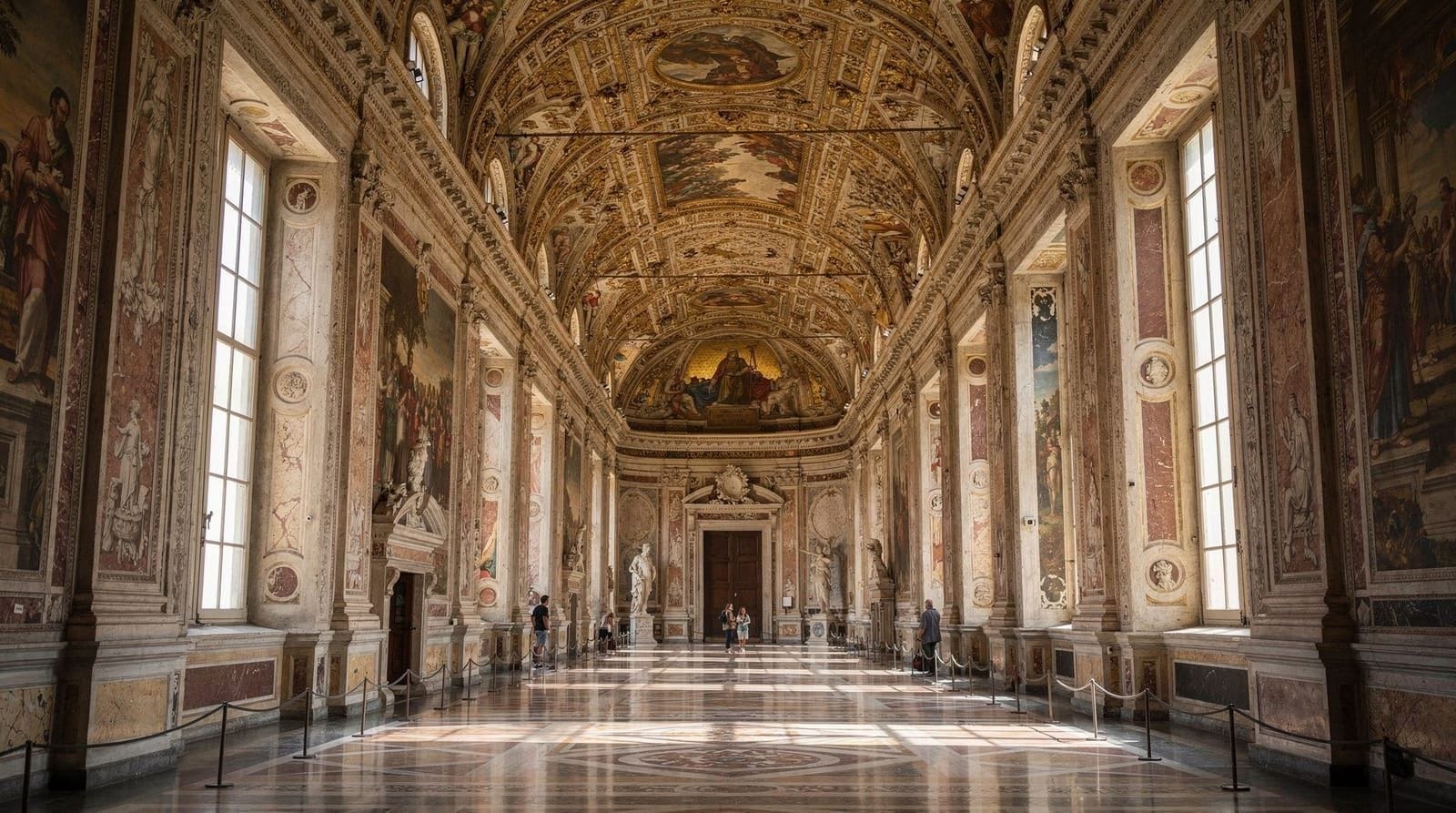
A guided Vatican Museums, Sistine Chapel and St. Peter’s Basilica tour handles the timed entry and guides you through the most significant works — Raphael’s School of Athens, Michelangelo’s ceiling, the Last Judgment — with enough context to make them meaningful rather than just visually overwhelming. Entry 20 € standard; guided tours 55-85 €. Book 2-4 weeks ahead.
12:00 — St. Peter’s Basilica and dome (2 hours)
Free entry to St. Peter’s; dome climb 8-10 €. The Basilica interior takes 45-60 minutes. The dome is 537 total steps (lift available for first 320) — the view is worth the climb. If you add St. Peter’s Square as a viewpoint, the 10-minute walk south on Via della Conciliazione from the Basilica gives the best external view of the colonnade.
14:00 — Castel Sant’Angelo (optional)
15 € entry, 1.5 hours. Hadrian’s cylindrical mausoleum-turned-papal-fortress; the terrace view over the Tiber is outstanding. Include it if you have energy; skip it if you want a slower afternoon.
15:30 — Trastevere
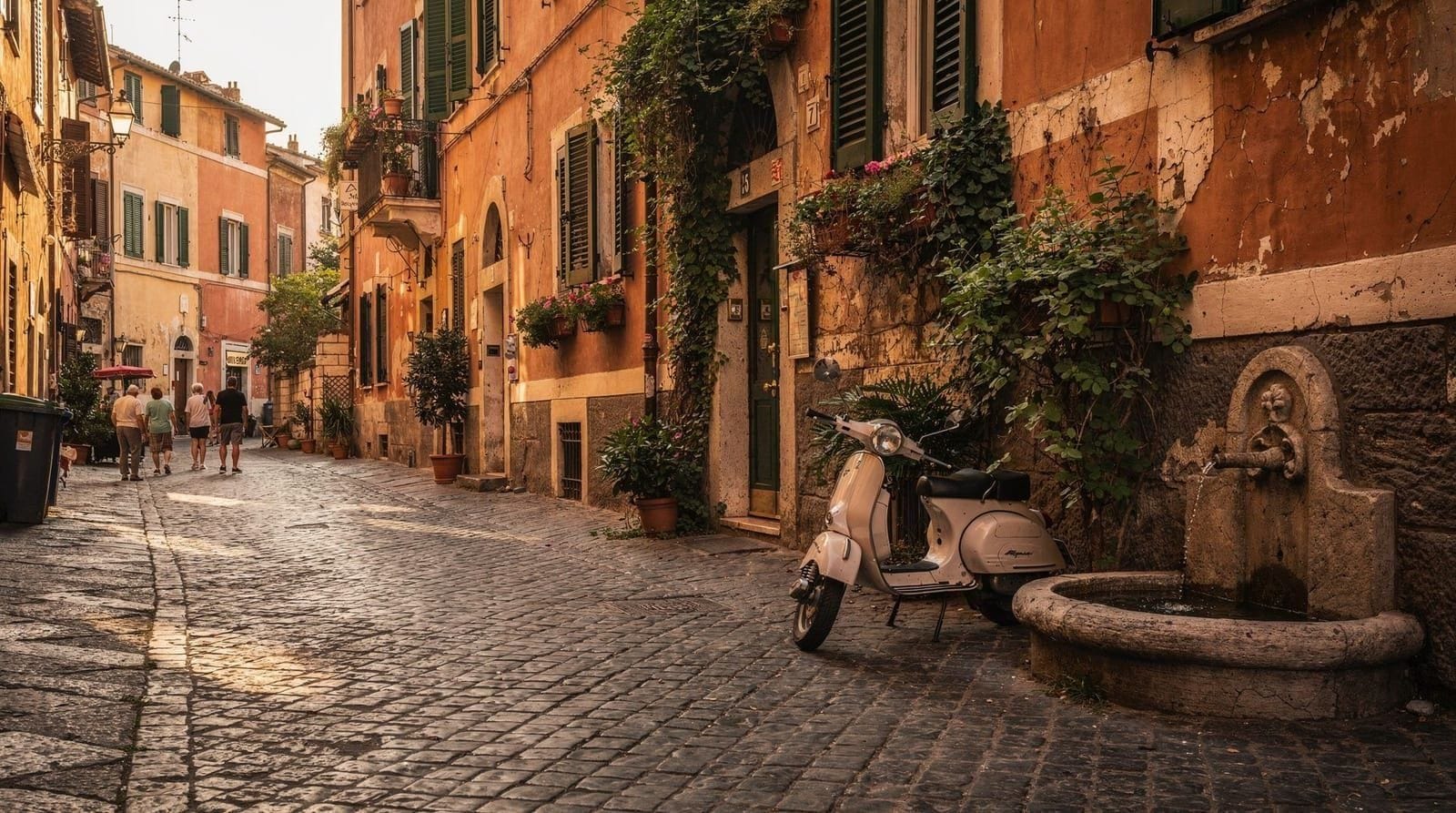
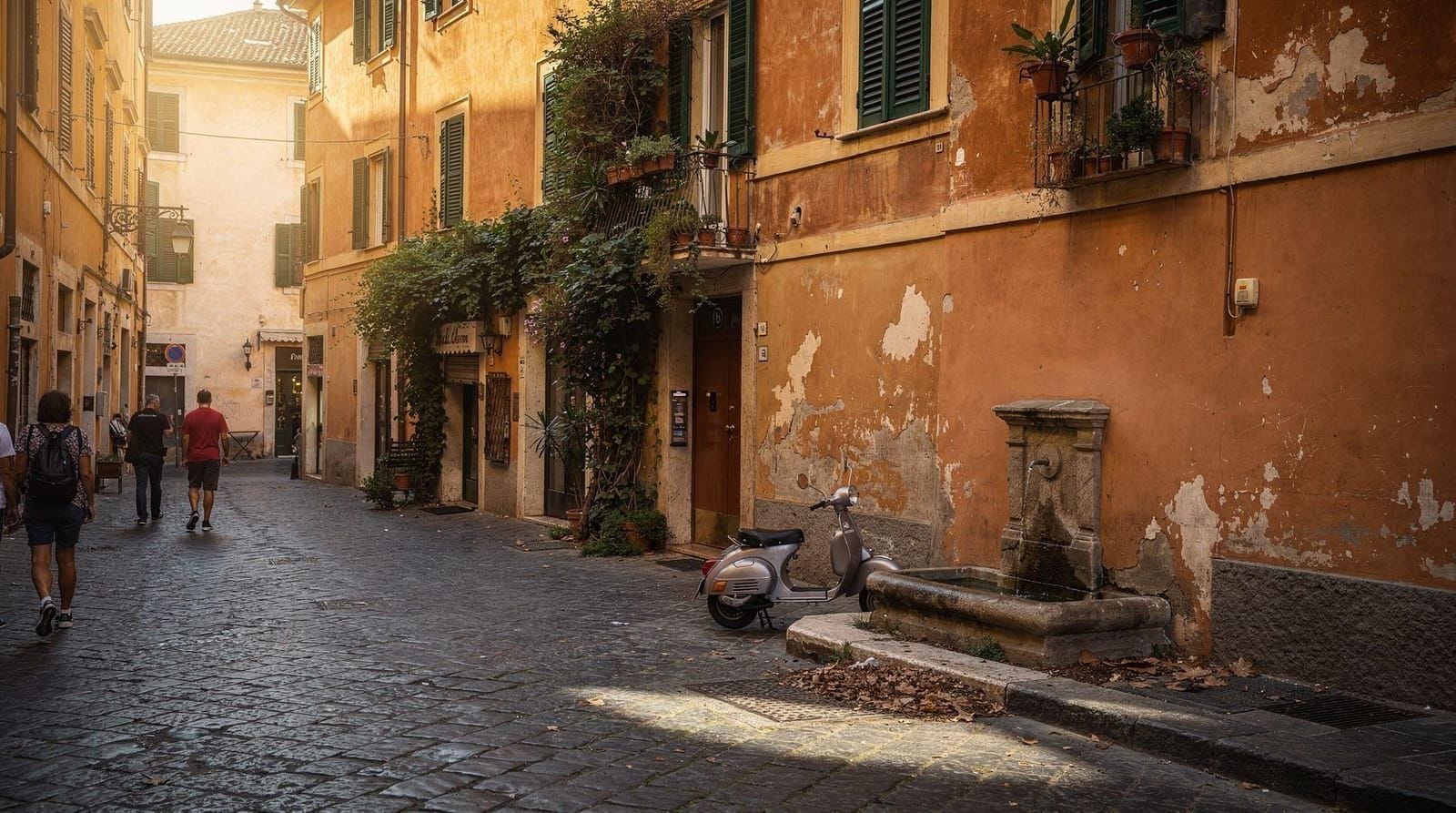
Cross Ponte Sisto into Trastevere. Walk to Santa Maria in Trastevere for the 12th-century mosaics and the neighbourhood’s focal piazza. Explore the lanes around Via della Scala, Santa Cecilia, and Piazza di Sant’Egidio. The Gianicolo above the neighbourhood is 15 minutes on foot and offers the best all-direction panorama in Rome.
19:30 — Dinner in Trastevere
A Trastevere food and wine tour with 20+ tastings is the immersive way to spend this evening — working through the neighbourhood’s food culture with a local guide over 3-4 hours. For a restaurant, Da Enzo al 29 requires a reservation but delivers outstanding Roman cooking.
Day 3: Borghese Gallery, Testaccio, and Aventino
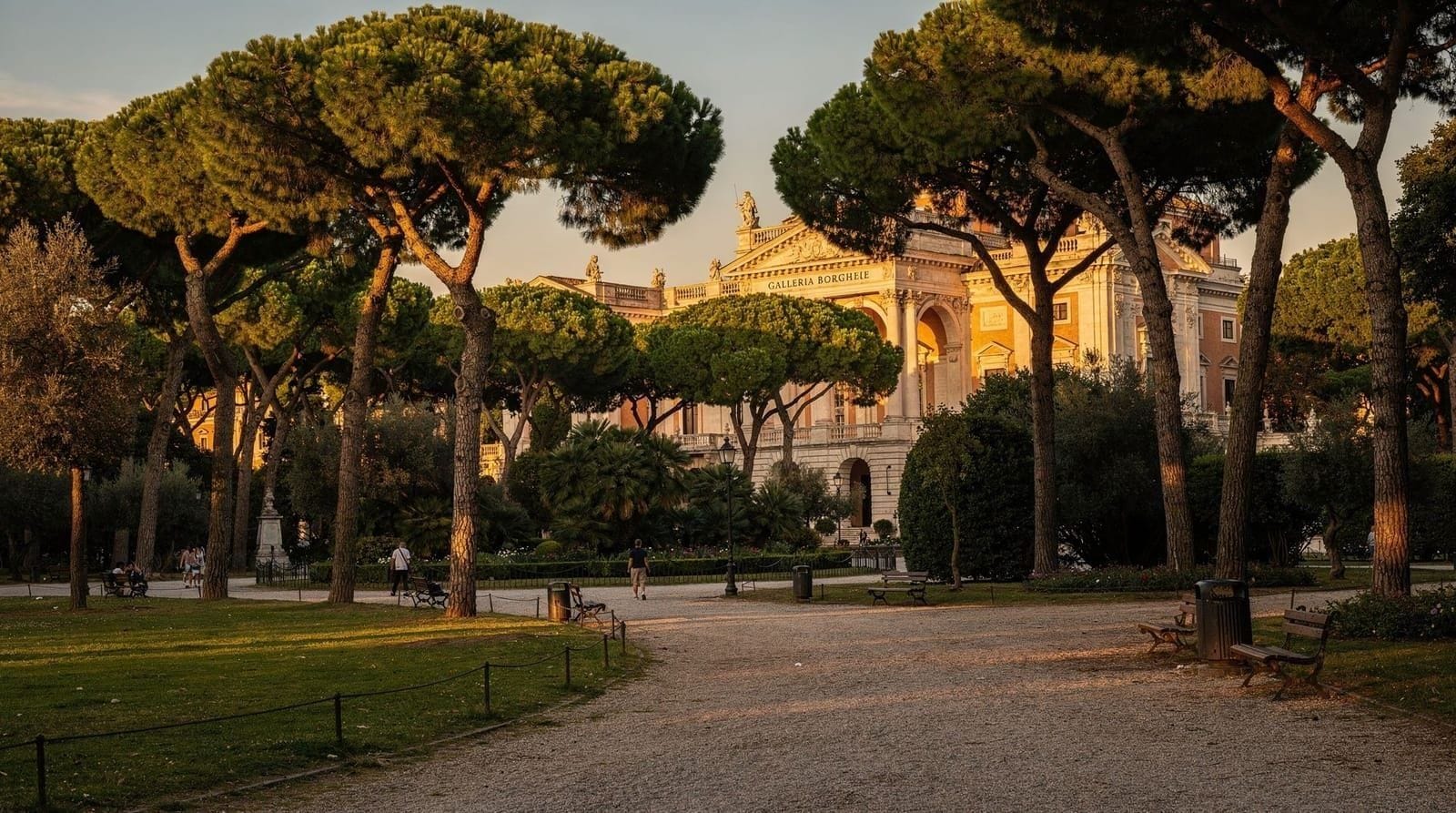
9:00 — Borghese Gallery (2 hours)
The Borghese Gallery is Rome’s finest museum experience per square metre and the one most likely to catch visitors without a booking. The 180-person cap per 2-hour slot means that from 10 days out in peak season, all slots are typically full. Book at least 10 days ahead; 14 is safer. Entry is 15 € plus booking fee.
Inside: Bernini’s four marble masterpieces (the abduction of Proserpina, Apollo and Daphne, David, Aeneas fleeing Troy) and six Caravaggio paintings. Two hours is the fixed limit.
Borghese Gallery skip-the-line entry with timed reservation is the right way to handle this booking — it manages the mandatory timed-entry slot.
11:00 — Borghese Gardens and Pincio
After the gallery, walk through the Villa Borghese park to the Pincio Terrace (15 minutes). Free panorama over Piazza del Popolo and the city roofline. Come back down via the Spanish Steps descent.
13:00 — Lunch near Piazza del Popolo
Santa Maria del Popolo church faces the piazza (free entry, Caravaggio’s two paintings of St. Paul and St. Peter in the Cerasi Chapel are extraordinary). Lunch nearby: 20-30 €.
15:00 — Testaccio
Metro B south or bus to Testaccio. This is Rome’s most genuinely local neighbourhood — the former slaughterhouse, the Mercato di Testaccio (closes around 14:00; see the surrounding streets instead in the afternoon), and the densest concentration of Roman-DNA restaurants in the city. Walk Via Galvani, look at the Monte dei Cocci (a hill made entirely of ancient amphora shards), and visit the Non-Catholic Cemetery for an unexpectedly moving half-hour.
17:00 — Aventino Hill
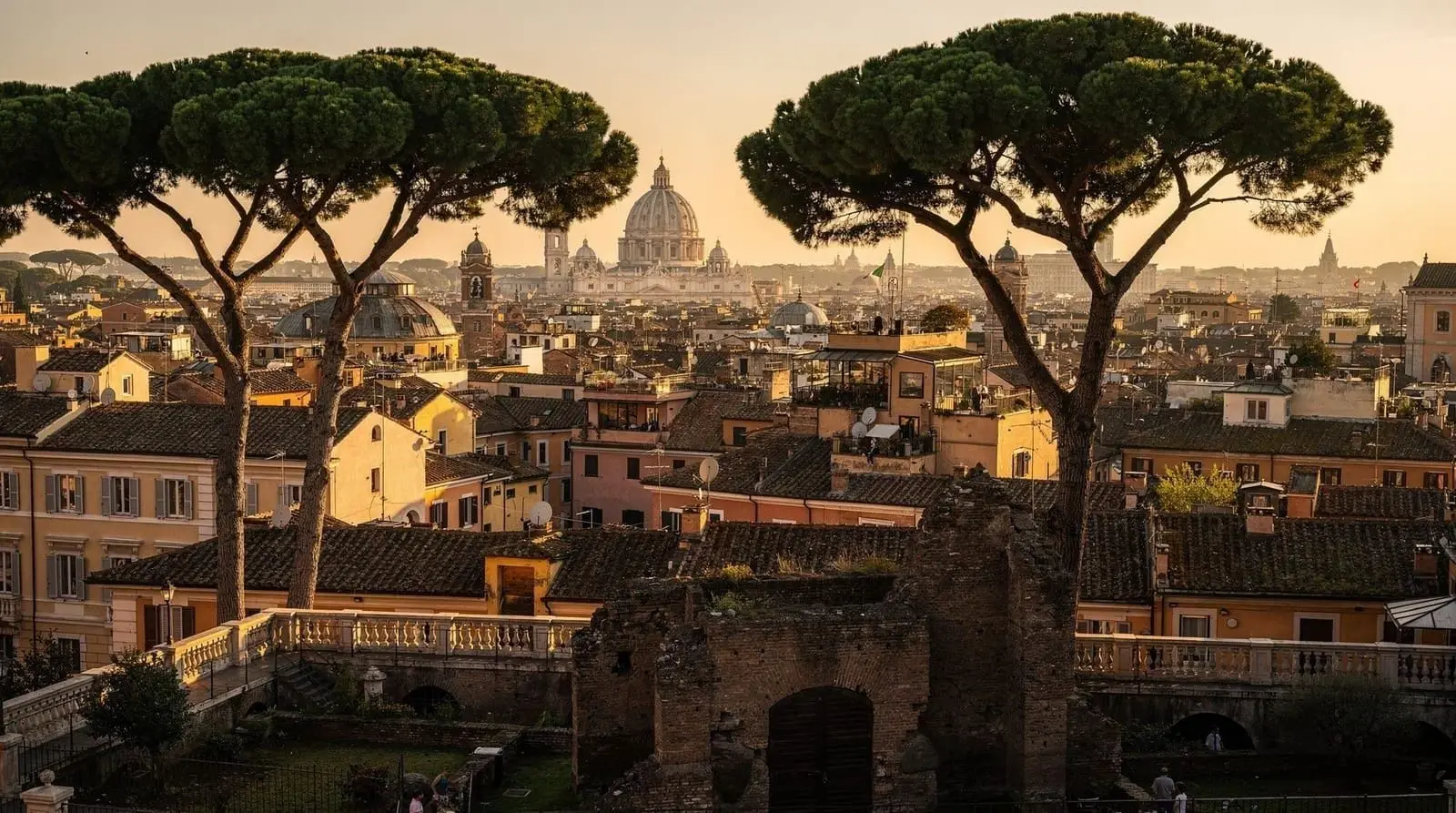
Walk 10 minutes from Testaccio to the Aventino for the Knights of Malta keyhole view — look through the bronze garden door on Via di Santa Sabina to see a perfectly framed St. Peter’s dome. One minute, free, and genuinely worth seeking out. The Basilica di Santa Sabina next door is one of Rome’s oldest and most peaceful churches.
20:00 — Dinner in Testaccio
Return to Testaccio for dinner. Flavio al Velavevodetto is set into the Monte dei Cocci itself and serves outstanding Roman classics — cacio e pepe, oxtail, carciofi alla romana. Book ahead. Budget 35-50 €.
Day 4: Tivoli day trip
9:00 — Departure for Tivoli (45 min from central Rome)
Tivoli is 30 km east of Rome and contains two UNESCO World Heritage Sites: Hadrian’s Villa (Villa Adriana, 2nd century AD) and Villa d’Este (16th century). A guided day trip handles transport and context.
A Tivoli day trip including Villa d’Este and Villa Adriana takes approximately 7-8 hours and is the most efficient way to cover both villas without navigating rural Lazio transport independently. Tours depart from central Rome and return by late afternoon.
Hadrian’s Villa is a vast sprawling complex — the personal retreat of the Emperor Hadrian, covering 120 hectares and incorporating reproductions of buildings from across the empire. Allow 2 hours; the Canopus reflecting pool and the Teatro Marittimo island villa are the set pieces.
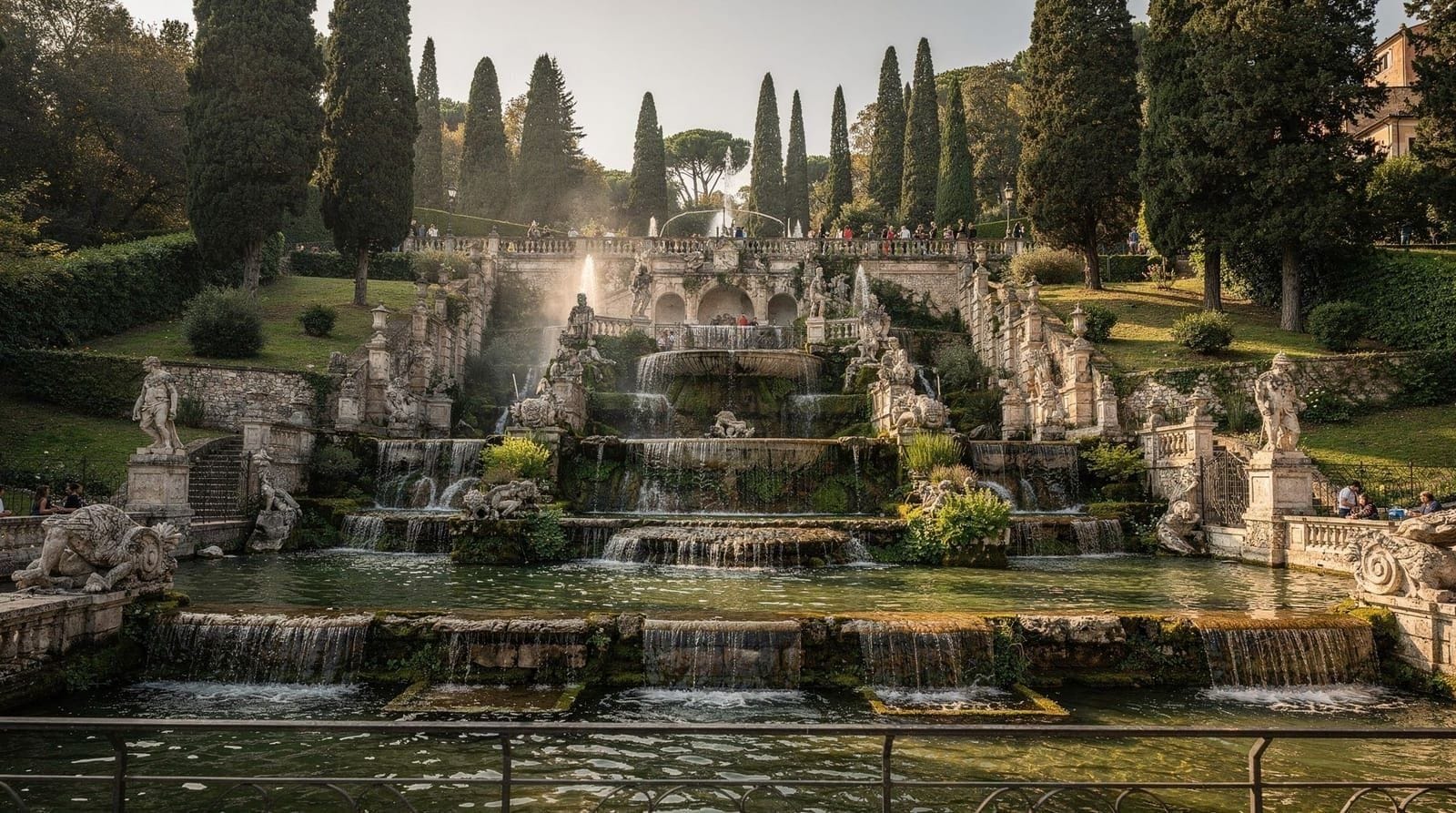
Villa d’Este is Tivoli’s other jewel: a Renaissance cardinal’s palace converted into an extraordinary water garden of 500 fountains, jets, and cascades. Allow 1.5-2 hours. The sound of running water is everywhere; in hot weather it is one of the most pleasant places in Lazio.
17:00 — Return to Rome
Back in Rome by early evening with enough time for a final dinner in Monti or Centro Storico. Use this evening without a plan — sit at a bar, walk to whichever piazza you didn’t have enough time to properly inhabit earlier, and drink a last Aperol spritz watching the city do its thing.
Where to stay
Monti is the best base for this 4-day itinerary. Central to the Colosseum, well connected to the Vatican by Metro A (change at Termini), close to the Borghese and Testaccio by transit, and with the city’s best neighbourhood restaurant scene for four evenings.
Trastevere is characterful but adds commute time to every morning departure.
Prati suits those whose Vatican morning is the main priority and who want lower prices and a quieter neighbourhood. It’s slightly farther from the Borghese and Testaccio.
Budget in 2026 for mid-range accommodation: 130-220 € per night in Monti or Centro Storico. Prices spike significantly in April, May, September, and October — book 2-3 months ahead for those periods.
Practical notes for four days in Rome:
- Water is free from the nasoni street fountains throughout the city. Carry a refillable bottle and use them — especially important in the summer months when walking between sites in the heat.
- The Metro is useful for two stretches in this itinerary: Line B from Colosseo station (Colosseum) toward Termini, and Line A from Termini to Ottaviano (Vatican). Single tickets are 1.50 €; a 48-hour pass (12.50 €) covers the whole four days of transit easily.
- Pickpocket risk is highest on Metro A between Termini and Ottaviano (the Vatican line) and in and around Termini station. Keep phones and wallets in front pockets or a front-facing bag on those journeys.
- Dress code matters at the Vatican and at all major churches: shoulders and knees must be covered. If you are wearing shorts or a sleeveless top, a scarf or wrap carried in your day bag solves the problem at every church door.
- Daily costs breakdown: accommodation 130-200 € per night, meals 40-70 € per person per day (two sit-down meals), entry tickets and tours 50-80 € per day on the big days. Total four-day budget per person at mid-range: approximately 1,300-1,600 €.
Why Tivoli and not Ostia Antica or Frascati for day four
Rome has several worthwhile day trips, and Tivoli is not the only option — but it’s the right one for a four-day first visit. Ostia Antica (Rome’s ancient port city, remarkably intact) is closer and cheaper but delivers more ruins in the same vein as day one’s Forum, which can feel repetitive rather than complementary. The Castelli Romani towns around Frascati offer wine and countryside but less to actually see and do in a single day. Tivoli’s pairing of an imperial villa and a Renaissance water garden gives you two genuinely different experiences — engineering and archaeology in the morning, pure aesthetic pleasure in the afternoon — which is why it’s the standard choice for a first extended Rome trip. If you do this trip again and want a different day four, both Ostia Antica and the Castelli Romani wine towns are worth a dedicated future visit.
FAQ
Is Tivoli worth a full day, or could I do it as a half-day and stay in Rome for the rest? A guided day trip typically runs 7-8 hours door to door once you include transport, so treat it as a full day rather than trying to combine it with city sightseeing. If you’d rather keep the whole day trip optional, this itinerary’s first three days already form a complete, satisfying visit on their own — Tivoli is the addition, not a requirement.
What if I can only get a Borghese Gallery slot on day four instead of day three? Swap it in — the itinerary’s day order is a logical default, not a fixed rule. Tivoli’s guided day trip has more schedule flexibility than the Borghese Gallery’s capped slots, so move Tivoli to day three if that’s what a Borghese booking requires.
Which of the four days could I cut if I only end up with three? Cut Tivoli, not one of the city days. The 3-day itinerary covers exactly this trip’s first three days, and Tivoli is the one component that’s genuinely optional rather than essential to a first Rome visit.
Top experiences
Bookable activities with verified prices and instant confirmation on GetYourGuide.