Appia Antica
Via Appia Antica: catacombs, aqueducts, cobblestones and e-bike rides outside Rome. Practical guide to getting there, what to see, and honest logistics.
Rome: Appian Way, Catacombs, & Roman Aqueducts E-bike Tour
Duration: 4-6 hours
Quick facts
- Distance from centre
- ~5 km SE of Piazza Venezia; 15 min by bus from Circo Massimo
- Catacombs entry
- €10–14 per site (San Callisto, San Sebastiano, Domitilla)
- E-bike rental
- ~€20–30/day; recommended — road is cobbled and not flat everywhere
- Car-free Sundays
- Via Appia Antica is closed to private vehicles every Sunday year-round
- Archaeology Park
- Free access along the road; museums have separate entry fees
- Best time
- Sunday mornings (car-free); April–May or Oct for mild weather
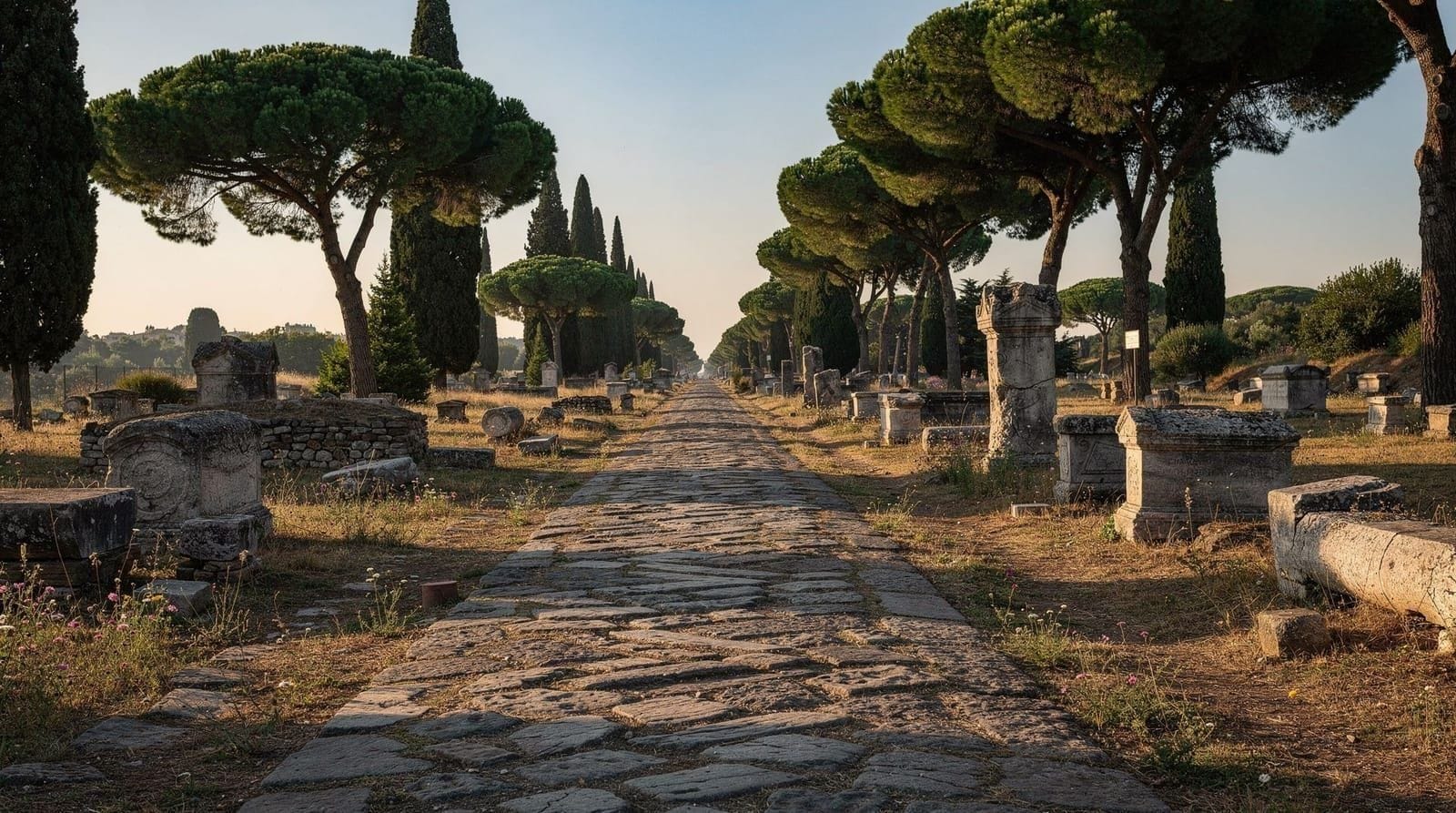
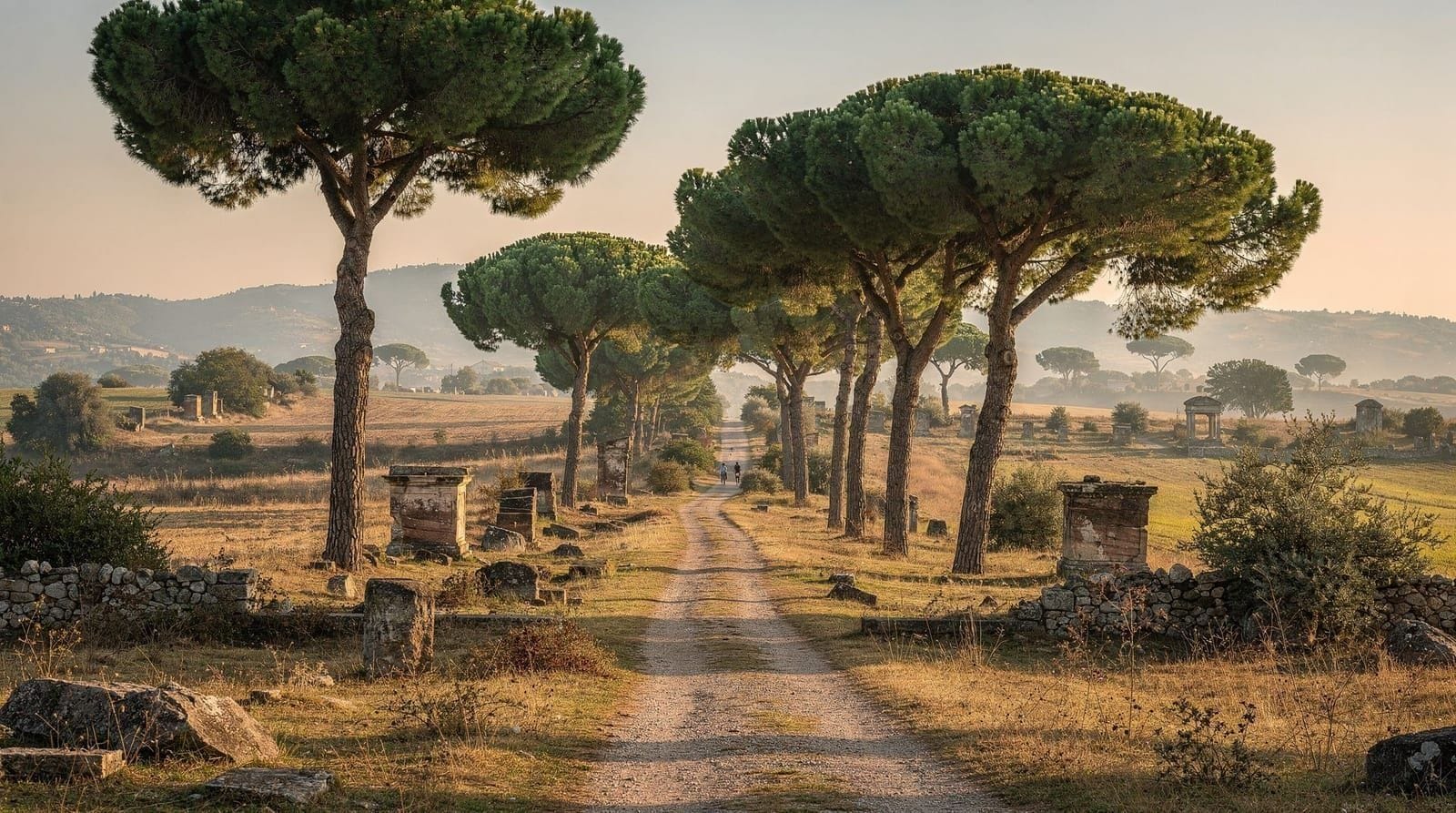
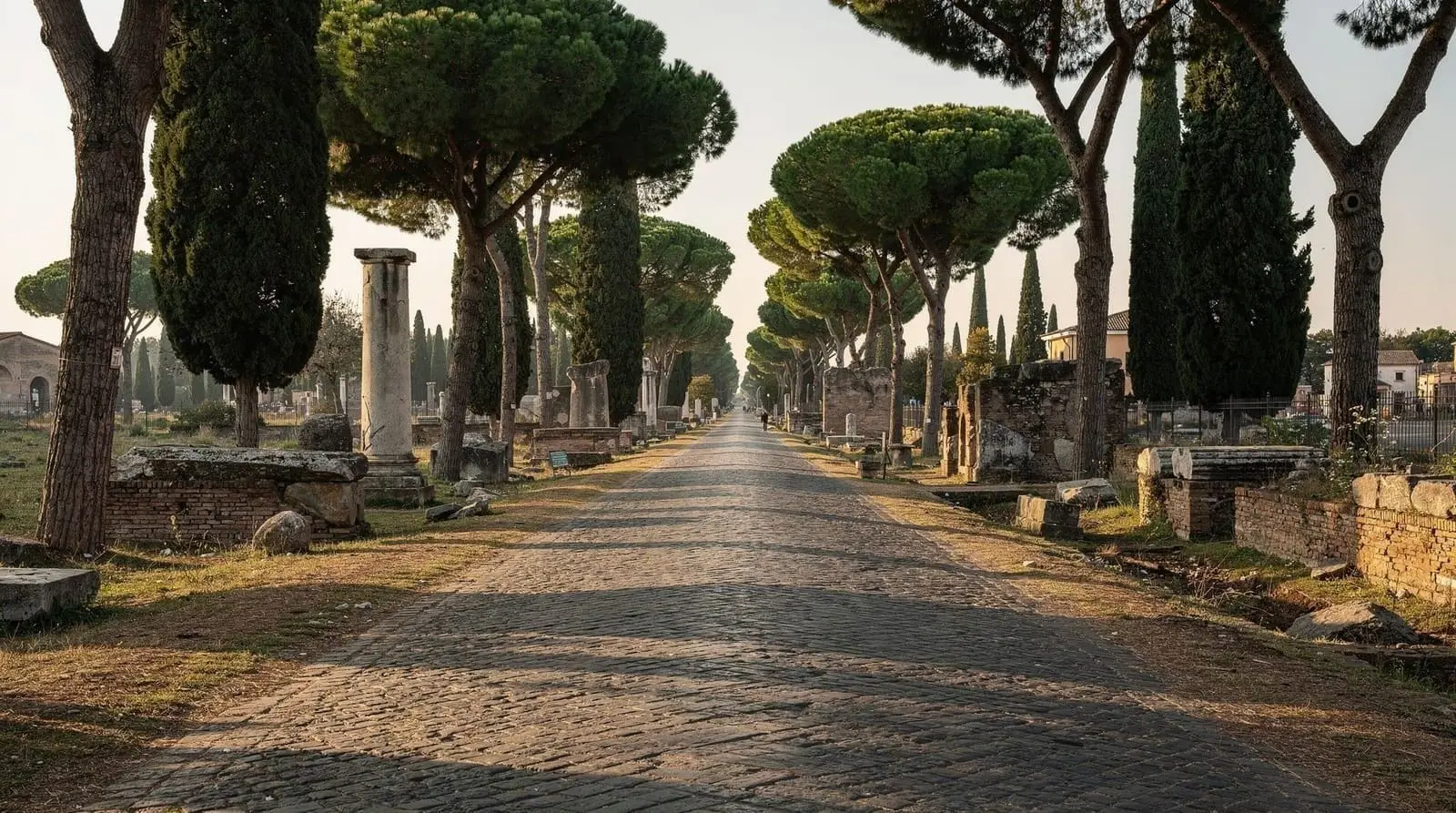
The Via Appia Antica — the Appian Way — is the oldest long-distance road in Rome’s history, built in 312 BCE by the censor Appius Claudius Caecus to connect Rome with Brindisi on the Adriatic. At its peak it stretched 570 km. The section south of Rome’s Aurelian Walls is now a protected archaeological park: Roman tombs line both sides of the road for several kilometres, ancient milestones mark every Roman mile, and the original basalt cobblestones survive largely intact under your feet (and wheels). On Sundays, no private cars are allowed on the road, transforming it into one of the most atmospheric places in the city. Most Romans have been meaning to come here for years and still haven’t. Tourists rarely find it. This is the point.
What the Appia Antica park actually contains
The Parco Regionale dell’Appia Antica covers roughly 3,400 hectares of wedge-shaped green corridor between Rome’s outer suburbs. The park is free to enter. What it contains:
The road itself: The original ancient surface — large irregular basalt polygons called silex — is preserved for about 10 km south of the Porta San Sebastiano (the old city gate). It is genuinely uneven, which is why e-bikes or mountain bikes are preferable to road bikes. Walking is entirely feasible but slow (the cobblestones are ankle-attention territory).
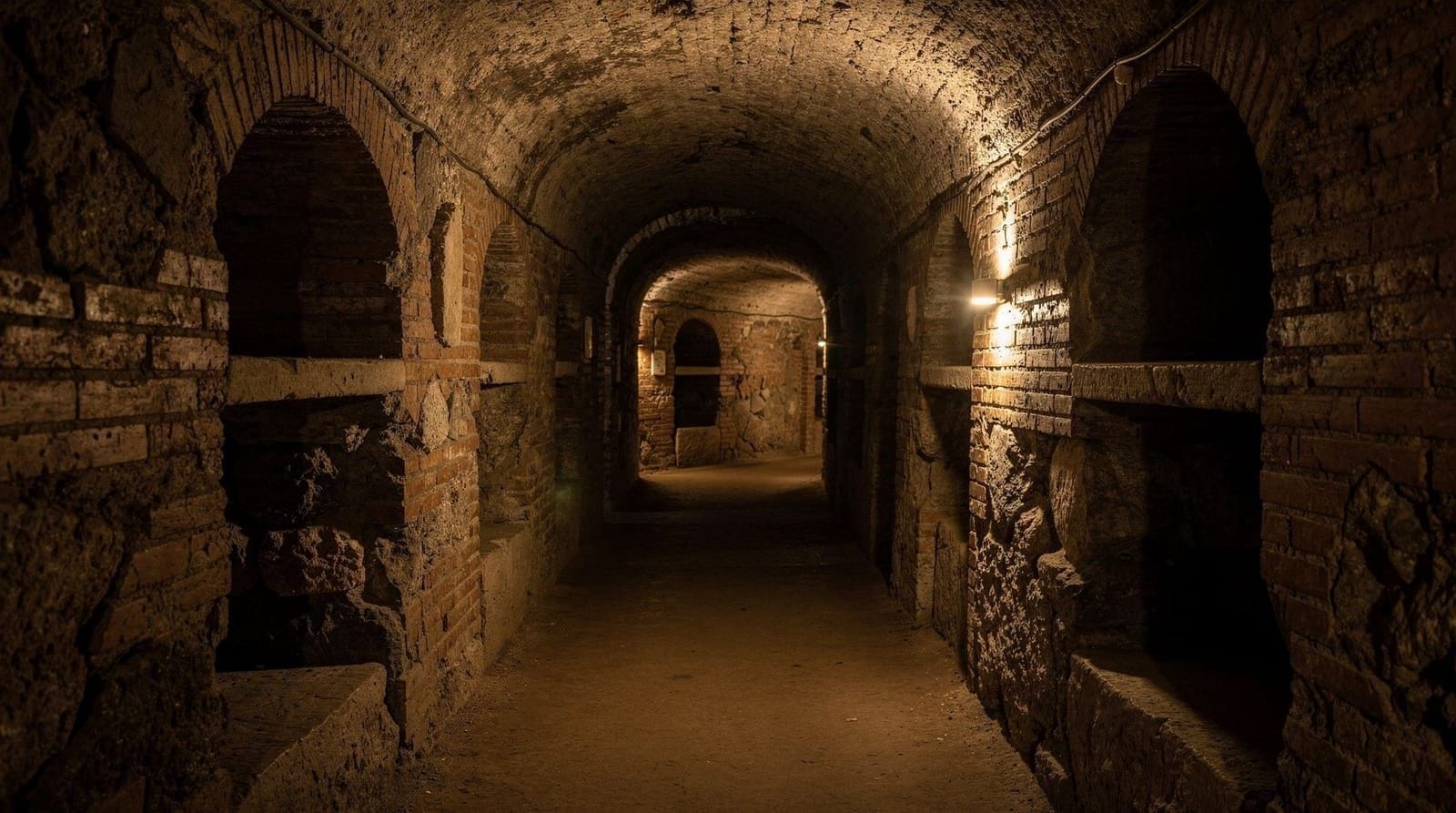
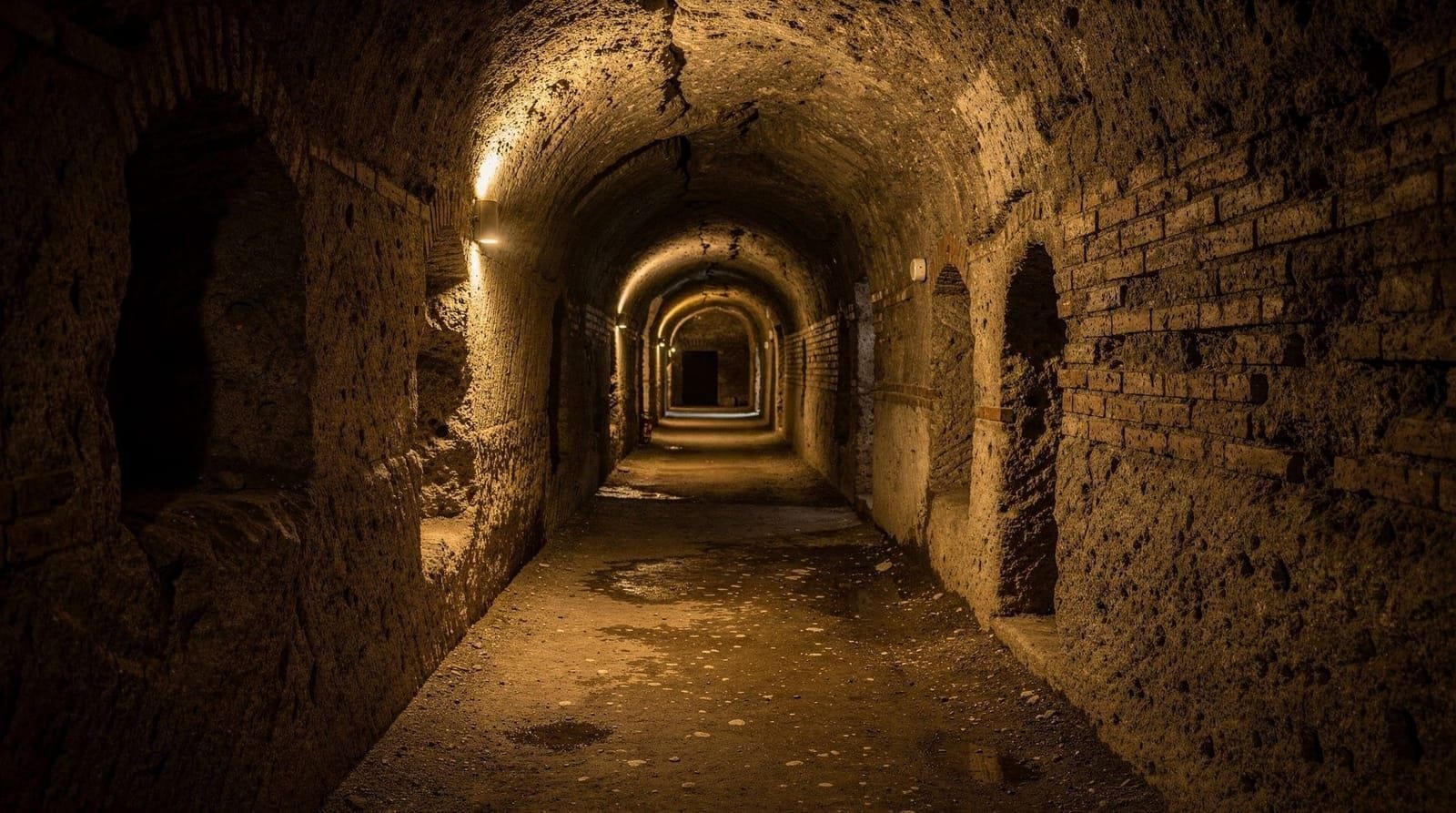
Catacombs of San Callisto: The largest and most visited catacomb on the road. This was the official burial ground of the early popes (3rd century CE); the papal crypt contains the tombs of several 3rd-century martyrs. Tours are guided in multiple languages, last about 30 minutes, cost approximately €14. The underground galleries total around 20 km across multiple levels, though you visit a small curated section. No photos inside (the friars who run it are strict about this).
Catacombs of San Sebastiano: Smaller, slightly earlier, and historically significant as a temporary resting place for the relics of Saints Peter and Paul in the 3rd century during persecutions. The church above contains a relic chapel and Baroque interior. Entry ~€10.
Catacombs of Domitilla: The largest catacomb complex in Rome (15 km of galleries) and arguably the most atmospheric — the oldest Christian imagery here dates to the 2nd century. It is also the least crowded of the three. Located slightly off the main road; requires a short detour. Entry ~€10.
Villa dei Quintili: A vast imperial villa complex about 5 km from Porta San Sebastiano, once the largest private villa near Rome. Hadrian confiscated it (and executed its owners) in 151 CE. The ruins include thermal baths, a circus, and substantial standing walls. Entry ~€10 with the Colosseum cultural pass.
Aqueduct Park (Parco degli Acquedotti): A 240-hectare park to the east of the Appia, where seven of Rome’s ancient aqueducts cross the landscape in parallel lines. The main photogenic section shows the arches of the Claudia and Felice aqueducts against the backdrop of suburban Rome. Accessible by metro (Line A, Subaugusta) and by bike from the Appia. Free entry.
Appian Way e-bike tour — catacombs + aqueducts, guide includedGetting to the Appia Antica from central Rome
Bus (most practical): Bus 118 runs from the Circo Massimo metro stop (Line B) to the main catacomb zone, stopping at Terme di Caracalla, the catacombs, and continuing south. Journey from Circo Massimo: about 20 minutes to San Callisto. Bus 218 runs from San Giovanni metro station (Line A/C). A standard BIT ticket (€1.50) covers the whole journey.
Metro + walk: Take Metro B to Circo Massimo, then either take bus 118 or walk 2 km along Via Ardeatina to reach the catacomb zone. The walk takes about 25 minutes but is not scenic (urban road).
Cycling or e-bike from central Rome: The route from the Circus Maximus valley along Via Appia Antica is approximately 5 km to the catacombs, largely car-free on Sundays. Hire e-bikes near Circo Massimo or at rental operators along the Appia.
By car: Possible on weekdays; Sundays the road is closed to private vehicles from Porta San Sebastiano onwards. Parking at the Cecilia Metella tomb is limited.
What NOT to do: Do not take a taxi all the way — an unnecessary cost. Do not assume a standard city tourist bus covers this area; most hop-on-hop-off routes do not extend to the Appia Antica.
Cycling the Appia Antica: honest logistics
The Appia Antica is romanticised in guidebooks, and the reality is slightly more complicated. The ancient cobblestones — genuinely original Roman basalt — are irregular, widely spaced, and slope unevenly. A road bike will be uncomfortable for the entire southern stretch. A city bike with wider tyres is tolerable. An e-bike with front suspension is comfortable. Mountain bikes work well.
The first 2 km from Porta San Sebastiano to the catacombs are the most important historically and architecturally (tombs, milestones, Cecilia Metella mausoleum). This section is entirely manageable on any bike and on foot.
Beyond the catacombs, the road becomes progressively rougher as traffic thins. The Villa dei Quintili section (5 km south) involves navigating modern roads around the park boundary — less idyllic than the main stretch but still rewarding for archaeology enthusiasts.
E-bike operators typically supply a helmet, lock, and map. Guided e-bike tours that include catacomb entry and an aqueducts loop are available through GYG and are worthwhile for a first visit — the route logistics between the Appia and the Parco degli Acquedotti require knowledge of local roads not obvious from maps.
Appian Way and aqueducts e-bike tour — scenic loop with guideThe catacombs in detail: what to expect
All three main catacombs on the Appia (Callisto, Sebastiano, Domitilla) operate on the same model: you cannot explore independently. A guide leads a group of 15–25 visitors through a section of the tunnels for 30–45 minutes. Photography is not permitted inside. The underground temperature is a consistent 15°C regardless of outside heat, so bring a layer in summer.
San Callisto has the most historical significance (papal crypt) and highest visitor numbers. Queues at the entrance can reach 30 minutes in high season. Arrive before 9:30 or after 14:00 for the shortest waits.
San Sebastiano is smaller and less dramatic but historically important (early Christian history, Peter and Paul relics). Often less crowded than Callisto.
Domitilla is the one most archaeology-focused visitors prefer: larger scale, older imagery, better condition, and genuinely less crowded. The underground basilica dedicated to Saints Nereus and Achilleus — an actual 4th-century subterranean church — is impressive. This is the honest recommendation for visitors who have time for only one catacomb.
The Capuchin Crypt (Cappuccino dei Frati Minori, Via Veneto) is a separate, unrelated attraction in central Rome — not on the Appia. Do not confuse the two. See catacombs of Rome overview for a full comparison.
The tombs along the road: what you pass
Walking or cycling from Porta San Sebastiano south, you pass:
- Tomb of Priscilla (1st century CE) — large cylindrical tomb
- Cecilia Metella mausoleum (late 1st century BCE) — the most imposing tomb on the road; converted into a fortress tower in the 14th century; entry included with some combined tickets
- Villa of the Quintilii — 5 km further south; substantial ruins
- Ancient milestones — several original marble mile-markers remain in situ at their original positions
The Appia Antica Information Point (Via Appia Antica 58, near San Callisto) has free maps and staff who speak English.
Where to eat on the Appia Antica
The Appia is not the Trastevere food scene — options are limited and aimed at a mix of locals and slow tourists.
Qui nun se more mai (Via Appia Antica 179): A deliberately anti-tourist trattoria that serves honest Roman food — pasta e ceci, abbacchio al forno — at fair prices. Open for lunch on weekends; occasionally weekday lunch.
Hostaria Antica Roma (Via Appia Antica 87): Long-established, reliable lunch spot with a garden. Roman and Lazio classics. Pasta dishes €12–15.
Take-away from Mercato di Testaccio: The most practical option if cycling from the city — pick up a porchetta sandwich and fruit from the market (open until 14:00) before heading south. Testaccio is 3 km north of Porta San Sebastiano.
History of the Appian Way: why it mattered
The Via Appia was Rome’s first great road — a military and commercial artery that changed the logistics of the Mediterranean world. When Appius Claudius Caecus ordered its construction in 312 BCE, the goal was to reach the allied city of Capua (215 km south) and eventually Brindisi on the Adriatic coast (570 km), where ships could reach Greece and the eastern Mediterranean. The road was built to an engineering standard that has not been significantly improved: a paved surface of interlocking basalt polygons (silex) on a compacted gravel base, with a slight camber to drain rainwater, lateral drainage ditches, and milestones at every Roman mile (1,480 metres).
The road reduced travel time dramatically. Carriages could cover 60–80 km per day on the Appia’s surface, compared to 30–40 km on unpaved roads. This mattered for supply chains, troop movements, and the communication of imperial authority across an enormous empire.
The Appia was also the road of death — specifically of Roman funerary culture. Roman law prohibited burial within city limits, so the roads leading out of Rome were lined with tombs, mausolea, columbaria (cremation niches), and funerary monuments. The Appia outside the Aurelian Walls became the most prestigious funerary address in Rome. The wealthy competed to build the grandest tombs visible from the road — a phenomenon visible today in the surviving monuments that line the first 5 km south of Porta San Sebastiano.
The most famous event on the Appia: the slave rebellion of Spartacus (73–71 BCE). After Crassus crushed the revolt, 6,000 surviving slaves were crucified along the Appian Way from Capua to Rome — the final 195 km lined with crosses at regular intervals. No physical evidence survives; the historical account comes from Appian and others writing 150 years later.
Porta San Sebastiano and the Aurelian Walls
The Appia Antica park begins at Porta San Sebastiano, one of the best-preserved gates in Rome’s Aurelian Walls. The Aurelian Walls themselves — 19 km of continuous fortification — were built in 270–275 CE under the emperor Aurelian when Germanic invasions threatened Italy for the first time. Until then, Rome had not needed walls; the legions had always stopped threats at the frontier. The walls’ construction is an index of imperial anxiety.
The Museo delle Mura at Porta San Sebastiano occupies the gate tower and a section of the wall walkway. Entry is free. You can walk along the top of the wall for about 200 metres, looking down over the modern Via Appia and the archaeological park. The museum’s exhibits on Roman military architecture and the wall’s construction are genuinely informative; the walkway views are excellent. Open Tue–Sun 9:00–14:00.
From Porta San Sebastiano, the original Via Appia extends south through the park — the ancient surface under your feet immediately as you pass through the gate.
Cecilia Metella: the most imposing tomb on the Appia
About 3 km south of Porta San Sebastiano, the Mausoleo di Cecilia Metella is the most substantial surviving funerary monument on the road — a cylindrical drum of travertine 30 metres in diameter and 11 metres high, built circa 30 BCE for the daughter (or daughter-in-law) of wealthy members of the late Republic elite. Its occupant’s identity was established by an inscription; the specific Cecilia Metella is otherwise unattested in history.
The monument’s size reflects the competitive funerary culture of the late Republic: the larger your mausoleum on the Appia, the more prominent your family’s claim on Roman memory. After the fall of Rome, the Caetani family converted the mausoleum into a fortress tower in the early 14th century, adding the battlements visible at the top today. The adjacent castle structures (Castrum Caetani) are from the same period.
Entry to the interior costs approximately €6 and is covered by some combined cultural passes. The exterior is freely viewable at any time.
Combining with the Aventino & Circus Maximus
A natural full-day combination: begin at the Circus Maximus, continue to the Baths of Caracalla, then cycle or walk south to the Appia. The Baths of Caracalla are the largest remaining bath complex in Rome (3rd century CE, capacity ~1,600 bathers simultaneously) and sit between the two areas. Combined ticket possible with some GYG tours; see ancient Rome in one day.
Seasonality: the best months to visit
The Appia rewards planning around the calendar more than most Rome sights, since it is entirely outdoors and exposed.
| Months | Weather | Crowds | Notes |
|---|---|---|---|
| Apr–May | Mild, occasional rain | Moderate, busier on Sundays | Best overall balance; wildflowers along the road |
| Jun | Warm, dry | High on weekends | Long daylight; start early to beat the heat |
| Jul–Aug | Hot, dry | Lower than central Rome, but midday is punishing | Ride before 10:00 or after 17:00; shade is scarce |
| Sep–Oct | Warm, drier air | Moderate | Arguably the best cycling window; harvest light in the countryside |
| Nov–Mar | Cool, more rain | Lowest, especially weekdays | Catacombs stay a stable 15°C year-round; road can be muddy after rain |
Car-free Sundays apply in every season, so a Sunday morning in any month is the single most reliable window for an uncrowded, traffic-free visit — the trade-off is that Sundays are also when the most Romans themselves come out to walk or cycle here, so “car-free” does not mean “empty.”
Renting an e-bike: what to actually expect
Several small operators cluster near Porta San Sebastiano and along the first kilometre of the Appia, plus a handful near Circo Massimo metro. Expect to leave an ID or a card deposit, sign a basic liability form, and get a helmet, a simple map, and a phone-charger mount if you ask. Bikes are usually returned to the same shop, not one-way — factor the return ride into your timing, especially if you have gone as far as Villa dei Quintili or looped out to the Parco degli Acquedotti.
Battery range on a full charge typically covers the round trip from Porta San Sebastiano to the Aqueduct Park loop (roughly 15–20 km) with charge to spare, but ask specifically if you plan to also detour to Domitilla or continue toward Castelli Romani-direction roads — some cheaper e-bikes are underpowered for the Villa dei Quintili’s rougher surface. If you would rather not manage logistics, navigation, and catacomb-entry queueing yourself, a guided e-bike tour bundles the route planning, the bike, and skip-the-line catacomb access into one booking, which is the main reason first-time visitors choose one over a self-guided rental.
Catacombs and Appian Way day trip with transport includedFrequently asked questions about the Via Appia Antica
Is the Via Appia Antica free?
The road and park are free to enter. Individual sites — the catacombs, Villa dei Quintili, Cecilia Metella — have separate entry fees ranging from €10–14. The Aqueduct Park is entirely free.
Can I visit the catacombs independently?
No. All catacomb visits are guided tours run by the religious institutions that manage each site. Tours run at regular intervals in Italian, English, German, French, and Spanish. Arrive at the entrance and join the next available tour.
Which catacomb should I choose?
San Callisto for papal history and the most famous site. San Sebastiano for historical significance (Peter and Paul) with smaller crowds. Domitilla for the largest scale and oldest Christian imagery. If you can only visit one, Domitilla is the honest recommendation — less marketed, equally impressive, rarely full.
Is cycling safe on the Appia Antica?
On Sundays (car-free day), the road from Porta San Sebastiano is very safe and pleasant. On weekdays, the first 2 km inside the park are car-restricted but not fully closed; some traffic passes. Beyond that, the road is narrow and shared with occasional farm vehicles. E-bikes with good brakes and tyres are recommended over standard road bikes due to the cobblestones.
When is the park least crowded?
Early Sunday mornings (before 10:30) between November and March. The park is always less crowded than central Rome; even in August it is manageable before noon. The catacombs themselves have fixed tour group sizes, so the real constraint is joining the next tour slot.
How do I combine the Appia with the Aqueduct Park?
By bike or e-bike, a loop is feasible: ride south on the Appia, turn east at the Villa dei Quintili junction, and loop back north through the Parco degli Acquedotti. Return via Via Tuscolana or Via Appia Nuova to central Rome. A local guide is helpful for this route — or use a structured Appia + aqueducts bike tour.
Do I need to book an e-bike or catacomb tour in advance?
In high season (June–September) and on weekends, booking a catacomb-inclusive tour a day or two ahead is sensible — group slots at San Callisto in particular can fill by early afternoon. Off-season and on weekdays, walking up and joining the next available tour usually works without a wait. E-bike rentals rarely need advance booking except on peak Sundays.
Is the Appia Antica suitable if I only have one day in Rome?
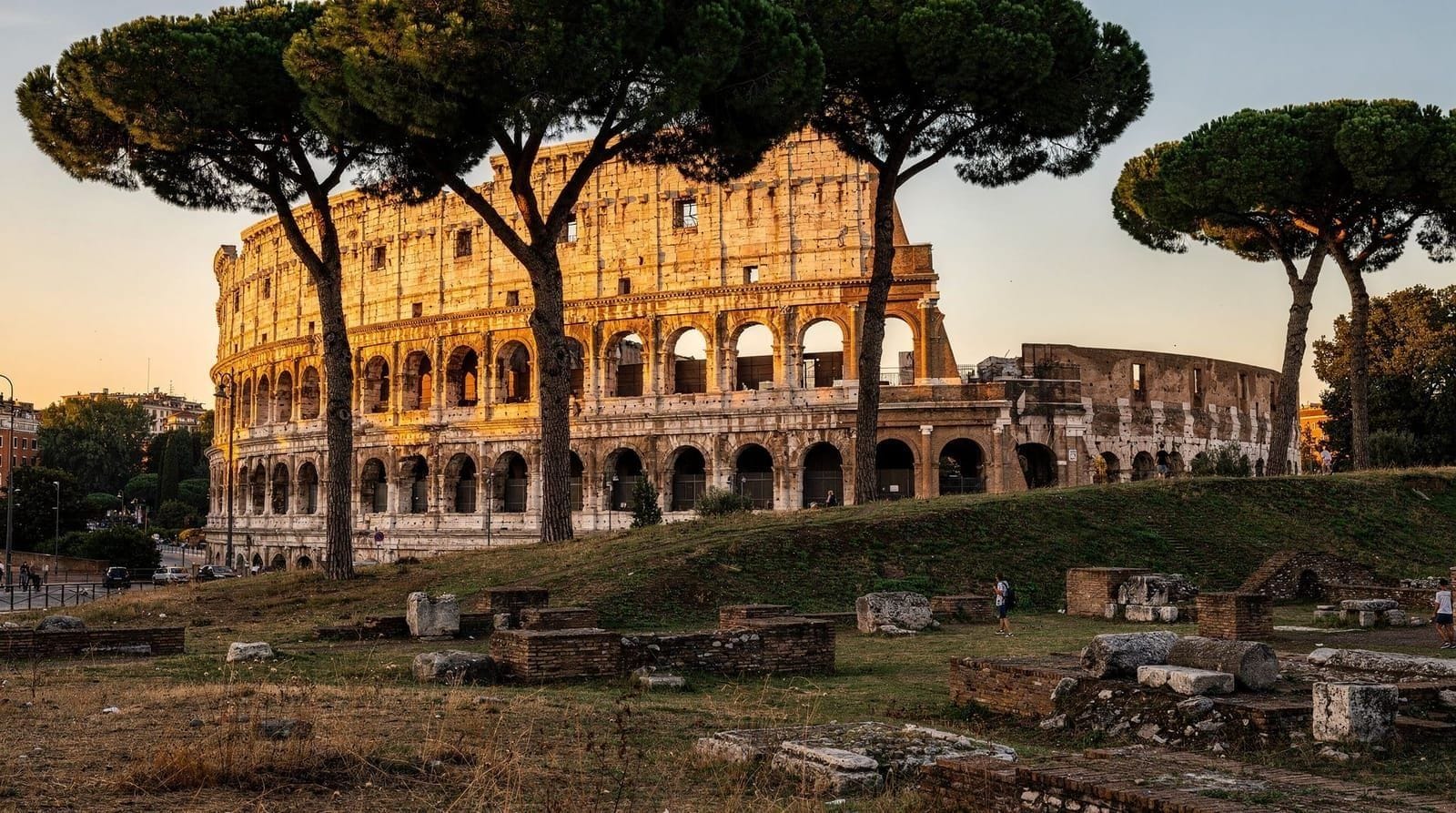
Generally no — a single day is better spent on the Colosseum, Forum and centro storico. The Appia is a strong choice for a second or third day, or for a slower-paced trip; see how many days in Rome for how it fits into a longer stay.
Top experiences
Bookable activities with verified prices and instant confirmation on GetYourGuide.