Monti neighborhood guide: Rome's coolest central quarter
Rome: E-Bike Tour of the Seven Hills
Duration: 3 hours
Why is Monti considered Rome's best neighborhood to stay in?
Monti combines genuine local character with exceptional transport connectivity: 10 minutes walk to the Colosseum, Metro B access (Cavour stop), a concentration of independent restaurants and aperitivo bars, and mid-range hotel prices lower than Centro Storico. It has almost none of the weekend noise problems of Trastevere.
The neighborhood most visitors should be staying in
Ask a Rome-experienced traveler — not a guidebook, not a booking platform, someone who has been to Rome multiple times — where they stay. The answer, more often than any other, is Monti.
Monti is Rome’s oldest rione (administrative quarter), sitting between the Colosseum, Termini station, and the Esquiline Hill. It has been a working-class Roman district since antiquity — the subura of the ancient city, known for its density, its markets, and its distance from the patrician hills. Today it has evolved into something more interesting: genuinely local, with independent boutiques and aperitivo bars, and simultaneously one of Rome’s most strategic bases for anyone trying to see the city efficiently.
This guide covers everything about staying in and experiencing Monti — from specific hotel recommendations with honest price ranges to which piazzas have aperitivo worth sitting at, to how the neighborhood fits into a multi-day Rome itinerary.
| Where | Between the Colosseum, Termini and the Esquiline Hill |
| Cost to stay | Around €90–260/night depending on category |
| Transport | Metro B (Cavour), bus corridor on Via Nazionale |
| Walk to Colosseum | About 10 minutes |
| Best for | Stays of 3+ nights wanting local character with connectivity |
The geography of Monti: how it works
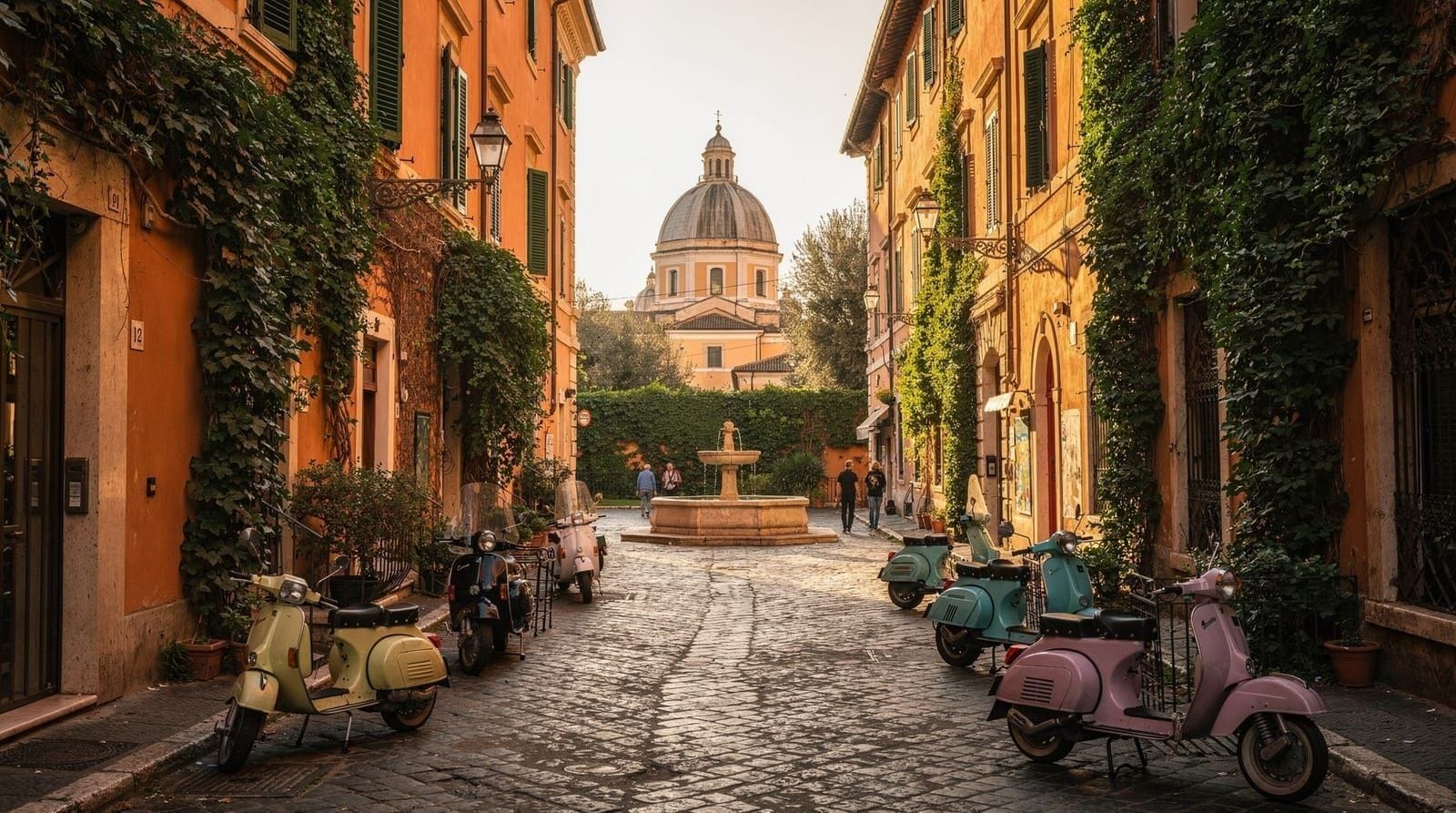
Monti occupies the triangular zone between Via Cavour (east), Via dei Fori Imperiali (south), and Via Nazionale (north). Its main streets are Via del Boschetto, Via Panisperna, Via Leonina, and the smaller lanes between them, all converging on two key piazzas: Piazza della Madonna dei Monti (the social center, with a 16th-century fountain and café tables) and Piazza degli Zingari (quieter, more residential).
The neighborhood is compact — you can walk from one end to the other in 12 minutes. This is not a large area to explore; it is a dense one.
Street numbering in Monti follows the same logic as the rest of central Rome (odd on one side, even on the other), but be aware that some of the smaller lanes change name every 50–100 meters, so a paper map or offline map app helps more here than in the wider boulevards of Prati or EUR.
What surrounds Monti:
- The Colosseum and Roman Forum are 10 minutes’ walk south — closer than almost any other residential neighborhood in central Rome
- Termini station is 15 minutes northeast — useful for day-trip trains
- Via Nazionale bisects the northern edge, providing bus connections west toward Centro Storico
Where to stay in Monti: real recommendations
Monti’s accommodation scene has grown significantly in the past decade, from a handful of guesthouses to a proper mix of boutique hotels, B&Bs, and design properties. Prices are generally 20–30% below equivalent quality in Centro Storico.
Hotel Lancelot (via Capo d’Africa 47) — not technically inside the Monti core but at its Colosseum-adjacent southern edge. Consistently one of Rome’s best mid-range hotels: excellent breakfast, a garden terrace, and genuinely attentive service. Run by the same family for decades. €160–240/night in peak season. Book 2–3 months ahead.
Nerva Boutique Hotel (via Tor de’ Conti 3) — well-positioned in the Monti core near the Imperial Fora. Clean, modern interiors, professional staff. Good value for the location. €130–190/night.
The Fifteen Keys Hotel (via della Madonna dei Monti 26) — boutique hotel directly on the main piazza. Contemporary design in a historic building. Some rooms have piazza views (ask). Breakfast included. €180–260/night; the piazza-facing rooms command a premium.
Hotel Artorius (via del Boschetto 30) — solid mid-range in the heart of Monti’s restaurant street. Comfortable rooms, friendly management. €110–170/night.
Domus Carvi — smaller B&B option on a quiet residential street. Simple rooms, honest prices. €90–130/night.
For apartments: Self-catering apartments in Monti have proliferated. Budget €100–160/night for a studio apartment with proper kitchen, and read carefully about stair access (many buildings have no lift and spiral medieval staircases).
Noise: The main via del Boschetto has bar noise until midnight–12:30 am on weekends. Side streets (via Baccina, via degli Zingari, via del Cardello) are quiet by 11 pm. This is considerably less disruptive than Trastevere.
The social center: Piazza della Madonna dei Monti
The piazza is where Monti happens. The 16th-century fountain (Giacomo della Porta, 1588) is surrounded on three sides by café tables, and from early evening it fills with aperitivo drinkers — a mix of local Romans, expats who live in the neighborhood, and visitors who have been told to come here.
The quality of aperitivo drinking on this piazza is genuinely good. Costs run €6–9 for a glass of wine, beer, or Aperol Spritz, with small plates often included. Compare that to the identical spritz at €14 on Piazza Navona.
Ai Tre Scalini (via Panisperna 251) — wine bar and trattoria that is Monti’s most beloved institution. Cramped, dark, excellent wine list, affordable food. Standing room only on a busy evening. Go early (7 pm) or late (9:30 pm) to get a table. A proper local Roman bar.
Pizzarium (via della Meloria) — technically this is in the Prati area, but worth mentioning as a model: Bonci’s pizza al taglio changed how Rome thinks about the form. In Monti, the pizza al taglio options on Via Leonina are solid.
Eating in Monti: where to go
Monti has a disproportionately good restaurant scene for its size — one of Rome’s best concentrations of genuinely Italian-focused cooking, ranging from traditional Roman trattoria to modern iterations of classic recipes.
Arcangelo Cucina (via Baccina 26) — probably the most important restaurant in the neighborhood. Roman classics (carbonara, cacio e pepe, offal preparations for the adventurous) cooked with intelligence. Small, often full. Reservations recommended. €40–55 per person with wine.
Flavio al Velavevodetto (via di Monte Testaccio) — technically in Testaccio but an easy 20-minute walk from Monti and worth including. Quintessential Roman trattoria built into the Monte Testaccio (a hill made of ancient amphora sherds). The rigatoni con pajata is famous.
Mercato Monti — a weekend market (Saturday and Sunday, 10 am–8 pm roughly) held at Hotel Palatino, via Leonina 46. Vintage clothing, design objects, food stands. Worth visiting on a Sunday morning.
Pasticceria Regoli (via dello Statuto) — near the Monti/Esquilino border; one of Rome’s older pastry shops. Maritozzi (sweet buns with cream) are what to order.
Transport from Monti: why it works so well
Monti’s transport connectivity is the practical argument for staying here, especially for visitors with an itinerary that spans multiple parts of the city.
Metro B — Cavour stop: A 5-minute walk from most of Monti. Connects north to Termini (Metro A interchange) and south toward EUR. Change at Termini for Metro A (Vatican/Ottaviano, Spanish Steps/Spagna, Borghese Gallery area).
Via Nazionale bus corridor: The northern edge of Monti. Multiple bus routes (40, 64, 70, H, and others) run west toward Centro Storico and Campo de’ Fiori, and east toward Termini.
Walking range: The Colosseum is genuinely 10 minutes on foot. The Roman Forum entrance is 12 minutes. Via dei Fori Imperiali is the straight line between Monti and the ancient sites — one of Rome’s great walks.
To the Vatican: Metro B from Cavour to Termini (3 minutes), then Metro A to Ottaviano (12 minutes). Total: about 20 minutes door to Vatican Museums gates.
An e-bike tour of Rome’s seven hills starts near the Colosseum and sweeps through the Aventino, Testaccio, and Gianicolo — an efficient way to understand the city’s geography on a first or second day, with Monti as a natural starting and ending point.What makes Monti genuinely local
Several things distinguish Monti from Rome’s more tourist-saturated neighborhoods:
The independent boutiques: Via del Boschetto and via Panisperna have a cluster of genuinely independent shops — ceramics, vintage clothing, books, artisan jewelry. Not many, but concentrated enough to make a browse worthwhile. Openings: typically 10:30 am–1 pm and 4–8 pm (standard Roman retail hours).
The residents: Monti still has a substantial permanent resident population — families, elderly Romans who have lived here for generations, young professionals who moved in as rents increased elsewhere. The neighborhood feels inhabited rather than staged.
The morning market: A small daily market on via Leonina sells produce, cheese, and household goods primarily to local residents. Go between 8–11 am for the full experience.
Via Panisperna: This street has its own micro-character — steeper than the Monti flatlands, with a more residential feel and fewer tourist facilities. The bar Ai Tre Scalini is here. At the top, it connects to the Esquiline area and the Basilica of Santa Prassede — one of Rome’s most undervisited early medieval churches, with extraordinary 9th-century mosaics.
Monti as a base: how it fits a Rome itinerary
Monti works as a base for any length of stay. Here is how a typical itinerary looks from here:
Day 1 (arrive, orient): Walk south to the Colosseum complex for the afternoon, return via the Roman Forum overlook. Dinner at Arcangelo. Aperitivo at Ai Tre Scalini.
Day 2 (Vatican): Metro B to Termini, Metro A to Ottaviano. Full morning at the Vatican Museums (book in advance — essential). Afternoon in Prati for lunch and Castel Sant’Angelo. Return by bus or Metro.
Day 3 (Centro Storico): Walk north via Via Nazionale or bus 40 to Largo Argentina. Day in the historic center — Pantheon, Piazza Navona, Trevi Fountain. Evening in Trastevere (tram 8 from Largo Argentina, 10 minutes).
Day 4 (day trip): Termini is 15 minutes on foot for trains to Tivoli, Ostia Antica, or Naples for the Pompeii connection.
For full planning, see our Rome itinerary planning guide.
Monti vs. alternatives
Monti vs. Trastevere: Both have genuine character. Trastevere has more atmosphere and better food concentration; Monti has better transport and lower noise. For stays of 5+ nights, Monti wins on practicality. For a romantic 2-night break where dinner and ambience matter more than commuting efficiency, Trastevere.
Monti vs. Centro Storico: Centro Storico is more central to the classic sights but 30–40% more expensive and noisier on weekends. Monti compensates with Metro access.
Monti vs. Prati: Prati is for Vatican access. If you are spending 3 of 5 days around the Vatican, Prati makes more sense. If your itinerary is balanced across the city, Monti is better connected.
Monti vs. Testaccio: Testaccio has Rome’s best food-and-market culture and a similarly local feel, but weaker Metro access to the historic center — Monti wins for travelers prioritizing transport, Testaccio for travelers prioritizing food. See our Testaccio neighborhood guide and Testaccio food guide for the case for staying there instead.
See our full where to stay in Rome comparison for a complete breakdown.
A golf cart tour with a local guide covers the city’s major highlights efficiently — a good way to get a broad orientation on arrival before settling into Monti’s quieter rhythm.The honest caveats
Via Nazionale is busy: The street bordering Monti to the north is a major bus corridor — traffic, noise, and commercial strip. Hotels on Via Nazionale itself are convenient but not atmospheric. The Monti neighborhood proper starts about 100 meters south of Via Nazionale.
The staircase problem: Monti’s streets descend from the Esquiline hill, which means uneven terrain and stairs in some areas. Not an issue for most travelers but worth noting if mobility is a concern.
High season booking: The best hotels (Lancelot, Fifteen Keys) fill 2–3 months ahead for June–September stays. Book early.
Construction noise: Several buildings near Via dei Fori Imperiali have been in ongoing restoration since the late 2010s. Check if your hotel has a specific noise concern before booking.
Things to see in Monti beyond the bars
Monti is not primarily a sightseeing neighborhood — it is a living one — but several attractions sit within or immediately adjacent:
Basilica di Santa Prassede (via di Santa Prassede 9) — one of Rome’s most important early medieval churches, built 822 CE, containing 9th-century Byzantine-influenced mosaics in the apse and in the Chapel of St. Zeno that are comparable in quality (and significantly less visited) to those in the Vatican. The Chapel of St. Zeno was known as “the garden of paradise” by medieval pilgrims. Entry is free. Opens from 7:30 am; most visitors walk straight past the entrance. Do not.
The Imperial Fora overlook (via dei Fori Imperiali) — Monti’s southern edge borders the Imperial Fora, the sequence of forums built by Caesar, Augustus, Nerva, and Trajan. The Via dei Fori Imperiali cuts through them (controversially — Mussolini built the road in the 1930s, destroying medieval structures above the buried Imperial Fora). The archaeological park along the road gives partial access and the views from street level are significant. The Forum of Trajan includes Trajan’s Column (2nd century CE, still standing at 38 meters), visible from the road.
Domus Romane di Palazzo Valentini (via IV Novembre 119) — directly on Monti’s northern edge, this is an underground archaeological site with the excavated remains of two patrician Roman houses from the Imperial period. A high-quality multimedia presentation reconstructs the original interiors. Entry €12; book ahead. See our Domus Romane guide.
Colosseum, Roman Forum, Palatine Hill — the essential archaeological circuit, 10 minutes’ walk from Monti. See our full guide and Roman Forum guide.
Monti in different seasons
Monti works at any time of year. The neighborhood is residential enough that its character does not fundamentally change with tourist seasons — the bars and restaurants remain primarily local-focused regardless of whether July brings tourist overflow. That said:
April–May and September–October are ideal: mild temperatures, good light, lower accommodation prices than peak summer, and a city that functions at normal pace rather than saturated. The outdoor tables on Piazza della Madonna dei Monti are particularly good in the early evening light of autumn.
July–August is hot (regularly 32–36°C) and the city slows. Some restaurants close for August or reduce hours. The Colosseum is even more crowded than usual. The silver lining: some of Monti’s local restaurants and bars maintain their character regardless of tourist season, and the cooler stone streets are a refuge in midday heat.
The neighborhood’s character: why people come back
More than any other Rome neighborhood except perhaps Testaccio, Monti rewards return visits. The first visit is about using it as a base. The second is about sitting at Piazza della Madonna dei Monti at 7 pm with a glass of Frascati and noticing how the light hits the fountain. The third is about finding your regular breakfast bar on via Baccina and the aperitivo table you prefer at Ai Tre Scalini.
That kind of accumulated local knowledge — the slow accumulation of places that are yours — is what neighborhoods like Monti exist for. Trastevere can feel like a stage set; Monti still feels like a place people actually live.
Monti with families or on a tighter budget
Monti works reasonably well for families, though it is not purpose-built for them the way some Prati or EUR hotels are. The advantages: short walking distances mean less carrying tired children, the Colosseum’s proximity makes an early-morning visit (before the worst heat and queues) easy to combine with a nap-friendly return, and Piazza della Madonna dei Monti has enough open space for children to move around while adults finish a coffee. The disadvantages: many buildings lack lifts, cobbled streets are hard on strollers, and the best restaurants are small and better suited to adults lingering over wine than a family dinner on a schedule.
For a tighter budget, Monti is more forgiving than Centro Storico or Trastevere. A realistic daily budget for two adults staying in a mid-range Monti hotel, eating one sit-down meal and one quick lunch, and using public transport runs approximately €180–260/day including accommodation — noticeably below equivalent quality nearer the Pantheon or Piazza Navona. Aperitivo at Piazza della Madonna dei Monti (€6–9 per drink, often with food) is one of the better value evenings in central Rome.
Practical logistics: arriving and getting oriented
Most visitors reach Monti one of three ways. From Fiumicino airport: the Leonardo Express train to Termini (about 32 minutes), then a 15-minute walk or one Metro B stop to Cavour. From Ciampino: a bus or taxi to Termini, same onward route. By taxi from either airport: expect roughly €50–60 to a Monti address, flat rate from Fiumicino.
Once settled, orientation is quick because the neighborhood is so compact. Spend the first hour walking the triangle bounded by Via Cavour, Via Nazionale, and Via dei Fori Imperiali — it takes under 20 minutes end to end and gives you a mental map for the rest of the stay. Use the fountain in Piazza della Madonna dei Monti as your reference point; almost everything worth knowing is within 300 meters of it.
Luggage and check-in: many Monti buildings are historic with no lift and narrow stairs (noted above), so confirm with your accommodation whether luggage assistance is available, especially for stays above the second floor. Most boutique hotels offer help; independent apartments often do not.
For a broader first-timer’s framework — how to sequence sights, how many days to allow, and which neighborhoods pair well together — see our guide for first-time visitors and our notes on getting around Rome by metro, bus and on foot.
Frequently asked questions about Monti neighborhood guide: Rome's coolest central quarter
Is Monti a good area to stay for first-time visitors?
What is Monti like at night?
How do I get from Monti to the Vatican?
What are the best restaurants in Monti?
Is Monti expensive to stay in?
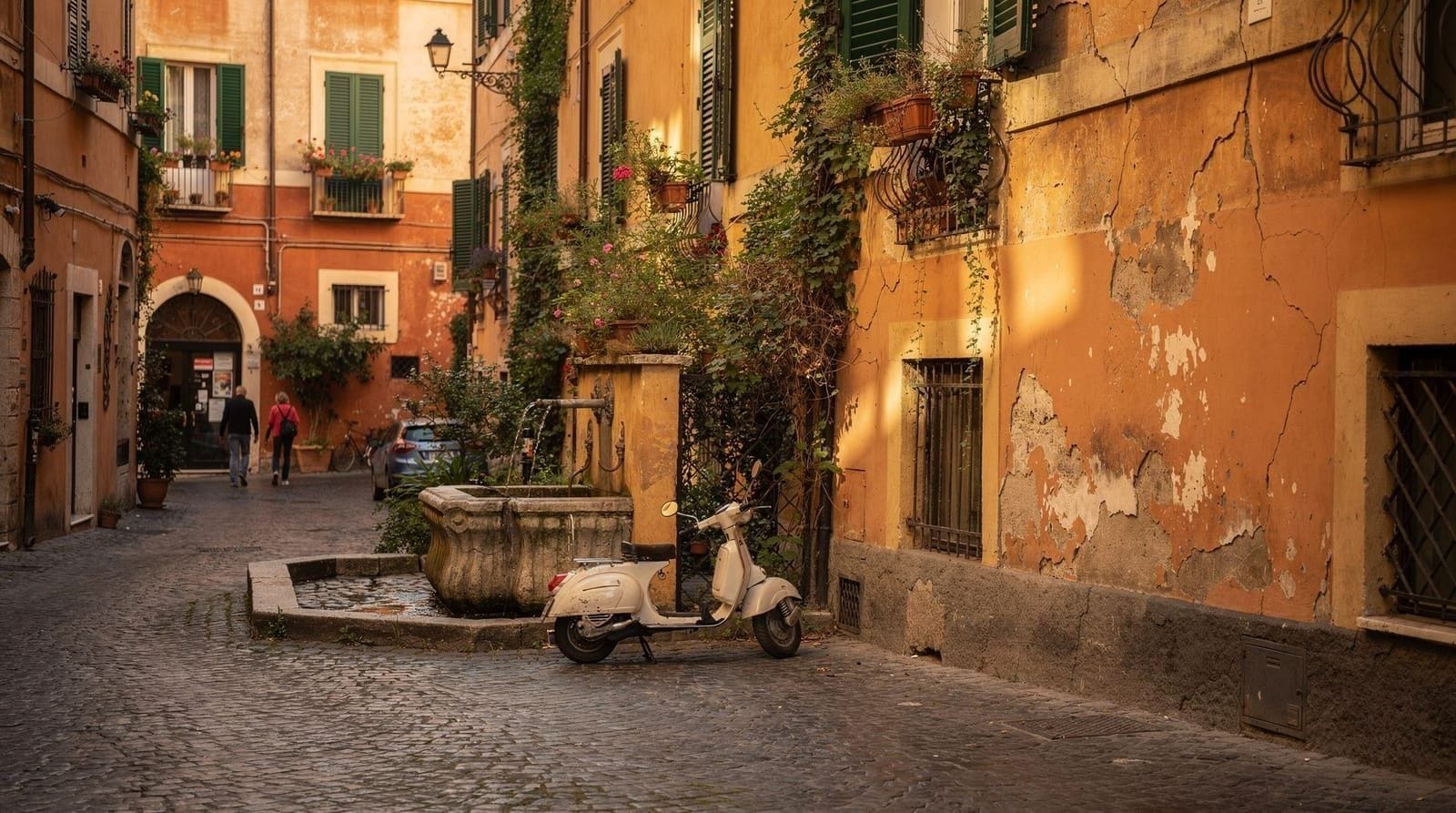
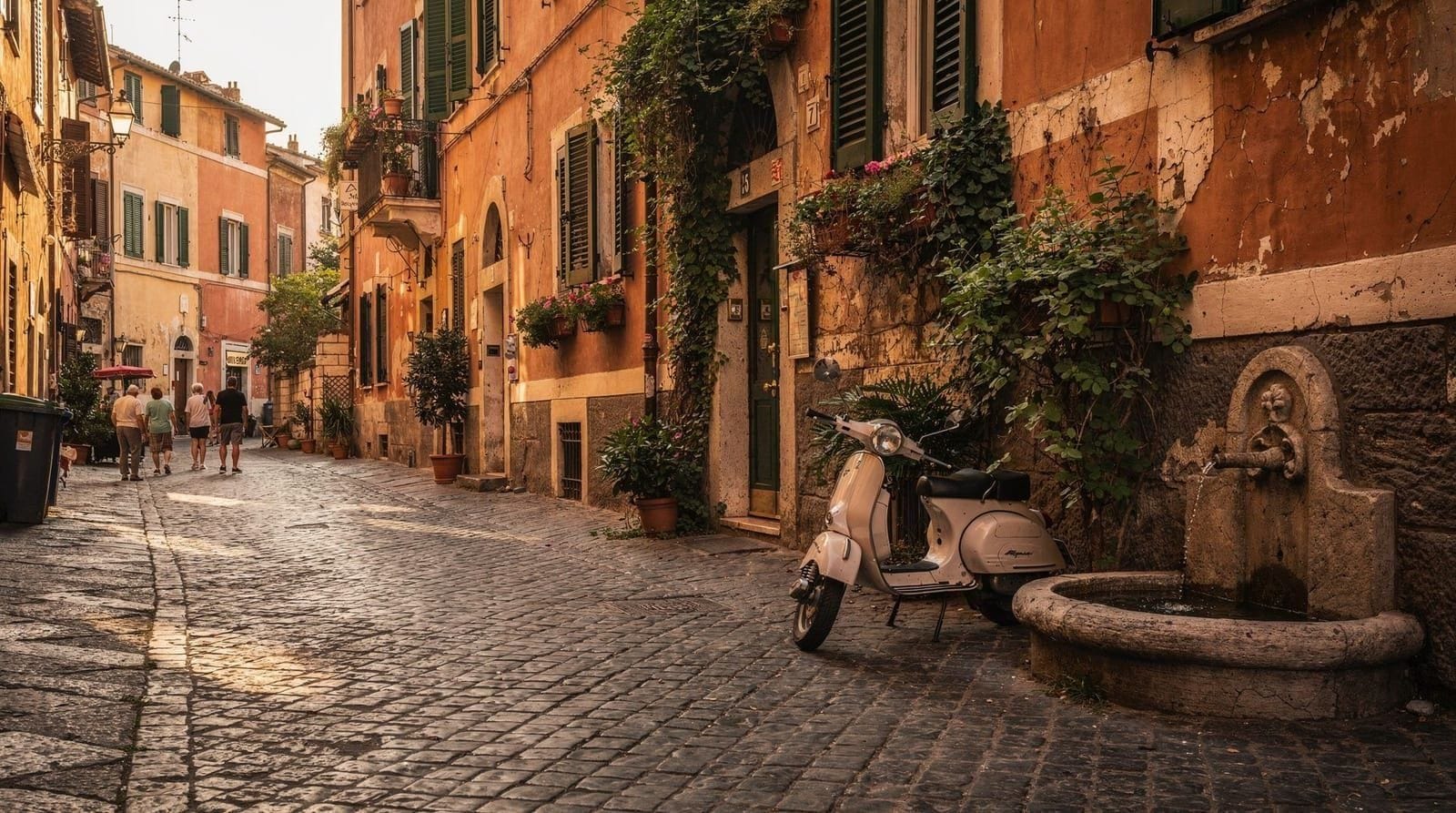
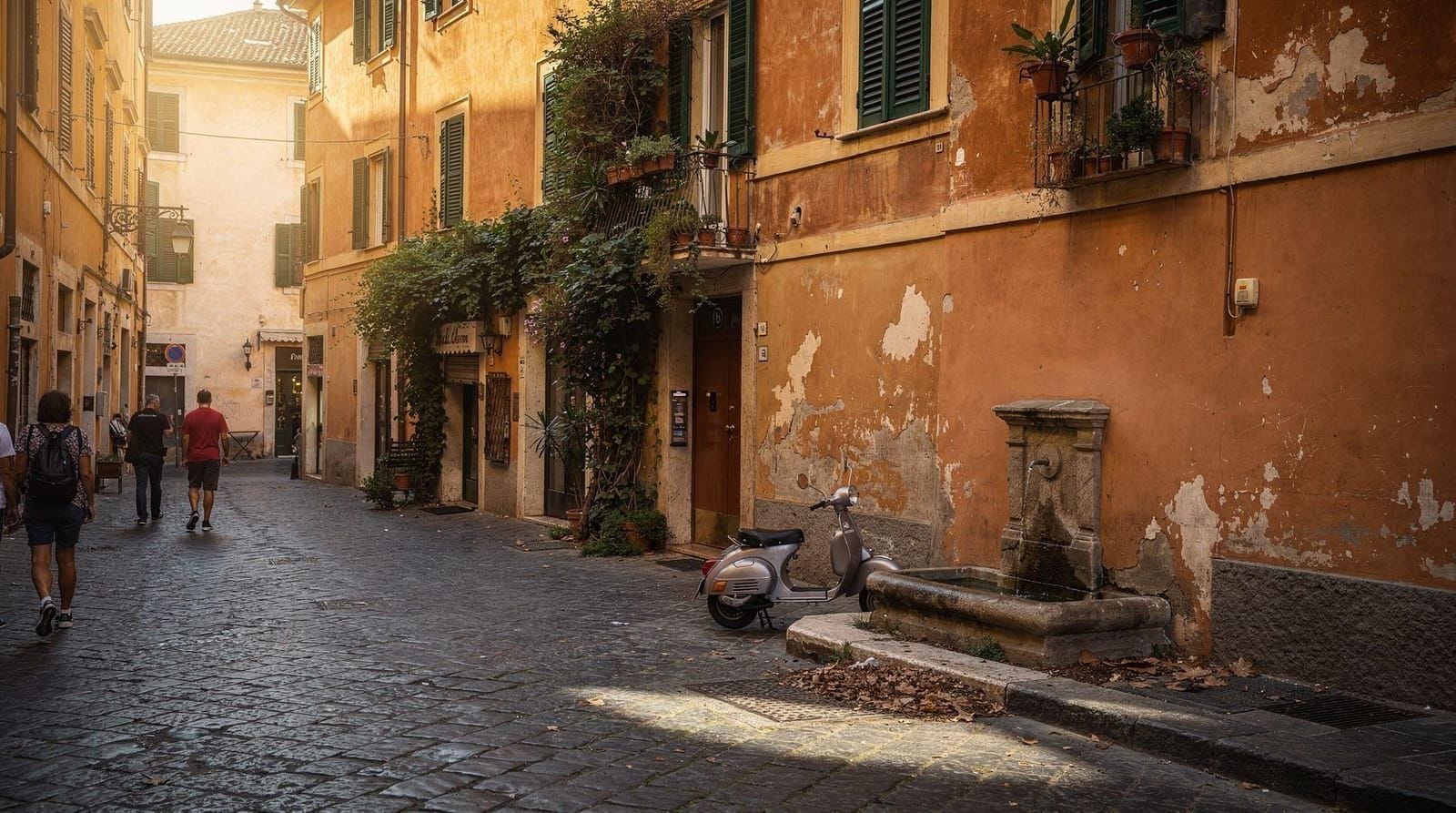
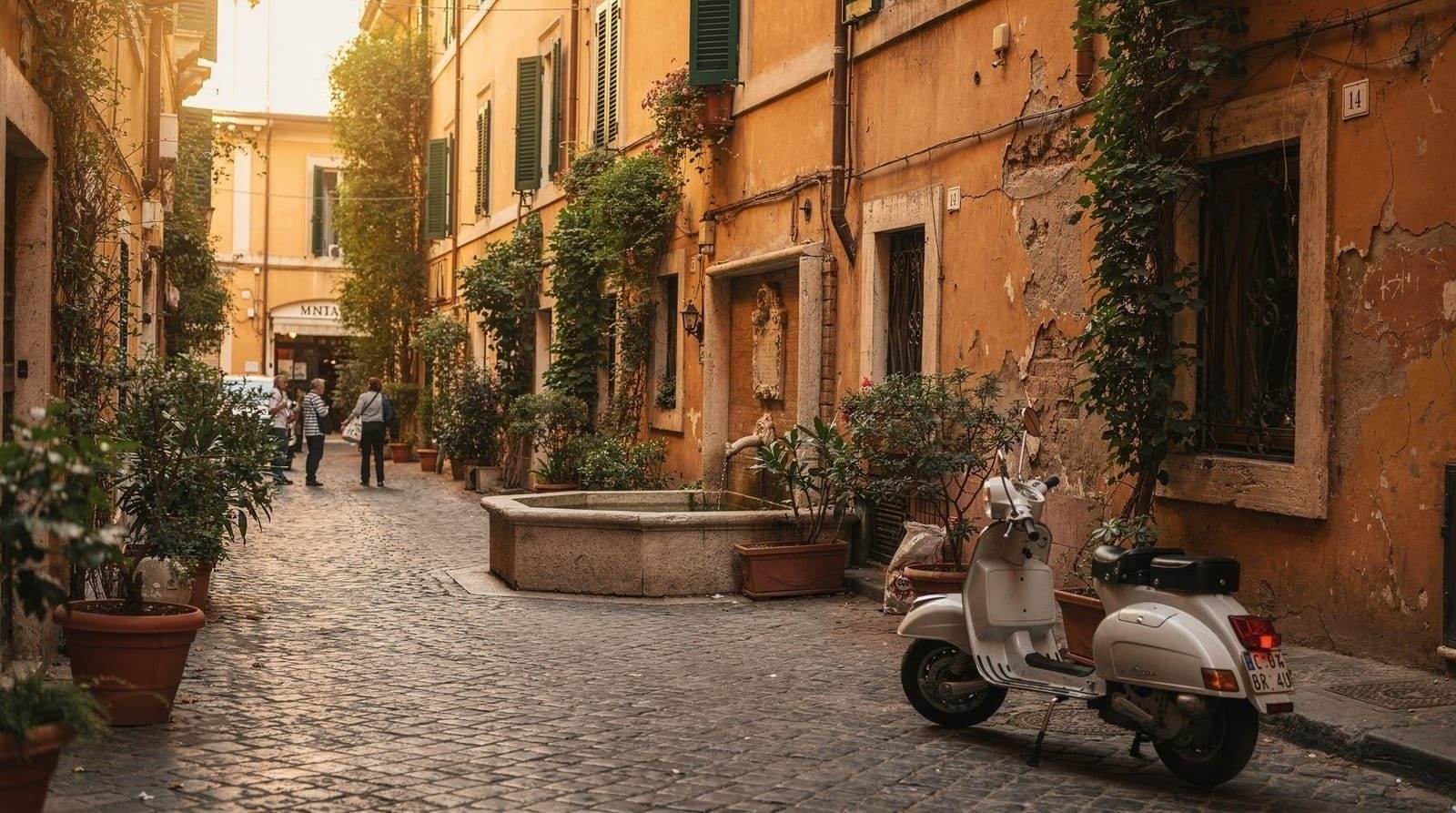
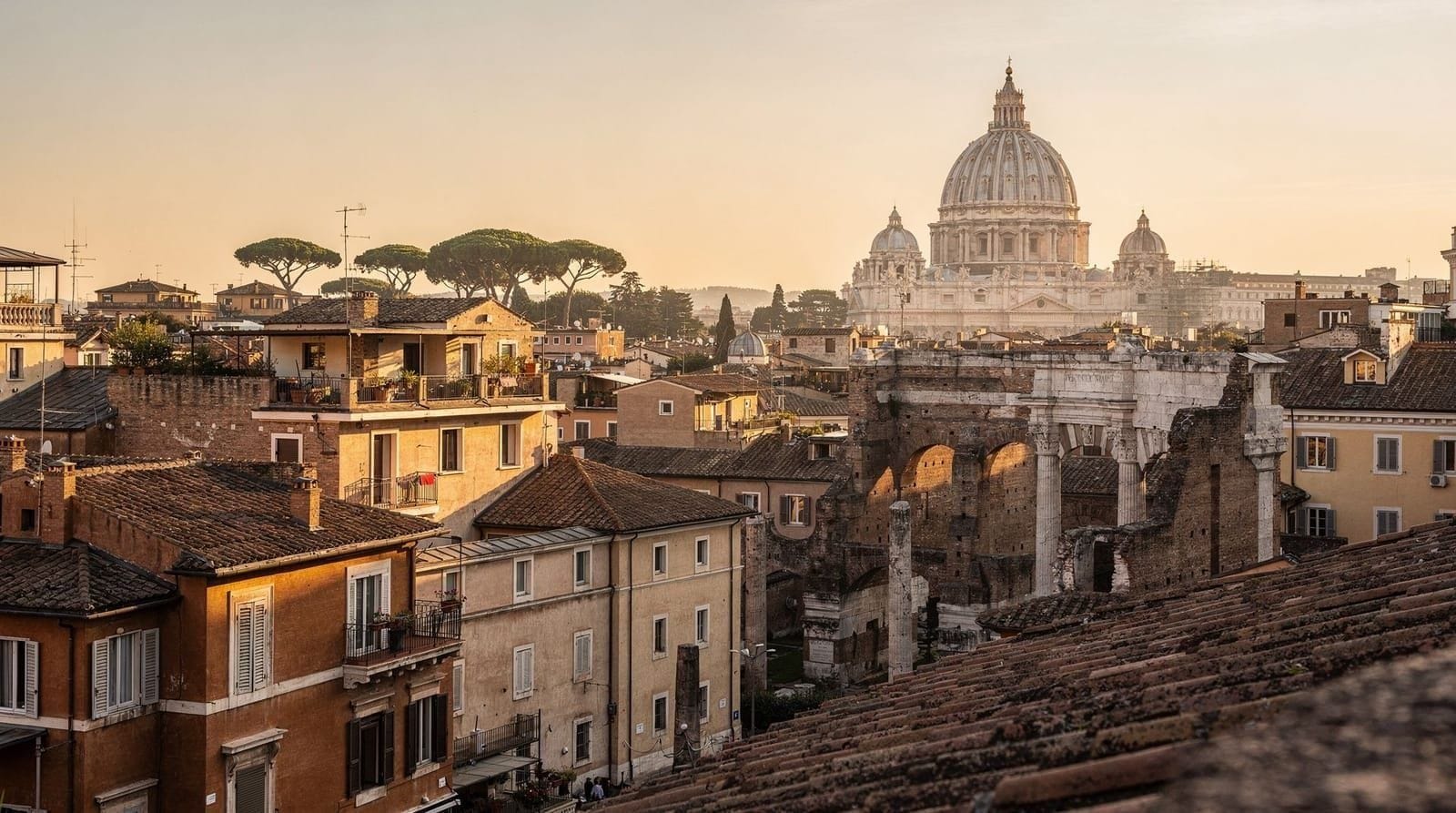
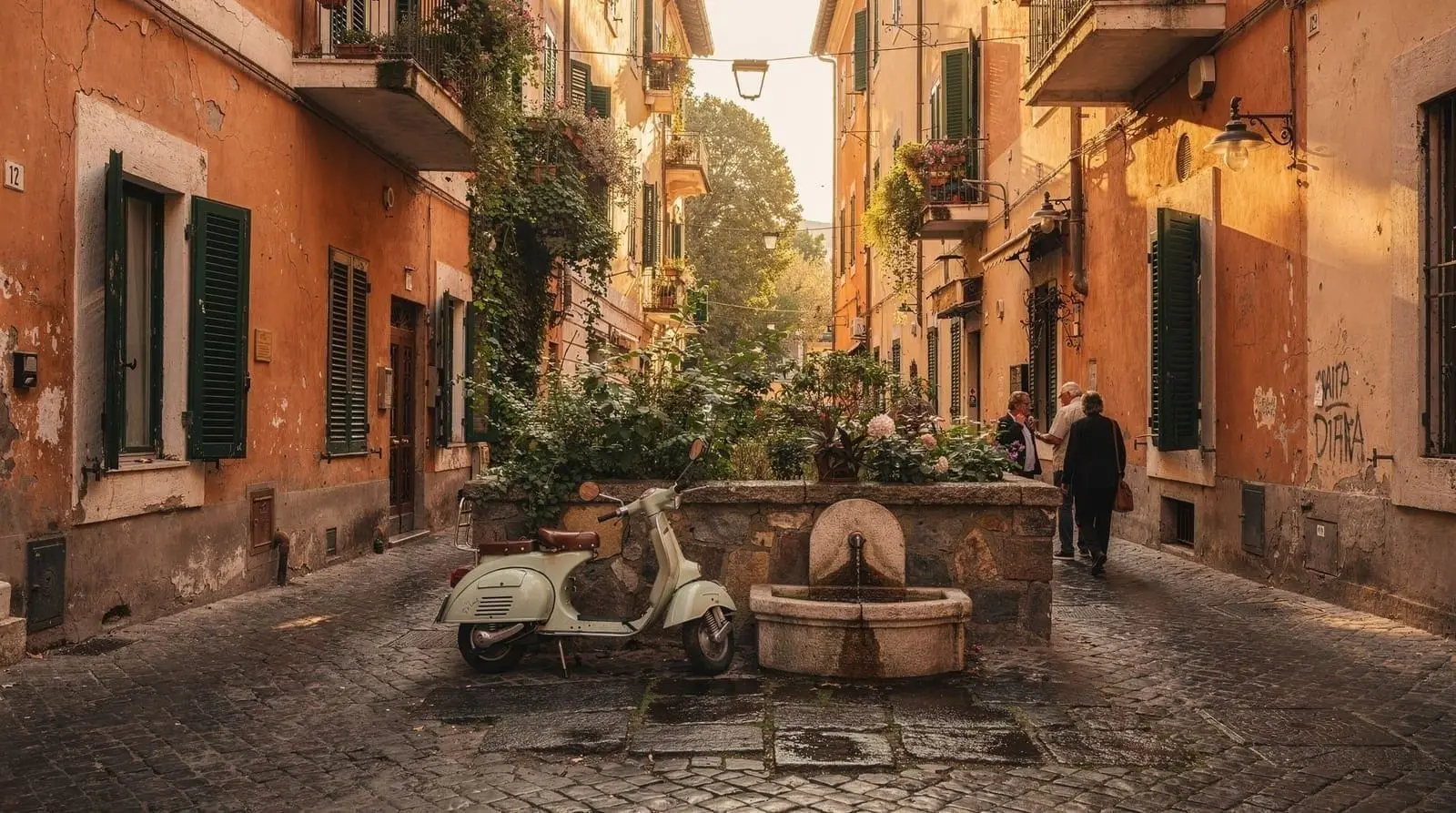
What does Monti look like — is it as photogenic as Trastevere?
Top experiences
Bookable activities with verified prices and instant confirmation on GetYourGuide.