Testaccio neighborhood guide: food, markets and real Rome
Trastevere: Food and Drink Tour
Is Testaccio worth staying in or visiting?
Testaccio is Rome's most authentically food-focused neighborhood — built around a historic market, with trattorias serving real Roman cuisine at honest prices, almost no tourist-oriented restaurants, and a genuine working-class character. It is excellent for food travelers and a good base for longer stays. It is 20 minutes on foot from the Colosseum and 10 minutes from the Aventino.
Where Romans actually eat
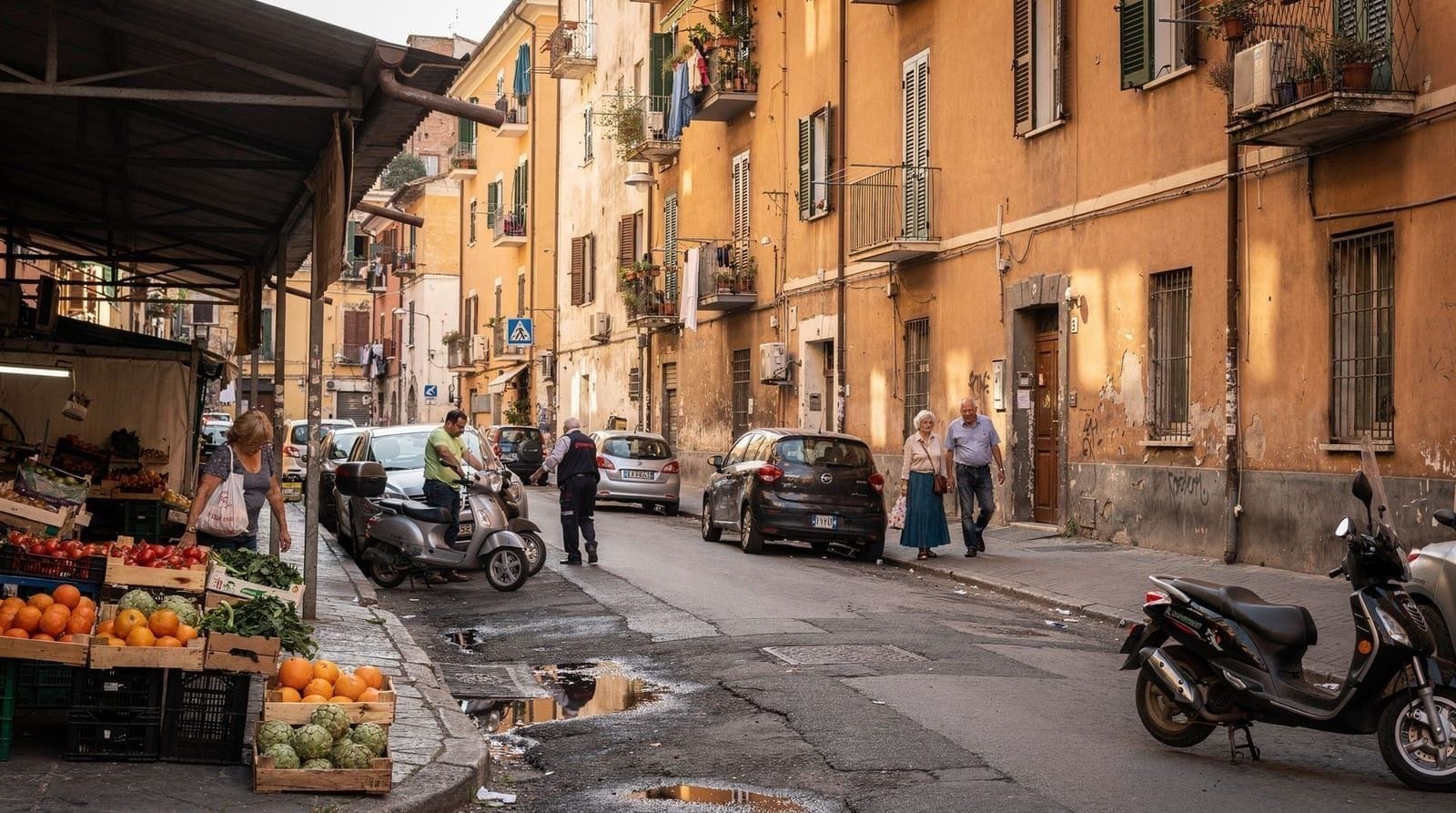
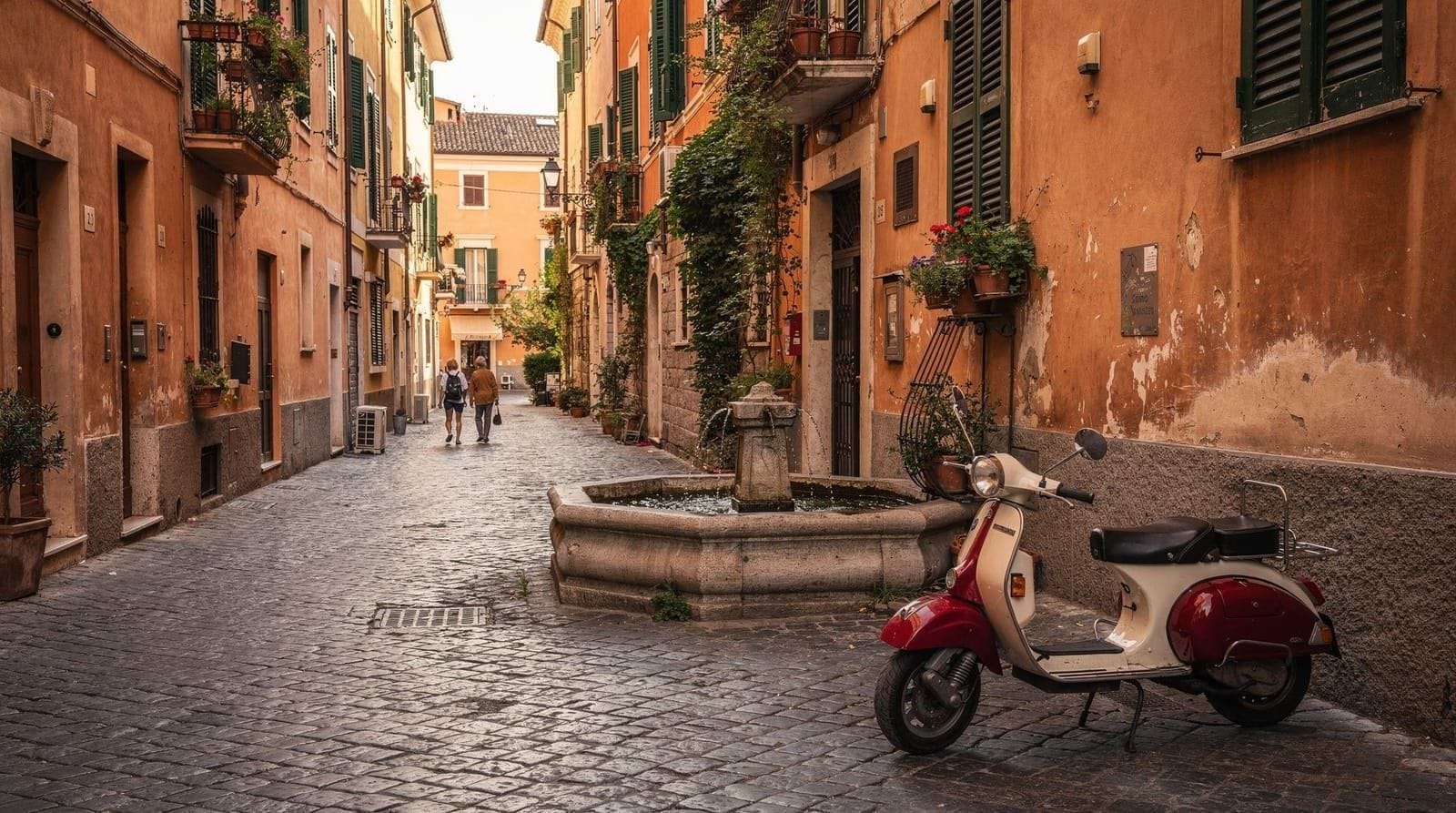
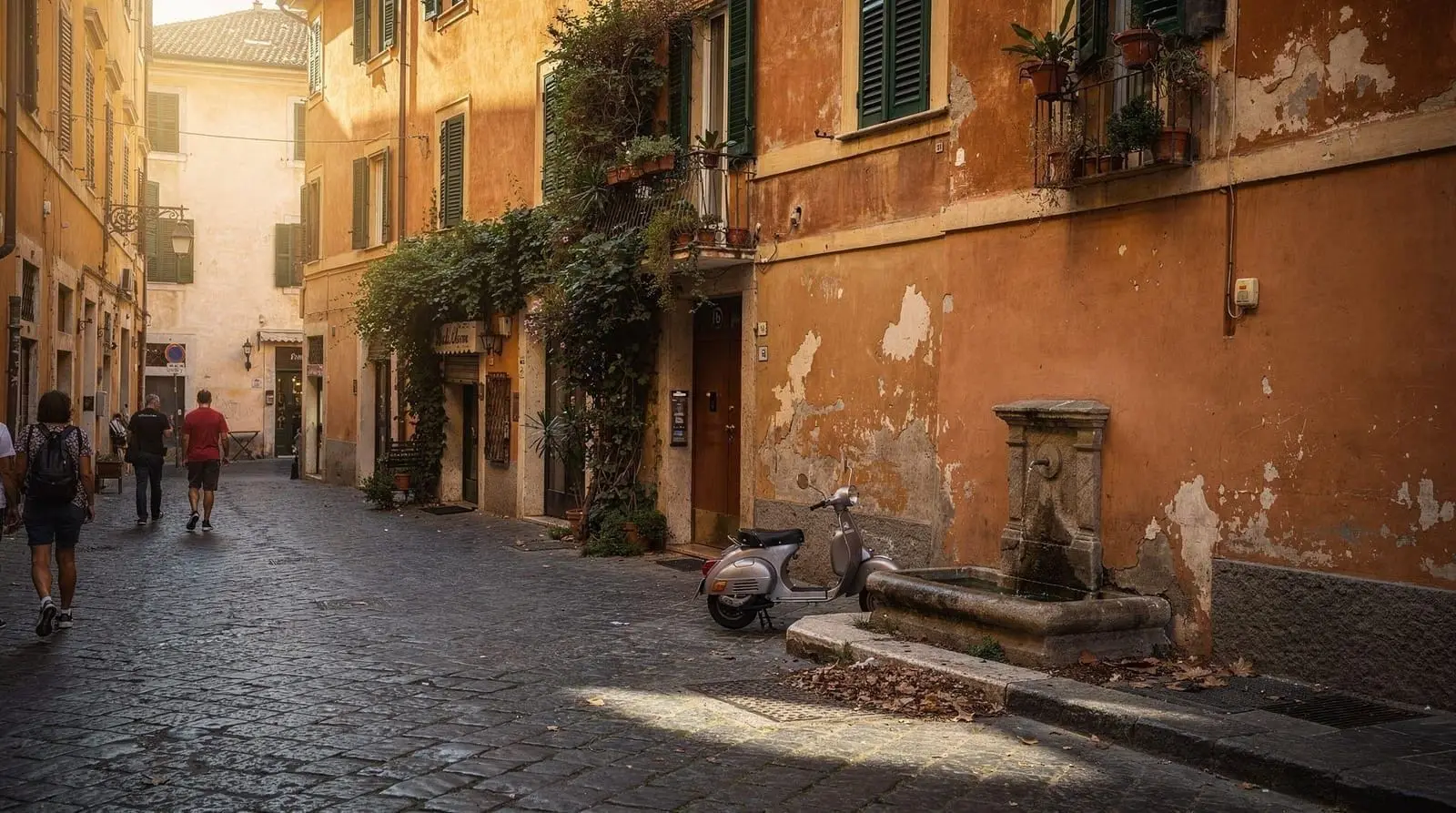
There is a Rome that tourists visit and a Rome where Romans live. The two overlap more in Testaccio than anywhere else in the city. This is not a neighborhood that has positioned itself for tourism — it exists for its residents, and visitors who find their way here are discovering something that has not yet been optimized for external consumption.
| Where | East bank of the Tiber, south of the Aventine Hill |
| Cost | Trattoria meal €25–55/person; budget rooms from ~€80/night |
| Time needed | Half a day minimum; a full day for food + Aventine views |
| Getting there | Metro B to Piramide, or tram 3 from Trastevere |
| Best time | Weekday mornings for the market; evenings for aperitivo |
Testaccio was built in the late 19th century as a working-class district, planned on a grid (unusual for Rome) to house the workers of the nearby slaughterhouse complex. The slaughterhouse supplied Rome with meat for decades; the offcuts and organs that the wealthy wouldn’t eat became the basis of a distinct Roman culinary tradition — the quinto quarto (fifth quarter) cooking of Testaccio, which still defines the neighborhood’s restaurants today.
The slaughterhouse closed in 1975. Its buildings have since been converted into the Macro Testaccio contemporary art space, event venues, and Roma Tre University facilities. But the food culture it created remains: dense, honest, organized around the market and the trattoria.
The Mercato Testaccio: the heart of the neighborhood
The Testaccio Market moved in 2012 from its original outdoor location to a modern covered building on via Beniamino Franklin. The move was contentious among purists who mourned the old open-air arrangement, but the new market works well: covered, well-lit, organized, and genuinely serving the neighborhood rather than tourists.
What you find there: Fresh produce stalls (seasonal vegetables, herbs), meat vendors (including offal for the quinto quarto tradition), cheese and dairy, fish on certain days, pasta fresh-made, bread. And food stalls — this is the key.
The lunch situation: Several of the market stalls serve prepared food and the market has become popular as a lunch destination. Stalls to know:
Mordi e Vai (box 15) — Rome’s most celebrated sandwich vendor. Sergio Esposito fills rolls with braised meats: rigatoni con pajata, coda alla vaccinara, trippa alla romana. Arrive early (11 am opening) as popular choices sell out. Queue is normal and moves quickly. €4–7 per sandwich.
Supplì Roma has a location in the market — fried rice balls, the Roman street food standard. €2.50 each.
Box 69 (Alimentari) — traditional Roman deli with excellent porchetta sandwiches and cold cuts. €4–6.
The market operates Monday–Saturday, roughly 7 am–3 pm (some stalls close by 2 pm). Go between 10 am and 1 pm for the best selection and liveliest atmosphere. For the fullest breakdown of what to order, when to arrive, and which stalls sell out fastest, see our dedicated Testaccio food guide — this neighbourhood guide covers the wider area, while that one is entirely food-focused.
How Mercato Testaccio compares to Rome’s other markets
| Market | Character | Best for |
|---|---|---|
| Mercato Testaccio | Covered, modern, resident-focused | Authentic lunch, offal sandwiches |
| Campo de’ Fiori | Historic open-air square | Photogenic produce stalls, but touristy pricing |
| Mercato Trionfale | Large, near the Vatican | Serious grocery shopping, less atmosphere |
See our Rome’s best markets guide and Campo de’ Fiori market guide for the full comparison if you’re deciding which to prioritise.
The restaurants of Testaccio: where to eat
Testaccio has Rome’s highest concentration of genuinely Roman restaurants that primarily serve local customers. Prices are meaningfully lower than equivalent quality in Trastevere or Centro Storico.
Da Remo (piazza di Santa Maria Liberatrice 44) — the definitive Roman pizza experience in Testaccio. Thin-crust, wood-fired, supple and charred in the right places. Very busy, no reservations, arrive at opening (7 pm) or wait. Priced at €8–12 per pizza. The suppli to start are essential. Cash preferred.
Flavio al Velavevodetto (via di Monte Testaccio 97) — built into the cave of Monte Testaccio itself (the amphora hill). The setting is extraordinary: terracotta walls of ancient pottery fragments visible through glass. The food is serious Roman cooking: rigatoni con pajata (milk-fed calf intestines in tomato sauce — don’t knock it until you’ve tried it), coda alla vaccinara (braised oxtail), abbacchio alla romana (spring lamb). Book 3–5 days ahead. €40–55 per person with wine.
Checchino dal 1887 (via di Monte Testaccio 30) — Rome’s most historic restaurant for quinto quarto cuisine, operating continuously since 1887. The wine cellar is carved into Monte Testaccio. Slightly more formal than other Testaccio options; significantly more expensive (€60–90 per person). The menu is a lesson in the fifth quarter tradition.
Osteria degli Amici (via Nicola Zabaglia) — casual neighborhood osteria; good daily specials, honest prices (€25–35 per person); the kind of place where regulars have a usual table.
Barberini (via Nicola Zabaglia) — bakery and café that does Testaccio’s best breakfast; cornetti, coffee, and supplì al ragu at lunchtime.
Monte Testaccio and the nightlife question
Monte Testaccio — the 35-meter hill of ancient amphora shards — has had bars and clubs cut into its base since the 1980s. It was Rome’s main nightlife district for a decade or more. Today the scene has shifted somewhat, but on Friday and Saturday nights the streets around Monte Testaccio have noise until 2–3 am.
If you are staying in southern Testaccio near the Monte, book a room with internal-facing windows or soundproofing, or factor in the weekend noise. Weeknight noise is generally minimal outside of special events, so a mid-week stay avoids the issue almost entirely if flexible dates are an option.
Currently worth visiting: Rec 23 (via Galvani) — a converted auto-body shop with good cocktails and an aperitivo that rivals Trastevere’s Freni e Frizioni. A genuine social space for Romans in their 20s and 30s, and a useful reference point if you want to compare Testaccio’s evening scene directly against Trastevere’s better-known bars.
The aperitivo situation: Testaccio’s aperitivo culture is better than its reputation. Via Galvani has a concentration of bars with outdoor seating that fill from 6:30 pm onward. Not as atmospheric as Trastevere’s piazzas, but cheaper and more local. For the broader picture of how Rome’s aperitivo and nightlife scene works across neighbourhoods, see our Rome aperitivo and nightlife guide.
Where to stay in Testaccio
Testaccio accommodation is limited but expanding. The neighborhood does not have the same hotel density as Trastevere or Monti, but this also means lower prices.
Hotel Sant’Anselmo (piazza di Sant’Anselmo 2) — technically on the Aventine hill rather than Testaccio proper, but a 10-minute walk. One of Rome’s genuinely special small hotels: set in a 19th-century villa, with garden, terrace, and an atmosphere of removed calm. €180–260/night. Excellent for couples.
Hotel Aventino (via San Domenico 10) — sister property to Sant’Anselmo; similarly calm and garden-oriented; €150–220/night.
Villa San Pio (via Santa Melania 19) — a third property in the same family group on the Aventine; best value of the three; €140–200/night.
Residenze Gregoriane — small B&B in the Testaccio core; basic but honest; €80–110/night.
Apartments: Several well-run apartment rentals operate in Testaccio, particularly around via Marmorata and via Galvani. These offer kitchen facilities which make sense given the market proximity. Budget €90–150/night for a studio.
Who should and shouldn’t stay in Testaccio
Testaccio suits couples, food-focused travellers, and repeat visitors to Rome who have already covered the Colosseum-Vatican-Trastevere circuit and want a different, quieter angle on the city. It also suits longer stays (5+ nights) where the daily savings on food and accommodation add up and the extra walking time to the centre becomes less of a factor.
It suits first-timers less well. If this is your only trip to Rome and you have 2–3 days, the 20–30 minute walk (or a bus/tram connection) to the Colosseum and historic centre eats into limited time better spent walking between sights directly. Families with young children may also find the neighbourhood’s appeal — market food, offal restaurants, adult-oriented nightlife — less relevant than a base closer to family-friendly attractions. See our where to stay in Rome guide for how Testaccio stacks up against other options for your specific trip length and priorities.
Getting around from Testaccio
Metro B — Piramide stop: 8–10 minutes’ walk from most of Testaccio. Connects to Termini (Metro A interchange) in 3 stops. From Piramide you can also reach Colosseum by bus or walk 20 minutes.
Bus 23: Runs along Lungotevere, connecting Testaccio to Trastevere (10 minutes), Prati, and beyond.
Tram 3: Via Marmorata connects to the Colosseum area (Circo Massimo/Aventino tram stop) and east toward San Giovanni.
Walking: Circus Maximus is 15 minutes north. Trastevere is 20 minutes west across the Tiber. The Aventine Hill is a 10-minute walk uphill. The Colosseum is 25–30 minutes on foot through the Circus Maximus area. All of these are pleasant, flat or gently sloping walks along the Tiber or through quiet residential streets, so the distances feel shorter in practice than the raw minutes suggest, especially in cooler months.
An e-bike tour of Rome’s seven hills covers the Aventine, Testaccio, Gianicolo and Trastevere in a loop — the best way to understand the topography of this part of Rome and why Testaccio sits where it does.The MACRO Testaccio and cultural scene
MACRO Testaccio (piazza Orazio Giustiniani 4) — one wing of Rome’s contemporary art museum (the main MACRO is in Nomentano). The converted slaughterhouse spaces are architecturally interesting: high ceilings, industrial structure, repurposed functionality. Worth checking the current exhibition before visiting. Entry varies by exhibition.
ExPero (piazza dell’Emporio) — another converted slaughterhouse building used for events, exhibitions, and temporary installations. The architecture alone is worth seeing.
Centrale Montemartini (via Ostiense 106) — technically in Ostiense (neighboring district but easily walkable). This is one of Rome’s best museum experiences: ancient Roman sculpture displayed in a 1930s electricity plant, the contrast between marble figures and industrial machinery is genuinely arresting. Highly recommended and consistently undercrowded. Entry €7.50.
Testaccio for food travelers: the structured approach
If food is your primary motivation in Rome, a Testaccio day looks like this:
Morning (8–10 am): Mercato Testaccio for produce, cheese, and morning coffee at one of the market cafés.
Late morning (10 am–1 pm): Wander via Galvani and via Marmorata. Visit Centrale Montemartini if you want to build in culture.
Lunch (12:30–2 pm): Back to the market — Mordi e Vai for a braised meat sandwich, supplì at the market stall.
Afternoon (3–6 pm): Walk up to the Aventine Hill for the Keyhole view of St. Peter’s (via del Magistero, look through the keyhole of the Cavalieri di Malta gate — free, genuinely extraordinary). Rose Garden (Roseto Comunale, free in spring). Down to the Circus Maximus.
Evening: Aperitivo on via Galvani from 6:30 pm. Dinner at Da Remo (arrive at 7 pm sharp) or Flavio al Velavevodetto (book ahead).
For combining Testaccio with Trastevere, both neighborhoods are 20 minutes apart — a natural pairing for a full food-and-neighborhood day.
Testaccio vs. other neighborhoods
Testaccio vs. Monti: Monti has better transport and more boutique character. Testaccio has more authentic food and more genuine working-class Roman atmosphere. Both are excellent for people who are tired of tourist Rome.
Testaccio vs. Trastevere: Trastevere has more atmosphere and better accommodation options. Testaccio has cheaper and more honest food. Trastevere is louder on weekends. Testaccio’s nightlife noise is more localized to the Monte area.
Testaccio vs. Centro Storico: Not directly comparable — Testaccio is a destination for the fourth or fifth day of a Rome trip, not the first.
See our where to stay in Rome overview for the full neighborhood comparison.
While Testaccio’s food scene is best explored independently, a Trastevere food tour gives context on Roman culinary culture as a whole — the quinto quarto tradition, the pasta canon, the wine culture — that makes Testaccio’s restaurants more legible.The Ostiense and Pigneto connection
Testaccio borders Ostiense to the south, which is worth knowing because Ostiense has its own attractions:
Centrale Montemartini (via Ostiense 106) is a 10-minute walk from Testaccio and consistently one of Rome’s most pleasurable museum experiences. Ancient Roman sculpture — a substantial collection from the Capitoline Museums — displayed inside a 1930s electricity-generating plant. The contrast of marble first-century figures against industrial turbines and generators is arresting and deliberately staged. Entry €7.50 or combined ticket with the Capitoline Museums. Almost always uncrowded.
Pyramid of Cestius (piazza Ostiense) — a genuine ancient Egyptian-style pyramid, built as a tomb for Gaius Cestius around 12 BCE. The exterior is freely visible from the road; interior visits require booking (limited hours). The pyramid is adjacent to the Piramide Metro B stop, and the Non-Catholic Cemetery next to it (Cimitero Acattolico) contains the graves of Keats and Shelley — more visited for literary pilgrimage than as a cemetery, and genuinely calm and beautiful.
Ostiense itself has become one of Rome’s more interesting post-industrial neighbourhoods, with street art along via del Porto Fluviale (a former granary building covered in a large-scale mural), a growing cluster of design-forward bars, and easy access to Roma Tre University’s student energy. It doesn’t have Testaccio’s food pedigree, but it makes a logical extension for anyone with an extra hour after Centrale Montemartini or the pyramid, especially those interested in contemporary Rome rather than only the ancient or Baroque city.
The quinto quarto tradition: what it means to eat in Testaccio
Understanding why Testaccio’s food culture is distinctive requires understanding the quinto quarto (fifth quarter). When the slaughterhouse distributed its production, the best cuts went to the wealthy. Workers were often paid partially in kind — receiving the offal, tail, tripe, trotters, and organs that the wealthy refused. The fifth quarter is what remained after the four commercial quarters (front and rear quarters of beef) were sold.
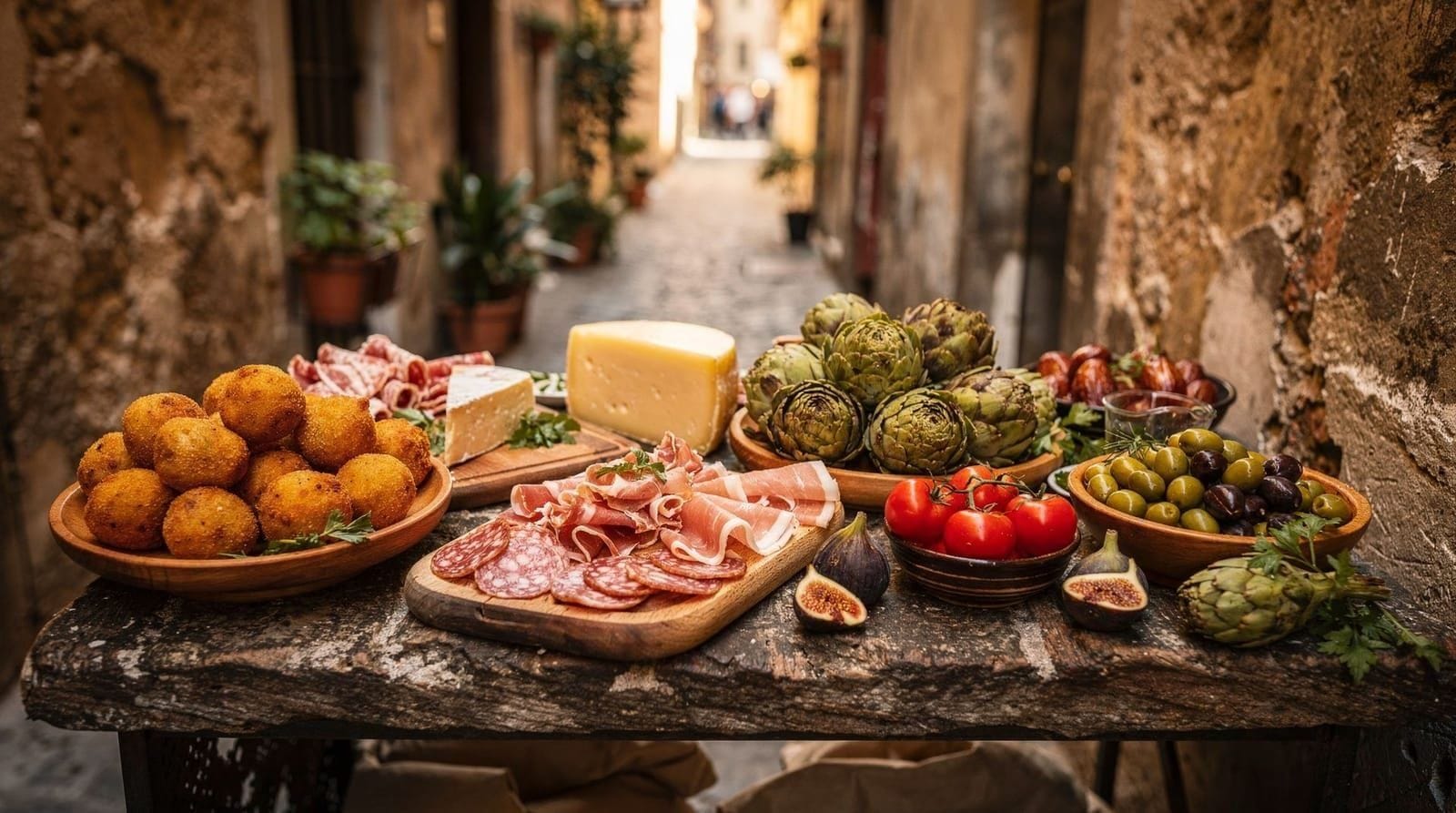
This is not nostalgic poverty tourism. The dishes developed from necessity became — as often happens in Italian regional cooking — genuinely good: carefully prepared, long-cooked, flavored with tomato, celery, and local herbs. Coda alla vaccinara (braised oxtail with tomato and celery) is one of Rome’s great slow-cooked preparations. Trippa alla romana (tripe in tomato sauce with pecorino) is served as a cheap lunch throughout the city on Saturdays — traditionally a Saturday dish. Rigatoni con pajata (veal intestines still containing milk, in tomato sauce) is the hardest dish for the squeamish but one of the most Roman.
You can explore most of this at Flavio al Velavevodetto or Checchino dal 1887 without specifically seeking it out. Knowing the context makes the menu more interesting.
The honest take on Testaccio as a stay
Testaccio works best for visitors who have either been to Rome before and want to see the city from a different angle, or who are staying 5+ nights and can afford to spend a day or two away from the main archaeological circuit.
The neighborhood is not for everyone. There is limited nightlife (outside Monte Testaccio’s clubs) and limited tourist infrastructure. There is no easy walk to the Pantheon. But there is a 7 am market where Roman grandmothers argue over the best artichokes, a trattoria that has made pajata the same way for 50 years, and a hill made of two million broken wine containers that somehow summarizes the extravagance and practicality of ancient Rome in a single geological fact.
That is what Testaccio is, and that is who it is for.
Frequently asked questions about Testaccio neighborhood guide: food, markets and real Rome
What is Testaccio best known for?
How far is Testaccio from the Colosseum?
Is Testaccio a safe neighborhood?
What should I eat in Testaccio?
What is Monte Testaccio?
Is Testaccio good for a first visit to Rome?
Top experiences
Bookable activities with verified prices and instant confirmation on GetYourGuide.