Vatican & Prati
Complete guide to Rome's Vatican & Prati district: Vatican Museums, Sistine Chapel, St. Peter's, Castel Sant'Angelo, plus where to eat and stay nearby.
Vatican Museums, Sistine Chapel & St. Peter's Basilica Tour
Quick facts
- Metro
- Line A — Ottaviano or Lepanto
- Vatican entry
- Book weeks ahead; dress code strictly enforced
- Dress code
- Shoulders AND knees covered — no exceptions
- Pickpocket risk
- High on Metro A Termini–Ottaviano corridor
- Free entry
- St. Peter's Basilica (queue separately)
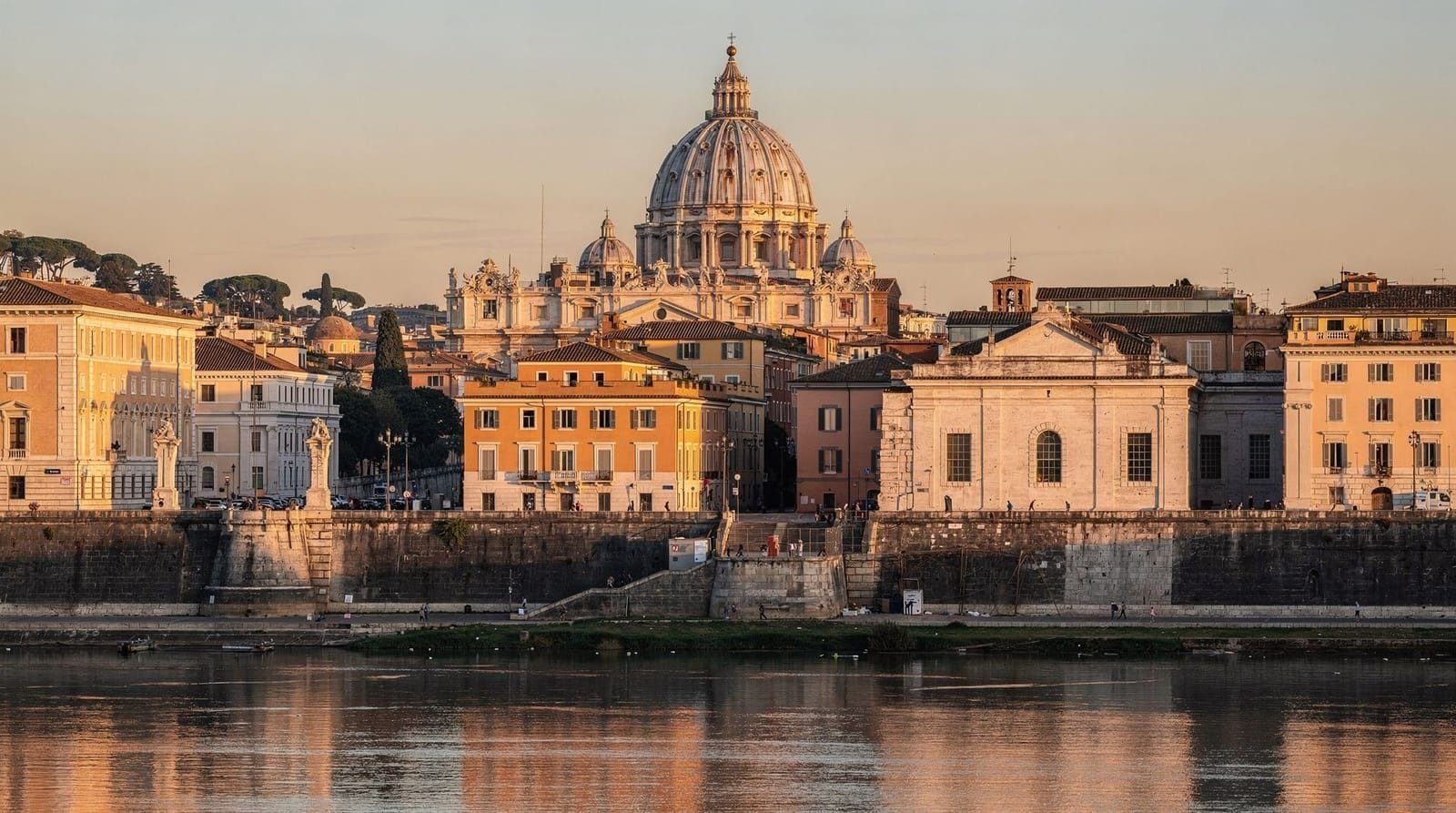
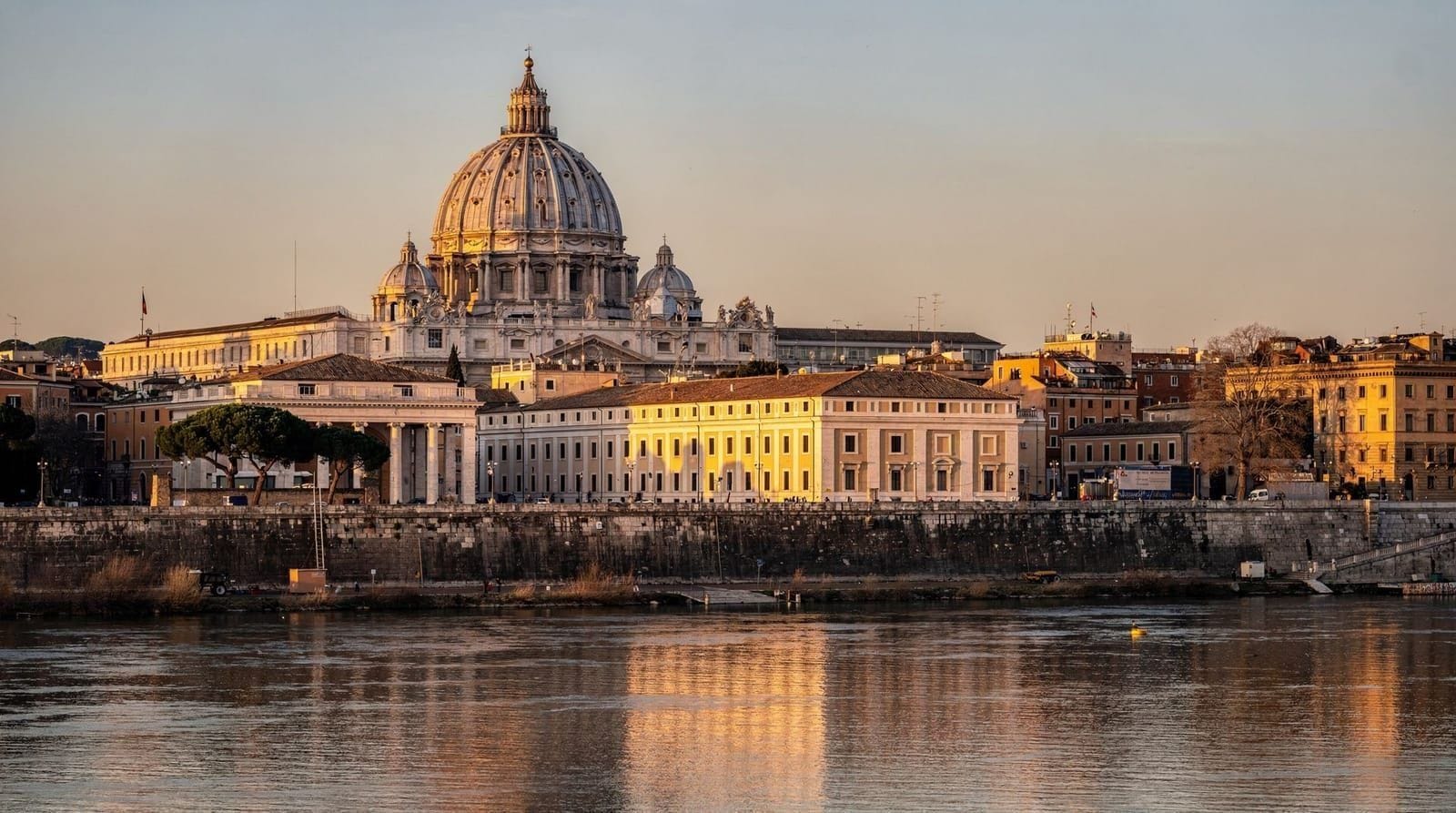
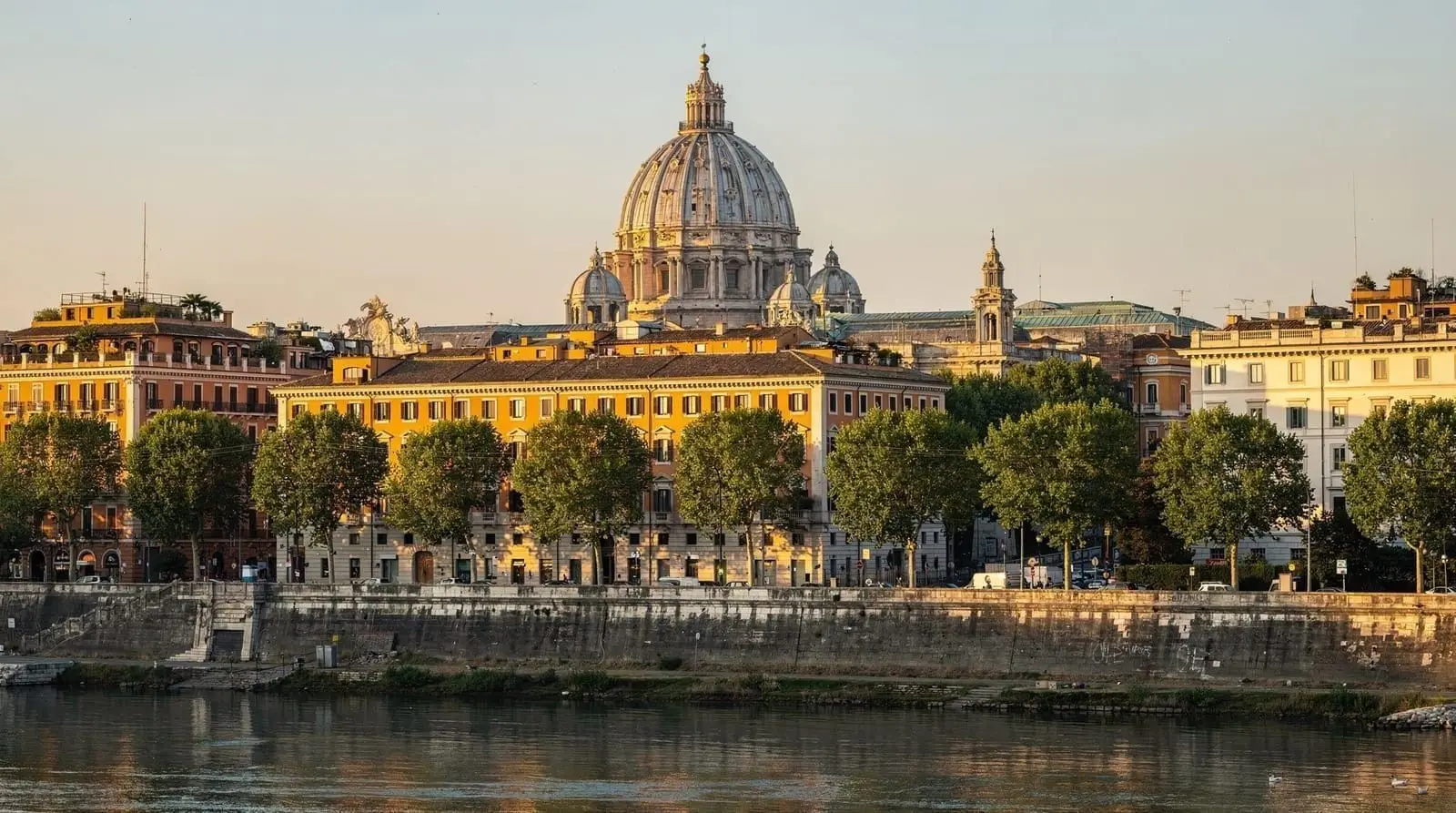
The Vatican is technically a separate sovereign state — the world’s smallest, at 44 hectares — but it sits entirely within Rome’s western fabric. Next to it, Prati is one of Rome’s most livable residential neighborhoods: wide 19th-century boulevards, good food, less noise, and a genuine local pace that vanishes the moment you cross into the Vatican zone.
This duality makes the area work as both a sightseeing destination and a sensible base. You can spend a full day in the Vatican Museums and still retreat to a calm street in Prati for a €12 lunch that has nothing to do with tourism.
| Where | West bank of the Tiber, north of Centro Storico |
| Getting there | Metro A to Ottaviano or Lepanto |
| Cost | Vatican Museums around €20–30; St. Peter’s free (queue) |
| Time needed | 3–6 hours for the Vatican; Prati works as an overnight base |
| Booking | Essential 2–4 weeks ahead; 8+ weeks during Jubilee, Easter and summer |
The Vatican Museums and Sistine Chapel
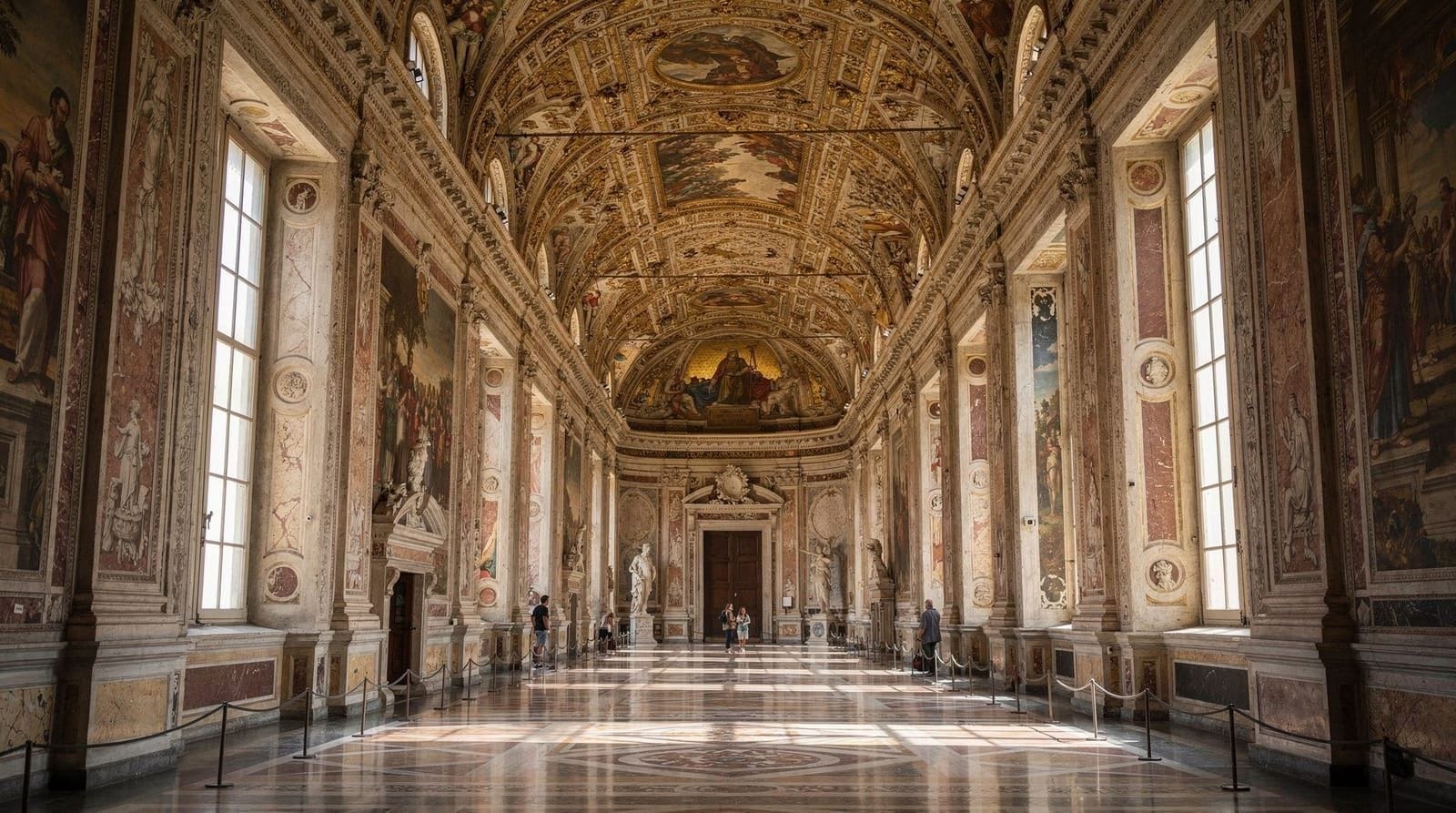
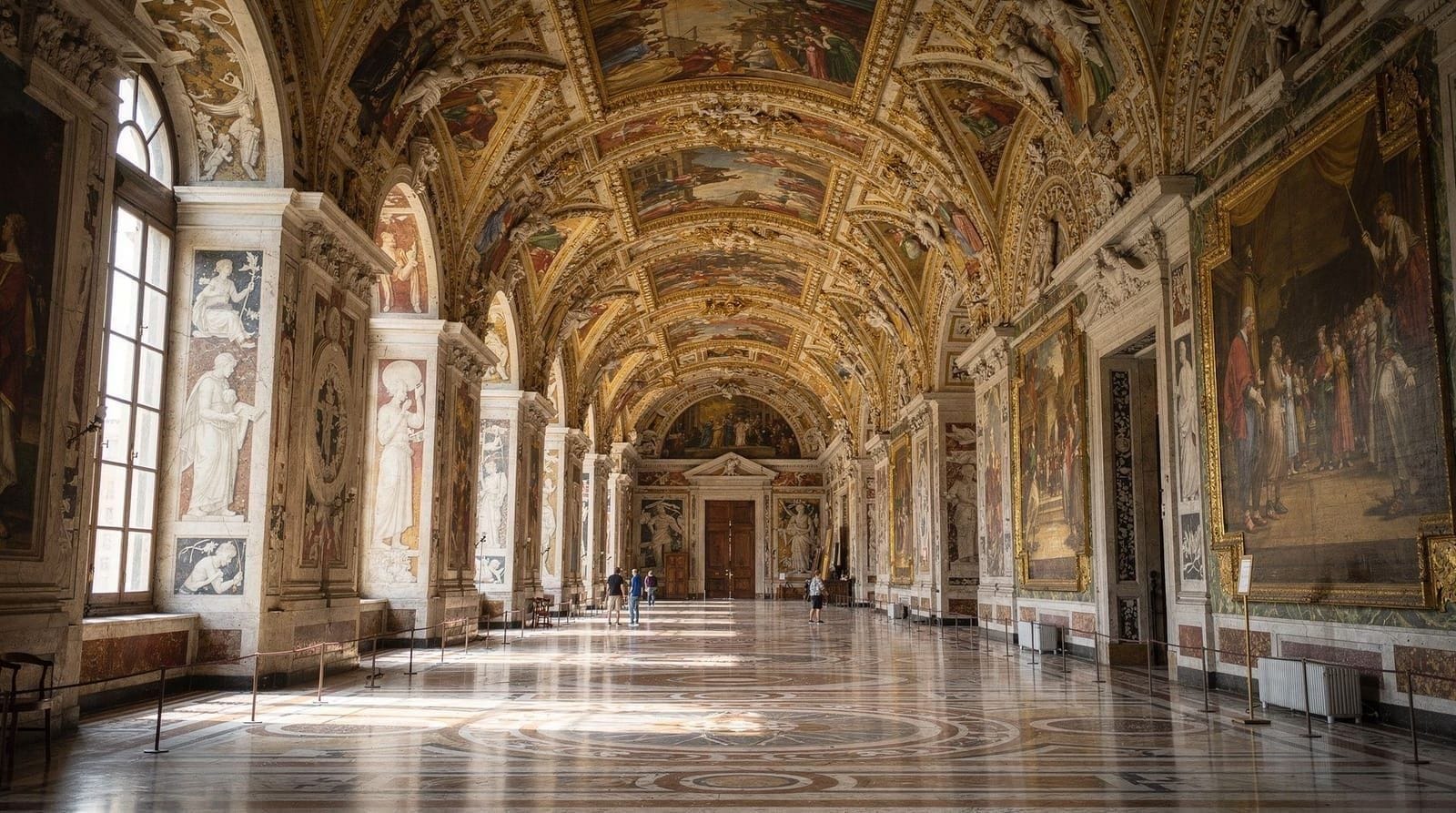
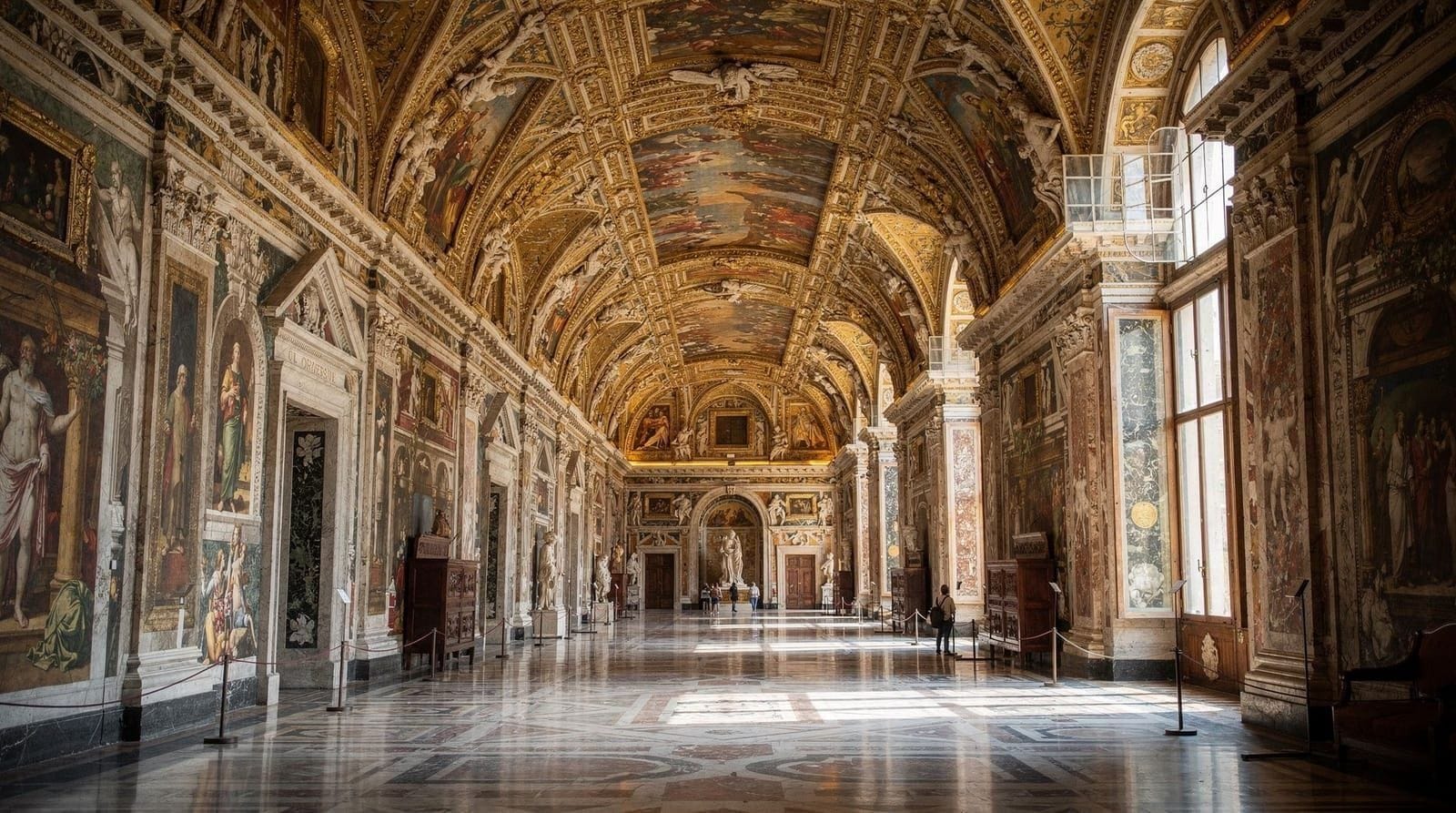
The Vatican Museums are not one museum — they are a 6-km-long circuit of linked galleries spanning 1,400 rooms, covering Egyptian antiquities, the Raphael Rooms, maps, tapestries, modern religious art, and finally the Sistine Chapel. Most visitors see maybe 20% of what is available.
What you should actually plan to see:
- Gallery of Maps — 40 topographic paintings of Italian regions from 1583; extraordinary and often half-empty compared to the Raphael corridor.
- Raphael Rooms (Stanze di Raffaello) — particularly the School of Athens, the greatest single image of Renaissance humanism.
- Sistine Chapel — the ceiling (Michelangelo, 1508–1512) and Last Judgment (1541) are justifiably the most famous paintings in the world. You will be in a room with 2,000 people. Guards ask for silence and shout for it every few minutes. Allow your eyes to adjust and try to find an edge wall rather than standing in the crush.
Booking is not optional. The Vatican Museums attract 6–7 million visitors annually. Same-day entry is essentially impossible in spring and summer. Book your timed-entry ticket at least 2–4 weeks ahead (8 weeks during Easter week and summer). Book a guided Vatican Museums, Sistine Chapel, and St. Peter’s tour — the guide context in the Raphael Rooms and Sistine Chapel is significant.
For the earliest slots (7:30–9 am), an early morning small-group Vatican tour offers the Sistine Chapel with a fraction of the usual crowd — worth the premium if Michelangelo is your priority.
Dress code — strictly enforced. Shoulders and knees must be covered. Sleeveless tops, shorts above the knee, and short skirts are turned away at the entrance — hundreds of visitors are refused every day. This applies to all genders. In summer, carry a scarf or lightweight layer. Tank tops with a shawl draped over shoulders are technically compliant but sometimes challenged. Wear a T-shirt and knee-length trousers to be safe.
Time needed: Allow 3–4 hours minimum for a basic circuit including the Sistine Chapel. A thorough visit takes 5–6 hours. The Museums close at 18:00 (last entry 16:00), Sundays at 13:00 (except last Sunday of month which is free — extremely crowded, do not attempt without booking).
St. Peter’s Basilica
Entry to St. Peter’s Basilica itself is free, but the queue without a reservation can be 45–90 minutes at peak times. The security check adds time. Dress code applies identically to the Museums.
The interior is almost incomprehensibly large (it is the world’s largest church by interior volume). Key works inside:
- Michelangelo’s Pietà (right nave, behind glass since 1972 when it was damaged) — the only work he ever signed.
- Bernini’s baldachin — the 30-metre bronze canopy over the altar, made partly from bronze stripped from the Pantheon portico.
- The tomb of St. Peter beneath the high altar (accessible via a separate crypt tour).
St. Peter’s Dome climb: You can climb to the top of the dome for views over the city. There is a lift to partway and then ~320 steps. The view is exceptional. Book timed entry or expect a wait. Book a St. Peter’s dome climb with a guide for context on both the architecture and the panoramic view.
Practical: The piazza (Bernini’s colonnade, 1656–1667) holds 300,000 people. At Easter and Christmas it is packed. At 7 am on a Tuesday in November it is almost empty and extraordinary.
Castel Sant’Angelo
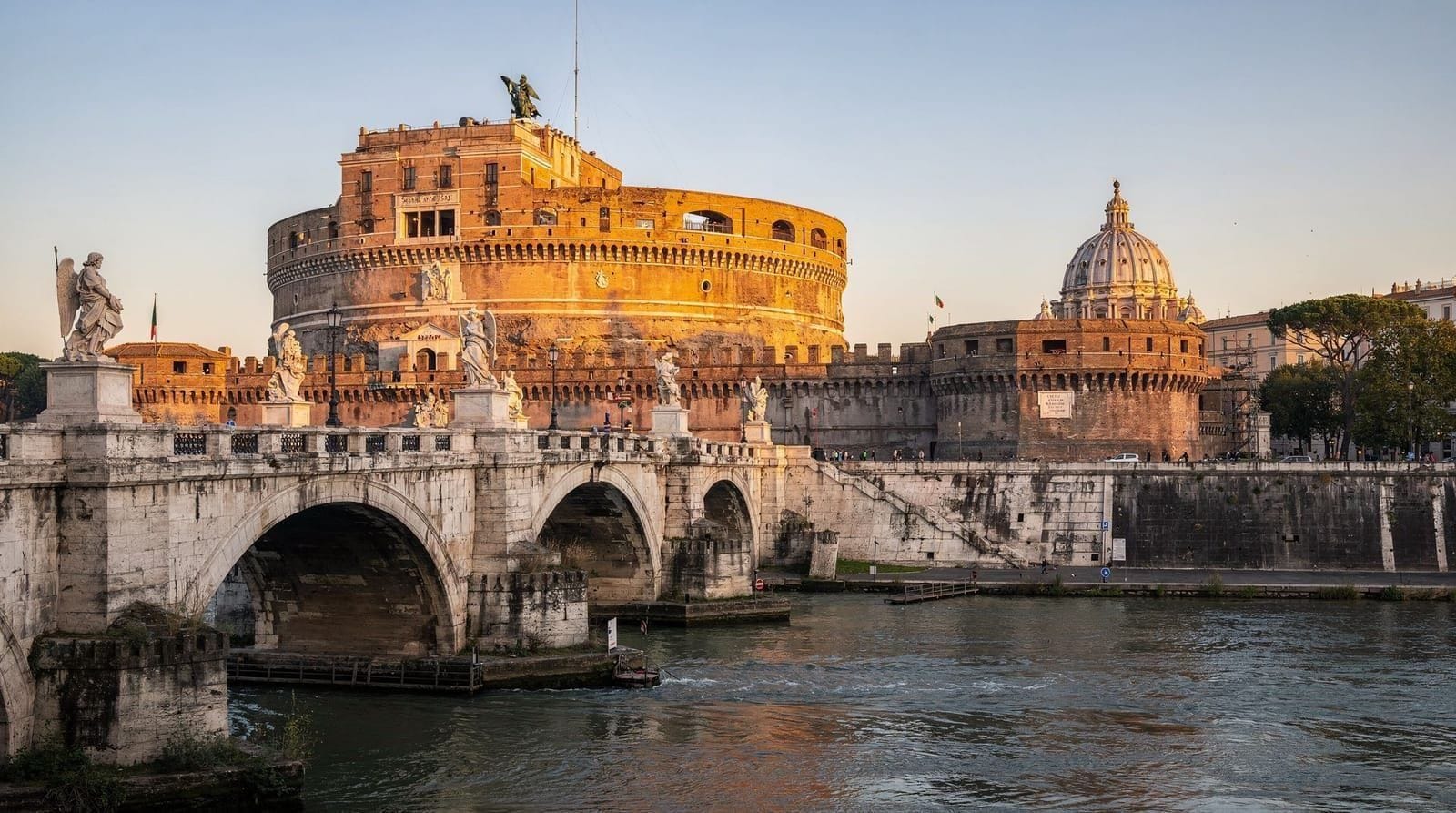
The cylindrical fortress on the Tiber, 10 minutes’ walk from St. Peter’s Square, started as Hadrian’s mausoleum (139 CE), became a medieval papal prison, a Renaissance fortress, and is now a museum. The rooftop terrace has one of Rome’s best views of the Tiber and dome.
It is frequently overlooked in favor of the major Vatican sites — which means shorter queues and a more considered visit. Allow 2 hours. Book a timed ticket in advance; queues can build even here in peak season.
Prati: the neighborhood beyond the Vatican walls
Prati was built in the late 19th century to house Vatican employees and Roman bourgeoisie. It is a grid of broad avenues, art nouveau and Liberty-style buildings, and a high density of good restaurants, bars, and shops that serve a local clientele, not a tourist one.
Via Cola di Rienzo is Prati’s main shopping street — supermarkets, alimentari, cheese shops, wine bars. It is a more functional and honest street than the souvenir blocks near St. Peter’s.
Where to eat in Prati:
- Pizzarium (via della Meloria) — Gabriele Bonci’s celebrated pizza al taglio; sold by weight with unusual toppings and excellent dough. Arrive at opening (11 am) or expect to wait.
- Il Sorpasso (via Properzio) — all-day wine bar and trattoria, very popular with locals for lunch.
- Gelateria dei Gracchi (via dei Gracchi) — consistently rated among Rome’s best artisanal gelato; queue at peak times.
- Osteria dell’Angelo (via Belli) — serves Roman classics (rigatoni alla gricia, abbacchio) in a no-frills setting; essential reservation.
- Sciascia Caffè (via Fabio Massimo) — old-school Roman café, one of the city’s most serious espressos.
Piazzale Risorgimento (the square in front of the Vatican Museums entrance) is surrounded by tourist restaurants with elevated prices. The food quality does not match the location premium. Walk three blocks into Prati.
Getting there
- Metro Line A to Ottaviano (Vatican Museums entrance 5-minute walk) or Lepanto (Prati center). Metro A between Termini and Ottaviano is Rome’s highest pickpocket density corridor — hands-free bag, zipped, facing front.
- Bus 40/64 from the city center to Piazza Risorgimento (Vatican) — same pickpocket caution.
- On foot from Centro Storico: cross the Tiber at Ponte Sant’Angelo (30 min walk from Piazza Navona).
Where to stay in Vatican & Prati
Prati is a genuinely good base for Rome: quieter than Centro Storico or Trastevere, with easy metro access to the whole city.
Hotels:
- Hotel Atlante Star — rooftop restaurant with an extraordinary view of St. Peter’s dome; rooms are comfortable if unremarkable.
- Hotel dei Consoli — boutique hotel on a Prati side street; attentive service, reasonable for the area.
- NH Collection Roma Centro — larger, consistent quality, near the Vatican.
Budget consideration: Vatican-adjacent hotels typically charge 20–30% more than equivalent hotels in Monti or Esquilino for the same star rating. During the Jubilee period (demand carries into 2026), Vatican-area hotels can run 30–50% above normal rates — book 3–6 months ahead for spring 2026.
Practical tips for the Vatican visit
Papal Audience: Pope Francis (or his successor) holds weekly general audiences on Wednesdays at 10 am in St. Peter’s Square (or Audience Hall in winter). Free tickets are required — apply via the Papal Prefecture of the Papal Household (Vatican website). Large crowds; book early.
Last Sunday free: Vatican Museums are free on the last Sunday of each month but attract enormous crowds (often 2-hour+ queues starting at 8 am). Not recommended unless you have no alternative.
Audio guide vs. guided tour: An audio guide (€8) helps navigate the Museum but a guided tour adds historical depth, particularly in the Raphael Rooms and Sistine Chapel. For the Sistine Chapel, having someone explain the narrative structure of the ceiling panels is the difference between looking at paint and understanding what Michelangelo was arguing with the Pope about.
After the Museums: The Museums exit does NOT connect directly to St. Peter’s Basilica. You must exit, walk around the walls (~15 min), re-enter through the Basilica’s security check. Plan accordingly.
Itinerary: one day in Vatican & Prati
Morning (8–9 am first entry): Vatican Museums — Gallery of Maps, Raphael Rooms, Sistine Chapel. Allow 4 hours.
Lunch (1 pm): Pizzarium for pizza al taglio, or a sit-down at Il Sorpasso.
Afternoon (3 pm): St. Peter’s Basilica (queue or book timed entry). Dome climb optional (+1h). If time: walk along the Tiber to Castel Sant’Angelo.
Evening: Passeggiata along via Cola di Rienzo; aperitivo at a Prati wine bar; dinner at Osteria dell’Angelo (reservation required).
For multi-day planning, see Rome in 3 days and Vatican vs Colosseum: which to prioritize.
The Vatican gardens and lesser-known Vatican
Most visitors see the Museums and St. Peter’s and consider the Vatican done. The Vatican has more:
Vatican Gardens — the 23-hectare gardens behind the Museums are the largest private gardens in Rome. They require a separate guided tour booking and are only accessible with a guide. The garden tour gives access to areas impossible to see otherwise, including the Vatican railway station (rarely used, occasionally open for the tour), the summer residence of papal audiences, and extraordinary views of the dome from angles impossible from the city.
Vatican Pinacoteca — the picture gallery inside the Museum complex has 18 rooms covering medieval through baroque painting. Raphael’s Transfiguration (1520, his final work) is here, often bypassed by visitors rushing to the Sistine Chapel. Allow 45 minutes if you care about painting.
St. Peter’s Necropolis (Scavi) — directly under St. Peter’s Basilica, accessible only via a separate small-group booking (4–12 people) weeks in advance through the Vatican Scavi office. The tour descends into the original Roman necropolis where, according to tradition, Peter’s tomb is located. The excavations from 1939–1948 uncovered a street of mausoleums and, at the end, a shrine and bones that Vatican archaeologists argue are Peter’s. It is a profoundly unusual experience. Booking: fabbricasanpietro.va (official Vatican site). Approximately €15, small group, 90 minutes.
Raphael’s School of Athens: what you are actually looking at
The Stanza della Segnatura (Raphael, 1508–1511) is arguably the most important room in the Vatican Museums beyond the Sistine Chapel. The School of Athens covers an entire wall and depicts some 50 figures representing the great thinkers of antiquity.
What guides often skip: Plato (center left, pointing upward) is a portrait of Leonardo da Vinci. Heraclitus (the brooding figure in the foreground, sitting on steps) is Michelangelo — added after Raphael saw the Sistine Chapel ceiling being painted and was overwhelmed. Raphael himself appears at the far right, looking out. The geometric precision of the floor and the barrel vault were based on Bramante’s designs for the new St. Peter’s. The painting is a manifesto of Renaissance humanism and a document of who mattered in 1510.
Navigating the Vatican Museums without getting lost
The Museums are more logistically complicated than most visitors expect. Key practical points:
Entry and crowd flow: The main entrance is on viale Vaticano (north side of Vatican walls, not facing St. Peter’s). Pre-booked timed-entry tickets have a dedicated lane; same-day visitors queue separately and wait significantly longer.
Obligatory circuit: The one-way flow system means you cannot easily backtrack. The Sistine Chapel is near the end of the standard circuit. Do not rush through the early galleries — the Gallery of Maps and Raphael Rooms are worth equivalent time to the Chapel.
Sistine Chapel exit: From the Chapel, you exit either through a door directly to St. Peter’s Basilica (often closed except for certain tours) or back through the Museums to the main exit. Confirm this on your day.
Photography: Photography without flash is permitted in most of the Museums. The Sistine Chapel officially prohibits photography (staff enforce this intermittently). The Gallery of Maps has extraordinary photographable ceilings.
Castel Sant’Angelo: the full story
Castel Sant’Angelo is one of the most continuously occupied structures in Rome — it has been a mausoleum, a medieval prison, a papal fortress, an execution site, and is now a museum. Hadrian began construction in 123 CE for himself and his successors. Caracalla was the last emperor interred here in 217 CE. After the fall of the western empire, successive popes used it as a refuge — a covered passageway (the Passetto di Borgo) connected it directly to the Vatican and was used by popes fleeing danger, including Clement VII during the Sack of Rome in 1527.
The interior contains Renaissance papal apartments decorated as lavishly as any Roman palace, the dark cells where prisoners were kept (Giordano Bruno was held here before his execution in 1600), and the rooftop terrace with the bronze angel statue (the archangel Michael, who, according to tradition, appeared here in 590 CE and ended a plague by sheathing his sword).
Practical: Allow 2 hours. Entry approximately €16. The walk up the helical ramp inside the drum is the original Roman construction; the Medieval and Renaissance additions are grafted onto it. The Castel Sant’Angelo guide covers booking in full.
Visiting during the Jubilee period
The Jubilee Year has pushed Vatican demand higher than a normal season, and the effect carries into 2026: longer booking windows, fuller early slots, and Vatican-area hotels running well above their usual rates. If your trip falls anywhere near a major Jubilee date, treat the 8-week advance booking window as a floor, not a suggestion, and expect St. Peter’s Square itself to be busier than the “quiet Tuesday morning” scenario described above. See the Rome Jubilee 2025–2026 guide for the calendar of peak dates and how they affect the whole city, not just the Vatican.
Best months to visit the Vatican
| Season | Crowds | Weather | Notes |
|---|---|---|---|
| Jan–Feb | Lower | Cold, some rain | Best crowd-to-effort ratio of the year |
| Mar–May | Rising fast | Mild | Book 4+ weeks ahead; Easter is the year’s peak |
| Jun–Aug | Very high | Hot, midday queues brutal | Early entry slots essential |
| Sep–Oct | High but manageable | Warm, pleasant | Good balance; still book ahead |
| Nov–Dec | Moderate, spikes at Christmas | Cold | Quiet outside the holiday week |
The Vatican best time to visit guide and Rome weather month by month go deeper on seasonal planning.
Vatican with children
The Vatican Museums are long and crowded, which is a tough combination for young children — the Sistine Chapel crush in particular can overwhelm a tired five-year-old. Families who make it work tend to book the earliest possible slot, skip the exhaustive circuit in favor of the Gallery of Maps and a fast pass through to the Chapel, and treat St. Peter’s dome climb as optional rather than mandatory (320 steps with no lift for most of it). The Vatican with kids guide covers age-appropriate pacing in detail, and Prati’s playgrounds and calmer streets make it a more forgiving base than staying inside the historic center.
Avoiding ticket scams near the Vatican
The area around Piazzale Risorgimento and Via della Conciliazione attracts touts selling “skip the line” tickets and offering unsolicited “free” tours that end in a hard sell. Buy tickets only through the official Vatican Museums site, a recognized reseller, or a vetted tour operator — never from someone approaching you on the street with a lanyard and a tablet. The Rome scams to avoid guide and Rome ticket scams guide cover the specific patterns to watch for, including fake “no queue” claims at legitimate-looking kiosks.
Combining Vatican tickets with other sights
Travelers doing several paid sights in the area sometimes ask about combined passes. The Omnia Vatican & Rome card guide breaks down whether a bundled pass actually saves money for your specific itinerary — it depends heavily on how many included sights you would visit anyway. For most first-time visitors doing only the Vatican and St. Peter’s, buying tickets individually is simpler and rarely more expensive.
Frequently asked questions about Vatican & Prati
Do I really need to book Vatican Museums in advance?
Yes, especially March–October and at Christmas/Easter. Same-day tickets do occasionally appear online when slots are released, but relying on this is risky. 2–4 weeks ahead is a minimum; 8 weeks for Easter week and summer. See Vatican skip-the-line tickets for exact booking steps.
What happens if I show up without a ticket?
You can join the standby queue, which can be 2–4 hours in peak season. Some third-party kiosks outside sell tickets at a markup; verify these are legitimate resellers, not touts with fake confirmations.
Is the dress code really enforced at the Vatican?
Yes, every day. Security personnel at St. Peter’s turn away hundreds of visitors daily for bare shoulders or knees. On hot days this includes people in T-shirts with thin straps or shorts. A lightweight scarf costs €5 from a nearby shop if you forget, but save yourself the stress.
Is Prati safe?
Prati is one of Rome’s safer residential neighborhoods — low crime, well-lit streets, local rather than tourist demographic. The main risk anywhere near the Vatican is pickpocketing on the metro and in the Vatican approach crowds, not personal safety.
How far is the Vatican from the Colosseum?
About 4.5 km — a 55-minute walk or 25 minutes by bus. Most visitors split these into separate days. See Vatican vs Colosseum: which to prioritize first for logistics advice.
Can I visit the Vatican for free?
St. Peter’s Basilica entry is free (queue required). Vatican Museums have no free general admission except the last Sunday of each month (massive crowds). The Vatican Gardens require a separate paid tour.
Does the Jubilee affect Vatican visits in 2026?
Yes — demand and hotel rates in the Vatican area remain elevated into 2026 as the Jubilee period continues to drive traffic. Book Vatican Museums tickets and Vatican-area hotels further ahead than you normally would, and expect St. Peter’s Square to be busier even outside headline event dates. See the Rome Jubilee 2025–2026 guide for the specifics.
Top experiences
Bookable activities with verified prices and instant confirmation on GetYourGuide.