Planning Rome with day trips: how to balance city and Lazio
Pompeii Day Trip from Rome by High-Speed Train & Guided Tour
How many day trips can you realistically fit into a Rome trip?
One or two day trips work well in a 5–7 day Rome base. More than two day trips in a week typically means you arrive back in Rome tired and see the city in a fog. The day trips that justify the time cost most reliably are Pompeii (extraordinary site, full day), Tivoli (two UNESCO villas, half to full day), and Florence (best city day trip by high-speed train). Prioritise these before adding others.
The central tension: city depth vs regional breadth
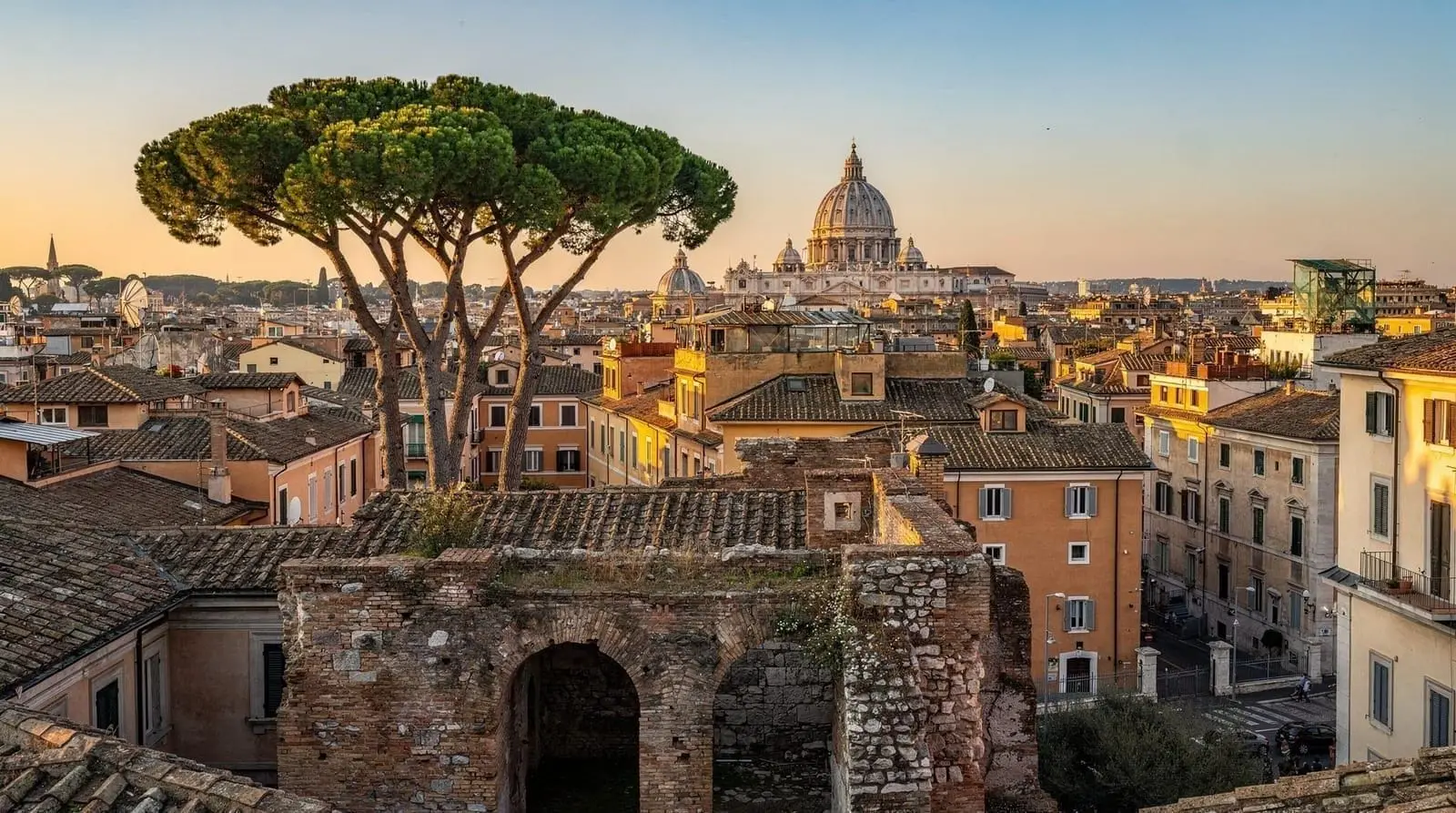
Rome is simultaneously one of the greatest cities in the world for urban sightseeing and the ideal base for reaching some of Europe’s most extraordinary day-trip destinations. This creates a genuine planning tension: every day spent in Pompeii or Florence is a day not spent in the Borghese Gallery or Trastevere.
There is no single right answer. But there are principles that help you build a trip where neither the city nor the day trips feel rushed.
| Where | Pompeii, Tivoli, Ostia Antica, Florence, Castelli Romani |
| Time needed | Half day (Ostia, Castelli) to full day (Pompeii, Florence, Tivoli) |
| Getting there | High-speed train (Florence, Pompeii via Naples), regional train or bus (Tivoli, Ostia, Castelli) |
| Best time | Spring or autumn; avoid stacking more than two full-day trips per week |
| Booking | Train tickets 1–2 weeks ahead; Pompeii timed entry in peak season |
The principles of a good Rome + day trips itinerary
Principle 1: Anchor the city first
Do the Rome days before the day trips. This serves multiple purposes:
- You arrive energetic and absorb the city’s core while fresh
- You understand Roman history and archaeology before you visit sites like Pompeii or Ostia Antica, which makes them significantly more legible
- You have already seen the must-book attractions (Colosseum, Vatican, Borghese) and are not at risk of skipping them in favour of a day trip
- By the time your day trips arrive, you know the city well enough to return to specific restaurants or neighbourhoods rather than defaulting to tourist options
For a 7-day trip, the split looks like: days 1–4 for Rome, days 5–7 for day trips and lighter city exploration. For a 5-day trip: days 1–3 for Rome, days 4–5 for day trips.
Principle 2: Do not do back-to-back full-day trips
Two consecutive full-day trips away from Rome is manageable. Three in a row accumulates fatigue and leaves most visitors feeling disconnected from the city they came to experience. After a day in Pompeii (hot, lots of walking on uneven surfaces) or Florence (lots of museum time), build in a lighter Rome day before the next major excursion.
Principle 3: Match day trip intensity to your energy level
Pompeii is one of the most demanding day trips — 2.5 hours of travel each way, then several hours walking an enormous archaeological site in the open air. Plan it for a day when you are not already tired from previous sightseeing. Ostia Antica, by contrast, is 30 minutes away and can be done as a relaxed half-day.
The day trips in order of priority
1. Pompeii — the unmissable major site
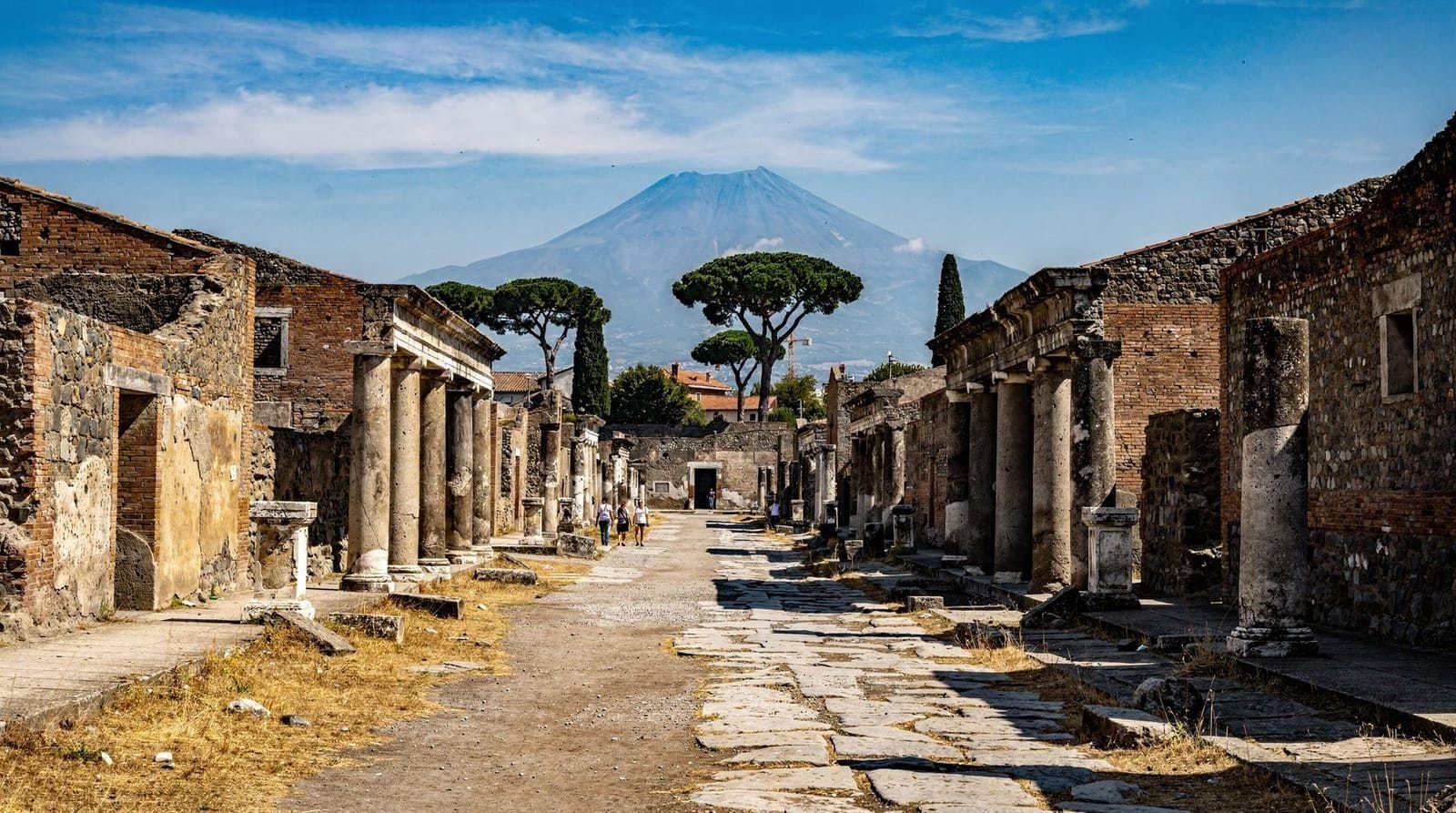
Pompeii belongs on any serious Italy itinerary, and a Rome base is the most natural way to access it. The high-speed train from Termini to Naples Central takes approximately 1 hour 10 minutes; from Naples, the Circumvesuviana local train runs to Pompeii Scavi station in another 35–40 minutes.
Inside, the site is very large — plan a minimum of 3–4 hours to do it justice. The preserved streetscapes, houses (including the House of the Faun with its extraordinary Alexander mosaic copy), bakeries, baths, thermopolia (fast-food counters), and the plaster casts of victims are unlike anything else in the world. A guided tour significantly enhances the visit.
Pompeii day trip from Rome by high-speed train with guided tour — includes both the train transfers and expert archaeological commentary at the site.Best season: April–May and September–October. Summer (July–August) is extremely hot at the open site — plan a 08:30 start to be inside before the worst heat builds.
Note on booking: Pompeii’s entry is timed at peak season. Book ahead at pompeiitickets.com.
2. Tivoli — two UNESCO sites in a day
Tivoli sits approximately 30 km east of Rome in the Tivoli–Aniene hills. It contains two UNESCO World Heritage Sites:
Villa Adriana (Hadrian’s Villa): The sprawling country residence built by Emperor Hadrian between 117 and 138 CE covers approximately 120 hectares. It was designed to evoke the emperor’s travels — buildings reference Egyptian canals, Greek theatres, and Spartan monuments. The site is a genuine archaeological complex, with pools, colonnades, baths, libraries and temples spread across a bucolic landscape.
Villa d’Este: The 16th-century Renaissance villa with its extraordinary garden of approximately 500 fountains and water features. In spring, the combination of fountain sound, garden scent and ornamental planting makes Villa d’Este one of Italy’s most sensory horticultural experiences. See the Tivoli day trip guide and Tivoli destination page.
Getting there: 60 minutes by COTRAL bus from Ponte Mammolo metro station (Line B), or a day trip tour from Rome. The two villas are 3 km apart; a car or taxi between them simplifies the logistics. See the Lazio day trips guide.
3. Ostia Antica — Rome’s ancient port, 30 minutes away
Ostia Antica is the most underrated half-day trip from Rome. The city that served as Rome’s commercial port from the 4th century BCE was gradually silted and abandoned, leaving an extraordinarily well-preserved archaeological site. Unlike Pompeii, Ostia was not buried by a volcanic eruption but simply abandoned — the result is a different kind of preservation: multi-storey apartment buildings (insulae), warehouses, mosaic-floored offices, baths, and a theatre.
The site is 30 minutes from Rome via the Roma–Lido train from Pyramide metro station (Line B). It sees a fraction of Pompeii’s visitor numbers, which means you can walk the ancient streets in near-solitude. See the Ostia Antica day trip guide.
4. Florence — the great city day trip
Florence by high-speed train (1 hour 25 minutes from Termini) is one of the best day trips in Europe. The city’s compact historic centre, Brunelleschi’s cathedral dome, Michelangelo’s David at the Accademia, the Uffizi Gallery, and the view from Piazzale Michelangelo all contribute to an extraordinarily rich day.
The key to a successful Florence day trip is choosing 2–3 priorities and committing to them, rather than trying to see everything. The Uffizi alone merits 2–3 hours; the Accademia (David) requires a specific timed entry. Book both in advance.
Day trip to Florence by high-speed train from Rome — organised tour with train transfers and guided city walk, allowing you to see the key sights without navigation overhead.See the Florence from Rome day trip guide for the full logistics.
5. Castelli Romani — wine country and hill towns
The Castelli Romani are a series of medieval hill towns in the Alban Hills 20–30 km south of Rome, historically producing Frascati and other white wines. The landscape is gentler than Lazio’s wilder northern reaches, with views over Lake Albano (a volcanic crater lake) and terraced vineyards.
The most accessible combination: Frascati (30 minutes by train from Termini, wine tastings and 18th-century villas) and Castel Gandolfo (the papal summer residence on Lake Albano). Both can be combined in a half-day. See the Castelli Romani destination and Castelli Romani day trip guide.
Combining a day trip with an overnight stay instead
Not every distant destination has to be a round-trip in the same day. For Florence specifically, if your total Italy time allows it, converting the day trip into a 1–2 night stay removes the travel-fatigue problem entirely and lets you see the Uffizi, Accademia and Oltrarno without racing the last train back to Rome. The same logic applies less often to Pompeii, since Naples itself makes a worthwhile 1-night stop with excellent food and its own major sites (the National Archaeological Museum holds most of the best finds from Pompeii and Herculaneum). If your itinerary has any flexibility, ask whether a day trip destination might be better served as a short standalone stop rather than a single rushed day squeezed around train timetables.
Structuring the itinerary: a 7-day example
Here is how a 7-day Rome trip with two major day trips might look:
Day 1: Arrival and orientation. Evening walk in Centro Storico — Pantheon, Piazza Navona, dinner in Trastevere.
Day 2: Ancient Rome. Colosseum, Roman Forum, Palatine Hill (full day). Evening in Monti.
Day 3: Vatican. Museums, Sistine Chapel, St. Peter’s Basilica. Lunch in Prati.
Day 4: Museums and neighbourhood day. Borghese Gallery morning (pre-booked). Testaccio afternoon — market and lunch.
Day 5: Day trip to Pompeii. Full day. Return by 19:00.
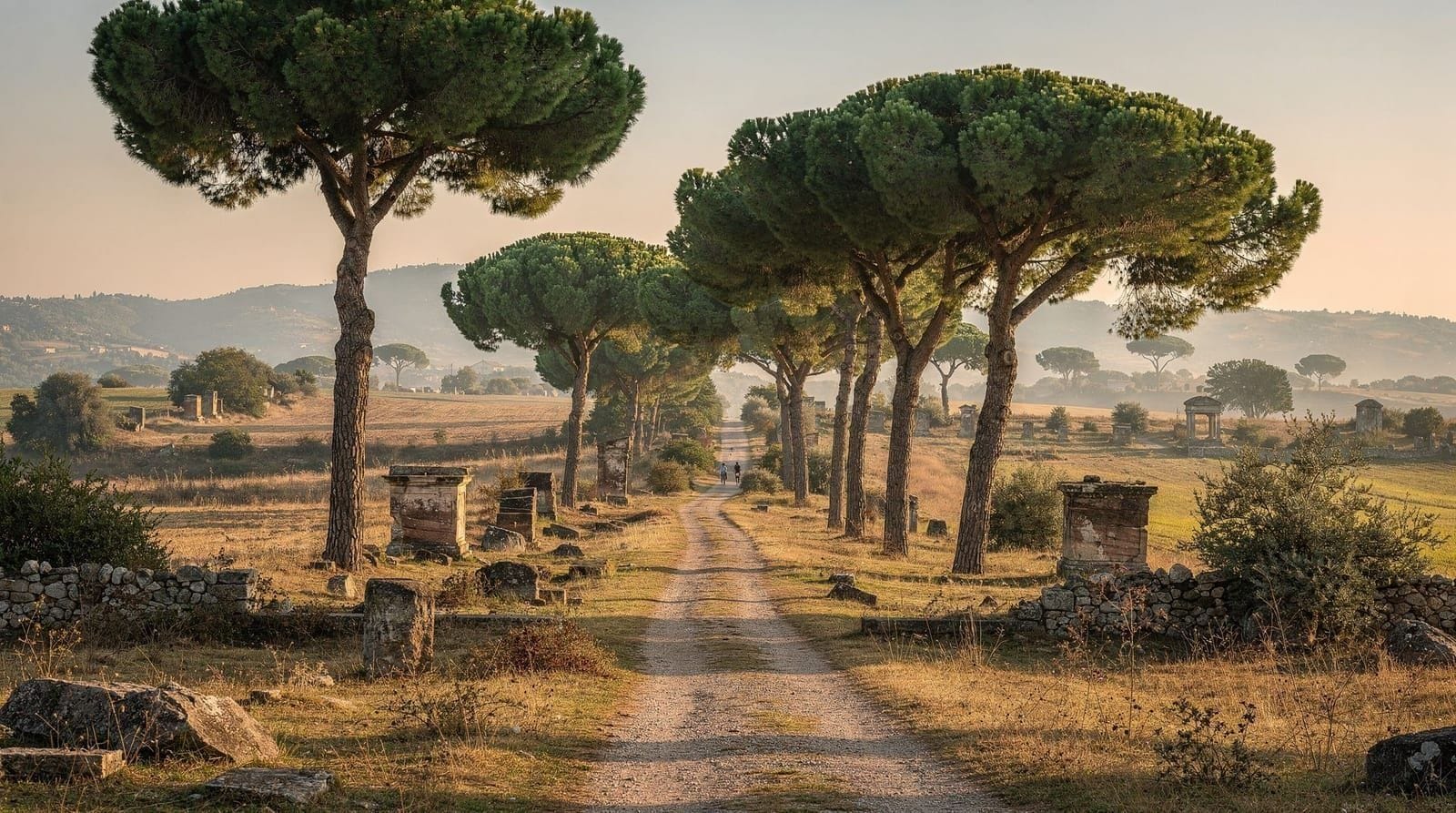
Day 6: Lighter Rome day. Recovery and flexible exploration: Capitoline Museums, Castel Sant’Angelo, the Appia Antica or catacombs.
Day 7: Day trip to Tivoli or Florence. Return by 19:30. Final dinner in Rome.
For the detailed hour-by-hour version, see the Rome with day trips 7-day itinerary.
The Lazio region: what makes it distinctive
Lazio is one of Italy’s least explored regions by international visitors, which is partly because Rome dominates. But the region immediately surrounding Rome contains extraordinary variety:
The Etruscan heritage of northern Lazio — Tarquinia, Cerveteri, Viterbo — is largely untouched by mass tourism and offers Etruscan painted tombs and medieval architecture. Civita di Bagnoregio, the tufa hill village accessible only by footbridge, is one of Italy’s most dramatic townscapes. Lake Bracciano provides swimming and a medieval castle. Sperlonga on the coast offers cliffs, a Greek-style white town, and the Grotto of Tiberius archaeological museum.
None of these are feasible from Rome without a car (except Bracciano, which has a train). If you rent a vehicle, do so specifically for a day trip departure from a parking area outside the historic centre — never attempt to drive into the ZTL zones. See the Rome ZTL warning guide.
Train vs organised tour: which works better
Self-guided by train works well for: Pompeii (trains straightforward), Florence (direct high-speed), Ostia Antica (30-minute local train), Tivoli (bus connections manageable). The advantage is flexibility — you can stay longer or leave earlier based on how you feel.
Organised day trip tour works better for: sites where guidance adds substantial value (Pompeii’s archaeology benefits enormously from a guide), multi-site days where logistics are complex (Orvieto + Civita di Bagnoregio requires coordination), and for visitors less comfortable with Italian train and bus connections.
See the day trips by train from Rome guide for the train logistics of each destination, and the best day trips overview for a comparison of all options.
Practical rail logistics: trains from Rome
Italy’s high-speed rail network makes day trips to Florence, Naples (and onward to Pompeii), and Orvieto straightforward from Rome Termini.
Key services from Termini:
- Florence: Frecciarossa/Frecciargento, 1 hour 20–35 minutes, roughly every 30 minutes
- Naples: Frecciarossa, 1 hour 10 minutes; Italo, similar timing
- Naples to Pompeii Scavi: Circumvesuviana train, 35–40 minutes from Naples Central
- Orvieto: standard train via Orte, approximately 1 hour 20 minutes (slower but very scenic)
Book Trenitalia or Italo high-speed tickets online 1–2 weeks ahead for best pricing. Italo and Trenitalia are Italy’s two high-speed operators and prices vary; compare both before booking. The high-speed train experience in Italy is genuinely excellent — comfortable, reliable, and considerably faster than driving.
For the Circumvesuviana (Pompeii local line), buy tickets on the day at Naples Central; no advance booking required.
Day trips that work better in specific seasons
Season matters significantly for which day trips to prioritise:
Spring (April–May):
- Tivoli’s Villa d’Este gardens peak in April–May when the formal planting is in bloom and the fountain programme is fully operational
- The Castelli Romani vineyards and orchards are in blossom
- Pompeii is excellent: comfortable temperatures (20–25°C) and lighter crowds than summer
Autumn (September–October):
- Pompeii is at its very best in October — golden light on the ruins, temperatures around 22°C, dramatically fewer visitors than summer
- The Castelli Romani vendemmia (wine harvest) runs September–October — local wineries often open for visits
- Florence in October has shorter museum queues and beautiful light
Summer (July–August):
- Pompeii in summer is very hot (the open site with little shade at 35°C is physically demanding). Start at 08:30 opening and leave by noon.
- Florence in summer is crowded and hot but the air-conditioned Uffizi and Accademia are excellent retreats
- The Lazio coast (Sperlonga, Lake Bracciano) makes excellent sense in summer — combine a beach stop with a cultural site. See the Sperlonga beach day trip and Lake Bracciano day trip guides.
Winter (November–February):
- Florence and Naples are excellent winter day trips — major indoor museums in both cities, near-empty in the off-season
- Pompeii is open year-round and strikingly atmospheric in winter, with fewer visitors than any other month
- Avoid Tivoli in winter; the Villa d’Este garden fountains are often turned off and the outdoor sites are less rewarding in cold grey weather
What not to do on a Rome day trip
Do not try to combine Florence and Pompeii in the same trip. They are in opposite directions and each deserves a full day. Choosing both means one is done well and one is rushed.
Do not leave for Pompeii after 09:00. The travel time means arriving at Pompeii close to noon, when the sun is at its strongest. The site needs a minimum of 3–4 hours. Leaving Termini by 07:30–08:00 is the right strategy.
Do not return to Rome without eating at the destination. Day trips are not just archaeological. Pompeii has a reasonable selection of restaurants near the site entrance; Naples is one of Italy’s great food cities (the birthplace of pizza, with extraordinary seafood). Florence has excellent food in the Oltrarno neighbourhood. Building lunch at the destination into the day is one of its pleasures, not an added complication.
Do not book a day trip that promises multiple distant destinations in one day. Tours marketing “Pompeii, Sorrento and the Amalfi Coast in one day” are technically possible but functionally unsatisfying — each place gets 90 minutes and the day is mostly transit. Choose one destination per day and go deep.
The Lazio day trips that rarely get the attention they deserve
Beyond the famous options, Lazio has several day trips that go almost completely unnoticed by international visitors:
Bomarzo (Parco dei Mostri): 16th-century garden of bizarre stone sculptures — giants, dragons, a tilted house, a vast face with an open mouth one can walk into. Created by Vicino Orsini as a deliberate affront to Renaissance ideals of harmony and proportion. Approximately 1.5 hours from Rome; accessible by train to Attigliano then taxi.
Sutri: Small Etruscan town with a well-preserved Roman amphitheatre carved directly into the tufa cliff, a Mithraeum converted to a church, and a remarkable Etruscan necropolis. Accessible by COTRAL bus; approximately 50 km from Rome.
Cerveteri: Major Etruscan city. The Necropoli della Banditaccia is a UNESCO World Heritage site — an entire city of the dead, with tumuli and underground chambers that offer the most atmospheric Etruscan experience accessible from Rome. See the northern Lazio destination guide and the Viterbo and Tuscia guide.
These sites suit visitors who have covered the major Lazio options and want something genuinely off the usual Rome-with-day-trips circuit.
Day trips compared at a glance
| Day trip | Round-trip time | Best for | Difficulty |
|---|---|---|---|
| Ostia Antica | ~1 hour | A relaxed half day, ancient Roman port | Easy |
| Castelli Romani | 1–2 hours | Wine, lake views, an easy half or full day | Easy |
| Tivoli | 2 hours | Two UNESCO villas, gardens and fountains | Moderate |
| Florence | 2h50 | Renaissance art, a genuinely great city | Moderate |
| Pompeii | 5 hours | The single best archaeological day trip in Italy | Demanding (heat, walking) |
| Orvieto/Civita di Bagnoregio | 2.5–3 hours | Hilltop towns, quieter than the above | Moderate, better with a tour |
Use this alongside the seasonal guidance above: an itinerary that pairs one demanding day (Pompeii) with one easy day (Ostia Antica or Castelli Romani) generally holds up better over a week than two demanding days back to back.
If a day trip goes wrong: practical contingencies
Trains occasionally run late, and Pompeii’s Circumvesuviana line in particular has a reputation for delays and crowding at peak times. Build a 20–30 minute buffer into any connection you cannot afford to miss, particularly the Naples-to-Pompeii change and the return journey if you have an evening restaurant booking in Rome. If a day trip does overrun, it is rarely worth rushing the destination to protect a Rome dinner reservation — most Rome restaurants can accommodate a later table with a phone call, and few things ruin a day trip faster than watching the clock at Pompeii. For return trains, always check the last realistic departure before you leave in the morning, and have a backup (a later Frecciarossa or Circumvesuviana service) in mind rather than assuming the one you planned around is the only option.
Frequently asked questions about Planning Rome with day trips: how to balance city and Lazio
Which day trips from Rome are worth doing?
Do I need a car for day trips from Rome?
Should I do day trips early or late in my Rome trip?
How do I structure a week in Rome with day trips?
Is Pompeii really worth the travel time from Rome?
What is the closest day trip to Rome?
What happens if my day trip train runs late and I have a Rome dinner booked?
Is it worth combining two day trips in one day, like Pompeii and a Castelli Romani stop?
Top experiences
Bookable activities with verified prices and instant confirmation on GetYourGuide.