Castel Sant'Angelo: from mausoleum to fortress, a visitor's guide
Rome: Castel Sant'Angelo Entry Ticket & Digital Audioguide
How much does Castel Sant'Angelo cost to visit and is it worth it?
Standard admission is €14 adult (free first Sunday of the month). No timed-entry system — you can arrive on the day, though online booking avoids the physical queue. Allow 1.5–2 hours for a full visit including the rooftop. The castle is worth visiting for the rooftop terrace alone — the 360-degree view of Rome, St. Peter's dome, the Tiber, and the historic centre is among the city's finest. The interior's layered history (mausoleum, fortress, papal apartments, prison) adds substantial interest.
Nineteen centuries of Roman history stacked in a cylinder
Castel Sant’Angelo is the most continuously used major structure in Rome. In the approximately 1,900 years since Hadrian commissioned his mausoleum on the Tiber’s west bank, the building has functioned as an imperial tomb, a section of the Aurelian Wall, a Byzantine fortress, a papal residence, a treasury, a prison, a place of execution, and now a museum.
The layers are not metaphorical — they are physical. Walk through the castle and you walk through the successive renovations that each era imposed on the previous: Hadrian’s brick drum beneath medieval military additions beneath Renaissance papal apartments beneath Baroque terraces. The result is architecturally complex, historically rich, and one of Rome’s most rewarding museums for visitors willing to read the building as they move through it.
The rooftop view alone — St. Peter’s dome to the west, the historic centre to the east, the Tiber below, Rome spread to every horizon — justifies the €14 admission. Everything else is a bonus.
| Where | Lungotevere Castello 50, on the Tiber between Centro Storico and the Vatican |
| Cost | Around €14 adult; free first Sunday of the month |
| Time needed | 1.5-2 hours for a full visit including the rooftop |
| Getting there | ~15 min walk from the Vatican Museums; ~10 min walk from Piazza Navona across Ponte Vittorio Emanuele II |
| Best time | Late afternoon (16:00-18:00) for rooftop light; closed Monday |
Hadrian’s mausoleum: what the original building looked like
Emperor Hadrian (76–138 CE) was one of Rome’s most architecturally ambitious emperors — the man responsible for rebuilding the Pantheon, constructing the Hadrian’s Wall frontier in Britain, and creating the Villa Adriana complex at Tivoli. His mausoleum was designed on the same monumental scale.
The original structure consisted of a large square base (approximately 89 metres per side) topped by a drum (approximately 64 metres in diameter, 21 metres high). The drum was covered in travertine marble and decorated with statues. Above the drum was a smaller cylindrical element, then a conical earthen mound planted with cypress trees, and at the summit a bronze quadriga — a chariot drawn by four horses — with Hadrian’s statue. The whole structure was approximately 50 metres high.
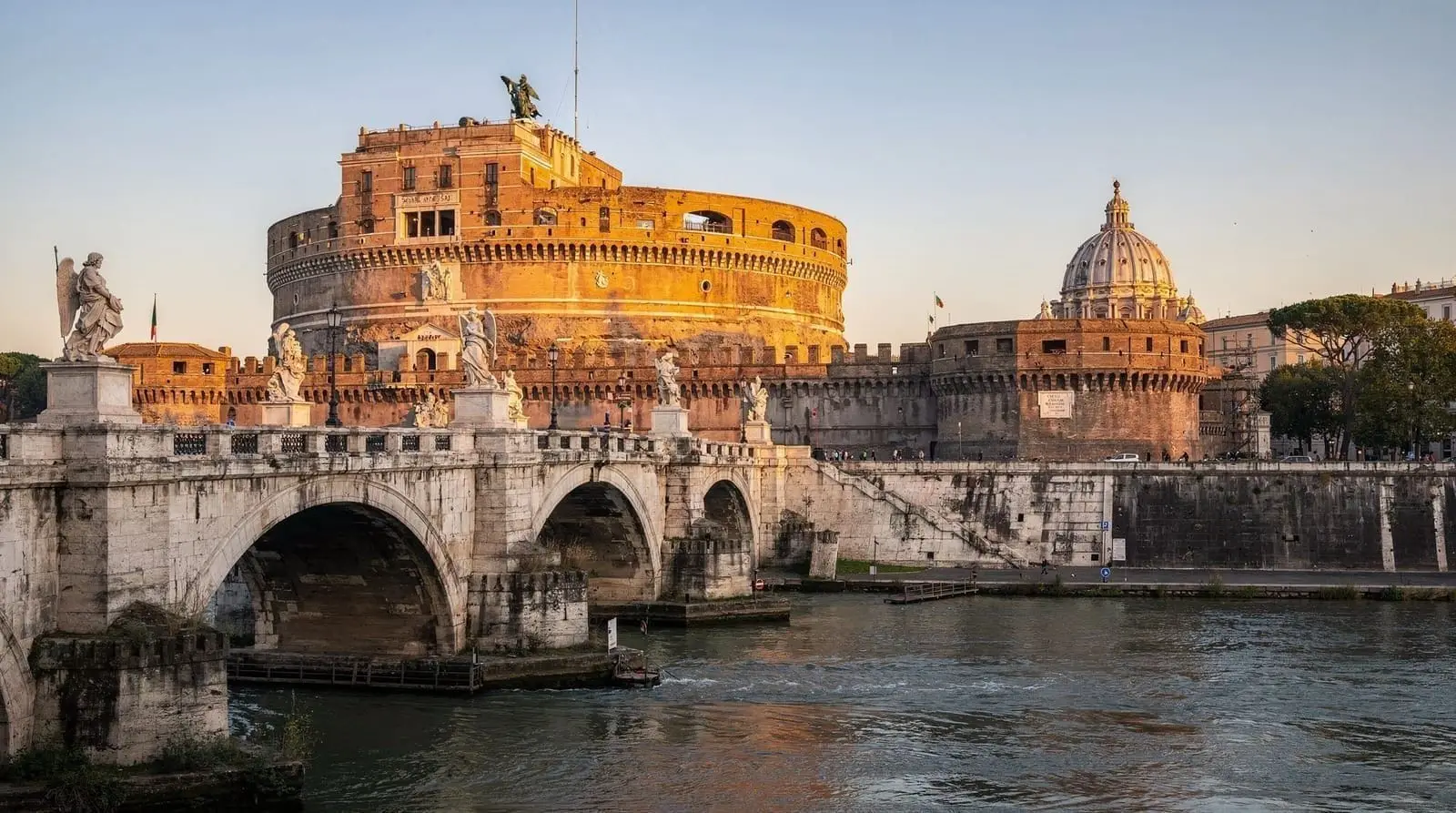
The Tiber crossing at this point was served by the Pons Aelius (now Ponte Sant’Angelo), built by Hadrian simultaneously. The bridge’s current six arches are ancient; the Bernini angels flanking the bridge were added in the 17th century (most are copies; two originals are in Sant’Andrea delle Fratte church).
Hadrian’s ashes were placed here in 139 CE. Successive emperors — Antoninus Pius, Marcus Aurelius, Commodus, Septimius Severus, and Caracalla — were also interred here until the early 3rd century.
The transformation into a fortress
The mausoleum’s transformation into a military structure happened gradually. By the 5th century CE, with Rome under increasing external pressure, the building’s massive walls were incorporated into the defensive circuit. The marble cladding was stripped — like much of Rome’s ancient stonework — to use elsewhere. The bronze decorations disappeared into weapons manufacture.
During the Ostrogothic period (493–553 CE), the structure served as a military garrison. Under Byzantine control, it was reinforced and garrisoned continuously. The medieval fortifications you see today — the projecting towers at the base, the crenellated battlements — date primarily from the 13th and 14th centuries, when the papacy formally took control.
Pope Alexander VI (Rodrigo Borgia) commissioned the major defensive upgrades in the late 15th century: the round bastions at the square base corners, the strengthened walls, and the formal fortification design that made the castle one of the most formidable defensive structures in central Italy. It was this fortified castle that Pope Clement VII reached through the Passetto corridor in 1527 while Habsburg troops sacked the city around him.
Inside the castle: a floor-by-floor guide
The castle is entered from the Lungotevere (Tiber embankment) side, through the original entrance on the north. The visit follows a roughly spiral upward route through the building’s successive historical layers.
Lower levels: Hadrian’s drum and ramp
The first section of the interior tour takes you into the original structure. The long helical ramp inside the drum was Hadrian’s original approach to the burial chambers — the same ramp along which the imperial coffins were carried. The brick tunnel is ancient, the walls thick. The sense of mass above you is physically tangible.
The burial chamber at the ramp’s end (the cella) is largely bare — looted long ago. But the scale and the quality of the construction are remarkable for a 2nd-century structure.
Medieval and Renaissance military levels
The middle floors of the castle show the military adaptations. Storage rooms, cisterns, weapons caches, and the oil store (filled with burning pitch for pouring over attackers) tell the story of the castle’s defensive purpose. The labyrinthine quality of the internal passages — some carved from Hadrian’s masonry, some added in the medieval period — is particularly evident here.
The prison cells associated with Benvenuto Cellini’s imprisonment are on this level. A small, dark cell with minimal light and no comfort — Cellini’s description in his autobiography of escaping by knotting bedsheets and descending the outer wall is vivid and specific. He was recaptured and returned; his eventual release came through papal intervention.
Papal apartments: Renaissance luxury in a medieval fortress
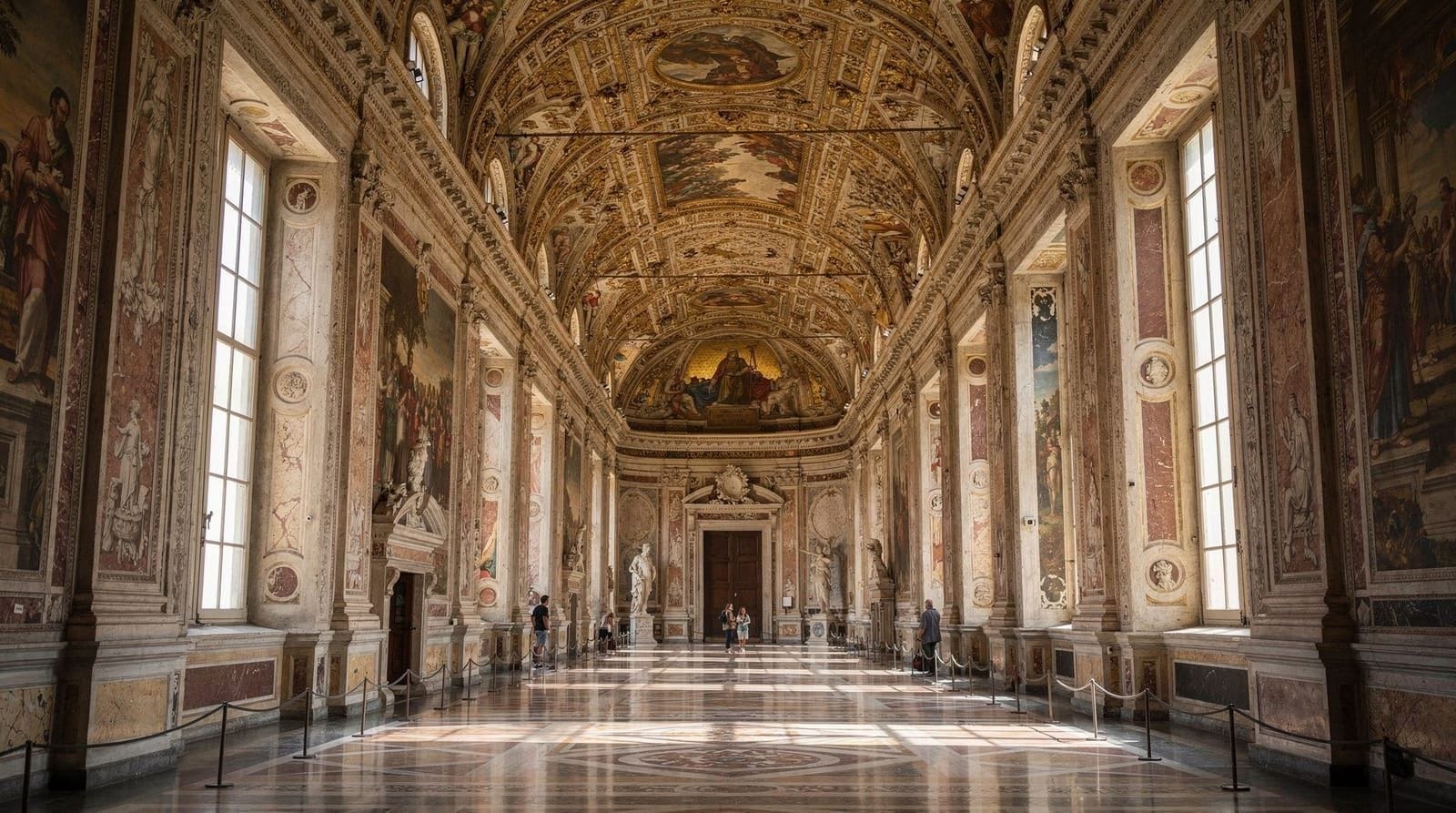
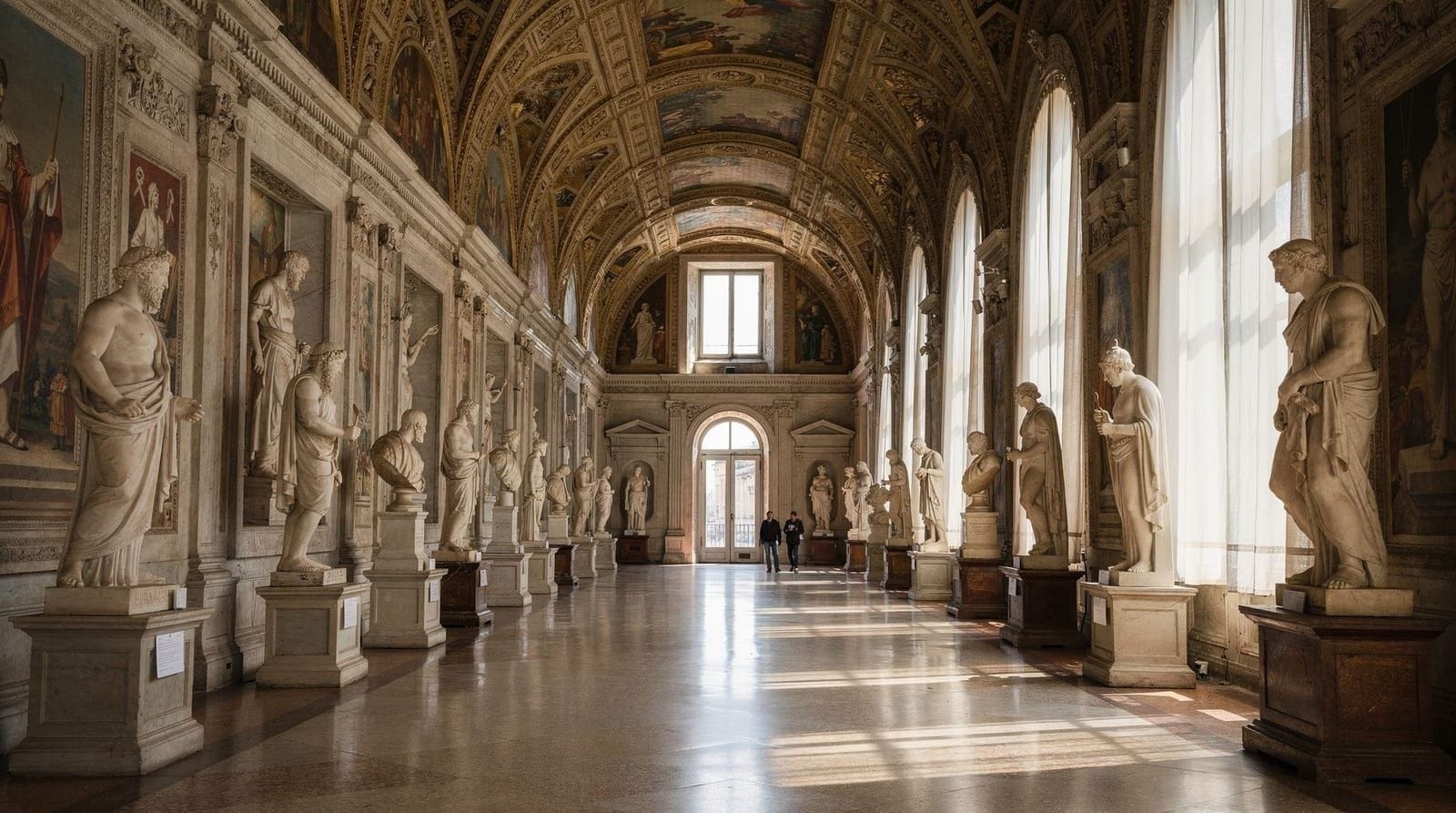
The upper residential floors contain the papal apartments, created primarily under Popes Nicholas V, Alexander VI, and Paul III in the 15th and 16th centuries. The transition from military grimness to aristocratic comfort is striking — within a few floors, rough military stonework gives way to frescoed ceilings, decorated tile floors, and carved marble fireplaces.
Sala Paolina: The main ceremonial hall, decorated with 16th-century frescoes including depictions of Alexander the Great (a subtle reference to Pope Alexander VI, the Borgia pope) and various mythological and allegorical scenes. The quality of the painting is high; the subject matter tells the story of papal self-aggrandisement as only the Renaissance could.
Camera del Perseo: Named for the Perseus myth depicted in the ceiling. The papal study, smaller and more intimate than the Sala Paolina.
Camera di Amore e Psiche: The bedroom, decorated with scenes from the Cupid and Psyche myth — an unusual choice for papal private quarters that tells something about the personalities of the Renaissance popes who occupied these rooms.
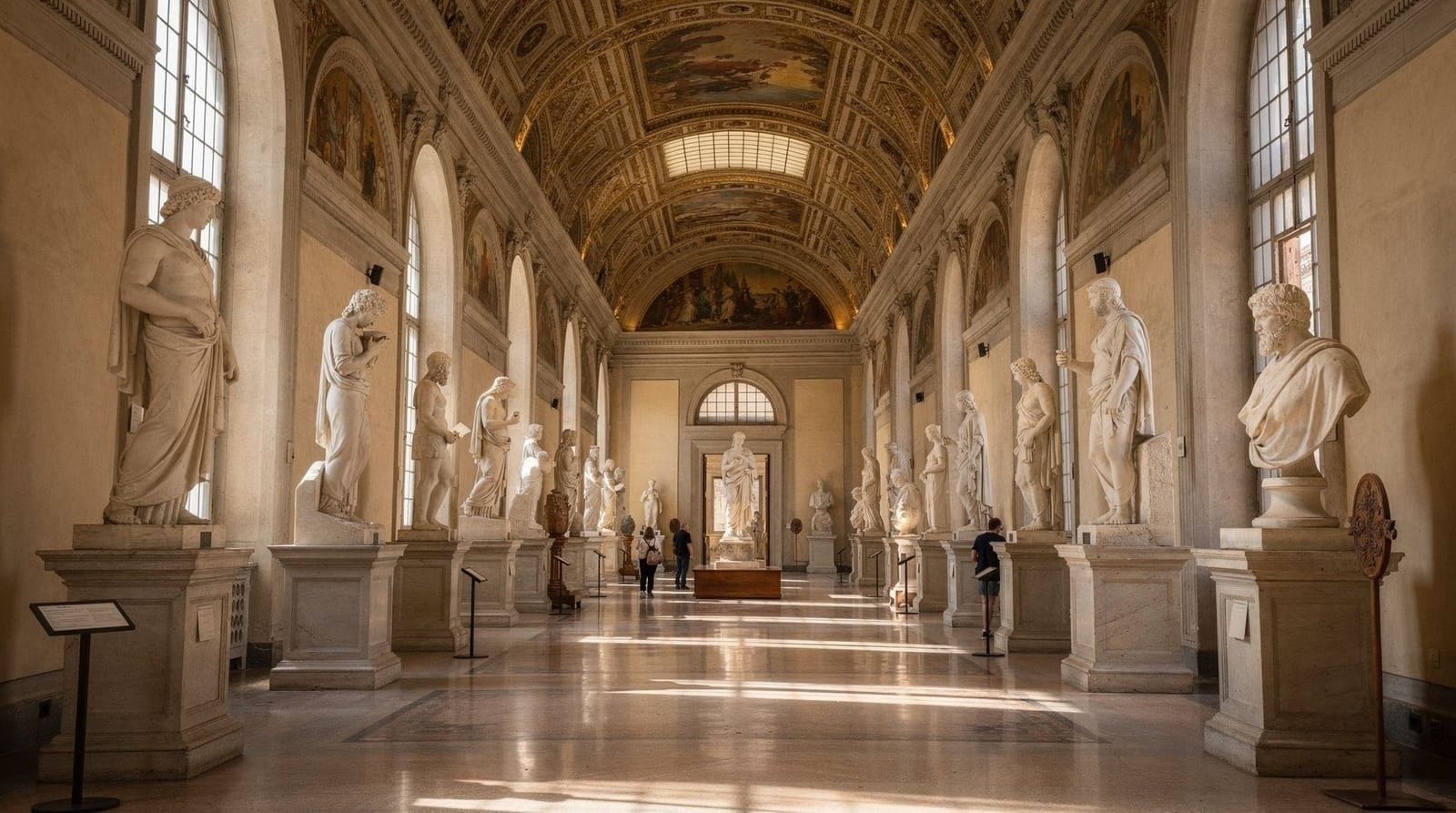
Treasury: The room where papal valuables were stored during sieges — gold, jewels, important documents, and the papal tiara. The room now displays some of the castle’s historical artefacts.
Castel Sant’Angelo skip-the-line entry with digital audioguide — reserved access and guided audio tour covering all the castle’s historical layersThe rooftop terrace
The castle’s summit terrace, dominated by the 1752 bronze Archangel Michael, is the visit’s culmination and its highlight.
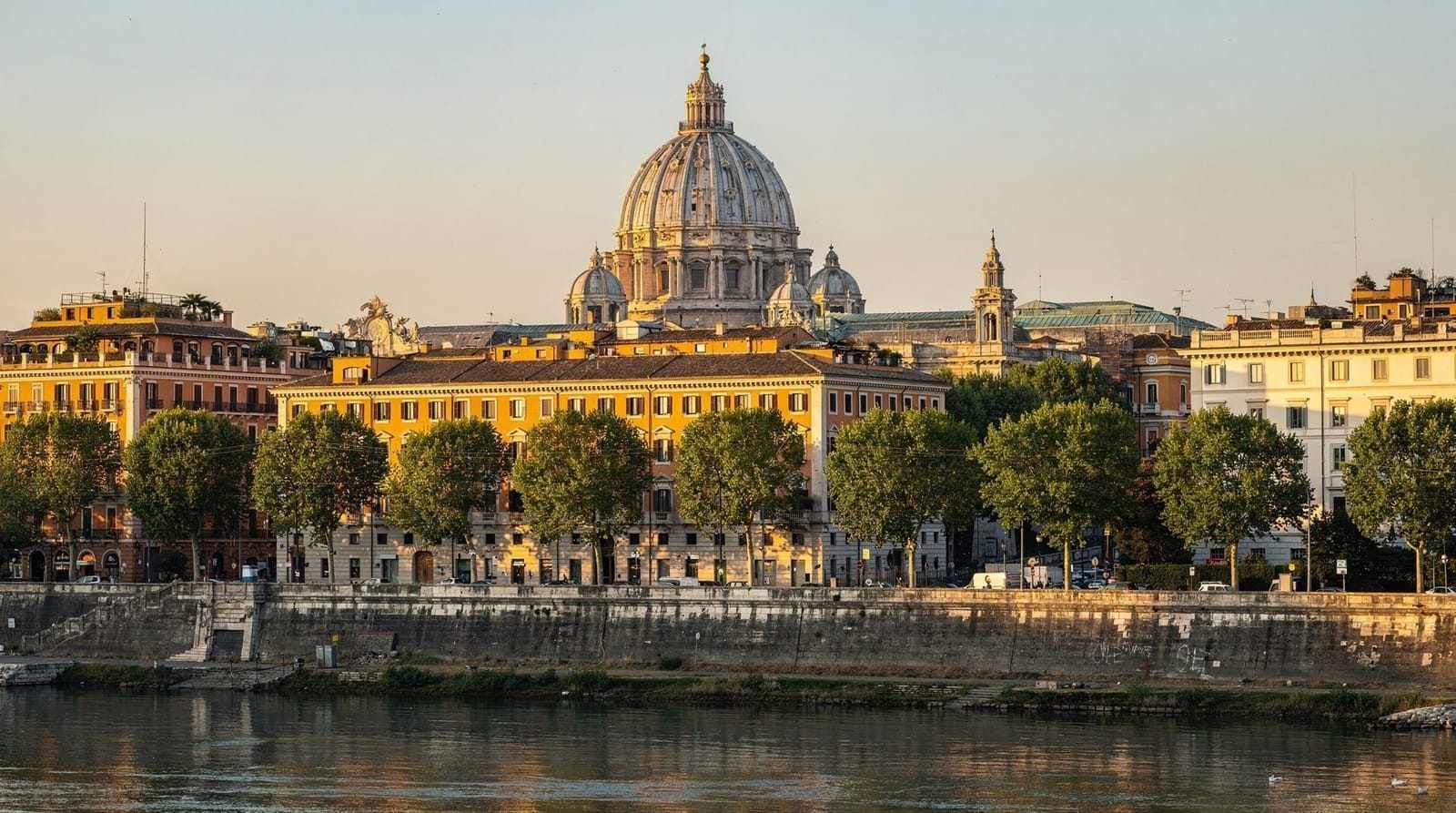
The 360-degree panorama from approximately 48 metres above the Tiber embankment is exceptional. Looking west: St. Peter’s Basilica dome fills the sky behind the Prati rooftops, with the Vatican Museums’ long wings visible to the left. Looking east: the historic centre stretches across the river — the Pantheon’s dome, the Altare della Patria’s white mass, glimpses of the Colosseum on the skyline. Looking north and south: the Tiber winds through Rome, Ponte Sant’Angelo directly below with Bernini’s angels visible from above.
The terrace also has a small café and bar — useful for a coffee break mid-visit. Views from the café seating are almost as good as from the terrace’s outer edge. On clear days (particularly in October and May), visibility extends to the Alban Hills to the southeast.
The terrace is exposed to weather. In summer (July–August), the midday sun makes it uncomfortable — visit in the late afternoon. In winter, it can be cold and windy; bring an extra layer.
Where the castle fits among Rome’s other museums
Castel Sant’Angelo is often visited as an afterthought to the Vatican, but on its own terms it competes with Rome’s better-known museum stops. Compared with the Capitoline Museums, it’s faster to see thoroughly (1.5-2 hours versus a half-day) and has the added draw of the rooftop, though the Capitoline’s ancient sculpture collection is deeper. If you’re weighing which museums are actually worth your limited time in Rome, our Rome’s best museums guide places both in context alongside the Vatican Museums and Borghese Gallery. First-time visitors building a broader plan should also see Rome for first-timers and Rome in 3 days for where a castle visit slots into a wider itinerary, and getting around Rome for the practicalities of moving between this side of the river and the historic centre.
The Ponte Sant’Angelo: Bernini’s bridge
The bridge connecting the castle to the Centro Storico is worth a deliberate walk rather than a rushed crossing. Bernini designed the ten angels flanking the bridge in 1668–1669, each carrying an instrument of Christ’s Passion (crown of thorns, nails, cross, etc.). Pope Clement IX found the originals so beautiful that he had copies made and placed the originals in Sant’Andrea delle Fratte church, where they remain today.
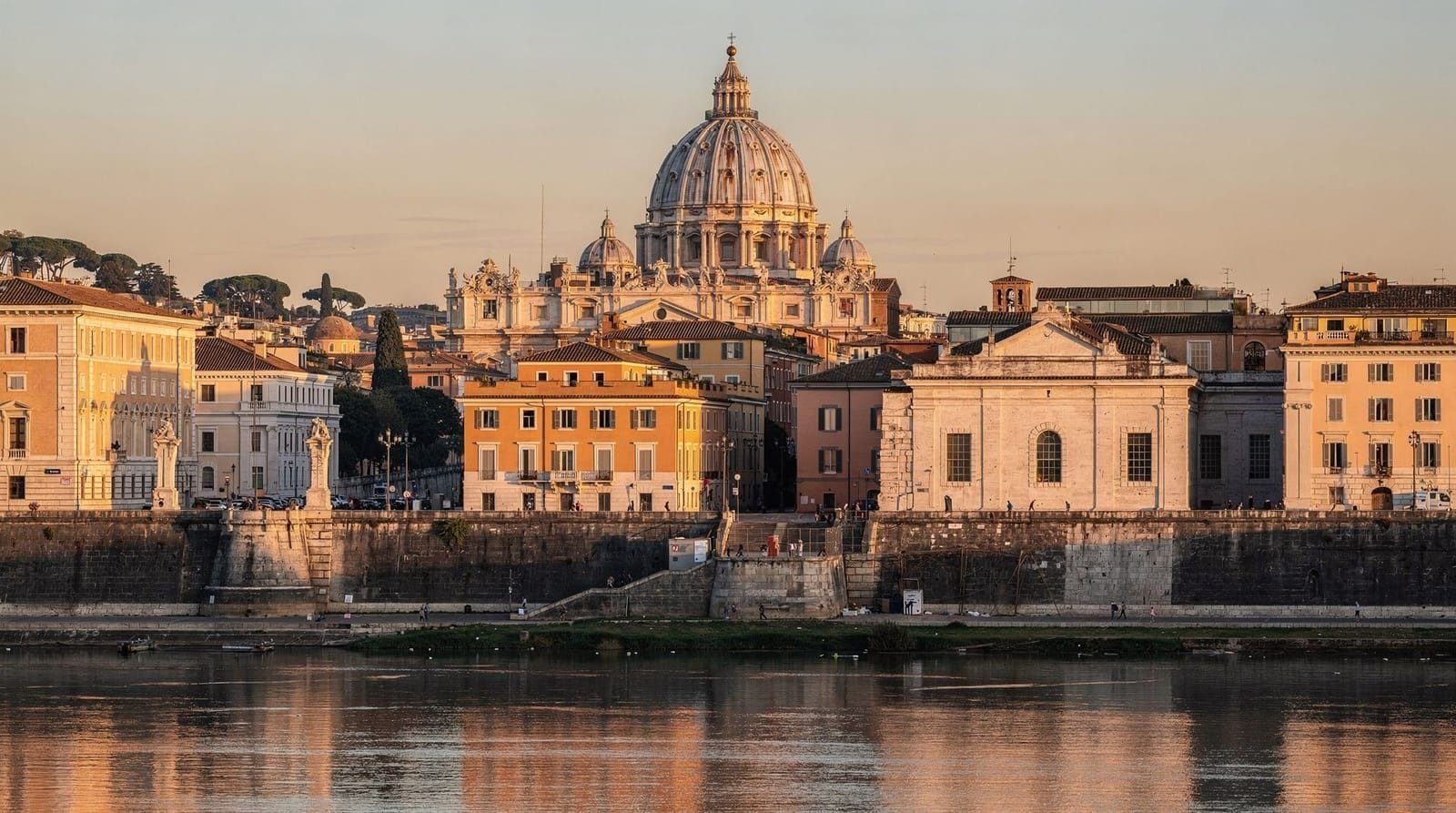
Walk the bridge in both directions — toward the castle for the building’s full frontal drama, back toward the city for the view of the bridge itself with the dome of St. Peter’s rising behind. In the evening, the bridge is lit and the reflection in the Tiber is excellent.
The bridge is one of Rome’s most photographed settings and is crowded at all hours in peak season. Early morning (before 08:00) or after dusk are the least crowded windows.
Castel Sant’Angelo ticket and audioguide — includes entry and comprehensive audio commentary covering the building’s history from Hadrian’s mausoleum to papal fortressPractical information for 2026
Tickets: €14 adult standard admission; EU citizens 18–25 reduced rate. Free first Sunday of each month (expect queues). Online booking at coopculture.it avoids the physical ticket queue; the online booking fee is small (€1–2) and worth paying in high season. No timed-entry slots — you can arrive and pay on the day.
Hours: Tuesday–Sunday 09:00–19:30 (last entry 18:30). Closed Monday. Check the official site for holiday adjustments — the castle closes on Christmas Day, New Year’s Day, and 1 May.
Getting there: Lungotevere Castello 50. Bus to Piazza Pia (many routes), then a 3-minute walk. From the Vatican Museums, approximately 15 minutes’ walk south along the Tiber. From the Pantheon/Piazza Navona area, cross the Tiber at Ponte Vittorio Emanuele II (10 minutes’ walk) or take any bus toward Prati.
Audio guide: €6 at the entrance kiosk. The included digital guide available via QR code is free. Both cover the castle’s history adequately; the €6 audio guide has more depth and is recommended for a first visit.
Accessibility: The helical ramp is accessible without stairs, but the upper levels have some steps. A lift is available for parts of the building; check at the ticket desk for current accessibility provision.
Nearby: The Prati neighbourhood immediately adjacent to the castle is Rome’s most pleasant non-touristy neighbourhood for a meal after the visit — see our Prati guide for restaurant recommendations.
Photography: The rooftop terrace and the Ponte Sant’Angelo are both among Rome’s most photographed spots, and for good reason — the combination of the bronze Archangel Michael statue, the river, and St. Peter’s dome in one frame is hard to replicate elsewhere in the city. A wide-angle lens or phone’s wide mode captures more of the panorama than a standard zoom; tripods are not permitted on the terrace, so brace against the parapet for low-light shots near closing time.
Combining Castel Sant’Angelo with the Vatican
The castle is 15 minutes’ walk from the Vatican Museums and St. Peter’s Basilica, making it a natural same-day pairing. However, the Vatican complex is a major time commitment (3–4 hours minimum), and adding 2 hours at the castle creates a genuinely exhausting full day.
Practical recommendation: If visiting the Vatican Museums and Sistine Chapel in the morning (book a 09:00 entry time), combine with the castle in the afternoon for a 16:00 visit — golden-hour rooftop views are the reward. Have dinner in Prati afterward rather than crossing the river.
If you have a separate Vatican-focused day planned, consider pairing the castle with a more relaxed exploration of the Vatican and Prati neighbourhood — walk the Ponte Sant’Angelo, explore the Prati market streets (Via Cola di Rienzo), and visit the castle mid-morning before the terrace gets hot.
For comprehensive Vatican planning, see the Vatican Museums and Sistine Chapel guide and St. Peter’s Basilica guide.
Castel Sant’Angelo entrance ticket with audioguide — skip the ticket queue with pre-booked access, audio commentary in English includedFrequently asked questions about Castel Sant'Angelo: from mausoleum to fortress, a visitor's
What was Castel Sant'Angelo originally built as?
Why is it called Castel Sant'Angelo (Castle of the Holy Angel)?
What is the Passetto di Borgo and how does it relate to the castle?
Were there ever real prisoners in Castel Sant'Angelo?
What are the papal apartments in Castel Sant'Angelo?
What is the best time of day to visit Castel Sant'Angelo?
Is Castel Sant'Angelo worth it compared to other Rome museums?
Does Castel Sant'Angelo get crowded?
Top experiences
Bookable activities with verified prices and instant confirmation on GetYourGuide.