Trastevere
Honest guide to Trastevere, Rome's most romantic quarter: cobbled lanes, Roman trattorias, food tours, best aperitivo bars, and how to avoid tourist traps.
Rome: Food Tour in Trastevere 20+ Tastings Free Flowing Wine
Quick facts
- Getting there
- Tram 8 from Largo Argentina; buses H, 23, 780
- Best time
- Evening for atmosphere; morning for quiet cobblestones
- ZTL
- Night/weekend ZTL enforced — no cars in the core
- Character
- Cobbled, photogenic, vibrant — and increasingly touristy
- Noise
- Very loud at weekends after 9 pm; pack earplugs
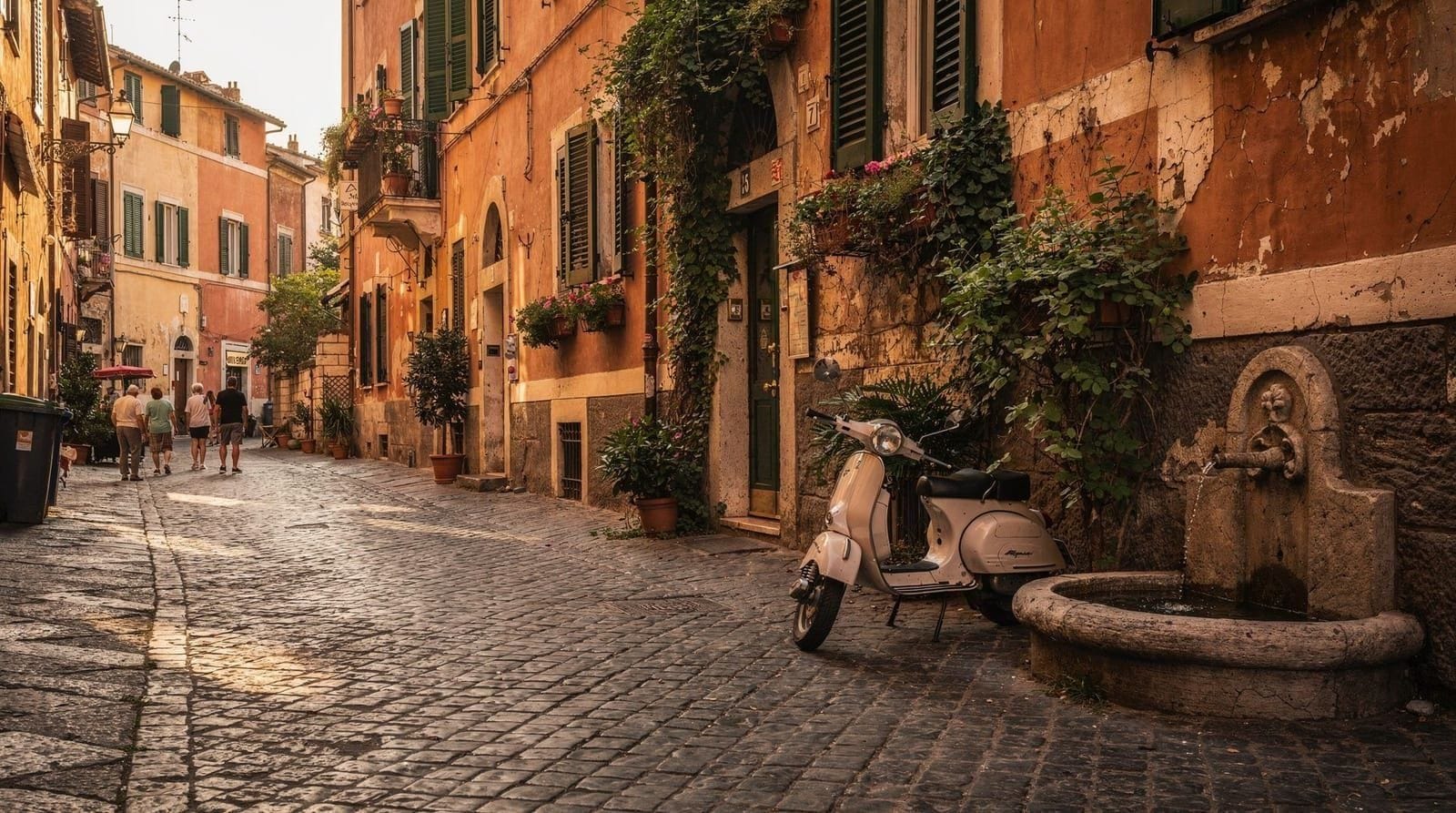
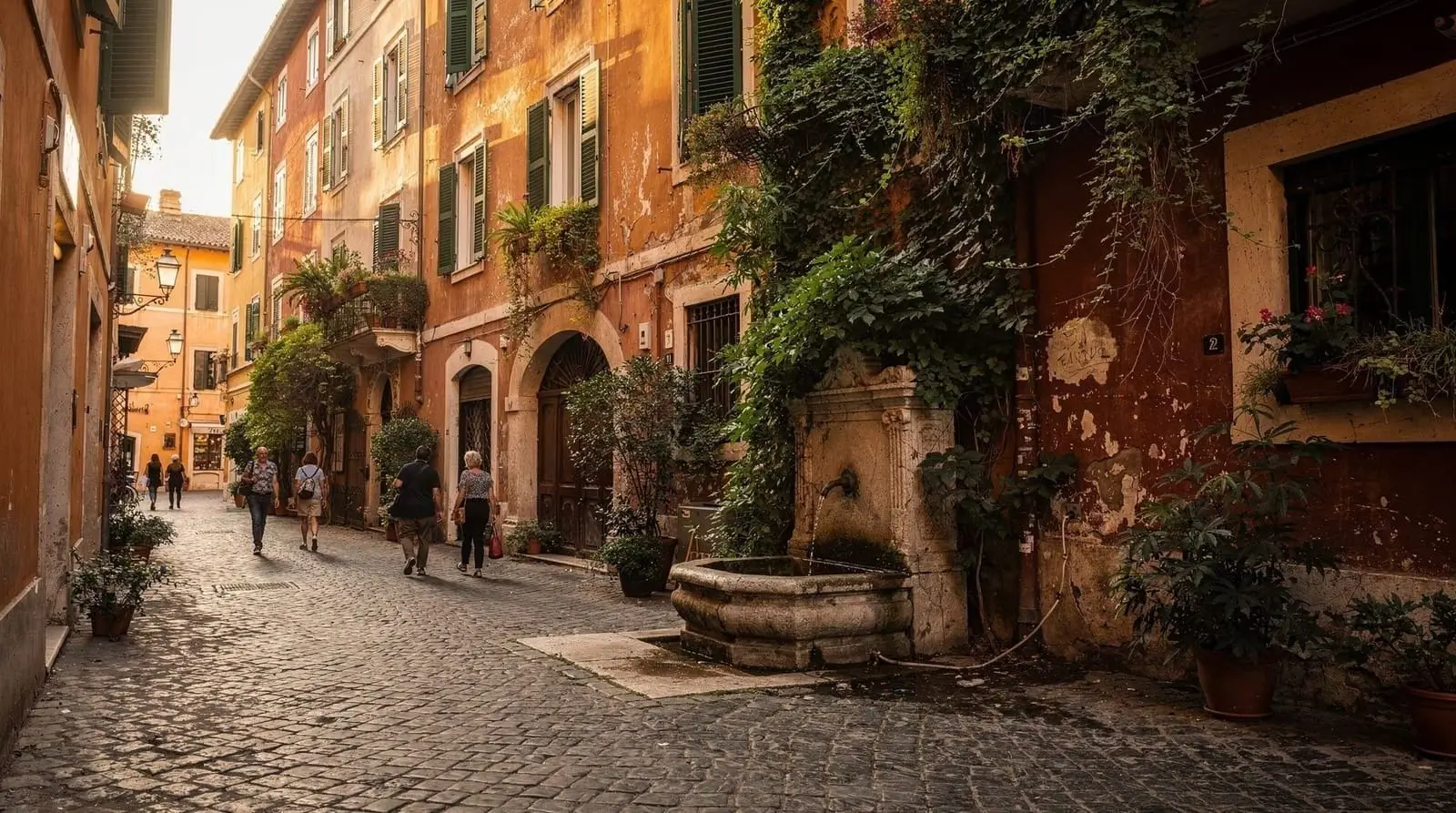
Trastevere — literally “across the Tiber” — is where Rome stops performing and becomes itself. The quarter’s labyrinth of ochre and terracotta buildings, draped with ivy and laundry, built against each other over centuries, produces streets that resist grids entirely. The name comes from the Latin trans Tiberim and the neighborhood has been a working-class Roman quarter since antiquity: merchants, artisans, fishermen from the river. Today it has been partially colonized by tourism, but the bones remain.
The honest assessment: Trastevere is wonderful but not undiscovered. The main square, Piazza di Santa Maria in Trastevere, is surrounded by restaurants whose menus exist entirely for visitors. The real Trastevere experience involves walking away from the main square — on side streets like via della Lungaretta, via dei Vascellari, and the quieter lanes south toward the Gianicolo hill.
| Where | West bank of the Tiber, south of Vatican & Prati |
| Getting there | Tram 8 from Largo Argentina (~10 min), or a 15–20 min walk from Campo de’ Fiori |
| Cost to visit | Free to wander; a glass of wine on the piazza runs around €4–6 |
| Time needed | Half a day for sights, a full evening for the food/nightlife scene |
| Best time | Morning for the basilica and quiet lanes; evening for atmosphere and aperitivo |
Santa Maria in Trastevere
The basilica at the heart of the neighborhood is one of Rome’s oldest churches, possibly the first publicly built church in the city. The current structure dates largely from the 12th century. The golden apse mosaics — particularly Pietro Cavallini’s Life of the Virgin (c. 1291) — are among the most important pre-Renaissance works in Rome and are consistently underattended. Entry is free. It is worth sitting quietly for 20 minutes, particularly in the morning light.
The piazza in front — Piazza di Santa Maria in Trastevere — is one of Rome’s great public spaces, anchored by an ancient fountain and surrounded by outdoor café tables. It is the social center of the neighborhood in the evening. The cafés on the piazza charge €4–6 for a glass of house wine. That is honest Roman bar pricing for an outdoor table at a landmark piazza — compare with the €12–15 cocktails at Trevi or Navona.
The food in Trastevere
Food is Trastevere’s central argument. The neighborhood concentrates trattorias, enotecas, pizza al taglio counters, and aperitivo bars within about 20 walkable minutes. The tourist-heavy streets around the main square have higher prices and lower authenticity. The good food is one to three blocks off.
Trattorias worth knowing:
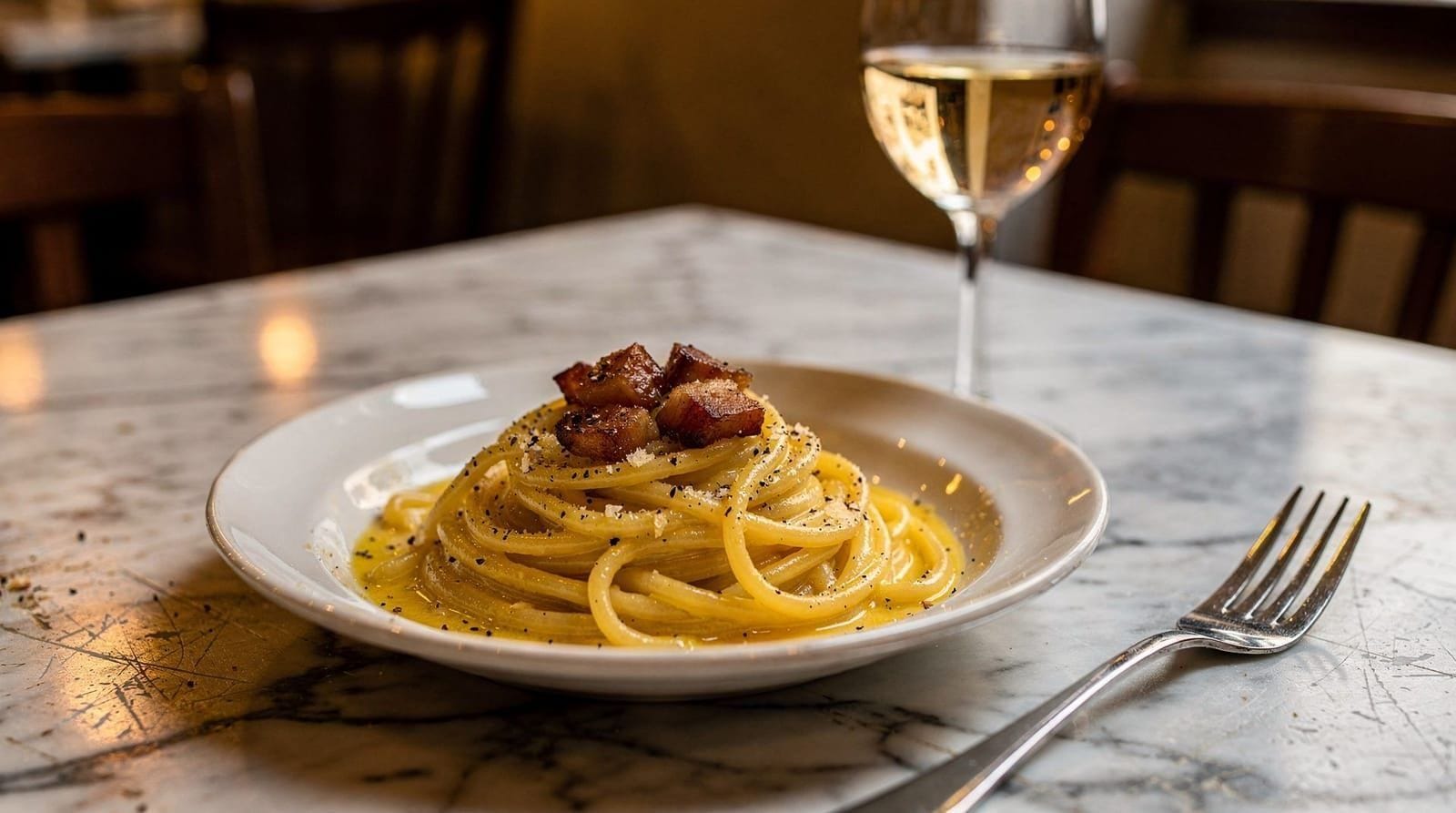
- Da Enzo al 29 (via dei Vascellari) — small, reservation-required, serves Roman classics (cacio e pepe, oxtail, carciofi) with real local clientele; reserve 1–2 weeks ahead.
- Tonnarello (via della Paglia) — large, bustling, Roman classics at reasonable prices; outdoor tables on good weather evenings; walk-in friendly.
- Grazia & Graziella — less known, genuinely local, simple and inexpensive; neighborhood institution.
- Pizzeria Ai Marmi (viale Trastevere) — nicknamed “the morgue” for its marble tables; superb thin-crust Roman pizza, long wait times, no reservations.
Street food and wine:
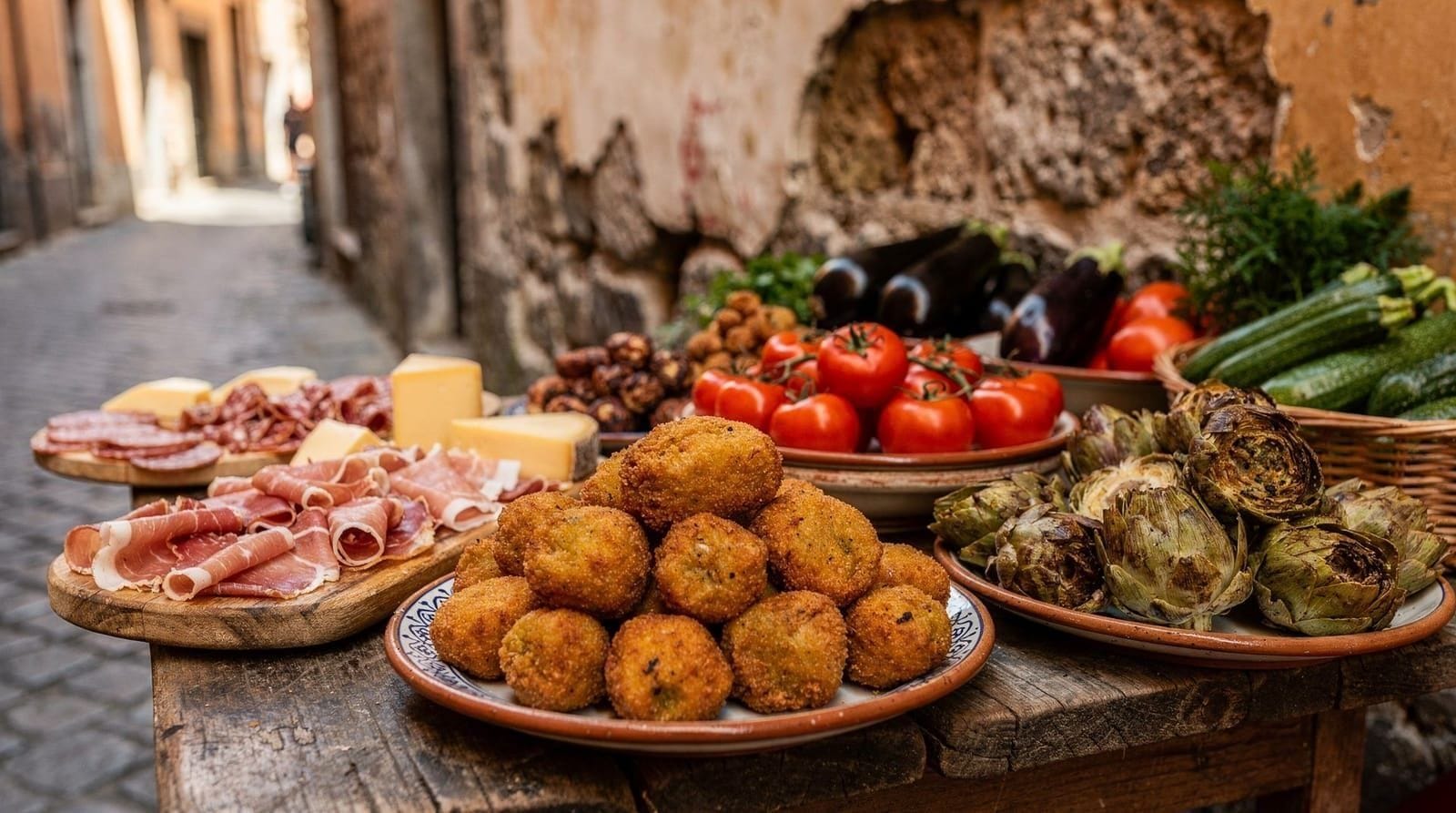
- Supplì Roma (viale Trastevere) — fried rice balls with ragù and mozzarella; €2–3 each, eat standing.
- Biscottificio Artigiano Innocenti (via della Luce) — small bakery doing biscotti and pastries; iconic local institution.
- Wine bars: Enoteca Ferrara and Spirito DiVino are among the better wine-focused spots for a sit-down glass or bottle with Roman small plates.
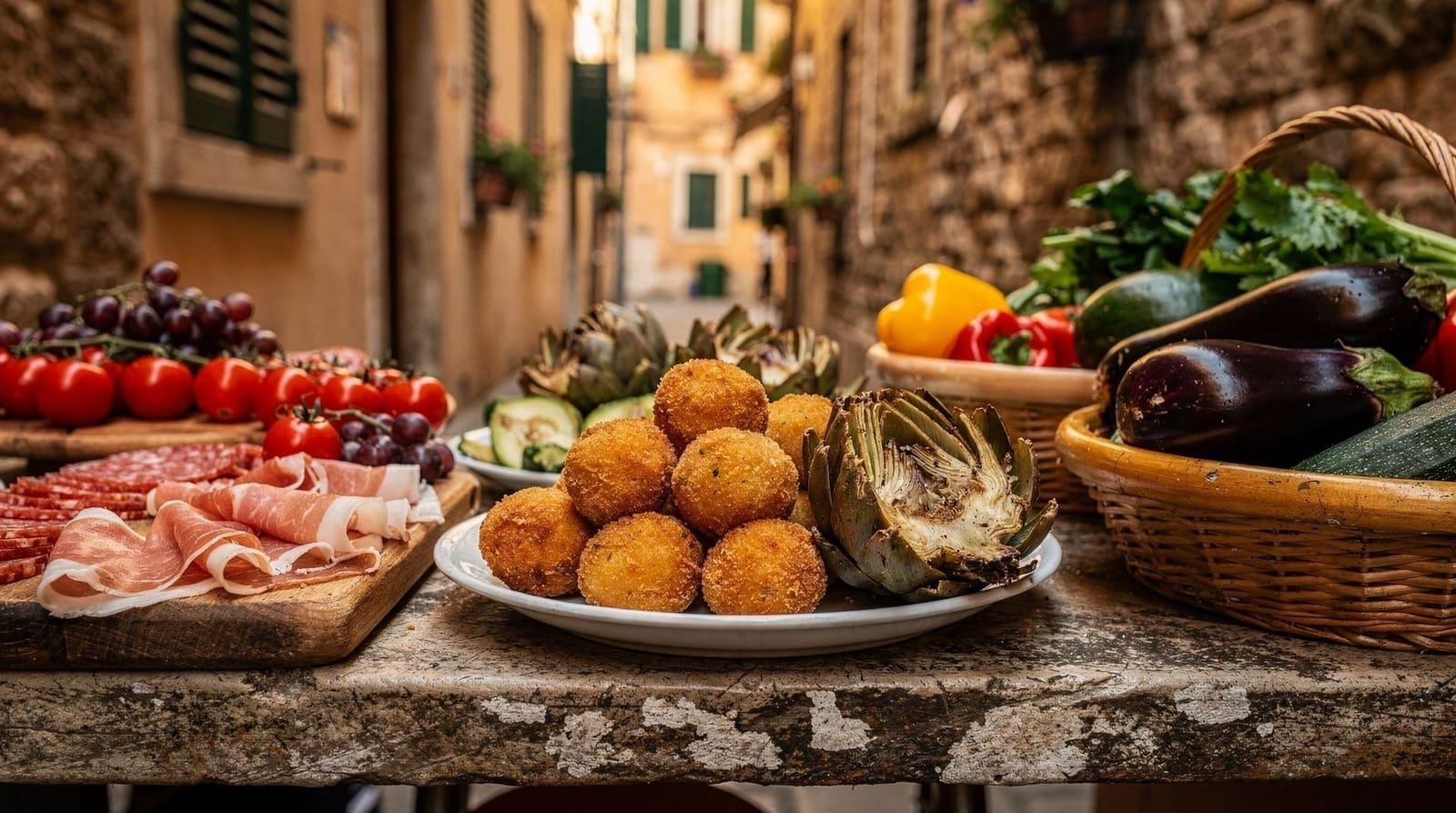
A Trastevere food and wine tasting tour with 20 stops is genuinely good value if you want introduction to Roman specialties (supplì, pizza al taglio, carbonara, gelato, local wine) rather than just eating blind. A Trastevere secret food tour covers the less-obvious side streets and producers that most visitors walk past.
Honest note on restaurants near the piazza: The restaurants directly on Piazza di Santa Maria and the immediate surrounding streets (via della Scala, via del Moro) include a mix of genuinely decent places and places that rely purely on location. Check current reviews and look at the clientele before sitting down. A restaurant full of locals at 8 pm is a better signal than one full of tourists at 6 pm.
Aperitivo and nightlife
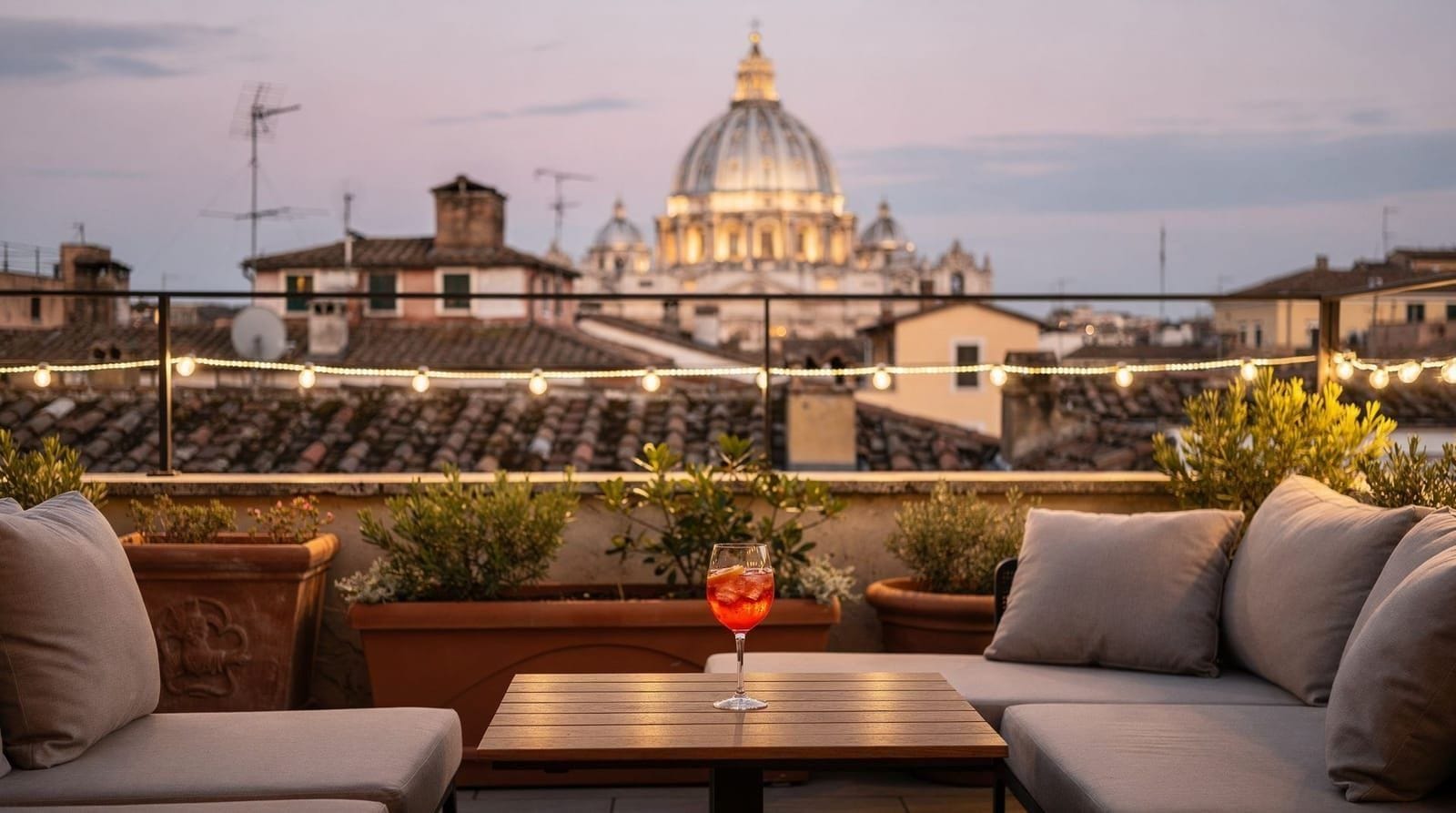
Trastevere at night is one of Rome’s most social neighborhoods. From about 7 pm, the streets fill with pre-dinner aperitivo drinkers; by 10 pm on weekends it is loud and packed.
For drinks:
- Ma Che Siete Venuti a Fà (via Benedetta) — small, packed craft beer bar; often a queue outside.
- Freni e Frizioni (via del Politeama) — converted mechanic’s workshop; good cocktails and generous aperitivo snacks; very popular, gets crowded after 8 pm.
- Bar San Calisto — legendary dive bar; cheap house wine (€1.50 a glass), regular local clientele mixed with tourists, informal.
Noise consideration: If you are staying in Trastevere and value sleep, book a room on a quiet side street rather than anywhere near Piazza di Santa Maria or via del Moro. Weekends are genuinely very loud until 1–2 am. This is not an exaggeration — Trastevere residents and the municipality have had ongoing disputes about the noise for years.
Sights beyond Santa Maria
Villa Farnesina (via della Lungara) — a Renaissance villa with Raphael frescoes, often overlooked because it sits just outside the tourist core. The Galatea and the Loggia of Psyche are comparable to works in the major museums, with a fraction of the visitors. Entry €10. Closed Sunday afternoons and all day Monday.
Gianicolo Hill — the terrace above Trastevere offers the best panoramic view of Rome from ground level in the city. Walk up via Garibaldi or take a bus. The equestrian statue of Garibaldi, the morning cannon shot at noon (daily, has done this since 1847), and the view are all worth it. There is an ice cream cart at the top.
Basilica di San Crisogono (viale Trastevere) — contains a largely intact early Christian church preserved underground; tours available and uncrowded.
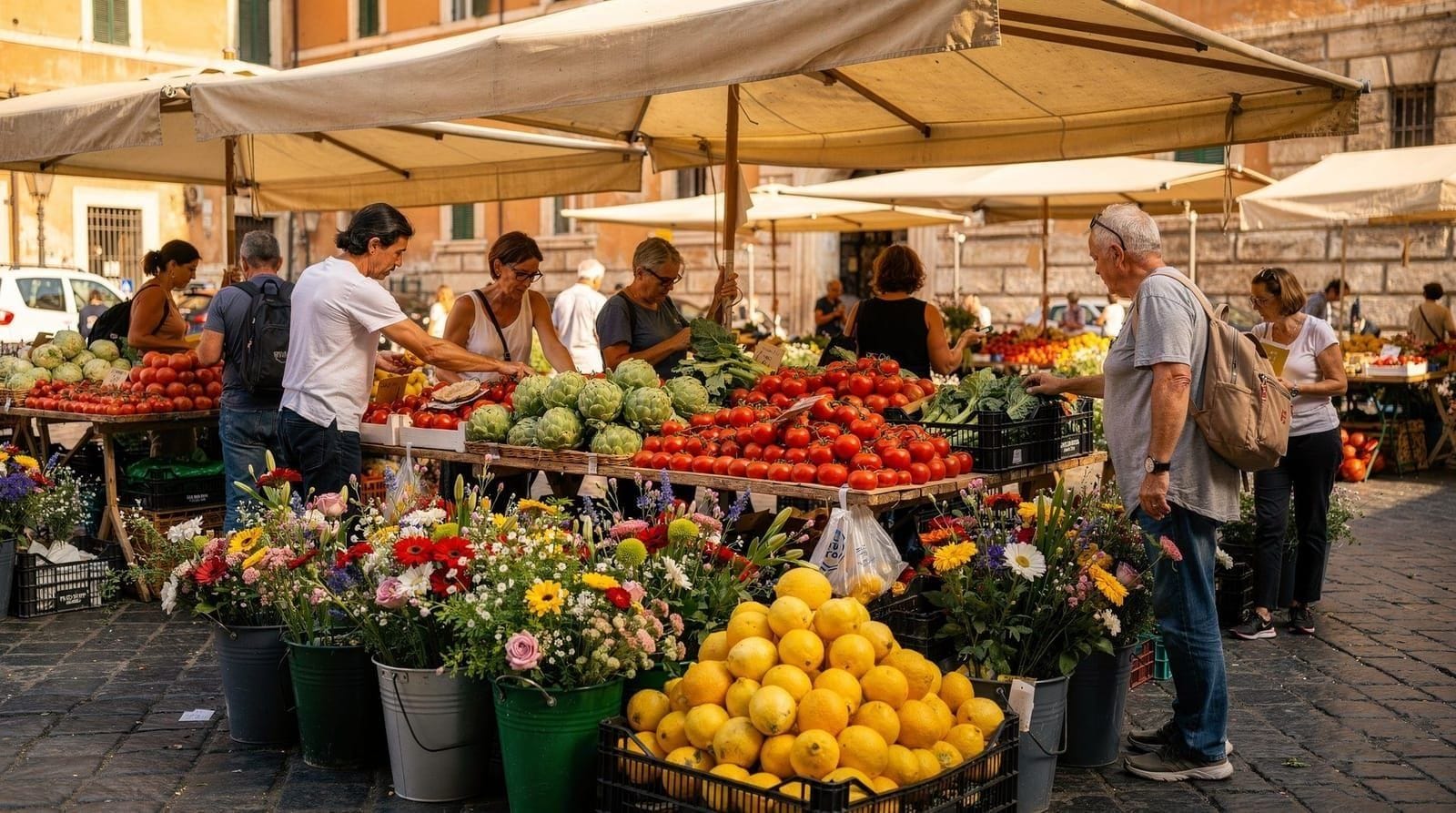
Porta Portese market — every Sunday morning, running from Trastevere along viale Trastevere, one of Rome’s great flea markets. Furniture, vintage clothing, books, bikes, and everything else. Go early (7–9 am) for the real dealers; after 10 am it becomes a general market. See Porta Portese flea market.
Getting to Trastevere
Trastevere has no metro station. Options:
- Tram 8 from Largo Argentina (heart of Centro Storico): fast, direct, 10 minutes.
- Bus H from Termini: longer but covers the viale Trastevere spine.
- Bus 23 or 280 from Piazza Navona or along the Lungotevere (river road).
- On foot from Centro Storico: Cross Ponte Sisto or Ponte Garibaldi — a 15-20 minute walk from Campo de’ Fiori.
Driving/ZTL: The Trastevere ZTL operates primarily at night and on weekends (specific hours vary — check before driving). The consequence is the same as elsewhere: camera-triggered fines on your card, weeks later. Do not drive in.
Where to stay in Trastevere
Staying in Trastevere means authentic streetscape, great dining, and short walks to Centro Storico and Testaccio. It also means noise at weekends and slightly higher prices for accommodation than Monti or Esquilino.
Good choices:
- Hotel Santa Maria (vicolo del Piede) — former convent, courtyard with orange trees, calm despite the location; one of Trastevere’s best mid-range hotels.
- Residenza San Calisto — simple, well-located near the piazza; honest value.
- Orsa Maggiore B&B — women-only hostel in a historic building; excellent for solo female travelers.
Budget: Guesthouses and B&Bs in Trastevere run €80–150/night for a double in peak season. Noisier rooms facing the main alleys will be cheaper — ask for an internal courtyard or upper floor if you need sleep.
How Trastevere fits into a Rome itinerary
Trastevere is best combined with nearby Testaccio for a full food-and-neighborhood day. The two are a 20-minute walk apart via Ponte Sublicio or Lungotevere.
Half-day option: Morning in Trastevere (Santa Maria basilica, Gianicolo, Villa Farnesina), lunch at Da Enzo al 29, afternoon walk south to Testaccio.
Evening only: Aperitivo at Freni e Frizioni, dinner at Tonnarello or Pizzeria Ai Marmi, passeggiata around the piazza. Add this as an evening from any base in the center.
For 3-day Rome itineraries, Trastevere works as a half-day combined with either Centro Storico or Testaccio.
The churches of Trastevere
Beyond Santa Maria in Trastevere, the neighborhood has several significant churches that reward a slower visit:
Santa Cecilia in Trastevere (piazza di Santa Cecilia) — the church built over the house where St. Cecilia was martyred in the 3rd century. The main draw is Pietro Cavallini’s Last Judgment fresco (c. 1293) in the nuns’ choir — one of the most important surviving works of pre-Giotto Italian painting. Access to the choir (upstairs) requires a small fee and has limited hours (check current schedule). The excavations under the church reveal the original Roman house, including what may have been the steam room where Cecilia was subjected to suffocation. Stefano Maderno’s recumbent marble sculpture of Cecilia (1600) in the nave, showing her exactly as described when her tomb was opened in 1599, is one of Rome’s most affecting works of art.
San Francesco a Ripa (piazza San Francesco d’Assisi) — a Franciscan church with Bernini’s Blessed Ludovica Albertoni in the Altieri chapel (last on the left). This is a late Bernini (1674), less famous than the Ecstasy of St. Teresa in Santa Maria della Vittoria, but comparable in emotional intensity — Ludovica’s dying ecstasy rendered in marble with extraordinary technical control. Free.
San Pietro in Montorio and the Tempietto — at the top of the Gianicolo hill, reached via via Garibaldi. Bramante’s Tempietto (1502) in the courtyard of San Pietro in Montorio is often cited as the first truly High Renaissance building — a small circular temple on the spot traditionally identified as Peter’s crucifixion site. It is tiny but architecturally monumental. The church itself has a Sebastiano del Piombo fresco. Free.
Walking Trastevere: the quiet routes
The standard tourist route through Trastevere follows via della Lungaretta to the main piazza and back via via della Scala. The quieter alternative:
From Ponte Sisto: enter Trastevere via via di Santa Dorotea toward the Fontana di Ponte Sisto (a 15th-century fountain in a small piazza). Walk via del Moro away from the main square, then left on via della Scala (this street is touristic but interesting for its market and herb vendors). Continue past Santa Maria in Trastevere (briefly) and then take via dei Vascellari or via Anicia south — quieter lanes with actual residents, drying laundry, and neighborhood bars.
The Piazza in Piscinula (near the Tiber bank) is one of Trastevere’s oldest piazzas, with a tiny medieval church (San Benedetto) containing a 13th-century floor and walls. Almost no tourists ever visit.
Via della Luce (north of the main piazza) has one of the best small piazzas in Trastevere — shaded, with a bar (Biscottificio Innocenti nearby) and a genuinely neighborhood atmosphere.
Trastevere for families
Trastevere is actually quite manageable with children:
- The cobbled streets are stroller-manageable in the main lanes (wider than many Roman streets) but some side alleys are awkward.
- Villa Sciarra (via Calandrelli) — a small public park at the south end of Trastevere, with playground equipment, cats, and shade; good for young children.
- Gianicolo — the hill above Trastevere has a daily cannon shot at noon (a tradition since 1847) that children consistently find remarkable. There is also a puppet theater in the park (Burattinaio Lupi) that performs traditional shows.
- Ice cream: Fatamorgana on via Roma Libera or the gelaterie on viale Trastevere.
The neighborhood is not buggy-inaccessible but has uneven cobblestones throughout. Bring a sling/carrier for narrow alleys if traveling with infants.
Trastevere in a 3-day Rome itinerary
Most 3-day itineraries include Trastevere as an evening destination combined with a daytime visit elsewhere. The most efficient combination:
Day 2 (suggested): Morning in Centro Storico — Pantheon and Piazza Navona. Afternoon: cross to Trastevere via Ponte Sisto for Villa Farnesina, Santa Cecilia, Santa Maria in Trastevere. Dinner in the neighborhood. Aperitivo at Freni e Frizioni.
Alternatively: Combine Trastevere with Testaccio on the same day — morning market in Testaccio, lunch there, walk across Lungotevere to Trastevere for afternoon and evening.
For full hour-by-hour planning see Rome in 3 days and Rome romantic weekend.
Trastevere on a budget
Trastevere has a reputation for being pricier than it needs to be, but the honest picture is mixed. The sit-down restaurants directly on Piazza di Santa Maria charge a premium for the view, and a full dinner with wine there can run €35–45 per person. Walk two or three streets away and the same quality of Roman cooking drops to €20–25. The cheapest genuine meal in the neighborhood is standing at a supplì counter (€2–3 a piece) or a slice of pizza al taglio, both of which double as an honest lunch for under €10.
For a full evening — aperitivo, dinner, gelato — budget €35–50 per person if you avoid the piazza-front tables and follow locals rather than menus with photos. That is broadly in line with the rest of central Rome; see the Rome on a budget guide and the 3-day Rome budget breakdown for how a Trastevere evening fits into a wider trip budget.
Safety, scams and etiquette
Trastevere is not a dangerous neighborhood, but it shares Rome’s general tourist-area pickpocket risk, especially in the crowded lanes around the piazza after dark and on the tram itself. Keep bags zipped and in front of you in any crush. Menu touts occasionally work the streets just off the piazza, gesturing customers toward a “special” table — a polite decline and a walk to a recommended address works fine; see the Rome tourist traps guide and Rome scams to avoid for the patterns that repeat across the city.
Etiquette-wise, Trastevere is more relaxed than the historic center, but residents do live here — keep noise down on the smaller residential lanes after midnight, and expect some pushback if you linger loudly outside someone’s front door. The neighborhood’s ongoing tension with weekend nightlife noise (see above) is exactly why.
Trastevere vs Testaccio vs Monti at a glance
If you are deciding where to spend an evening — or where to stay — this comparison covers the three neighborhoods most often shortlisted together:
| Trastevere | Testaccio | Monti | |
|---|---|---|---|
| Character | Cobbled, romantic, busy | Working-class, market, clubs | Boho, artisan shops, calmer |
| Food scene | Trattorias, aperitivo bars | Roman offal classics, market stalls | Wine bars, small kitchens |
| Nightlife noise | Very loud weekends | Loud near the clubs, quieter elsewhere | Mellow, low-key |
| Best for | First-time atmosphere seekers | Serious eaters, nightlife | Quiet base near the Forum |
| Tourist density | High around the piazza | Moderate | Moderate-low |
For neighborhood-specific detail, see the Trastevere neighborhood guide, the Trastevere food guide, and the Rome aperitivo & nightlife guide.
Frequently asked questions about Trastevere
Is Trastevere still authentic or has it been taken over by tourists?
Both. The main piazza and adjacent streets are heavily touristy. Three or four blocks away — especially toward the Gianicolo or south via dei Vascellari — the neighborhood is still genuinely residential with local trattorias and bars. The bones of the place are real; you just have to walk a little further for them.
What is the best way to experience Trastevere like a local?
Avoid the main piazza for dinner. Eat at a trattoria on a side street (reservations usually needed 1 week ahead at the best spots). Go to Bar San Calisto for cheap wine. Walk up to the Gianicolo at sunset. Come back on Sunday morning for the Porta Portese market.
Is Trastevere noisy at night?
Yes, significantly on Friday and Saturday nights. This is a known issue — the neighborhood has active nightlife and noise complaints are a running civic issue. If noise sensitivity is a concern, book a hotel with an internal courtyard or soundproofed windows, or stay in Monti or Aventino instead.
Can I walk to the Vatican from Trastevere?
Yes — about 30–35 minutes on foot via Lungotevere or Ponte Garibaldi/Sisto and then north. Or take bus 23 along the Lungotevere. The Vatican & Prati entry describes the route in detail.
What is the best food tour in Trastevere?
The twilight Trastevere food tour is particularly well-rated for combining the neighborhood at its most atmospheric (dusk) with a structured tasting circuit. It covers about 8–10 stops in 3 hours.
When is Porta Portese market?
Every Sunday morning, from around 6:30–7 am until 2 pm, along via Portuense and viale Trastevere. Best from 7–9 am for serious dealers; after 10 am it fills with casual market traffic.
Is Trastevere expensive compared to the rest of Rome?
Right on the main piazza, yes — expect a premium for the location. Two or three streets away, prices for a trattoria meal or a glass of wine are in line with the rest of central Rome, roughly €20–25 for a full meal. See the Rome on a budget guide for a citywide comparison.
Top experiences
Bookable activities with verified prices and instant confirmation on GetYourGuide.