Monti
Monti is Rome's best all-round neighborhood: bohemian streets, craft wine bars, boutiques, and 10 minutes from the Colosseum. Honest guide for 2026.
Rome: Domus Aurea, Nero's Golden House Guided Tour
Quick facts
- Metro
- Line B — Colosseo (5 min walk)
- Character
- Bohemian, artsy, local — Rome's best all-round neighborhood
- Walking time to Colosseum
- 5–8 minutes on foot
- Best for
- Couples, repeat visitors, wine bars, boutiques
- Noise level
- Manageable — livelier around Piazza della Madonna dei Monti
Monti is the neighborhood Romans recommend when asked where to stay. That recommendation is increasingly well-known, which means Monti is no longer undiscovered — but it is still genuinely livable in a way that Centro Storico is not. The streets are walkable and human in scale, the restaurants are mostly real rather than tourist-oriented, and you are 8 minutes from the Colosseum and 15 minutes from the Pantheon.
The ancient Romans called this area the Subura — the densely populated, sometimes notorious quarter that ran along the valley between the Esquiline and Viminal hills. Julius Caesar reputedly lived here before he could afford the Forum. Nero’s Domus Aurea was built over part of it after the great fire of 64 CE. The neighborhood has been many things. Today it is predominantly a 19th-century residential fabric — narrow streets, six-story buildings, small piazzas — inhabited by a mix of long-term Romans, creatives, and a younger professional demographic.
The character of the neighborhood
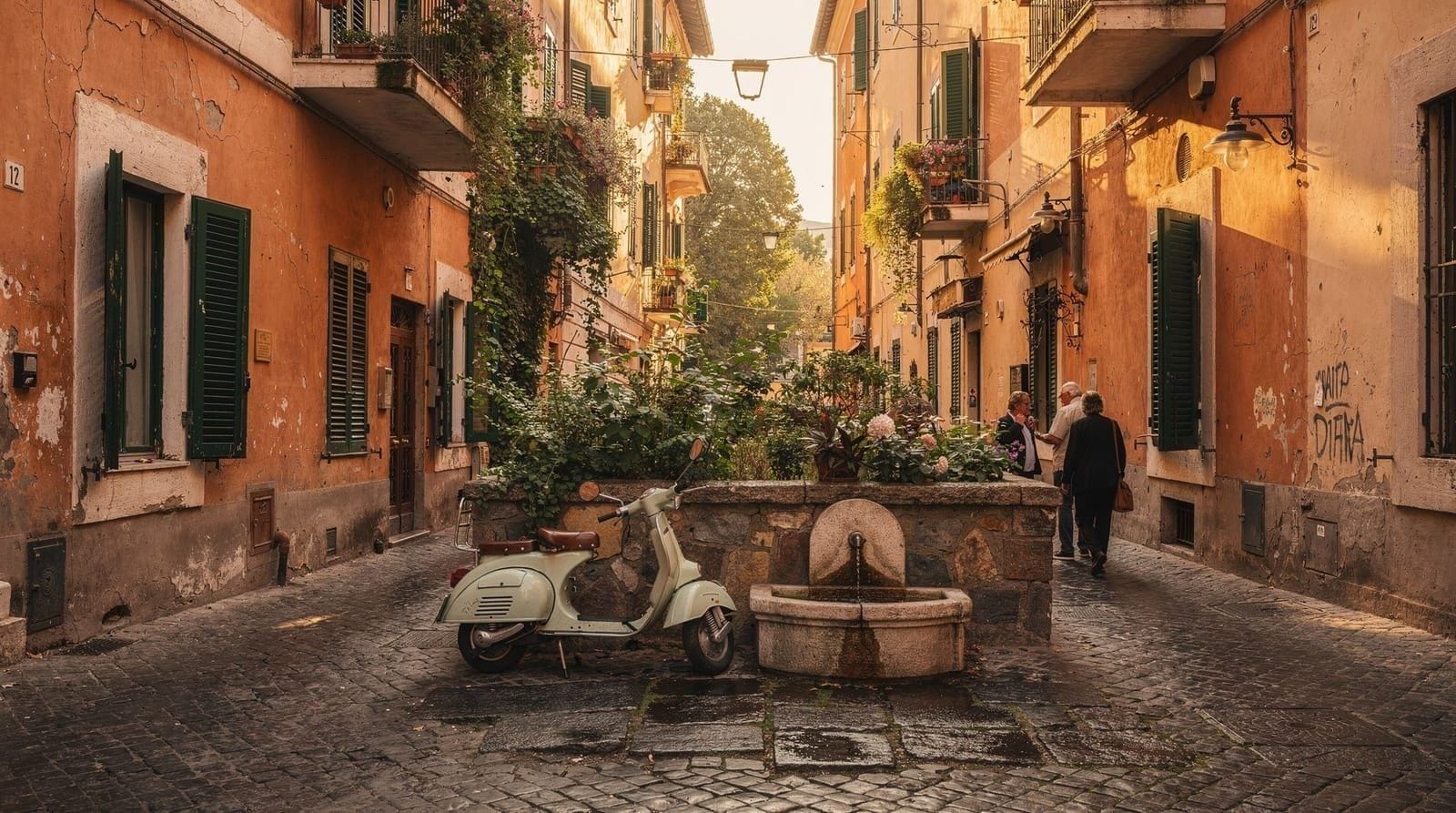
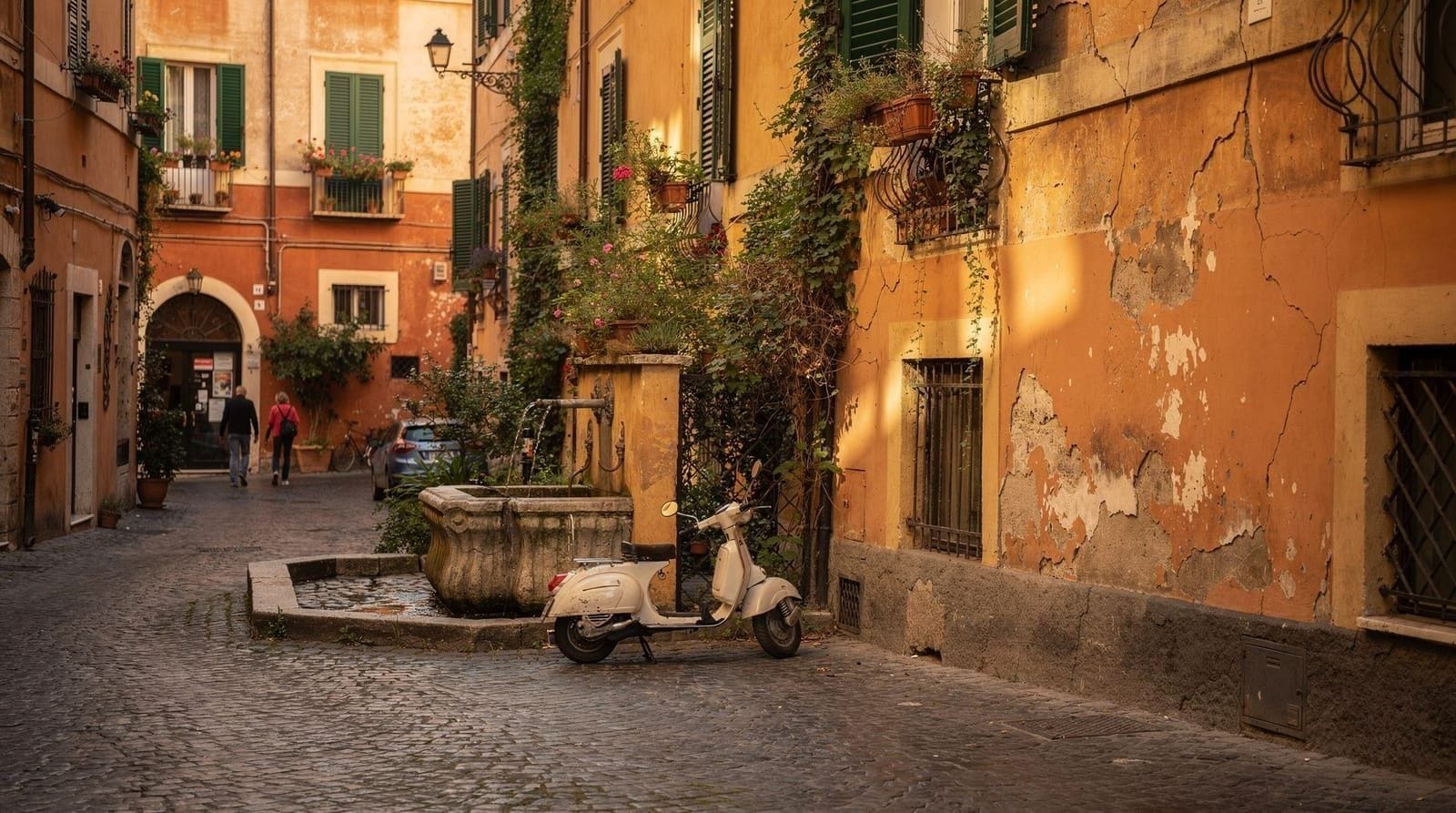
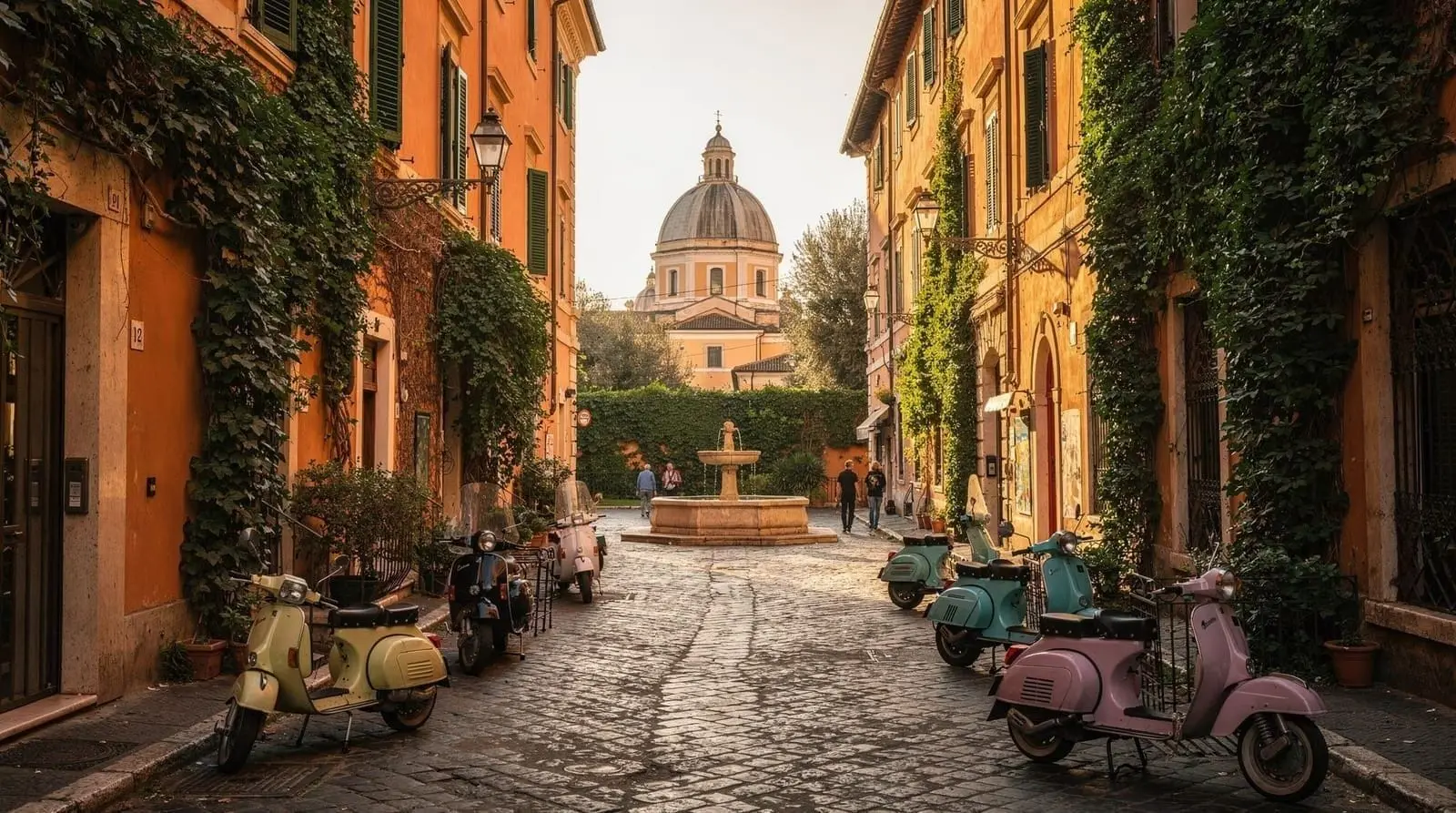
Monti’s spine is via del Boschetto and via Urbana, two streets lined with independent clothing boutiques, bookshops, vintage shops, and coffee bars. The social hub is Piazza della Madonna dei Monti, a small square with a fountain (built 1588 — yes, the fountain is from 1588) where Romans sit on the steps with wine glasses in the evening in a completely unstaged way.
The difference from Trastevere is texture. Trastevere has become a destination; its piazza is ringed with restaurants serving tourists. Monti’s piazza has one restaurant, a bar, and several staircases full of locals. This is an argument for Monti as a base and for evenings in Trastevere rather than the other way around.
What to do in Monti itself
- Browse via del Boschetto: independent boutiques selling handmade shoes, small ceramics workshops, a good independent bookshop (BIBLIOBAR, which also serves coffee). Not a shopping street built for tourists.
- Piazza della Madonna dei Monti: at aperitivo time (7–9 pm), this is one of the most genuinely Roman experiences available without trying. Bring a bottle from a nearby wine bar, sit on the fountain steps.
- The Suburra: the actual area around via della Suburra and via Cavour that runs from Monti down to the Colosseum has been excavated in parts and is interesting at street level — original Roman road surfaces visible in places, the Arco dei Pantani (an ancient gate, partly visible).
Ancient Rome from Monti
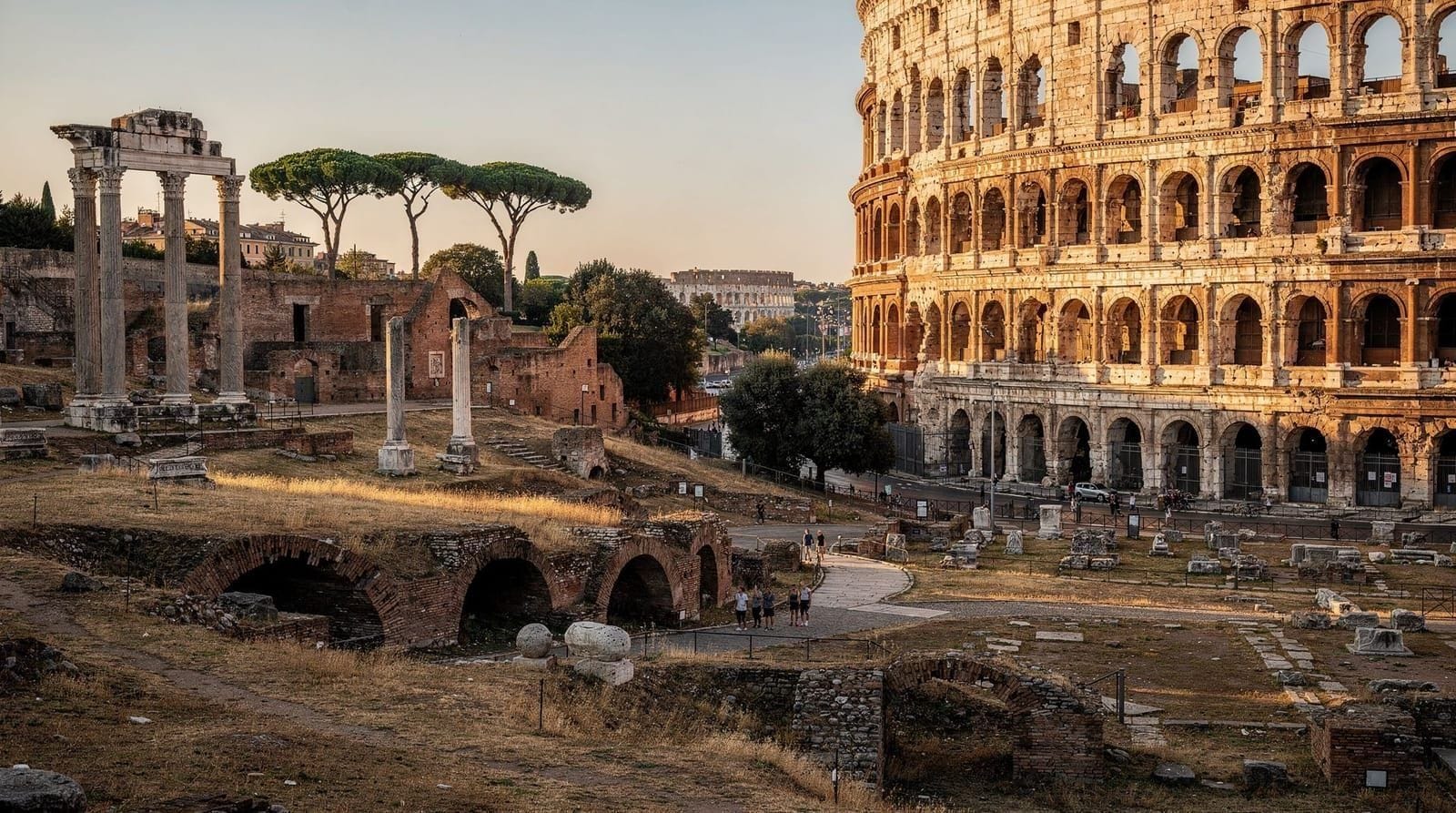
Monti’s location makes it the best base for ancient Rome sightseeing. The Colosseum is an 8-minute walk. The Roman Forum and Palatine Hill are included in the same ticket and directly adjacent. Allow a full day for all three.
Book a Colosseum, Roman Forum, and Palatine Hill group tour — the site is genuinely better with a guide because the Forum is a complex of ruins that requires interpretation. Without orientation, visitors walk through without understanding what they are looking at.
The Domus Aurea — Nero’s vast “Golden House” built after the 64 CE fire, largely buried after his death and rediscovered in the Renaissance — sits directly under the Colle Oppio park, 5 minutes from Monti. It is one of Rome’s most extraordinary and most neglected sites. Book a Domus Aurea guided tour — the experience requires a reservation and the spaces (partially restored, with VR overlay options) are extraordinary. Raphael’s artists explored it in secret in the 16th century; the grotesque style in Renaissance decoration comes from drawings they made of the ceiling paintings here.
Booking note: Both the Colosseum and Domus Aurea require advance booking. Colosseum tickets include Forum and Palatine. See Colosseum tickets guide and Domus Aurea booking guide for current pricing and slot windows.
Where to eat in Monti
Monti has a higher proportion of genuinely good restaurants to tourist-oriented ones than almost any other central Rome neighborhood.
Trattorias and restaurants:
- Ai Tre Scalini (via Panisperna) — one of Monti’s most loved wine bars, with a very solid food menu of antipasti and Roman pasta; crowded most evenings, arrive by 7 pm for a table.
- Alle Carrette (vicolo delle Carrette) — inexpensive, generous portions, mostly Roman dishes; a neighborhood staple for 40+ years.
- La Carbonara (via Panisperna) — historic trattoria; serves the dish it is named after well, in a slightly formal setting.
- Pizzeria Leonina — consistently recommended for thin-crust Roman pizza; small, no reservations, queue expected.
- Panella (via Merulana) — old-school pasticceria and bakery with extraordinary pastries, pizza bianca, and the best window-shopping of food in the neighborhood.
Bars and aperitivo:
- Ai Tre Scalini doubles as an aperitivo bar; the wine selection is serious.
- Il Tasso — small, local wine bar; unpretentious.
- Pasticceria Regoli (via dello Statuto) — legendary old-school pastry shop; the maritozzo (cream-filled brioche) is worth the walk.
The Forum of Nerva and the Imperial Fora
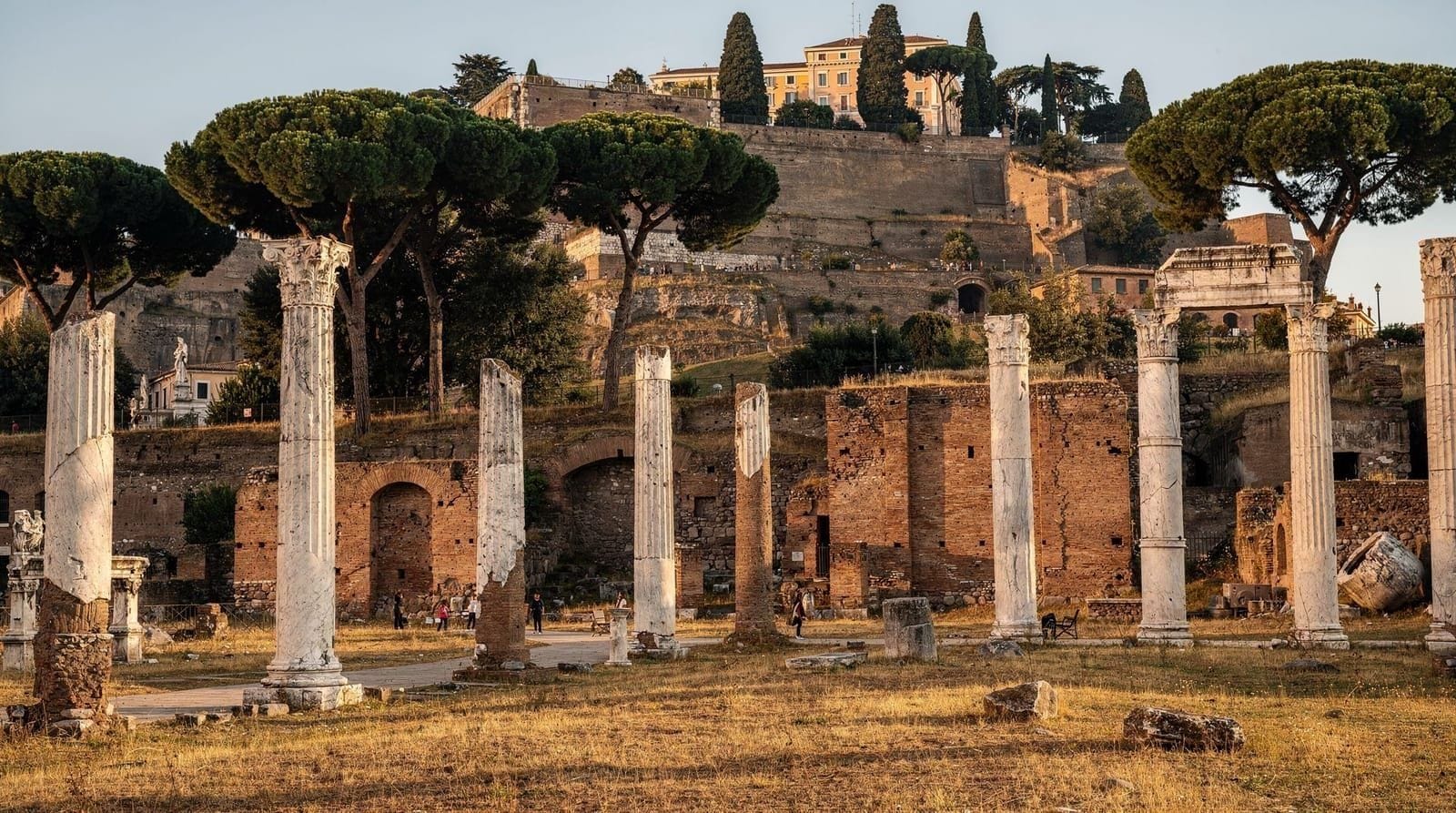
Between Monti and Centro Storico, via dei Fori Imperiali runs past the Imperial Fora — the sequence of forum complexes built by Julius Caesar, Augustus, Vespasian (Forum of Peace), Nerva, and Trajan, extending the older Roman Forum. Most visitors rush past these on the way to the Colosseum.
Forum of Nerva (Foro di Nerva): two columns of the colonnade survive above street level; excavations at the base reveal more. The forum was built over the ancient Argiletum (booksellers’ street) and dedicated to Minerva. The relevant part for Monti is that the visible ruins are directly on the boundary between Monti and the ancient forum area — you walk past them on via Cavour.
Forum of Augustus: partially visible from the street behind the fence on via dei Fori Imperiali; the Temple of Mars Ultor columns are the most prominent surviving element. Monti residents have lived above the buried portions of this complex for centuries.
Mercati di Traiano (Trajan’s Markets, via Quattro Novembre) — the five-level commercial complex on the hillside above the forum is accessible as a museum and provides excellent elevated views of the entire Imperial Fora complex. Entry approximately €15; the view from level 4 looking southwest over Trajan’s Column and the Colosseum is exceptional.
Getting to and from Monti
- Metro Line B to Colosseo — 5 minutes walk to Piazza della Madonna dei Monti. This is the easiest connection.
- Metro Line A at Termini (15 min walk to Monti center, or 2 stops on B from Repubblica/Termini).
- Bus: multiple bus lines along via Cavour and via Merulana.
- On foot from Centro Storico: 20–25 minutes via via dei Fori Imperiali (the broad boulevard built by Mussolini in 1932, running from Piazza Venezia to the Colosseum).
Where to stay in Monti
Monti offers the best value-to-location ratio of any central Rome neighborhood. Hotels and guesthouses here are typically 15–25% cheaper than equivalent accommodation in Centro Storico or Trastevere, with better walkability to ancient Rome sites.
Hotels:
- Nerva Boutique Hotel — quiet, tasteful, directly above part of the ancient Forum of Nerva; genuinely good small hotel.
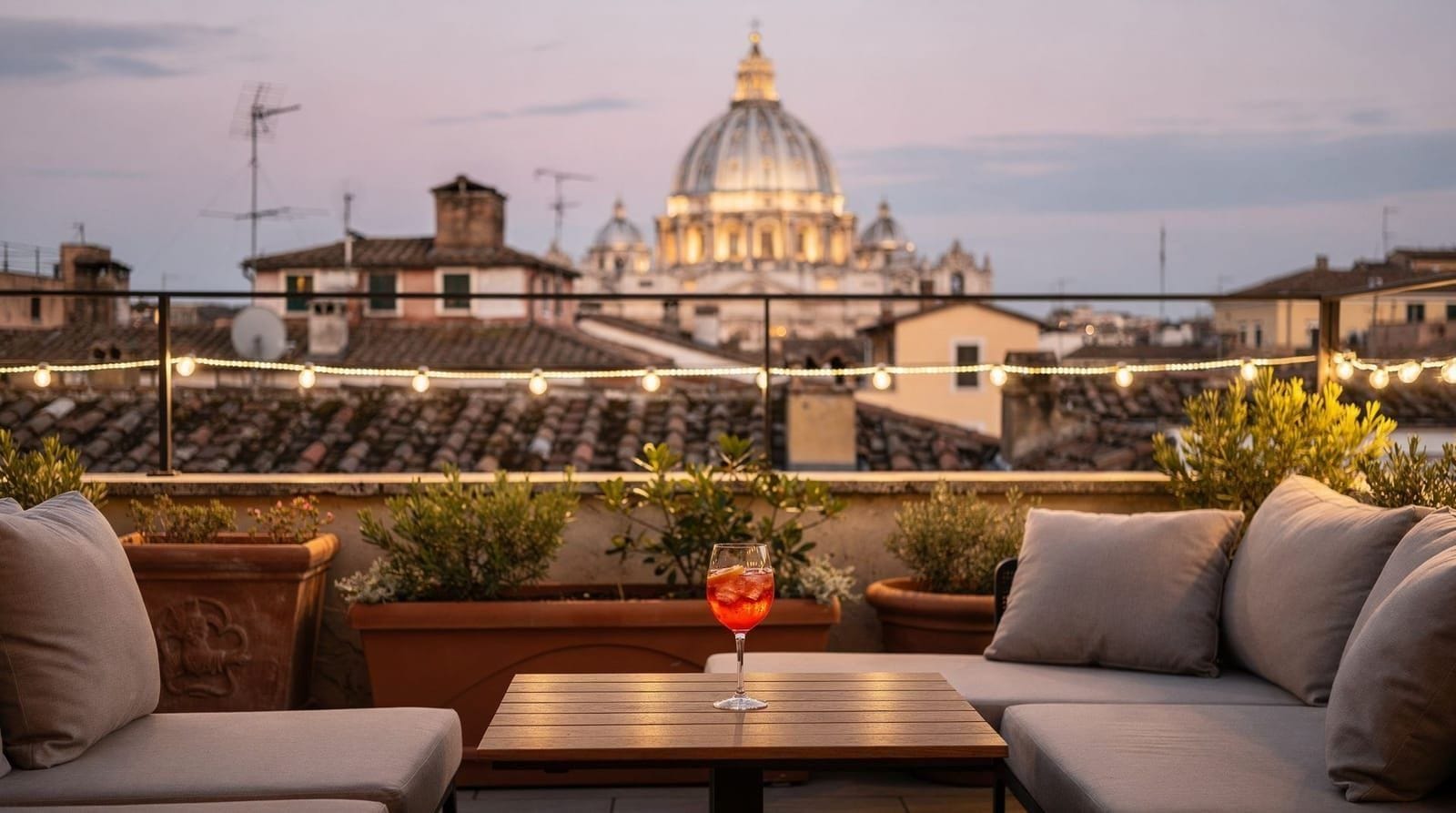
- Palazzo Manfredi — high-end boutique hotel with a rooftop restaurant overlooking the Colosseum; the view justifies the price if you are celebrating.
- Hotel Lancelot — family-run, near the Colosseum, very well-reviewed for service and quality at the price point; no pretension.
- Arco dei Tolomei B&B — small, intimate, good value; long-running neighborhood bed and breakfast.
Budget: Monti has a number of apartment rentals and guesthouses at €70–120/night for a double — considerably cheaper than comparable Centro Storico options.
Monti in context: itinerary suggestions
For a 3-day Rome trip: Use Monti as your base. Day 1: Colosseum, Forum, Palatine. Day 2: Vatican Museums and St. Peter’s. Day 3: Centro Storico — Pantheon, Navona, Trevi. Evenings: Monti for dinner and aperitivo.
Half-day in Monti: Walk via del Boschetto → Piazza Madonna dei Monti → via Panisperna (the street where Fermi’s group discovered nuclear fission in 1934 — there is a small plaque) → Basilica di Santa Maria Maggiore.
For ancient Rome: The Colosseum + Forum + Palatine is a full-day circuit from Monti. Add the Domus Aurea (requires separate ticket and booking) on a second half-day.
Churches and art in Monti
Monti has a cluster of significant churches that most visitors skip while heading to the nearby Colosseum:
Basilica di Santa Maria Maggiore (piazza di Santa Maria Maggiore) — one of Rome’s four major basilicas. The golden apse mosaics from the 5th century (432–440 CE) are among the oldest surviving figurative mosaics in Rome. Free entry. The building is a 15-minute walk from the center of Monti, slightly into Esquilino territory but accessible from either neighborhood.
Santa Prassede (via di Santa Prassede) — a 9th-century church with the finest Byzantine mosaics in Rome outside Ravenna. The Chapel of San Zeno (called the Garden of Paradise by contemporaries) has a gold-ground mosaic ceiling of stunning quality. The church is small and rarely crowded despite being extraordinary. Free.
Santa Pudenziana (via Urbana) — contains the oldest known mosaic of Christ enthroned, from approximately 390 CE, predating most early Christian art. The building is small and easy to walk past. Worth 20 minutes for the mosaic alone.
San Pietro in Vincoli (piazza di San Pietro in Vincoli) — houses Michelangelo’s Moses (1513–1515), the massive seated figure with horned head (a translation error in Jerome’s Vulgate — the Hebrew karan meaning “radiant” was mistranslated as “horned”). The church also claims to hold the chains (vincoli) that bound St. Peter in Jerusalem and Rome; they are displayed under the altar. Free.
Via Panisperna — the street that runs through Monti’s upper section is named for the alms bread (pane and prosciutto) historically distributed here. In 1934, Enrico Fermi and his team worked in a building on this street at the Physics Institute, conducting experiments that led directly to the discovery of nuclear fission. A plaque marks the building. The physics group was called “I ragazzi di via Panisperna” (the boys of via Panisperna) and their work in Rome preceded the Manhattan Project.
Shopping in Monti
Via del Boschetto and its connecting streets have a concentration of independent retail that is genuinely worth browsing:
- Pifebo Vintage Shop (via del Boschetto) — curated second-hand and vintage clothing; quality selection.
- Artigianato ceramics workshops — small studios on via degli Zingari and via della Madonna dei Monti where artisans make and sell individually.
- Mercato di via Sannio (not technically in Monti but adjacent, south of Porta Maggiore) — Saturday morning outdoor market with second-hand goods, vintage military, clothing.
- Libreria Bibliò (via Leonina) — independent bookshop with a good selection of English-language used books alongside Italian titles.
The shopping in Monti is the opposite of souvenir: it is independent, local, and not artificially curated for visitors.
The Subura and ancient topography
The valley that Monti occupies was, in antiquity, one of the most densely populated neighborhoods in Rome. Ancient writers describe the Subura as loud, smelly, dangerous, and perpetually crowded — the closest ancient Rome came to a working-class urban slum. The contrast with the Palatine Hill (where the emperors lived, directly above) was deliberate and commented on by ancient authors.
Walking through Monti now, you can still see remnants of the ancient topography: the remains of Nero’s Domus Aurea under the Colle Oppio park, the visible fragments of the Forum of Nerva (between Monti and the Imperial Fora), and the enormous brick wall of the Markets of Trajan (Mercati di Traiano) on via Quattro Novembre — one of the best-preserved commercial complexes from the Roman Empire, accessible as a museum.
Mercati di Traiano (via Quattro Novembre) — a five-storey semicircular complex of 150+ tabernae (shops/offices) built in the 2nd century CE as part of Trajan’s Forum complex. Now a museum of the imperial fora. Entry approximately €15. Allow 2 hours. Excellent views of the Forum of Trajan from the upper levels.
Monti at different seasons
Spring (April–May): Monti’s rooftop terraces and outdoor tables come into their own. The Colosseum sightseeing season is at peak, so book all ancient Rome tickets weeks ahead. Weather is ideal for walking.
Summer (July–August): Monti residents mostly leave for the coast or mountains (Ferragosto, August 15, marks peak exodus). Many restaurants and shops close for 2–3 weeks. Tourist density at the Colosseum and Forum is very high; go early (9 am opening) and leave by noon. The neighborhood itself is quieter but slightly ghost-like. Heat (32–38 °C) makes midday sightseeing difficult — schedule accordingly.
Autumn (September–October): The best season. Crowds ease, heat abates, and the neighborhood returns to full operation. October in particular has excellent weather (22 °C average) and lower prices than spring.
Winter (November–February): Cold (12–15 °C), some rain, very quiet. The Colosseum and Forum are best in winter — you can explore without crowds. Monti’s wine bars and restaurants are warm and full of local regulars.
Choosing where to stay: Monti vs the alternatives
Monti is our pick for most first-time visitors who want a genuine neighborhood rather than a tourist bubble, but it isn’t automatically right for everyone. The honest comparison against Rome’s other popular bases:
| Monti | Trastevere | Centro Storico | Prati | |
|---|---|---|---|---|
| Walk to Colosseum | 8 min | 30–35 min | 20–25 min | 40+ min |
| Walk to Pantheon | 15 min | 15–20 min | 5–10 min | 20 min |
| Nightlife | Wine bars, quiet by midnight | Bars, later and louder | Restaurants, moderate | Quiet, residential |
| Price level | Mid, best value | Mid-high | High | Mid |
| Feel | Bohemian, lived-in | Touristy but scenic | Historic, busy | Residential, Vatican-adjacent |
If ancient Rome is your priority, Monti wins outright. If you want to be steps from the Pantheon and Piazza Navona and don’t mind paying for it, Centro Storico makes more sense. If evening atmosphere and river views matter most, Trastevere is the better fit. For a Vatican-focused trip with a quieter, more residential base, see Prati. The where to stay in Rome guide and the best areas to stay guide cover the full shortlist in more depth.
A morning in Monti: café culture and daily rhythms
Monti reveals itself best in the morning, before the Colosseum crowds build and while the neighborhood is still running on local time. Coffee bars along via Baccina and via del Boschetto fill with residents standing at the counter for a quick espresso before work — the etiquette is the same as everywhere in Rome (order and pay at the till first if there’s a cassa, then take your receipt to the bar), but the crowd here is genuinely local rather than tour groups passing through.
Panella on via Merulana is worth timing your morning around: fresh pizza bianca and cornetti straight from the oven, plus a bakery counter that locals actually shop at for dinner bread, not just tourist pastries. A short walk away, the daily fruit and vegetable stalls near via Leonina give a sense of how the neighborhood actually shops, distinct from the souvenir stands nearer the Colosseum. If your trip includes a longer stay, the Rome food tours compared guide covers guided options that start in this part of the city.
Rome evening walking tour through the historic centre is a good complement if mornings are for Monti’s own streets and you want a guided evening covering the wider centre.
Frequently asked questions about Monti
Why do Romans recommend Monti for staying?
Good walkability to both ancient Rome and Centro Storico, genuine neighborhood character rather than a tourist bubble, better restaurant quality-to-price ratio than more famous neighborhoods, and relative quiet compared to Trastevere.
Is Monti touristy?
More so than 10 years ago, less so than Trastevere. The restaurants and wine bars still serve a genuine local clientele mixed with visitors. The boutiques on via del Boschetto are independent and authentic, not souvenir shops.
How far is Monti from the Colosseum?
About 500 metres — an 8-minute walk from the center of Monti (Piazza della Madonna dei Monti) to the Colosseum entrance. It is the closest central residential neighborhood to ancient Rome.
What is the Domus Aurea and is it worth visiting?
Nero’s vast underground palace, built after 64 CE. It requires advance booking and an accompanied tour. It is one of Rome’s most genuinely remarkable experiences for anyone with an interest in ancient art or architecture. See Domus Aurea guide for details.
Is Monti good for nightlife?
For aperitivo and wine bars, yes — it is excellent. For late-night clubs and loud bars, no. The neighborhood’s nightlife is almost entirely bar-based and winds down by midnight. If you want late-night options, Testaccio is a better choice.
What is the best aperitivo spot in Monti?
Piazza della Madonna dei Monti in the early evening — bring wine from a nearby wine bar, sit on the steps, watch the neighborhood function. Ai Tre Scalini on via Panisperna is the best sit-down option with both a serious wine selection and good food.
Is Monti or Centro Storico better for a first-time visitor?
It depends on priorities. Monti is better value and closer to the Colosseum and Forum; Centro Storico puts you steps from the Pantheon and Piazza Navona at a higher price. Many first-timers do well splitting attention between the two rather than treating it as an either/or choice, since they are a comfortable 15–20 minute walk apart.
Does Monti work well for a family with kids?
Yes, reasonably — it’s quiet enough for evenings with children asleep in a hotel room, and the walk to the Colosseum is short and flat. It has fewer child-specific attractions than some areas, so pair it with the Rome with kids guide for a fuller itinerary.
Top experiences
Bookable activities with verified prices and instant confirmation on GetYourGuide.