The Caravaggio trail: seeing his paintings free in Rome's churches
Trevi, Pantheon & Spanish Steps Guided English Walking Tour
Which churches in Rome have Caravaggio paintings?
San Luigi dei Francesi (three paintings: Calling of Saint Matthew, Martyrdom of Saint Matthew, Saint Matthew and the Angel), Santa Maria del Popolo (two paintings: Conversion of Saint Paul, Crucifixion of Saint Peter), and Sant'Agostino (one painting: Madonna dei Pellegrini). A seventh work, the Rest on the Flight into Egypt, is in the Doria Pamphilj Gallery (paid admission). All church paintings are free; bring €1 coins for lighting.
Why Rome has the best Caravaggio in the world
The Louvre has Caravaggios. The Uffizi has Caravaggios. The National Gallery in London, the Prado, the Kunsthistorisches in Vienna — all have major works. But Rome is the city where Caravaggio lived, worked, and painted for most of his productive life, and it is Rome’s churches — not any of those great museums — that hold his most important paintings.
Three churches. Seven paintings between them (six in churches, one in a private gallery). All free to view, all still in the locations Caravaggio designed them for, with the light falling on them more or less as he planned. This guide tells you exactly how to see them and what to look for.
| Where | San Luigi dei Francesi, Sant’Agostino, Santa Maria del Popolo — all near Piazza Navona |
| Cost | Free entry; budget €3-5 in €1 coins for the chapel lighting |
| Time needed | 2-3 hours for the three church stops, plus 60-90 minutes if adding the Borghese or Doria Pamphilj |
| Getting there | Walking — San Luigi and Sant’Agostino are 5 minutes apart, Santa Maria del Popolo 15-20 minutes further |
| Best time | Morning, starting at Sant’Agostino (opens 07:30, no midday closure) |
Who was Caravaggio: the 60-second version
Michelangelo Merisi was born in 1571 near Milan and arrived in Rome around 1592, probably penniless. He struggled for several years before the Cardinal Francesco Maria Del Monte became his patron in the mid-1590s, giving him accommodation and commissions. Del Monte’s connections led to Caravaggio’s first major church commissions — the San Luigi dei Francesi paintings in 1599–1602 — which made him the most talked-about painter in Rome almost overnight.
His method was radical: he worked directly from live models onto the canvas without preparatory drawings, using the actual physical space of the chapel — the direction of the windows, the angle of vision from the door — as compositional elements. He also apparently used a mirror to project images as compositional guides, a technique only confirmed by technical analysis in recent decades.
His personal life was turbulent. He was repeatedly arrested: for assaulting an innkeeper, for throwing a plate of artichokes at a waiter, for carrying a sword without a licence. In 1606 he killed Ranuccio Tomassoni in a street fight and fled Rome under a sentence of death (capital bando). He never returned. He died in Porto Ercole in 1610 at 38, possibly of fever or possibly poisoned, reportedly on his way back to Rome after a papal pardon had been secured.
He left six major church paintings in Rome. They have never moved.
Stop 1: San Luigi dei Francesi
Getting there
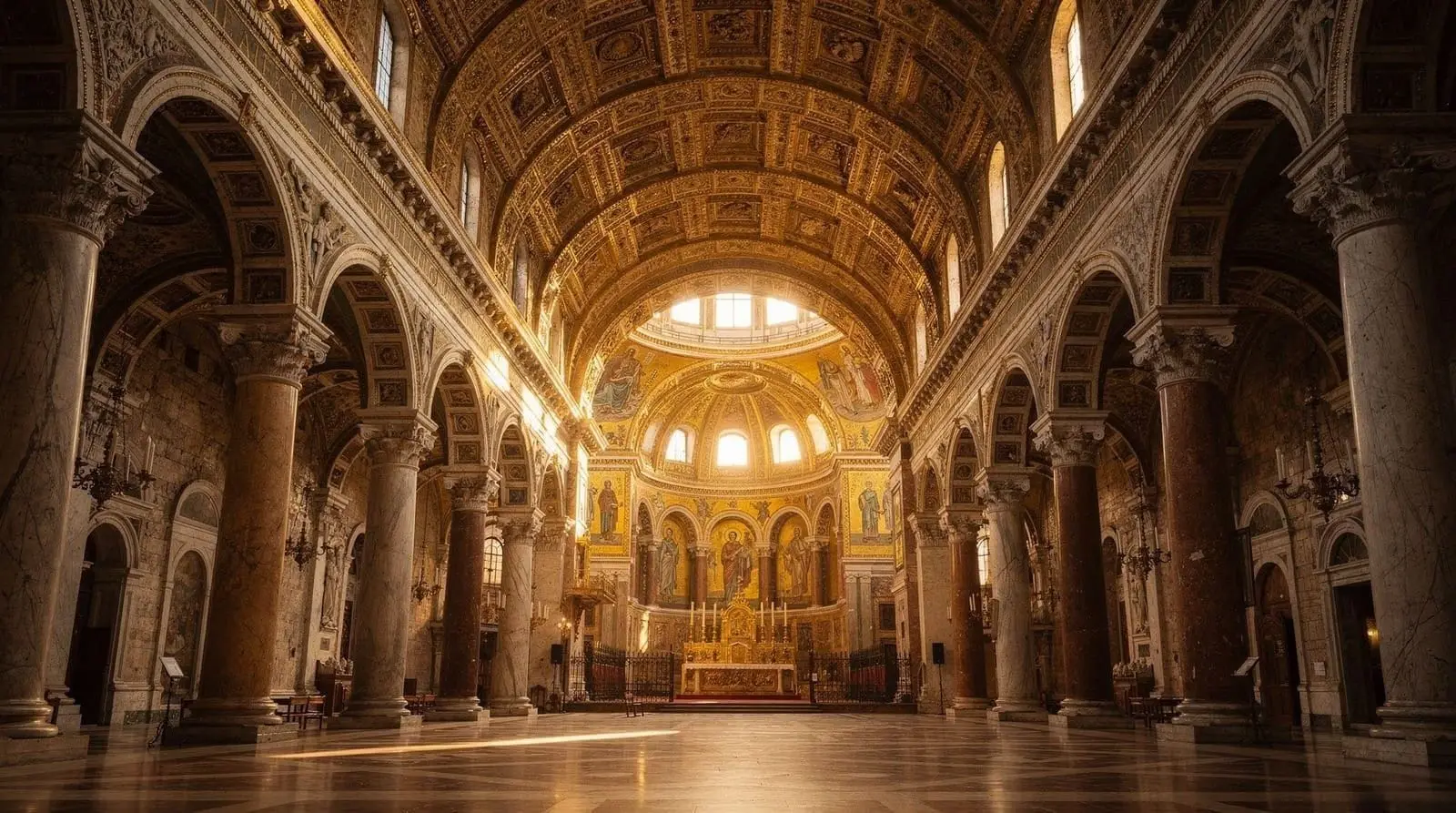
The French national church of Rome sits on a small piazza two minutes’ walk northeast of the Piazza Navona, in the Centro Storico. From the Piazza Navona northern end, walk past the church of Sant’Agnese in Agone and follow the street northwest. You will see the church’s pale 16th-century facade.
Hours: Opens 09:30, closes around 12:45; reopens 14:30, closes 18:30. These hours vary seasonally — check before arriving.
Coins: Essential. The Contarelli Chapel has three lighting machines operating the chandeliers that illuminate three separate canvases.
The Contarelli Chapel (fifth chapel on the left)
Walk in, let your eyes adjust, and find the fifth chapel on the left aisle. The three large oil paintings on canvas covering all three walls were commissioned by the estate of Cardinal Matteo Cointrel (Contarelli in Italianized form) and painted between 1599 and 1602.
Left wall: The Calling of Saint Matthew (1600)
This is the most famous of the three and one of the most discussed paintings in Western art. Christ and Saint Peter stand in a doorway on the right, their faces in shadow, Christ’s arm extended in a gesture borrowed from Michelangelo’s Creation of Adam on the Sistine Chapel ceiling. At a table on the left, five men — all dressed in 1600s contemporary clothing — react to the gesture. One (elderly, far left) points to himself with a gesture that asks: me? He is Matthew, the tax collector, about to be called to apostleship.
The painting’s power comes from what it omits. There is no halo on Christ (except in a later restoration addition that partially survives). There is no heavenly light — just ordinary tavern light from the window at the right. The sacred event is happening in an utterly ordinary room to ordinary people, and Matthew’s reaction is not ecstasy but incredulous self-questioning.
Insert a coin and study the surface: the cloth textures, the doublet stitching, the rings on the money-counter’s fingers. Caravaggio painted from life, and the detail is documentary.
Right wall: The Martyrdom of Saint Matthew (1599–1600)
Caravaggio’s first version of this composition was entirely repainted. The surviving painting shows Matthew being killed by a swordsman in front of the altar where he was saying Mass, with onlookers recoiling in horror. In the background right, a young man watches — that is Caravaggio himself, the only confirmed self-portrait in this church.
Altarpiece: Saint Matthew and the Angel (1602)
The second version of this subject (the first was rejected as undignified). An elderly, rough-handed Matthew writes his gospel while an angel guides his hand and counts on fingers the genealogy he is recording. Despite being a replacement for a rejected work, this version is among the most intimate of Caravaggio’s church paintings.
The rest of San Luigi dei Francesi
The church has other significant works, including Domenichino’s Life of Saint Cecilia frescos in the second chapel — worth pausing for, though they look essentially 17th-century conventional after Caravaggio’s radicalism.
Stop 2: Sant’Agostino
Getting there
Five minutes’ walk from San Luigi dei Francesi, also near Piazza Navona. The large Renaissance facade faces a small piazza on Via della Scrofa.
Hours: Opens 07:30, no midday closure.
The Madonna dei Pellegrini (1604–1606)
In the first chapel on the left (Cappella Cavalletti), Caravaggio’s Madonna dei Pellegrini shows the Virgin Mary standing in a doorway — a completely domestic doorway, the plaster crumbling — holding the Christ Child, while two pilgrims kneel before her in ragged clothing. Their feet are dirty and bare. The soles of the pilgrim’s foot pointing toward the viewer are painted with extraordinary naturalistic detail — caked mud, cracked skin.
When the painting was unveiled it caused scandal specifically because of those dirty feet. The nobility of the Madonna (a beautiful young woman, possibly one of Caravaggio’s Roman models) contrasts deliberately with the poverty of the pilgrims. The message was both theological (Christ comes to the poor) and provocative — critics felt it degraded the sacred by making it too human.
The painting is smaller than the San Luigi canvases and in less dramatic light. Insert a coin for proper illumination.
Also in Sant’Agostino: Walk toward the front of the church and look up to the third pier on the left for Raphael’s fresco of the Prophet Isaiah (1512) — painted in response to seeing the Sistine Chapel ceiling (completed 1511) and showing Michelangelo’s direct influence on Raphael’s figure style. Two major Renaissance works in one church, both free.
Stop 3: Santa Maria del Popolo
Getting there
Santa Maria del Popolo is at the northern end of the Via del Corso, just inside the Porta del Popolo gate, approximately 1.2 kilometres from San Luigi dei Francesi. Walking takes about 15–20 minutes through the historic centre. Alternatively, take a taxi (about €8 from Piazza Navona) or any bus running up the Corso.
Hours: Opens 07:00, closes 12:30; reopens 15:00, closes 19:00.
The Cerasi Chapel (first chapel on the left of the main altar)
The chapel was commissioned by Tiberio Cerasi, Treasurer General of Pope Clement VIII, who paid Caravaggio and Annibale Carracci simultaneously — Caravaggio for the two side canvases, Carracci for the central altarpiece. The contrast between Carracci’s conventional academic idealism (the Assumption in the center) and Caravaggio’s radical realism on the flanking walls was surely deliberate.
Left wall: The Conversion of Saint Paul (1601)
Paul — known before his conversion as Saul of Tarsus, a Roman citizen and persecutor of Christians — is shown immediately after being knocked from his horse on the road to Damascus by a blinding light and a voice asking “Why do you persecute me?” Caravaggio does not show the light. He does not show Christ. He shows an old man lying on his back in the dark, arms spread wide, eyes closed, a horse standing over him while a groom struggles to control it.
The horse occupies more than half the canvas. The groom is not sure what is happening. The drama is entirely invisible — an interior event of spiritual transformation shown as a physical collapse.
This is considered by many critics the greatest single image Caravaggio produced.
Right wall: The Crucifixion of Saint Peter (1601)
Four men hoist the cross on which the elderly Peter has been crucified upside-down (at his own request, according to tradition, as he did not feel worthy to die in the same position as Christ). The painting shows the effort — the strain in the men’s muscles, the awkward angle of the lifting — rather than any spiritual or celestial drama. Peter looks inward, absorbed. The workers do their job.
The contrast with conventional treatments of this subject (heavenly light, mourning angels, crowds of witnesses) is absolute.
The rest of Santa Maria del Popolo
The church is rich beyond the Caravaggios:
-
Chigi Chapel (second chapel on the left): Designed by Raphael (c.1513–1516) for the banker Agostino Chigi; Raphael died before it was completed. Bernini later added sculptures and modified some elements in the 1650s. The mosaic dome was executed to Raphael’s design. The combination of Renaissance architecture, Bernini sculpture, and original Raphael programme makes this one of the most concentrated small chapels in Rome.
-
15th-century frescos throughout the nave by Pinturicchio — less famous than the Caravaggios but historically important examples of pre-High-Renaissance Roman painting.
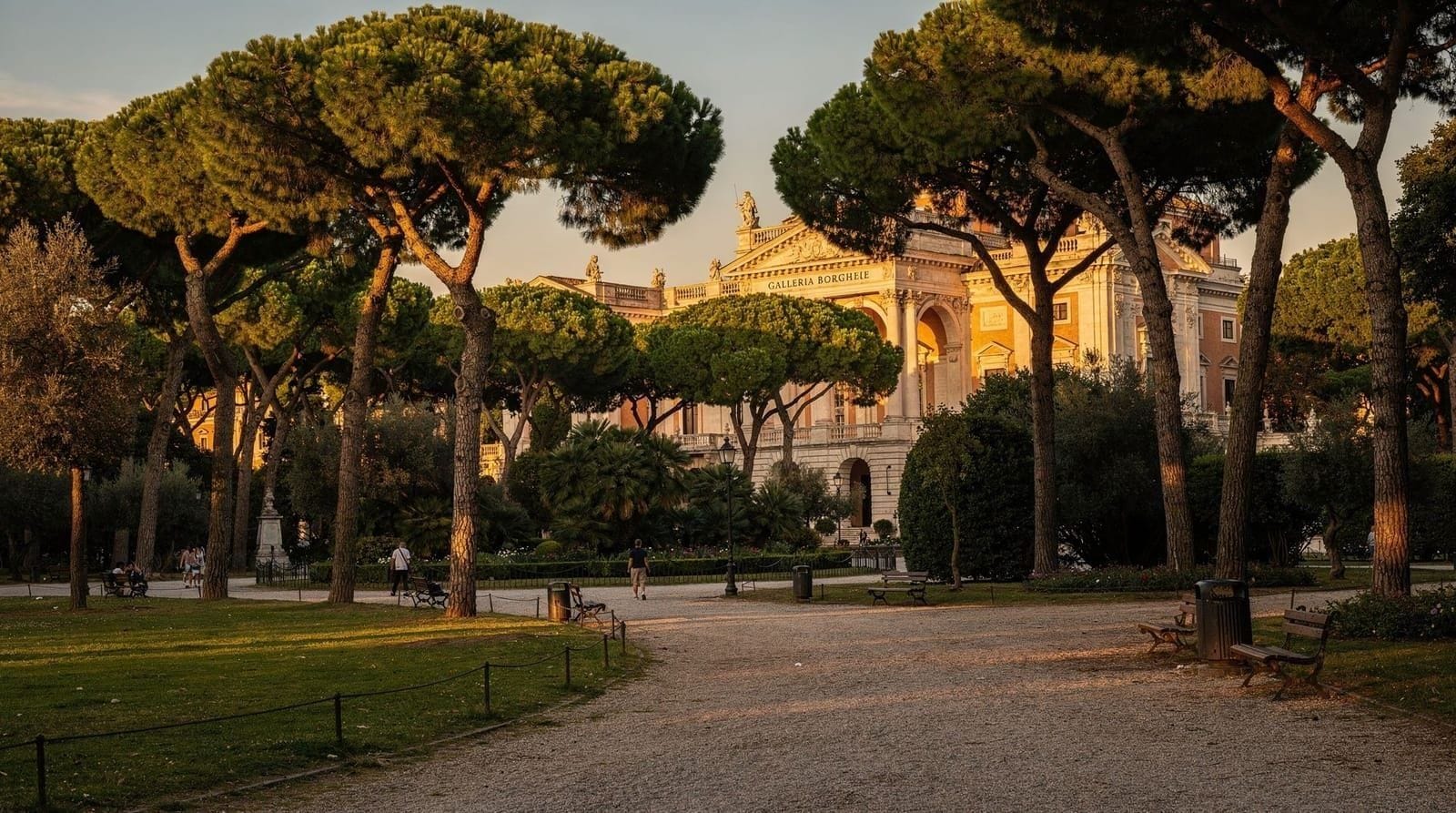
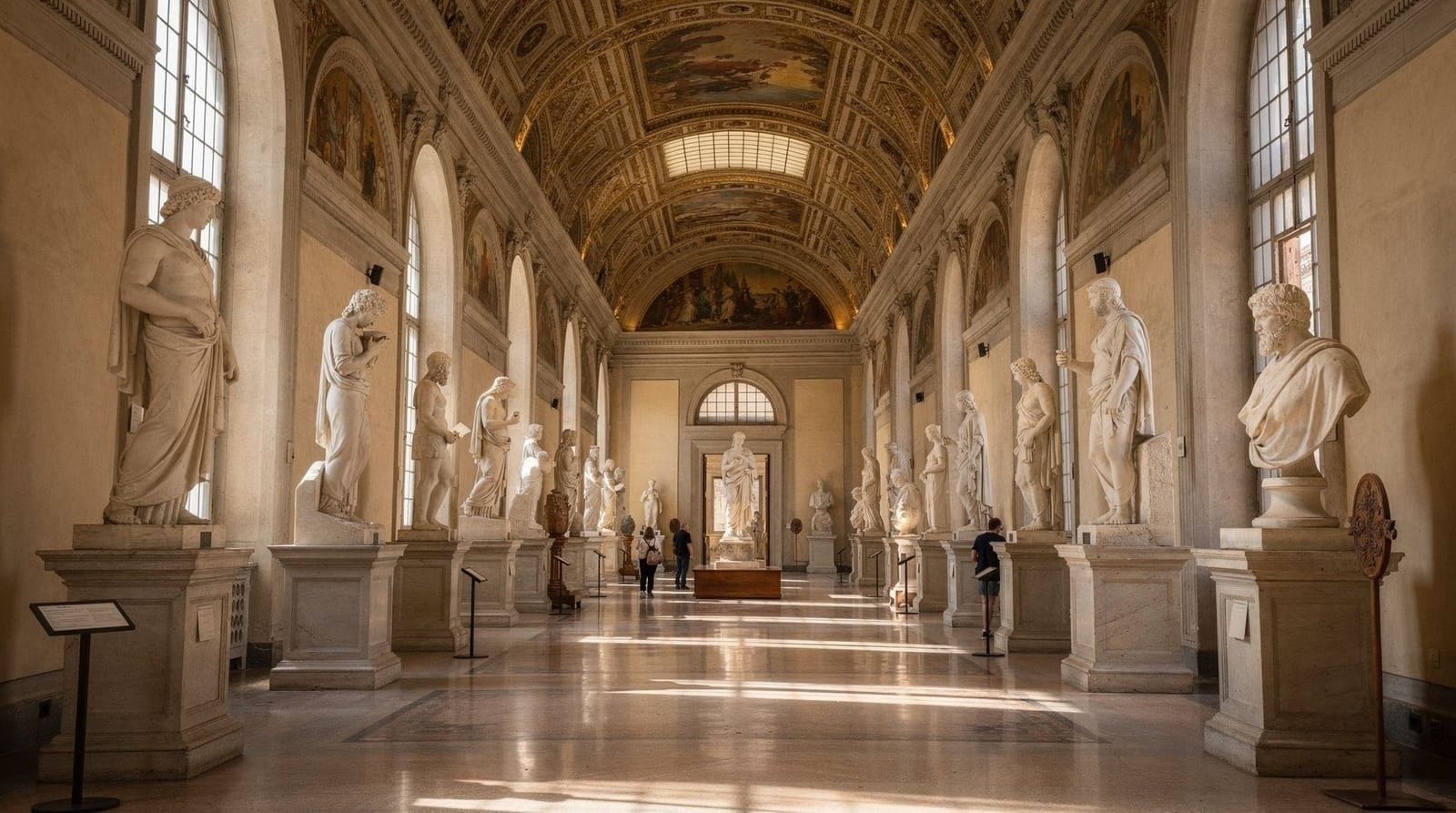
The Borghese Gallery: six more Caravaggios
The Borghese Gallery requires advance booking (mandatory, maximum 180 visitors per 2-hour slot) and paid admission (approximately €17 plus booking fee). It holds six Caravaggios:
- Boy with a Basket of Fruit (c.1593): an early work showing Caravaggio’s proto-still-life technique
- Bacchus / Young Sick Bacchus (c.1593–1594): self-portrait as a pallid, half-drunk deity — possibly painted during an illness
- Madonna of the Palafrenieri (1605–1606): commissioned for an altar in St. Peter’s, rejected immediately, sold to Cardinal Borghese; shows the Virgin and Child trampling a serpent while Saint Anne watches, the child startlingly physical and ordinary
- Saint Jerome Writing (1605–1606): the elderly scholar bent over a text, the skull of vanitas on his desk
- David with the Head of Goliath (1609–1610): painted in Naples during Caravaggio’s final years — Goliath’s severed head carries Caravaggio’s own face, a late self-portrait of disturbing psychological complexity
For Borghese booking procedures and the full gallery guide, see our Borghese Gallery guide.
The Doria Pamphilj Gallery
The Doria Pamphilj Gallery (Palazzo Doria Pamphilj on the Via del Corso, approximately 10 minutes’ walk from Piazza Navona) is the least-visited major art gallery in the historic centre, housed in a 17th-century palace that remains the property of the Doria Pamphilj family. Entry approximately €13.
It contains two Caravaggios:
- Rest on the Flight into Egypt (c.1597): an early work, softer and more lyrical than the church paintings — the Holy Family resting, an angel playing music from a score held by Saint Joseph
- Penitent Magdalene (c.1594–1595): another early work, a young woman in contemporary dress seated on a low chair, apparently weeping — the first major commission by Cardinal Del Monte’s circle
Both are early works that show Caravaggio before his mature style fully developed. The Magdalene in particular looks nothing like the San Luigi paintings made five years later — the stylistic evolution is remarkable.
The gallery also contains a Velázquez portrait of Innocent X (1650) that many consider the greatest portrait ever painted, and is worth the visit in its own right. See our Doria Pamphilj Gallery guide for full coverage.
Practical Caravaggio trail tips
Best order
Option A (churches only, half-day): Start at Sant’Agostino at 07:30 (opens earliest, no midday closure), then walk 5 minutes to San Luigi dei Francesi at 09:30 when it opens. Midday: gap with lunch in the Piazza Navona area. Afternoon: Santa Maria del Popolo after 15:00.
Option B (full day including Borghese): Reserve Borghese Gallery for 09:00 or 11:00. Churches in the afternoon. The gallery is in the Monti / Villa Borghese park area, a taxi or 20-minute walk from the Piazza Navona cluster.
Lighting strategy
The coin-operated lighting at San Luigi dei Francesi is absolutely necessary — without it, the Contarelli Chapel is too dark for meaningful viewing. Insert one coin, study one canvas, insert the next coin before the previous expires. The right-wall Martyrdom and the altarpiece both require separate coins from the Calling.
Sant’Agostino and Santa Maria del Popolo have better ambient light, but coins improve the experience significantly.
Photography
Photography without flash is generally permitted in all three churches. The Contarelli Chapel presents the most challenge — the paintings are set in a dark chapel with coin-operated lights, making clean photography difficult without a steady surface. A small gorilla pod or a steadying hand on a rail helps considerably.
What to read beforehand
Andrew Graham-Dixon’s biography of Caravaggio (Caravaggio: A Life Sacred and Profane, 2010) is the best available in English and transforms the experience of seeing the paintings in their actual context. The book specifically describes the Roman church settings and Caravaggio’s working methods in detail. Even reading a single chapter covering the San Luigi commission before visiting San Luigi dei Francesi substantially deepens the encounter.
Rome evening walking tour — covers Piazza Navona and the historic centre after dark, a good complement to a daytime Caravaggio church visit.Beyond Caravaggio: the wider church art context
Caravaggio is the most famous name on Rome’s church art trail but not the only one. The same neighbourhood churches contain works by Raphael, Michelangelo, Pinturicchio, Annibale Carracci, Domenichino, and Guido Reni — all free, all in their original settings, all within 20 minutes’ walk of each other.
For the full picture of Rome’s free church masterpieces — including the Byzantine mosaics, Bernini sculpture, and churches the crowds miss — see our Rome basilicas and Caravaggio guide and the hidden churches guide.
The Caravaggio trail takes two to three hours and costs nothing except €3–5 in coins. It is among the best-value art experiences in Europe.
Caravaggio’s Rome locations beyond the paintings themselves
Beyond the churches and galleries, Caravaggio’s Rome years left a physical trail across the city that’s worth knowing even if you don’t detour specifically to see it. He lived for a time on Via della Scrofa, close to Sant’Agostino, in lodgings arranged through Cardinal Del Monte’s patronage network; the Palazzo Madama, Del Monte’s residence (now the seat of the Italian Senate), sits a few minutes from Piazza Navona and is where much of his early patronage was brokered. The Campo de’ Fiori area, where he was arrested more than once for brawling, retains the working-class, crowded character that likely shaped the tavern scenes and street models in his paintings. None of these sites are museums or require a special visit, but recognizing them while walking the Centro Storico adds useful texture to a trail that’s otherwise entirely about the paintings themselves.
Where the trail fits in a Rome itinerary
Because the three church stops sit almost entirely within the Piazza Navona area, the Caravaggio trail is easy to fold into a Centro Storico morning rather than treating it as a standalone excursion. It pairs naturally with the Capitoline Museums if you want to add the Fortune Teller and John the Baptist to your Caravaggio count in the same day, and it’s one of the strongest entries on any free things to do in Rome list precisely because the quality on offer rivals anything requiring a paid ticket. For first-time visitors trying to decide how much of a trip to dedicate to art versus ruins, our Rome for first-timers guide and Rome history guide help calibrate expectations for a first visit.
Guided vs self-guided: is a Caravaggio-focused tour worth it
The churches themselves require no guide — entry is free and the paintings are well labelled — but a specialist art historian guide adds genuine value here in a way it doesn’t for every Rome sight. Caravaggio’s compositional choices (the missing halos, the ordinary light sources, the specific models) reward context that isn’t always available on-site, and a good guide can point out details — the self-portrait in the Martyrdom of Saint Matthew, the technical evidence for Caravaggio’s mirror-projection method — that are easy to miss on a self-guided visit. That said, reading a chapter of a good biography beforehand (see the book recommendation below) achieves much the same result for free. Treat a guided option as a convenience and depth-add, not a necessity, for this particular trail.
Photography and light through the day
Because the chapel lighting is coin-operated and the ambient light in all three churches shifts through the day, timing affects not just the viewing experience but photography as well. Morning light entering Sant’Agostino’s windows adds useful ambient fill for photographing the Madonna dei Pellegrini without relying entirely on the coin machine; by contrast, the Contarelli Chapel at San Luigi is dim regardless of time of day and depends entirely on the coin lighting. If photography is a priority beyond this trail, our best photo spots in Rome guide covers timing for the wider Centro Storico, including Piazza Navona itself at dawn. Santa Maria del Popolo’s Cerasi Chapel benefits from its own natural light through the church’s windows in late morning, making the 15:00 reopening slightly less favourable for photography than an earlier visit, even though the coin machine works identically at either time.
Frequently asked questions about The Caravaggio trail: seeing his paintings free in Rome's churches
How long does the Caravaggio trail take in Rome?
Are Caravaggio paintings in Rome free to see?
Who was Caravaggio and why did he leave Rome?
What makes Caravaggio's paintings revolutionary?
Is there a Caravaggio museum in Rome?
What are Caravaggio's best paintings in Rome?
Top experiences
Bookable activities with verified prices and instant confirmation on GetYourGuide.