Rome Off the Beaten Path: 3 Days
Rome: Appian Way, Catacombs, & Roman Aqueducts E-bike Tour
Duration: 4-6 hours
Quick answer: Three days visiting the Rome most visitors never see — the Appian Way’s catacombs and aqueducts, EUR’s Fascist-era grandeur, Testaccio’s market and offal lunch, the Aventino’s rose garden and keyhole view, and Quartiere Coppedè’s surreal Art Nouveau fantasy. No Colosseum queue, no Vatican crowds, no disappointment.
| Best for | Repeat visitors, independent travellers, history lovers |
| Cost | Around €40-60 per day in entry fees — considerably less than the Colosseum-Vatican circuit |
| Time needed | 3 days, moderate walking with some bus/metro transfers |
| Getting around | Metro B, buses 118/52/53/910, walking |
| Booking priority | Catacombs guided tour — fixed time slots, book ahead |
This itinerary assumes you have already done Rome’s greatest hits — or that you are deliberately skipping them. Either is valid. The city beyond the Pantheon and the Trevi Fountain is deeper, quieter, and in many ways more interesting. These three days are built around neighborhoods and monuments that reward curiosity over convenience.
Who this itinerary is for
| Off the beaten path (this guide) | Standard first-timer routes | |
|---|---|---|
| Best for | Repeat visitors, independent travellers | First-time visitors |
| Anchors | Appian Way, EUR, hidden churches | Colosseum, Vatican, Borghese |
| Crowds | Genuinely light throughout | Heavy at every anchor site |
| Booking pressure | Low (only the catacombs need real advance booking) | High (three sites sell out weeks ahead) |
If this is genuinely your first time in Rome, the classic anchors matter more than this route does — see the Rome for first-timers 3-day itinerary instead and save this route for a return trip.
You do not need a car. Rome’s transport network gets you everywhere on this route, and the Appian Way is best explored on foot or by e-bike in any case.
Day 1: The Appian Way and the catacombs
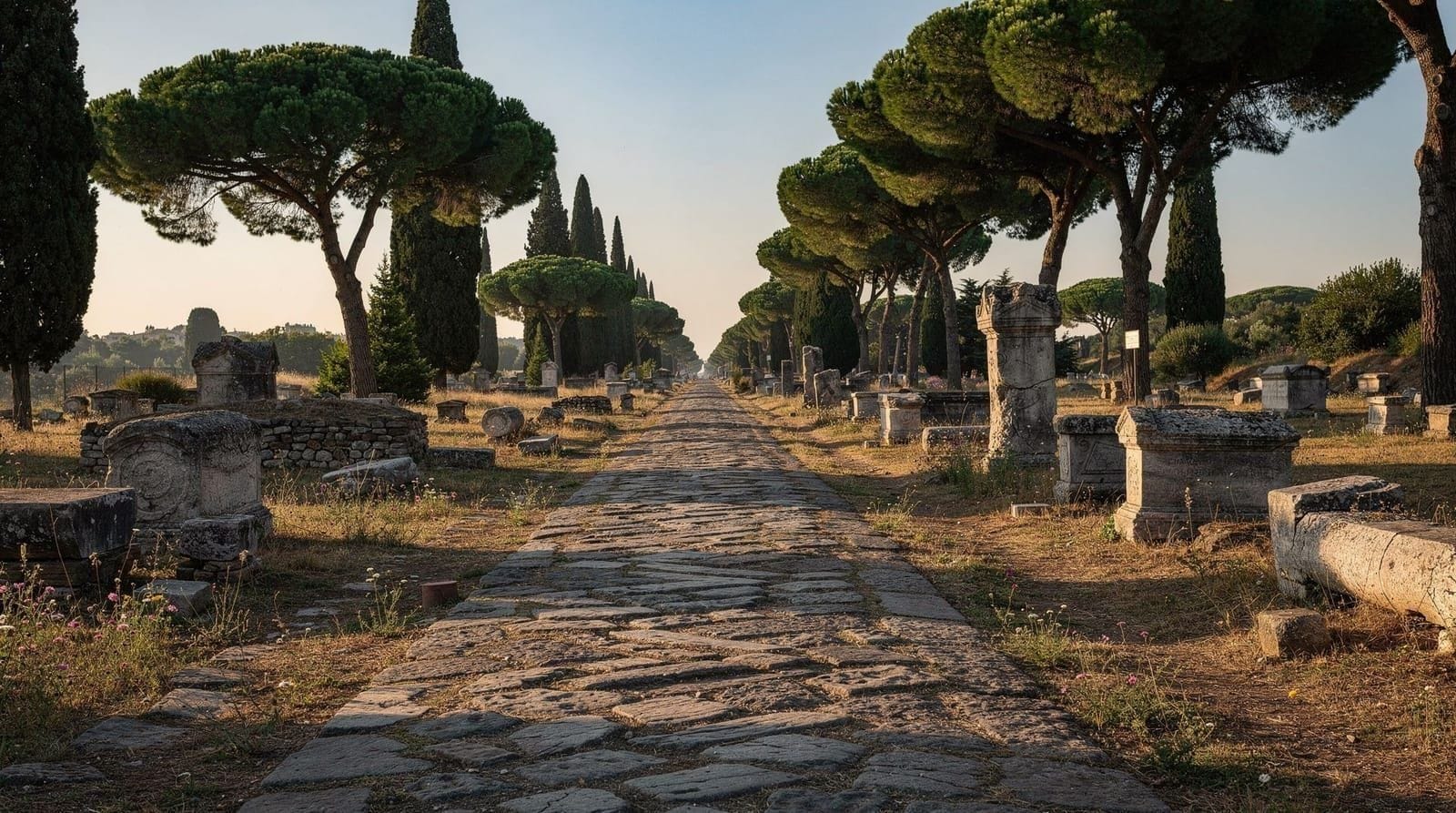
The Via Appia Antica is one of the few places in Rome where you can walk on stones laid by Roman legions without a rope barrier between you and them. Plan an early start — the road gets crowded by midday and becomes uncomfortable in summer heat.
Morning: Porta San Sebastiano and the first stretch
Take bus 118 from the Colosseum area to Porta San Sebastiano, the best-preserved gate in the Aurelian Walls. The road stretches ahead between umbrella pines, lined with the eroded tombs of patrician families and inscribed milestone columns. This is where Rome buried its dead, as burial inside the city walls was forbidden.
Walk south past the Circus of Maxentius, the best-preserved chariot-racing track in existence (largely unvisited), and the immense cylindrical bulk of the Tomb of Cecilia Metella, a first-century BCE monument that later became a castle for the Caetani family.
Late morning: the catacombs
Book ahead for the Catacombe di San Callisto, the largest of the Appian Way catacombs, where several early popes are buried. Guided tours descend 15 metres through tufa-cut galleries lined with loculi — the carved niches that held the early Christian dead. The scale is genuinely startling. Tours run on the hour; allow 45 minutes.
Appian Way and Catacombs guided tourAfternoon: aqueducts and e-bike
After lunch at a trattoria near the road (try Ristorante Appia Antica), the Parco degli Acquedotti opens to the east — a vast meadow under the arches of six Roman aqueducts, still standing after two thousand years. This is one of Rome’s great unsung landscapes. An e-bike tour of the Appian Way covers the whole route efficiently, especially in warmer months when the afternoon sun makes long walks punishing.
Appian Way, Catacombs and Aqueducts e-bike tourEvening: Testaccio aperitivo
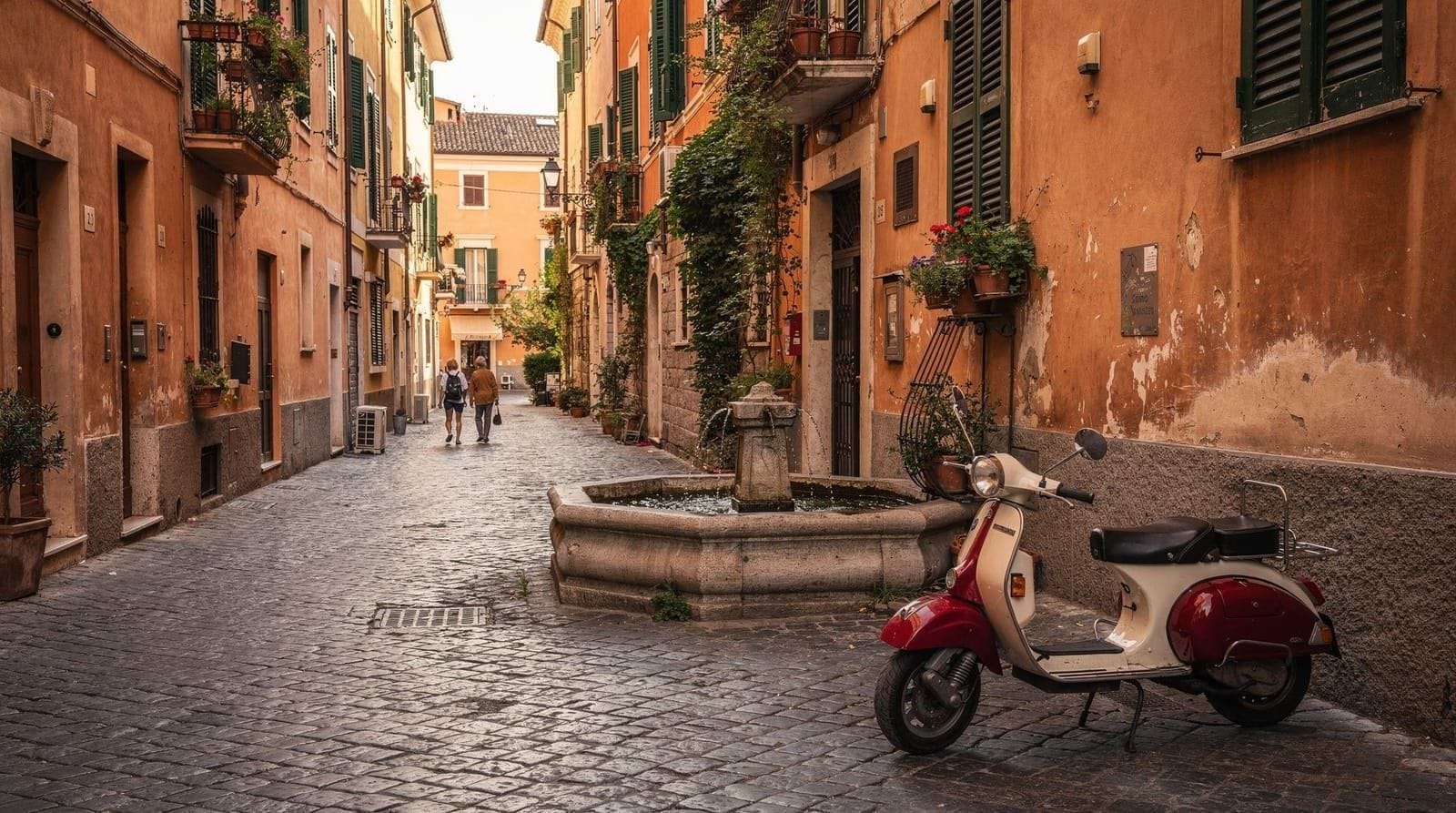
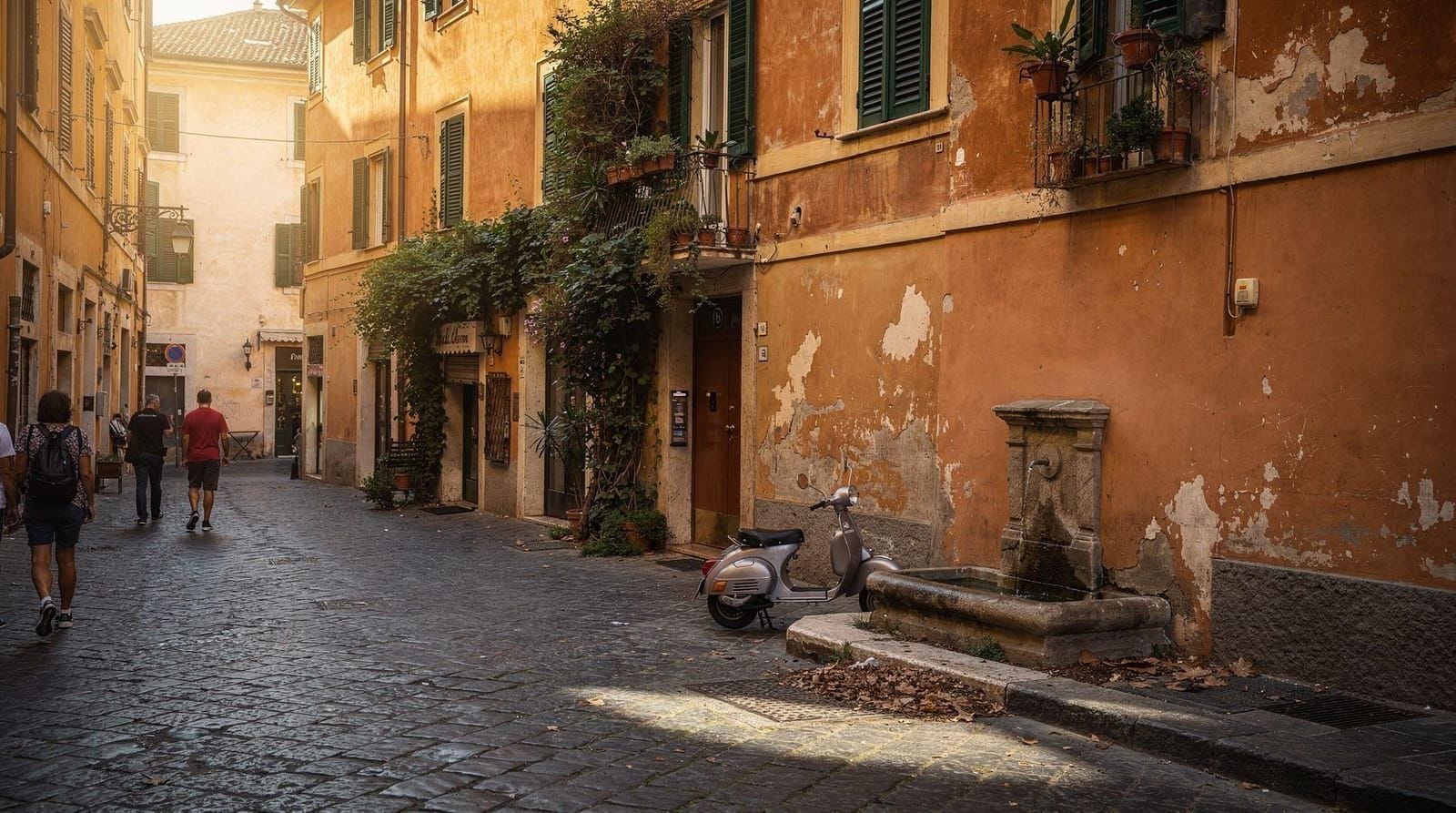
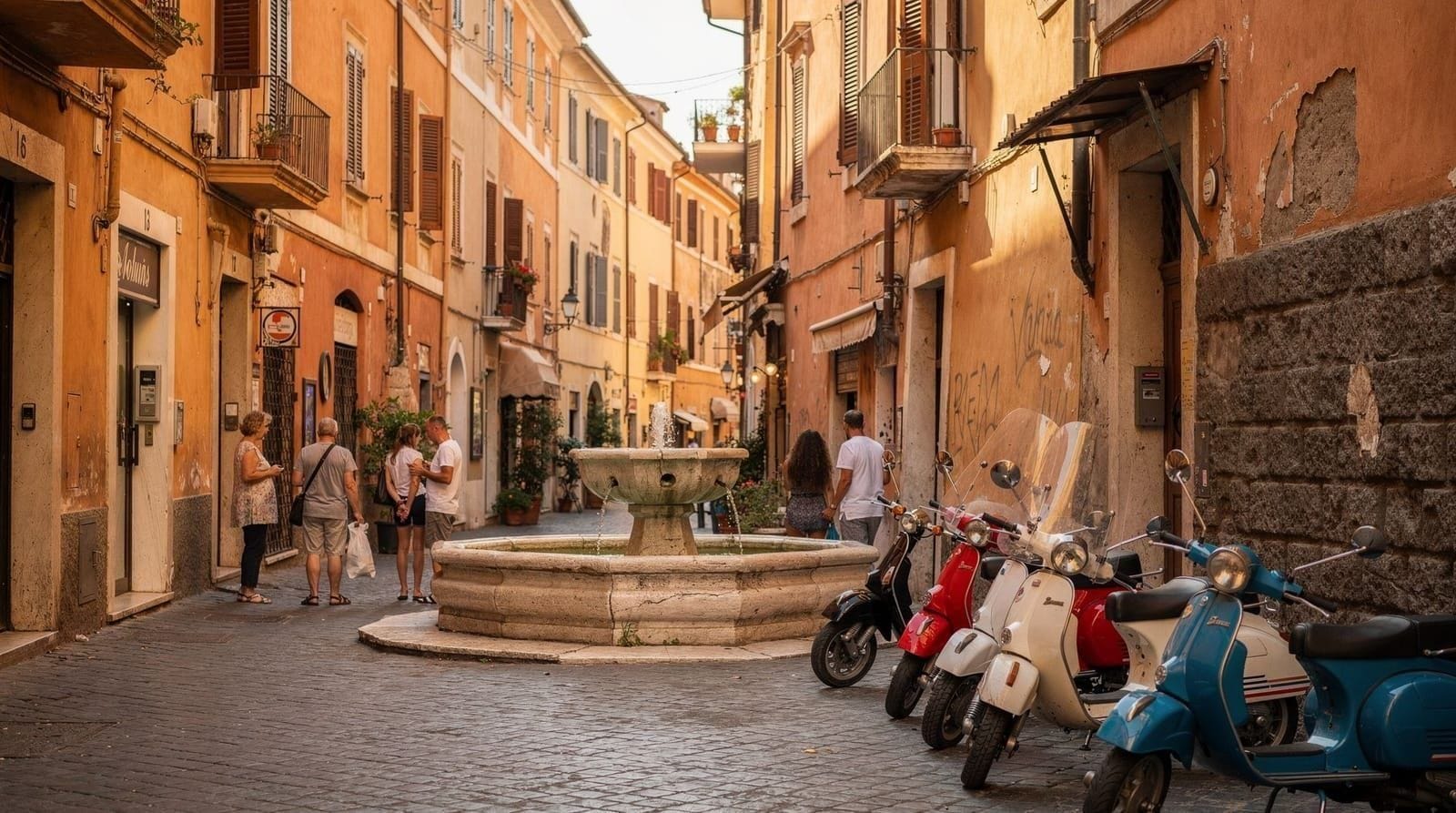
Return to Testaccio and join the neighborhood at aperitivo hour. The area around Via Marmorata and the old slaughterhouse (Mattatoio) is genuine Roman working-class territory, now colonized by good wine bars without tourist-inflated prices. The Testaccio market closes in the early afternoon but the surrounding trattorias stay open. Dinner here is the honest Roman table: cacio e pepe, rigatoni alla pajata, coda alla vaccinara. These are dishes that come from this neighborhood.
Day 2: EUR, Aventino and Quartiere Coppedè
A day of architectural surprises, covering three of Rome’s most undervisited corners.
Morning: EUR
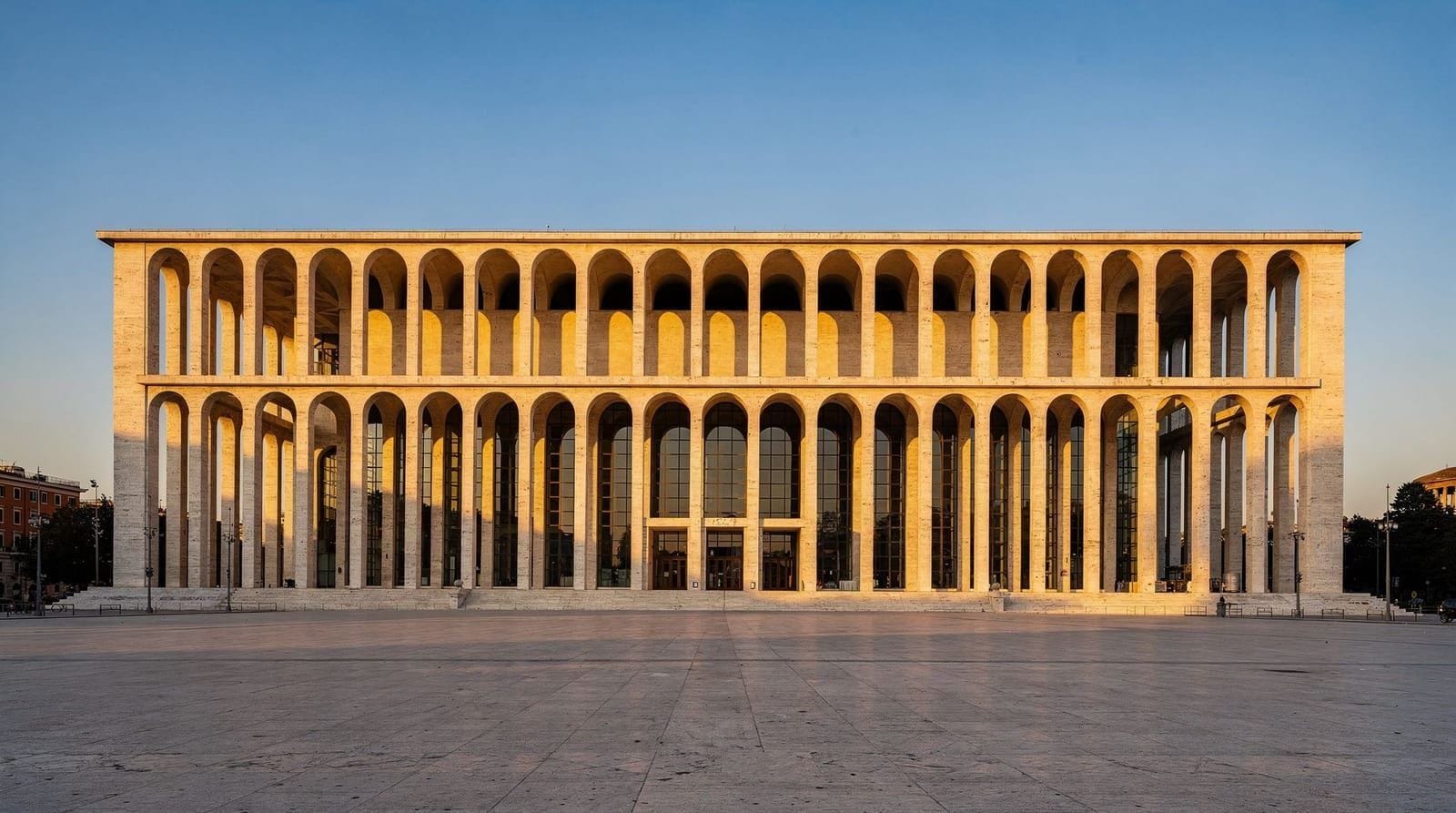
Take Metro B to EUR Palasport or EUR Fermi and spend two hours in EUR, the district Mussolini commissioned for a 1942 World’s Fair that never happened. The Palazzo della Civiltà Italiana — the “Square Colosseum” — is the most photogenic building in Rome that nobody talks about: six rows of arches on each face, 216 identical arches total, gleaming white travertine. The Piazza Guglielmo Marconi and the surrounding boulevards have the eerie grandeur of a planned city built for a future that didn’t arrive. This is not fascism aestheticized — it is a legitimate piece of twentieth-century architectural history worth understanding on its own terms.
The Museo della Civiltà Romana (when open) houses plaster casts of Trajan’s Column reliefs and a scale model of ancient Rome at its imperial peak. Allow 30-40 minutes.
Midday: lunch in Testaccio
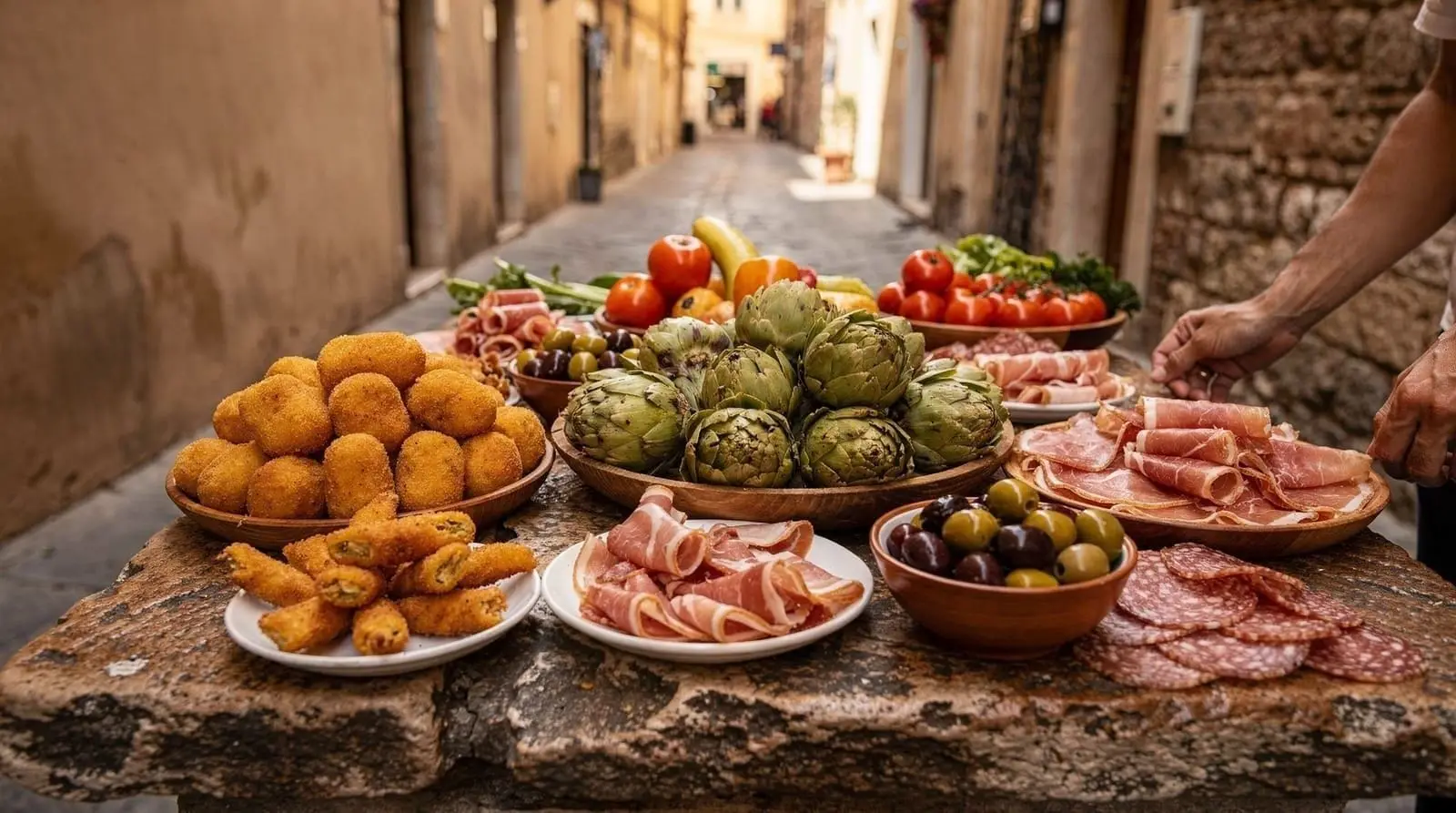
Return north for lunch at the Testaccio market (Piazza Testaccio). The covered market replaced the old outdoor version in 2012 and is still entirely neighborhood-focused: stalls selling vegetables, cheese, cheap and excellent sandwiches (try Box 15 for a supplì and a trapizzino).
Afternoon: Aventino Hill
The Aventino is one of Rome’s seven hills and one of its most peaceful. The sequence here is short but worth timing correctly.
Walk up through the Orange Garden (Giardino degli Aranci) for the classic postcard view across the Tiber to St. Peter’s dome — best in the afternoon when the light falls from the west. From here, walk two minutes to the Keyhole of the Knights of Malta: a small brass lock on a green door in Piazza dei Cavalieri di Malta, through which a precisely aligned avenue of trees frames the dome of St. Peter’s perfectly. There is often a short queue. It is one of those small Roman things that genuinely delivers.
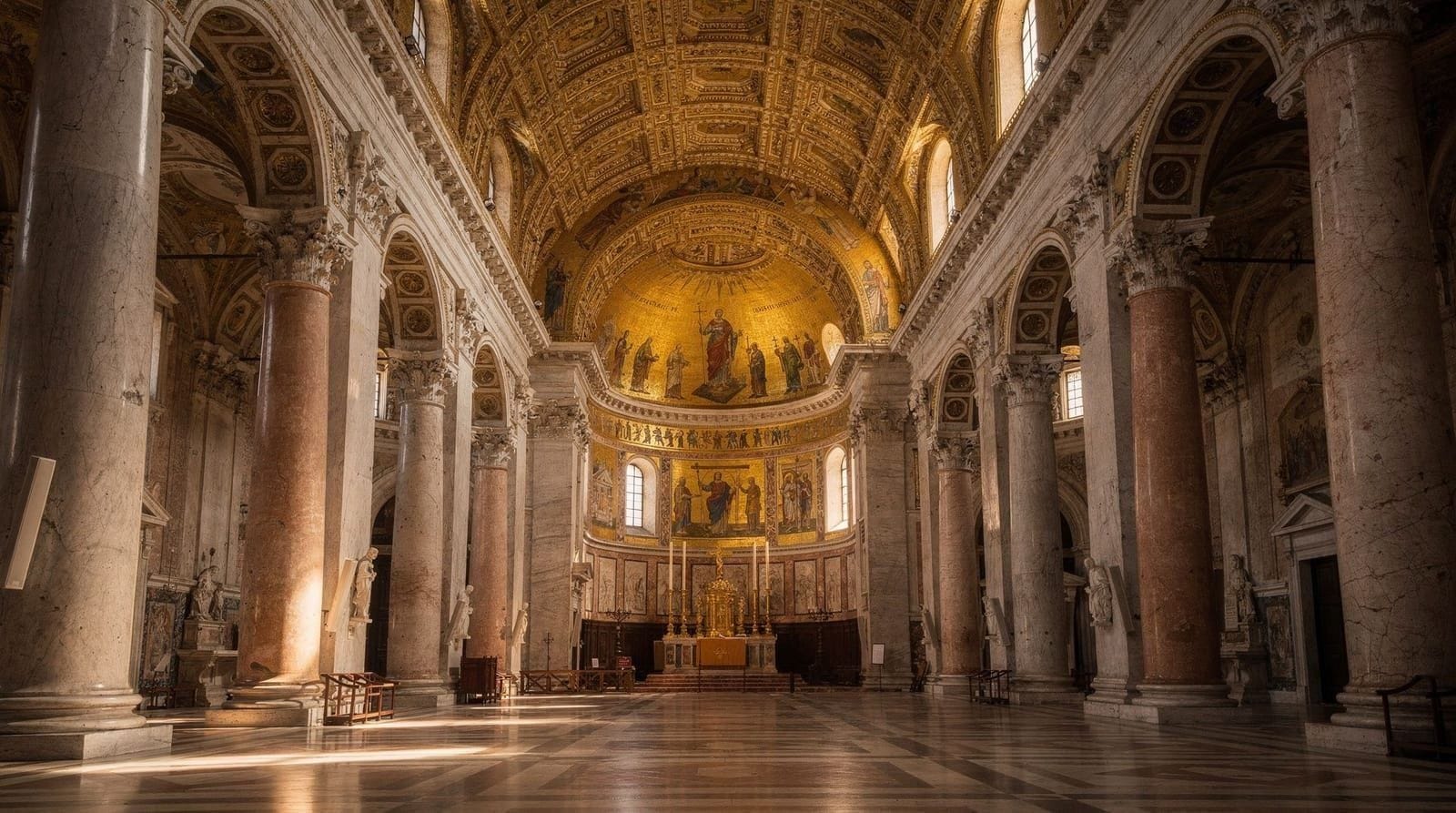
Then into the Aventino proper: the Basilica di Santa Sabina, a fifth-century church that has barely changed since late antiquity. The carved wooden doors at the entrance contain what may be the oldest surviving depiction of the Crucifixion in art. The interior — light, spare, with 24 Corinthian columns from a Roman temple — is one of the least altered early Christian spaces in the world. Free to enter.
Late afternoon: Quartiere Coppedè
Take a bus or taxi north to the Quartiere Coppedè, around Piazza Mincio in the Trieste neighborhood. This Art Nouveau and eclectic fantasy district — designed by architect Gino Coppedè in the 1920s — is absurd in the best possible way: fairy-tale turrets, spider-web ironwork, grotesque masks on every facade, a monumental arch straddling Via Dora with a huge chandelier hung beneath it. Almost no tourists come here. Spend 30-40 minutes wandering and photographing the facades. The Fontana delle Rane (Fountain of the Frogs) at the centre of Piazza Mincio is the money shot.
Evening: aperitivo in Monti
Finish in Monti, Rome’s most liveable neighborhood, for aperitivo at one of the wine bars on Via della Madonna dei Monti or around Piazza della Madonna dei Monti. Dinner at one of the independent trattorias in the side streets — this is a neighborhood where the ratio of local to tourist is still reasonable and the food reflects it.
Day 3: Hidden churches and an evening walk
Rome has over 900 churches. Most visitors see three or four. This day visits the most extraordinary of the overlooked ones.
Morning: San Clemente and the underground layers
Begin at Basilica di San Clemente, near the Colosseum. The surface church dates from the twelfth century and contains fine cosmatesque floor work and a Byzantine-style apse mosaic. Descend to the level below and you are in the fourth-century original basilica, its frescoes of the life of St. Clement still legible. Go deeper still and you are in a first-century Roman building — possibly a mint, possibly a private house — with an active Mithraic temple in its basement, complete with an altar carved with Mithras slaying the bull. Three layers of history, two thousand years of continuous use, and only a moderate entry fee.
Mid-morning: Santi Quattro Coronati and Santa Prassede
Walk up the Caelian Hill to Santi Quattro Coronati, a fortified convent-church from the ninth century. Ring the bell at the small door on the left and a nun will (usually) admit you to the Cappella di San Silvestro, its frescoes illustrating the Donation of Constantine — medieval propaganda at its most vivid. Then cross to Santa Prassede near Santa Maria Maggiore for the Cappella di San Zenone, a ninth-century room lined entirely in gold mosaic so dense it glows. This is Byzantine Rome, not the tourist circuit.
Colosseum, Roman Forum and Palatine Hill guided tour — for those who want to add the ancient core to their final day.
Afternoon: the Caravaggio trail
Spend the afternoon on the Caravaggio trail in the centro storico. The sequence runs: San Luigi dei Francesi (three large canvases of the life of St. Matthew, including the famous moment of the divine calling, with that shaft of raking light); a ten-minute walk to Sant’Agostino (the Madonna di Loreto, the painting that scandalized Rome because Caravaggio used a real peasant woman as his model); and finally Santa Maria del Popolo (the Cerasi Chapel, with the Crucifixion of St. Peter and the Conversion of St. Paul, two of his most physically immediate works). All three churches are free to enter and open in the afternoon (check for prayer closures around 12:30-15:30).
Evening: a final walk
End in the centro storico, on foot, without a plan. This is when Rome does its best work — the crowds thin slightly after 7pm, the light turns gold, and the fountains are lit. Walk from Piazza Navona through the Campo de’ Fiori, past the Farnese palace, through the Jewish Ghetto, along the Lungotevere to Castel Sant’Angelo. No tickets required, no guide needed, just the city doing what it does.
Guided evening walking tour of central RomePractical tips
Getting around: This itinerary uses buses and the metro rather than taxis, which reflects how these parts of Rome actually work. The Metro B line connects Termini to EUR (EUR Fermi stop) in 20 minutes. Bus 118 runs along the Appian Way from the Colosseum area. The Aventino is walkable from Testaccio. Quartiere Coppedè is most easily reached by taxi or bus 52/53/910 from Piazza Venezia.
Costs: The Appian Way catacombs charge €8-10 per person for a guided tour (obligatory — independent visits are not permitted). San Clemente charges €10 for the underground descent. EUR museums have modest entry fees (€8-12). The Caravaggio churches, Santi Quattro Coronati, Santa Prassede, and Santa Sabina are all free. Budget around €40-60 per day for entry fees on this itinerary, considerably less than the Vatican-and-Colosseum circuit.
Booking: Reserve the catacombs in advance for a specific time slot — they operate on fixed tour times and the English-language departures in peak season fill up. The Borghese Gallery (Day 3 option) requires booking at galleriaborghese.it 10-14 days in advance. Everything else on this route can be done on the day, which is one of its advantages.
Food: The neighborhoods on this itinerary — Testaccio, Monti, the Aventino surroundings — are among the best places to eat in Rome without paying tourist-facing prices. Testaccio for lunch and dinner on Days 1-2, Monti for aperitivo, and the streets around San Clemente for a quick lunch before the afternoon Caravaggio walk.
Photography: The Quartiere Coppedè is best in the morning before cars arrive and park on the streets. The Aventino keyhole photograph requires morning or evening light for a clean shot — midday sun washes out the framing. The Orange Garden (Giardino degli Aranci) looks toward St. Peter’s best in the afternoon when the light falls from behind you. EUR is best in overcast conditions when the white travertine does not create hard shadows.
Where to stay
Monti or Celio are the best bases for this itinerary: close to the Colosseum metro stop, within walking distance of the Appian Way buses, and in genuinely local neighborhoods. The Residenza Cellini and Hotel Capo d’Africa (Celio) both offer good mid-range value.
Testaccio itself has fewer hotels but excellent apartment rentals — staying here puts you inside the neighborhood rather than visiting it.
Avoid hotels in the very center around Piazza Navona or Campo de’ Fiori for this particular trip — the prices are higher, the noise is considerable at night, and these neighborhoods are not where this itinerary spends its time.
A note on timing: this route works in any season, but spring (April-May) and autumn (September-October) give you the best walking conditions and the most favorable light for photography. July and August are possible but the Appian Way and EUR are brutal at midday — shift all outdoor elements to early morning or late afternoon.
Combining this with a return-visit anchor site
If you have a fourth day, or if one of the classic anchors still calls to you despite this itinerary’s focus, the Borghese Gallery pairs surprisingly well with Day 2’s Aventino and Testaccio afternoon — it sits on the way back toward Monti and shares the same unhurried, art-focused mood as the hidden churches on Day 3. Book it at galleriaborghese.it 10-14 days ahead if you want to add it. Alternatively, if you’re combining this trip with day trips further out, the Appian Way aqueducts guide links naturally to Castelli Romani, which extends the same “beyond the centre” logic into the countryside southeast of the city.
FAQ
Is this itinerary suitable for a genuine first visit to Rome? Not recommended as your only Rome itinerary. It deliberately skips the Colosseum, the Vatican and the Pantheon in favour of Rome’s quieter corners, which works best once you’ve already seen (or deliberately chosen to skip) the headline sights. First-time visitors should look at the Rome for first-timers itinerary instead.
Do I need to book anything on this route, or can it all be done on the day? Almost everything can be done same-day except the Appian Way catacombs, which run fixed guided tour times and require booking ahead, especially for English-language slots in peak season. Everything else — EUR, the Aventino, the hidden churches, Quartiere Coppedè — has no booking requirement, which is one of this itinerary’s genuine advantages over the anchor-site circuit.
What’s the best single addition if I have a fourth day? The Borghese Gallery, both for the art itself and because it fits this itinerary’s unhurried, exploratory character better than the Colosseum or Vatican would. Book it 10-14 days ahead since its 180-visitor cap per slot makes it the one genuinely competitive booking in an otherwise low-pressure itinerary.
Top experiences
Bookable activities with verified prices and instant confirmation on GetYourGuide.