Rome overrated vs underrated: an honest verdict
Rome: Guided Tour of Colosseum, Roman Forum & Palatine Hill
What is overrated in Rome and what is underrated?
Overrated: the Spanish Steps in high season (a crowded staircase), the Trevi Fountain at midday (a crush), and the free first Sunday (queues that negate the saving). Underrated: the Baths of Caracalla (enormous, rarely crowded), Ostia Antica (rivals Pompeii), Palazzo Doria Pamphilj (world-class art, tiny queues), and Testaccio (Rome's best food neighbourhood, still local).
The overrated/underrated problem
Most “honest” travel lists about overrated destinations are themselves dishonest — they are clickbait contrarianism, calling the Eiffel Tower overrated because it is too famous. That is not a useful verdict.
The more useful question is: does this attraction deliver what the reputation promises, and at what cost? Some things are famous and fully deliver. Some are famous and actively disappoint. Some are obscure and vastly exceed expectations. The ratings below are specific, justified, and based on what visitors actually experience in 2026 — not what was written about Rome in 1985.
| At a glance | Verdict |
|---|---|
| Trevi Fountain, Spanish Steps at midday | Overrated by timing — go before 07:30 or after 21:00 instead |
| Hop-on hop-off bus, first Sunday free entry | Overrated by value — a day metro pass or advance ticket beats both |
| Baths of Caracalla, Ostia Antica, Doria Pamphilj | Underrated — major-league sights at a fraction of the crowds |
| Colosseum, Vatican Museums, Pantheon | Correctly rated — deserve the reputation if booked and timed properly |
OVERRATED
Trevi Fountain at midday: overrated by timing
The Trevi Fountain itself is extraordinary — Nicola Salvi’s 1762 composition is as technically and emotionally impressive as the reputation suggests. The travertine cliff with Neptune at its centre, the allegorical figures, the triumphal arch framing: all excellent.
The experience of visiting it between 09:00 and 20:00 in high season (April to October) is not excellent. It is a crush of several thousand people simultaneously, selfie sticks extended, tour guide amplifiers competing with each other, and no possible angle that does not include 200 strangers. The fountain is visible. The experience is not what any photograph you have seen suggests.
The solution: arrive before 07:30 or after 21:00. At night the fountain is dramatically lit and the crowds drop to manageable. In the early morning, you may have it nearly to yourself. The location is identical. The fountain is identical. Only the crowd volume changes.
The Trevi area restaurants and cafés: overrated and overpriced without exception. See our tourist traps guide for the specific economics.
The Spanish Steps: overrated by expectation
The Spanish Steps are a graceful piece of 18th-century urban design — 135 steps, three levels, flower sellers in spring, the Trinità dei Monti church above. They are perfectly pleasant. They are not the charged, romantic space that the reputation implies.
The problem is scale of expectation. “Spanish Steps” sounds like a major destination. The steps are a nice staircase in a nice neighbourhood. The view down from the top toward Via Condotti is good. The surrounding shopping (Valentino, Bulgari, Hermès, et al.) is the most expensive in Rome. The area is primarily a luxury shopping district with an attractive flight of steps.
The steps are worth seeing in passing. They do not merit being a primary destination or significant time allocation unless you are combining with the Villa Medici or Pincio Gardens above.
The Keats-Shelley House museum at the bottom, however, is underrated: Keats died in this building in 1821, the rooms are preserved, and the literary collection is remarkable. Entry around 6 €. Usually almost empty.
The hop-on hop-off bus: overrated as transport
Legitimate operators (City Sightseeing, Big Bus) run hop-on hop-off services covering Rome’s main sites. The marketing implies an efficient way to see multiple places. The reality is Rome’s traffic makes buses slow, stops are often a significant walk from the actual monument entrance, and a day metro pass costs 7 € versus 25-30 € for the bus.
The hop-on hop-off works well for one specific use case: an orientation ride on arrival without any planned stops, to get a visual sense of the city layout. For actually moving between sites, the metro is faster and cheaper.
First Sunday free entry: overrated by value proposition
Mathematically, free entry to the Colosseum (normally 18 €) should be a great deal. In practice, visitor numbers increase by 3-5x on first Sunday, the queue without a pre-booked time slot is 2-3 hours, and the experience inside is significantly degraded by the crowd. You save 18 € and spend 2-3 hours in a queue.
The sensible alternative: book timed entry in advance for any non-Sunday, pay the 18 €, and experience the site as it was intended to be experienced. See our Colosseum tickets guide.
”Authentic” Trastevere in evening: overrated by reputation
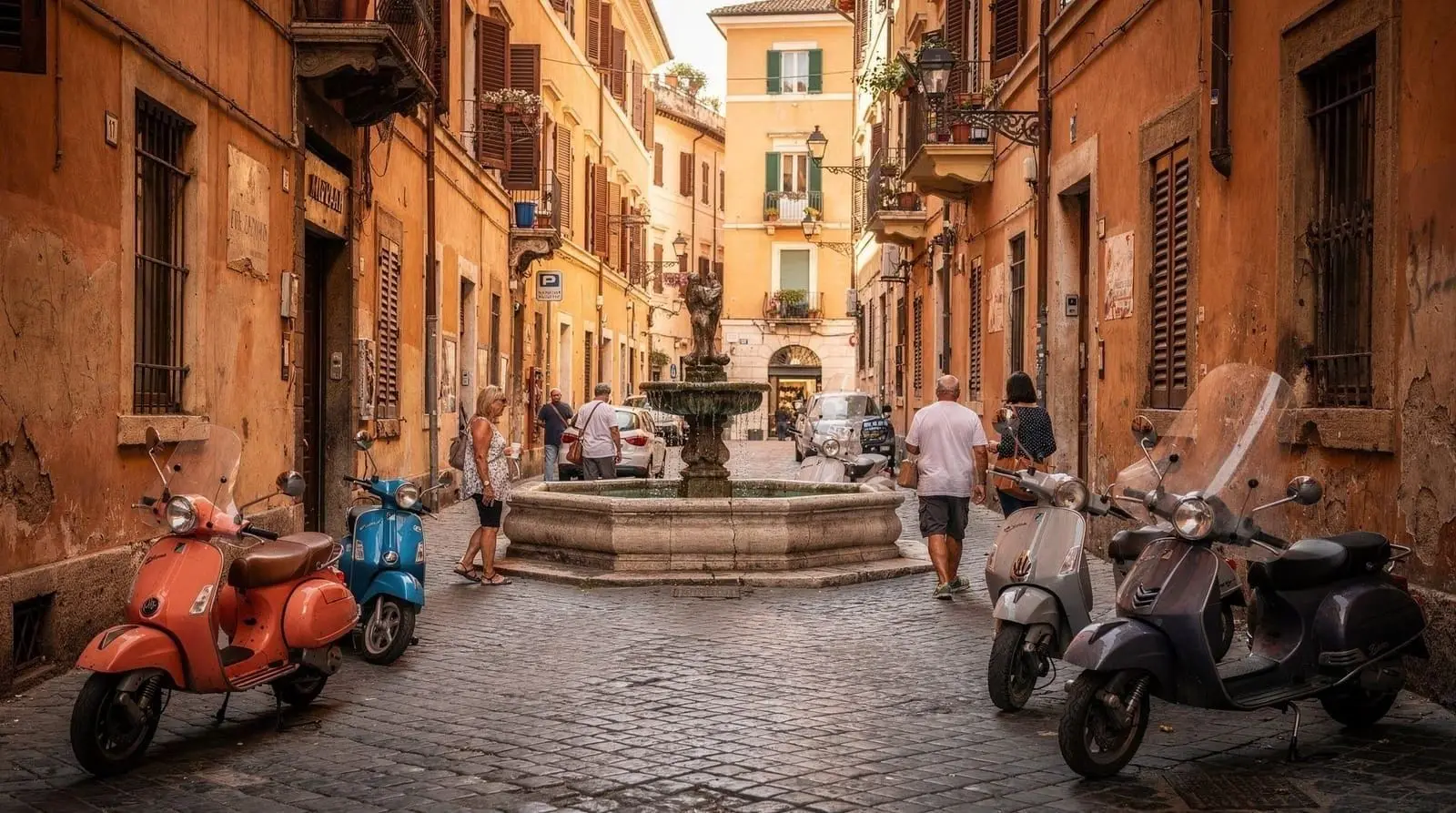
Trastevere has a genuine neighbourhood character and is architecturally among the most beautiful areas of Rome. The evening restaurant scene, however, has been substantially touristified — English menus, coperto charges, and restaurants that have not had a Roman regular for a decade. The neighbourhood is worth visiting (see our Trastevere neighbourhood guide) but the “authentic local evening in Trastevere” experience requires going specifically to places that are not on tourist-facing streets.
UNDERRATED
The Baths of Caracalla: criminally undervisited
As noted in the hidden gems guide, the Baths of Caracalla are among the most impressive ancient structures in Rome and see a fraction of the visitors they deserve. The bathing halls are enormous — the frigidarium (cold room) is the size of a cathedral nave. The floor mosaics are spectacular. The entire complex sits in a green park that is pleasant to walk in regardless of whether you enter the ruins.
Entry around 10 €. On a Tuesday morning in May, you may be one of 50 people in a structure that once held 1,600 simultaneously. See our full Baths of Caracalla guide.
This tour covers the Appian Way corridor including the Catacombs — southern Rome’s most historically dense area, where the Baths of Caracalla also sit.Palazzo Doria Pamphilj: the best ratio in Rome
Art quality to visitor volume ratio: the Doria Pamphilj wins by a large margin. The Velázquez Innocent X portrait is genuinely a contender for the finest portrait in the Western tradition. The room that contains it has, on most mornings, fewer than 10 people.
For context: the portrait hangs in a room in a palazzo owned by the same family who commissioned it in 1650. The Prince Doria narrates the audio guide personally. You stand in front of one of the greatest paintings in the world in near-solitude.
Entry around 16 €. The gallery also has Caravaggio canvases, multiple Flemish masters, and a sculptural collection. See our Doria Pamphilj gallery guide.
Testaccio: underrated as a food destination
Most visitor food spending in Rome goes to tourist-facing restaurants near the major monuments. Testaccio is the alternative that Romans themselves know about and use. The neighbourhood is built around the former slaughterhouse (now a contemporary arts centre), which generated a tradition of offal-based cooking that became the basis for Roman cuisine — coda alla vaccinara, trippa alla romana, rigatoni con pajata.
You do not have to eat offal in Testaccio. Supplì (fried rice balls), pizza al taglio, and proper carbonara are available from market vendors and neighbourhood trattorie at prices roughly 40% below equivalent quality in the tourist zone. The Testaccio neighbourhood guide has specific names.
Ostia Antica: underrated by visitor pattern
Pompeii-level ruins, one-quarter of the queues, 30 minutes from central Rome by train. Ostia Antica (the ancient port city of Rome) is consistently identified by archaeologists and serious Rome visitors as one of Italy’s great ancient sites and consistently ignored by most tourists who visit Rome.
The practical comparison: Pompeii receives around 3.5 million visitors annually; Ostia Antica receives around 400,000. The completeness is similar — streets, forums, theatres, apartment blocks, insulae — but the experience of walking Ostia is dramatically more peaceful. See our Ostia Antica day trip guide.
The Roman Forum: underrated vs the Colosseum
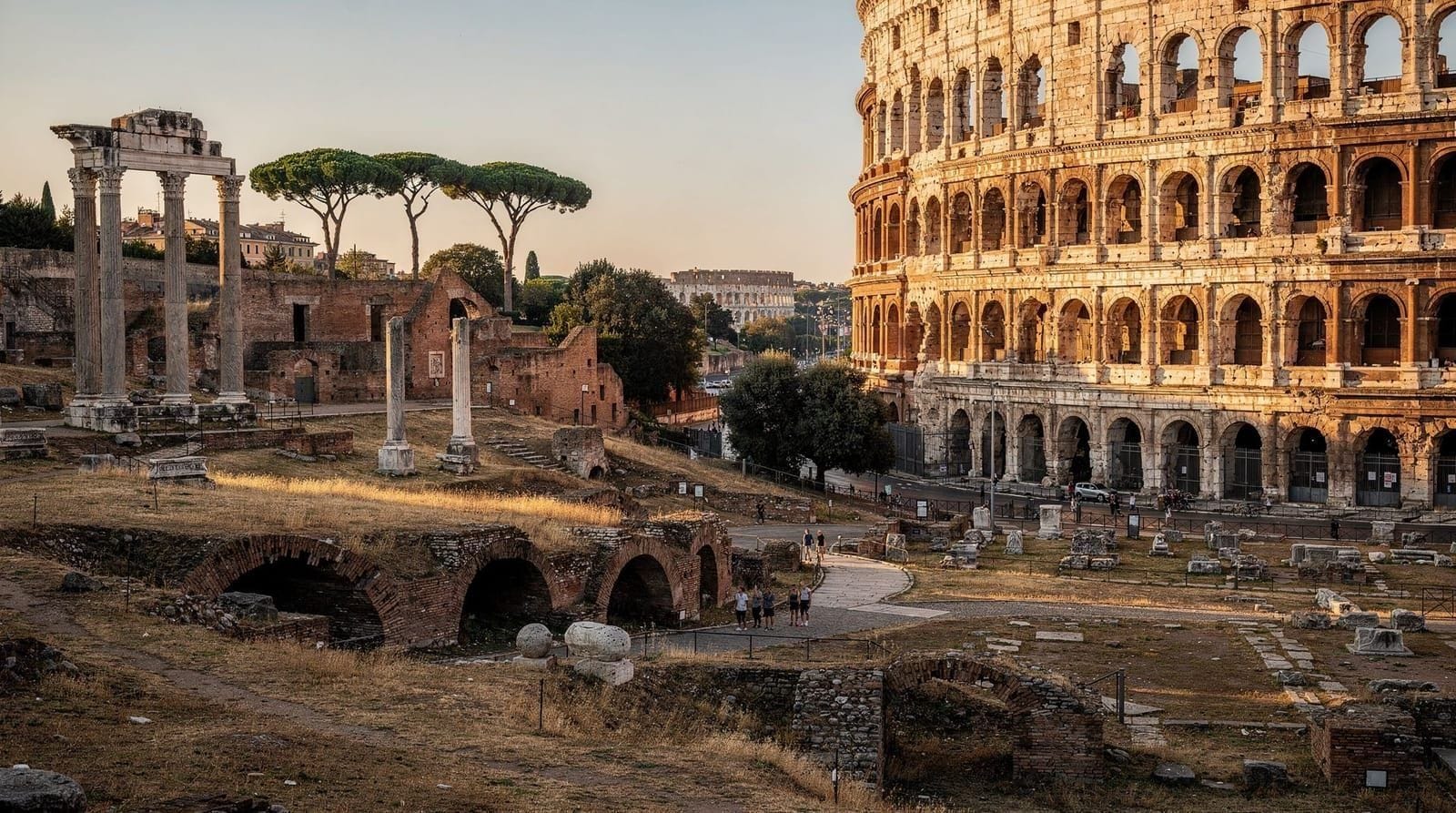
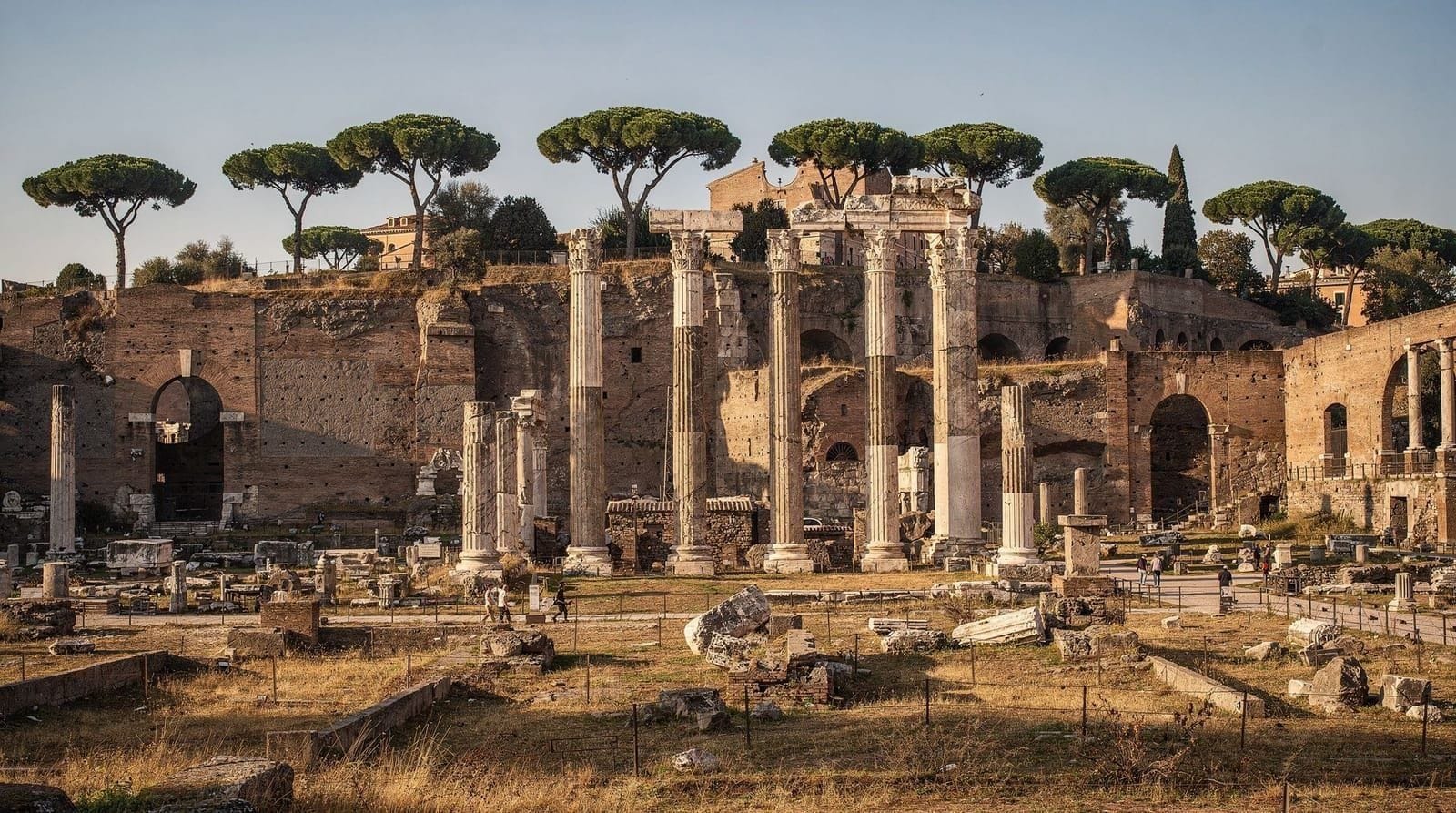
The Roman Forum is included in the same ticket as the Colosseum (€18 combined) and typically receives less visitor attention because the Colosseum’s exterior is more visually obvious. The Forum is actually historically more important — the political, civic, and religious centre of Roman civilization for a thousand years.
Most visitors walk through the Forum quickly on the way to/from the Colosseum, without adequate preparation or time. With two hours, good orientation material, and an audio guide, the Forum is transformative. Our Roman Forum guide provides the preparation.
Palazzo Massimo alle Terme: the best Roman museum no one visits
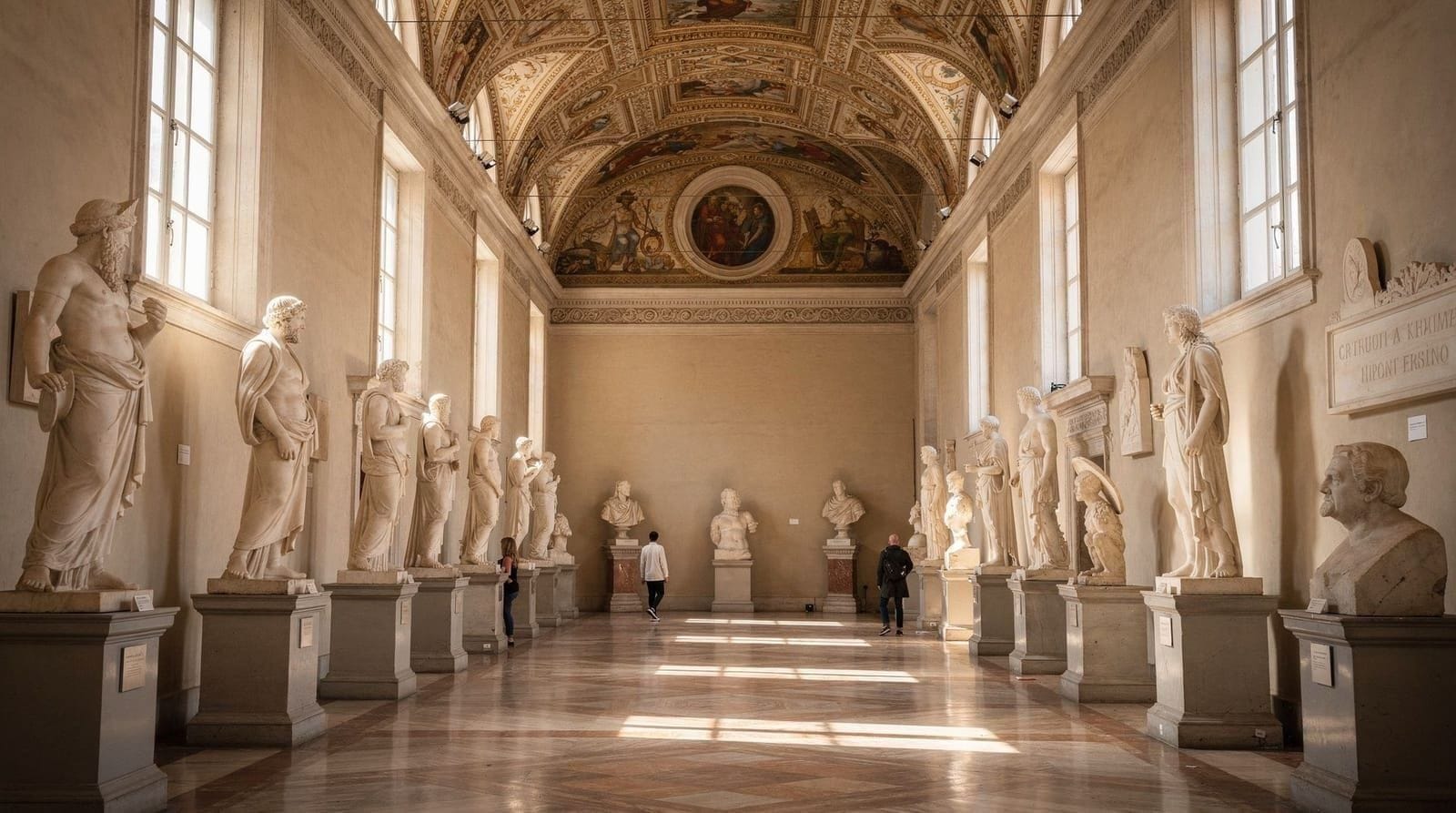
The Nazionale Romano at Palazzo Massimo (near Termini station) holds the greatest collection of ancient Roman painting in existence — actual frescoes removed from their walls in the 1st century CE, including the remarkable Garden Room of Livia’s Villa, a room-sized painting of a garden that creates the most complete ancient Roman interior experience surviving today. Also the Lancellotti Discobolus, fine bronzes, and extraordinary mosaic floors.
Entry around 10 €, combined tickets available. Visitor volume is a fraction of any comparable collection in Rome. Open Tuesday through Sunday.
The Pincio and Borghese Gardens: underrated by itinerary pressure
Most Rome itineraries are monument-centric. The Borghese Gardens occupy the northeast corner of the city centre and provide 80 hectares of free public park — extraordinary views, fine paths, a small lake, and the option to visit the Borghese Gallery (pre-booked, 17 €). The gardens see primarily Roman families and fitness users. They have no tourist density to speak of.
The Gianicolo Hill, accessible from Trastevere, provides Rome’s best free panoramic view with a fraction of the visitors at any other paid viewpoint.
A guided tour of the Colosseum, Forum and Palatine ensures you do justice to the main ancient circuit — the sites that are correctly rated as essential, done in the way that makes them worth the time.Campo de’ Fiori: overrated in the evening, underrated in the morning
Campo de’ Fiori runs a genuine flower and food market every morning except Sunday until around 13:30 — worth seeing for the produce, the flower stalls, and the statue of Giordano Bruno at the centre, marking the spot of his 1600 execution. By evening the same piazza becomes a loud, tourist-facing bar strip with some of the worst drink pricing in the Centro Storico. Visit in the morning for the market; skip the evening bars unless you specifically want that scene. The Centro Storico guide has the full neighbourhood context.
Castel Sant’Angelo: correctly rated, often skipped by mistake
Castel Sant’Angelo — Hadrian’s mausoleum turned papal fortress, connected to the Vatican by the elevated Passetto corridor — is frequently treated as optional because it sits slightly apart from the main Vatican circuit. That’s a mistake: the spiral ramp, the papal apartments, and the rooftop terrace (with one of Rome’s best unobstructed views toward St. Peter’s) justify the roughly 15 € entry on their own. It pairs naturally with a Vatican day rather than requiring a separate trip.
CORRECTLY RATED (worth addressing)
The Colosseum: fully deserves the reputation if properly visited. Book in advance, allow two hours, consider arena floor access, combine with the Forum. The most common mistake is treating it as a 45-minute stop. It is a half-day if done properly. See our Colosseum, Forum and Palatine guide.
The Vatican Museums and Sistine Chapel: genuinely extraordinary, but requires the right approach. The Early Morning tour is the correct way to see it. See our Vatican Museums guide.
The Pantheon: worth seeing but now costs 5 €. Still correct to visit — the oculus and the spatial composition are exactly what the reputation claims. The building’s engineering (a 43.3-metre concrete dome with an 8.9-metre hole in it, standing intact since 125 CE) is as impressive as the artwork. Brief visit — 30-45 minutes — but correct.
Piazza Navona: correctly rated as one of Europe’s finest urban spaces, with Bernini’s Fontana dei Quattro Fiumi as its centrepiece. The tourist restaurant prices are the only thing correctly overrated about it. Stand in the piazza, look at the fountain, move on. Do not sit at a restaurant table here.
Tivoli (Villa d’Este and Villa Adriana): correctly underrated by most tourists but properly famous among those who go. A day trip from Rome that includes the UNESCO-listed Villa d’Este Renaissance gardens and Hadrian’s enormous villa complex (essentially a private Roman town) is one of the best day trips in Italy. Neither site is crowded relative to its quality. See our Tivoli day trip guide.
Piazza Navona at night: underrated after the tour groups leave
By day, Piazza Navona is dense with tour groups, portrait artists working the crowd, and restaurant touts. After around 22:00, the same piazza empties considerably — the Fontana dei Quattro Fiumi is lit, street performers thin out, and it becomes one of the more atmospheric places in the city for a slow walk. Combine it with a late Pantheon pass-by (the exterior and portico are visible and free at any hour) for a genuinely underrated evening loop through the Centro Storico.
Underrated specifically for food
Most food writing about Rome focuses on the obvious: carbonara, cacio e pepe, pizza, supplì. These are correctly famous. What is underrated is the neighbourhood context.
Roman-Jewish cuisine — carciofi alla giudia, coda alla vaccinara, baccalà fritto — is as significant a culinary tradition as the pasta canon and is best encountered in the Jewish Ghetto at a fraction of the tourist restaurant prices. Offal cooking in Testaccio (rigatoni con pajata, trippa alla romana) represents Rome’s oldest food tradition, predating pasta, and is available at market-side stalls for under 10 €.
The overrated food category: restaurants anywhere within 200 metres of Trevi Fountain, the Pantheon, or Campo de’ Fiori at dinner. The pasta is the same ingredients as a Testaccio trattoria. The experience costs twice as much and comes with a coperto that was not on the menu.
See our five Roman pastas guide and where to eat in Rome for a neighbourhood-by-neighbourhood food breakdown.
A food tour in Trastevere that takes you to the spots that are not in front of tourist-facing restaurants — the places where the food is worth eating at prices that make sense.The verdict
Rome is a city where the famous things are famous for excellent reasons. The overrated category is largely about timing and context — not about the things themselves. The Colosseum at 09:00 on a Thursday in October with an advance booking is extraordinary. The Colosseum on free Sunday in August at noon is genuinely unpleasant.
The underrated category is largely about itinerary structure. If you arrive with a five-item list and no flexibility, you will see the five famous things and miss the privately owned palazzo 200 metres away with Velázquez’s greatest portrait.
Build flexibility into your Rome itinerary. Book the essential sites in advance. Leave at least one day without a fixed agenda. And eat dinner where the Romans eat dinner — not where you can see a fountain from the table.
See our Rome hidden gems guide and our Rome where locals go guide for the full picture of what to prioritise beyond the standard attractions list. For a broader read on which crowds are worth navigating, how to avoid Colosseum crowds and avoid Rome crowds go into timing strategy in more depth, and the Rome tourist traps guide catalogues the specific restaurants and scams behind most “overrated” complaints.
Frequently asked questions about Rome overrated vs underrated: an honest verdict
Is the Colosseum worth it or overrated?
Is the Vatican overrated?
Are the Spanish Steps worth seeing?
Is Trastevere overrated now?
What is the most underrated museum in Rome?
Top experiences
Bookable activities with verified prices and instant confirmation on GetYourGuide.