Appian Way and aqueducts: Rome's most underrated half-day
Rome: Appian Way, Catacombs, & Roman Aqueducts E-bike Tour
Duration: 4-6 hours
How do I get to the Appian Way from Rome's center?
Take bus 118 from Circo Massimo metro (Line B) to the Via Appia Antica park entrance — about 25 minutes. The free stretch of the road (no cars on Sundays) starts approximately 2km from the city. Alternatively, take the Archeobus tourist bus (€12 return) from Termini. For the Aqueducts Park, bus 664 from Subaugusta metro (Line A) reaches the Parco degli Acquedotti in 20 minutes.
The best escape from tourist Rome
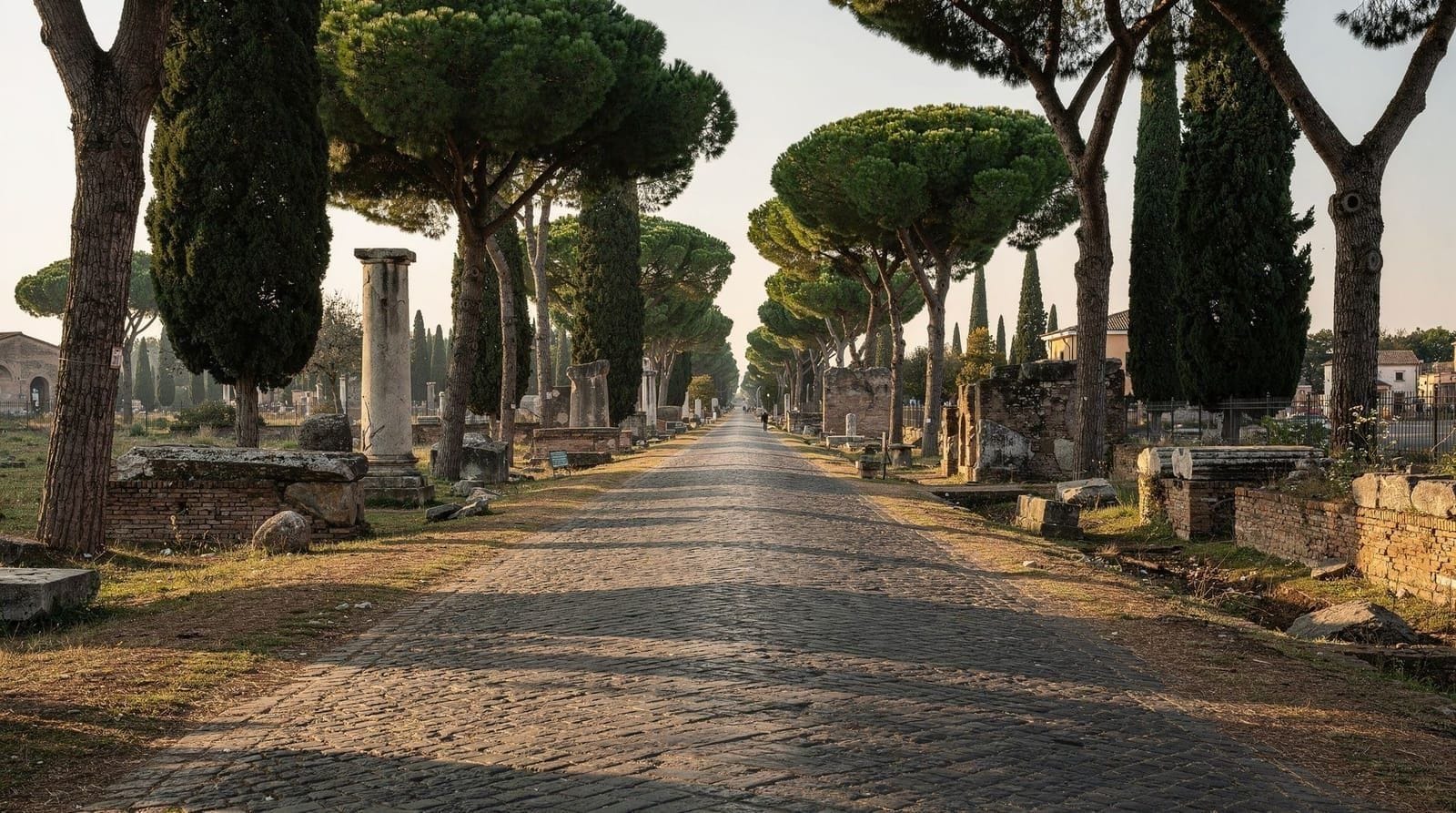
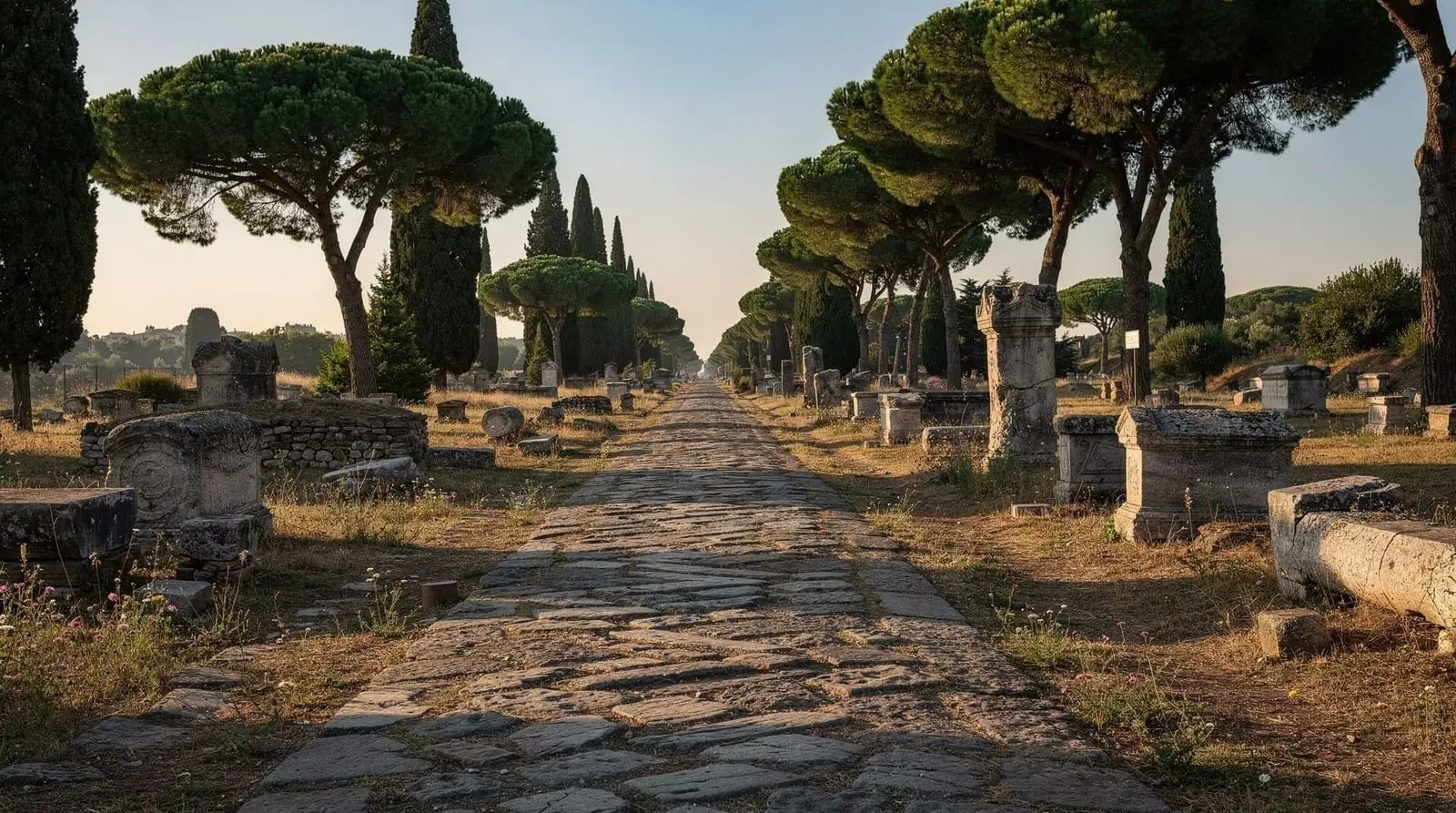
The Via Appia Antica — the Appian Way — is one of the world’s oldest roads. Built from 312 BCE, it stretches from Rome to Brindisi, 570 kilometres to the southeast. The preserved section within Rome’s boundary is a regional park: ancient cobblestones, umbrella pines, tombs and mausoleums, sheep grazing between aqueduct arches, and — on Sundays when cars are banned — a rare silence in what is otherwise a noisy, traffic-saturated city.
The Appia Antica and the adjacent Aqueducts Park are among the most rewarding and least crowded ancient Roman experiences available. They are also almost entirely free.
| Where | Via Appia Antica park, south of the Circus Maximus |
| Cost | Mostly free; Cecilia Metella/Quintili ~€3–8, catacombs ~€8 |
| Time needed | Half day (3–5 hours); full day if combined with Caffarella valley |
| Getting there | Bus 118 from Circo Massimo, or Archeobus from Termini |
| Best day | Sunday — the road closes to cars |
| Best time | Morning, or spring for wildflowers |
Getting there and around: comparing your options
| Option | Cost | Time | Best for |
|---|---|---|---|
| Bus 118 from Circo Massimo | ~€1.50 | ~25 min | Independent visitors, budget |
| Archeobus from Termini | ~€12 return | Hop-on hop-off | First-timers wanting catacombs stops |
| Rental bike/e-bike | €5–25 | 3–4 hrs on site | Covering the full road comfortably |
| Guided e-bike tour | Tour-priced | 4–6 hrs | Combining road, aqueducts and catacombs with commentary |
Why the Appian Way matters
The Romans called it the “queen of roads” (regina viarum). It was strategic military infrastructure as much as a road — built to move legions rapidly to Campania and the southern ports. The engineering standards were extraordinary: 1.2-metre-wide carved basalt paving blocks, cambered for drainage, with gravel shoulders and milestones every Roman mile (1,480 metres).
The road was also a display medium. Roman law prohibited burials within the city walls, so the wealthy built their tombs along the main roads outside the city — visible to the maximum number of travellers. The Appia Antica is lined with mausoleums and tombs spanning five centuries: the Tomb of Cecilia Metella (the most prominent, a well-preserved circular tower from around 50 BCE), the Villa of the Quintili (enormous 2nd century CE villa complex with a private hippodrome), and dozens of less famous but still impressive remains.
The Aqueducts Park: less visited, equally dramatic
The Parco degli Acquedotti (Aqueducts Park) is a separate but adjacent linear park, 15 minutes’ drive from the Appian Way, where seven of Rome’s eleven ancient aqueducts converge in a flat meadow. The visual effect is extraordinary: multiple sequences of arches at different heights, built over four centuries, cutting across a suburban meadow with no fences and almost no visitors.
The most impressive is the Aqua Claudia (38–52 CE), with arches up to 30 metres high. The Aqua Felix (built by Pope Sixtus V in 1585 using ancient arch foundations) runs alongside it. On a clear morning, you can walk for 3–4 kilometres alongside these arches with no significant crowd.
The park is free. The nearest metro is Subaugusta (Line A); bus 664 connects to the park.
Getting there: your realistic options
By bus from Circo Massimo: Bus 118 from the Circo Massimo bus stop (near the Circus Maximus, metro Line B) runs directly to the Appian Way park. Frequency: roughly every 20–30 minutes. Journey: about 25 minutes to the Via Appia Antica entrance near the Tomb of Cecilia Metella. Standard ATAC ticket (€1.50).
By Archeobus: The Roma Archeobus (operated by Trambus/ATAC) runs from Termini station to the key Appian Way sites, including catacombs stops. Cost approximately €12 round trip; runs on weekends primarily. This is the easiest option for first-timers who want to stop at the catacombs.
By e-bike or bicycle: Multiple rental shops near the park entrance (Via Appia Antica 175 and nearby) rent bicycles and e-bikes: €5–10 for standard bikes, €15–25 for e-bikes, typically for 3–4 hours. This is the most rewarding way to cover the road — the cobblestones are uneven on foot over long distances, but manageable on a bike. The road is flat to gently rolling.
On a guided e-bike tour: Several operators run guided e-bike tours from the center of Rome to the Appian Way, often combining it with the Catacombs of St. Callixtus and the Aqueducts Park. Duration 4–6 hours. This is the best single experience for those who want to cover both the road and the aqueducts park in one outing without navigating on their own.
Appian Way, catacombs and Roman aqueducts e-bike tour — the most complete way to cover the full Appia Antica landscape, with a guide who explains the Roman road and burial customs.The catacombs: which ones to visit
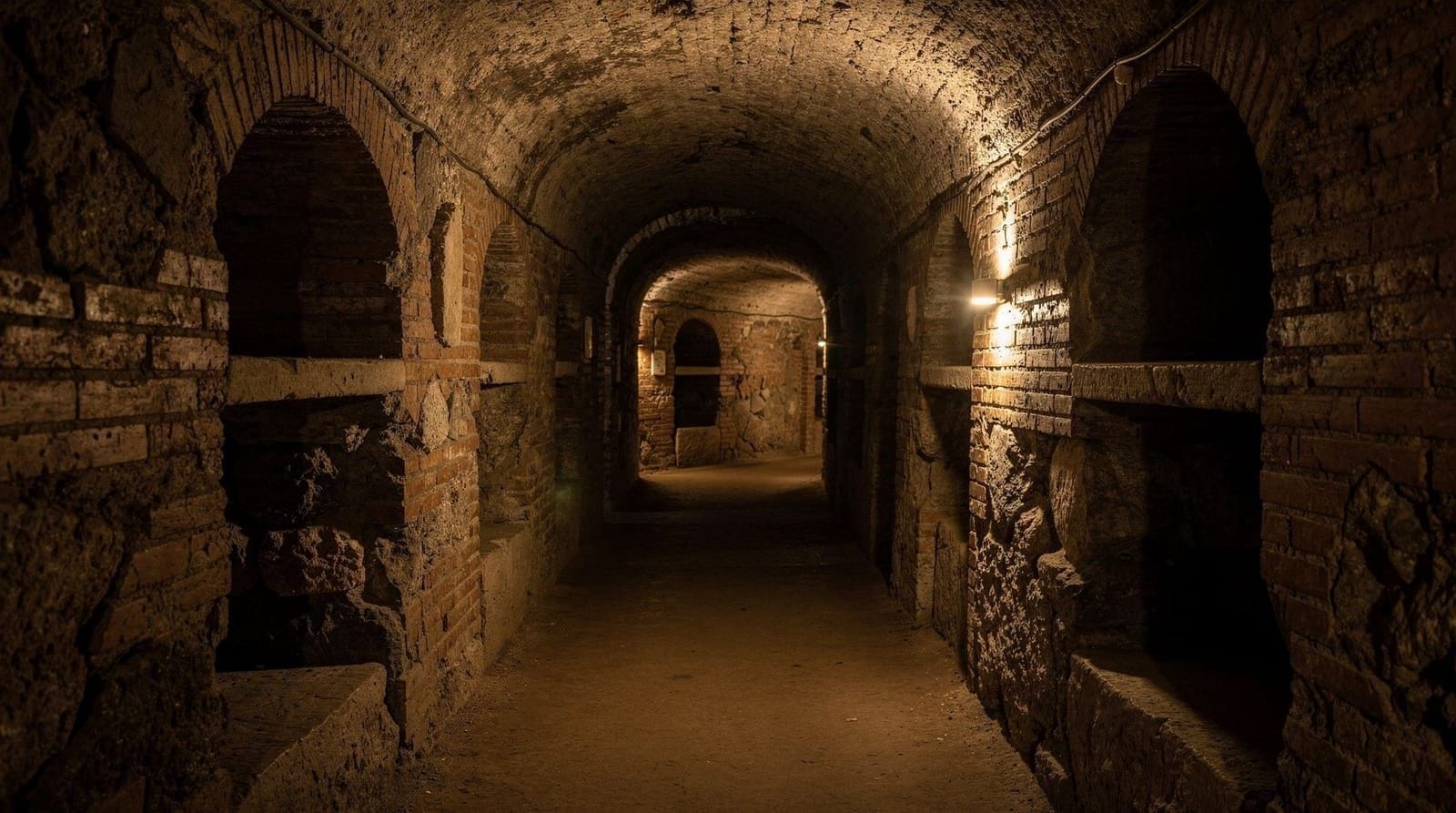
The Appian Way section contains the highest concentration of Roman catacombs (early Christian underground burial networks) anywhere in the world. The main visitor sites:
Catacombs of St. Callixtus (San Callisto): The largest and most visited. Official burial site of early popes; multi-level tunnels covering 20+ km. Guided tours in English run regularly; approximately €8 entry. Located on Via Appia Antica, 2km from the Circus Maximus.
Catacombs of St. Sebastian (San Sebastiano): Smaller but historically significant — the original meaning of “catacomb” (kata kymbe, near the hollow) referred to this site specifically. Contains early Christian graffiti invoking Peter and Paul; also has a Roman villa section. Similar pricing to Callixtus.
Catacombs of Domitilla: Largest of the Appian Way catacombs by tunnel length; less commercial than Callixtus. Well-preserved early Christian frescoes including the earliest surviving depictions of Christ as the Good Shepherd. Slightly harder to reach (signposted from Via Appia Antica, 500m off the main road).
All require guided tours (no independent access). Photography is generally not permitted underground. Tours run in multiple languages; check individual sites for current schedules.
| Catacomb | Highlight | Entry | Crowd level |
|---|---|---|---|
| San Callisto | Early popes’ burial site, 20+ km of tunnels | ~€8 | Busiest, most visited |
| San Sebastiano | Origin of the word “catacomb”, Roman villa section | ~€8 | Moderate |
| Domitilla | Earliest Good Shepherd frescoes, longest tunnels | ~€8 | Quietest, least commercial |
Best time of day and year to visit
Morning (arriving by 9:30–10:00) gives the best light for photographs along the tomb-lined road and keeps you ahead of the modest but real midday crowds around Cecilia Metella. Spring (February–April) is the best season overall: wildflowers carpet the meadows, temperatures are comfortable for walking or cycling several kilometres, and the Caffarella valley’s grazing sheep are most active. Summer is workable but shadeless in the central stretch between roughly km 4 and km 8 — bring sun protection and water, and consider an e-bike over walking to shorten your sun exposure. Winter is quiet and atmospheric but some catacomb tour schedules thin out; check hours before travelling. Whatever the season, Sunday remains the single best day to go, since the road closes to private traffic and both cyclists and pedestrians have the cobblestones largely to themselves.
The Tomb of Cecilia Metella
This circular mausoleum (approximately 50 BCE) is the best-preserved and most visually striking tomb on the Appian Way. It was built for the daughter-in-law of Marcus Licinius Crassus (the richest man in Rome, who funded part of the First Triumvirate with Julius Caesar and Pompey). The cylindrical tower, 11 metres in diameter and 11 metres tall, is clad in travertine and topped by a medieval battlement added in the 14th century when the Caetani family fortified it as a defensive tower.
Entry €3 (combined ticket with the nearby Villa dei Quintili available). Open Tuesday–Sunday.
The Villa of the Quintili
The largest villa complex on the Appian Way, dating to the 2nd century CE. So impressive that Emperor Commodus coveted it, had the owners executed, and took it for himself. The remaining structures include a private hippodrome (longer than the Circus Maximus), baths, a tower and substantial residential blocks. Entry €8 (or combined with Cecilia Metella). Less visited than the central ruins; genuinely extraordinary for scale.
Sunday: the car-free day
On Sundays, Via Appia Antica is closed to private vehicles from the Porta San Sebastiano to the GRA (ring road) — approximately 10 km of ancient road. This is the best day to visit: the cobblestones are walkable without traffic, bicycle rentals are busiest, and local Romans cycle and walk here as an afternoon tradition. Arrive by 10:00 to have the better sections to yourself.
Appian Way aqueducts e-bike tour with optional catacombs and lunch — flexible format that lets you add the St. Callixtus catacomb visit to the bike route.Combining the Appian Way with nearby sites
Baths of Caracalla (20 minutes’ walk from the Circus Maximus, on the way to the Appian Way): see our Baths of Caracalla guide.
Circus Maximus: 10 minutes from the Circo Massimo metro. Free to enter the site. See our Circus Maximus guide.
Catacombs (on the Appian Way itself): covered above and in our catacombs and underground guide.
For the Ostia Antica vs Pompeii comparison — both Roman-era sites outside Rome — see our Ostia Antica vs Pompeii guide.
The Via Appia Antica regional park: practical management
The Appia Antica Regional Park (Parco Regionale dell’Appia Antica) was established in 1988 to protect the remaining ancient road from urban encroachment. It covers approximately 3,500 hectares and includes the road itself, the aqueducts park, the Caffarella valley, and various archaeological zones. There is a visitor information point at Via Appia Antica 58 (open Tuesday–Sunday, 9:30–12:30 and 14:00–17:00 approximately; hours vary seasonally), which provides free maps and current site access information.
The park authority has been in periodic conflict with residents who own houses along the road — the same heritage protection that makes the landscape beautiful also restricts property modifications, creating occasional legal disputes. Visitors benefit from this protection entirely.
The wider Appia road network
The preserved Rome section is often treated as the entirety of the Appia Antica experience, but the road continues uninterrupted to the south. The next significant accessible section is in the Castelli Romani area (toward Albano Laziale, where the road passes through), and further sections are accessible in the Terracina area (~80 km south) where some of the most dramatic original paving survives on steep volcanic rock sections.
For Rome visitors, the first 10–15 km from the city wall are the practical day-trip range. The area between km 5 and km 15 (Villa of the Quintili, the Casal Rotondo mausoleum, the Casale di Roma Vecchia) is the most archaeologically dense and least visited.
Flora and fauna: the road as ecosystem
The umbrella pines (Pinus pinea) lining the Appian Way are largely 19th-century plantings — the original tree cover would have been different — but they have become the iconic visual signature of the road. The umbrella pine canopy creates partial shade and gives the road its distinctive Mediterranean silhouette.
The meadows adjacent to the road support a range of wildflowers in spring (February–April): anemones, wild orchids, asphodels, and poppies that appear briefly and vibrantly between the ancient ruins. The Caffarella valley adjacent to the Appia section nearest the city is one of Rome’s last surviving pastoral landscapes — actual shepherds with actual flocks still move through it — and its contrast with the city immediately outside the park boundary is startling.
Cycling the full Appia Antica
An ambitious cycle route runs from the Porta San Sebastiano (at the Aurelian Wall, accessible on foot from Circo Massimo metro) all the way to the GRA (ring road), approximately 10 km. The route is doable on standard rental bikes but the original basalt paving is rough; a hybrid or mountain bike is preferable. E-bikes with adequate suspension are the most comfortable option.
Beyond the GRA, the road is largely intact but less protected, passing through industrial outskirts before re-entering agricultural landscape. This extended section is for cycling enthusiasts rather than typical visitors.
Mithraism along the Appia
The Appian Way area has a higher concentration of Mithraeum sites than almost anywhere in Rome. Mithraism — a mystery religion popular among Roman soldiers — required underground sanctuaries. The catacombs excavations along the Appia occasionally reveal adjacent Mithraic spaces; the Mithraeum beneath the Baths of Caracalla (20 minutes northwest of the main Appia section) is the best preserved in Rome. See our Mithraeum guide for details.
What to bring
- Water (no drinking fountains on the road beyond the park entrance area)
- Comfortable, closed-toe shoes with grip (cobblestones are highly uneven)
- Sunscreen and hat (very little shade in the central sections between km 4–8)
- Cash for bike rental, catacomb entry, and the occasional roadside kiosk
- ATAC ticket or transport pass for the bus
- Download the Rome Appia Antica park map PDF from parcoappiaantica.it before leaving — mobile data is unreliable on the road
The Roman road network: context for the Appia
The Appian Way was not unique in Roman engineering — it was the first paved long-distance road, setting a standard that was replicated across the empire. By the 2nd century CE, the Roman road network totalled approximately 400,000 km (250,000 miles), of which roughly 80,000 km were stone-paved.
The engineering standard was consistent across the empire: excavated roadbed, compacted layers of stone and rubble for drainage, and a finished surface of cut stone fitted without mortar. This approach produced roads that are still usable in preserved sections 2,000 years later.
The Appia Antica within Rome’s boundary is unusual in having original basalt paving mostly intact. Elsewhere, the surface stones were removed for reuse in medieval and Renaissance construction — the same material quarry effect that stripped the Colosseum, Forum and virtually every other ancient structure. The Appian Way’s survival is partly due to the park protection established in the 19th century.
The Appia in Roman literature and art
The Appian Way appears repeatedly in Roman literature as both a physical road and a symbol:
Cicero describes it as “the most frequented road in Italy” in his letters, noting the constant traffic of travellers, merchants and military units. His estate near Tusculum (in the Alban Hills, accessible from the Appia) was connected to Rome via a branch road.
Horace opens his “Satires” with a comic description of a journey from Rome to Brundisium (Brindisi) along the Appian Way — the first recorded travel narrative in Western literature, full of complaints about bad inns, mosquitoes, and travelling companions. The journey takes approximately two weeks on foot and the complaints would be familiar to any modern traveller.
Statius (1st century CE) wrote a poem on the restoration of the Via Domitiana, a later improvement to the Appia section near Naples — this is one of the first literary celebrations of infrastructure engineering.
The road’s presence in literature suggests its place in Roman consciousness as a primary artery connecting Rome to the southern empire — equivalent in cultural weight to a major modern highway, but also a monument to Roman organizational power.
The Caffarella valley: the hidden pastoral landscape
Adjacent to the main Appian Way, the Caffarella valley (Valle della Caffarella) is a protected agricultural landscape that has remained substantially unchanged for centuries — one of the most remarkable survivals of pastoral landscape within a major European capital.
The valley contains working farms (still producing livestock and some crops), archaeological features including a Nymphaeum of Egeria (a large Roman grotto and water sanctuary, 2nd century CE), and meadows that are genuinely grazed by sheep. The combination of ancient ruins, medieval farm buildings, and live agricultural activity in the middle of a city of three million people is startling.
Access: free, open to walkers. From the Via Appia Antica park entrance, the valley is accessible on foot southward via signposted paths. A 2–3 hour loop through the Caffarella and back along the Appia is one of Rome’s most unusual and satisfying walks.
The catacomb and Appian Way day trip from Rome — combines the underground catacomb visit with the surface section of the ancient road in a guided half-day format.Frequently asked questions about Appian Way and aqueducts: Rome's most underrated half-day
Is the Appian Way worth visiting if I only have one day in Rome?
Can I visit the Appian Way without a guide?
Top experiences
Bookable activities with verified prices and instant confirmation on GetYourGuide.