Rome with Kids: 3 Days
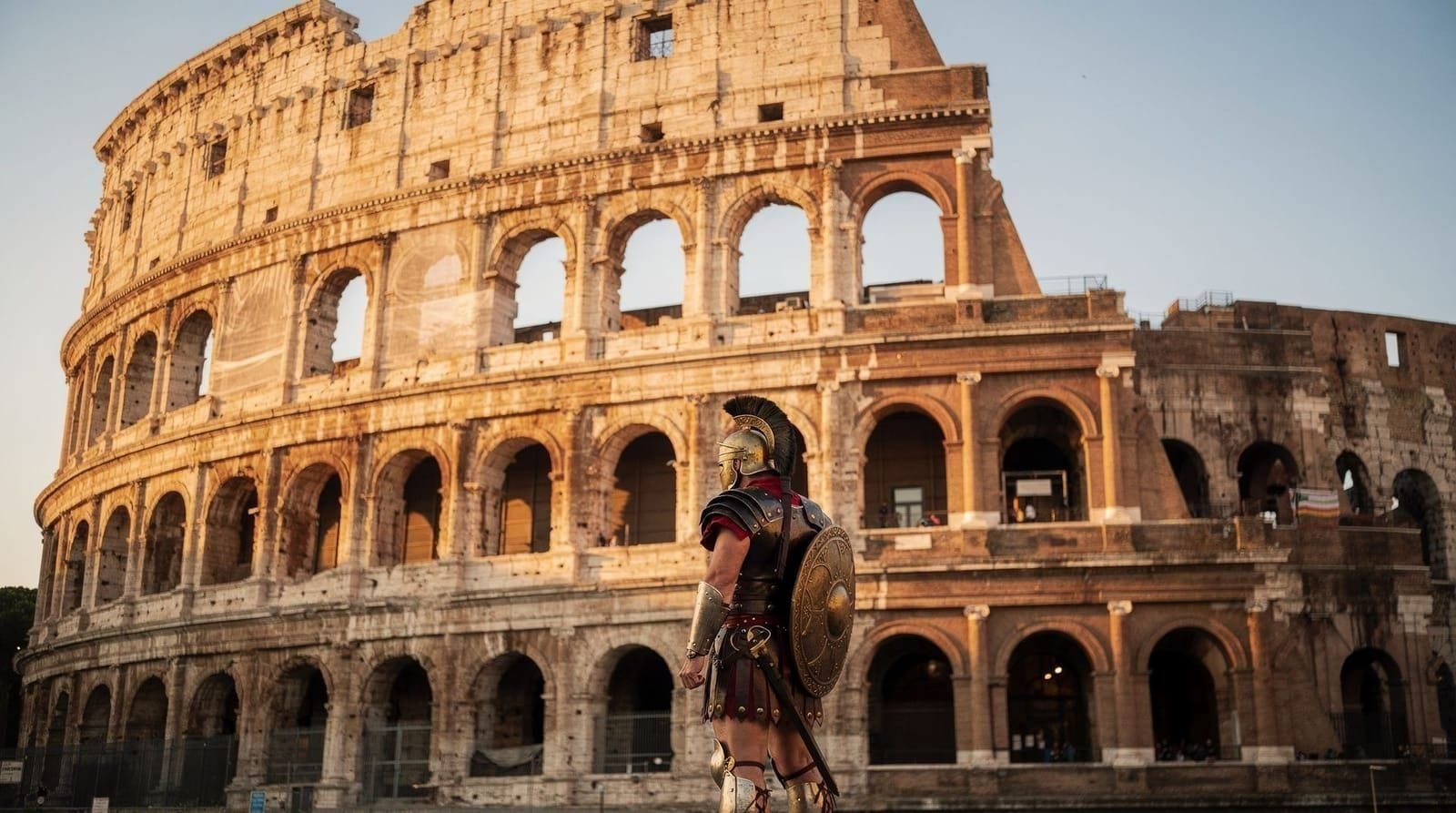
Rome: Colosseum for Kids - A Journey through Gladiators
Quick answer: Three days works well for Rome with kids if you keep mornings active and afternoons flexible. The essentials — a kid-focused Colosseum tour, gladiator school, Borghese gardens, and the historic fountains — are all child-friendly. The Vatican can wait for a future trip without children, or keep it short and focus on St. Peter’s Square rather than the full Museums.
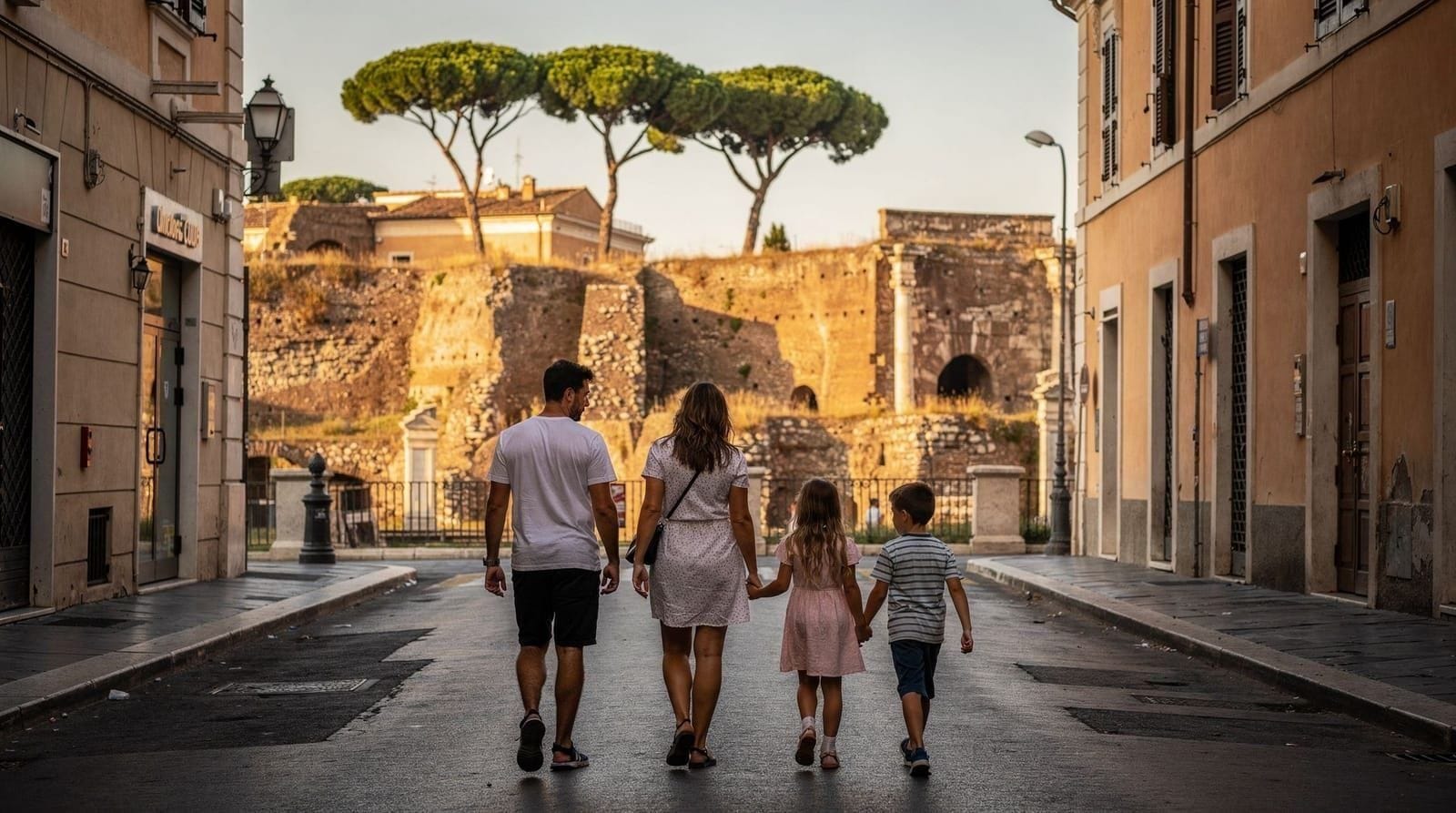
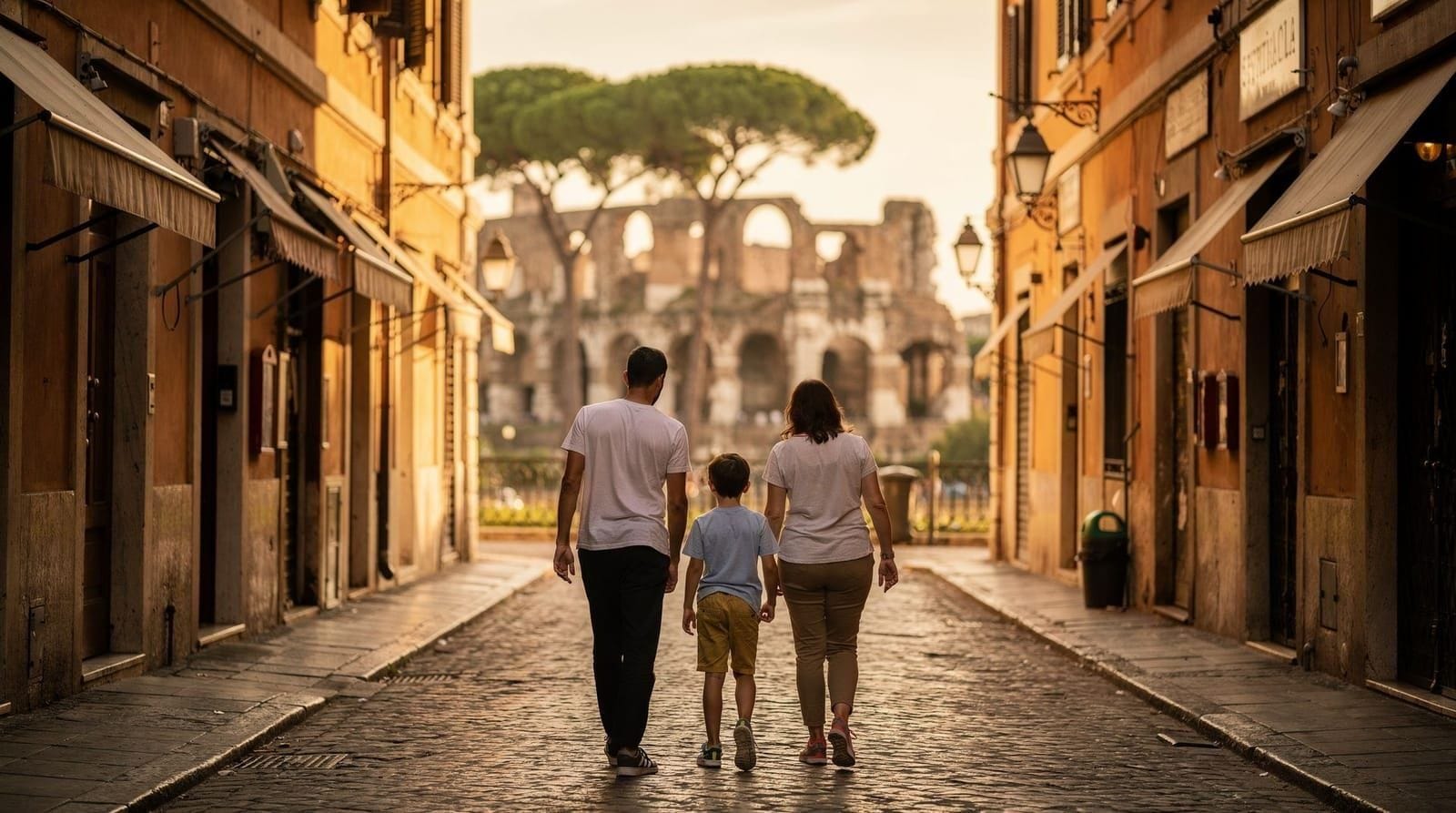
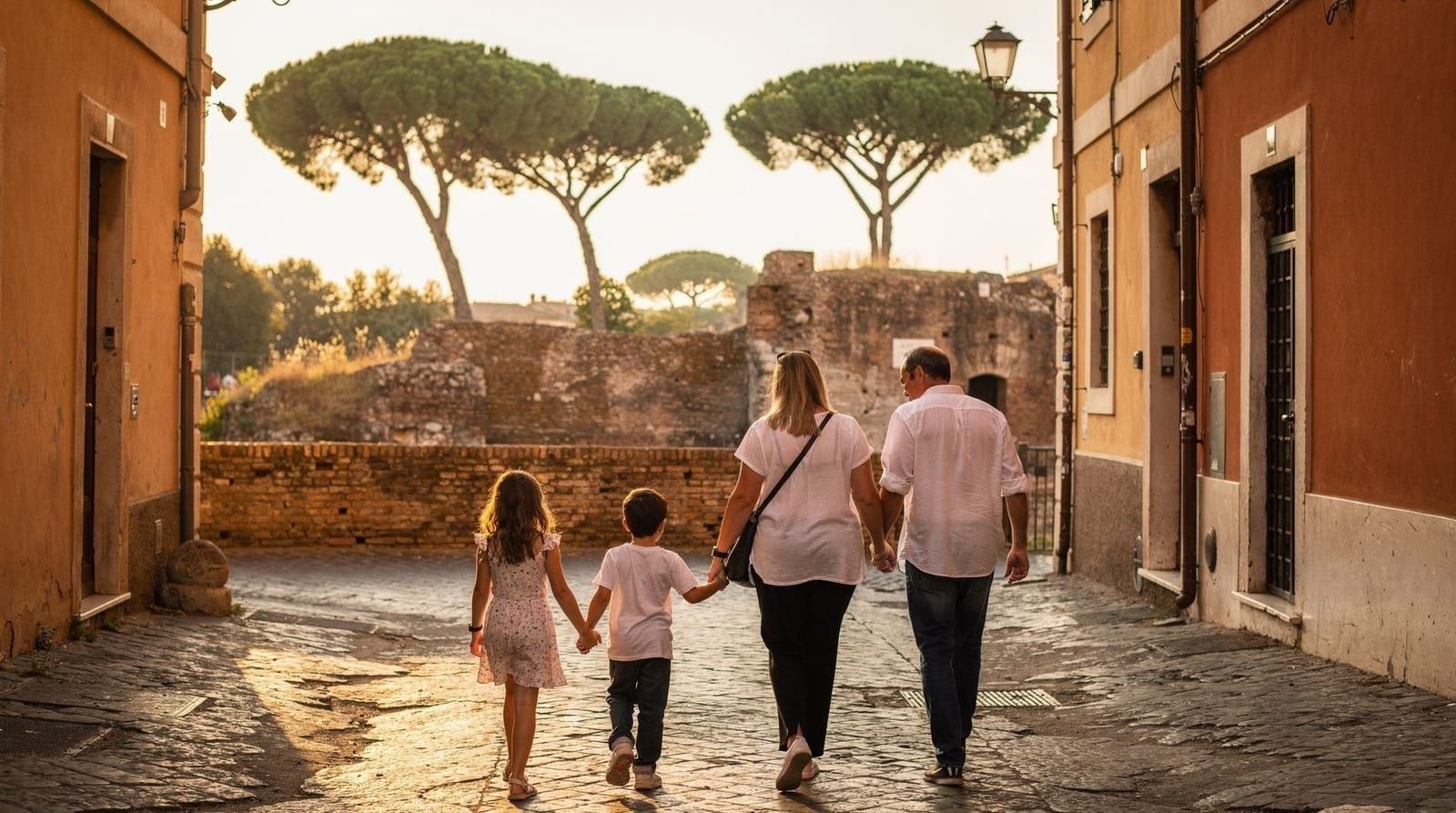
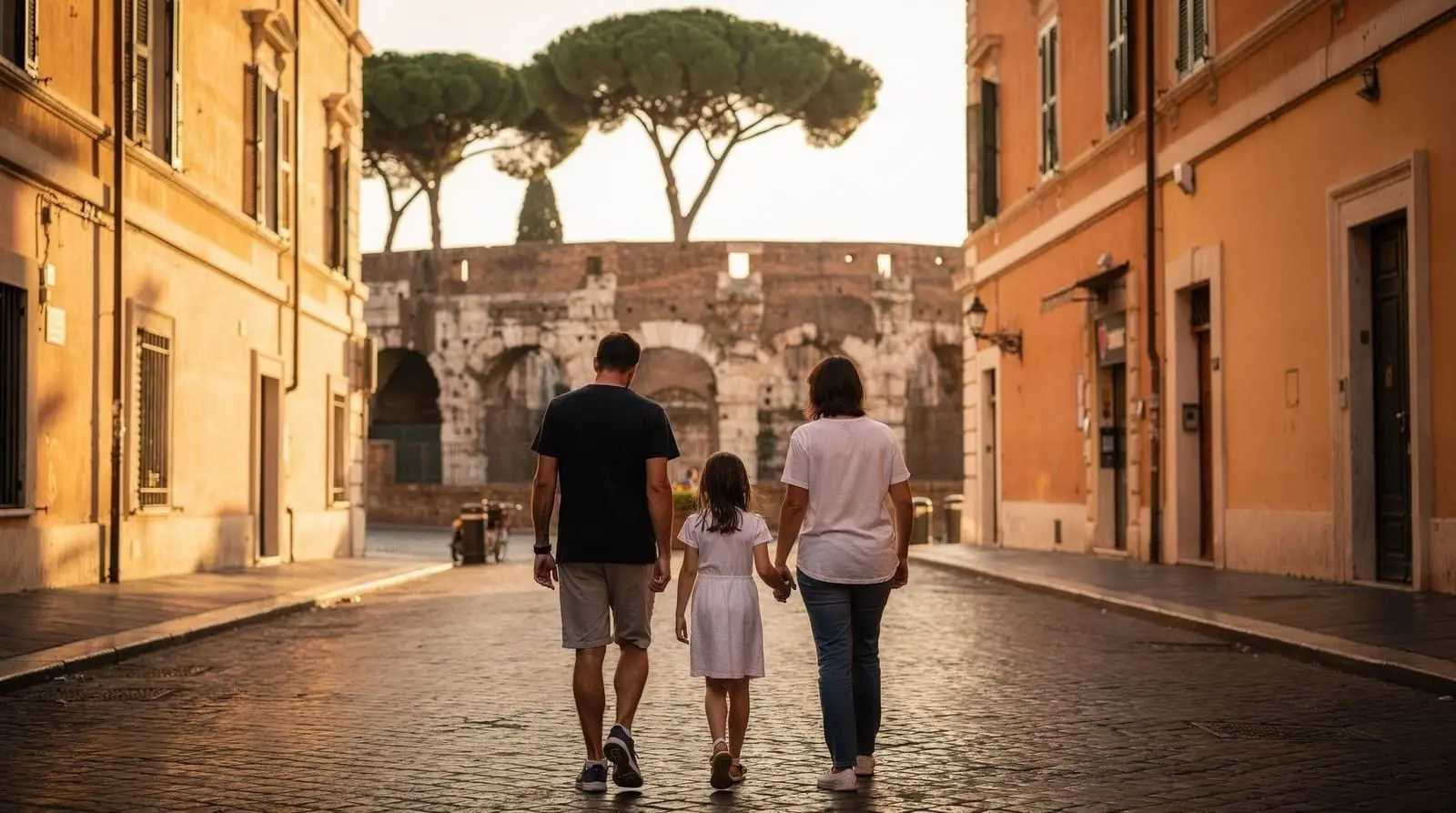
Rome is better with children than most visitors expect. Kids respond strongly to gladiators, underground tunnels, chariot tracks, and the sheer scale of things like the Colosseum and the Pantheon. The challenge is pacing: adult-paced itineraries will exhaust everyone by Day 2. The structure below clusters sights so you’re walking, not commuting, and builds in gelato stops and downtime as part of the plan rather than afterthoughts.
A few honest expectations: strollers are difficult on Rome’s cobblestones — a carrier or a sturdy wheeled option with air tyres works better. Metro Line A is useful but the stairs at most stations are steep and lifts are unreliable. Buses are often crowded in peak hours. For families with children under five, a base near Villa Borghese makes walks manageable without long transit legs.
The single best planning decision for a family trip is to book the gladiator school before you book anything else. It is the experience children talk about for months afterwards, and it makes everything else — the Colosseum, the Forum, the Circus Maximus — make sense in a way that a straight history tour never quite achieves. For a detailed look at all kid-friendly activities in the city, Rome with kids and kid-friendly Rome activities cover the full range by age group and energy level. If this is your first Rome trip as a family, Rome for first-timers has the general orientation this itinerary assumes.
| Where | Celio-Colosseo, Centro Storico, Vatican-Prati, Aventino |
| Cost | around 140-200 €/day for a family of four, mid-range |
| Time needed | 3 days as structured, 4 if traveling with toddlers |
| Getting around | walking + Metro Line A; avoid strollers on cobblestones |
| Best time | April-May or late September-October, avoiding peak summer heat |
Feeding a family without a meltdown
Italian meal timing doesn’t naturally suit small children — lunch service often starts at 12:30 and dinner rarely before 7:30 — so plan a snack around 4:00-5:00 pm to bridge the gap rather than letting hunger build. Pizza al taglio counters (sold by weight, no reservation, no waiting for a table) are the family’s best friend for a fast lunch between sights, and gelato works as both bribe and reward. If anyone in the family has dietary restrictions, Rome handles gluten-free requests well at most trattorias — Rome dietary and gluten-free guide has the specifics on what to ask for. For the general rhythm that keeps a family trip from unraveling by Day 2, Rome family itinerary tips covers pacing, nap-time logistics, and realistic daily distances in more depth than fits here.
Traveling with a toddler or baby instead of older kids
Everything above assumes children old enough to walk, queue, and sit through an hour of sightseeing. With a baby or toddler, the calculus changes: cobblestones make strollers hard work in Trastevere, Monti, and the historic center, a carrier is more practical than wheels for most of this route, and naptime should shape the schedule rather than the other way around. Rome with toddlers and a baby covers stroller-friendly routes, feeding logistics, and which sights genuinely work (or don’t) at that age — worth reading before adapting this itinerary for the youngest members of the family.
Day 1: Gladiators and Ancient Rome
This is the day children remember. Start at gladiator school before the Colosseum — not the other way around — because the school gives kids context that makes the monument make sense.
Gladiator school in Rome for kids and adultsThe Scuola Gladiatori Roma, near Appia Antica, runs a 2-hour session where children (and adults) learn basic gladiatorial combat techniques in Roman-era costume. The instructors pitch it to the age group in the room; it works for ages 5 and up. Book in advance — classes are capped and popular with school groups. Cost is around 40 € per person for children, more for adults.
After lunch near the school, head to the Colosseum for the afternoon session. A kid-focused tour makes a dramatic difference here — generic adult tours lose younger children fast, but a guide who talks about the animals, the gladiators’ lives, and the mechanics of the arena floor keeps even eight-year-olds engaged for 90 minutes.
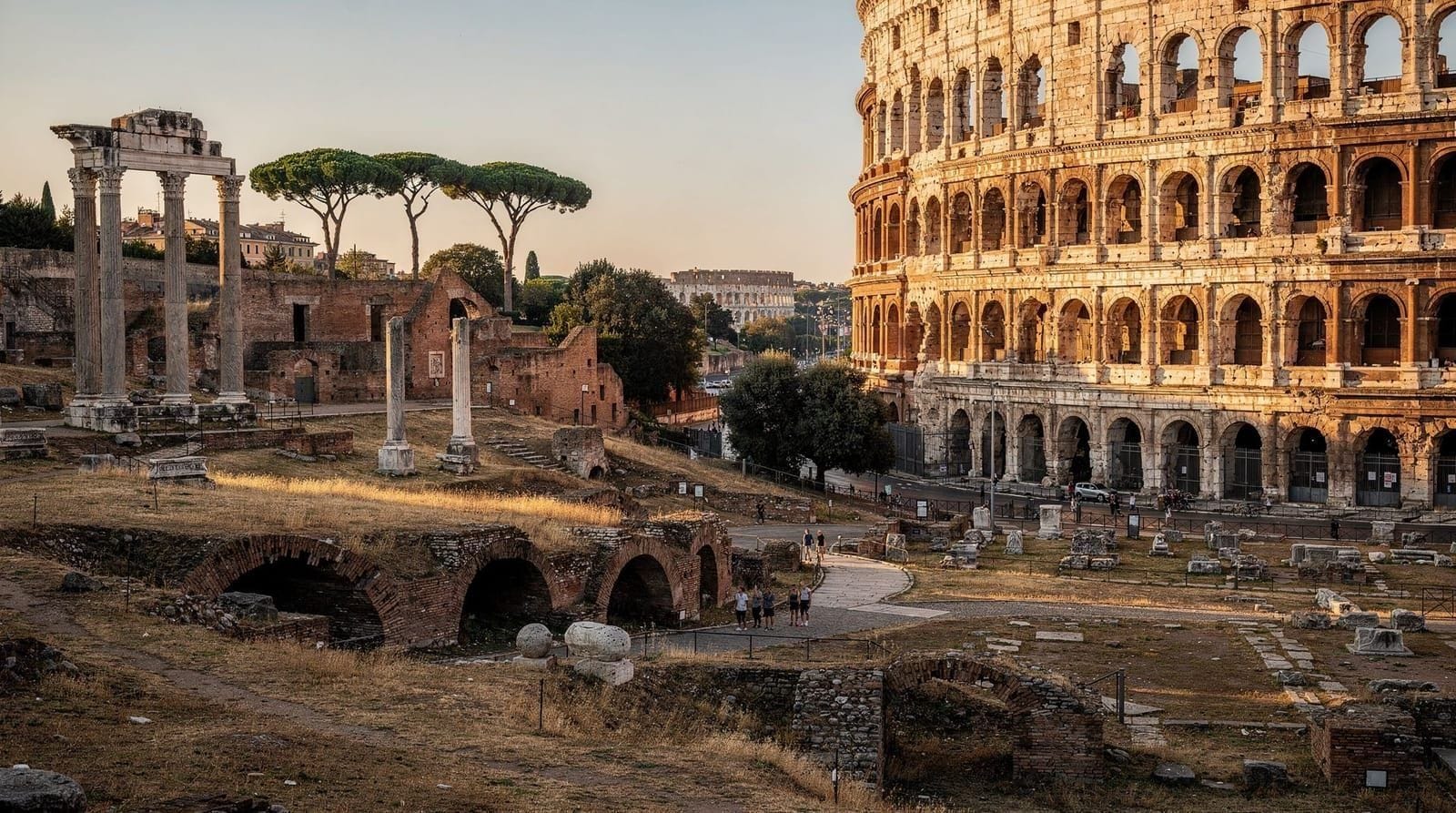
Colosseum for kids: a journey through gladiatorsWalk across to the Roman Forum afterward, but be realistic: an hour here is enough for most children. The raised road above the Forum gives a good overview without requiring a descent into the site; older children who visited Pompeii find the comparison fascinating, but for under-tens, the Palatine Hill goats and the scale of the Arch of Constantine at the Forum entrance tend to hold attention better than the column stubs. The Celio and Colosseum district has several family-friendly trattorie for dinner; avoid the tourist menus along Via Sacra and look for restaurants a block or two away.
Practical: The Colosseum is nominatively booked — each ticket is in one name. Book through the official Colosseo.it website or via a tour operator at least two weeks ahead, especially for summer. On the first Sunday of each month, entry is free but queues start before opening. EU citizens under 18 enter state museums for free year-round; non-EU children under 18 pay a reduced rate. See colosseum tickets guide for the exact booking steps and what to watch out for with third-party resellers.
Day 2: Borghese Gardens and the Historic Fountains
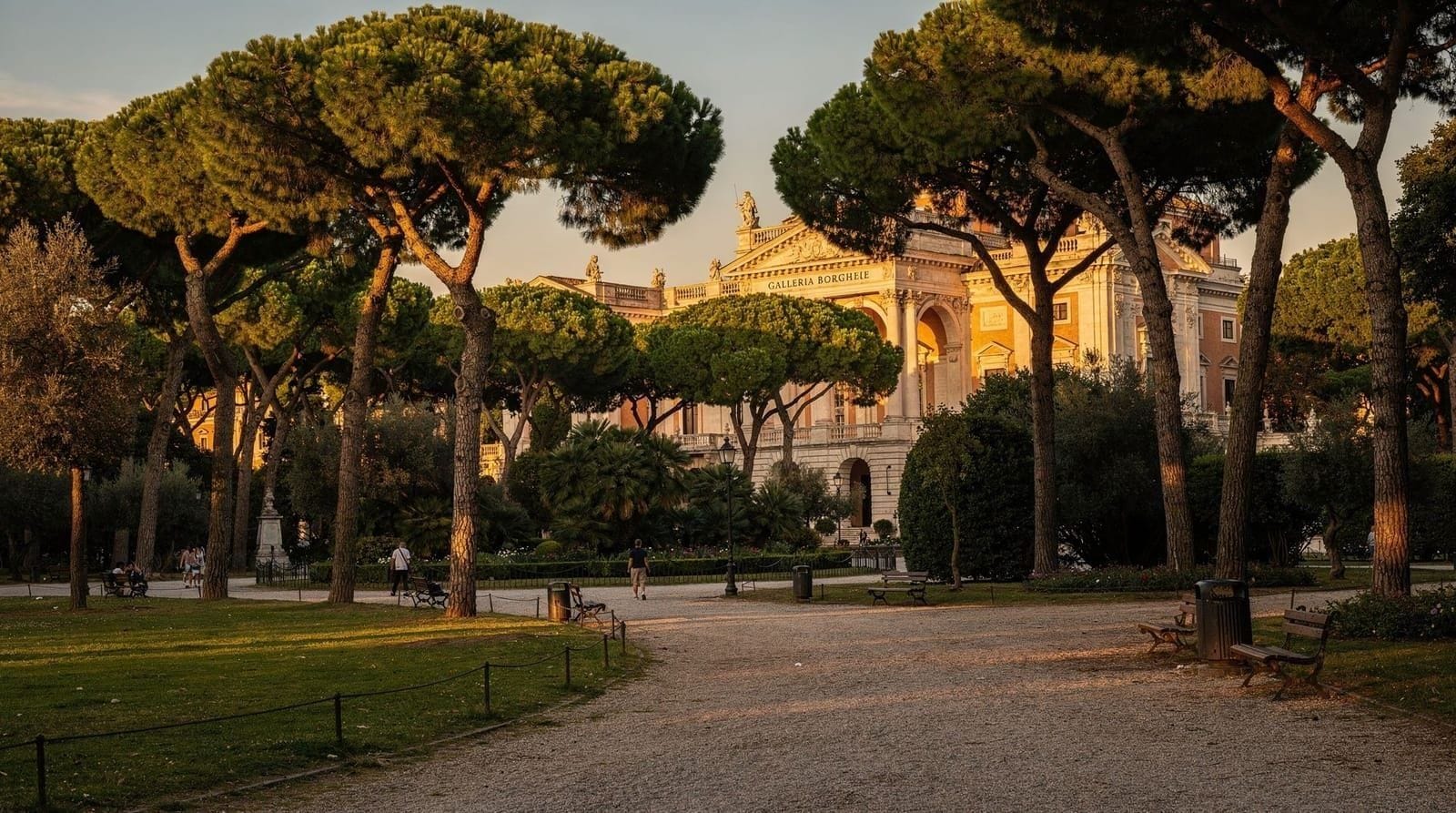
A more relaxed pace. Start the morning at Villa Borghese — the gardens are free and enormous, with a lake where you can hire rowing boats (about 3 € per person), a small zoo (Bioparco), playgrounds, and wide flat paths that are good for younger children and manageable for strollers. The gardens open at sunrise; morning is the best time before heat and crowds build.
The Borghese Gallery itself is world-class — Bernini’s sculptures of Daphne and Apollo, Pluto and Persephone, and the Canova reclining Pauline Bonaparte — but the two-hour timed entry works best for children aged 10 and up who can sustain focus in a formal gallery. For younger children, stick to the gardens.
After a long morning in Borghese, descend via the Pincian Hill terrace (one of Rome’s best views over Piazza del Popolo) and walk south toward the historic center. Afternoon is for piazzas and fountains:
The Trevi Fountain is unavoidable and children love the coin-throwing tradition (legend says one coin guarantees a return to Rome; two coins brings romance; three coins brings marriage). Go mid-afternoon (2:00-3:00 pm is often quieter than 11:00 am or evening) and keep bags and pockets secure — this is one of Rome’s highest-pickpocket zones. The Neptune statue in the center is 5.8 meters tall; the entire fountain is carved into the back wall of Palazzo Poli and uses no glue or mortar — just gravity and interlocking stone. Walk southeast to the Pantheon: the 43-meter dome with its oculus open to the sky is reliably impressive to children and adults alike. Explain that the concrete is Roman and nearly 2,000 years old, and that the dome was the largest in the world for 1,300 years — it helps anchor what ancient actually means. Entry is 5 €, pre-booked.
Piazza Navona is five minutes’ walk west — a good stop for gelato and watching street performers. Best gelato in Rome runs through the neighborhoods; near Navona, Giolitti (Via degli Uffici del Vicario) is the classic choice.
Dinner near Centro Storico or walk back toward your hotel. Children in Rome are welcomed warmly in restaurants; Italians genuinely like children at the table, and there is no stigma about eating late (8:00-9:00 pm is normal).
Day 3: Vatican, Castel Sant’Angelo, and a Last Gelato
The Vatican on Day 3 means you are not burned out from Day 1. If children are under eight, skip the Vatican Museums entirely and do Castel Sant’Angelo instead — the former papal fortress by the Tiber has turrets, ramparts, medieval dungeons, and fantastic views of the city, all of which appeal to children far more than the Sistine Chapel.
For older children (10+), a short Vatican visit can work if you are strategic: book an early-entry tour (7:00-8:00 am is possible through some operators) and focus on the Gallery of Maps, the Raphael Rooms, and the Sistine Chapel. Skip the Egyptian collection and the Pinacoteca unless you have specific interest. Two hours maximum; children’s stamina for museums drops sharply after that point.
After the Vatican area, walk east along the Tiber toward Castel Sant’Angelo. Even if you skip the interior, the bridge (Ponte Sant’Angelo) lined with Bernini angels is one of Rome’s most photogenic spots. The castle itself is excellent for children aged eight and up: dungeons, ramparts, a working drawbridge, and papal escape tunnels connecting to the Vatican — the structure was Rome’s tallest building for centuries and functioned at various times as mausoleum, fortress, prison, and papal residence. Entry is 16 €. The Prati neighborhood directly north has good bakeries and casual lunch options; Via Cola di Rienzo is the main shopping street, with a Mercato Trionfale market a few blocks north selling food and goods at genuinely local prices.
For families with energy on the last afternoon, a golf cart or e-bike tour of the historic center is a fun way to cover a lot of ground at a child-friendly pace without wearing out legs. These tours are especially good when younger children are flagging but older siblings still want more.
Before you leave: The Aventine Keyhole (Piazza dei Cavalieri di Malta) is a five-minute walk detour to a keyhole in a green door, through which the dome of St. Peter’s is perfectly framed at the end of a garden avenue. Children find this genuinely delightful — the drama of a keyhole view revealing a dome three kilometres away is a kind of magic trick that adults also never quite stop finding remarkable. It is free and almost always has a short queue. The Orange Garden nearby is a good spot for a snack break with a city view over Trastevere and the Tiber.
If you are near Monti on the last afternoon and the children still have energy, the neighborhood has independent toy shops, vintage bookshops, and an informal street life that feels nothing like the tourist-center version of Rome. A gelato at Fata Morgana (Via dei Mille) — known for unusual flavors including rose and violet, basil and walnut, and the excellent gianduia — is a good way to end three days in the city.
Where to stay
Near Villa Borghese (Parioli or top of Via Veneto): Quieter, less chaotic than the historic center, walkable to the gardens, and easy to reach the Vatican and the center by Metro Line A. Best choice for families with young children or strollers.
Monti: Central, well-priced relative to other central neighborhoods, and walkable to the Colosseum. Fewer tourist restaurants than Centro Storico. Works well for families who want the Colosseum within walking distance.
Prati: Directly west of the Vatican, local neighborhood feel, flat streets, good supermarkets. Ideal if the Vatican is your primary interest and you want a quick daily walk to the Museums.
Practical notes for families
- Heat: July and August are brutal (32-38 °C). If traveling in summer, build in an air-conditioned museum or hotel rest between noon and 3:00 pm. See Rome in summer.
- Dress code: Churches and the Vatican require covered shoulders and knees. Keep a lightweight scarf in your bag for everyone in the family.
- Strollers: Manageable on smooth piazza surfaces and in some museums, but cobblestones in Trastevere, Monti, and the historic center are challenging. A carrier works better for under-threes.
- Food timing: Italian lunch is 12:30-2:30 pm, dinner from 7:30 pm. Many restaurants don’t open for dinner before 7:30. Plan children’s hunger accordingly with a snack break mid-afternoon.
- Free entry: Under-18 EU citizens enter most state museums (Colosseum, Roman Forum, Borghese) free. Non-EU children under 18 pay reduced rates. Check Rome free entry days for full details.
- Nasoni: Rome’s free drinking fountains (over 2,500 of them) are lifesavers in heat. The water is cold, clean, and constantly flowing. Every child should know how to drink from one.
Three days at a glance
| Day | Morning | Afternoon | Evening |
|---|---|---|---|
| 1 | Gladiator school | Colosseum for kids, Forum | Dinner in Celio-Colosseo |
| 2 | Villa Borghese gardens | Trevi, Pantheon, Navona | Dinner near Centro Storico |
| 3 | Vatican / Castel Sant’Angelo | Golf cart or e-bike tour | Aventine Keyhole, last gelato |
Frequently asked questions
Should we do the full Vatican Museums with young children? Generally not with under-eights — two hours is close to the stamina limit even for engaged older children, and the Sistine Chapel’s no-talking, no-photo rules are hard for little ones to sustain. Vatican with kids has age-by-age guidance on what to prioritize or skip, and this itinerary defaults to Castel Sant’Angelo instead for younger families.
What’s the single best thing to book first for a Rome trip with kids? Gladiator school, ahead of the Colosseum ticket itself — it gives context that makes the ruins land differently for children, and the popular time slots fill up around school holidays. Book it before anything else on the trip.
Top experiences
Bookable activities with verified prices and instant confirmation on GetYourGuide.