Rome free entry days — what's actually free and when crowds hit
Rome: City Sightseeing Hop-on Hop-off Bus with Audioguide
When is entry free to Rome's state museums?
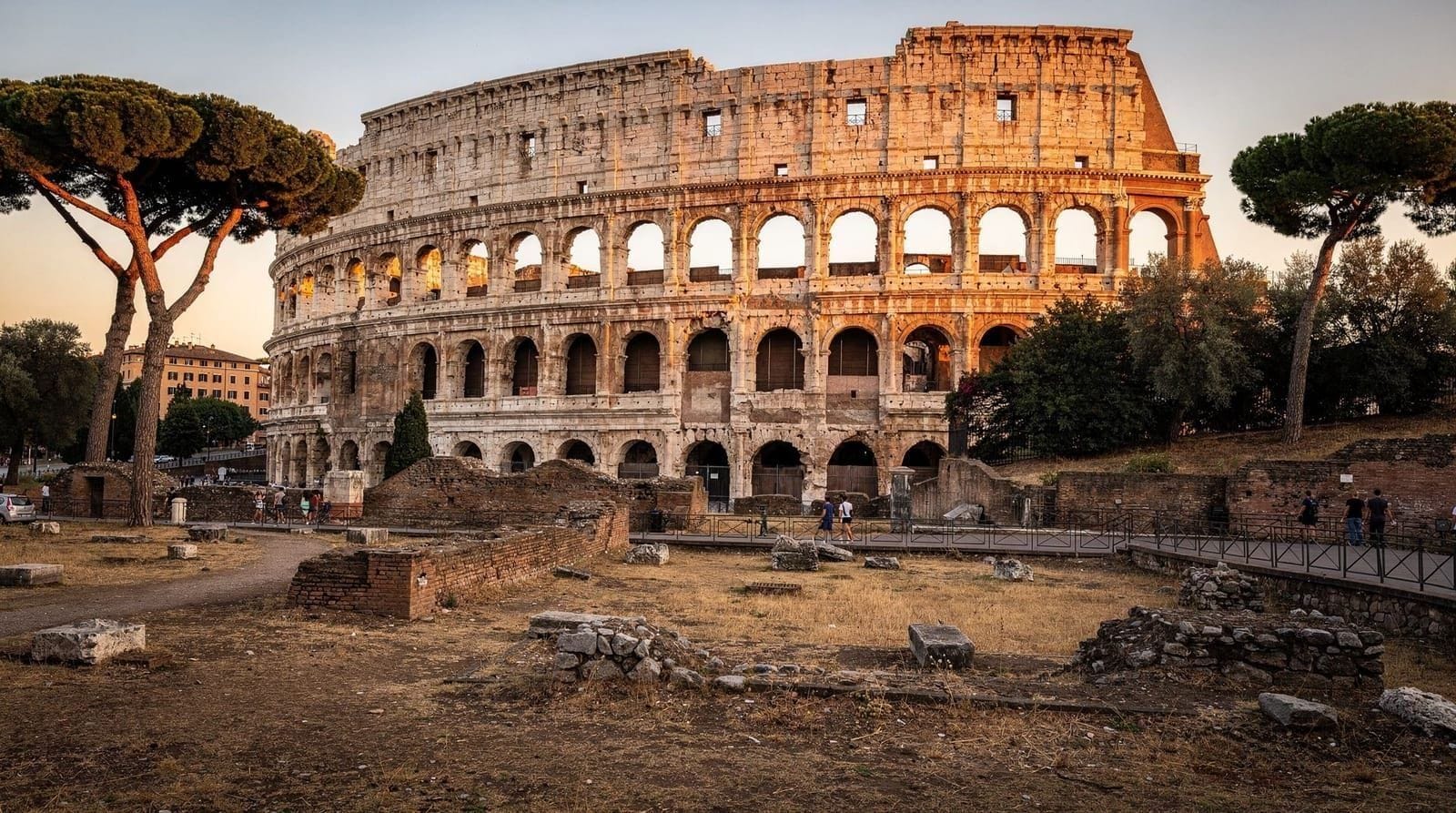
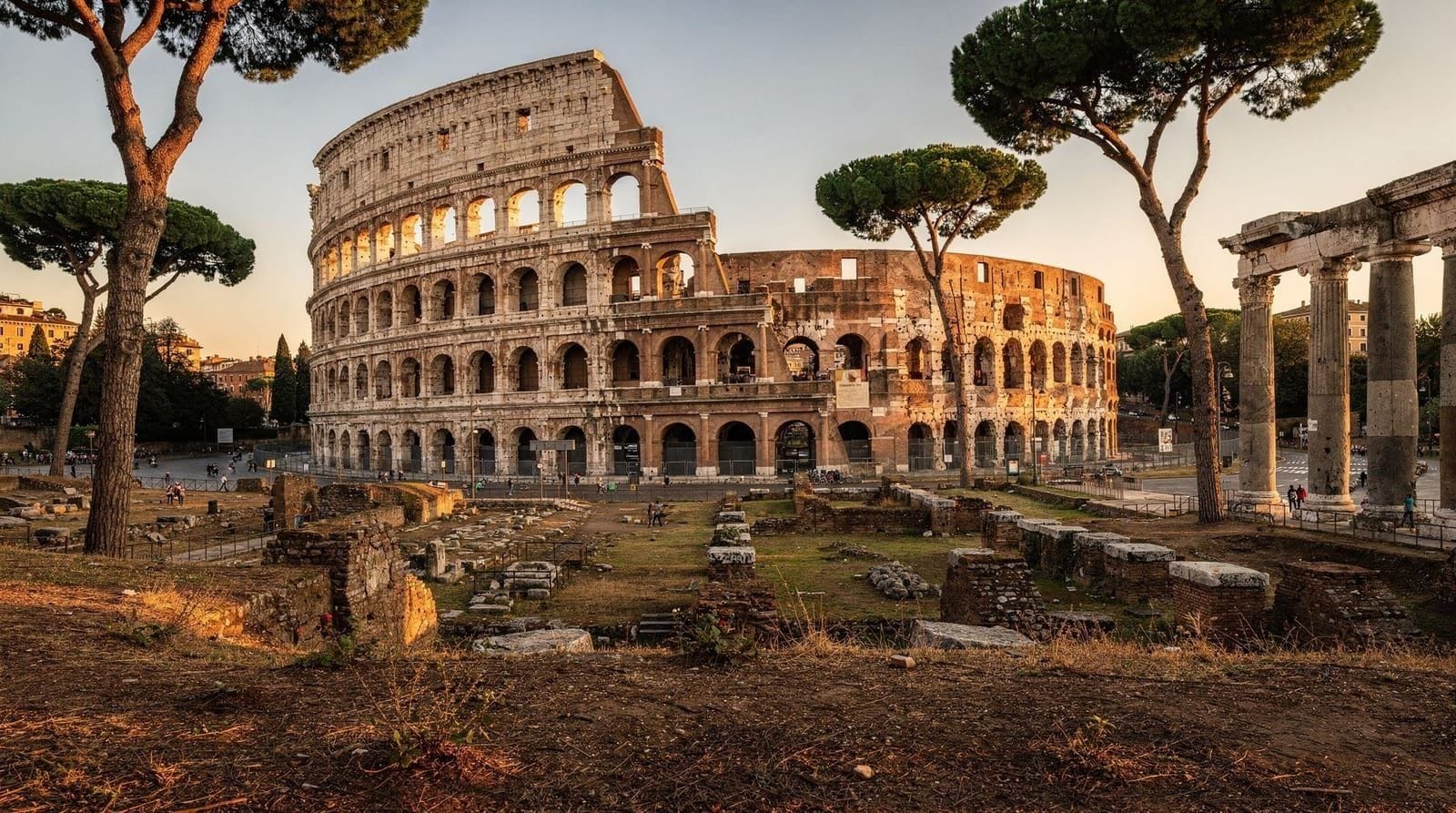
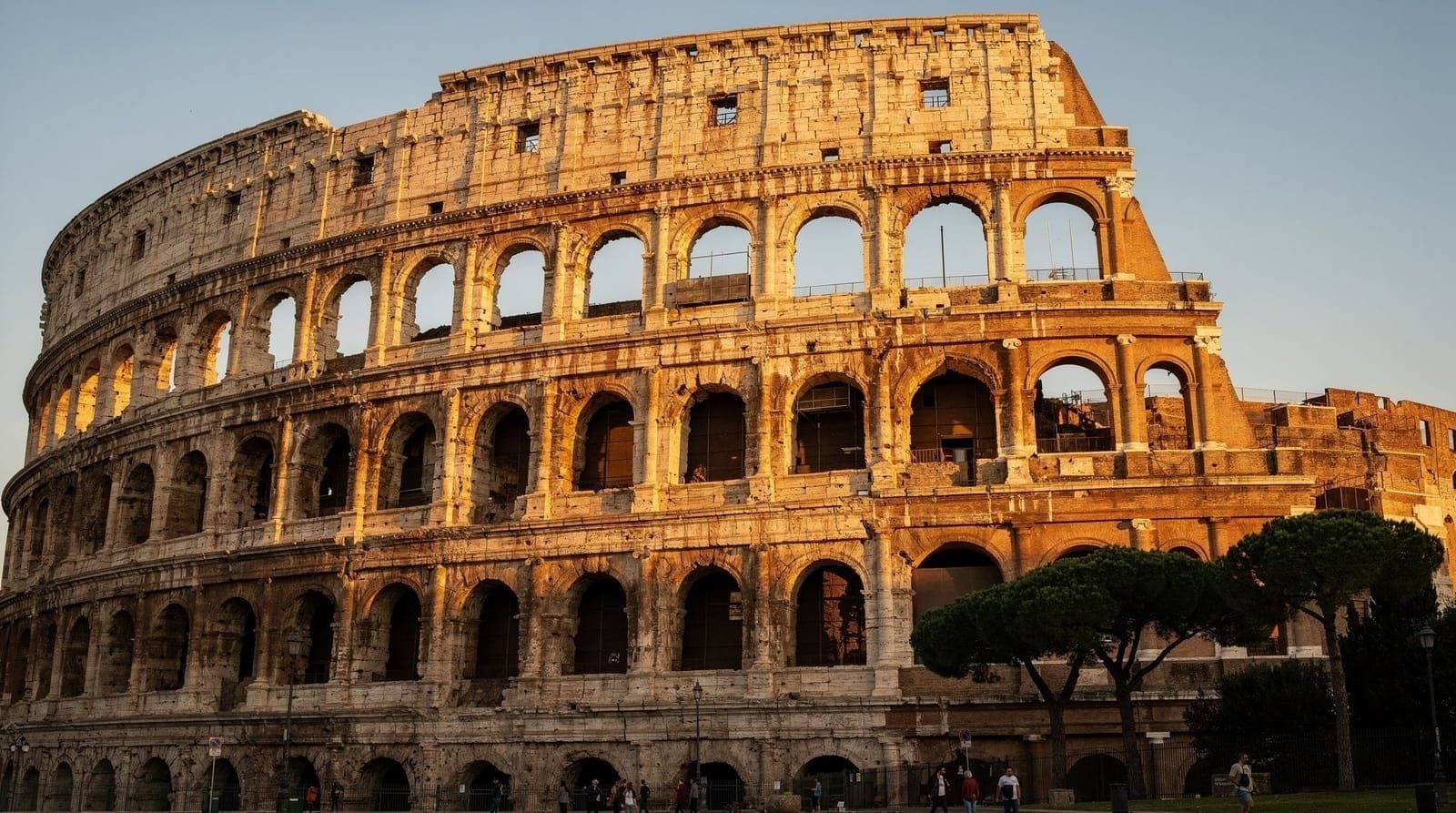
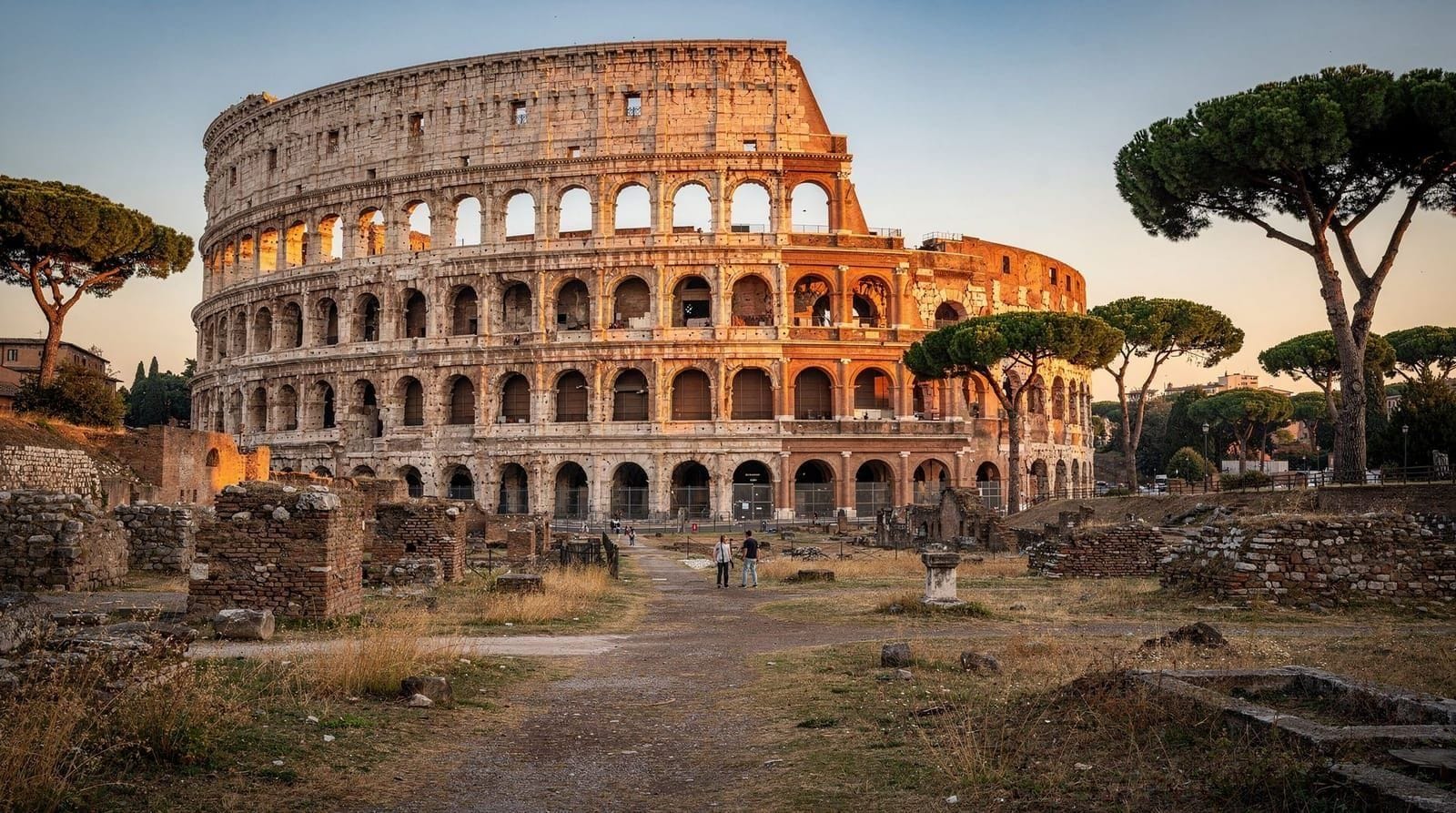
Italian state museums (Colosseum, Roman Forum, Palatine Hill, Castel Sant'Angelo, Capitoline Museums, and others) have free entry on the first Sunday of each month. However, these days are the most crowded of the month — the Colosseum receives 2–3 times normal Sunday visitor numbers. Book a timed slot in advance even for free-entry days. Under-18 EU citizens are free every day.
Not everything in Rome costs money
Rome’s reputation as an expensive city is partly undeserved — the most atmospherically powerful experiences in Rome are largely free. Walking the Roman Forum, stepping inside Baroque churches, sitting by the Trevi Fountain at dawn, crossing the Tiber at Isola Tiberina — none of these require a ticket.
Understanding which major paid attractions have free windows — and when those free windows attract the largest crowds — lets you plan strategically and save money where possible.
| State museums free day | First Sunday of each month (very crowded) |
| Vatican Museums free day | Last Sunday of each month (queue 3–5 hours) |
| Always free under 18 | EU citizens, every day, at Italian state museums |
| Always free | Churches, piazzas, Villa Borghese park, all nasoni water |
| Best strategy | Pay for the Colosseum on a quiet weekday; use free Sundays for less-crowded sites |
Italian state museum free Sundays
On the first Sunday of each month, admission is free at all Italian state-managed attractions. For Rome, this includes:
- Colosseum, Roman Forum, and Palatine Hill
- Castel Sant’Angelo
- National Roman Museum (Palazzo Massimo, Terme di Diocleziano, Palazzo Altemps, Crypta Balbi)
- Galleria Nazionale d’Arte Antica (Palazzo Barberini and Palazzo Corsini)
- Capitoline Museums (Rome municipal)
- Ara Pacis
- Villa d’Este in Tivoli (day trip)
- Hadrian’s Villa in Tivoli (day trip)
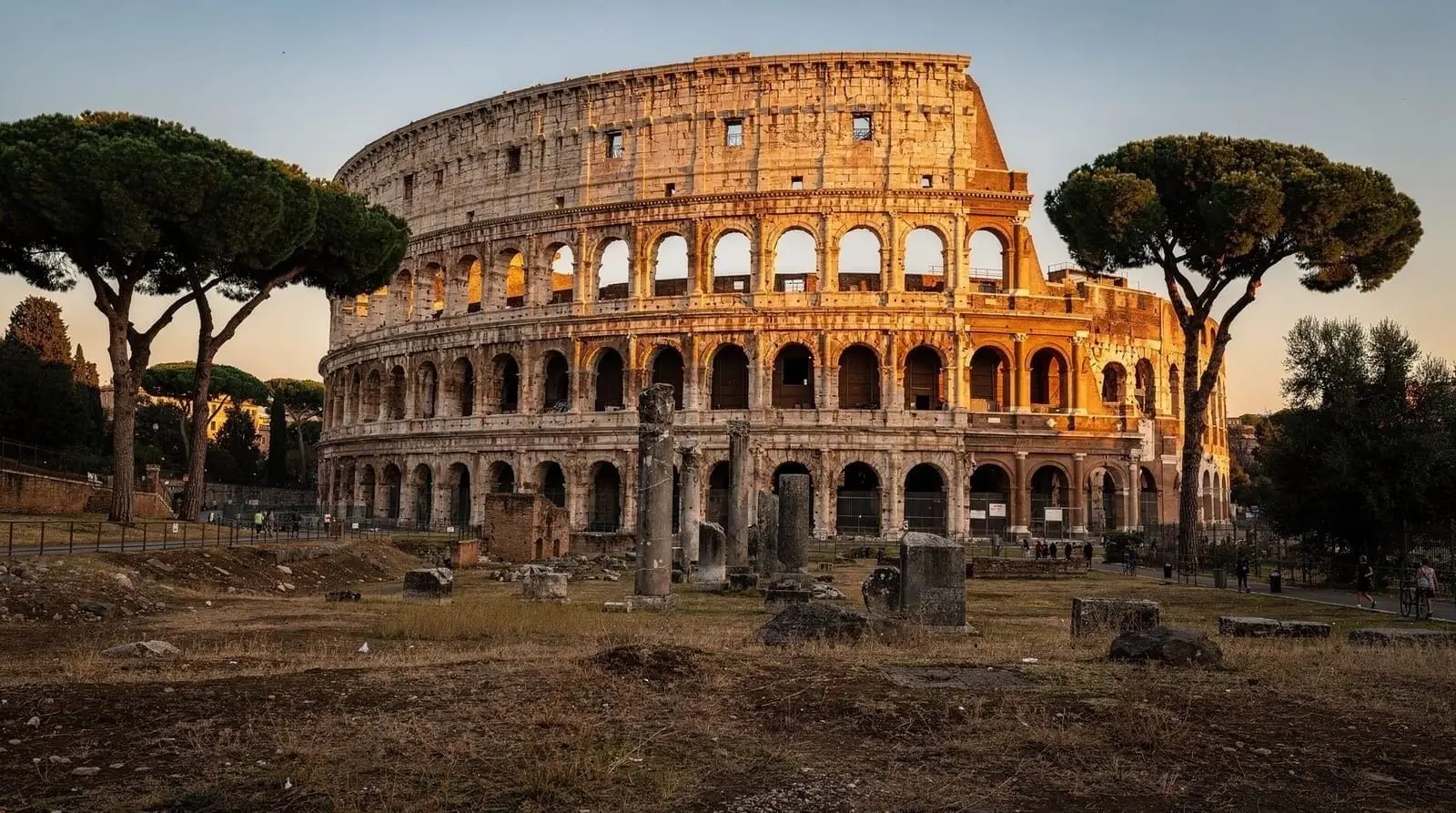
Critical caveat: these days are the most crowded of the month. The Colosseum on the first Sunday of April can see 3,000+ additional walk-up visitors compared to a normal Sunday. The free-Sunday benefit at the Colosseum requires a timed-entry booking (still mandatory even on free days) reserved weeks ahead.
Practical verdict: Free Sundays work best for attractions where crowds are less problematic — the National Roman Museum, Palazzo Barberini, or Ara Pacis. For the Colosseum, the €20 investment on a quieter weekday provides a better experience than a free Sunday.
Free entry every day — Italian state museums
- EU citizens under 18: Free at all Italian state museums on all days. Bring proof of EU nationality.
- EU citizens 18–25: 50% discount (€9 for Colosseum instead of €18) on all days.
These are not special discount days — they are permanent exemptions. If you are travelling with EU children under 18, you never pay for them at any Italian state museum. Book their free timed slots online the same way you would for a paid ticket.
Vatican Museums — last Sunday of the month
The Vatican Museums (not part of the Italian state system) offer free entry on the last Sunday of each month. This is one of the most misleading “deals” in Rome:
- Queue time on Vatican last Sunday: 3–5 hours starting before the 09:00 opening, with people queuing from 06:00 in peak season.
- The experience inside: similar to any other overcrowded visit, but you had to queue for 3+ hours to get in.
- The Sistine Chapel on the last Sunday is typically the most crowded it will be all month.
Honest assessment: The Vatican free Sunday is not worth it for most visitors. A €17–20 online ticket purchased 2–4 weeks ahead with a 15-minute queue is a dramatically better experience. The exception is budget travellers visiting in November–February when the last-Sunday queue is manageable (45–90 minutes).
Always free in Rome — the comprehensive list
Historic churches (always free)
- St. Peter’s Basilica — no entry fee; security queue varies. St. Peter’s guide.
- Santa Maria Maggiore — one of the four Papal Basilicas; extraordinary gold ceiling. Guide.
- San Giovanni in Laterano (St. John Lateran) — the oldest church in Rome; free cloister access included.
- Santa Maria in Trastevere — 12th-century mosaics; the most beautiful church in Trastevere.
- San Clemente — the church itself is free; underground levels (€10 at door) are paid.
- Sant’Ignazio di Loyola — extraordinary trompe-l’oeil ceiling fresco by Pozzo; free.
- Santa Maria della Vittoria — Bernini’s Ecstasy of Saint Teresa; free.
- Sant’Agostino — Caravaggio’s Madonna di Loreto; free.
- San Luigi dei Francesi — three Caravaggio paintings of St. Matthew; free. See Caravaggio trail.
- Santa Maria del Popolo — two Caravaggio works plus Raphael chapel; free.
Public squares and monuments
- Trevi Fountain (24 hours; best before 07:00 or after 22:00)
- Piazza Navona (24 hours; Bernini’s Fountain of the Four Rivers)
- Spanish Steps (24 hours; 135 steps, best at dawn)
- Campo de’ Fiori (morning market Mon–Sat until 13:30)
- Piazza del Popolo (Egyptian obelisk + twin churches)
- Pantheon exterior (free to admire from outside; €5 to enter)
Parks and panoramas
- Villa Borghese — Rome’s largest central park; free to walk. The gallery inside requires a ticket.
- Pincio terrace — best free panorama of Rome from above, at the north end of Villa Borghese.
- Gianicolo (Janiculum Hill) — arguably the best panoramic view of Rome; reachable by bus 115/870, 30-minute walk from Trastevere.
- Aventine Keyhole — free, queued; look through the Knights of Malta keyhole for a perfectly framed view of St. Peter’s dome.
- Orange Garden (Giardino degli Aranci) — free; best morning views from the Aventine Hill. Aventino guide.
- Villa Pamphilj — west of Trastevere; Rome’s quietest major park; free.
- Appian Way (Via Appia Antica) — the ancient road and its free-access stretches on Sunday mornings (closed to traffic, open for walkers).
Water — the nasoni network
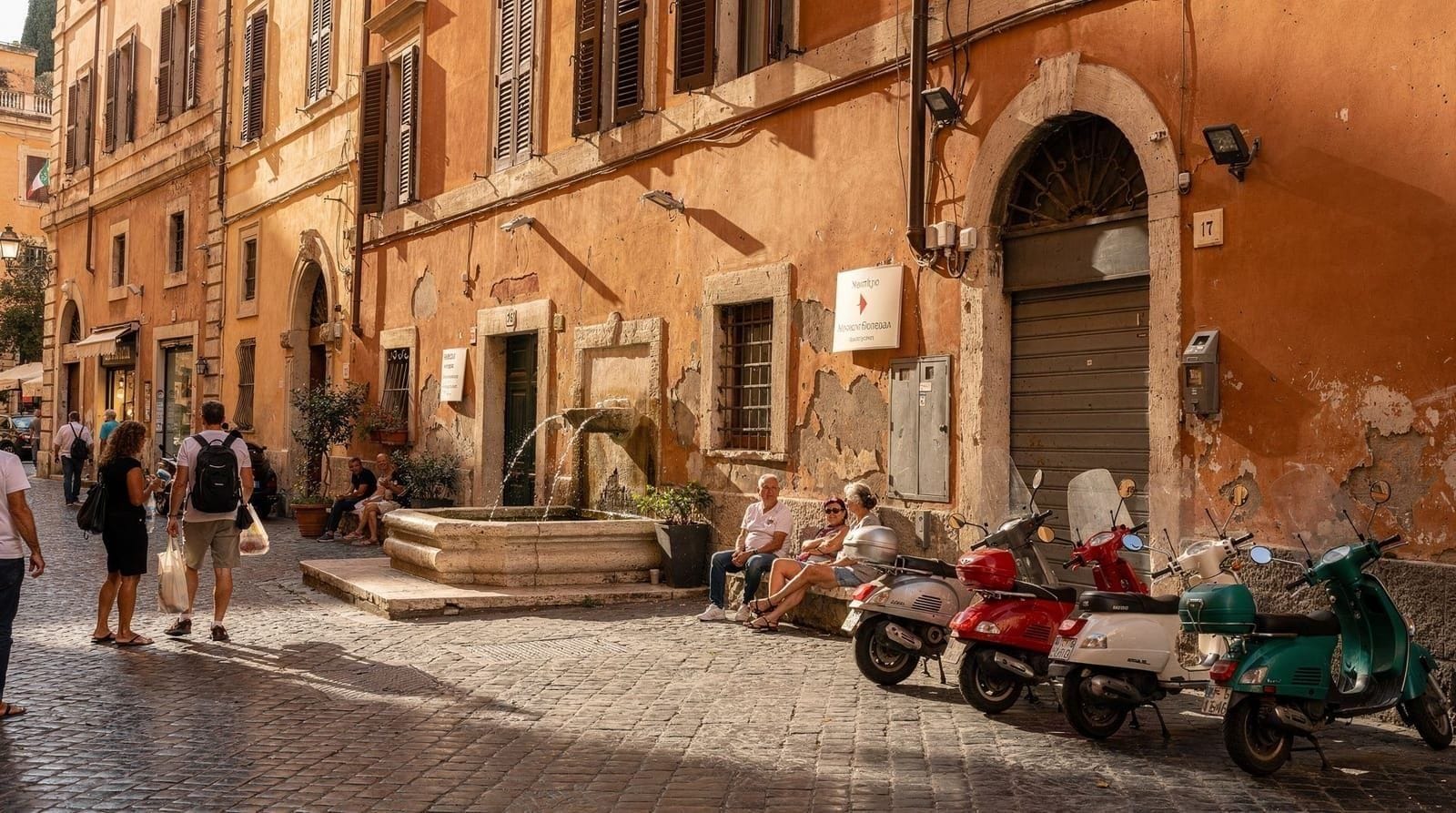
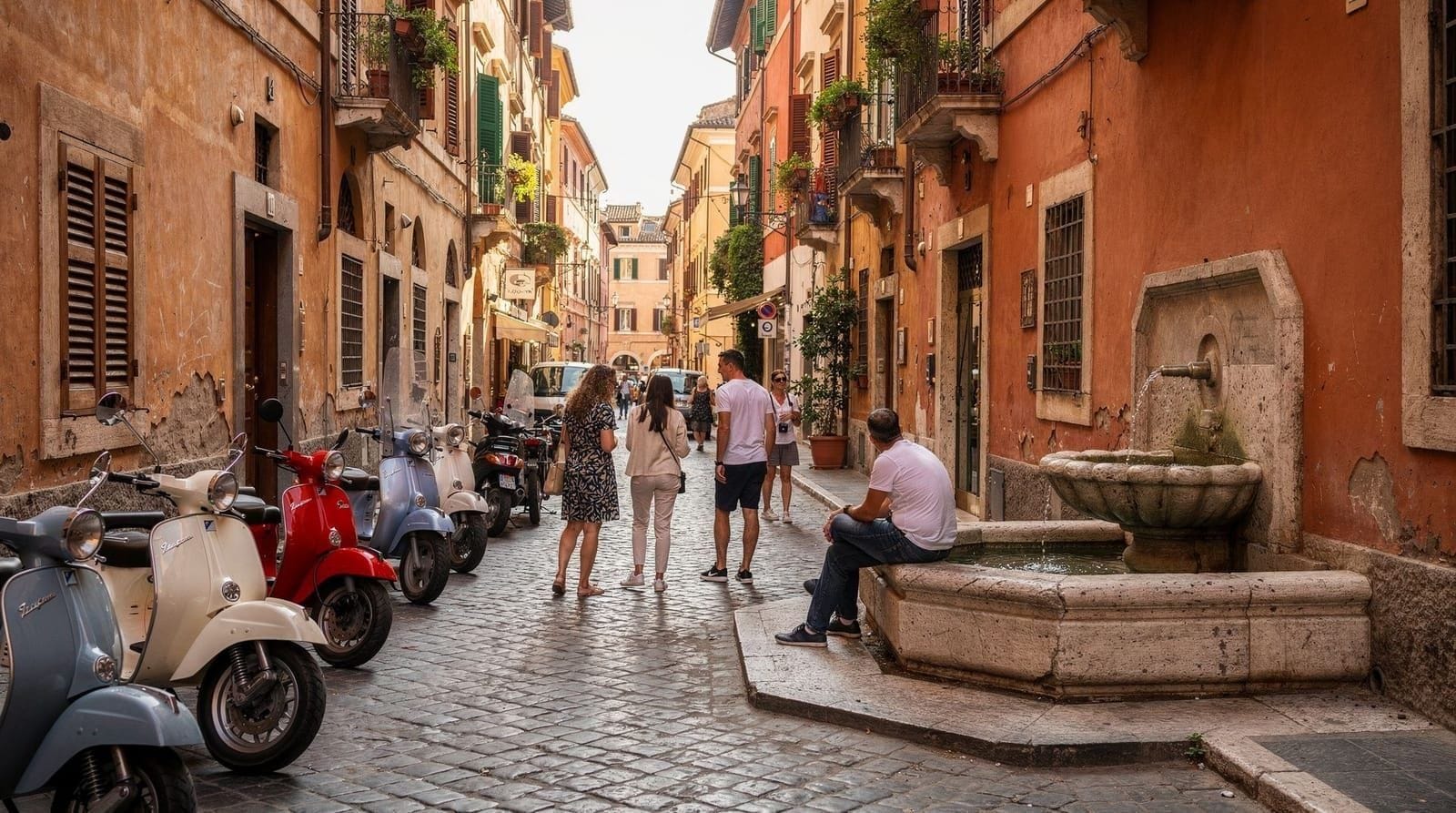
Rome has approximately 2,500 cast-iron street fountains (nasoni, meaning “big noses”) running continuously with cold, potable drinking water from the same aquifer system that supplied ancient Roman baths. Refill a reusable bottle at any nasoni — the water is excellent and cold even in summer heat. Never buy bottled water in Rome when a nasoni is visible.
Free nights and after-hours
Several sites become free or dramatically cheaper at certain hours:
- Pantheon: Free on Sundays. Otherwise €5.
- Roman Forum and Palatine Hill: Some sections of the Forum are accessible from Via Sacra without entering the ticket zone at all — the arch of Titus and the view down the Sacred Way can be seen free from the street.
- Summer evening concerts: Free outdoor concerts in July–August in Piazza del Campidoglio (Capitoline Hill), at Villa Doria Pamphilj, and in park settings across the city. Check the city’s eventi.comune.roma.it calendar.
Budget planning with free entry
A well-planned Rome visit for an EU couple can cover major sights for approximately €70–80 in total paid admissions (versus €120–140 at full price):
| Attraction | EU couple (one adult + one under-18) | Standard |
|---|---|---|
| Colosseum + Forum | €20 (one adult, one free) | €40 |
| Vatican | €17–20 each | €17–20 each |
| Borghese | €17 (under-18 free or discounted) | €34 |
| Castel Sant’Angelo | €15 each | €30 |
| Pantheon | €5 each | €10 |
For the full budget Rome strategy, see Rome on a budget.
Free entry for specific visitor groups
Beyond the calendar-based free days, several permanent exemptions apply at Italian state museums, easy to miss if you only look at the free-Sunday calendar:
- EU citizens under 18: Free every day, no exceptions, at all Italian state museums (Colosseum, Forum, Palatine, Castel Sant’Angelo, National Roman Museum). Non-EU under-18s do not automatically qualify — check the specific site’s current policy.
- EU citizens 18–25: 50% discount every day, not just free Sundays.
- Visitors with disabilities: Free entry for the visitor and one accompanying companion at Italian state museums, with valid documentation. This applies every day of the year, not just free-entry Sundays, and is one of the most under-used exemptions among international visitors who don’t realise it extends to a companion.
- School groups and licensed tour guides: Free or discounted entry under separate arrangements, not relevant to independent leisure travellers but worth knowing if travelling with an educational group.
- Journalists and some professional categories: Occasionally free with valid press credentials at state sites — a niche exemption, but genuine.
None of these require advance registration beyond the same timed-entry booking every visitor needs — bring the relevant ID or documentation to the ticket desk.
Making the free days work with a short trip
If your visit is only 3–4 days and happens to fall near a first or last Sunday, the honest calculation is this: the Colosseum and Vatican are rarely worth the free-Sunday queue given their popularity, but a National Roman Museum or Palazzo Barberini visit on the free first Sunday is a genuinely good use of the exemption, since these sites carry far less crowd pressure even on their busiest free day. Structure your itinerary so the free Sunday lands on a lower-demand site, and pay full price for the Colosseum and Vatican on a quieter weekday instead.
Rome’s hop-on hop-off bus is a practical way to reach the free sites spread across the city — Villa Borghese, the Aventine, Trastevere — without planning point-to-point transport for each stop.Frequently asked questions about Rome free entry
Can I visit the Colosseum for free if I am an EU student over 18?
Not free, but discounted — EU citizens aged 18–25 pay €9 (50% of the standard €18). This applies every day, not just free Sundays.
Is the Pantheon free on Sunday?
The Pantheon waives the €5 fee on Sundays. The queue on free Sundays is typically the longest of the week. Arrive before 09:00 for a manageable wait. The Sunday experience inside the Pantheon is identical to any other day; the rotunda oculus light-beam position changes with time of day but is not specific to Sundays.
Are there free tours in Rome?
Yes — free walking tours operating on tips run daily in major areas (Centro Storico, Trastevere, Jewish Ghetto). These are legitimate services with professional guides; the tip is expected and a €10–15 per person tip is appropriate for a 2-hour tour. Not to be confused with commission-based “free” tours that end at restaurants or shops.
What is the best free half-day itinerary in Rome?
Walk from Piazza del Popolo (twin churches) along Via del Corso, detour to Santa Maria sopra Minerva and Sant’Ignazio, continue to the Pantheon exterior, then to Piazza Navona (Bernini fountain), through Campo de’ Fiori to Largo Argentina (Republican-era temples, Caesar assassination site), and along the Tiber to Isola Tiberina. This is approximately 6 km and 3–4 hours with stops. Fully free.
Does the Roma Pass make free entry better or worse value?
The Roma Pass (€52 for 72h) includes one free Colosseum entry. If you would otherwise pay for the Colosseum and are using the included public transport, the pass can be cost-effective. But it does not override free-Sunday entry or EU youth exemptions. See the Roma Pass guide for the full calculation.
Is a companion free if I have a disability?
Yes, at Italian state museums. Visitors with a recognised disability and valid documentation receive free entry, along with one accompanying companion, every day of the year — not just on free-entry Sundays. This is a permanent exemption, separate from the calendar-based free days, and is worth confirming with the specific site (Colosseum, Vatican policies differ from the state system) before your visit.
Which free-Sunday sites are actually worth visiting on the free day?
The National Roman Museum sites (Palazzo Massimo, Palazzo Altemps, Terme di Diocleziano), Palazzo Barberini and Ara Pacis carry far less crowd pressure on the first Sunday than the Colosseum or Vatican do. These are the sites where the free-Sunday exemption is genuinely worth using; save full-price tickets for the Colosseum and Vatican on an ordinary weekday instead.
Top experiences
Bookable activities with verified prices and instant confirmation on GetYourGuide.