Prati neighborhood guide: elegant, calm and next to the Vatican
Rome: City Highlights Golf Cart Tour with Local Guide
Is Prati a good neighborhood to stay in for Rome?
Excellent, particularly for Vatican-focused visits and travelers who value calm over nightlife. Prati sits directly north of the Vatican, 10 minutes' walk from the museum entrance. It has wide boulevards, proper supermarkets, quality restaurants serving Romans rather than tourists, and Metro A access to the rest of the city. It is significantly quieter than Trastevere or Campo de' Fiori.
The neighborhood most tourists overlook
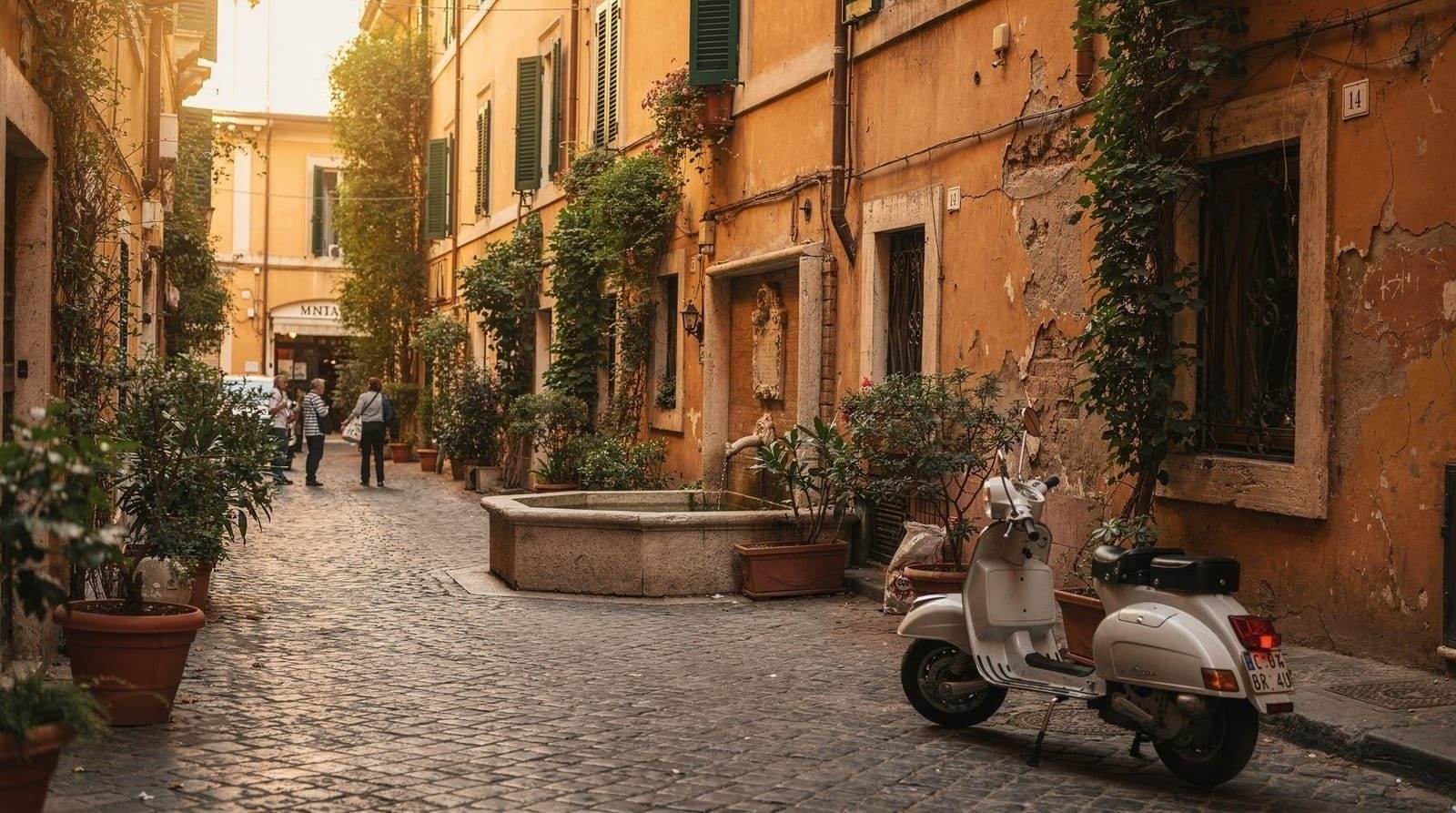
Ask most Rome visitors where they stayed and you will hear Trastevere, Centro Storico, or somewhere near Termini. Ask the Rome-experienced traveler who has figured out that sleep matters and that not everywhere needs to be cobblestoned and picturesque, and there is a good chance the answer is Prati.
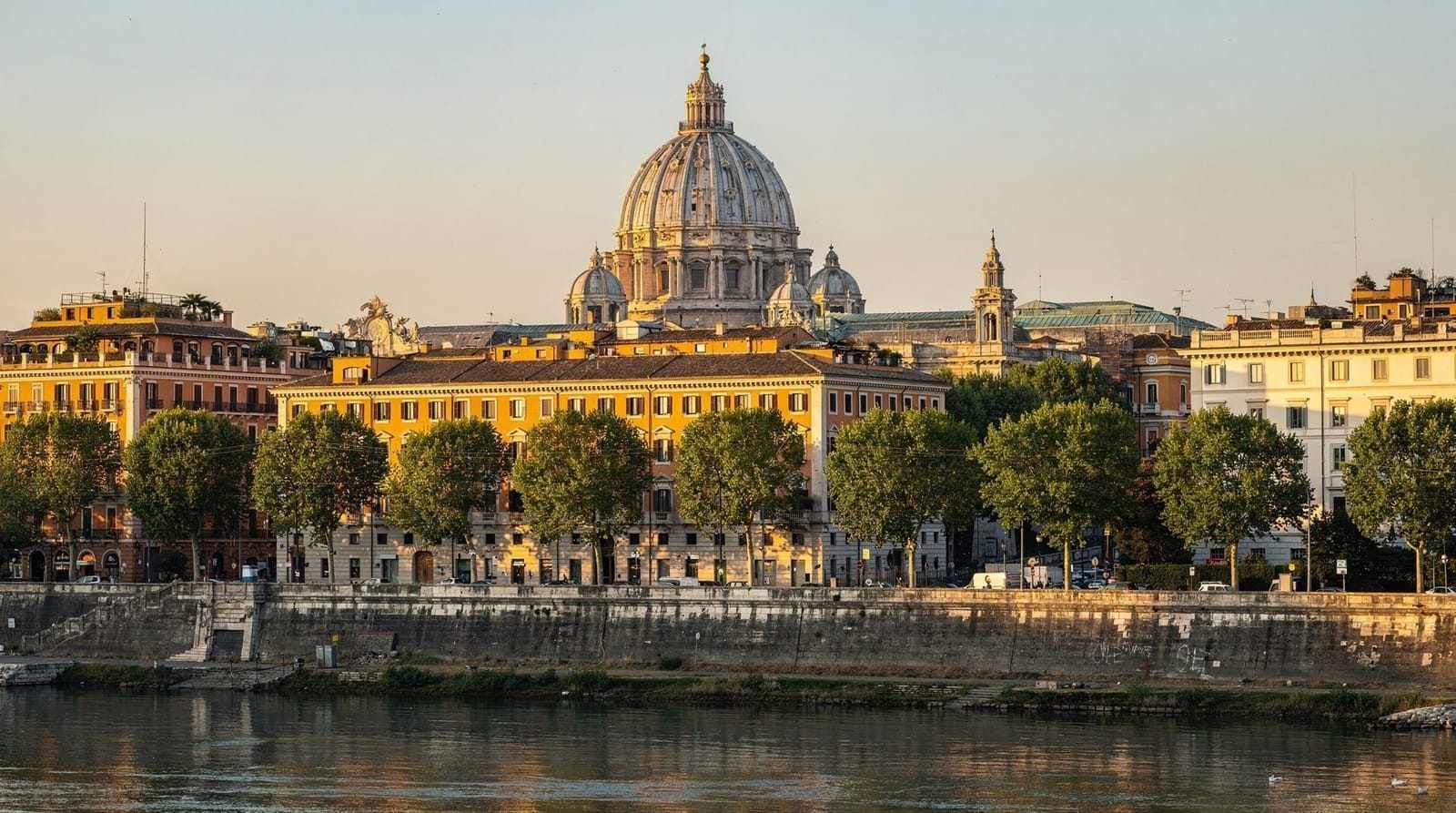
Prati is the grid-planned, wide-boulevarded, 19th-century residential neighborhood immediately north of the Vatican. It is orderly in a way that is unusual for Rome — the streets are broad enough for trees, there are proper supermarkets (Conad, Carrefour), the coffee at local bars is priced for residents rather than tourists, and on a Tuesday evening the main piazza (Piazza dell’Unità) has a farmers’ market that no travel guide mentions because it exists for the people who live there.
None of this is atmospheric in the Trastevere sense. But Prati has something those neighborhoods don’t: it functions like a real city and lets you stay in it.
| Where | North of the Vatican, across the Tiber from Centro Storico |
| Cost | Around €120–200/night for a solid mid-range hotel |
| Vibe | Calm, residential, wide boulevards, few tourists after dark |
| Vatican distance | About 10–15 minutes on foot |
| Best for | Vatican-focused visits, families, light sleepers |
Why Prati exists: a brief history
Prati was developed in the 1880s and 1890s as part of Rome’s post-unification urban expansion. When Rome became the capital of unified Italy in 1871, the city needed to house a rapidly growing bureaucratic and professional class. Prati (the name means “meadows” — this was farmland before development) was the planned solution: wide Haussman-inspired boulevards, uniform building heights, a rational grid.
The Vatican’s presence immediately to the south shaped the neighborhood. The religious orders, Vatican employees, and the clerical economy created a distinctive character — more conservative in some ways, with a high density of Catholic institutions, bookshops, and religious goods shops (via della Conciliazione toward the Vatican is lined with them).
Today Prati is solidly middle-class Roman: lawyers, public servants, university professors, Vatican employees, families who have lived here for three generations. Tourism has increased around the Vatican end, but move two blocks north of via Cola di Rienzo and you are in a genuinely residential neighborhood.
The geography of Prati
Prati’s boundaries are roughly the Tiber (east and south), via Candia and Castel Sant’Angelo (south), and the northern residential blocks past viale Giulio Cesare.
Key streets:
Via Cola di Rienzo — Prati’s main commercial spine. Running north–south, this is where you find good deli shops (Focacci for meats and cheeses, La Corte for wines), a good market (Mercato Trionfale at the northern end, one of Rome’s best), and the density of cafés and restaurants serving local Romans.
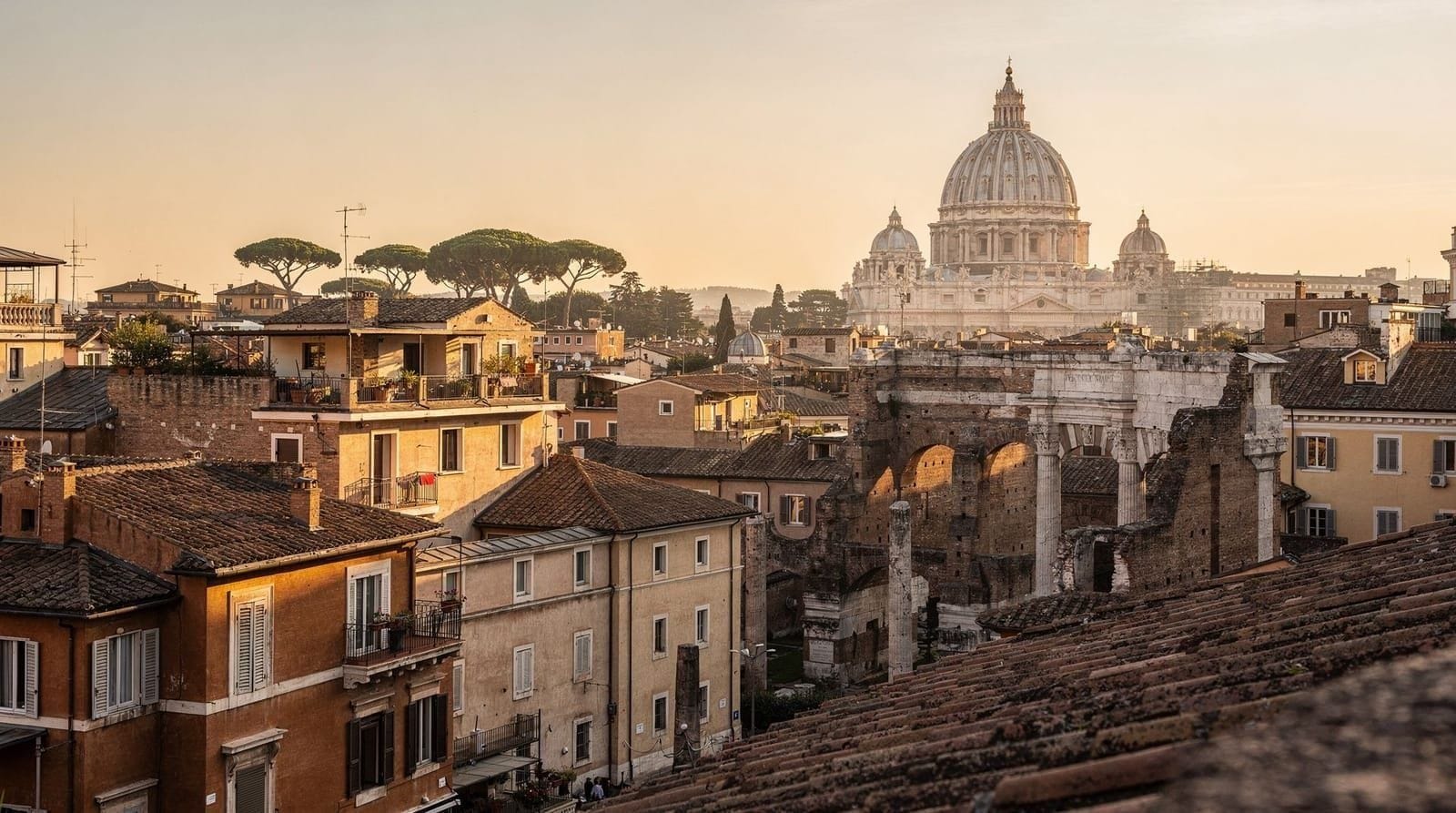
Via della Conciliazione — the broad processional avenue connecting Castel Sant’Angelo to St. Peter’s Square. Built by Mussolini in the 1930s (requiring demolition of a medieval neighborhood). Tourist-heavy, with overpriced restaurants. Worth walking for the arrival effect (the view of the basilica dome as you approach is extraordinary) but not for eating.
Borgo — the neighborhood between Prati and St. Peter’s Square. Technically separate but functions as Prati’s Vatican-adjacent zone. Charming in parts, tourist-saturated near the Vatican walls.
Viale Giulio Cesare — northern Prati’s main artery; calmer and more residential than Cola di Rienzo.
Where to stay: the accommodation guide
Prati’s hotel scene covers the full range from large business-grade hotels to small family B&Bs. The sweet spot for most visitors is the category between: 3-star boutique properties and well-run mid-range hotels that offer genuinely comfortable rooms at lower prices than equivalent quality in Centro Storico.
Hotel dei Mellini (via Muzio Clementi 81) — a well-regarded four-star and one of Prati’s best hotels. Rooftop terrace with city views (good for sunset), comfortable rooms, professional service. €190–270/night in peak season.
Starhotels Michelangelo (via della Stazione di San Pietro 14) — reliable, professional, larger. Better for groups and business travelers. Often has competitive rates. €160–240/night.
Residenza Paolo VI (via Paolo VI 29) — within the Vatican walls’ shadow; former clergy house now operating as a small hotel with rooftop views of St. Peter’s dome. Atmospheric if slightly institutional. €160–220/night.
Casa di Santa Brigida (piazza Farnese, technically near Centro Storico) — a pilgrim house run by Swedish nuns, open to all, quiet and well-run; one of Rome’s best-kept budget secrets. €100–140/night.
Hotel Gerber (via degli Scipioni 241) — reliable, family-run, nothing remarkable but consistent quality at honest prices. €120–170/night.
Giuggiolone — small boutique B&B on a quieter Prati street; good value and personable service; €100–150/night.
Apartments in Prati: Several well-managed apartment rentals operate in Prati. Unlike the medieval buildings in Trastevere and Monti, Prati’s 1890s buildings typically have wider staircases and some have lifts. Studio apartments run €100–160/night.
Noise reality: Prati is one of Rome’s calmer areas for sleep. The streets around via Cola di Rienzo have some evening noise but it is restaurant and foot traffic noise that ends by 11 pm, not nightclub noise. The Borgo area near the Vatican can have tourist crowds until 9–10 pm but quiets thereafter.
The Vatican logistics from Prati
If Vatican access is part of your Rome itinerary, Prati simplifies the morning considerably.
The Vatican Museums — enter from viale Vaticano, which runs along the north wall of Vatican City. From most of Prati, this is a 12–18 minute walk. Booking ahead is essential (the museum sells timed-entry tickets; without pre-booking, queue wait times of 2+ hours are common in peak season). See our Vatican tickets guide.
St. Peter’s Basilica — the basilica itself is free to enter (no ticket needed); the dome climb costs €8 (stairs) or €10 (lift). From Prati, walk south via via della Conciliazione. In summer, arrive before 8 am to avoid the longest queues.
Castel Sant’Angelo (lungotevere Castello) — 5 minutes from most of Prati. The cylindrical fortress has panoramic roof terrace views and an excellent interior (Papal apartments, arms museum). Entry €15 with audioguide.
Early Vatican tip: The Vatican Museums open at 9 am officially, but early-morning tours have access from 7 am. Staying in Prati makes these genuinely feasible — a 15-minute walk beats an early Metro journey from across the city.
Eating and drinking in Prati
Prati’s restaurant scene divides cleanly: overpriced tourist traps along via della Conciliazione and Borgo, and genuinely good local restaurants two or three blocks away.
For serious pizza: Pizzarium (via della Meloria 43) is Gabriele Bonci’s famous pizza al taglio shop — the most influential Roman pizza by weight in the country. Thick crust, inventive toppings (potato and rosemary, mortadella and pistachio), priced by weight at approximately €3–5 per 100g. Arrive at opening (11 am) before the best pieces go. Worth the slight detour.
For Roman trattoria: Trattoria dei Musei (via dei Bastioni di Michelangelo 7) — solid Roman cooking, serves local office workers and Vatican staff; honest prices; cacio e pepe and gricia done correctly.
La Pratolina (via degli Scipioni 160) — Neapolitan-influenced pizza (thicker, charred, soft center) in a sit-down restaurant. Good quality, popular with locals.
Gelato: Fatamorgana has a location on via Laurina (via Laurina 10) — creative flavors using high-quality ingredients; genuinely one of Rome’s better gelaterie.
Coffee: Any of the bars on via Cola di Rienzo is priced for locals — €1.20–1.50 for espresso at the bar, as it should be in Rome.
The Mercato Trionfale (via Andrea Doria) — at the northern end of Prati toward Prati/Trionfale border. One of Rome’s largest and most impressive fresh markets. Monday–Saturday mornings. Excellent produce, fish, meat, cheese. A better market for produce than the more famous Campo de’ Fiori.
Transport from Prati
Metro A — Ottaviano stop: In the heart of Prati, connecting to Termini (Metro A east) and via Lepanto to the northern city. From Ottaviano, change at Termini for Metro B to the Colosseum (total 20–25 minutes). Spagna (Spanish Steps) is two stops east.
Metro A — Lepanto stop: Slightly north of the Vatican-adjacent Prati. Useful for northern city destinations.
Bus routes: Numerous lines along via Cola di Rienzo, lungotevere, and via della Conciliazione. Bus 40/64 connects Prati to the Centro Storico and east toward Termini. Bus 23 along the Lungotevere connects to Trastevere (20 minutes).
Walking: The Vatican is genuinely walkable. Castel Sant’Angelo is a 5-minute walk. Centro Storico (Piazza Navona area) is 25–30 minutes on foot via Ponte Cavour or Ponte Sant’Angelo.
A Vespa sidecar tour of Rome’s highlights is a particularly enjoyable way to cover the city from a Prati base — starting near the Vatican and sweeping through the key sights across multiple rioni before returning.Prati for families
Prati is arguably the best central Rome neighborhood for families with young children:
Wide pavements: Unlike Trastevere and Monti, Prati’s 1890s streets are wide enough for side-by-side walking and pushchairs.
Proximity to the Vatican: St. Peter’s Square is one of the more manageable Vatican experiences with children — the open space, the pigeons, the obelisk. The basilica interior is magnificent for children who can handle large churches; the dome climb is appropriate for older children.
Parco Adriano (Lungotevere Castello) — the river park adjacent to Castel Sant’Angelo has green space and room to run. The area around the Tiber banks here is more open than most of central Rome.
Villa Borghese gardens: Metro A from Ottaviano to Spagna, then 15 minutes up to the Borghese park. The park has playgrounds, row boats on the lake, a zoo, and the Bioparco (children’s nature museum). Plan half a day.
Evening quiet: Prati’s residential nature means restaurants have proper family-hour sitting times (dinner from 7:30 pm in many places) and the streets are not chaotic after 10 pm.
Prati vs. the alternatives
Prati vs. Trastevere: Both are across the Tiber from the main ancient sites. Prati is quieter, more practical, cheaper for equivalent quality, and better for Vatican access. Trastevere is more atmospheric, better for nightlife and food scene concentration, louder at weekends.
Prati vs. Monti: Monti has better Colosseum access and a more interesting independent neighborhood character. Prati is better for Vatican focus and for calm. Monti’s Metro B is arguably more useful for multi-site itineraries.
Prati vs. Centro Storico: Centro Storico wins on atmosphere and walking distance to the main historic center sights. Prati wins on sleep quality, value, and Vatican proximity.
Neighborhood comparison at a glance
| Prati | Trastevere | Monti | Centro Storico | |
|---|---|---|---|---|
| Noise at night | Low | High | Moderate | Moderate-high |
| Vatican distance | 10–15 min | 25–30 min | 30–35 min | 20–25 min |
| Colosseum distance | 20–25 min (Metro) | 20 min | 10 min | 15–20 min |
| Typical hotel cost | €120–200 | €140–220 | €130–210 | €160–260 |
| Atmosphere | Functional, residential | Highly atmospheric | Village-like | Postcard central Rome |
See the full comparison in our where to stay in Rome guide, or the practical basics in our getting around Rome guide and Rome for first-timers guide.
A golf cart city tour with a local guide covers the key sites efficiently from Prati — the Vatican, Castel Sant’Angelo, Pantheon, Piazza Navona — giving a good overview of distances and priorities on a first day.The Castel Sant’Angelo: Prati’s landmark
The cylindrical fortress on the Tiber between Prati and the Vatican is one of Rome’s most layered monuments: Hadrian’s tomb (started 130 CE), converted to a papal fortress, connected to the Vatican by the Passetto di Borgo (a secret elevated passageway used by popes escaping danger), and finally a prison, barracks, and now museum.
The rooftop terrace offers one of Rome’s best panoramic views — particularly good at sunset. Entry is €15. The interior includes the Papal apartments (Renaissance decoration), the armory, and Puccini’s Tosca (Act III is set on the rooftop). The castle plays a role in Rome’s popular imagination disproportionate to its formal visitor numbers — it is busy but rarely overwhelmingly crowded by Vatican Museum standards.
See our Castel Sant’Angelo guide for full visiting information.
Shopping in Prati beyond the market
Via Cola di Rienzo is also Prati’s best shopping street for practical needs: mid-range Italian clothing chains, a proper pharmacy or two, a well-stocked Feltrinelli bookshop for English-language guides and novels, and several shoe shops carrying Italian brands at prices well below the boutiques of via del Corso. For gifts with more character, the streets immediately around Piazza dell’Unità have small artisan shops — a good stationer, a couple of home-goods stores — that see far fewer tourists than equivalent shops in Centro Storico. If you need anything genuinely practical during your stay (adaptors, medication, a phone charger), Prati is one of the easiest central neighborhoods to sort it out without a special trip.
A one-day Prati-based itinerary
A realistic day using Prati as a base: breakfast at a local bar on via Cola di Rienzo, Vatican Museums and Sistine Chapel from a pre-booked morning slot (allow 3 hours), lunch at Pizzarium or Trattoria dei Musei, St. Peter’s Basilica in the early afternoon when queues have usually eased, then Castel Sant’Angelo for the rooftop view before it closes. Finish with an aperitivo back on via Cola di Rienzo rather than the pricier options along via della Conciliazione. It is a full day, entirely walkable, and gets you back to a quiet room by 9 or 10pm rather than navigating a late Metro ride across the city.
The honest conclusion on Prati
Prati will not be the neighborhood that makes you fall in love with Rome in the way Trastevere does. It does not have that quality. What it has is functionality: decent restaurants, quiet nights, Metro access, proper shops, and a morning walk to the Vatican that takes 12 minutes instead of requiring planning.
For first-time visitors who want to maximize Vatican time without the logistical friction of commuting from the other side of the city, Prati is the rational choice. For travelers on a second or third visit who want a calm base while they explore further afield, Prati works well.
It is not the most exciting Rome neighborhood to stay in. It might be the most sensible.
Frequently asked questions about Prati neighborhood guide: elegant, calm and next to the Vatican
How far is Prati from the Vatican Museums?
Is Prati touristy?
What is the best thing about staying in Prati vs. Trastevere?
Is Prati expensive to stay in?
What are the best restaurants in Prati?
Can I walk to the Colosseum from Prati?
Is Prati good for a first visit to Rome, or better for a return trip?
Are there good grocery options in Prati for a longer stay?
Top experiences
Bookable activities with verified prices and instant confirmation on GetYourGuide.