Gladiator school in Rome: is it worth it for kids?
Rome: 2-Hour Gladiator School
Duration: 2 hours
Is gladiator school in Rome worth it for children?
Yes, for most children aged 6–14. The two-hour session involves dressing in replica armour, learning basic gladiatorial moves from costumed instructors, and receiving a diploma. It is theatrical rather than strictly historical, but it provides active participation after days of passive sightseeing. Children who have been glazing over at ruins are consistently re-engaged by the physical activity and the roleplay. Adults enjoy it more than they expect to as well.
What gladiator school actually is
“Gladiator school” in Rome is a costumed, interactive experience run by historical recreation societies — primarily Gruppo Storico Romano, which has been operating since 1994. It is not a historical museum with passive displays. It is a two-hour session in which you dress in replica armour, are addressed as a tiro (new recruit), and are trained in basic gladiatorial combat techniques by instructors in full period costume.
The setting — a replica ludus magnus (training school) with sand floor and arena atmosphere — supports the theatrical framing. The instruction is genuine: moves are drawn from historical sources including the text of Vegetius and visual records from Roman mosaics and reliefs. The overall experience is somewhere between living history and theatrical recreation.
It is not for everyone. Parents who want strictly factual, museum-grade historical engagement may find the theatrical elements uncomfortable. Children, almost without exception, do not share this concern.
| Where | Via Appia Nuova/Tuscolana area, ~3–4km from the Colosseum |
| Cost | Around €140–150 for two adults plus children (standard session) |
| Time needed | 2 hours |
| Getting there | Taxi from the Colosseum (~12 min); no direct metro |
| Best time | Morning session, before a Colosseum visit later the same day |
Why it works for children
After two or three days of looking at ancient ruins — impressive but requiring explanation to be intelligible — the gladiator school provides something qualitatively different: physical participation.
Children who have been cooperating with adult-paced sightseeing and museum-visiting are reactivated by the opportunity to put on armour, hold a replica weapon, and learn something that involves moving their bodies. The competitive instinct engaged by combat training (even cooperative combat training) produces a level of focus that is difficult to replicate in a gallery context.
The diploma ceremony at the end — receiving a certificate as a trained gladiator — provides a concrete, tangible object to take home. This is a small thing to adults and a significant thing to children.
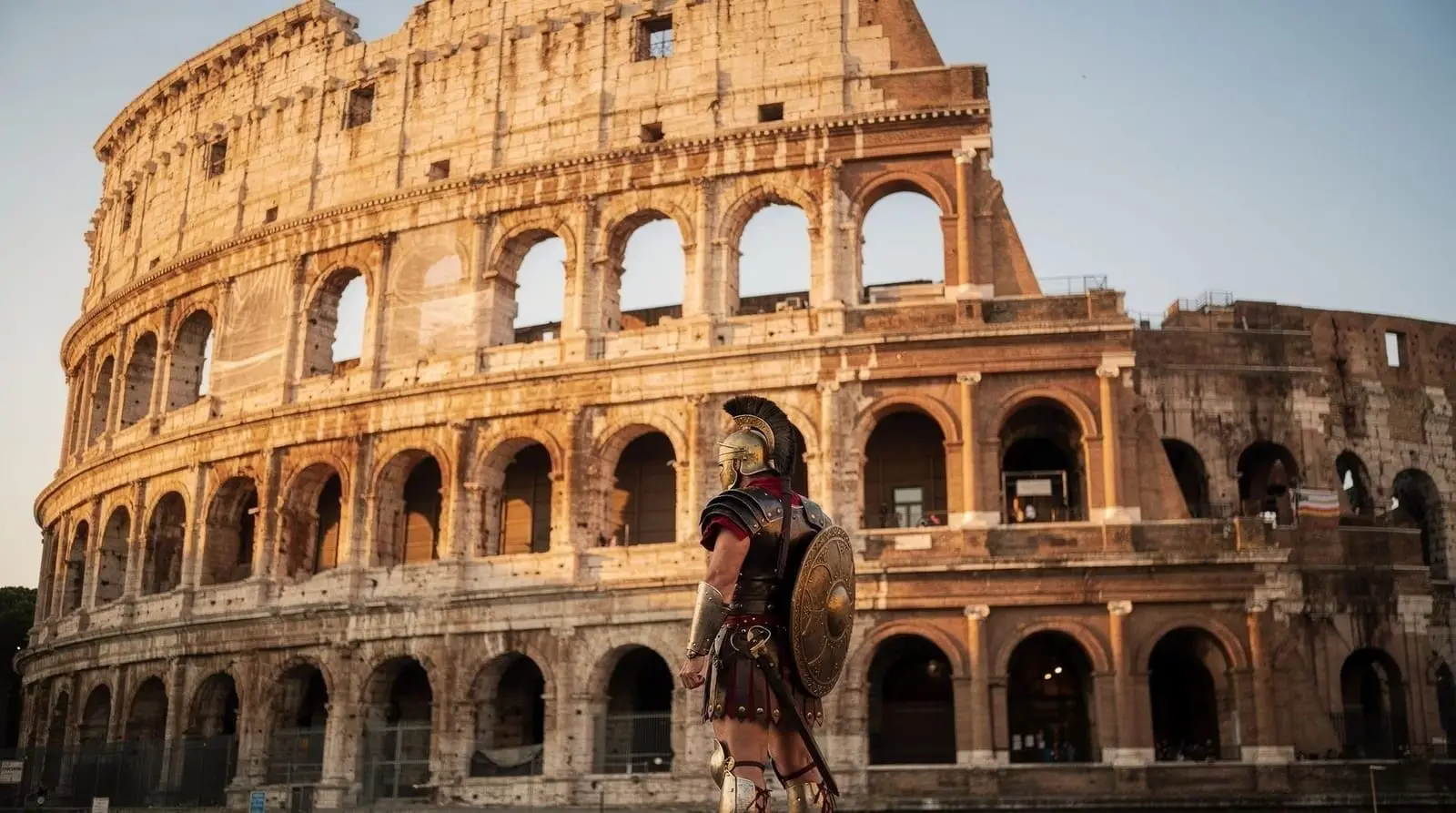
Rome 2-Hour Gladiator School — the main costumed training experience for families, with instruction, equipment, and diploma includedThe session structure in detail
Arrival and briefing (15–20 minutes) Participants gather at the training ground. The instructors are in full gladiatorial costume throughout — this is not a classroom briefing with occasional costume. The historical context is provided in character: recruits are new tiro who have been bought by the lanista (trainer) and must prove their worth. This roleplay framing is engaging for children and adults who lean into it.
Equipment fitting (15 minutes) Participants are fitted with a tunic over their clothes, followed by replica armour (lorica, greave protectors for the leg, arm guards), and a training helmet for those who want it. Weapons are replica blunted swords (rudis), shields (scutum), and sometimes other gladiatorial armament depending on the “class” of gladiator being trained.
Training in the arena (75–80 minutes) The core of the experience. Instruction covers:
- Basic footwork and stance
- Attack sequences (offensive combination strikes)
- Defence positions and shield use
- Paired sparring with a training partner
- Group exercises and formation work
Instruction is in Italian with English translation. The physical demands are moderate — appropriate for children aged 7+ and adults of normal fitness.
Diploma and photos (15 minutes) Formal certificate presented to each participant as a trained gladiator. Photos in full armour are encouraged. The training ground allows time for photos both during and after the session.
For children at different ages
Ages 5–7: Can participate with parental support and patience from instructors. Will likely spend some of the session being guided physically rather than independent. Enjoyable for the costume and the atmosphere even if the combat instruction is partially lost.
Ages 8–12: The sweet spot. Full independent participation, able to follow instruction, physically capable of most of the moves. Consistently the age group that instructors report as most enthusiastically engaged.
Ages 13–16: Can feel self-conscious initially, but most teenagers report enjoying it once past the first few minutes. The physical challenge and the permission to move and compete provide the engagement that passive sightseeing does not.
Adults: Consistently enjoy it more than anticipated. The theatrical elements that adults might expect to find embarrassing land differently in context — the experience is clearly designed to be fun, and that permission is liberating for most adults.
Combining with the Colosseum
The logical combination is gladiator school and the Colosseum on the same day. The question is the order.
Option A — Gladiator school first (morning), Colosseum second (afternoon): The gladiator school provides the experiential context; the Colosseum follows as the real arena where this happened. Children arrive at the Colosseum knowing what the arena floor was for because they trained on one. The gladiator school’s historical briefing makes the Colosseum’s arena floor more legible.
This is the recommended order. The gladiator school starts early (typically 08:30 or 09:30); a Colosseum slot booked for 11:30 or 12:00 provides a workable gap with travel time.
Option B — Colosseum first (morning), gladiator school second (afternoon): Works but is slightly less effective — children have already spent the best energy of the day on the Colosseum and arrive at the gladiator school in the post-lunch energy trough.
For the Colosseum visit itself, a family-focused guided tour is the right format:
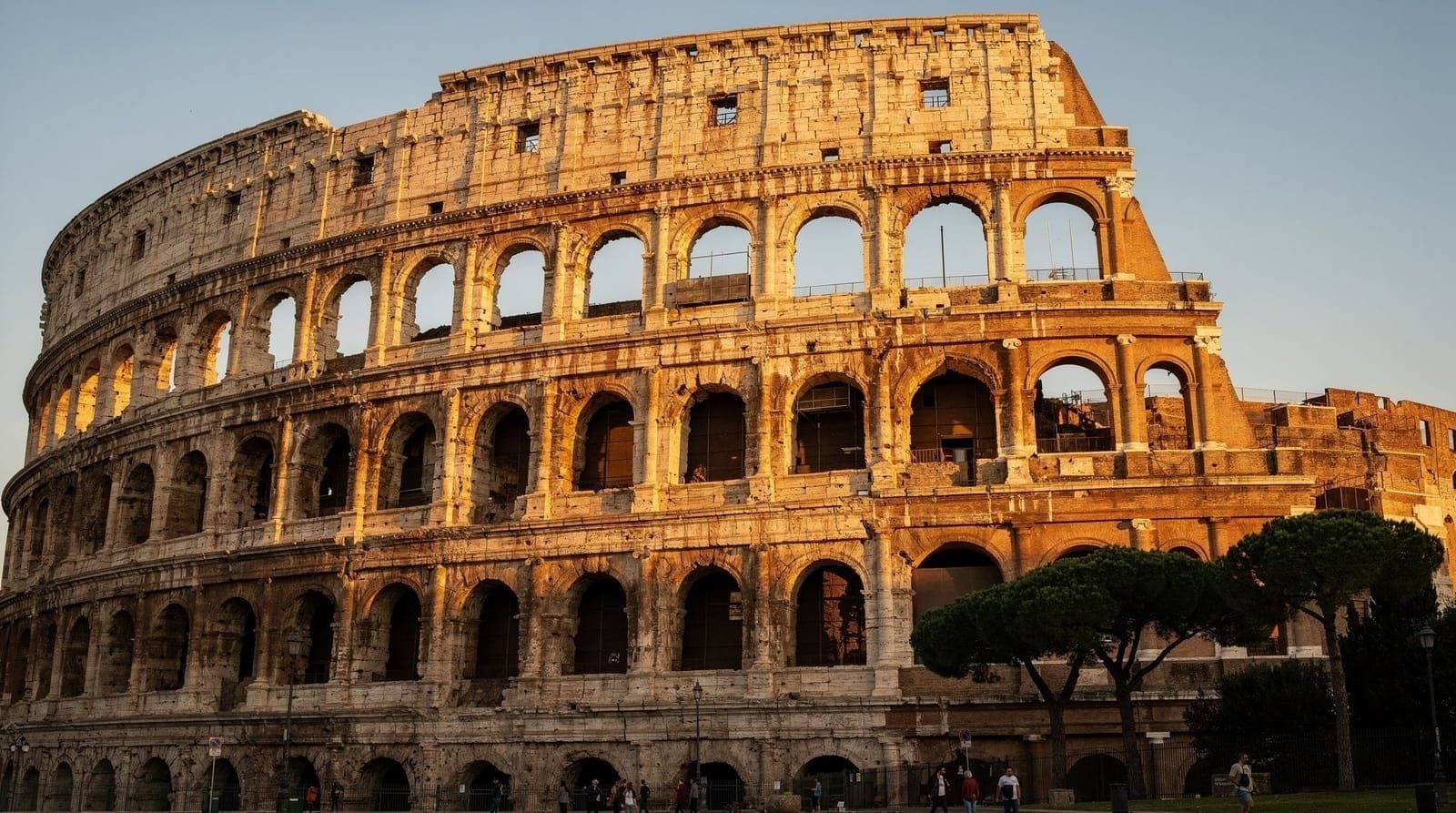
Colosseum Gladiator Tour for Kids and Families — combines Colosseum access with gladiator-focused storytelling designed for children; pairs naturally with the school experienceThe honest assessment
Is it worth the price? For families with children aged 7–14: yes, consistently. The price point (approximately €140–150 for two adults plus children on the standard Gruppo Storico Romano session) is high compared to a Colosseum entry ticket, but the experience is a two-hour active participation rather than a passive visit.
The comparison point is not the Colosseum ticket price; it is the cost of a cooking class, a children’s activity workshop, or any other structured participatory experience. In that framing, the gladiator school is competitive.
Is it historically accurate? Partially. The equipment is based on historical records. The moves have some documentary basis. The theatrical framing (in-character instructors, gladiator naming, arena ceremony) is dramatisation for engagement purposes, not strict recreation. This is appropriate for the context — it is a family activity, not a postgraduate seminar.
Become a Gladiator — Rome ancient Roman experience; another well-reviewed costumed gladiator training option for families and adultsPractical logistics
Location: The main Gruppo Storico Romano training ground is in the area of Via Appia Nuova / Tuscolana, approximately 3–4 km from the Colosseum. A taxi from the Colosseum takes about 12 minutes. There is no convenient metro connection from the centro storico.
Booking: Essential. Sessions have limited participant numbers (typically 8–15 participants per session). Book directly or via the GetYourGuide booking links above — availability can be limited 3–7 days ahead in peak season.
What to bring: Closed-toe shoes, comfortable clothing. Sunscreen in summer. Nothing that cannot survive contact with sandy arena surfaces or the inevitable excited child swinging a training sword.
Accessibility: The training ground has a sand floor. Not wheelchair accessible; participants need to be mobile enough to move, crouch, and swing equipment. Contact the operator directly for specific mobility queries.
Gladiator school versus other ancient-Rome family activities
Families often ask how this stacks up against other hands-on options in the same category. A quick comparison:
| Activity | Format | Duration | Best age |
|---|---|---|---|
| Gladiator school | Active — dress, train, spar | 2 hours | 8–14 |
| Colosseum family tour with storytelling | Passive/guided walk-through | 2–3 hours | 6–12 |
| Roman cooking class | Active, hands-on | 2–3 hours | Any age, better 8+ |
| Standard museum visit | Passive | 1–2 hours | Varies widely |
Gladiator school sits at the “most active, most physically engaging” end of the spectrum — which is exactly why it works so well as a counterbalance to a trip otherwise full of standing, looking and listening. For a broader sense of how it fits a multi-day family plan, see our kid-friendly Rome activities guide, which lists it alongside other hands-on options across the city.
Beyond gladiators: deepening the Roman military context
For families with children whose gladiatorial interest extends into broader Roman history, Rome has several complementary resources:
The Roman Forum guide covers the civic and military context of ancient Rome. The Colosseum and Roman Forum combination provides the architectural context for the gladiatorial games. The Roman Empire explained guide gives the broader historical framework that makes gladiatorial culture legible as a social institution rather than just an entertainment spectacle.
For families planning the full ancient Rome itinerary around this activity, the Rome family itinerary tips guide provides the pacing framework.
The history behind the experience: what gladiators actually were
The theatrical framing of the gladiator school works better — both for children and adults — when grounded in the real history. A brief briefing before or after the session substantially deepens the experience.
Who were gladiators? Primarily slaves, prisoners of war, and condemned criminals, though free men occasionally volunteered (attracted by the possibility of fame and payment). The gladiator was a paradoxical figure in Roman society: socially degraded (infames, outside the bounds of respectable citizenship) yet widely celebrated and occasionally famous. Successful gladiators had fan followings documented in graffiti found at Pompeii.
How many fights did a gladiator have? Fewer than popular culture suggests. Most gladiators fought 2–5 times per year at most. A career might involve 20–30 total fights over several years. Death rates were lower than cinematic tradition implies — games were expensive to produce, and killing a trained gladiator wasted a significant financial investment. Documentary evidence from Pompeii suggests that roughly 1 in 5–6 fights ended in death; the rest ended in defeat without killing.
The different types (munera): The gladiator school gives participants an introduction to several classic types. The retiarius (net and trident, no helmet) versus the secutor (heavy armour, restricted helmet) was the classic pairing — designed to create visible drama between speed and protection. The murmillo (fish-crested helmet, large shield) and the thraex (curved short sword, small shield) were another common match. Children who encounter these names at the Colosseum after the school session recognise them in context.
Women gladiators: Rarely mentioned in the school experience but documented in Roman sources — female gladiators (gladiatrices) are attested in inscriptions and reliefs. Raising this with older children who ask about inclusivity generates a genuine historical discussion rather than a modern imposition on history.
Where the gladiators actually trained: The real ludus magnus, the largest gladiator training school in ancient Rome, stood immediately southeast of the Colosseum — its foundations are visible today from a viewing platform on Via Labicana. Pointing this out during a Colosseum visit (or before, if you visit that spot first) gives children a concrete link between the modern reconstruction they trained in and the genuine archaeological site where the real ludus once stood. It is a short, free stop that costs nothing to add to a Colosseum day and meaningfully deepens the connection to what the family just experienced.
Why the theatrical framing is a deliberate choice: Operators running these sessions have made a considered decision to prioritise engagement over academic rigor, and it is worth understanding why. A strictly accurate recreation of gladiator training — repetitive drilling, harsh discipline, real injury risk — would be neither safe nor enjoyable for a family audience. The theatrical version keeps the historical skeleton (real weapon names, real training terminology, real combat styles) while wrapping it in a safe, welcoming, performance-oriented experience designed for people who are on holiday, not training for actual combat. Understanding this trade-off in advance helps parents calibrate expectations and explain the distinction to curious older children.
What families say: common questions answered honestly
“My child is afraid of swords, even replica ones.” The replica swords at the school are blunted, lightweight, and not threatening in appearance. They look like props because they are props. Most children who express initial reluctance to hold them change their mind within five minutes of watching other participants.
“My child is not interested in history — will they still enjoy it?” Consistently yes. The gladiator school experience is physical activity first, history second. Children who are uninterested in history enjoy the movement, the armour, and the competition. The historical content is present but not required for enjoyment.
“We are vegetarian/vegan — is there anything offensive in the experience?” No animal content is part of the experience. The historical references to venationes (animal hunts in the arena) are not enacted; the school focuses on gladiatorial combat between human participants.
“My child uses a wheelchair — can they participate?” The training area has a sand floor and involves movement. Partial participation is possible — fitting armour, observing, participating in stationary elements. Contact the operator directly before booking to discuss specific accommodations.
Frequently asked questions about Gladiator school in Rome: is it worth it for kids?
What is the minimum age for gladiator school in Rome?
Where is the gladiator school located?
How long does the gladiator school experience last?
Is gladiator school suitable for adults?
How does the Colosseum gladiator tour compare to the gladiator school?
What should children wear to gladiator school?
Top experiences
Bookable activities with verified prices and instant confirmation on GetYourGuide.