The best gelato in Rome (and how to spot the fake stuff)
Rome: Twilight Trastevere Food Tour with Wine Tasting
Duration: 4 hours
How do I find good gelato in Rome?
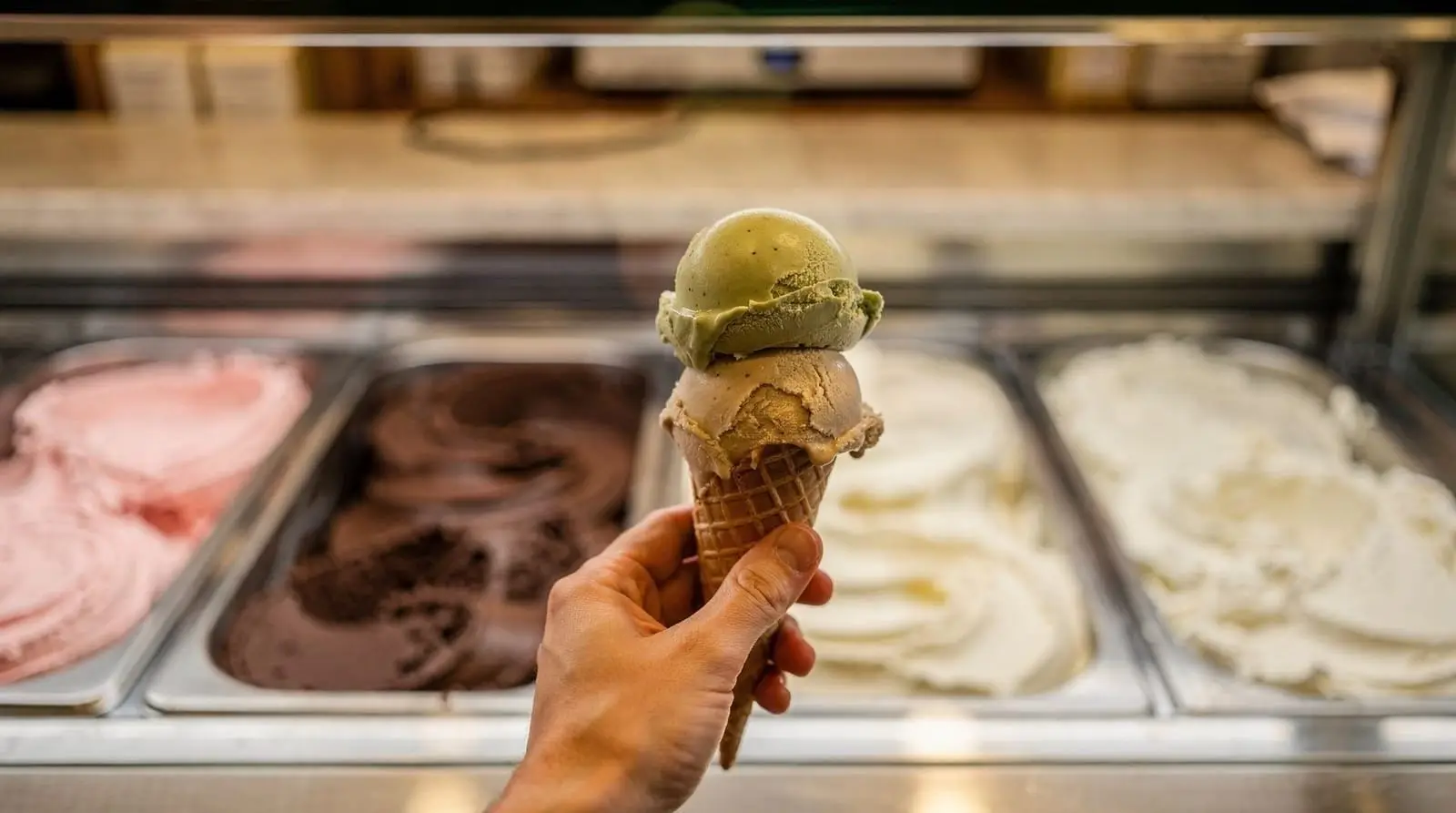
Look for gelato stored in covered flat metal pans below or at counter level, not piled in tall colorful mounds. Natural pistachio is grey-green, not neon green. Natural strawberry is pale pink. Signs saying 'artigianale' or 'produzione propria' are a good start. Avoid anything near the Trevi Fountain or Pantheon that doesn't show those signs.
The gelato situation in Rome
Rome has more gelato shops per square kilometer than almost any city in the world. It also has more bad gelato per square kilometer than almost any city in the world. The two facts are related: tourism creates demand for ice cream in a roughly gelato-shaped format, and supply has followed demand with varying degrees of honesty.
The good news is that the signs distinguishing artisanal gelato from industrial imposters are visible and learnable. You don’t need to speak Italian or have prior gelato experience. You need to look at the display case for about ten seconds and apply three rules.
This guide gives you those rules, lists the best shops in Rome by neighborhood, and explains why some of the most famous names on the tourist circuit are worth seeking out while others are not.
| Where | Every neighborhood, but quality varies enormously by proximity to monuments |
| Cost | Around €2.50-5 per cup or cone depending on size and shop |
| Time needed | 10-15 minutes to choose and eat; longer if you queue at a famous name |
| Best time | Any time, but afternoon heat (14:00-18:00) is when it’s most rewarding |
| Avoid | Anything within sight of the Trevi Fountain, Pantheon steps or Colosseum with neon-colored mounds |
The three rules for spotting genuine gelato
Rule 1: How is it stored?
Good sign: Gelato stored in flat metal pans (called “pozzetti”) with lids, positioned at or below counter level. The pans are covered because real gelato oxidizes and loses texture when exposed to air. The temperature is controlled precisely.
Bad sign: Gelato piled high in large colorful mounds, often extending 15-20cm above the rim of the container. This requires over-aeration to hold its shape — either industrial premix bases or modified starches. Real gelato cannot hold a tall mound; it’s too dense and too heavy.
Rule 2: What colors are the flavors?
Good sign: Natural colors. Pistachio is grey-green (the color of actual pistachios). Strawberry is pale pink. Mint is a muted greenish-white. Lemon is pale yellow. Dark chocolate is dark brown, not glossy black.
Bad sign: Neon colors. Electric green pistachio. Bright pink strawberry. Sky-blue “cotton candy.” These require artificial coloring agents. Natural ingredients don’t produce these shades. When you see them, the flavor is almost certainly from powdered premix, not real fruit or nuts.
Rule 3: What does the shop say about itself?
Good sign: Signs reading “artigianale” (artisanal), “produzione propria” (made on-premises), or “fatto in casa” (house-made). These terms have some legal weight in Italy — though not as much as you’d like.
Bad sign: No such signage, combined with tourist-facing location. The absence of a claim about production method, combined with proximity to a major monument, is a reliable predictor of industrial product.
The best gelato shops in Rome
Gelateria del Teatro (near Piazza Navona)
Via dei Coronari 65 / Via di San Simone 70
Consistently the most recommended artisan shop in Rome among gelato-literate visitors and locals. The kitchen is visible from the shop — you can watch production. Ingredients are sourced seasonally from named producers: pistachios from Bronte in Sicily, hazelnuts from Piedmont, fruit from regional farms.
The flavor list changes with the season. In spring: strawberry-balsamic, artichoke (yes, artichoke — works surprisingly well), violet. In summer: peach, fig, melon. Autumn: chestnut, pear-gorgonzola. The creative combinations are thoughtful, not gimmicky.
The classics are equally good: the cioccolato fondente (dark chocolate) is among the best in the city, and the nocciola has a roasted, buttery depth that industrial versions can’t approach.
Price: €2.80-4.50 depending on size. Two flavors in a cup is €3.50.
Hours: Generally 11:00-22:00, later in summer. Closed Tuesdays.
Fatamorgana (multiple locations)
Fatamorgana is a small chain of genuine quality — unusual in an industry where expansion usually degrades the product. It’s best known for unusual flavor combinations: tahini-date, basil-walnuts, gorgonzola-fig, tobacco-honey. These sound alarming; they taste intentional.
The mainstream flavors are equally well-made: the stracciatella uses real dark chocolate, not pre-made chocolate chips. The hazelnut tastes of hazelnuts.
Best locations: The Prati branch (Via Leone IV 10) is convenient for Vatican visitors. The Monti branch (Via dei Serpenti 136) is well-placed for Colosseum-area visits. The Trastevere location (Piazza San Cosimato 62) is convenient for the food neighborhoods.
Price: €2.80-4 standard cone or cup. Pricier for the premium flavors.
Note on allergens: Fatamorgana specializes in gluten-free and dairy-free options — the entire menu is gluten-free, and many flavors are made with alternative milks. Worth knowing if you’re traveling with dietary restrictions.
Giolitti (Centro Storico)
Via degli Uffici del Vicario 40
Giolitti opened in 1900 and has been serving gelato to Romans and visitors since before the Italian state was fully consolidated. The location near the Pantheon makes it convenient; the hundred-year history means it knows what it’s doing.
The classics here are genuinely good — fior di latte (pure milk flavor, a test of dairy quality), stracciatella, pistachio, and particularly the zabaione (egg yolk and Marsala wine). The shop is not the most adventurous or technically cutting-edge; it is consistent, honest and atmospheric.
The honest caveat: Giolitti is now famous enough to attract tourist-facing pricing (€4+ for a standard cone) and is located in a high-traffic area. It’s worth visiting once for the history and the quality; for everyday gelato on a budget, there are better-value alternatives.
Price: €3.50-5 depending on size.
Gelateria dei Gracchi (Prati)
Via dei Gracchi 272
The neighborhood choice for Prati locals — less famous than Giolitti or Gelateria del Teatro, but consistent and honest. The stracciatella and hazelnut are reliable; the seasonal fruit flavors depend on what’s available from the weekly market.
A practical choice if you’re near the Vatican and want gelato without the tourist premium.
Price: €2.50-3.50.
Come il Latte (Esquilino-Termini area)
Via Silvio Spaventa 24-26
Near Termini station, which might seem like a red flag, but Come il Latte is a genuine artisan shop with a production-visible format (you can see the churning tanks). Their specialty is cream-forward flavors: fior di latte made from high-quality milk, crema, mascarpone. The chocolate is excellent; the seasonal fruit flavors are reliable.
Useful if you’re arriving or departing from Termini and want to avoid the tourist traps on the main station concourse.
Price: €2.80-3.80.
Shop-by-shop comparison
| Shop | Area | Price range | Best flavor to order |
|---|---|---|---|
| Gelateria del Teatro | Piazza Navona | €2.80-4.50 | Seasonal special or dark chocolate |
| Fatamorgana | Prati / Monti / Trastevere | €2.80-4 | Tahini-date or stracciatella |
| Giolitti | Centro Storico | €3.50-5 | Zabaione |
| Gelateria dei Gracchi | Prati | €2.50-3.50 | Stracciatella |
| Come il Latte | Esquilino-Termini | €2.80-3.80 | Fior di latte |
| Il Gelato di San Crispino | Near Trevi | €3-4.50 | Cup only, ask for the seasonal fruit |
Use this table to pick by location rather than crossing the city — the quality gap between the shops above and the nearest neon-mound stand is much bigger than the quality gap between any two shops on this list.
Neighborhood-by-neighborhood quick reference
Near the Pantheon / Piazza Navona: Gelateria del Teatro (best), Giolitti (classic), or Cremeria Monteforte (Via della Rotonda 22, traditional). Avoid the generic gelato shops that ring Piazza Navona.
Near the Vatican / Prati: Fatamorgana Prati, Gelateria dei Gracchi. Avoid Via della Conciliazione entirely.
Trastevere: Fatamorgana (Piazza San Cosimato), or simply buy supplì and pizza bianca instead.
Testaccio: Fatamorgana nearby, or the Mercato di Testaccio stall. Testaccio is primarily a savory food neighborhood; don’t go out of your way for gelato here.
Near the Colosseum: Walk to Monti — Fatamorgana Via dei Serpenti is 10 minutes away and worth it. The Colosseum-area gelato shops are almost universally industrial.
Near the Trevi Fountain: This is the hardest zone. Il Gelato di San Crispino (Via della Panetteria 42) is the serious option, 2 minutes from the Trevi — they’ve been making quality gelato here since 1993 and refuse to sell in cones (cups only, because cones interfere with the flavor). Otherwise, use the pistachio-color test and walk away from anything neon.
What to order
For testing quality: Pistachio or nocciola (hazelnut). These reveal the most about sourcing and technique.
For pure pleasure: Cioccolato fondente (dark chocolate) or fior di latte (pure milk), eaten in a small cup without distractions.
For the Roman experience: Crema (egg yolk cream) — the flavor that Romans have been ordering since gelato arrived in the city. Rich, slightly custardy, subtly vanilla.
For the adventurous: At Gelateria del Teatro or Fatamorgana, try whatever seasonal special is listed on the board. The creative combinations there are made with intention, not novelty.
Gelato vs granita
Granita is different: a semi-frozen flavored ice, coarser in texture and served as a slush rather than a dense scoop. It’s primarily Sicilian but available in Rome in summer. Coffee granita with a brioche is a Palermo breakfast tradition that has crossed to Rome in food-aware cafes. Worth trying in hot weather.
Where to find good granita in Rome: Bar San Calisto (Piazza di Santa Calisto 3, Trastevere) does a reliable coffee granita in summer.
A note on guided food tours and gelato
Most good food tours in Rome include a gelato stop as part of the experience. The guides typically take you to artisan shops rather than tourist traps — which is part of the value.
The twilight food tour through Trastevere includes an artisanal gelato stop as part of a broader food walk — a convenient way to learn the neighborhood’s food culture alongside the tasting.For the full context of eating in Rome, see our where to eat in Rome guide and the street food guide. Gelato is the punctuation of a Roman day, not the main clause — but it’s worth getting right.
The brief on coffee as a gelato pairing
Affogato (a scoop of gelato “drowned” in a shot of espresso) is served at gelaterias and bars. The combination works best with fior di latte or crema — the bitterness of the espresso and the sweetness of the dairy create the balance. At Sant’Eustachio il Caffè, the espresso used for affogato is the same quality as the coffee they’re known for — worth the €4-5 price.
For coffee drinking in Rome more broadly, our Rome coffee culture guide covers what to order, when and at which bar.
How gelato is made — and why it matters for quality
Understanding the production process helps you evaluate what you’re eating.
The base: Artisanal gelato starts with a cooked base (crema cotta) of milk, cream, egg yolks and sugar — essentially a custard. Some shops use a cold-process base that skips the cooking stage; this is faster but produces a less stable, less complex result. The cooked base develops more flavor through the Maillard reactions in the egg proteins.
The inclusions: Fruit flavors require real fruit — either fresh, pureed or cooked down to a sorbet-like base with no dairy. Nut flavors require actual nuts: pistachio paste made from ground Bronte pistachios, hazelnut paste from Piedmontese hazelnuts. Industrial versions use powdered flavor concentrates dissolved in the base — faster, cheaper, and you can taste the difference.
Churning and freezing: Gelato is churned in a batch freezer at lower speeds than ice cream, incorporating less air. The result: 20-30% overrun (air content) compared to 50-100% in commercial ice cream. This denser structure means gelato melts faster when it leaves the freezer — which is why it must be served at a warmer temperature and consumed quickly.
Shelf life: Good artisanal gelato is made in small batches and should be consumed within 48-72 hours of production. Industrial gelato can be stored for weeks. A shop that makes fresh batches daily will have a more limited daily selection (some flavors sell out) — this is a positive sign, not a negative one.
Gelato flavors as quality indicators — in depth
Pistachio: A reliable proxy for overall quality. Good pistachio uses paste made from Bronte pistachios in Sicily — the most prized variety, with a strong, slightly sweet nuttiness. The color is unmistakable: grey-green, like raw pistachios. Industrial versions use a cheaper paste (often Turkish pistachio or almond-pistachio blend) with green food coloring to create the expected appearance. The taste difference is dramatic.
Nocciola (hazelnut): Similar principle. Good nocciola uses roasted Piedmontese hazelnuts (IGP Langhe hazelnuts ideally), producing a deep, toasty flavor that’s clearly distinct from the generic nuttiness of artificial hazelnut flavoring. Color: rich light brown, not pale or grey.
Cioccolato fondente: The quality of the cocoa matters enormously. A serious shop uses single-origin dark chocolate with high cocoa percentage (70%+); the gelato has genuine bitterness alongside the sweetness. Industrial chocolate gelato uses cocoa powder with added sugar — sweet, flat, one-dimensional.
Fior di latte: The plain milk flavor is the purest test of base quality. There are no strong inclusions to hide behind — you’re tasting the milk and cream, which should be clean, slightly sweet and distinctly dairy. If it tastes flat or slightly powdery, the milk quality or the base technique is poor.
Fruit flavors: Seasonal fruit is essential. Strawberry gelato in January is made with frozen or imported strawberries — technically fine but lacking the flavor intensity of June strawberries. Good shops list the fruit origins; some specify the supplier. If a fruit flavor is available year-round with unchanging intensity, it’s probably made with concentrate.
Practical logistics
Opening hours: Most gelaterias open around 11:00-12:00 and close between 21:00 and midnight, sometimes later in summer. A few traditional shops close during the afternoon (15:00-17:00) for the Italian riposo; artisan shops aimed at foot traffic usually stay open.
Payment: Most accept cards now; some traditional shops are still cash only. Check before ordering.
Ordering the right amount: The standard sizes at a Roman gelateria are typically: piccolo (one scoop/flavor, €2.50-3), medio (two flavors, €3-4), grande (three flavors, €3.50-5). You can often request a cone (cono) or cup (coppetta) — cups are the more stable option for multiple flavors.
Waffle cones vs. plain cones: Plain cones (cialde) don’t add flavor. Waffle cones are sweeter and crunchier — a matter of preference. Brioche gelato (gelato sandwich in a small brioche bun) is a Sicilian tradition available at some Roman shops; good for breakfast.
Temperature: Artisanal gelato is served at -11°C to -12°C. If it’s too hard to scoop easily, it was stored at too low a temperature (industrial practice). If it’s runny, it’s too warm. The correct consistency is firm but yielding — a scoop holds its shape but starts to soften in 3-5 minutes outside the display case.
Gelato with kids
Kids generally don’t need the pistachio-color lecture to enjoy gelato, but a few practical notes help. Cups are easier than cones for younger children — less mess, no dripping down a sleeve on a hot afternoon. Fior di latte, chocolate and fruit flavors like fragola (strawberry) or limone (lemon) are the safest bets for small palates; save the tahini-date or gorgonzola-fig combinations for the adults. Fatamorgana’s dairy-free options are worth knowing if a child has an allergy — ask directly, since not every flavor is dairy-free even at a shop known for the option. For a full day-out plan that includes gelato stops, see our Rome with kids guide.
Gelato in the Rome heat
In July and August, gelato shifts from treat to necessity. Shops near major sights get long queues by mid-afternoon; going before noon or after 20:00 avoids the worst of it. Because real gelato is served softer and melts faster in high heat, eat it standing near the shop rather than walking it across town — a scoop of fior di latte will not survive a 15-minute walk to the Trevi Fountain intact. If you’re planning a summer visit more broadly, our Rome in summer heat guide covers pacing a day around the worst of the temperature, and gelato stops are a legitimate part of that strategy, not just an indulgence.
A Vespa sidecar tour with a gelato stop built in is a fun way to combine sightseeing with a proper artisan break, without having to research shops yourself.Frequently asked questions about The best gelato in Rome (and how to spot the fake stuff)
Is gelato near the Colosseum ever worth trying?
Can I find dairy-free or vegan gelato in Rome?
Top experiences
Bookable activities with verified prices and instant confirmation on GetYourGuide.