Celio & the Colosseum district
Celio and the Colosseum district: ancient Rome's beating heart. Colosseum tickets, Roman Forum, Palatine Hill, Domus Aurea, and where to eat nearby.
Rome: Guided Tour of Colosseum, Roman Forum & Palatine Hill
Quick facts
- Metro
- Line B — Colosseo stop (3 stops from Termini)
- Colosseum ticket
- €18 + €2 online booking fee; reserve 4–8 weeks ahead
- Combined ticket
- Forum + Palatine included; valid 24h
- Best arrival time
- First slot of the day (9:00) or late afternoon 15:30–17:00
- Domus Aurea
- Separate ticket ~€14; book online; closes periodically for conservation
- Crowds
- July–Aug: extremely heavy; April–May and Oct are best
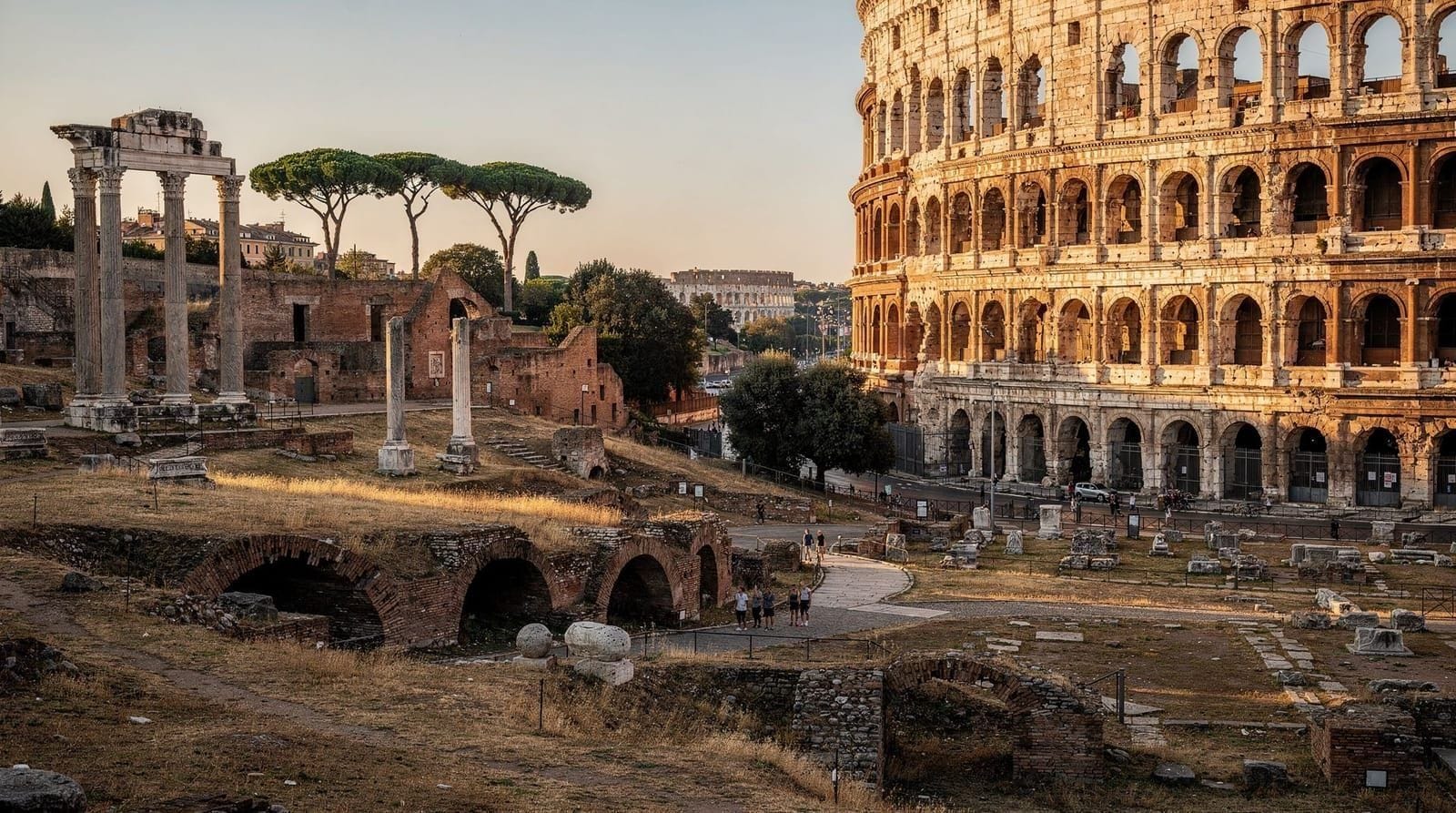
The Celio hill and the Colosseum valley form the most archaeologically dense neighbourhood in Rome — arguably in Europe. Within a 15-minute walk you have the Colosseum, the Roman Forum, Palatine Hill, Domus Aurea, the Arch of Constantine, three early Christian basilicas, and the remnants of a gladiatorial training school. For first-time visitors, this district is non-negotiable. For returning visitors, it still rewards a slower second look — particularly the Palatine gardens, Domus Aurea, and the quiet Celio hill churches that almost no one visits.
What the district actually contains
The Colosseum valley sits between the Celio hill to the south and the Esquilino and Palatine hills to the north and west. The geography matters: the original Colosseum site was an artificial lake belonging to Nero’s Domus Aurea until Vespasian drained it and built the amphitheatre in its place (72–80 CE) — an act of deliberate political theatre returning land to the people.
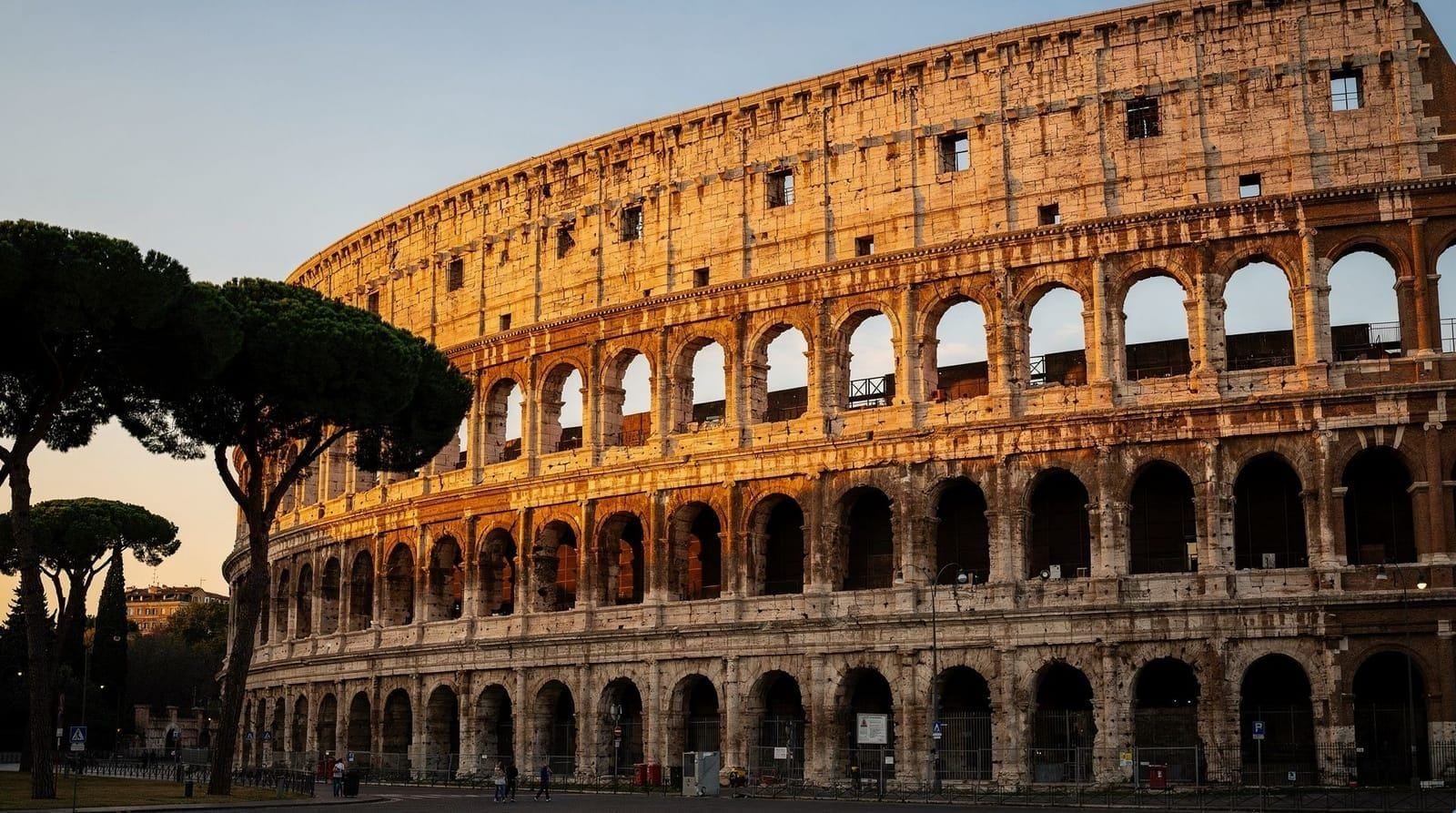
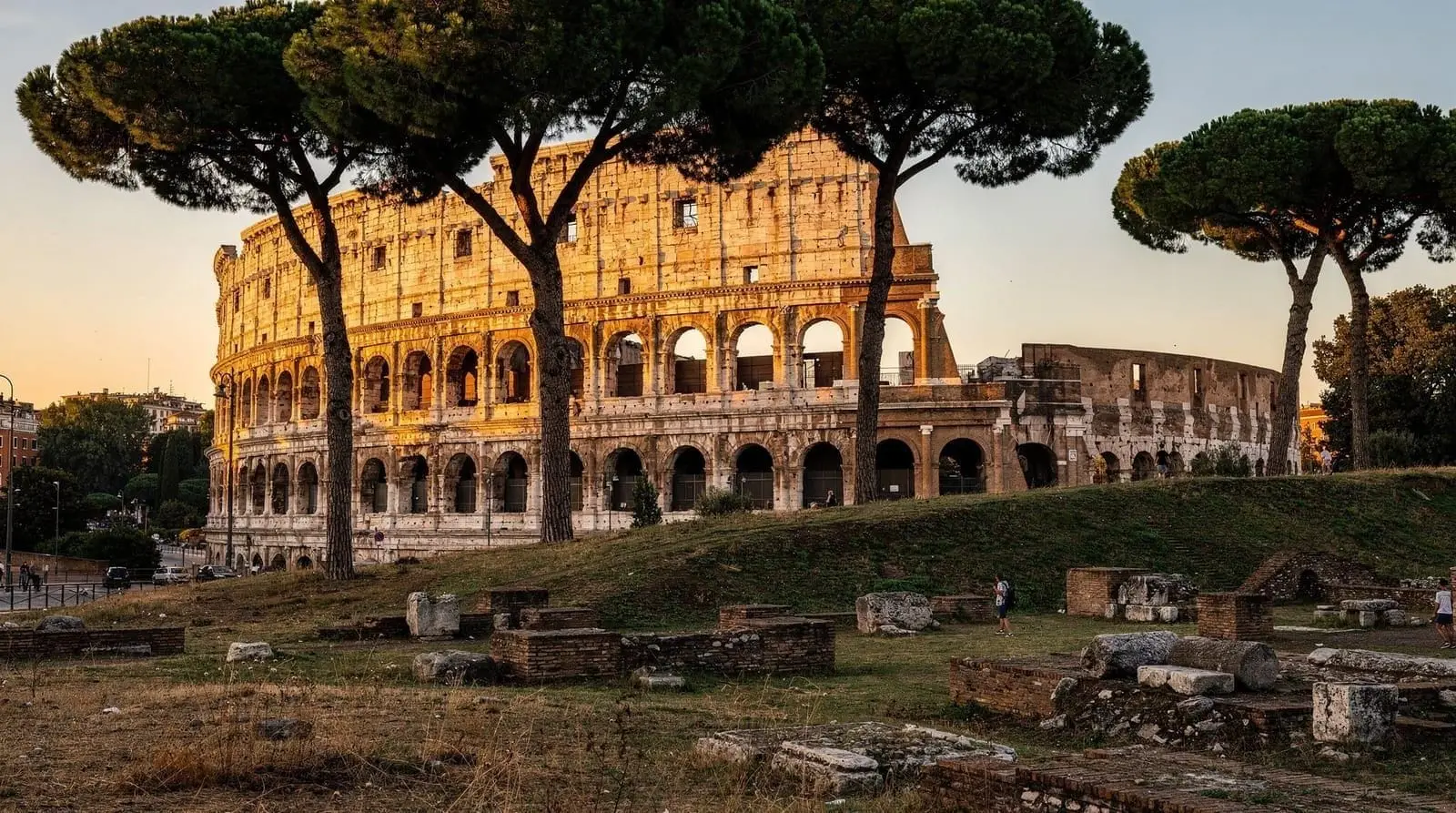
The Colosseum (Flavian Amphitheatre): The most visited ancient monument in the world, with roughly 7.5 million visitors annually. It held 50,000–70,000 spectators for gladiatorial combat and animal hunts (venationes) for four centuries. The travertine exterior you see today is about two-thirds of the original — medieval and Renaissance builders quarried the rest for other projects, including St. Peter’s Basilica. The interior seating tiers (cavea) are reconstructed; the underground hypogeum, where animals and gladiators waited before entering through trapdoors, is visitable with specific ticket upgrades.
Roman Forum & Palatine Hill: Included in the Colosseum combined ticket. The Forum was the political, commercial and religious centre of ancient Rome for nearly a thousand years. Palatine Hill above it is where the emperors built their palaces (Palatium → palace); the views over the Forum from up there put the whole complex in spatial context. Allow 2–3 hours for both.
Domus Aurea (Nero’s Golden House): Separate site, separate ticket, on the Oppian hill behind the Colosseum. Nero built this staggering complex (estimated 80–100 hectares) after the Great Fire of 64 CE. Much of it was deliberately buried by later emperors. The underground rooms contain extraordinary frescoes — the style inspired Renaissance artists including Raphael and Michelangelo, who rappelled down to study the “grotteschi” paintings. Visits are guided and timed (about 75 min); it closes periodically for conservation work. Check availability weeks ahead.
Celio hill churches: Santi Giovanni e Paolo (4th–5th century, over a Roman house), Santo Stefano Rotondo (5th century, circular plan — rare in Rome), Santa Maria in Domnica (9th-century mosaics). These are genuinely under-visited. On a busy summer day, you can walk 3 minutes from the Colosseum crowds and have a medieval church entirely to yourself.
Booking the Colosseum: what first-timers get wrong
The single most common mistake: arriving without a reservation and assuming you can queue at the box office. You cannot get a timed entry this way in high season — the slots are allocated online. Even Roma Pass holders must book a specific entry time on the official Colosseo ticketing site (coopculture.it). The Roma Pass gives free admission but not a slot; you still need to reserve.
Ticket price: €18 standard entry + €2 mandatory online booking fee. The combined ticket includes the Roman Forum and Palatine Hill and is valid for 24 hours after first use — meaning you can visit the Forum in the afternoon and return to the Palatine the following morning.
Arena floor access costs more (approximately €22–28 depending on provider) and must also be pre-booked. The underground hypogeum adds roughly €8–12 more. For a complete experience including underground + arena floor, budget around €30–35 per person. Guided tours with these upgrades built in are available through GYG and are often the most practical option for first-timers.
Arena floor guided tour — includes underground hypogeum access and Forum/Palatine combined ticketBest time slots: First entry of the day (9:00) is the least crowded option. The 15:30–17:00 window is the second-best choice as coach tour groups have typically moved on. Avoid the 10:30–14:00 window in July and August — you will be in 34°C heat with thousands of other people in an unshaded stone structure.
Gladiator photo scams: Costumed “gladiators” near the Colosseum and the Via Sacra approach aggressively demand €5–20 for photos. Accepting any interaction — including making eye contact — makes it very hard to walk away. Decline firmly, do not stop.
Getting here from central Rome
Metro: Line B, Colosseo stop. Direct from Termini (3 stops, 5 minutes), Tiburtina (accessible), or Laurentina. Exit to the Colosseum is direct — you emerge facing the monument.
Bus: Lines 60, 75, 85, 87, 117 stop near Piazza del Colosseo. Bus 60 runs along Via Nazionale from Termini.
Walking from the Forum/Palatine side: If you are coming from the Capitoline Hill or Piazza Venezia, the Via Sacra entrance to the Roman Forum is closest. This is the historic entrance; the Colosseum is 500 metres further east along the via.
On foot from Monti: The neighbourhood of Monti sits immediately northwest of the Colosseum on the Esquilino slope, a 10-minute walk. Monti is the best base for this district — more character, better value restaurants than the tourist-trap strip on Via Sacra.
On foot from Trastevere: Allow 25–30 minutes crossing the Circus Maximus valley and climbing up.
What to see on the Celio hill
The Celio (Caelian Hill) is the least-visited of the seven hills. Its summit plateau is almost entirely occupied by the Villa Celimontana, a 16th-century park with Roman obelisk. Quiet on weekdays. Families use it as a shortcut from Circo Massimo to the Colosseum.
Three churches worth the detour:
Santi Quattro Coronati (Four Crowned Saints): A 9th-century fortress-basilica with a cloister of exceptional Romanesque quality and frescoes of Silvester I. Ring the bell for the convent chapel — a nun will pass you a key to the oratory. Almost no tourists.
San Gregorio Magno al Celio: 17th-century façade, but the foundations are 6th century; Pope Gregory the Great is said to have launched his mission to England from here. The three oratory chapels in the garden have frescoes by Guido Reni and Domenichino.
Santo Stefano Rotondo: Circular late antique church (480 CE) with disturbing 16th-century frescoes of martyrdoms. The building’s plan is unique in Rome — clearly modelled on the Holy Sepulchre in Jerusalem. Entry is free.
Where to eat near the Colosseum (and what to avoid)
The restaurants immediately facing the Colosseum on Via Sacra and Via dei Fori Imperiali are tourist traps in the literal sense: high prices, mediocre food, aggressive seating. The €15–18 pasta dishes at these establishments are typically reheated. Avoid them entirely.
Honest options in reach:
- Ai Tre Scalini (Via dei Santi Quattro 30, Celio): A neighbourhood trattoria with cacio e pepe and carbonara that locals actually use. €12–14 for a pasta. Book ahead.
- Ristorante da Remo (Piazza Santa Maria Liberatrice, Testaccio): A 25-minute walk gets you to Testaccio, Rome’s actual food neighbourhood. The original Roman pizza margherita, coal-fired. Lines form; go before 20:00 or after 21:30.
- Trattoria Luzzi (Via di San Giovanni in Laterano 88): Close enough to the Colosseum to be convenient; unfussy, no-nonsense Roman food since 1945. Lunch €12–15.
- Mercato di Testaccio (Via Galvani, Testaccio): For lunch after a morning at the Colosseum — food stalls with supplì, porchetta sandwiches, artisanal gelato. Box 66 (“Food Box”) is the supplier counter most Romans go to.
Coffee near the Colosseum: Bar San Clemente (Via Labicana 64) — no tourist-premium, proper espresso at €1.30 standing at the bar.
Combining the Colosseum district with a full day
A realistic full-day itinerary:
- 9:00 — Colosseum first entry slot (90 min inside)
- 11:00 — Roman Forum walk-through via Via Sacra (60 min; Arch of Titus, Temple of Saturn, Basilica of Maxentius)
- 12:00 — Palatine Hill (60–90 min; Farnese Gardens, Palace of Domitian, views over the Circus Maximus valley)
- 13:30 — Lunch in Monti or at Mercato di Testaccio
- 15:00 — Domus Aurea (if pre-booked; 75 min guided tour)
- 17:00 — Celio hill walk: Villa Celimontana, Santi Quattro Coronati, Santo Stefano Rotondo
For a deeper ancient Rome focus, see the guide to spending one day in ancient Rome. If you want to understand the ticket options before booking, see Colosseum tickets explained.
Colosseum, Forum & Palatine group tour — guided, includes timed entryNight visits to the Colosseum
Several operators offer special evening access to the Colosseum’s underground and/or arena floor after regular closing. These tours are genuinely different — the golden light, the absence of daytime crowds, and the atmospheric quality of the hypogeum at dusk make them worth the premium price (typically €40–60). They sell out weeks in advance.
Colosseum by night — underground and arena floor after-hours accessThe Roman Forum: what you are actually looking at
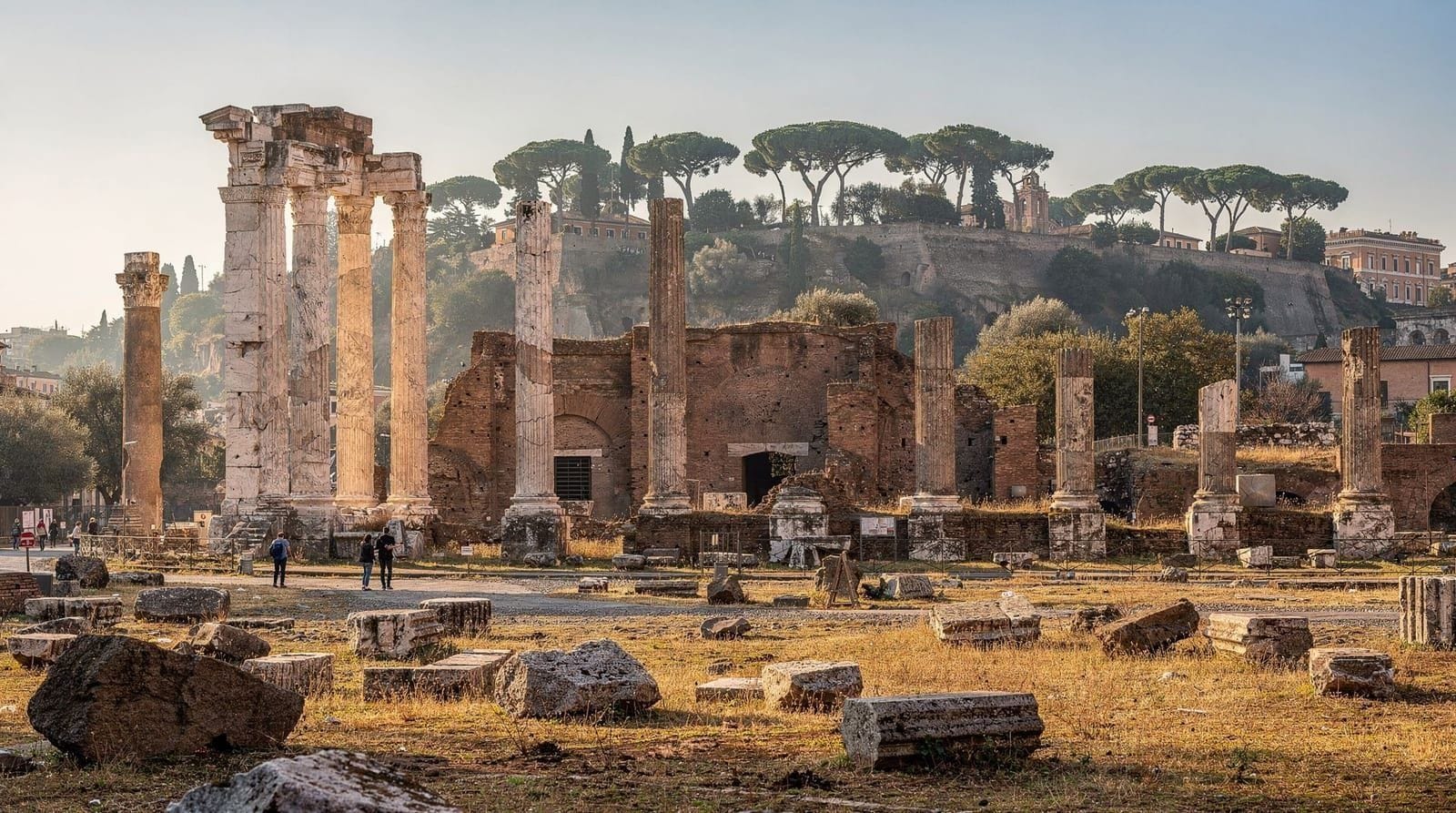
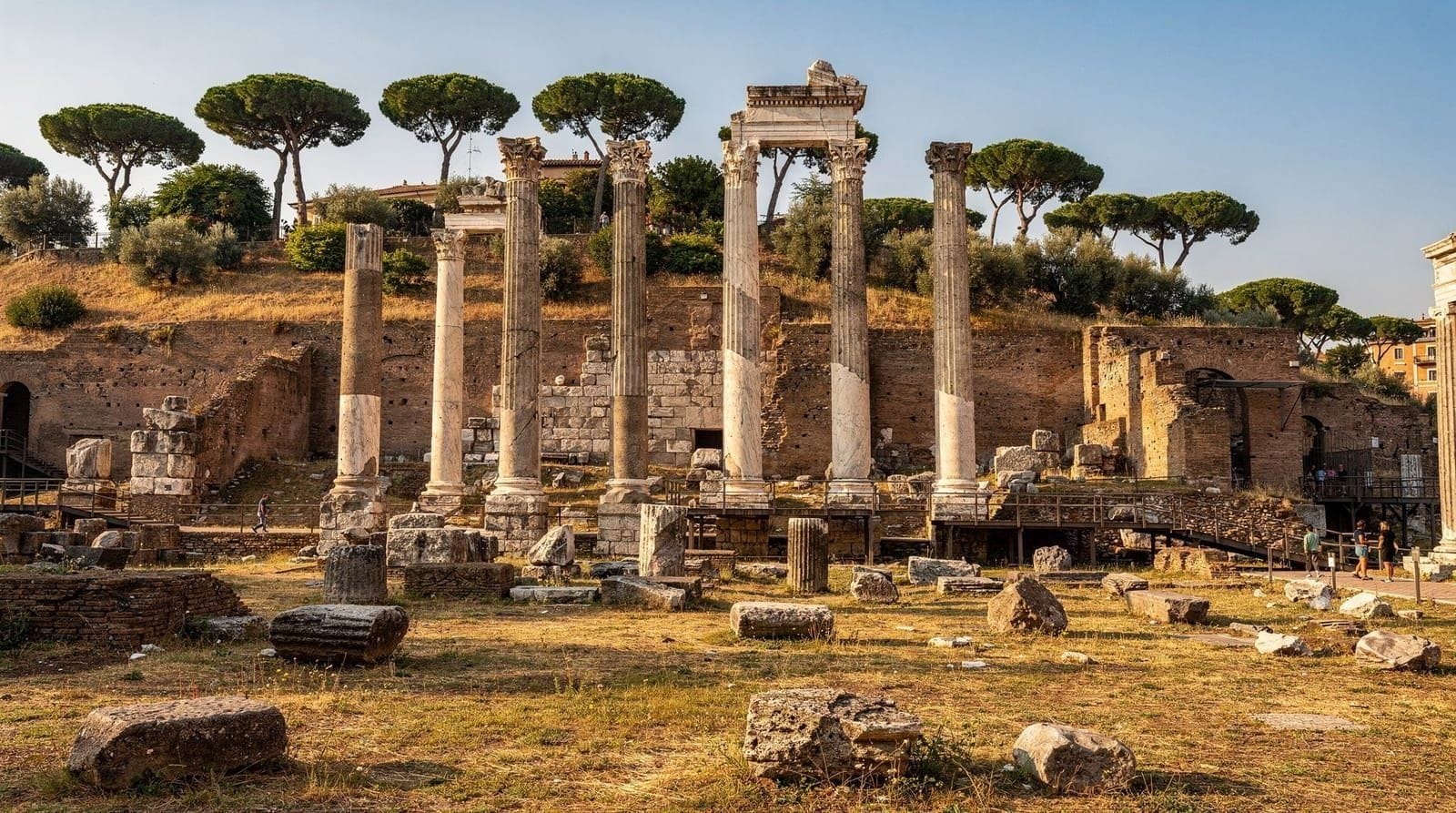
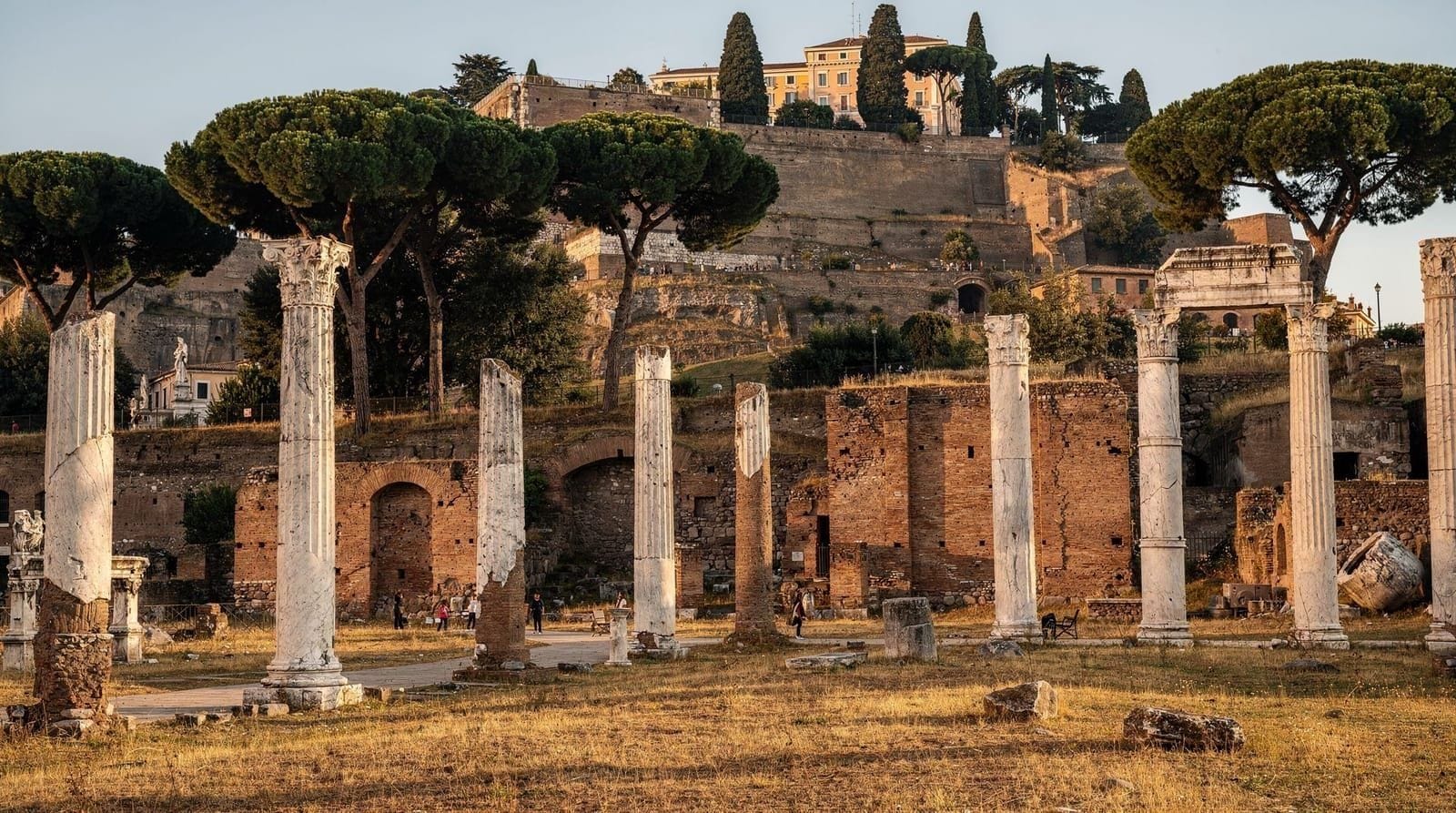
The Roman Forum (Foro Romano) is the most historically significant public space in Western history, and also the most confusing to navigate. Unlike the Colosseum, which presents itself clearly as a building, the Forum is a layered accumulation of temples, basilicas, arches, and infrastructure from multiple centuries, partially standing and partially reduced to column stumps and platform foundations. Without context, it can feel like an undifferentiated field of old stones.
A few reference points help enormously:
Via Sacra: The main processional road running east-west through the Forum, along which triumphant Roman generals led their armies. You walk this road from the Arch of Titus (82 CE, commemorating the destruction of Jerusalem in 70 CE) at the east end toward the Arch of Septimius Severus (203 CE) at the west end. Everything between these arches is the Forum.
Temple of Saturn: The eight surviving columns at the northwest corner of the Forum mark one of Rome’s oldest temples (dedicated 498 BCE; the standing columns are 4th-century reconstructions). The Roman treasury was housed beneath it.
Basilica of Maxentius (Basilica of Constantine): The enormous barrel-vaulted brick arches near the east end of the Forum — three massive cofferred naves rising to 40 metres — are the remains of a basilica begun by Maxentius in 308 CE and completed by Constantine. The scale is the clearest surviving indicator of how ambitious late Roman public architecture was.
Temple of Vesta and House of the Vestal Virgins: The circular temple (partially reconstructed) and the adjacent courtyard-house where Rome’s Vestal Virgins lived and maintained the city’s sacred flame for nearly 1,000 years. One of the most emotionally resonant spots in the Forum.
Arch of Titus: The best-preserved triumphal arch in Rome, showing interior reliefs of soldiers carrying the Menorah and other Jewish Temple treasures from Jerusalem after the 70 CE siege. Controversial and historically significant in equal measure.
The guide to the Roman Forum covers the complete site layout, best walking sequence, and historical context.
Palatine Hill: the birthplace of Rome
The Palatine Hill (Palatino) is simultaneously a comfortable extension of the Forum visit and, at the archaeological level, one of the most important sites in Rome. According to tradition it is where Romulus founded the city in 753 BCE. In the historical record it is where Augustus, Domitian, and Septimius Severus built their successive imperial palaces — stacked on top of each other across 400 years of Roman imperial power.
What you see today: the substantial ruins of Domitian’s palace (Domus Augustana, built 81–92 CE), the earlier House of Augustus, the House of Livia (Augustus’s wife) with some of the best-preserved Republican-era frescoes in existence, the Farnese Gardens (a 16th-century botanical garden installed over Tiberius’s palace by the Farnese family), and panoramic views in multiple directions — down into the Forum, toward the Circus Maximus valley, and across to the Aventine hill.
The Palatine Museum (Museo Palatino) at the hill’s summit displays finds from 150 years of excavation: early Iron Age hut-floors from the 8th century BCE, pottery, architectural fragments, and frescoes. Included in the combined ticket.
Time needed: Allow a genuine 60–90 minutes for the Palatine. Many visitors rush through it after the Forum; this is a mistake. The Farnese Gardens section at the top offers shade, benches, and the best views. See the Palatine Hill guide for full details.
Understanding the ticket system: common traps and clarity
Colosseum ticketing confuses first-time visitors because of the number of ticket types and the multiple booking channels. A quick breakdown:
Standard combined ticket (€18 + €2 fee): Covers Colosseum + Forum + Palatine. Valid 24 hours. This is the baseline ticket most visitors need. Arena floor and underground are NOT included.
With arena floor access (approximately €24–28): Adds access to the arena floor level — standing where gladiators stood, looking up at the tiers. This is a meaningful upgrade for history enthusiasts.
With underground hypogeum (€28–35 depending on provider): The hypogeum is the network of subterranean passages beneath the arena floor, where animals were kept in wooden cages operated by trapdoor mechanisms, and gladiators waited before combat. This requires a guided tour and is the most atmospheric option.
Night tours (€40–60+): Special after-hours access; genuinely different experience.
Roma Pass: The 72-hour Roma Pass (€52) includes one free site of your choice — many use it for the Colosseum. You still must book a timed entry slot on coopculture.it. The pass also covers unlimited public transport and discounts at other museums.
For detailed analysis of whether a Roma Pass makes financial sense for your trip, see Roma Pass guide.
Warning on third-party resellers: Search results for “Colosseum tickets” surface multiple third-party sites charging €30–45 for tickets that cost €18–20 official. These sites are not illegal but they charge inflated fees. Always book direct at coopculture.it or through a GYG-listed operator whose markup is transparent.
Crowds by season: when to actually go
The Colosseum district is Rome’s single most-visited area, so timing matters more here than almost anywhere else in the city.
| Months | Crowd level | Notes |
|---|---|---|
| Apr–May | High | Peak season begins; book 6–8 weeks ahead |
| Jun | Very high | School groups + summer tourists overlap |
| Jul–Aug | Very high, extreme heat | Midday is genuinely punishing; first or last slot essential |
| Sep–Oct | High but slightly easing | Arguably the best balance of weather and crowd |
| Nov–Mar | Lower | Shortest queues; some Domus Aurea conservation closures more likely |
Even in the “quiet” winter months, the Colosseum sees meaningful crowds — it never truly empties the way smaller sights do. The 9:00 first-entry slot and the 15:30–17:00 late-afternoon window remain the two most reliable low-crowd options in any season, and they matter more than the month you choose.
The Arch of Constantine: Rome’s largest surviving triumphal arch
Standing between the Colosseum and the start of the Palatine Hill, the Arch of Constantine (315 CE) is easy to walk past quickly on the way to the amphitheatre, but it rewards a few extra minutes. At 21 metres high, it’s the largest of Rome’s surviving triumphal arches, built to commemorate Constantine’s victory over Maxentius at the Battle of the Milvian Bridge in 312 CE — the battle after which Constantine, according to tradition, saw a vision that led to his support for Christianity.
What makes the arch art-historically interesting is that much of its relief sculpture was reused (spolia) from earlier monuments of Trajan, Hadrian, and Marcus Aurelius, a century or more older than the arch itself. Art historians have long debated whether this reuse reflects a decline in contemporary sculptural skill in the early 4th century, or a deliberate political statement linking Constantine to Rome’s “good emperors.” Either reading is worth knowing before you look at the arch’s mismatched sculptural styles up close — the older reused panels are noticeably more refined than the Constantinian-era friezes.
Entry is free — the arch sits on public land between the Colosseum and the Forum’s Via Sacra entrance, visible (and photographable) without a ticket at any hour. It’s also one of the least crowded good photo spots in the entire district — most visitors walk straight past it toward the Colosseum ticket queue, leaving the arch itself with only a fraction of the foot traffic just metres away.
Accessibility notes for this district
The Colosseum itself has been substantially adapted for step-free access: ramps and a lift provide access to the main visitor level, and accessible routes are signposted from the entrance. The Roman Forum and Palatine Hill are considerably more challenging — much of the ground is uneven ancient paving, gravel path, or exposed tree roots, and the Palatine in particular involves genuine gradient. Wheelchair users and visitors with mobility limitations should contact coopculture.it in advance for the current accessible-route map, as it’s periodically revised as excavation work continues.
The Domus Aurea’s guided tours involve some stairs and uneven underground surfaces and are not fully step-free. The Celio hill churches vary — Santo Stefano Rotondo and San Gregorio Magno have level entrances; Santi Quattro Coronati’s cloister has some stepped sections.
History in 5 minutes: the Colosseum’s 2,000-year career
72–80 CE: Construction under Vespasian and completed by Titus. The inauguration games reportedly lasted 100 days and killed 5,000 animals. Not a legend — large-scale animal hunts (venationes) were a primary programme item for the first century of operation.
1st–4th century CE: Regular gladiatorial games, venationes, public executions, mock naval battles (the floor was once flooded). Capacity ~50,000–70,000 spectators, seated by social class.
404 CE: Honorious officially ended gladiatorial combat (though it had already been declining). Animal hunts continued longer.
7th–14th century: Abandoned as a monument; used as housing, then as a fortress by the Frangipane family. The earthquake of 1349 collapsed the southeast exterior wall — the side you see “missing” today.
15th–18th century: Systematic quarrying for building material (travertine blocks, iron clamps) — for St. Peter’s, Palazzo Venezia, and other Renaissance projects. Approximately 60% of original material removed.
1749: Pope Benedict XIV declared the Colosseum sacred ground (in memory of Christian martyrs), effectively halting quarrying. The “Christian martyrs in the Colosseum” story is historically uncertain — there is no contemporary documentation of Christian executions there — but the consecration preserved what remained.
19th–20th century: Excavation, restoration, and the first systematic archaeological work.
Today: ~7.5 million visitors per year, making it the most visited monument in Europe.
Frequently asked questions about the Celio & Colosseum district
Do I need to book the Colosseum in advance?
Yes, always. Timed-entry tickets are mandatory and sell out weeks ahead during April–October. Same-day availability is rare. Book on the official Colosseo ticketing site (coopculture.it) or through a reputable operator. Even Roma Pass holders must reserve a slot.
What does the combined ticket include?
The standard combined ticket (€18 + €2 booking fee) covers the Colosseum, Roman Forum, and Palatine Hill. It is valid for 24 hours from first use — you do not need to visit all three on the same day. Arena floor and underground hypogeum access cost extra.
How much time do I need for the Colosseum?
The Colosseum interior takes 60–90 minutes for a self-guided visit. Add the Roman Forum (60 min) and Palatine Hill (60 min) and you have a full half-day. The Domus Aurea, if included, takes another 90 minutes with travel time.
Is the Domus Aurea worth visiting?
Yes, especially for history and architecture enthusiasts. The underground rooms are extraordinary and genuinely uncrowded. The main caveat: check opening dates before planning, as conservation work closes it periodically for months at a time. Confirm at the official site before adding it to your itinerary.
What are the gladiator photo scammers near the Colosseum?
Men in replica Roman armour stationed near the main entrance. They offer photos for what sounds like a small fee, then demand €10–20 aggressively. Do not engage, do not make eye contact. This has been an ongoing issue for years; it is not a cultural experience.
Is the Celio hill worth visiting?
Yes, if you have time. The Celio plateau is one of Rome’s genuinely quiet spots a 5-minute walk from the Colosseum crowds. The churches — particularly Santi Quattro Coronati and Santo Stefano Rotondo — are historically significant, architecturally unusual, and almost entirely tourist-free.
Is the Colosseum accessible for wheelchair users?
The Colosseum itself has ramps and a lift to the main visitor level and is reasonably accessible. The Roman Forum and Palatine Hill are considerably harder going, with uneven ancient paving and, on the Palatine, real gradient. Contact coopculture.it in advance for the current accessible-route details before planning around a specific mobility need.
What is the best month to visit the Colosseum with smaller crowds?
November through March sees the lowest crowds, though the site never truly empties given its status as Europe’s most visited monument. September and October offer a good balance of mild weather and slightly eased summer crowds. In any month, the 9:00 first-entry slot and the 15:30–17:00 window remain the most reliable ways to avoid the worst of the crowds.
Top experiences
Bookable activities with verified prices and instant confirmation on GetYourGuide.