Gluten-free and dietary-needs dining in Rome: a practical guide
Trastevere: Food and Drink Tour
Is Rome a good city for gluten-free travellers?
Better than you might expect. Italy has one of the highest rates of diagnosed coeliac disease in Europe, which means genuine gluten-free awareness exists in the restaurant industry. Many restaurants — especially mid-range trattorias — can prepare gluten-free pasta on request. Look for the 'spiga barrata' (crossed grain) certification symbol or ask for the menu senza glutine (without gluten). The key challenge is cross-contamination in kitchens where wheat flour is used heavily — ask specifically about this if your condition is severe.
| Best for | Coeliac and gluten-free travellers (Italy has strong medical awareness) |
| Hardest diet | Strict vegan (Roman cuisine leans on egg pasta, cheese, guanciale) |
| Key phrase | ”Sono celiaco/a” — establishes seriousness immediately |
| Where to look | AIC-certified spots (spiga barrata symbol), Pigneto/Trastevere for vegan |
| Booking | Mention the restriction when reserving, not on arrival |
Dietary restrictions in Rome: the realistic picture
Roman food culture is built around wheat, pork, dairy and eggs. This is not a bad thing — it’s produced one of the world’s great regional cuisines. But it means visitors with gluten restrictions, dairy allergies, vegetarian preferences or vegan diets need a practical plan rather than hoping for the best.
The good news: Italy is genuinely one of Europe’s more accommodating countries for coeliac disease specifically. The bad news: the Roman food culture’s heavy reliance on pasta means you’ll need active engagement with restaurants rather than passive browsing of any menu.
This guide covers each dietary category honestly, with specific guidance on phrases, restaurants, and the traps to avoid.
Gluten-free in Rome
The structural advantage
Italy has one of the highest rates of diagnosed coeliac disease in Europe — approximately 1 in 100 Italians is coeliac, and the condition has been managed within the national health system since the 1990s. This creates a foundation of genuine medical and culinary awareness that many other European countries lack.
The Italian Coeliac Association (AIC — Associazione Italiana Celiachia) runs a certification programme for restaurants. Establishments with the spiga barrata symbol (a crossed grain stalk) have undergone training and inspection for gluten-free protocols, including cross-contamination controls. This is the most reliable indicator of a restaurant that takes gluten-free service seriously.
Finding certified restaurants
The AIC website (celiachia.it) has a searchable database of certified restaurants by city and neighbourhood. For Rome, there are dozens of certified options across the historic centre, Trastevere and Prati. Always cross-reference with current online reviews, as certifications can lapse and kitchens change.
Non-certified restaurants can still be safe — many mid-range trattorias in Rome have gluten-free pasta and good awareness. The difference is that certified restaurants have been audited; non-certified ones haven’t. For medically serious cases, certification matters more.
Gluten-free pasta: the practical situation
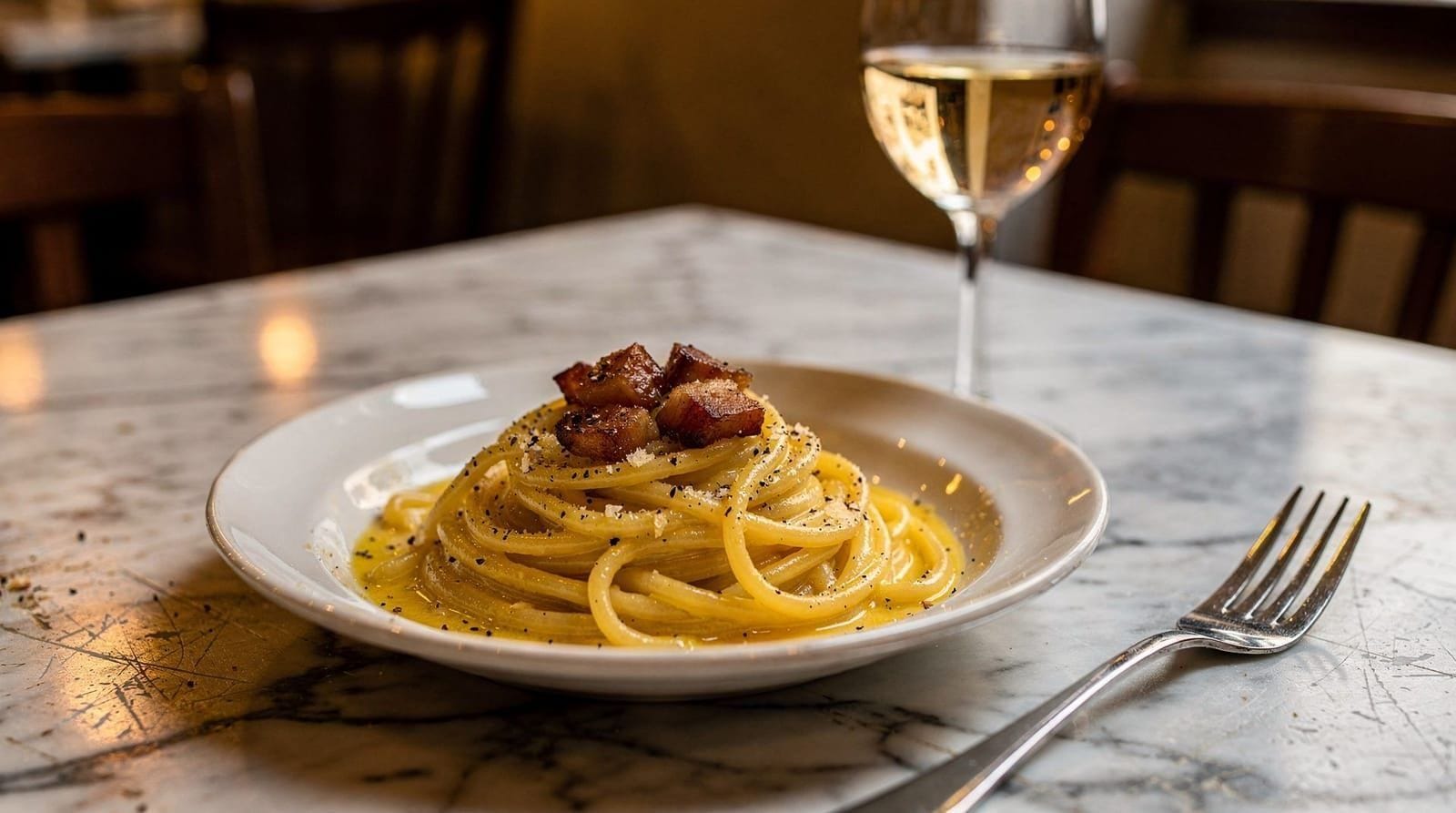
The Roman pasta tradition is the central challenge for coeliac visitors. Cacio e pepe, carbonara, amatriciana, gricia — all of these can theoretically be made with gluten-free pasta, and many restaurants in Rome now offer this. The questions to ask:
- Do you have gluten-free pasta (avete pasta senza glutine)?
- Is it cooked in separate water from wheat pasta (è cotta in acqua separata)?
- Are the sauces made without flour or wheat ingredients (i sughi sono senza farina di grano)?
The third question matters because some sauces — particularly meat-based ragù — are occasionally thickened with a small amount of flour. Most aren’t, but confirming costs nothing.
Gluten-free pizza
Many pizzerias offer gluten-free bases. The range in quality is wide. A well-made gluten-free pizza base should be:
- Made from rice, corn or chickpea flour (not a spongy premix)
- Baked on a dedicated stone or in a dedicated area
- Handled with clean equipment not shared with wheat dough
Gino Sorbillo (Via dei Tribunali, Naples, and several Rome locations) offers gluten-free as a standard menu option with reasonable protocols. Several neighbourhood pizzerias in Rome now stock gluten-free bases but the contamination procedures vary — always ask.
Gluten-free friendly options that require no modification
Roman food has a substantial naturally gluten-free repertoire:
- All grilled meat and fish (without breading)
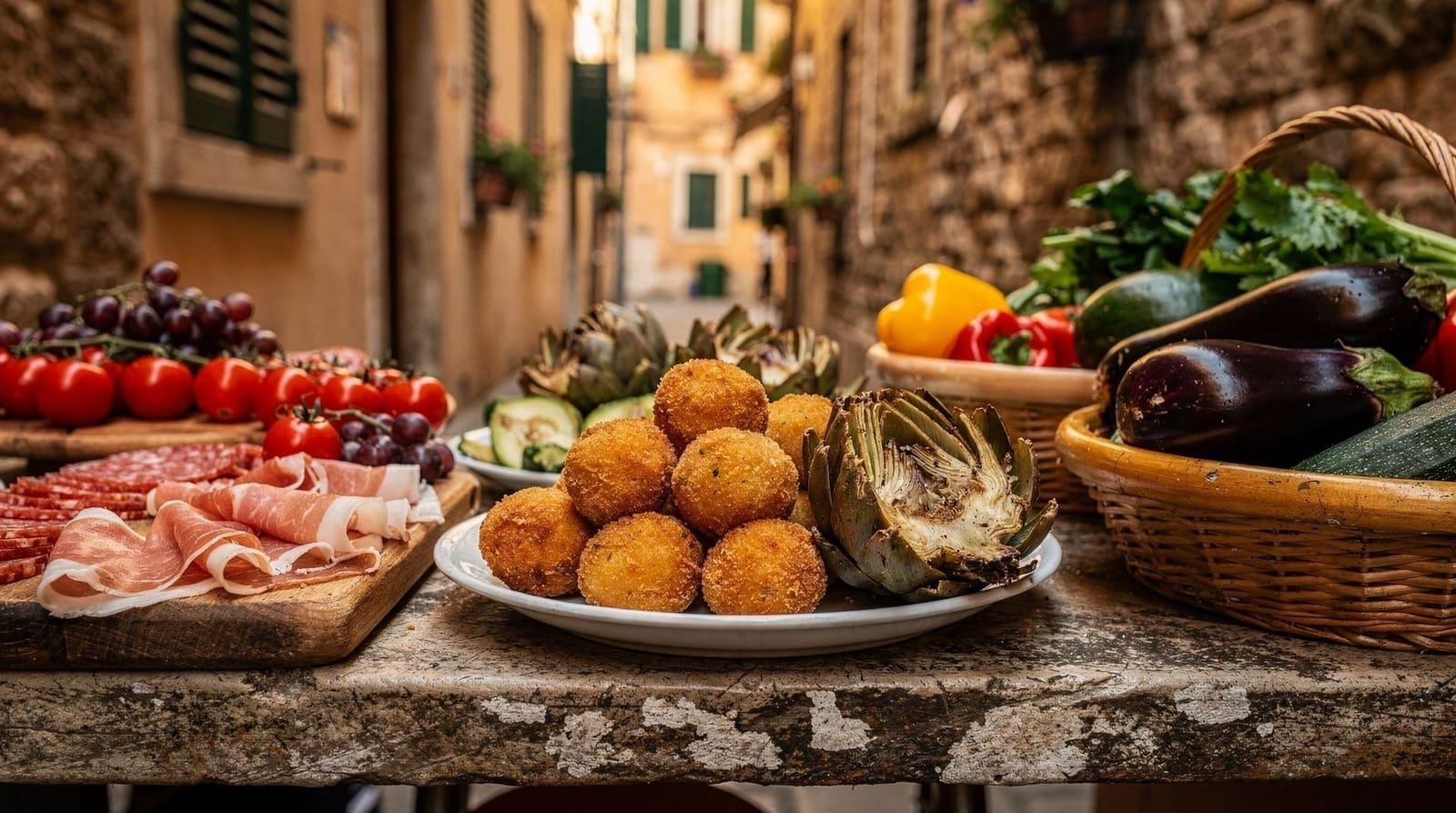
- Carciofi alla romana (braised artichoke — check for flour in the braising liquid, which some restaurants add, but it’s not traditional)
- Carciofi alla giudia (deep-fried artichoke — ask whether the frying oil is shared with breaded items)
- Cicoria ripassata (sautéed chicory with garlic and olive oil) and most cooked vegetable sides
- Rice and polenta dishes (where available)
- Most legume dishes (pasta e ceci requires checking whether the pasta is wheat or other grain)
- Most Italian cheeses and cured meats
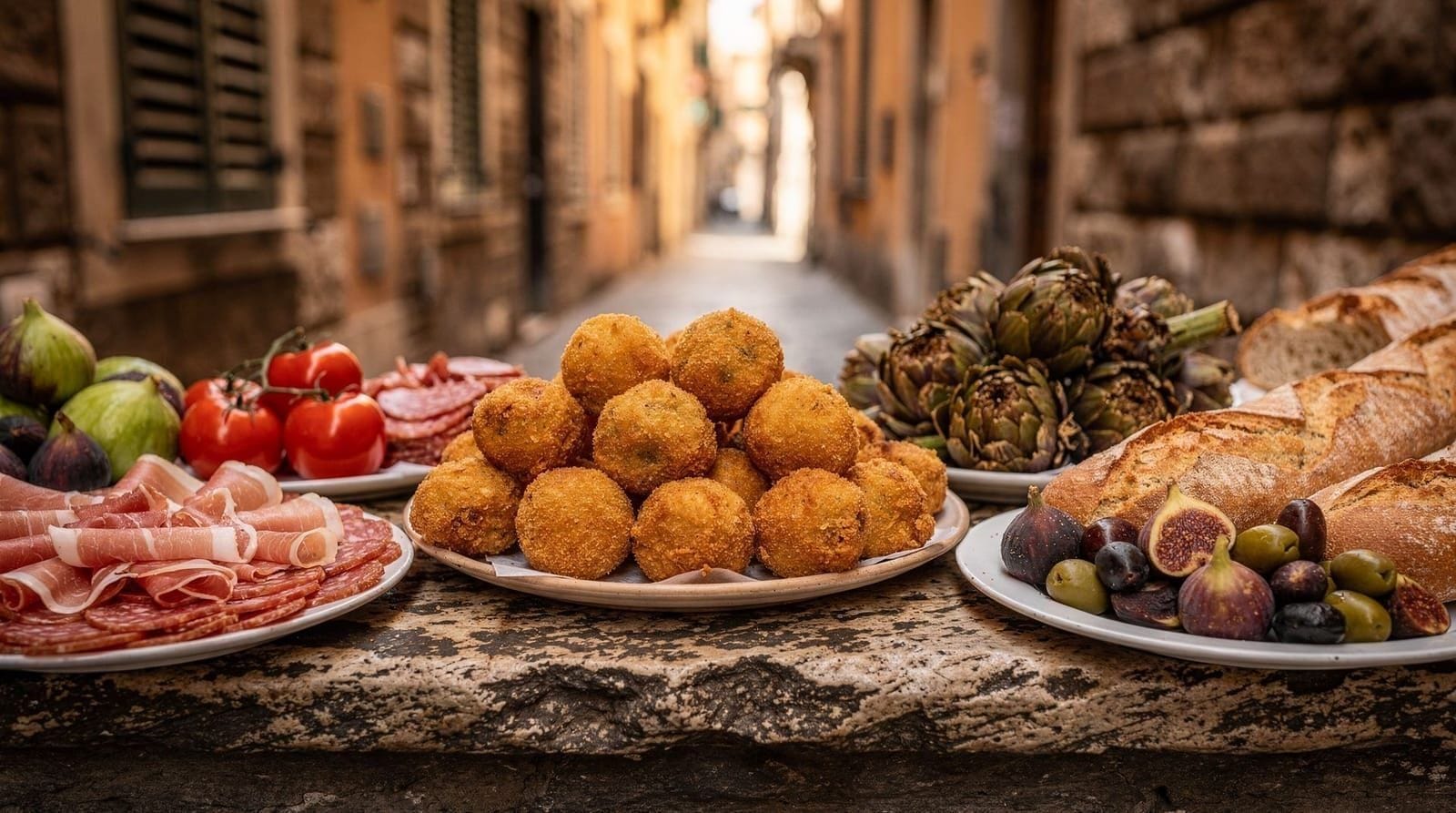
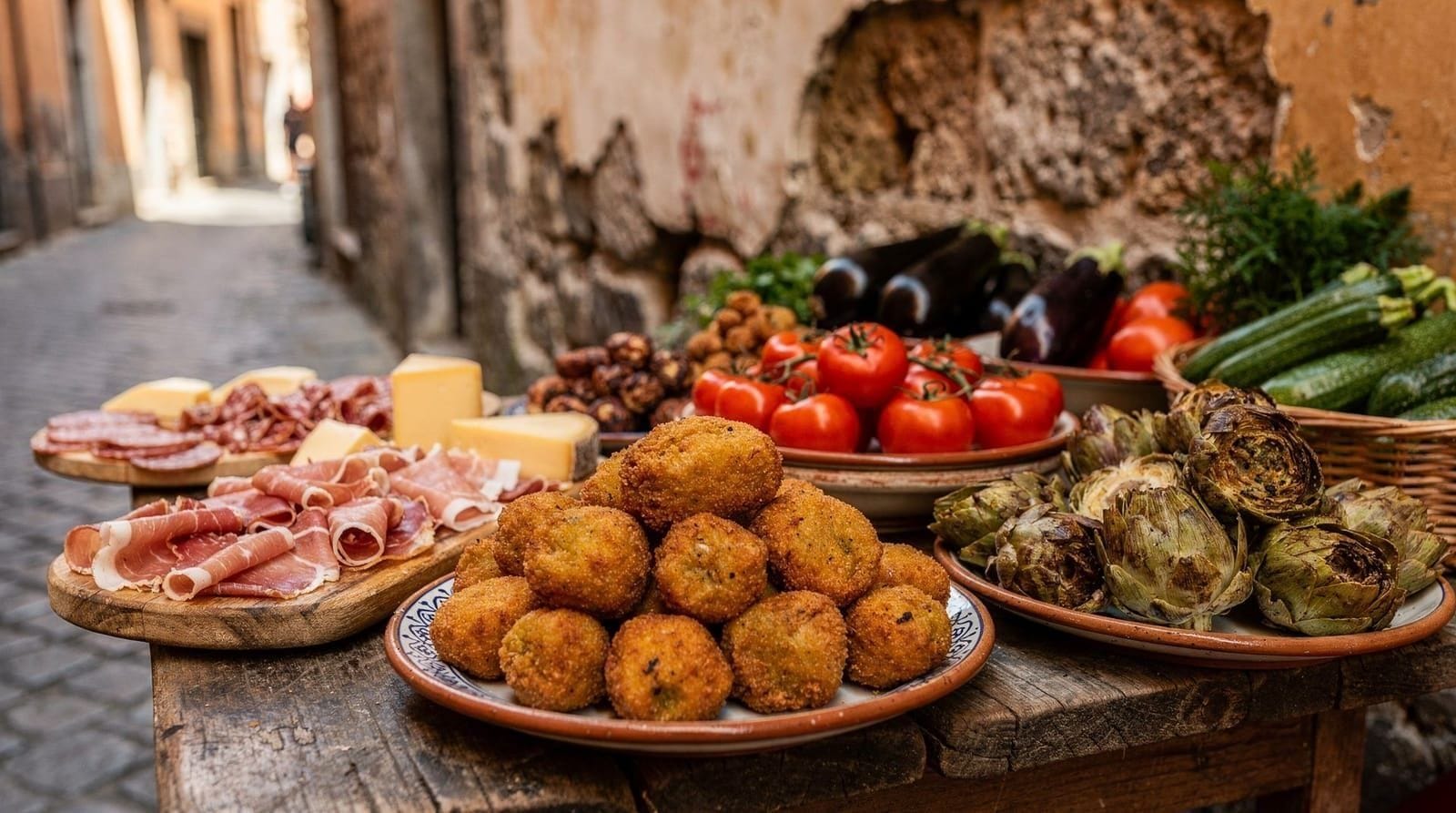
Supplì (fried rice balls) are generally coated in breadcrumbs — avoid unless the restaurant has a confirmed gluten-free version.
Cross-contamination: the critical question
For medically diagnosed coeliac disease — not gluten intolerance, but true coeliac — cross-contamination is the issue that determines whether you’re safe, not whether a gluten-free menu item exists. A Roman kitchen uses wheat flour constantly: in pasta water (which proteins can persist in for long periods), in dusting surfaces, in shared fryers, on shared utensils. “We have gluten-free pasta” is not the same as “we have a safe kitchen for coeliac diners.”
Ask specifically: ‘C’è rischio di contaminazione crociata nel vostro ristorante?’ (Is there a risk of cross-contamination in your restaurant?). A restaurant that pauses, checks with the kitchen and gives you a specific answer is better than one that says ‘no, no problem’ immediately without thought.
For the most serious cases, AIC-certified restaurants are the safest option. Their protocols have been independently verified.
Vegetarian dining in Rome
Roman food is meat-forward but not meat-exclusive. The vegetable tradition here is strong — artichokes prepared two ways, chicory family vegetables (cicoria, puntarelle, catalogna), seasonal courgettes, broad beans in spring, pumpkin in autumn. Pasta sauces include excellent non-meat options: aglio e olio (garlic and olive oil), arrabbiata (tomato and chilli), cacio e pepe (cheese and pepper), primavera (seasonal vegetables).
The challenge is that the four canonical Roman pastas — cacio e pepe, gricia, carbonara, amatriciana — all use guanciale. Cacio e pepe is the easiest to have meat-free (it’s essentially just cheese and pepper) and many restaurants will make it without issue. The others require ingredient substitution, which good kitchens can accommodate but which purists will note changes the dish.
For vegetarians, the practical strategy is:
- Order cacio e pepe (naturally meat-free)
- Ask about the antipasto options — most trattorias have seasonal vegetables, cheeses and bruschetta
- Look for daily specials that include vegetable-based secondi (carciofi, verdure grigliate, legumes)
- In the Jewish Ghetto, the Roman-Jewish tradition has a particularly strong vegetable base — Nonna Betta and Ba’Ghetto both have substantial vegetable options
Most trattorias can produce a satisfying vegetarian meal without the meat courses. The pasta and vegetable sides are the core of the meal; you’re not missing the architecture of Roman food, just one component.
Vegan dining in Rome
Vegan dining in Rome requires more active engagement than vegetarian. The issue is not just meat: pasta uses eggs, Roman bread is often brushed with egg, cheeses are everywhere and even some vegetable dishes are finished with lard.
What works well:
- Pizza bianca (Roman flatbread) is typically made with olive oil, water, flour and salt — naturally vegan
- Grilled or roasted vegetables without cheese or butter finishing
- Most bean and legume dishes
- Bruschetta without cheese
- Most fruit-based desserts (sorbetto rather than gelato)
- Most dried pasta sauces made with tomato, vegetables and olive oil
Reliable vegan restaurants: The dedicated vegan and plant-based restaurant scene in Rome is concentrated in Pigneto (east of the centre), Trastevere side streets and the Ostiense area. Apps like HappyCow and Google Maps with “vegan Rome” filter show them reliably. Several have opened since 2020 and reflect a real shift in Rome’s food culture.
Supermarkets: Rome’s supermarkets (Conad, Esselunga, Pam) stock a reasonable range of plant-based products. Buying breakfast and lunch supplies from a supermarket and eating one restaurant dinner is a practical strategy for strict vegan visitors who find Roman menus limiting.
Nut allergies
Nut allergies are less systematically managed in Italian restaurants than coeliac disease. The challenge is that pine nuts appear in many traditional preparations (pesto, some meat fillings, some dolci), and almonds are common in biscotti and some pastries. Restaurants are not uniformly aware of cross-contamination risks for nut allergies.
The practical advice: communicate your allergy clearly, ask specifically what’s in the dish you’re ordering and err toward simple preparations (grilled meat or fish, plain pasta with a basic sauce) where the ingredients are more controlled.
Dairy-free dining
Most Roman pasta classics rely on pecorino romano or parmigiano reggiano. Carbonara requires cheese and egg. Cacio e pepe is literally cheese and pepper. Finding dairy-free options at traditional Roman trattorias means working through the meat and fish secondi (check for butter finishing) and the vegetable sides (chicory, artichokes, grilled courgette are typically dairy-free).
Gelato made with a sorbetto base (fruit-based, no dairy) is widely available at any gelato shop — ask specifically for the sorbetti, which are labeled separately. The lemon, strawberry and melon sorbetti are typically dairy-free.
Guided food experiences with dietary restrictions
If you’re navigating dietary restrictions and want a guided food experience, communicate requirements when booking. The better operators can accommodate gluten-free and vegetarian participants. The key is advance notice — a guide who knows your restriction before arrival can plan the stops; one who finds out at the first tasting is working around it on the fly.
The Trastevere food and drink tour can typically accommodate vegetarian participants with advance notice — contact the operator at booking to confirm and note dietary requirements explicitly.For cooking classes with dietary restrictions, advance communication is even more important — a pasta class assumes you’re making egg pasta, so a vegan participant needs an adjusted format. Some operators offer this; others don’t.
The fettuccine, ravioli and tiramisu class can accommodate gluten-free requests at some sessions — contact the operator in advance and specify whether it’s a strict coeliac requirement or a preference, as this affects the preparation protocol.Ease of dining out: a quick comparison
Not every dietary need is equally well served by Roman restaurant culture. This is the honest ranking, from easiest to hardest:
| Diet | Difficulty in Rome | Why |
|---|---|---|
| Coeliac / gluten-free | Easier than expected | AIC certification system, genuine medical awareness, gluten-free pasta widely available |
| Vegetarian | Moderate | Strong vegetable tradition, but the four canonical pastas all use guanciale |
| Pescatarian | Easy | Rome’s fish and seafood secondi are excellent and naturally exclude the coeliac’s usual pasta problem |
| Dairy-free | Moderate–hard | Pecorino and parmigiano are structural to Roman cooking, not garnish |
| Vegan | Hardest | Egg pasta, cheese and lard appear even in dishes that look plant-based |
| Nut allergy | Moderate | Less systematically managed than coeliac disease; requires active questioning |
Egg and shellfish allergies
These two allergies are less well catered for than coeliac disease, mostly because Italian restaurants have not organised around them the way they have around gluten. Egg allergy is a genuine problem in Rome specifically because fresh pasta — the base of carbonara, cacio e pepe (sometimes), fettuccine and tagliatelle — is often egg-based, unlike the dried durum-wheat pasta used for spaghetti and penne, which is usually egg-free. Ask ‘è fatta con le uova?’ (is it made with eggs?) before ordering any fresh pasta dish. Shellfish allergy is more manageable: Roman cuisine is not shellfish-heavy outside specific seafood restaurants, so avoiding shellfish dishes is usually straightforward, but cross-contact in a shared fryer (for fritto misto) is a real risk — ask if the frying oil is shared.
Where to eat: neighbourhoods that handle dietary needs best
Not all of Rome is equally accommodating. Trastevere and the areas around it have the highest concentration of dietary-aware kitchens, plus a growing vegan scene documented in the Trastevere food guide. Testaccio, covered in the Testaccio food guide, has fewer dedicated free-from menus but a strong culture of made-to-order trattorias willing to adapt a dish on request. The Monti neighbourhood and the area around Campo de’ Fiori (see the market guide) have a reasonable spread of AIC-certified restaurants within walking distance of the historic centre, useful if you are staying centrally and don’t want to travel across the city for a safe meal.
Key phrases for dietary communication
| Situation | Italian phrase |
|---|---|
| I am coeliac | Sono celiaco (m) / celiaca (f) |
| I need gluten-free | Ho bisogno di cibo senza glutine |
| Do you have a gluten-free menu? | Avete un menu senza glutine? |
| I am vegetarian | Sono vegetariano (m) / vegetariana (f) |
| I am vegan | Sono vegano (m) / vegana (f) |
| I am allergic to nuts | Sono allergico/a alle noci |
| No dairy | Senza latticini |
| Cross-contamination risk? | C’è rischio di contaminazione crociata? |
| What’s in this dish? | Cosa c’è in questo piatto? |
Further food guides for context
Understanding Roman food broadly makes navigating dietary restrictions easier — you know what to expect on a menu and what questions to ask. The Roman pasta food tour guide covers the pasta tradition. The where to eat in Rome guide provides neighbourhood-by-neighbourhood restaurant guidance. The Trastevere food guide and Testaccio food guide map the best neighbourhoods for honest eating, where you’re also more likely to find restaurants willing to accommodate specific requests than in the tourist-facing operations near the major sights.
For dietary-restricted visitors who want guided food context without having to navigate the language barrier independently, the Trastevere secret food tour uses local guides who know which spots can accommodate specific needs — worth contacting in advance to confirm what they can arrange.Frequently asked questions about Gluten-free and dietary-needs dining in Rome: a practical
What is the Italian phrase for gluten-free?
Do Italian restaurants understand coeliac disease?
Can I get gluten-free pizza in Rome?
Are there naturally gluten-free Roman dishes?
What about cross-contamination in Roman kitchens?
Is Rome suitable for vegetarians?
Is Rome suitable for vegans?
What should I tell a restaurant to get reliable gluten-free service?
Is an egg allergy a serious problem in Rome?
Which Rome neighbourhoods are most dietary-need friendly?
Top experiences
Bookable activities with verified prices and instant confirmation on GetYourGuide.