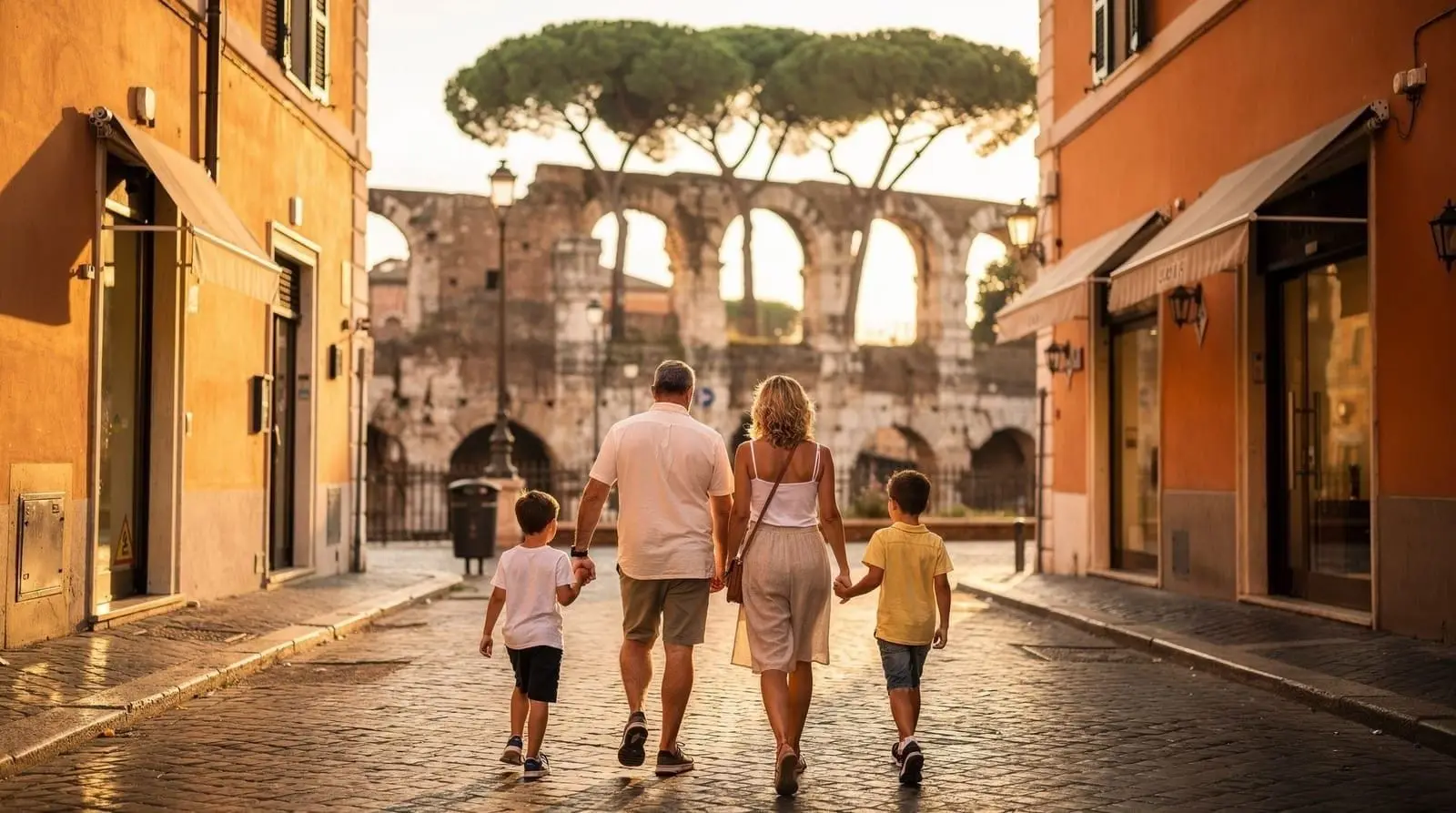
Rome with toddlers and babies: strollers, naps and survival
Rome: City Sightseeing Hop-on Hop-off Bus with Audioguide
Is Rome manageable with a baby or toddler?
Yes, but it requires adjusting expectations. Cobblestones (sampietrini) make stroller navigation genuinely hard in most of the centro storico — a compact travel stroller or baby carrier is essential. Babies under 2 are free everywhere. The best strategy with very young children is shorter daily outings, choosing a walkable base in Prati or near Villa Borghese, and treating the city as the experience rather than trying to tick off major monuments.
The honest truth about Rome with very young children
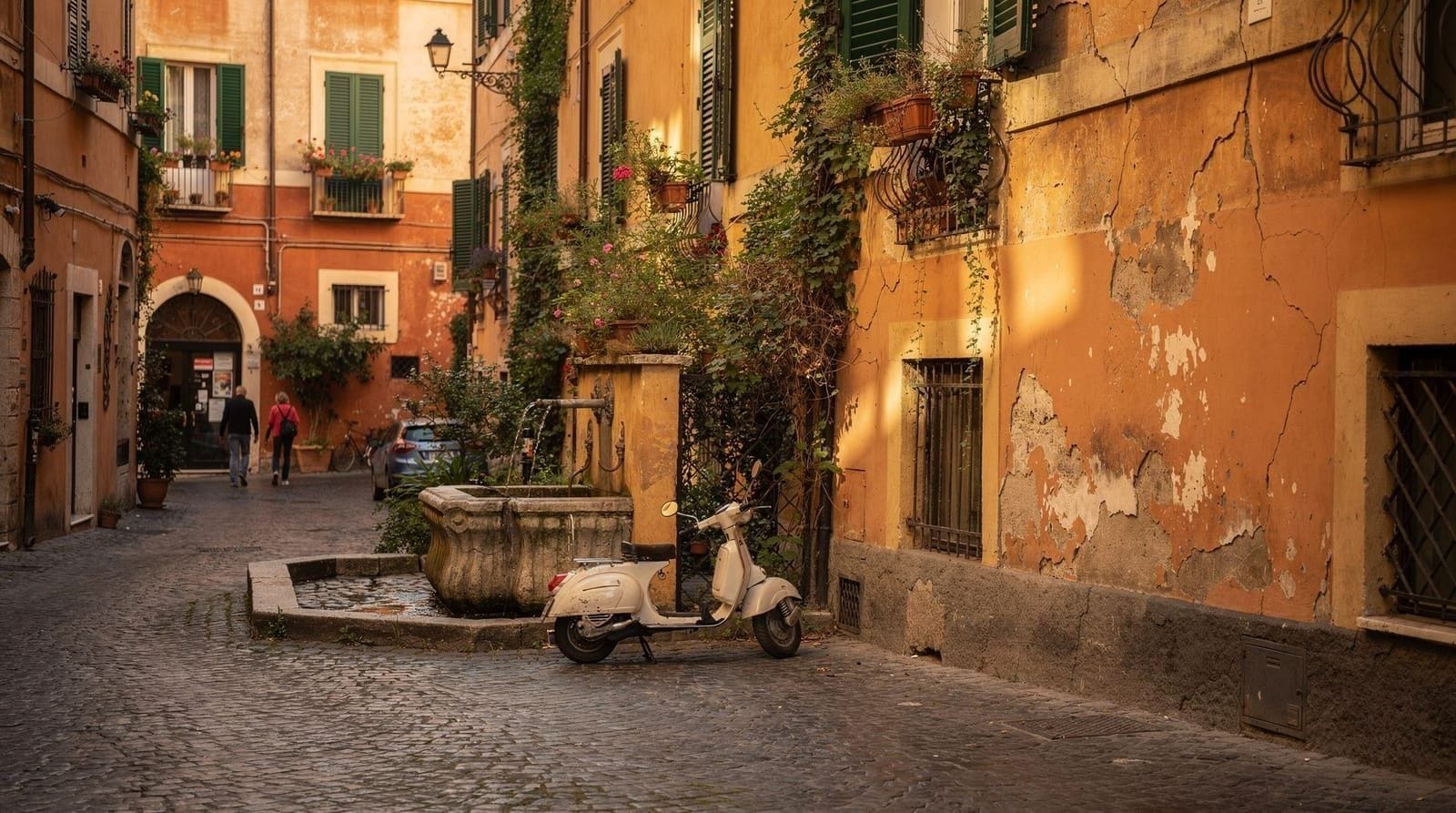
Rome is not designed for strollers. The sampietrini — the traditional square cobblestones that cover most of the historic centre — are beautiful, ancient, and deeply inconvenient for anything with small wheels. The metro has lifts at very few stations. Many of the most photographed streets involve steps, slopes, and narrow passages.
None of this means you cannot visit Rome with a baby or toddler. Thousands of families do so every year and have a genuinely good time. But it means going in with accurate information rather than the impression that Rome is a stroller-friendly European city on the model of Amsterdam or Copenhagen. It is not. It is Rome.
This guide addresses the practical reality of navigating the city with a child under 3.
| Where to stay | Prati or near Villa Borghese — flat, residential, naptime-friendly |
| Cost | Under-2s free everywhere; most other costs unchanged from a standard Rome trip |
| Time needed | Plan shorter daily outings rather than full-day itineraries |
| Getting there | Bus over metro (few lifts); carrier for cobbled side streets |
| Best time | April–May, September–October — mild enough for long park time |
The stroller situation: what actually works
Which stroller to bring
The standard advice — bring a compact travel stroller — is correct but insufficient. Here is the more specific guidance:
Wheel size matters more than stroller size. Small-wheeled umbrella strollers (under 15 cm wheel diameter) jam in cobblestone gaps and become impossible to push. What works is a compact stroller with wheels of at least 17–18 cm. The Babyzen Yoyo 2, Bugaboo Butterfly, and similar models have been specifically tested on Roman streets by travel bloggers and the consensus is positive.
A baby carrier is not optional. Even with the right stroller, there will be moments — a flight of steps, a steep cobbled alley, a packed metro car — where a carrier is the only practical solution. Bring one regardless of the stroller you choose. A structured carrier (Ergobaby 360, Tula Standard, or similar) for longer carries; a ring sling or stretchy wrap for quicker transfers.
Checking a large travel system at the airport and using only a carrier in Rome is an underrated option that experienced Rome-with-baby travellers occasionally recommend. A 10-day Rome trip with only a carrier is entirely feasible if your baby/toddler tolerates the carrier well.
The streets by neighbourhood
Prati and Vatican area: Relatively flat, mix of paved and cobbled streets. Manageable.
Centro Storico (Pantheon, Navona, Campo de’ Fiori area): Heavy sampietrini, narrow alleys. More difficult. The main tourist paths are worn smooth in places; side streets are rough.
Trastevere: Hilly and heavily cobbled. The hardest neighbourhood in the centro for stroller users. Beautiful but genuinely exhausting.
Testaccio: Relatively flat with a mix of surface types. More manageable than Trastevere.
Monti: Mix of flat and sloped, some steps. More navigable than Trastevere.
Villa Borghese and Parioli: Excellent. The Villa Borghese park has smooth gravel and asphalt paths throughout — the most stroller-friendly major open space in Rome.
The metro question
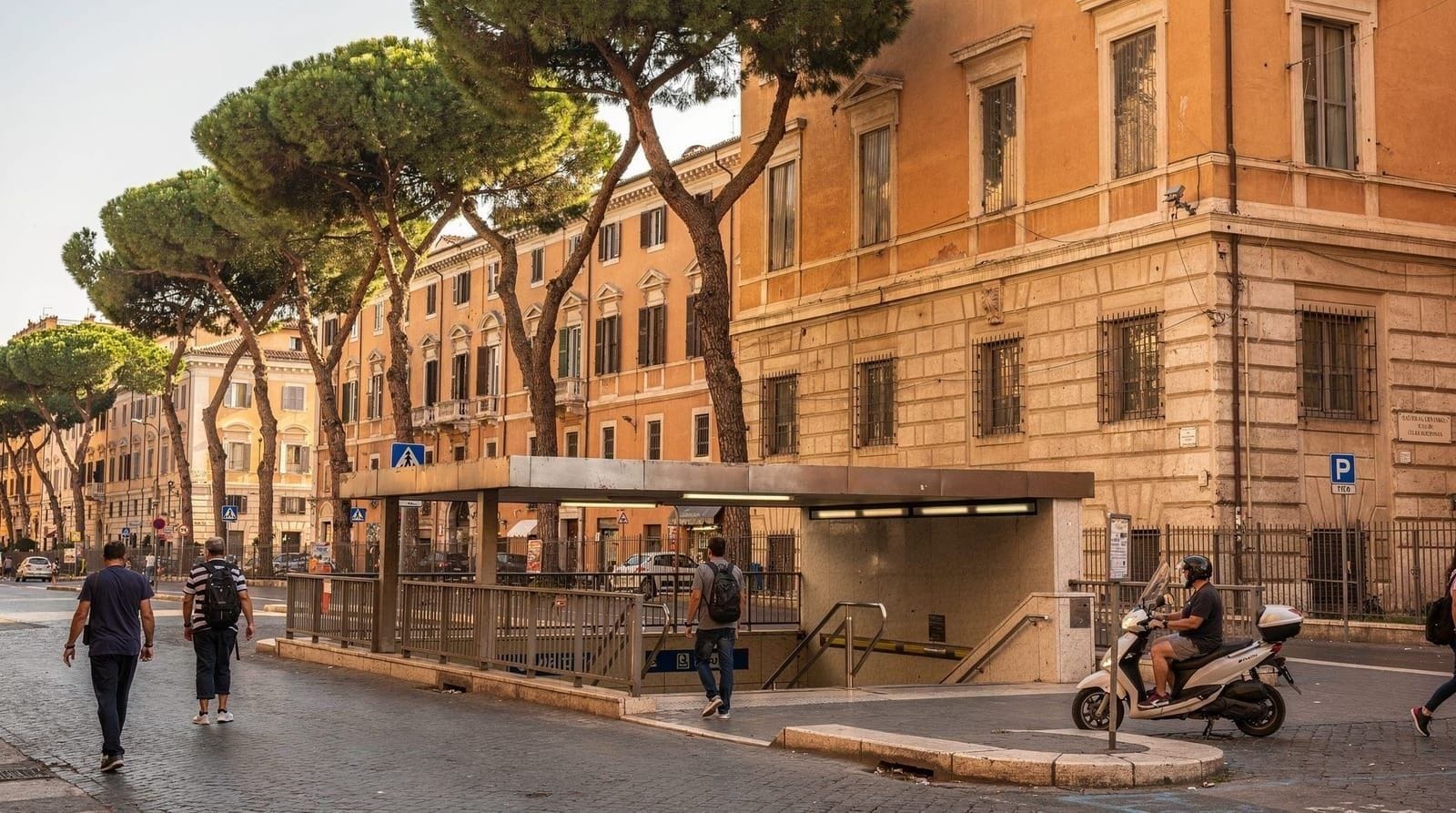
The Rome metro (lines A, B, C) has lifts at a limited number of stations. Lines B and C are more reliably equipped; Line A (which covers the tourist route from Termini through Spagna and on to the Vatican at Ottaviano) has lifts at some stations but they are frequently out of order.
Practical approach with a stroller: use the bus network rather than the metro. Rome’s buses are not air-conditioned (uncomfortable in summer) and have no dedicated stroller space, but they are street-level and do not require lifts. Bus 40 and 64 run directly to the Vatican from Termini. Trams (lines 3 and 8) have level boarding.
The hop-on hop-off bus is an option worth considering for families with young children — open-top double-decker, stops at major sights, no need to fold the stroller for every boarding.
City Sightseeing Hop-on Hop-off Bus — a practical transit option for families that reduces walking distance between major sitesNap logistics: working with Rome rather than against it
Most parents of babies and toddlers discover that forcing sightseeing through naptime is a losing battle. The alternative is building nap time into the itinerary as a positive activity rather than a disruption.
Nap strategy options:
Park naps: Villa Borghese, the Pincio terraces, Orto Botanico in Trastevere, and the Giardino degli Aranci (Aventino park) all have benches and shade. A stroller or carrier nap in a beautiful Roman park is a genuinely pleasant way for adults to sit quietly while a child sleeps.
Café naps: Roman cafes — especially those with outdoor terraces — are tolerant of families with sleeping babies. Order a coffee, let the child sleep in the pram next to the table, and have 45 minutes of relative peace. This works best in less-touristy areas (Prati, Monti, Testaccio) where café culture is more relaxed than in tourist-facing venues.
Hotel nap windows: If your accommodation is centrally located, scheduling a midday return for a proper crib or bed nap allows a longer afternoon of sightseeing. This requires a hotel or apartment within 15–20 minutes’ walk of your morning activity.
Which sites are worth attempting with a toddler or baby
High value: definitely try
Villa Borghese park and gardens The single most toddler-friendly attraction in Rome. Smooth paths, open grass, a boating lake (rowboats for older toddlers), and a small children’s activity area near Piazza di Siena. The Borghese Gallery itself requires a pre-booked timed entry and silence that is not compatible with very young children — visit the gallery on a child-free occasion or with older children. The park is free and excellent.
Piazza Navona Large, mostly pedestrianised, with a dramatic fountain that toddlers respond to enthusiastically. Evening visits are particularly pleasant — the piazza fills with locals as well as tourists, and the atmosphere is genuinely festive. Gelato shops are accessible without entering a sit-down restaurant.
Ostia Antica Underrated for families with young children. The ancient port city of Rome is spacious, relatively uncrowded, and has wide paved paths through the ruins. Toddlers can walk or be pushed in strollers. The amphitheatre has grassy banks to run on. It is a full half-day trip but the lower intensity (compared to the Colosseum crowds) makes it sustainable. See the Ostia Antica day trip guide for logistics.
Trastevere neighbourhood exploration Counter-intuitive given the cobblestones, but Trastevere’s piazzas (Santa Maria in Trastevere, San Cosimato) are genuinely good family spaces with fountains, bars, and a casual atmosphere. Use a carrier for the narrow alleys; park the stroller for the piazza time.
Lower value with very young children
Colosseum: The site itself is impressive for adults and school-age children; babies and toddlers under 3 are unlikely to engage. It is worth visiting if you are going regardless, but do not plan a baby trip specifically around it.
Vatican Museums: A full Museums visit with a baby or toddler is difficult — long route, intense crowds, strict dress code that applies to children. A brief visit to St. Peter’s Basilica (free, no timed entry required for the Basilica itself) is more manageable.
Any museum requiring strict silence: The Borghese Gallery and the Capitoline Museums are better visited without under-3s. The National Roman Museum is a quieter option if your toddler is having a calm day.
Feeding and food logistics
Breastfeeding is accepted throughout Rome without social awkwardness. Parks, museum cafes, and café terraces are all practical. The Vatican Museums has a reasonably quiet area near the entrance cafeteria.
Formula and jarred food: Widely available in Italian supermarkets (Carrefour, Conad, Esselunga). Prati has multiple supermarkets within easy walking distance of the Vatican area.
High chairs: Most sit-down restaurants have at least one seggiolone (high chair). In tourist-area restaurants these may be of variable quality. Asking (“avete un seggiolone?”) rarely fails.
Toddler-friendly foods: Roman food is naturally toddler-compatible — pasta, pizza, suppli (fried rice balls), focaccia, and gelato. Avoid restaurants with menus limited to elaborate multi-course experiences; trattorie and pizzerie are more accommodating of children who want simple carbohydrates and nothing else.
The golf cart option: a hidden family tool
For families who want to cover more ground without long walks, the electric golf cart tours of Rome are a genuinely useful option. The carts navigate streets that buses cannot reach, are open-air but shaded, and can be booked as private tours that accommodate a family group including a stroller (which folds and goes in the boot or is left at the hotel).
Rome City Highlights Golf Cart Tour — private option available, suitable for families wanting to see major sights without extensive walkingThis is not the cheapest sightseeing format, but for a family with a toddler who is not managing the heat or the walking, it can salvage an afternoon that would otherwise be a struggle.
Practical kit for Rome with a baby or toddler
Non-negotiable:
- Compact travel stroller with wheels of at least 17 cm
- Structured baby carrier (for metro steps, steep alleys, and stroller-hostile terrain)
- Refillable water bottles (use the nasoni network — Rome’s free-flowing street fountains)
- Portable changing pad (changing tables are available at major museums but not always in cafes)
- Sun hat and sunscreen (essential April–October)
Useful:
- Small backpack rather than a changing bag (easier to manage with one hand while pushing a stroller)
- Portable white-noise app or small device for naps in unfamiliar environments
- Snacks from a Roman supermarket rather than tourist-priced hotel food
Building a sustainable daily rhythm
The families who enjoy Rome with young children most tend to follow a similar daily pattern:
07:30–08:30: Early start before heat builds. Visit one major site (Colosseum, Vatican, Borghese park). Young children are at their best energy in the morning.
11:00–12:00: Return to the neighbourhood or a park. Morning winding down.
12:00–14:30: Lunch and nap window. This is the hottest part of the day in summer and the quietest indoor period — use it for hotel/accommodation rest, not more sightseeing.
15:30–18:30: Neighbourhood exploration at a lower intensity. Piazzas, gelato, markets, window shopping. No more ticketed sites.
19:00–21:00: Early dinner at a family-friendly trattoria. Children eat at this time; the formal evening dining culture starts later.
This rhythm is not glamorous, but it is sustainable across a week. Families who try to maintain adult sightseeing intensity with young children typically hit a wall by day three.
Pharmacies and healthcare: practical knowledge
Rome has a dense network of pharmacies (farmacie, green cross sign) that stock everything a family with a young child might need: formula (follow-on milk from major Italian brands is standard), nappies (pannolini), infant medicines, and paracetamol-based infant products.
Farmacia di Guardia: Italy has a rotating pharmacy system ensuring at least one farmacia is open in each zone at all hours. Hotels always know the nearest all-night pharmacy; the city also posts this information on the door of any closed pharmacy (by law).
If a child gets sick in Rome: The Bambino Gesù children’s hospital (Ospedale Pediatrico Bambino Gesù, in Prati / Vatican area) is one of the most respected paediatric hospitals in Europe. For non-emergency care, the hospital’s emergency department (pronto soccorso) handles paediatric cases with English-speaking staff available.
Travel insurance with medical repatriation cover is strongly recommended for families with infants. EU citizens can use the European Health Insurance Card (EHIC) for state healthcare at the same cost as Italian citizens.
The changing table situation: a realistic assessment
Rome’s newer museums and larger restaurants have changing facilities. Most cafes, smaller trattorie, and older museums do not. Carry a compact, foldable changing mat and be prepared to change a baby on your lap, on a bench in a park, or in a car. This is normal practice in Italy; no one will react negatively to a parent managing a nappy change on a bench in Villa Borghese.
Major sites with changing facilities:
- Vatican Museums: near the entrance/cloakroom area
- Borghese Gallery: ground floor facilities
- Fiumicino Airport: multiple locations; arriving families can sort any immediate needs before entering the city
Flying in and out with a baby or toddler
Fiumicino Airport handles families with young children routinely and has dedicated family security lanes at most checkpoints, along with baby-changing facilities in multiple terminal areas. If you are bringing a car seat and full-size travel system, most airlines allow both to be checked free of charge separately from your regular baggage allowance, but check the specific policy before flying, as some budget carriers apply different rules. For the transfer into the city, the Leonardo Express train to Termini has no dedicated stroller space and boards via steps, which is awkward with a folded stroller and a sleeping child — a fixed-rate airport taxi (€55 to the historic centre) is often the less stressful option for the arrival transfer specifically, even if you plan to use public transport for the rest of the trip.
Renting baby gear instead of travelling with it
Several baby equipment rental services operate in Rome and deliver directly to hotels or apartments — cots, high chairs, car seats, and even strollers can be rented for the duration of a stay rather than checked as luggage. This is worth considering for families flying a long distance, since it removes the stress of managing bulky gear through airports and Rome’s cobbled streets simultaneously. Search for “baby equipment rental Rome” or ask your accommodation directly, as many apartment-rental hosts either provide a travel cot on request or can recommend a local rental service. Balancing what to bring against what to rent is worth doing before you pack, not after you arrive and discover the cobblestones.
A note on Italian attitudes toward babies and toddlers
Italy has a cultural warmth toward small children that is genuinely different from northern European or American norms. Strangers will approach, comment approvingly, occasionally want to touch the baby’s cheek (a reflex that startles some non-Italian parents but is entirely benign in intent). Restaurant staff will take an interest in a toddler’s meal. The phrase “che bello/a!” (how beautiful) directed at your child is a constant.
This cultural warmth makes Rome a more relaxed place to navigate with a baby than many cities. The flip side: unsolicited advice about whether the baby is warm enough, being held correctly, or eating the right food is also culturally normal and should be received as the positive intent it represents. Restaurant staff in particular tend to go out of their way for families with small children — offering to warm a bottle, bringing bread out early, or seating you away from a draught without being asked — small gestures that add up over a week of travelling with a baby.
For how to scale this up as children get older, the broader Rome with kids guide covers the 5–14 age range with more activity options. For a complete family itinerary structure, see the Rome family itinerary tips guide.
Frequently asked questions about Rome with toddlers and babies: strollers, naps and survival
What stroller works best in Rome?
Which Rome sites are genuinely accessible with a pram?
Where should I stay with a baby or toddler in Rome?
What do I do when the baby needs to nap during sightseeing?
Is breastfeeding in public accepted in Rome?
Should I bring my own travel stroller or rent baby gear in Rome?
Is the transfer from Fiumicino Airport manageable with a baby?
Top experiences
Bookable activities with verified prices and instant confirmation on GetYourGuide.