Kid-friendly Rome: activities children actually enjoy
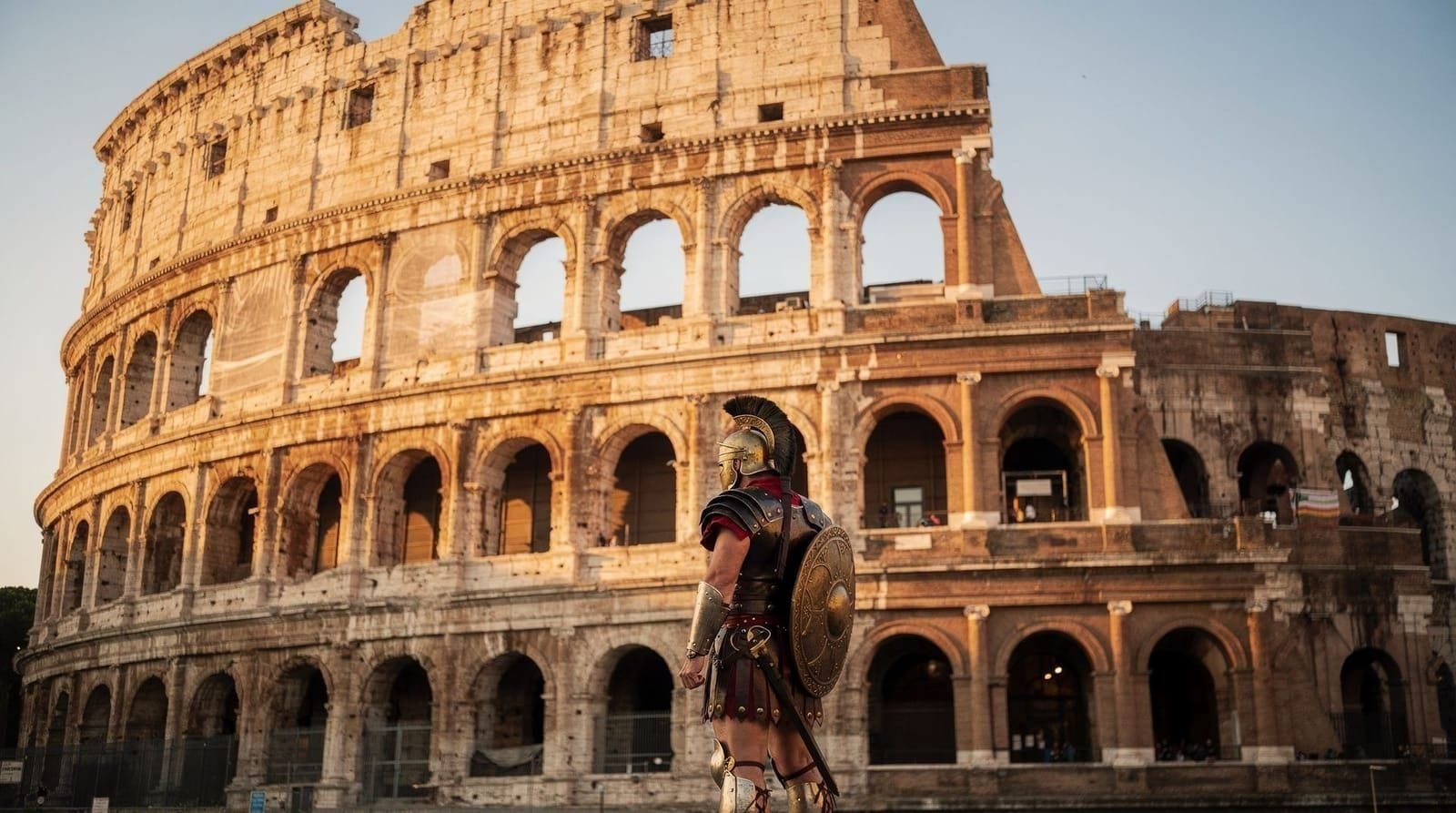
Colosseum Gladiator Tour for Kids and Families
What do children actually enjoy most in Rome?
The Colosseum and anything gladiator-themed top the list for most age groups. The catacombs are a surprise hit with ages 8+ who enjoy the eerie atmosphere. The Villa Borghese park (free, with rowboats and open space) works across all ages. The gladiator school experience is consistently rated highly by children who attend it. Piazza Navona with a gelato and street performers requires zero planning and works every time.
What actually works versus what parents hope will work
Every Rome guidebook lists the Colosseum, Vatican, and Trevi Fountain as family attractions. That is partly correct — those sites are impressive — but the experience of visiting them with children depends heavily on how they are approached, and not all famous Rome attractions translate equally to child engagement.
This guide focuses specifically on what children aged 5–14 actually respond to in Rome, based on the consistent patterns of what parents report as genuine successes versus what their children tolerated politely.
| Where | Citywide — historic centre, Villa Borghese, Appian Way |
| Cost | Free (parks, piazzas) to €25–50/child for guided experiences |
| Time needed | Half-day activities mix well across a multi-day family trip |
| Getting there | Walking and metro for the centre; bike hire for the Appian Way |
| Best time | Morning for monuments, late afternoon for parks and piazzas |
The Colosseum: the one site that always works
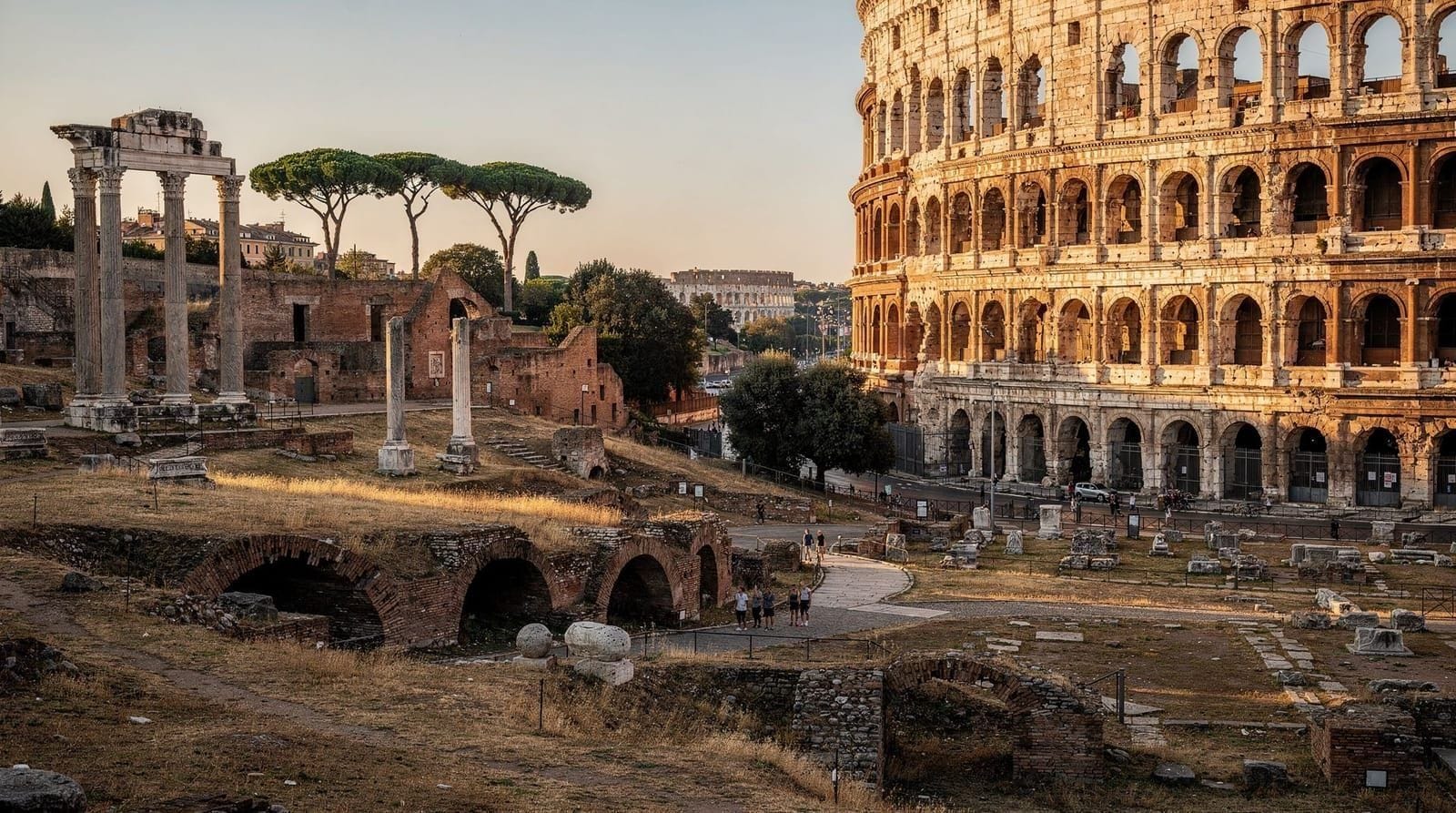
The Colosseum works for children for a simple reason: children already know what it is. Whether from films, video games, or school history, the gladiator arena as a concept lands before they arrive. Standing inside it — seeing the hypogeum (underground passages) where animals were caged, the arena floor, the 50,000-seat scale — meets and usually exceeds expectations.
The key is the booking and the presentation. A family-focused Colosseum tour with a guide who tells gladiator stories rather than architectural history is a completely different experience from a standard adult tour.
Colosseum Gladiator Tour for Kids and Families — specifically designed for children, with gladiator storytelling and age-appropriate pacingCombine with the Roman Forum on the same ticket — the Forum is less immediately gripping for under-10s but provides context, and the Palatine Hill above has open space and views.
Gladiator school: theatrical but effective
The gladiator training experience is run by Gruppo Storico Romano and takes place in a replica training area near the ancient Appian Way. Children (and adults) dress in replica armour, learn basic attack and defence moves from instructors in full gladiatorial costume, and receive a diploma at the end.
Is it authentic? No — it is theatrical recreation. Is it good for children? Consistently yes. The physical activity, the costumes, and the roleplay element engage children who have been passively viewing things all morning. Two hours of active participation stands out in memory against days of looking at ruins.
Become a Gladiator experience — ancient Roman role-play activity with training, costumes and certificate; suitable for ages 6 and upFor the full details including minimum ages, location, and what to expect, see the gladiator school guide.
The catacombs: surprisingly good for ages 8+
Most parents are unsure about taking children to the catacombs. The surprise is that children aged 8 and up frequently rate the catacombs as a highlight of the entire trip, often above the Colosseum.
The reasons: underground tunnels, real ancient burial niches (empty or with remains), flickering guide torches (modern but atmospheric), and the frisson of something genuinely old and slightly eerie. Children who enjoy mystery, history, or anything slightly macabre find the catacombs intensely engaging.
The most child-accessible catacomb sites are:
Catacombs of St. Callixtus (Via Appia Antica): The largest and most visited, with excellent English-language guides who pace tours for mixed groups including children. 30–45 minute underground walk.
Catacombs of Domitilla: Less crowded, includes an early Christian basilica underground. Slightly more atmospheric and less rushed than Callixtus.
Capuchin Crypt (Via Veneto): Not technically a catacomb but a crypt where Capuchin monks arranged the bones of their dead brothers in decorative patterns — bone chandeliers, bone arches, bone walls. More immediately dramatic for children but also more disturbing for sensitive younger children. Ages 10+ handle it well.
For ages under 8, the Capuchin Crypt in particular is not appropriate — assess your child’s threshold for the slightly grim before booking.
Villa Borghese: the underrated family day
Villa Borghese is one of the largest parks in Rome and a genuinely excellent family space that many first-time visitors overlook in favour of monument-ticking.
What the park offers:
- The Boating Lake (Laghetto): Row boats available for hire by the hour. Children love it; adults find it peaceful. No advance booking needed.
- Bioparco (the zoo): Within the park, with a separate entrance fee. A half-day option for ages 3–9.
- Bike and electric vehicle hire: Multiple hire points throughout the park for bikes, tandem bikes, and covered electric carriages. Easy flat cycling for families.
- Playgrounds: Near Piazza di Siena; not extensive but functional.
- Open grass and shade: For picnics, ball games, and unstructured time.
The park is entirely free to enter. It connects to the Pincio terraces above Piazza del Popolo — a short walk through the park leads to the terrace overlook with a panoramic view of central Rome that is genuinely impressive.
Piazza Navona: the failsafe family piazza
Piazza Navona works with children because it requires nothing from them — it is a large, traffic-free space with a dramatic fountain, street performers, gelato shops, and the permanent energy of a working Roman piazza.
The Fountain of the Four Rivers by Bernini is large enough to fascinate children without explanation (each of the four river gods represents a different continent), street performers provide entertainment, and the gelato shops around the perimeter provide a concrete reward for the walk there.
Evening visits (after 19:00) are particularly good — the piazza fills with Roman families as well as tourists, and the atmosphere is more genuinely festive than the midday tourist-heavy experience. See the Piazza Navona guide for more context.
The Vatican Egyptian Museum: the museum surprise
Most children expect to be bored in a museum. The Vatican Egyptian Museum (located immediately inside the Vatican Museums entrance) is the consistent exception.
Real mummies, sarcophagi, canopic jars (the containers for organs), ushabti figurines, and ancient papyrus — all accessible with minimal barriers. The visceral reality of “this person died 3,000 years ago and we are looking at them right now” lands across age groups. Allow 25–35 minutes here before moving to the Sistine Chapel.
The challenge is that getting to the Egyptian Museum requires entering the Vatican Museums, which needs advance timed-entry booking. See the Vatican with kids guide for the full logistics.
Castel Sant’Angelo: dungeons, ramparts, and views
Castel Sant’Angelo is underrated for families. Originally Hadrian’s mausoleum, later a papal fortress with a secret escape tunnel connecting it to the Vatican, it has everything children enjoy in a historical site: narrow corridors, a cylindrical keep that feels like a medieval castle, ramparts with views over Rome, cannons, and a history of imprisonment and dramatic papal escapes.
Children aged 8+ tend to find it genuinely interesting. The escape tunnel (Passetto di Borgo) story — popes fleeing to the castle via a covered walkway during attacks — captures imagination. The views from the top are among the better elevated perspectives in Rome.
Entry is cheaper than the Vatican or Colosseum and queues are manageable with advance booking.
Trastevere and the Jewish Ghetto: neighbourhood immersion
Not all child-friendly Rome activities involve monuments. Neighbourhood exploration at a low-stakes level is a sustainable family activity that requires no booking, no queues, and no advance planning.
Trastevere is charismatic despite its cobblestones — the neighbourhood has a distinct character (artisan workshops, neighbourhood churches, ivy-covered buildings) and children respond to its liveliness. Santa Maria in Trastevere piazza is a good base point: the fountain, the basilica facade, and the surrounding cafes create a compact area where children can move freely.
The Jewish Ghetto (Portico d’Ottavia area) combines ancient ruins visible from street level (no entrance fee), a distinctive neighbourhood character, and excellent artichoke-based food. The Roman synagogue is one of the most interesting non-ancient buildings in Rome but the interior requires checking tour availability.
The Appian Way and aqueducts: cycling history
For families with children aged 8+ who can handle 3–4 hours of cycling, the Appian Way (Via Appia Antica) is a memorable experience. The road is ancient — in use since 312 BCE — and sections of the original paving survive. Bike hire is available at the start of the park (Via Appia Antica 58, near Terme di Caracalla).
The combination of cycling on ancient stones, catacombs at the side of the road, and the Roman aqueduct arches running across the flat campagna creates a day that feels genuinely different from monument-visiting. Combine with a picnic in the park. See the Appian Way guide for logistics.
Gelato: the underappreciated activity
Gelato as an activity rather than a snack is a legitimate children’s Rome experience. A gelateria visit in each neighbourhood — comparing chocolate from Fatamorgana versus Giolitti versus a local Prati shop — is a thread that runs through a Rome trip and provides consistent motivation.
The educational angle (if needed): Italian gelato is made with less fat and more natural fruit than most ice cream; artisanal shops use seasonal ingredients; pistachio from Bronte in Sicily is different from everywhere else. Children who are slightly interested in food respond to this kind of specific knowledge. Children who are not interested simply enjoy the gelato.
Rules for identifying good gelato:
- Storage in flat metal containers with lids, not pyramidal mounds
- Natural colours (pistachio is brown-green, not vivid green; lemon is white or pale yellow)
- Ingredients listed on a chalkboard
Hop-on hop-off bus: using it strategically
The hop-on hop-off bus is often dismissed by adults who see it as a tourist trap. For families with children, it is a different calculation. The open-top double-decker covers a wide circuit around Rome’s main monuments, the audio guide provides basic context, and — critically for children — it is a form of transport that children find inherently enjoyable rather than a chore.
Use it as a transit tool rather than as a primary activity: take it for the longer transfers (Vatican to Colosseum area, Piazza Venezia to Villa Borghese) rather than as the day’s main structure. A two-day pass gives the flexibility to board and disembark freely as the day develops.
Rome City Sightseeing Hop-on Hop-off — useful for families as a complement to site visits, reducing cobblestone walking distance between zonesWhat to say no to
Not every Rome experience marketed for children genuinely works with children. A few honest assessments:
Horse-drawn carriages (botticelle): These operate around the centro storico and are a persistent offer to tourists with children. They are expensive (typically €40–80 for a 30-minute circuit), slow, and offer no educational content. Children are occasionally charmed for five minutes and then bored. Not worth it compared to any other activity on this list.
Roman cooking classes for families: These are often excellent for older children (12+) who have genuine interest in food and can follow instruction. For under-10s, the adult-to-child attention balance in a group cooking class tends to frustrate both the children and the other participants. One-on-one pasta making in a vacation apartment is a better format for young children.
Interactive “time travel” technology tours: Several operators offer augmented reality or tablet-guided visits promising to “bring ruins to life.” In practice, tablet-in-hand navigation is awkward, AR overlays are often unconvincing, and children who are already competent with technology are not impressed. A good human guide telling stories beats every AR experience currently operating in Rome.
Age-based summary: the short version
Ages 3–5: Villa Borghese park, Piazza Navona, brief Trastevere piazza visit. No ticketed monuments needed.
Ages 5–7: Colosseum (with family guide), Piazza Navona, Ostia Antica, Vatican Egyptian Museum (as part of Vatican visit), gelato walks.
Ages 8–12: All of the above plus catacombs, gladiator school, Castel Sant’Angelo, Appian Way cycling.
Ages 13+: Standard adult Rome with adjustments — gladiator school if they are open to it, Colosseum arena floor, neighbourhood exploration with some independence.
Activities compared by engagement and effort
For parents deciding where to spend limited time and energy, this compares the main options side by side:
| Activity | Booking needed | Physical effort | Typical hit rate |
|---|---|---|---|
| Colosseum + family guide | Advance, essential | Moderate (standing, stairs) | Very high, all ages 6+ |
| Gladiator school | Advance, essential | High (active training) | Very high, ages 7–14 |
| Catacombs | Advance recommended | Low (guided walk) | High, ages 8+ only |
| Villa Borghese park | None | Low to moderate | High, all ages |
| Piazza Navona evening | None | Low | High, all ages |
| Hop-on hop-off bus | Same-day possible | Very low | Moderate, best as transit |
| Horse-drawn carriage | None | None | Low — skip it |
The clearest pattern: activities requiring some physical or sensory engagement (gladiator school, catacombs, cycling) consistently outperform passive options (carriage rides, tablet-guided tours) regardless of age. Budget accordingly rather than assuming a passive activity will hold a child’s attention because it’s famous.
Rainy-day and midday-heat backup options
Rome trips rarely go entirely to plan, and having a fallback for a rained-out morning or a punishing midday heat spell saves a trip from feeling like a battle. The Vatican Museums (once inside) and Castel Sant’Angelo both work well as indoor-heavy options that still hold children’s interest. The Bioparco has covered sections and shaded paths that make it more tolerable than open-air ruins on a 35°C afternoon. For a full rainy-day plan beyond what’s covered here, see our Rome on a rainy day guide — several of its suggestions work especially well for families needing an indoor pivot at short notice.
For the full family logistics guide — accommodation, transport, booking timing, and daily structure — see the Rome with kids guide and the Rome family itinerary tips guide.
Frequently asked questions about Kid-friendly Rome: activities children actually enjoy
What age is appropriate for the Roman Catacombs?
Is the Bioparco (Rome Zoo) worth visiting with children?
Are there playgrounds in Rome for young children?
What is the best gelato in Rome for children?
Can children under 18 enter the Colosseum free?
Top experiences
Bookable activities with verified prices and instant confirmation on GetYourGuide.