A street food crawl through Rome: what to eat, where, and in what order
Rome is not, in the traditional sense, a street food city. You will not find hawker stalls or moving carts in the way you might in Bangkok or Istanbul. What you will find, if you know where to look, is a loose category of brilliant things eaten while standing up: supplì warm from the fryer, pizza al taglio cut with scissors and handed over on paper, a cone of fried baccalà from a window in the Jewish Ghetto, a soft roll stuffed with porchetta at a market stall. None of it requires a reservation. Most of it costs under €5.
The trick is geography. Rome’s street food is not evenly distributed. It clusters in specific neighbourhoods — Testaccio, Trastevere, the area around Campo de’ Fiori, the Jewish Ghetto — and the best approach is to build a crawl that moves between them with some intention rather than stumbling between tourist restaurants hoping for the best.
| Where | Testaccio, Jewish Ghetto, Campo de’ Fiori, Trastevere |
| Cost | around €20–30 per person for the full crawl |
| Time needed | half a day if focused, a full day at a relaxed pace |
| Getting there | walkable between stops, or bus/tram along the Lungotevere |
| Best time | weekday mornings for markets; evening for Trastevere |
What follows is a sequence. You don’t have to do it all in one day — though if you’re hungry enough, you absolutely can.
Start in Testaccio: the neighbourhood that takes food seriously
Testaccio is where Romans come to eat, and it is where you should begin. The Mercato Testaccio — the indoor market on Via Beniamino Franklin — opens around 07:00 and runs until 14:00, six days a week. The stalls inside sell everything from vegetables to wine, but the reason to come specifically for a food crawl is the prepared food section near the back.
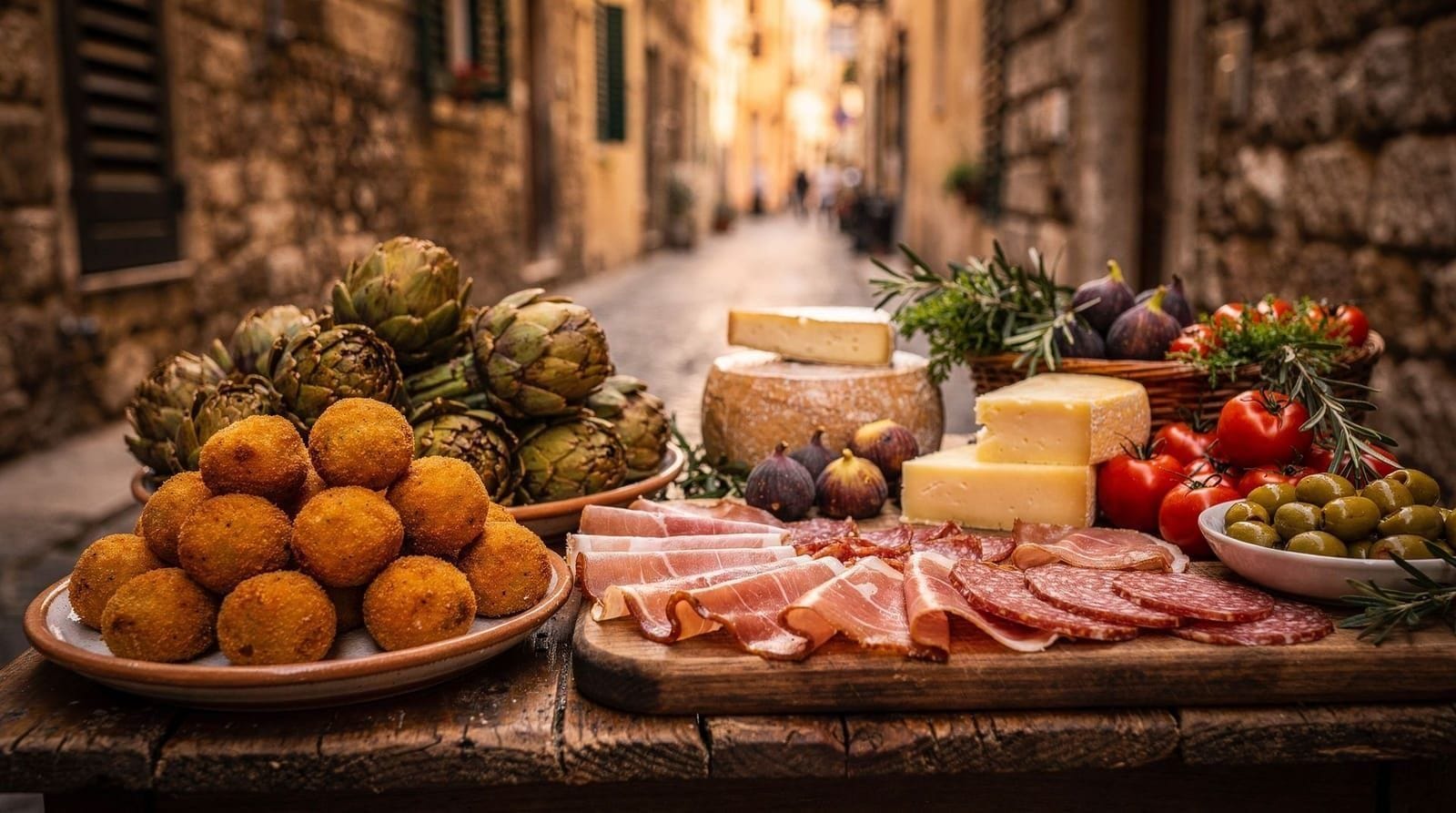
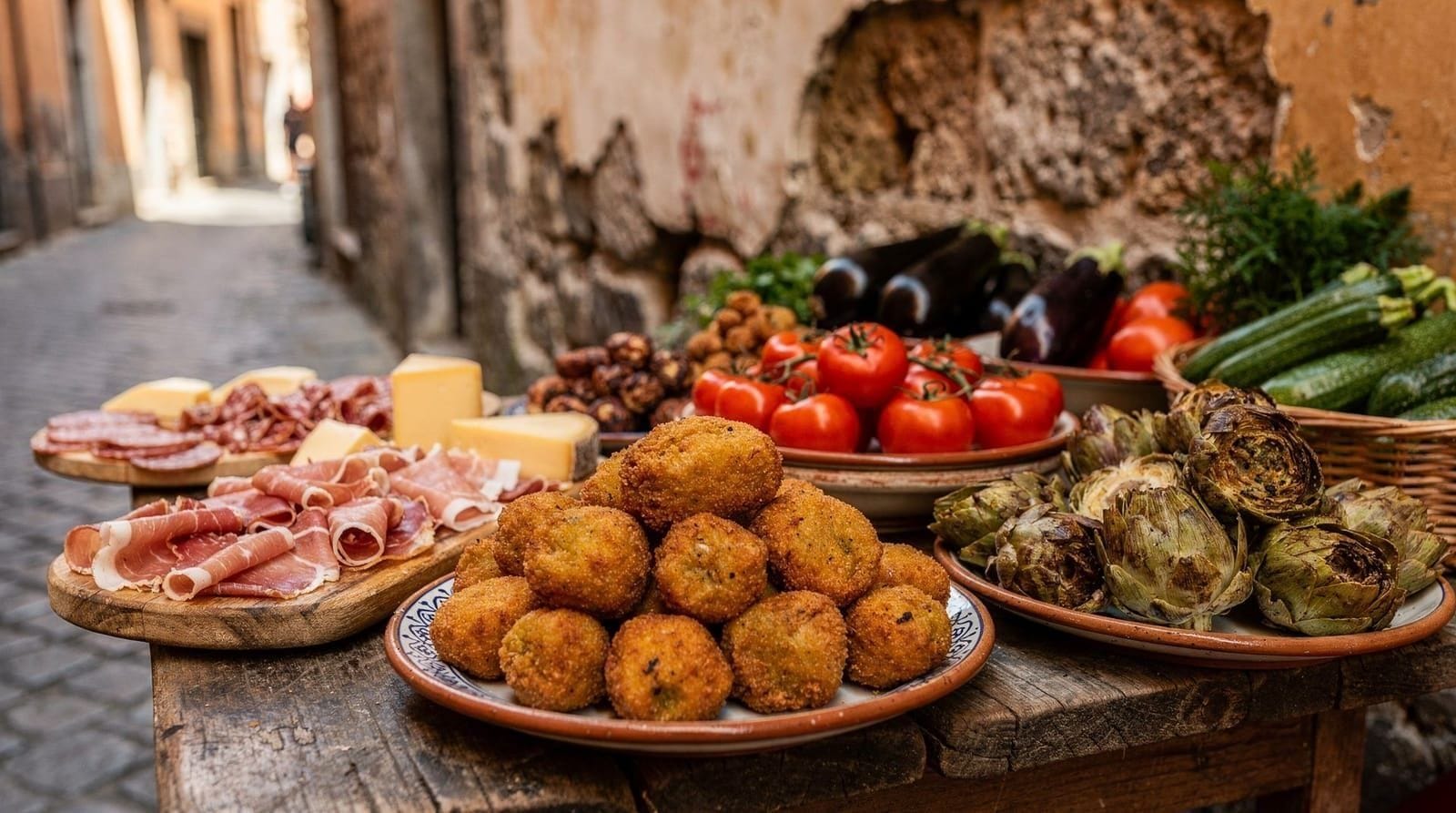
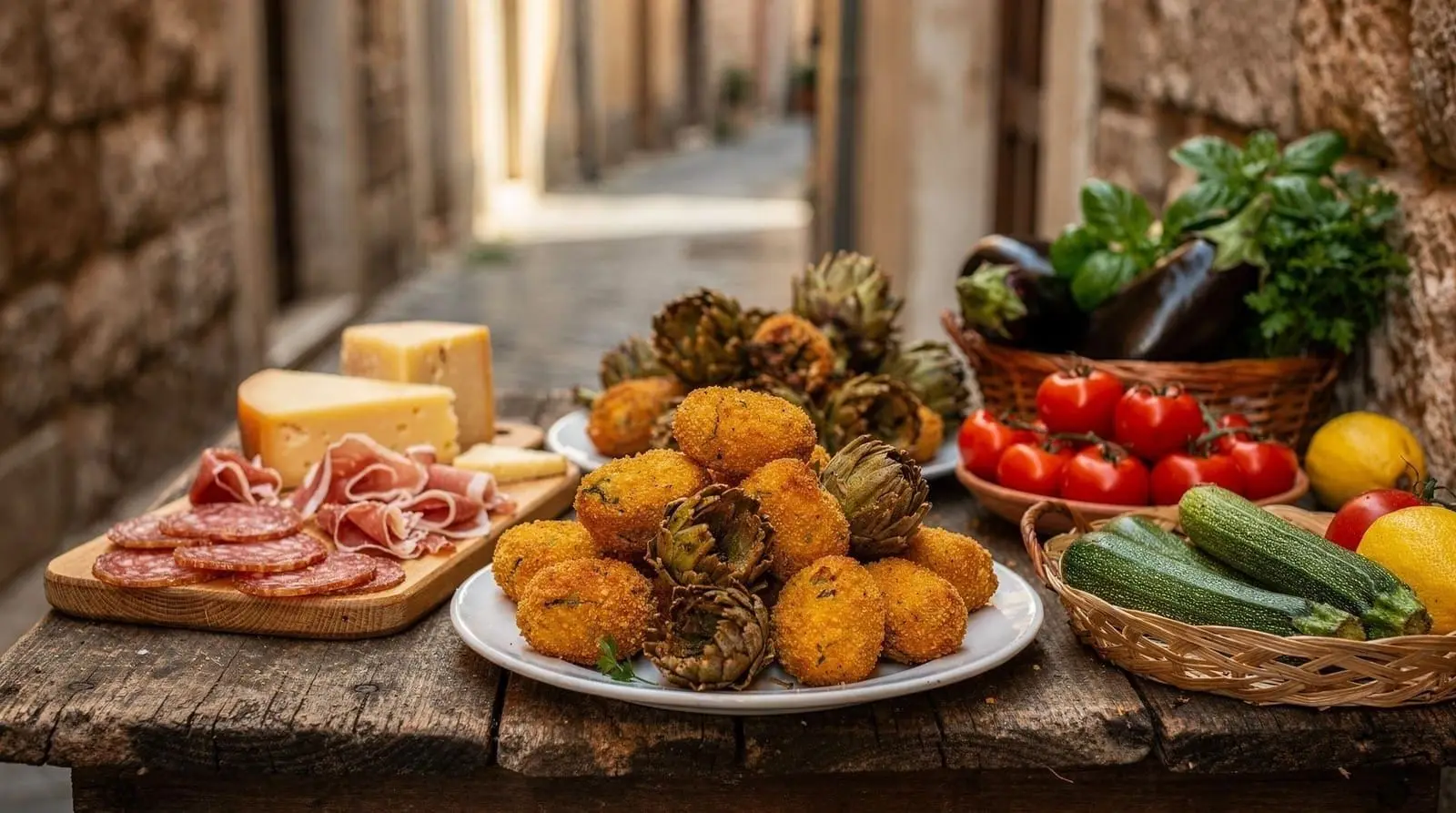
Look for the arancini and supplì vendors. Supplì al telefono — the Roman rice balls, fried, filled with tomato ragù and melting mozzarella — are what you’re after. A good one should be about the size of a large egg, with a crust that gives cleanly and a centre that stretches into strings when you pull it apart (that’s the telefono reference: the melted mozzarella resembles an old telephone cord). Price: around €1.50–2.50 each.
Also in Testaccio: the trapizzino. This triangular pocket of thick focaccia bread, filled with Roman stewed meats — oxtail in tomato sauce (coda alla vaccinara), chicken hunter-style (pollo alla cacciatora), braised tripe — is something of a modern Roman institution despite being invented relatively recently. The original spot, Trapizzino, is on Via Giovanni Branca, just outside the market. Budget €4–5 for two.
The Jewish Ghetto: fried things done correctly
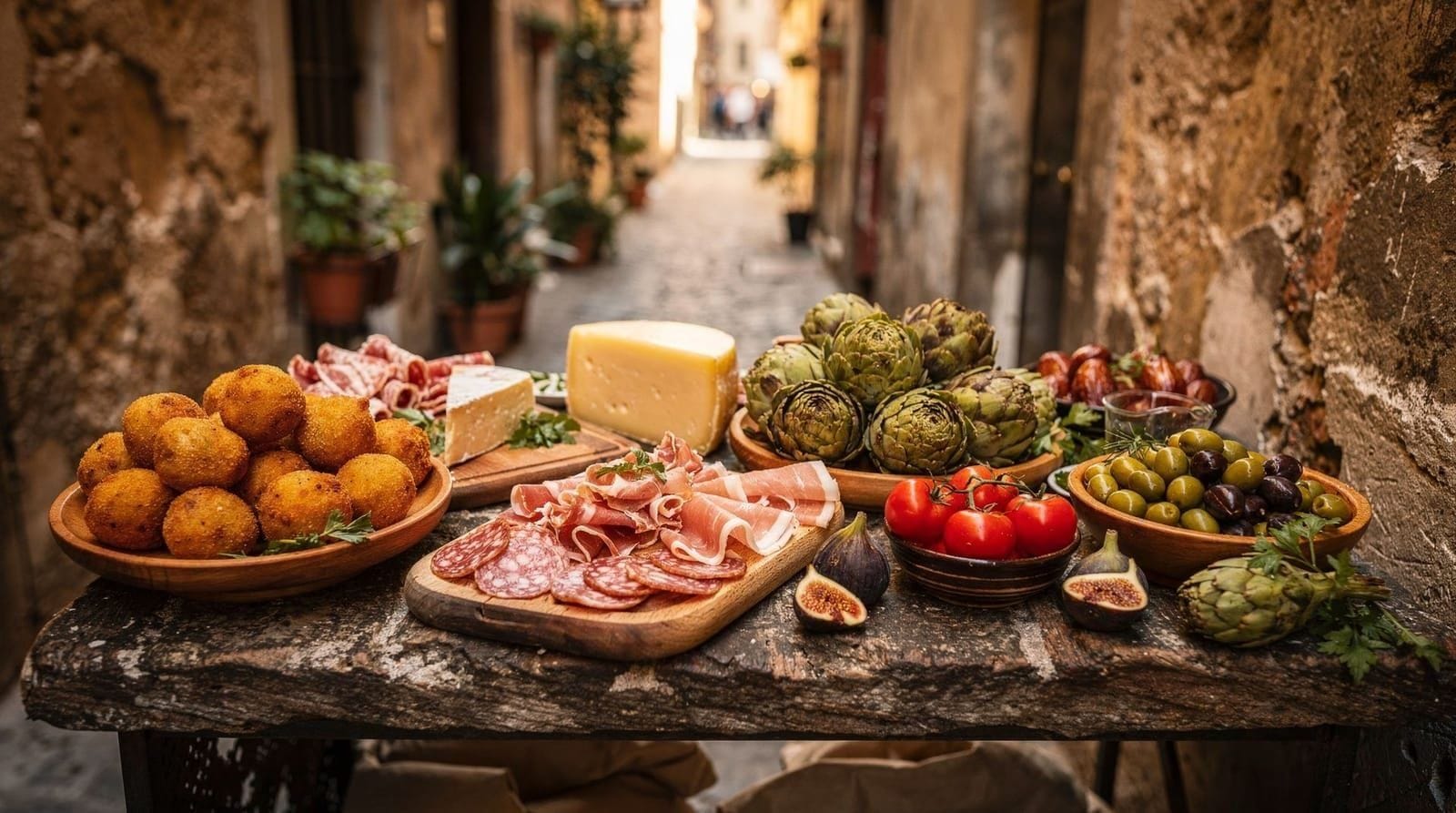
From Testaccio, a 20-minute walk (or a quick bus up the Lungotevere) brings you to the Jewish Ghetto, one of Rome’s most distinctive eating neighbourhoods and consistently underrated by first-timers. The Ghetto’s contribution to Roman street food is primarily fried: carciofi alla giudia (artichokes fried whole until they open like flowers, crisp at the edges, soft in the centre) and filetti di baccalà (deep-fried salt cod in a light batter, served from the window of a small fryer shop on Via del Portico d’Ottavia).
The artichokes run €4–7 each depending on the establishment. The baccalà fillets are typically €3–4 per piece. Eat them standing outside — sitting down at a table in this neighbourhood inverts the whole point of the exercise.
The Ghetto is also the place for bomboloni, the Italian doughnuts sometimes filled with cream or jam. Quality varies; the best versions have a thin crust and a generous, properly sweet filling.
Campo de’ Fiori: pizza al taglio and the market scene
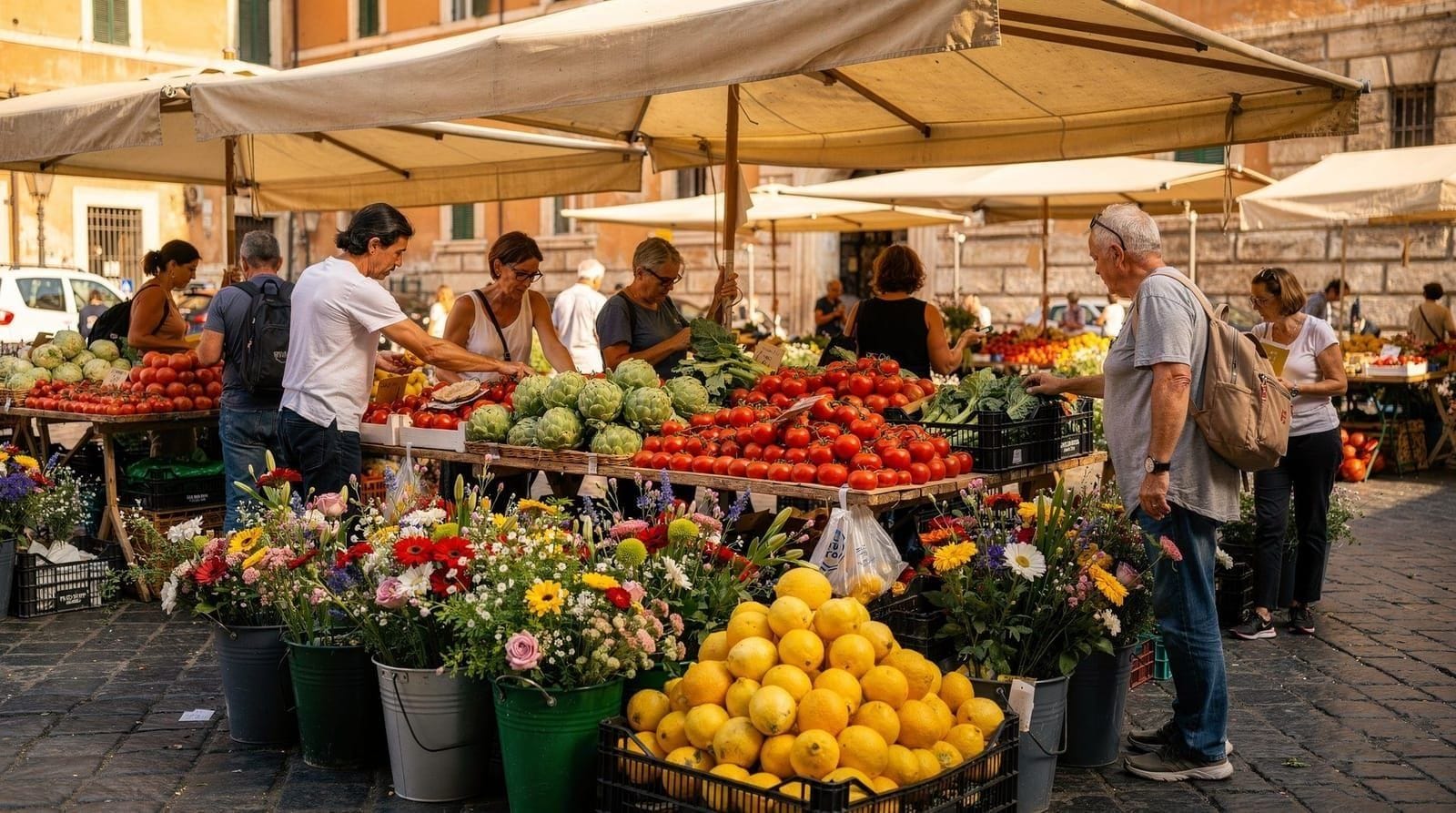
The market at Campo de’ Fiori runs every morning except Sunday, roughly 07:00 to 14:00. It is undeniably touristy by now — the produce stalls have gradually given ground to souvenirs — but the fruit and vegetable vendors are still there and the atmosphere in the morning hours, before the day-trippers arrive, is lively and genuinely Roman.
For the street food crawl, what matters most is the cluster of pizza al taglio spots within a few minutes’ walk of the piazza. Pizza al taglio — rectangular slabs of pizza sold by weight, cut with scissors, eaten folded in paper — is Rome’s fast food and it is brilliant when done well. Look for places that cycle through their inventory quickly (this means fresh product), and for toppings that are Roman rather than tourist-facing: potato and rosemary, zucchini flowers, the classic rossa (tomato and olive oil, no cheese).
Budget €3–6 for a satisfying portion, depending on weight.
Trastevere: the evening stretch
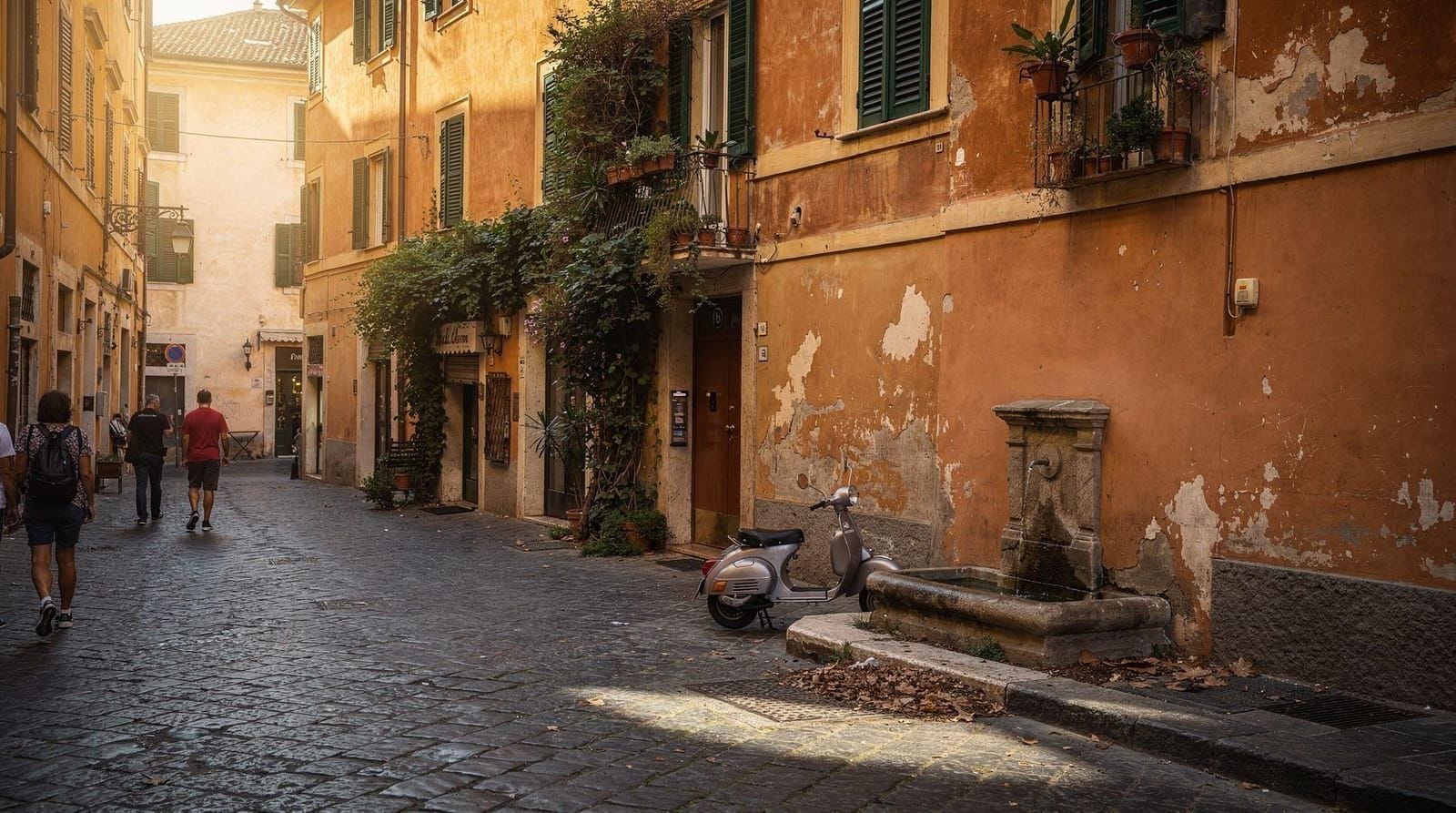
Trastevere in the evening is the city at its most photogenic and, fair warning, its most crowded with tourists. But it also has a density of good casual eating — gelaterias, aperitivo bars, and above all the street-food stalls that set up on the side streets off Viale di Trastevere after about 18:00.
Look for the fried pastry stalls selling frappe (a Roman carnival fritter, thin and dusted with powdered sugar) and castagnole (small fried dough balls). These are seasonal, most common in winter and spring, but stalls selling some version of fried sweet dough appear year-round.
For something more substantial in Trastevere, the porchetta sandwich — thinly sliced roast suckling pig with crackling, herbs, and occasional chilli — is the move. Quality varies enormously: the best versions have skin that shatters and meat that is moist rather than dried-out. Budget €4–6.
Rome street food walking tour through Trastevere and Campo de’ FioriIf you want to do this systematically with someone who knows which stalls are worth stopping at and which are coasting on their location, a guided street food tour through these two neighbourhoods makes sense. The best ones cover eight to twelve tastings over three to four hours and include enough wine and explanation to make it feel like an education rather than a procession of eating stops.
Gelato: the non-negotiable
No crawl through Rome ends without gelato. The rules are simple and contested: real gelato is served from covered metal containers (pozzetti), not piled in extravagant mounds above the glass counter. The mounds are for show; they indicate stabilisers and food colouring. The flat, covered presentation is for flavour.
Around €2.50–3.50 for a small cup or cone. Flavours to order in Rome: pistachio (pistacchio), hazelnut (nocciola), fig (fico) in season, and the fruit sorbets which should taste exactly like the fruit they’re made from.
Budget for the full crawl: roughly €20–30 per person covers everything above comfortably, with room for a glass of wine in Trastevere.
Vegetarian and lighter options
The crawl above leans meaty by nature — Roman street food grew out of a culture that used every part of the animal — but there’s a genuine vegetarian thread running through it too. The rossa pizza al taglio near Campo de’ Fiori (tomato and olive oil, no cheese) and the potato-and-rosemary version are both entirely meat-free and among the better slices on offer. Carciofi alla giudia in the Jewish Ghetto are vegetarian by default. Supplì normally contain a small amount of ragù, but plain mozzarella-only versions (supplì bianco) turn up on some menus — ask before you order if you’re avoiding meat. Gelato, obviously, needs no adjustment at all.
What to drink along the way
You don’t need to plan drinks separately — this is Rome, and wine or a cold beer slots naturally into a standing-up meal. A glass of white from the Castelli Romani wine region pairs well with the fried things in the Ghetto, and it’s common to see people drinking a plastic cup of wine alongside their supplì at the market with nobody batting an eye. In Trastevere in the evening, this is also where the crawl naturally tips into aperitivo territory if you want to slow down and make an evening of the last stop rather than keep moving.
Practical notes
The crawl as described runs south-to-north roughly: Testaccio in the morning, Jewish Ghetto late morning, Campo de’ Fiori around midday, Trastevere in the evening. It works best on a weekday when the markets are open. Add a side trip to the Mercato di Porta Portese on Sunday morning if you want the flea market experience alongside the food.
Wear shoes you can stand in for several hours. Bring a small bottle of water. And eat less at each stop than you think you want — pacing is the difference between an enjoyable crawl and a mid-afternoon lie-down.
Frequently asked questions
Is Rome street food safe to eat from market stalls? Yes — the stalls inside Mercato Testaccio and similar covered markets are regulated and popular with locals, which is itself a good sign. Stick to stalls with visible turnover (a queue, or food being fried to order) rather than pre-made items sitting out for hours.
Can you do the crawl without speaking Italian? Easily. Pointing at what you want, or saying the dish name, is entirely normal at every stop described here — none of it requires conversation, and vendors are used to tourists ordering this way.