Testaccio food guide: Rome's working-class culinary heartland
Rome: Trastevere & Campo de Fiori Street Food Walking Tour
Is Testaccio really the best neighborhood for food in Rome?
Yes, by most honest measures. Testaccio has lower prices, fewer tourists and a functioning covered market (Mercato di Testaccio) with genuine Roman street food. The trattorias here serve pasta, offal and Roman classics at €12–16 — what you'd pay €22–28 for in the Centro Storico. The neighborhood runs on a working-class food culture that has barely changed in 50 years.
Why Testaccio matters for anyone serious about Roman food
Every Rome travel article tells you to eat in Trastevere. The ones worth trusting also tell you to go to Testaccio — the wedge-shaped neighborhood on the eastern bank of the Tiber, bounded by the Circus Maximus to the north, the Aventine Hill to the east and the Tiber to the west.
| Where | Testaccio, south of the Aventine Hill and Circus Maximus |
| Cost | Market lunch €10–15; trattoria dinner €25–55/person |
| Time needed | Half a day for market + a meal; longer with a food tour |
| Getting there | Metro B to Piramide, or tram 3 from Trastevere |
| Best time | Weekday mornings for the market (closed Sundays) |
Testaccio is where Rome’s food culture formed and where much of it persists. Its culinary identity grew directly from the Mattatoio — the municipal slaughterhouse that operated here from 1891 until 1975. Slaughterhouse workers received their wages partly in kind: the quinto quarto (fifth quarter), meaning the offal, feet, tail and extremities that wealthy buyers didn’t want. Necessity turned these cuts into a cuisine: coda alla vaccinara, trippa alla romana, coratella con carciofi, rigatoni con pajata. That tradition is still alive in the neighborhood’s trattorias and at Mercato di Testaccio.
The neighborhood also has none of Trastevere’s tourist overlay. There is no neighborhood-wide gelato-and-souvenir economy, no restaurants with English photo menus outside, no piazza polished for Instagram. What you find instead is a functioning residential neighborhood with real supermarkets, a real market and restaurants that live or die on local custom.
Testaccio vs Rome’s other food neighbourhoods
| Neighbourhood | Character | Typical trattoria price | Tourist density |
|---|---|---|---|
| Testaccio | Working-class, market-anchored, offal tradition | €12–16/pasta | Low |
| Trastevere | Picturesque, lively at night, mixed quality | €14–20/pasta | High |
| Campo de’ Fiori | Historic market square, heavily touristy at the edges | €16–24/pasta | Very high |
| Jewish Ghetto | Distinct Roman-Jewish tradition, compact area | €16–22/pasta | Moderate-high |
If your priority is authenticity and value over atmosphere and convenience, Testaccio wins clearly. If you want an evening out with more buzz and don’t mind paying a premium, Trastevere or the Ghetto suit that better — see our Trastevere food guide and Jewish Ghetto food guide for those in depth.
Mercato di Testaccio — the anchor of the neighborhood’s food life
The covered market on Piazza Testaccio replaced the old open-air version in 2012. It’s a two-level structure housing roughly 90 stalls, split between produce vendors and ready-to-eat counters. The architecture isn’t beautiful, but the market itself is the real thing.
Hours: Monday to Saturday, 07:00 to approximately 14:00. Closed Sunday. Arrive before noon for the best selection.
Entry: Free.
What to eat at the market
Box 66 — Mordi e Vai: This is the stall you’ve read about, and the reputation is deserved. Sergio Esposito has been running it for years, slow-braising Roman classics — oxtail, bollito (boiled mixed meats), trippa, nervetti — and stuffing them into bread rolls with salsa verde or grated pecorino. The panini run €5–7 and the fillings sell out by early afternoon on busy days. Queue when it opens if you want the full selection.
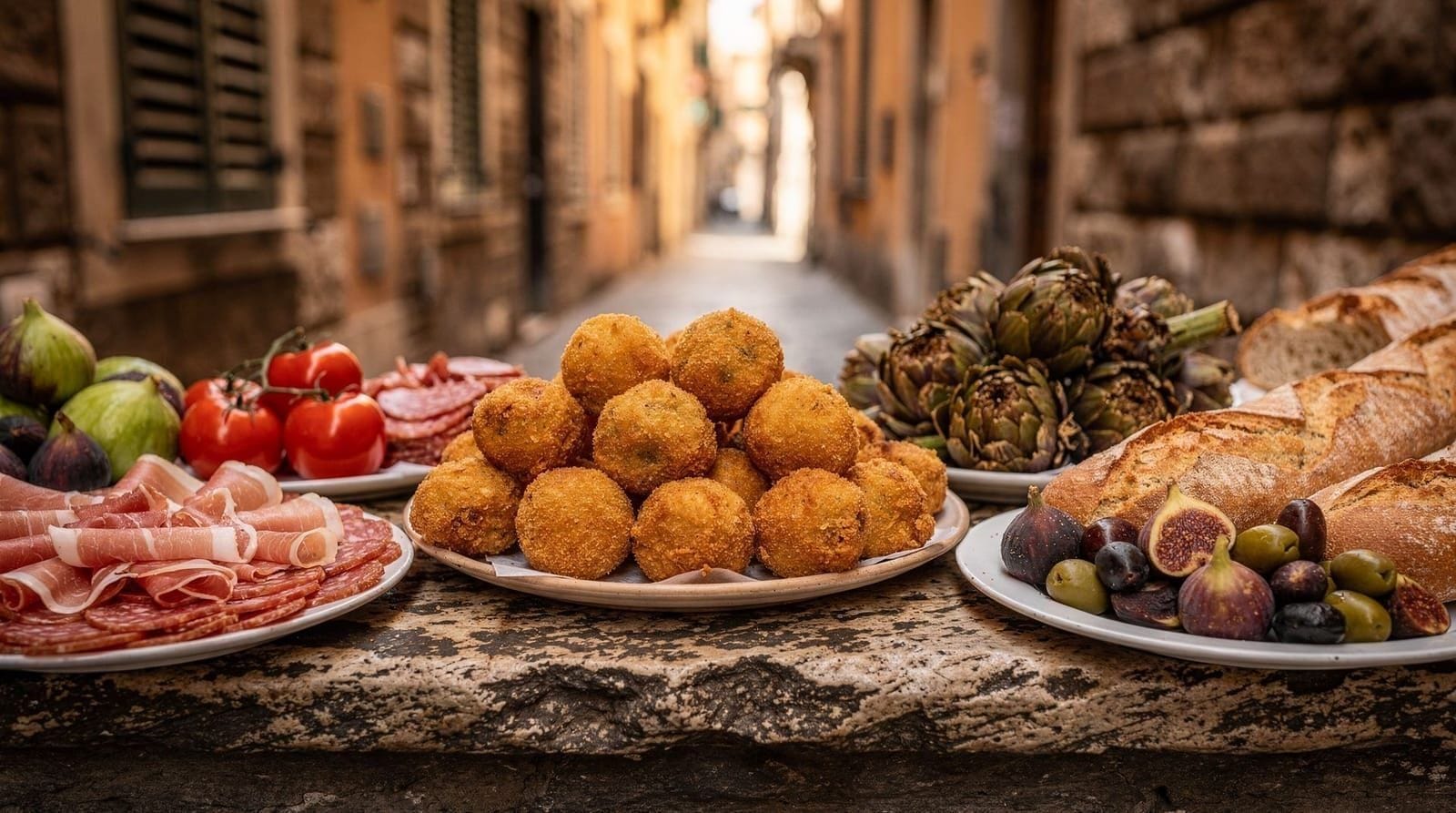
The supplì counter: A dedicated supplì counter inside the market does fried rice balls to the Roman standard — crispy outside, oozing mozzarella at the center, properly seasoned ragù. Two makes a lunch. Budget €3–5.
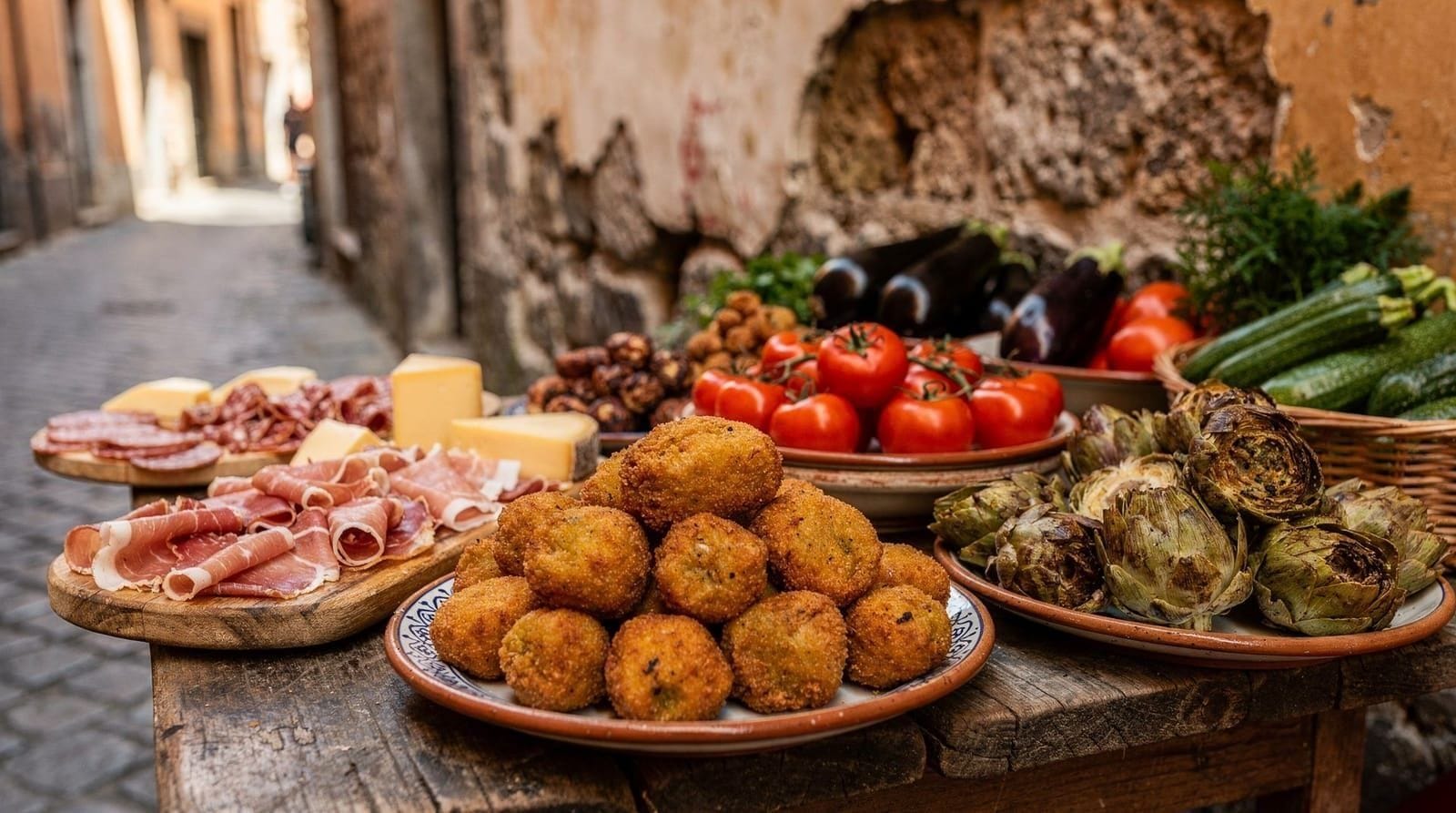
Fish and produce vendors: For anyone cooking or assembling a picnic, the fish counter is one of the better-stocked in central Rome. Produce stalls sell seasonal vegetables at fair prices. In artichoke season (February to April), the romanesco artichokes here are substantially better than anything you’ll find at a tourist-adjacent greengrocer.
Wine: Several stalls sell wine by the bottle and by the glass, including a reasonable selection of Lazio whites (Frascati, Frascati Superiore) and Lazio reds. Prices are far below what you’d pay at a restaurant.
The restaurants worth knowing
Flavio al Velavevodetto
Via Monte Testaccio 97 — This is the one you book. Flavio al Velavevodetto is built into the side of Monte Testaccio, the ancient hill composed almost entirely of broken amphorae (Roman waste from the port). The setting alone is worth the visit: terracotta walls, understated lighting, a wine list that includes respectable Lazio wines at honest prices.
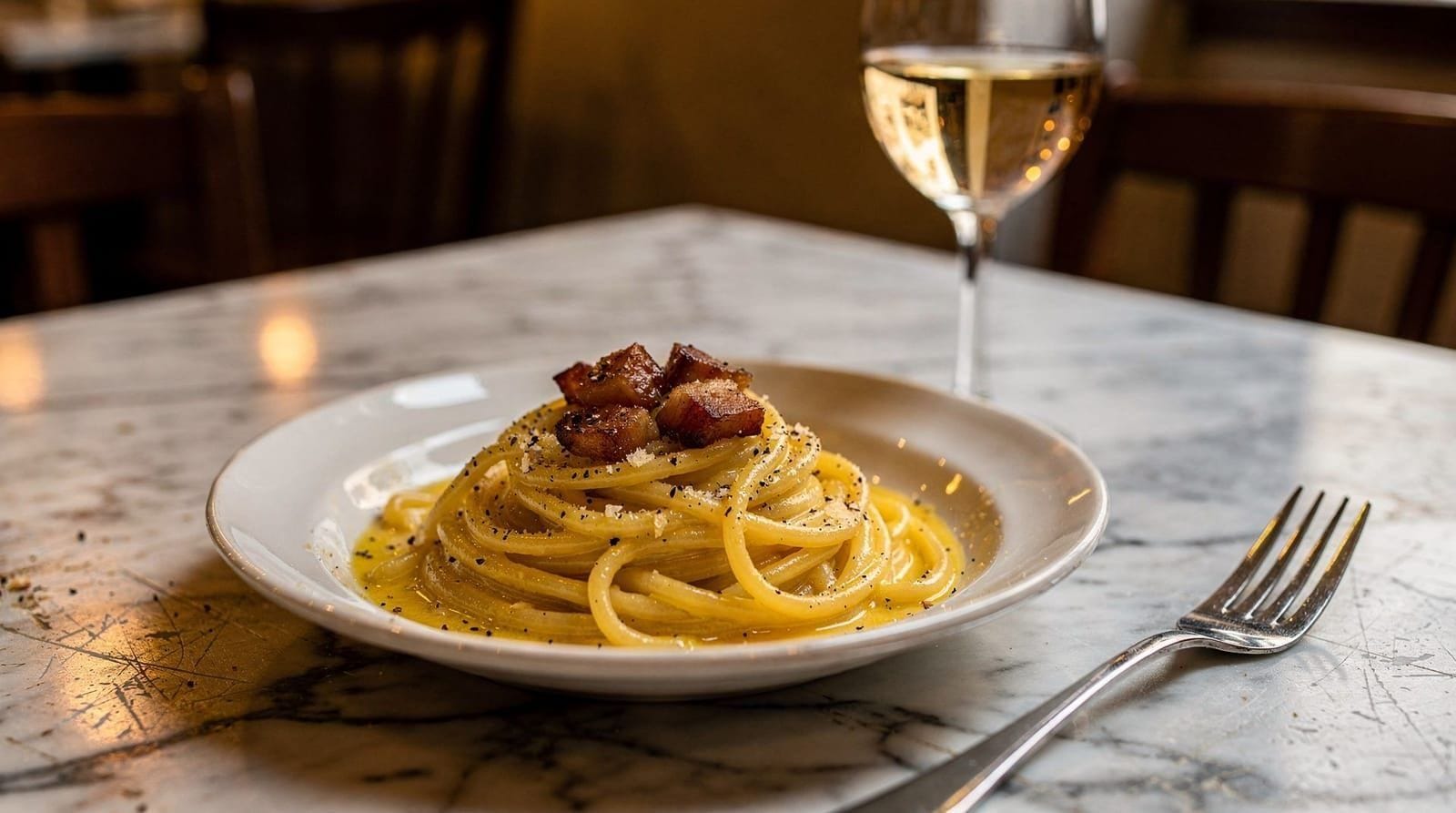
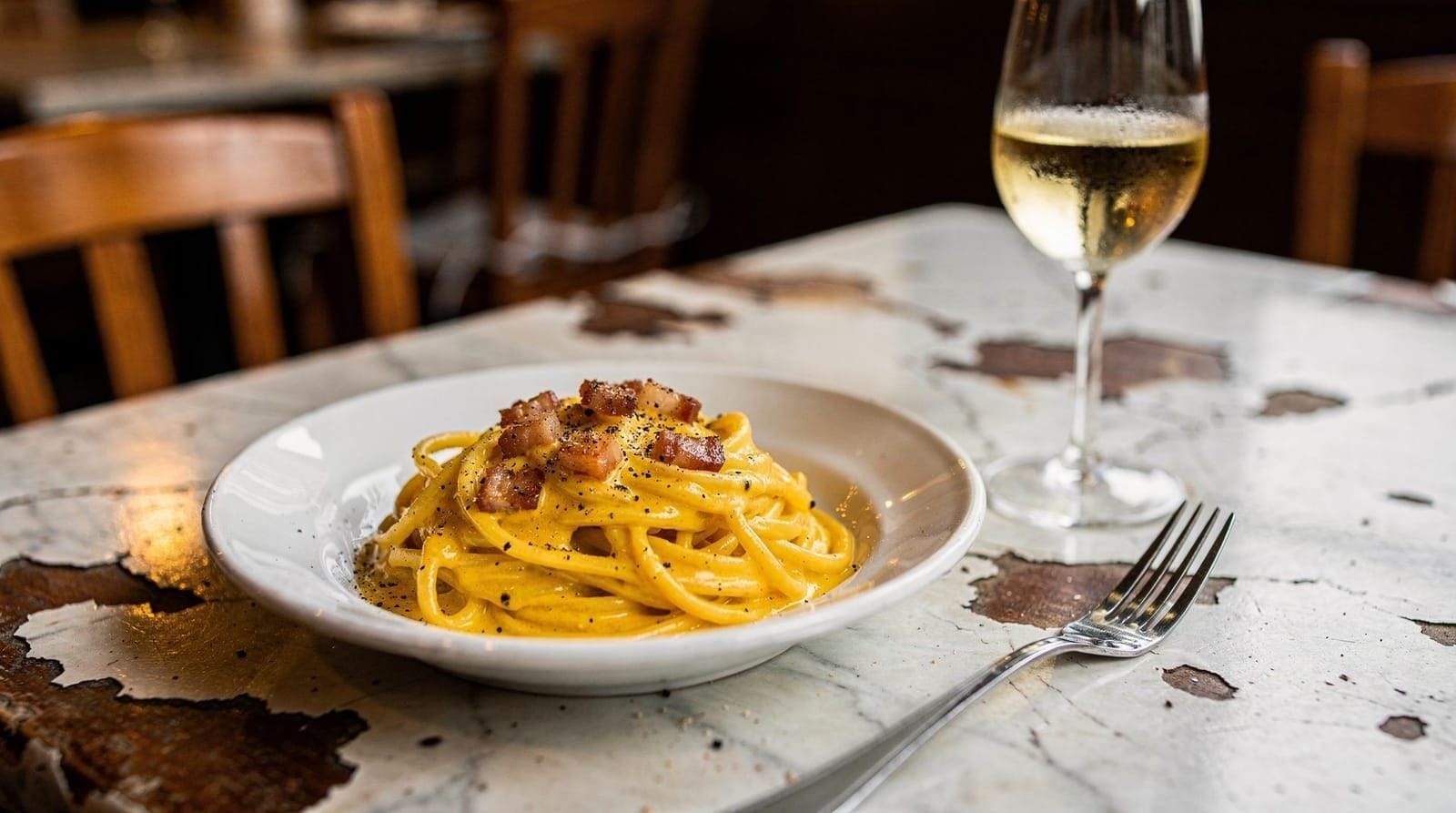
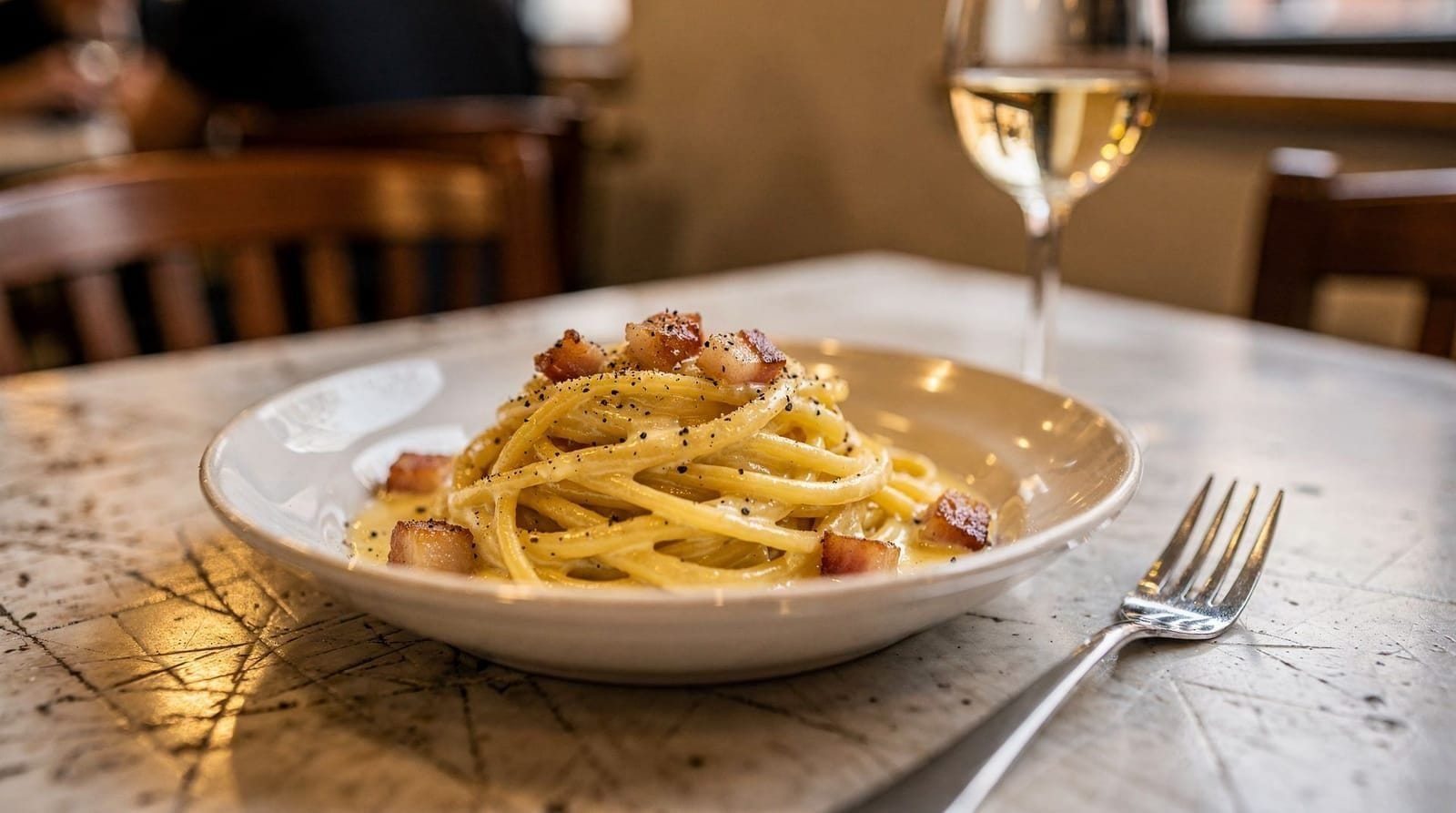
The food is traditional and technically precise. Carbonara comes on rigatoni, made correctly — no cream, properly tempered egg yolk, good guanciale. Coda alla vaccinara is slow-braised until it’s falling off the bone. The carciofi (seasonal) are done both ways, fried and braised. Pasta runs €13–16. Secondi €16–22. Coperto €2. The wine list starts around €18 a bottle.
Reservations are essential for dinner, especially Friday and Saturday — book at least a week ahead. Lunch is more accessible. Closed Sunday evenings.
Osteria degli Amici
Via Nicola Zabaglia 25 — Quieter, less famous and entirely honest. This is a neighbourhood trattoria of the old-fashioned kind: no design aesthetic, paper tablecloths, a menu that changes with the seasons. Pasta is €12–14. The amatriciana on bucatini is particularly reliable. Service is brusque in the Roman way, meaning efficient and direct. Lunch reservations are rarely necessary; dinner is better booked ahead, though less urgently than Flavio.
Da Remo
Piazza di Santa Maria Liberatrice 44 — Technically pizza, not pasta, but it belongs here because the supplì are among the best in Rome and the pizza (Roman-style, thin and crispy, cooked in a wood oven) is cheaper and better than most dedicated tourist-adjacent spots. A pizza runs €8–12. The supplì (€2 each) are worth the queue. Arrive before 19:30 on weekends or expect a wait of 30+ minutes. Cash only, no reservations.
Tuttifrutti (il Canestro)
A reliable neighbourhood lunch option near the market, with daily specials on a chalkboard and a mixed lunch crowd of office workers and market vendors. No English menu. Point at the board and order what looks good — it usually is. Budget €12–15 for a full lunch with wine.
Pizzeria Remo’s neighbors
A cluster of pizza al taglio shops on and around Via Marmorata and Piazza Testaccio are worth a stop if you’re assembling a lunch from the market. Look for fresh-baked pizza sold by weight with visible rotation — the trick is to buy from counters where the pizza moves quickly, not places where the same tray has been under the lamp for two hours.
The fifth quarter tradition: what to order and what it means
The cucina del quinto quarto is Testaccio’s most distinctive contribution to Roman food culture. If you’ve only ever eaten pasta, approaching offal in an unfamiliar city can feel like a step too far. It shouldn’t.
Coda alla vaccinara (braised oxtail): The oxtail is slow-braised in tomato, celery, pine nuts and cocoa powder — a Baroque-era combination that sounds odd and tastes profound. It’s rich, slightly sweet, gelatinous from the collagen. Served at Flavio and Osteria degli Amici when available (usually autumn and winter).
Trippa alla romana (tripe in tomato): The most approachable offal dish for cautious eaters. Tripe (stomach lining) cooked until tender in tomato sauce with mentuccia (Roman wild mint) and finished with pecorino. It has a slightly springy texture and a flavour that reads as deeply savoury, not gamey. A Roman Monday lunch classic.
Coratella con carciofi (lamb offal with artichokes): Heart, lung and liver of lamb, quickly sautéed with artichokes. Strong flavoured and best in artichoke season. A spring dish.
Rigatoni con pajata (pasta with calf intestine): The most confronting for northern European palates — calf intestine with the chyme (milk stomach contents) still inside, cooked in tomato. The flavour reads as intensely dairy-rich and slightly funky. Banned from sale for a period during the BSE crisis of the 1990s, it returned legally and is now a point of local pride.
None of these require a cast-iron stomach, just an open one.
How to order offal if you’re nervous about it
The easiest entry point is trippa alla romana — the tomato sauce and pecorino give it a familiar flavour profile even for first-timers, and the texture, while distinctive, is closer to a firm pasta than anything unsettling. Order it as a starter-sized secondo rather than committing a whole meal to it, and pair it with a simple pasta afterward if you want a safety net. Coda alla vaccinara is a good second step — its richness and sweetness from the cocoa and tomato make it read more like a slow-cooked stew than “offal” in the abstract sense. Save rigatoni con pajata for a return visit once you know the milder dishes work for you; it’s the most distinctive in both flavour and texture, and best approached with curiosity rather than obligation. Staff at Testaccio’s trattorias are used to explaining these dishes to uncertain visitors and will happily describe a dish in detail before you order — asking is normal, not a tourist tell.
Street food and casual eating beyond the market
Trapizzino (Via Branca 88): A triangular pocket of white pizza dough filled with Roman braises. The coda alla vaccinara and the pollo alla cacciatora fillings are the originals. €3.50–4 each, eaten standing. The format was invented here in Testaccio and has since expanded citywide, but the original location has the best consistency.
Supplì Roma is the dedicated supplì bar if the market counter is sold out. Crispy, properly filled, affordable. The standard for comparison across Rome.
Bar San Calisto (technically just over the border into Trastevere at Piazza di San Calisto): The reference point for a basic cheap aperitivo — €3–4 for a Campari spritz, nuts and chips included. Standing room, loud, Roman.
Connecting Testaccio to the wider food scene
Testaccio sits at one end of a food itinerary that makes sense logically. From the market, it’s a 20-minute walk along the Tiber to Trastevere, where you can pick up a guided food tour of the evening food spots — a good pairing for a day that starts with the market and ends with a sit-down dinner.
The Trastevere and Campo de’ Fiori street food walking tour covers the best of both neighborhoods — useful if you want guided context for the kind of food you’d discover independently in Testaccio.The Jewish Ghetto food guide covers the other strand of Rome’s historic cuisine — the Roman-Jewish tradition, which intersects with Testaccio at the artichoke and the offal but diverges significantly in technique.
For the Roman pasta tradition in depth, the five Roman pastas guide and the carbonara and cacio e pepe guide fill in the background. You’ll eat these pastas in Testaccio; understanding them beforehand makes the meal more satisfying.
What the neighborhood looks like — and why the setting matters
Monte Testaccio (the hill) is both geologically strange and historically significant. The mound is composed almost entirely of broken amphorae from the ancient Roman port — roughly 53 million vessels discarded over 600 years as the port handled olive oil imported from Spain, North Africa and the eastern Mediterranean. The amphorae were smashed after use (re-use was impractical) and stacked into what became a 50-metre hill.
The hill is now ringed by restaurants and nightclubs built into its base — the constant temperature inside the hill (around 14°C) made it ideal for wine cellars, and later bars. In the 1990s it was the centre of Rome’s alternative club scene. Today the restaurants that use the spaces (Flavio most prominently) maintain the cave-like atmosphere while running proper kitchens.
The Mattatoio itself — the former slaughterhouse — is now a contemporary arts space (MACRO Testaccio) and market venue. Part of it houses an ongoing archaeological site. You can walk through the outer grounds freely during the day.
Practical information
Getting there: Metro B to Piramide (2 minutes from Termini). Tram 3 from Trastevere (Viale Trastevere stop) to Marmorata. Bus 23, 30, 130, 170, 719.
Budget: Market lunch with wine, €10–15. Trattoria lunch without alcohol, €18–25. Dinner with wine at Flavio al Velavevodetto, €40–55/person.
When to go: The market is best on weekday mornings. Trattorias are busiest Thursday to Sunday evenings. Avoid the neighborhood on Sunday, when the market is closed and several restaurants are also shut.
Cards: Most trattorias accept cards. Da Remo is cash only. The market has mixed acceptance.
A one-day Testaccio food itinerary
09:30 — Arrive at Mercato di Testaccio via Metro B to Piramide. Walk the market stalls before it gets busy.
10:00 — Panino from Mordi e Vai (Box 66) if the braised fillings are already out, or come back closer to noon if you’d rather have a full lunch first.
11:00 — Wander Via Marmorata and Piazza Testaccio for pizza al taglio and a coffee.
13:00 — Sit-down lunch at Osteria degli Amici or Tuttifrutti — order one pasta and, if you’re feeling adventurous, a small offal secondo to share.
15:00 — Walk up Monte Testaccio to see the amphora fragments and the restaurant row built into the hill.
16:00 — Optional: walk 20 minutes along the Tiber toward Trastevere to extend the day with an evening food crawl there, or stay in Testaccio for dinner at Flavio al Velavevodetto (reserved in advance) or a casual Trapizzino.
This structure front-loads the market, which closes at 14:00, and leaves the afternoon and evening flexible depending on whether you want a second neighbourhood or a full Testaccio day.
For an overview of where Testaccio sits in Rome’s neighbourhood landscape, see the Testaccio neighbourhood guide. For planning how food fits into a longer Rome itinerary, the where to eat in Rome guide covers all the major areas, and our rundown of Rome’s food tours helps decide whether a guided option is worth it for your trip.
If you want to extend your food day with a guided evening tour in the nearby Trastevere district, the Trastevere secret food tour is a well-organised option covering spots that aren’t on the standard tourist map.Frequently asked questions about Testaccio food guide: Rome's working-class culinary heartland
What is Mercato di Testaccio and when is it open?
What is Mordi e Vai and what should I order?
What restaurants are worth booking in advance in Testaccio?
Is offal safe to eat at Testaccio restaurants?
How far is Testaccio from the main sights?
Are there vegetarian or vegan options in Testaccio?
What is the difference between carciofi alla giudia and carciofi alla romana?
Top experiences
Bookable activities with verified prices and instant confirmation on GetYourGuide.