Where locals eat in Testaccio — Rome's most honest food neighbourhood
| Where | south of the Aventine hill, along Via Galvani & Via di Monte Testaccio |
| Cost | €15-45 per person depending on venue |
| Market hours | Tue-Sat, roughly 7am-3pm (arrive by noon for full stalls) |
| Getting there | 15-min walk from the Colosseum; tram 3 from Trastevere |
| Best time | weekday mornings for the market; evenings for restaurants |
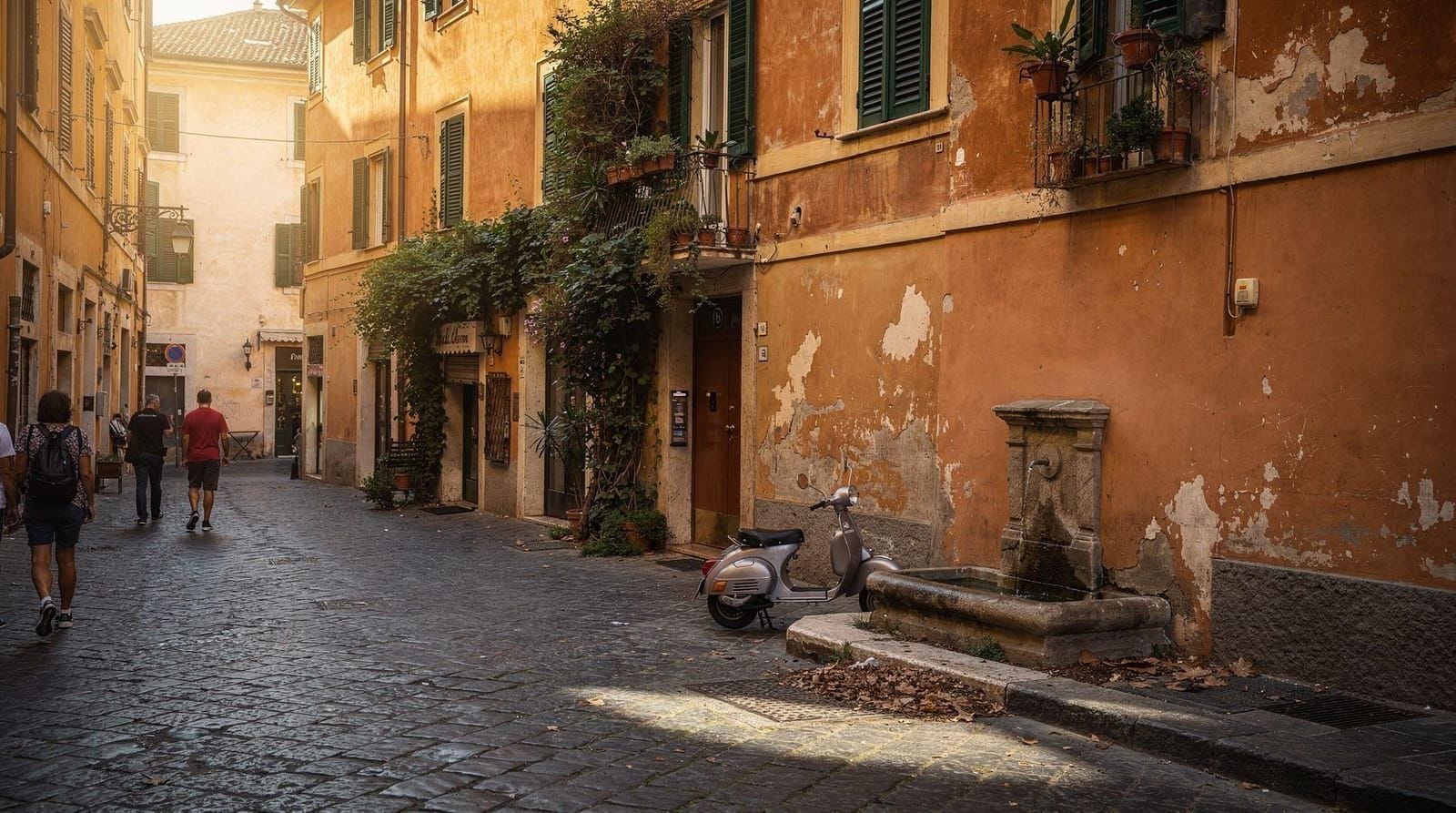
Testaccio does not announce itself. There are no oversized restaurant boards with photographs of pasta dishes. No one stands in a doorway trying to hand you a menu. The neighbourhood sits south of the Aventine hill, bounded by the Tiber on one side and the old slaughterhouse on the other, and for most of its modern history it has been a working-class Roman quarter that fed its residents seriously and without fuss.
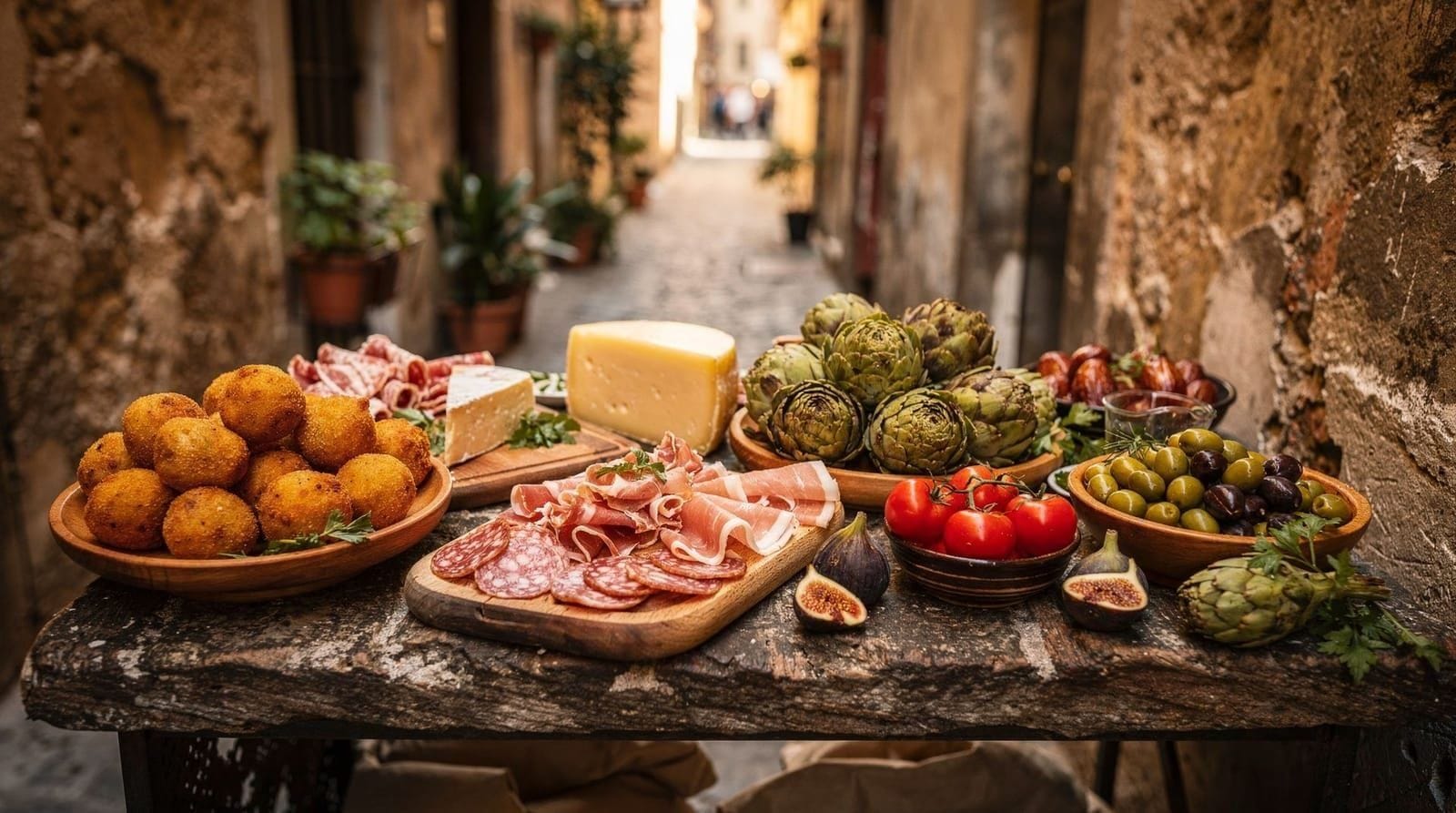
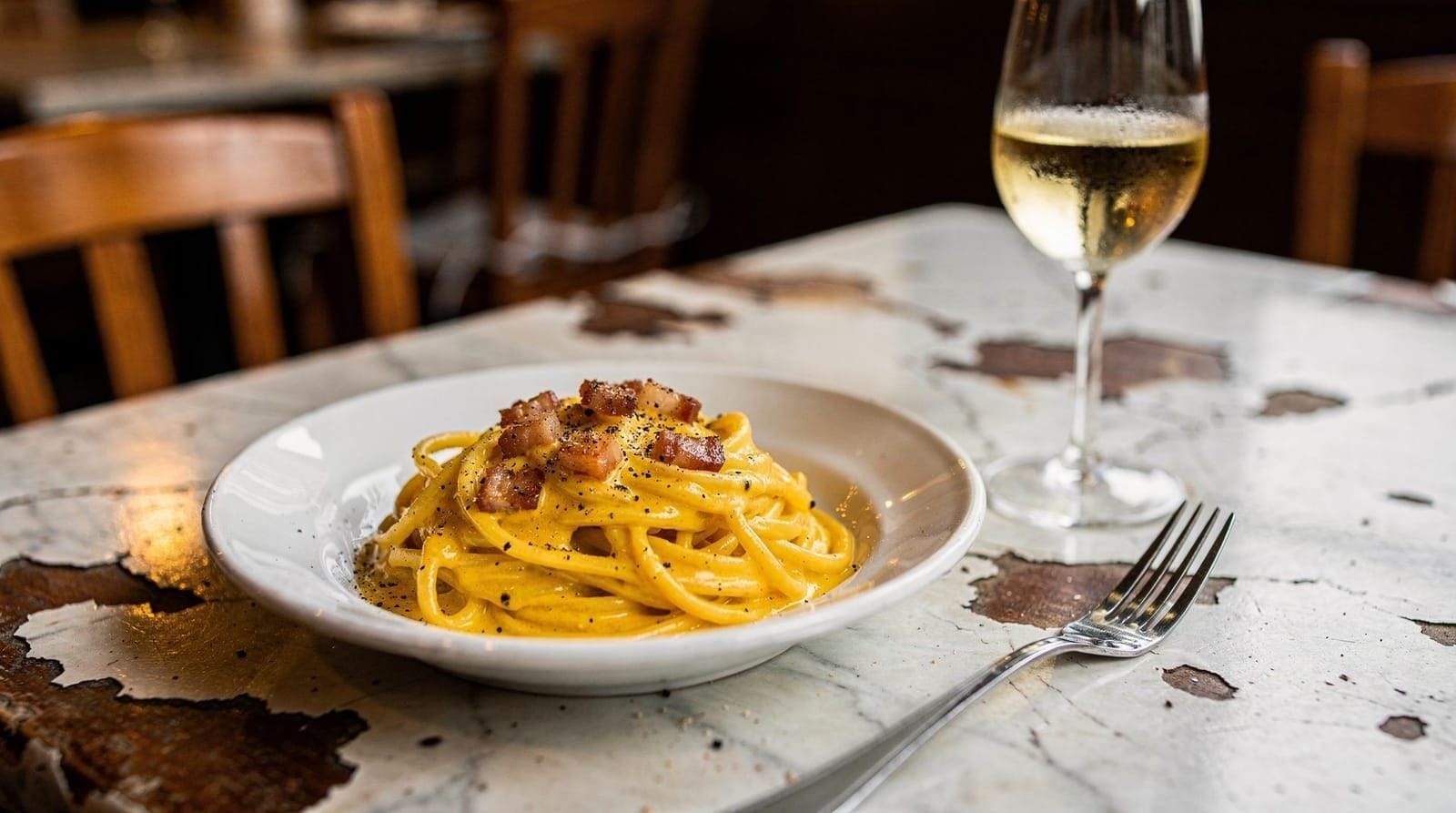
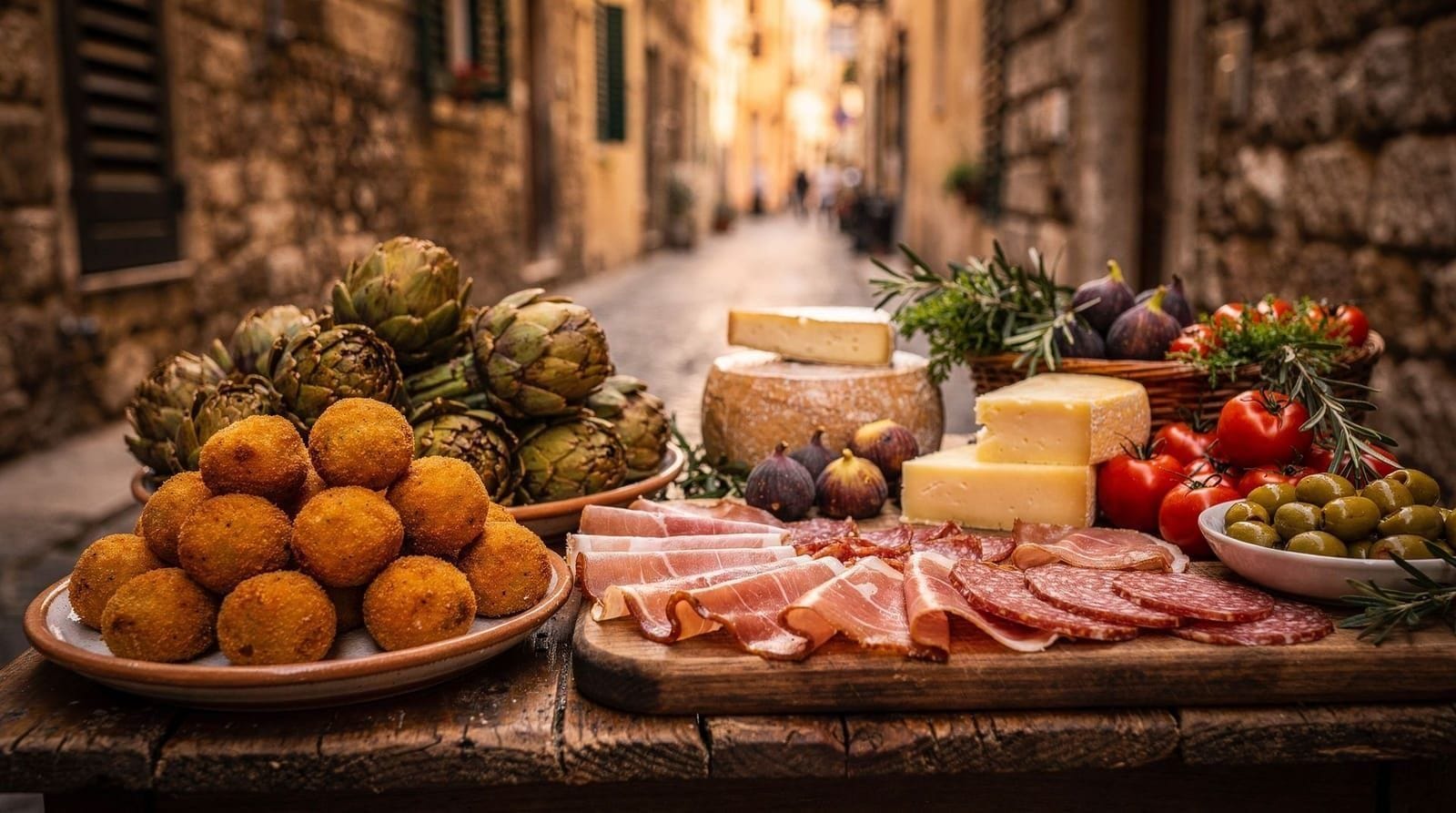
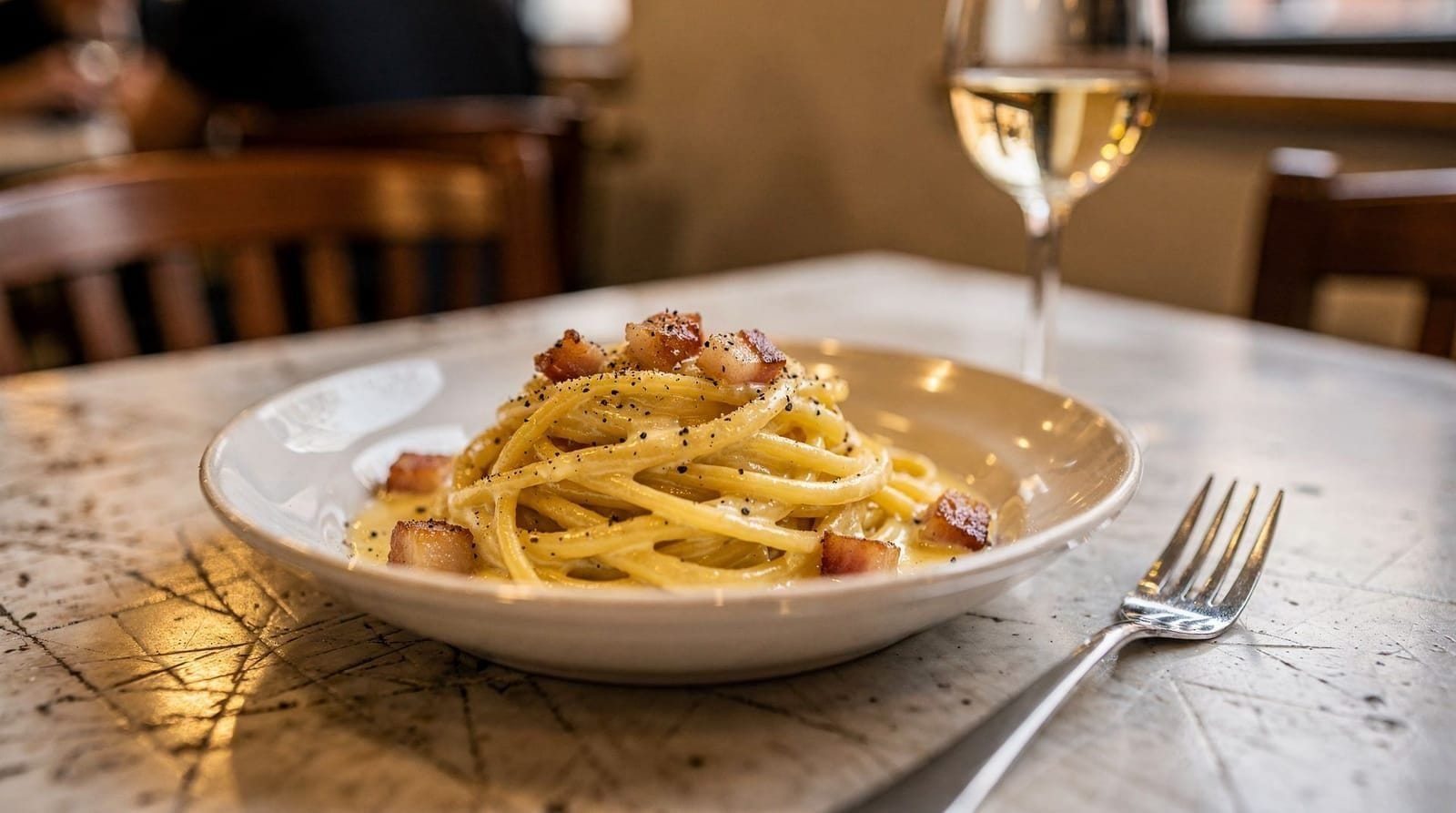
It remains exactly that. The restaurants here are full of Romans — not exclusively, but predominantly — because Testaccio has the kind of cooking that earns repeat custom. Quinto quarto (offal and secondary cuts), cacio e pepe, carbonara, supplì, fried artichokes, abbacchio. The cuisine of poverty and the slaughterhouse, elevated over generations into something that is now the canonical Roman table.
The covered market — start here
The Mercato Testaccio on Via Galvani is the right place to calibrate your appetite before anything else. It is a covered market operating Tuesday through Saturday, roughly 7am to 3pm, and it is genuinely a food market in the Roman sense: produce stalls, butchers, fishmongers, pasta vendors, cheese counters, and a cluster of food stalls inside the market selling street food and small plates.
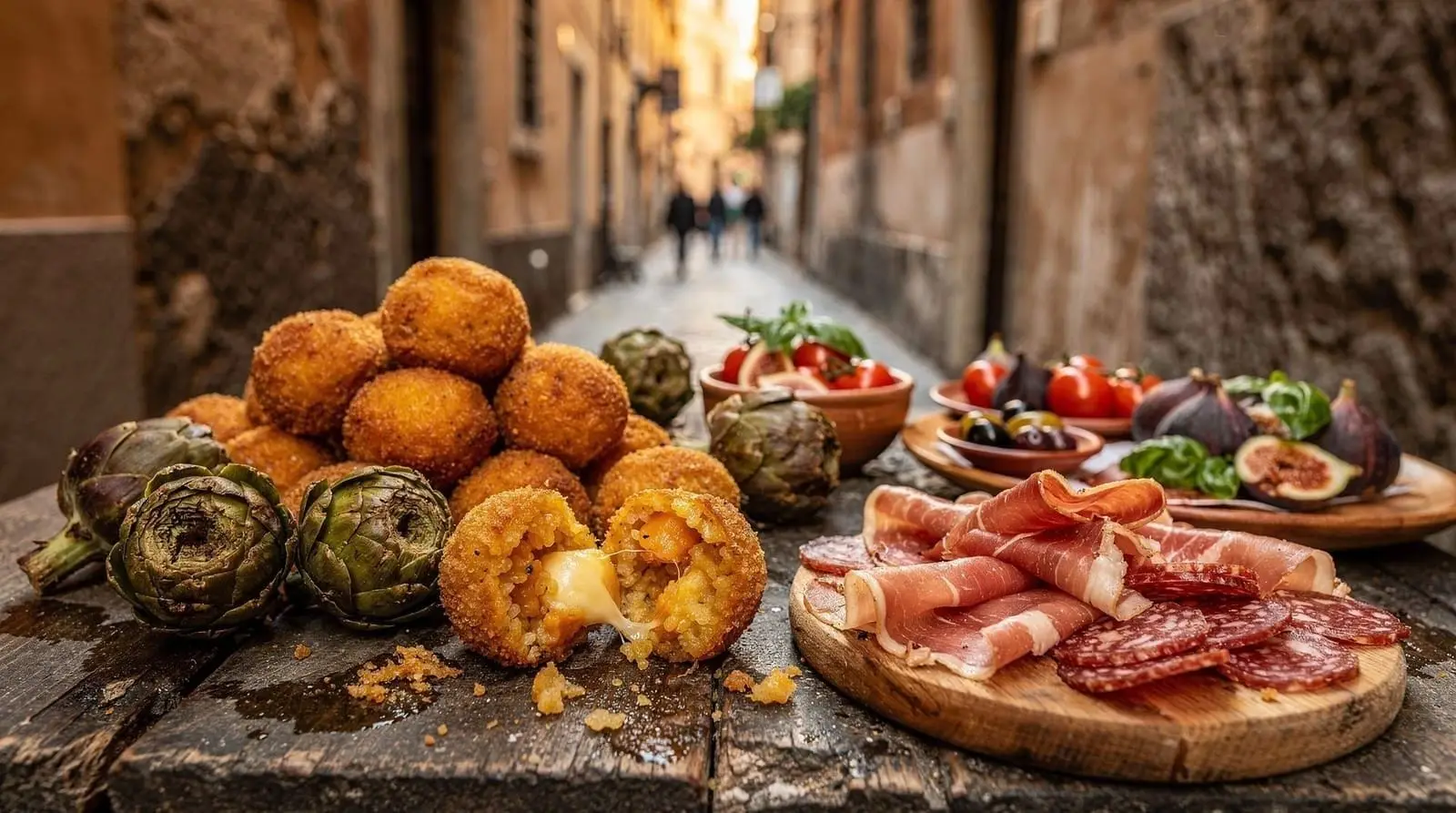
The thing to eat at the market is supplì — fried risotto balls with a molten mozzarella core. Mordi e Vai, run by Sergio Esposito, is the stall with the queue and the reputation. The slow-cooked meat in breadcrumbs (bollito) is the more obscure order; the classic supplì al telefono is the baseline. The name comes from the string of melted cheese that stretches between the two halves when you pull it apart, like a telephone cord. Get two. The first one disappears before you have registered eating it.
There are also excellent fried fish and fried vegetable options at other stalls. The artichokes, when in season (November through April), are worth prioritising — carciofi alla giudia, the Jewish-style deep-fried whole artichoke, is one of Rome’s truly distinctive dishes and the versions at the market are well-executed and inexpensive, around €2–3 each.
Lunch: where to sit
Flavio al Velavevodetto on Via di Monte Testaccio is the neighbourhood’s flagship trattoria — embedded literally into the Monte Testaccio (a hill built entirely from ancient Roman amphora shards) with a terrace and a straightforward Roman menu. The cacio e pepe is correct, the rigatoni alla pajata (pasta with veal intestines) is excellent and rarely found elsewhere without compromise, and the secondi lean toward the classic Roman preparations: abbacchio scottadito, involtini, trippa.
Reservations are genuinely advisable for dinner and useful for lunch on weekends. The space is handsome and the service is professional without being stiff. Budget around €35–45 per person with wine.
Da Remo on Piazza di Santa Maria Liberatrice is the Testaccio pizza institution — thin, charred Roman pizza, eaten standing or at paper-covered tables, usually very loud. The queue on Friday evenings is real; go on a Tuesday or a Thursday at 8pm and you will wait less. The supplì here is also excellent. Budget €15–20 per person.
Il Buchetto on Via Luca della Robbia is the kind of place that does not advertise itself and barely needs to: seven tables, seasonal menu written on a blackboard, a wine list that rewards asking questions. The owners are serious about quality without being precious about it. This is where you eat if you want the neighbourhood version of a restaurant rather than the version adapted for visitors.
The quinto quarto question
Testaccio’s historical food identity comes directly from the old slaughterhouse — the mattatoio — that occupied the southern end of the neighbourhood from 1891 until the 1970s. Slaughterhouse workers were paid partly in the offal and secondary cuts that were not sold commercially: the fifth quarter, quinto quarto. Tripe, oxtail, lung, heart, kidneys, intestines — all of this became the foundation of Testaccio cooking because it was what people could afford and what they had.
The modern expression of this is not just preserved for historical interest. Restaurants like Flavio al Velavevodetto and, more insistently, Checchino dal 1887 (one of the city’s oldest restaurants, specialising entirely in quinto quarto) still cook these dishes seriously because there is a genuine clientele for them. Coda alla vaccinara — braised oxtail in tomato and celery — is one of the great Roman preparations and worth ordering if you encounter it. It requires patience to cook correctly and the versions in Testaccio are done properly.
You do not have to eat offal to eat well in Testaccio. But understanding where the food comes from gives the neighbourhood’s cooking a context that makes even a plate of cacio e pepe feel different.
What the neighbourhood is about beyond food
Testaccio is also the neighbourhood where you find some of the city’s most honest bar culture. The Piazza Testaccio and surrounding streets have a concentration of wine bars, aperitivo spots, and old-school caffès that serve primarily Romans. The Rec 23 bar-restaurant hybrid has been popular for a decade without becoming a tourist destination. The Palladium and Villaggio Globale are former industrial spaces that now host live music and cultural events.
The Testaccio neighborhood guide covers the full geography, but the practical food walker’s route is simple: start at the market in the morning, eat supplì at Mordi e Vai, explore the Monte Testaccio area at lunch, and return for dinner at either Flavio or a smaller trattoria. If you are covering this alongside the Aventine or the Circus Maximus area, the Aventino & Circus Maximus neighbourhood connects directly to the north.
Rome street food walking tour: Trastevere and Campo de’ FioriIf you want a guided context for Roman street food before striking out independently, this format covers the fundamentals across two of the city’s most food-dense areas. Testaccio operates differently — more a neighbourhood to explore on your own once you know what to look for — but the grounding in Roman street food vocabulary (supplì, pizza al taglio, fried things) transfers directly.
Wine and a slower evening
Testaccio’s wine bar scene has grown alongside its restaurant reputation without losing its neighbourhood character. Enoteche around Via Galvani and the streets near the market pour Lazio wines — the Castelli Romani whites that pair naturally with fried artichokes and supplì — at prices well below what you’d pay in Trastevere or the centro storico. This is a good neighbourhood for the kind of evening that starts with a glass of wine and small plates rather than committing to a full sit-down dinner, especially if you’ve already eaten well at lunch.
Comparing Testaccio to Rome’s other food neighbourhoods
Testaccio is often mentioned in the same breath as Trastevere and the Jewish Ghetto as one of Rome’s essential eating districts, but the character differs. Trastevere is more atmospheric and more tourist-heavy after dark; the Ghetto is smaller and concentrated on a handful of fried specialities; Testaccio is the one that still functions primarily for its own residents, with prices to match. If you only have time for one serious food neighbourhood beyond the historic centre, Testaccio is the one that rewards showing up hungry and unhurried rather than working through a checklist.
Practical notes
The market closes early — be there by noon if you want full access to all the stalls. Most Testaccio restaurants close Sunday evening and Monday. The neighbourhood is a 15-minute walk from the Colosseum and the Circus Maximus, or a short tram ride (line 3 from Trastevere) and bus connections from the centre.
Prices are noticeably lower than in Trastevere or the centro storico. Coperto (cover charge) is standard at 1–2 € per person — this is normal, not a trap. Tipping 5–10% is appreciated at sit-down restaurants.
One thing: Testaccio on a Saturday market morning is a neighbourhood operating at full noise. It is excellent. Go on a Thursday or Friday if you want it slightly calmer. Go on Saturday if you want the full texture of Roman food culture functioning at peak intensity.
It is one of the best mornings you can spend in Rome, and it costs very little if you navigate it correctly.
Frequently asked questions
Is Testaccio safe and easy to get to for a visitor? Yes — it’s a well-connected, ordinary residential neighbourhood a 15-minute walk from the Colosseum or a short tram ride from Trastevere, with no particular safety concerns beyond normal city awareness.
What is quinto quarto and should I be worried about trying it? Quinto quarto refers to offal and secondary cuts — tripe, oxtail, and similar — that became central to Testaccio cooking historically. You don’t have to order it to eat well in the neighbourhood, but dishes like coda alla vaccinara are approachable even for cautious first-timers and are considered some of Rome’s best cooking.