Porta Portese flea market: Rome's Sunday treasure hunt
Rome: Trastevere & Campo de Fiori Street Food Walking Tour
Is Porta Portese flea market worth visiting?
Yes, if you arrive before 09:00 and have realistic expectations. It is Rome's largest and most varied flea market, operating every Sunday morning along Viale di Trastevere. Genuine antiques, second-hand clothing, vinyl records and oddities are available alongside low-quality imported goods. The experience is chaotic and fascinating; the pickpocket risk is real and constant. Secure your valuables and arrive early.
A Sunday institution with real and imagined treasures
Porta Portese is the kind of market that generates stories. The antique dealer who sold a Caravaggio attribution for €50. The box of vintage Levi’s from a Roman estate. The first edition Moravia novel in perfect condition. These stories are real — they happen, occasionally, and they are part of why Romans have been coming here every Sunday for 80 years.
Most visits do not produce stories. Most visits produce a chaotic and absorbing few hours among 4,000 stalls, a great deal of imported tat alongside genuinely interesting second-hand merchandise, and the specific pleasure of sorting through physical objects with no particular agenda. That is enough — Porta Portese is one of Rome’s most characteristically Roman experiences, and it costs nothing to enter.
The practical reality: arrive early, secure your valuables, know your prices if you are buying anything significant, and understand that the good material goes before the tourist crowds arrive.
| Where | Viale di Trastevere, starting at the Porta Portese gate |
| When | Sundays, roughly 07:00–14:00 |
| Cost to enter | Free — pay only for what you buy |
| Time needed | 1.5–3 hours for a proper browse |
| Getting there | Tram 8 or bus 23/280/H, or a 20-minute walk from Trastevere |
If markets aren’t your priority, our free things to do in Rome guide covers other no-cost Sunday options, and Rome’s tourist traps guide is useful background on where else to apply the same scepticism.
History and geography
The market is named for the ancient Porta Portese gate in the Aurelian Walls, built by Emperor Claudius as a secondary city gate for the nearby Tiber port (Portus). The gate survives; the flea market grew around it after World War II, when Romans sold household goods and personal possessions to survive the economic devastation. It formalised over the following decades into a permanent Sunday institution.
The market runs along Viale di Trastevere from the Porta Portese gate for several hundred metres, then extends into the parallel side streets — particularly Via Portuense and the smaller streets between. The total footprint is large; a single pass from end to end covers 1–1.5 km if you walk the main line and a few side streets.
The character changes as you move through the market:
Near the Porta Portese gate (southern end): This is where the more serious antique dealers concentrate — furniture, ceramics, prints, silverware, vintage clothing. The merchandise quality is higher, the prices are higher, and the vendors know their stock. This section rewards early arrival and careful browsing.
Along Viale di Trastevere (main stretch): The bulk of the market — mixed quality, unpredictable selection. Clothing vendors, book vendors, vinyl records, tools, general household goods. This is where the chaos peaks by 10:00.
Side streets: Often where the most interesting speciality vendors set up — vintage electronics, specific furniture periods, military surplus, stamps and coins. Worth exploring if you have a particular interest.
What to look for and what to avoid
Worth investigating
Vinyl records: Rome has a genuine collector’s scene and Porta Portese has multiple record vendors. Italian pop and rock from the 1960s–1980s (RCA Italiana, CBS, Fonit Cetra labels), jazz, classical, and international pop. Condition varies; bring a scratch-check habit or accept risk. Prices for desirable Italian records have increased significantly as collector demand grew; €5–30 for most desirable items, more for rarities.
Books and printed ephemera: Italian-language paperbacks, art catalogues, old magazines (particularly 1950s–1970s illustrated weeklies like Gente and Epoca, which have good photography), maps and prints. Italian-language material is cheap because the market is local; illustrated books with international appeal are priced accordingly.
Vintage clothing: The better vintage clothing vendors are concentrated near the gate end. Look for Italian-made garments from the 1960s–1980s specifically — the construction quality of that era’s industrial Italian garment industry was excellent. Leather goods, wool coats and formal wear from this period retain wearability and have modest international collector interest. Mass-produced imported clothing is not worth sorting through.
Ceramics and kitchenware: Pre-industrial Italian kitchen ceramics (majolica, terracotta serving pieces) appear regularly at modest prices. Condition and authenticity require some knowledge; buy what you find attractive rather than what you think is valuable.
Religious objects: The Italian religious object market is rich and strange. Antique devotional prints, reliquary cases, holy water fonts, old rosaries, wooden ex-votos — these appear at Porta Portese at prices between €2 and several hundred euros depending on age and condition. The most interesting and affordable category for an average browser.
Approach with caution
Electronics: Test everything before payment. There is no returns policy. Stolen items circulate through flea markets; ask yourself whether you would be comfortable if the provenance turned out to be unexpected.
Luxury goods: Genuine Hermès scarves and Louis Vuitton bags do appear at flea markets when estates are cleared. They also appear as counterfeits. Unless you are highly knowledgeable, the risk is not worth taking.
“Antiques” without visible age: Items presented as antique but showing no genuine wear, patina or oxidation. The flea market includes vendors who produce convincing-looking fake antiques.
Cheap imported goods: A significant portion of the market — particularly the centre stretch — is Chinese and Southeast Asian import goods sold at market margins. Nothing wrong with buying them if you want them, but they are not the reason to visit.
Pickpockets: a direct warning
Porta Portese pickpockets are professional and persistent. This is not speculative — it is documented by police reports and the consistent experience of visitors and locals. The market conditions are near-ideal for pickpockets: you are distracted, your hands are occupied with objects, crowds press together in narrow alleys between stalls, and there is ambient noise that prevents you from noticing a bump or a light touch.
Specific tactics reported:
- The “drop and bump” — someone drops something near you, you instinctively bend to help pick it up, a second person takes your wallet or phone.
- The “close press” — people pressing unusually close on your phone pocket or bag.
- Distraction by apparent confusion or argument that draws your attention while a partner takes your belongings.
Mitigation: Front trouser pockets for cards and cash (a thin money clip works well). Phone in a front pocket or inside a jacket pocket. Cross-body bag worn across the chest, not hanging to the side or behind. Leave valuable jewellery and expensive watches at the hotel. Do not carry your entire travel budget; bring only what you plan to spend.
Bargaining: practical guidance
Bargaining is the expected mode of transaction for everything above approximately €5. Below that, vendors generally just name a price and selling to the next person suits them as well as negotiating.
Starting point: For most items, 50% of the asking price is a reasonable opening. Vendors typically ask with a 30–50% margin built in. Some ask with very little margin because the price is already fair; you will find out quickly from their reaction.
Reading the vendor: A vendor who immediately accepts your first counter-offer has built in a large margin. A vendor who barely engages and says the price is fixed is either at their floor or has no interest in bargaining. Most fall in between — some back-and-forth, then a number that works for both parties.
The walk-away: The most effective negotiating tool. If you are genuinely willing to not buy the item, starting to walk away usually produces a better offer. It works only if you are actually willing to leave.
Language: Basic Italian is helpful: “Quanto vuole?” (How much do you want?), “È troppo” (That’s too much), “Posso avere per…?” (Can I have it for…?). Many vendors at the antique end speak some English; at the general merchandise end, Italian works better.
Cash and small notes: Bring plenty of small-denomination notes and coins. Vendors negotiating in the €5–30 range are frequently unwilling or unable to break a €50 note early in the morning before they’ve made other sales, and producing a large note undermines your bargaining position anyway — it signals you have more to spend than you’re claiming. A mix of €5s, €10s and coins makes transactions faster and keeps your negotiating leverage intact.
After the market: eating in Trastevere
Porta Portese is a natural complement to a Trastevere morning. After the market, the neighbourhood’s bars and cafés are ready for the late-morning crowd. For food:
Da Enzo al 29 (Via dei Vascellari, Trastevere): Traditional Roman trattoria with genuine cacio e pepe and carbonara. Reserve ahead; it fills by 13:00 on Sundays.
Grazia e Graziella (Via dei Salumi): A simple neighbourhood lunch spot popular with market vendors and local families on Sunday. Cash only, unpretentious, good value.
For coffee and pastry while waiting for lunch, any of the bars on Piazza di Santa Maria in Trastevere are pleasant — it is one of Rome’s most beautiful small squares and perfectly calm on a Sunday mid-morning after the market rush.
For a broader picture of the Trastevere neighbourhood’s food culture, see our Trastevere food guide and Trastevere neighbourhood guide.
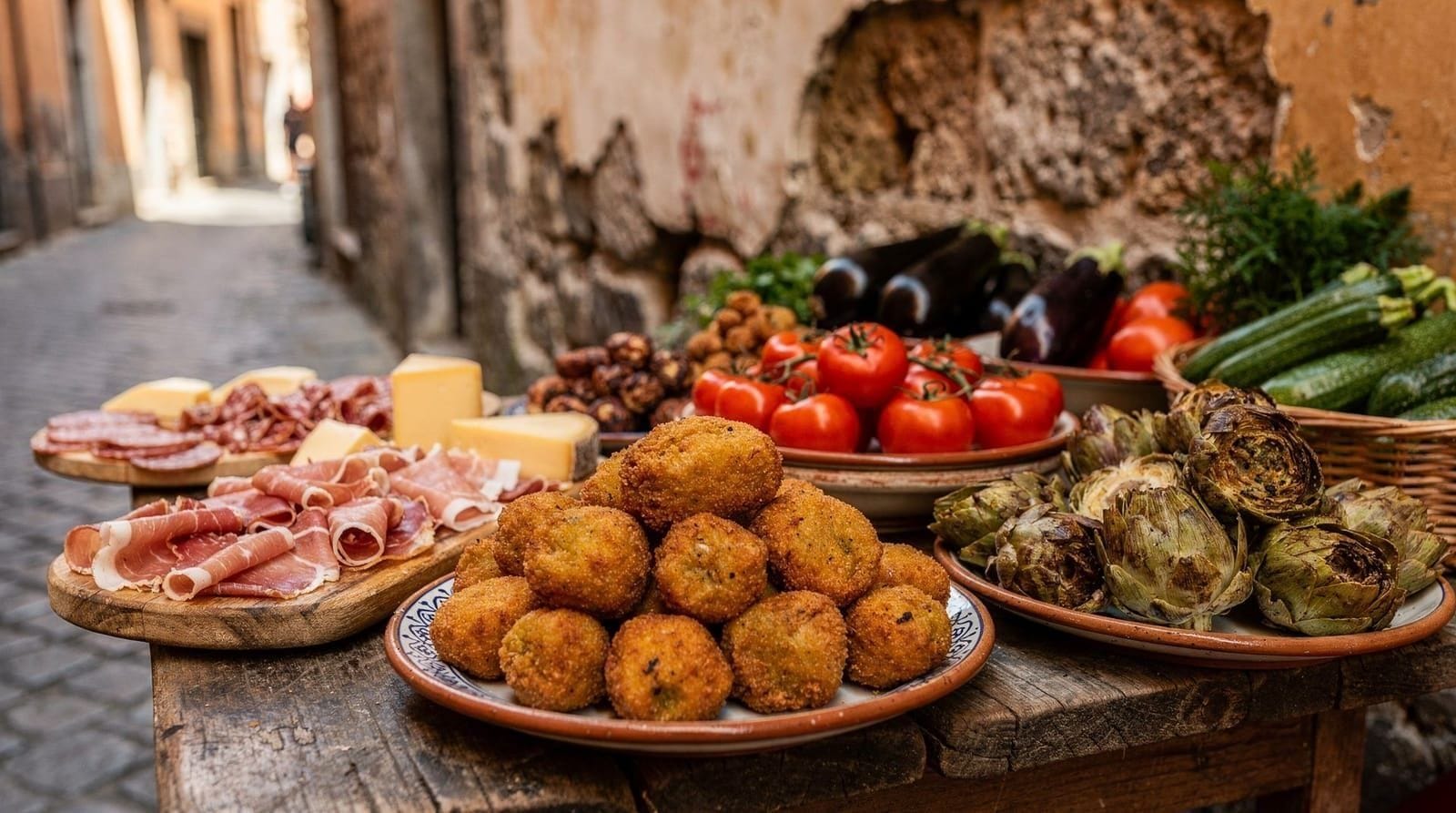
Trastevere and Campo de’ Fiori street food tour — a guided walk through the neighbourhood’s food culture, useful context for the Porta Portese Sunday market area.Combining Porta Portese with the Sunday organic market
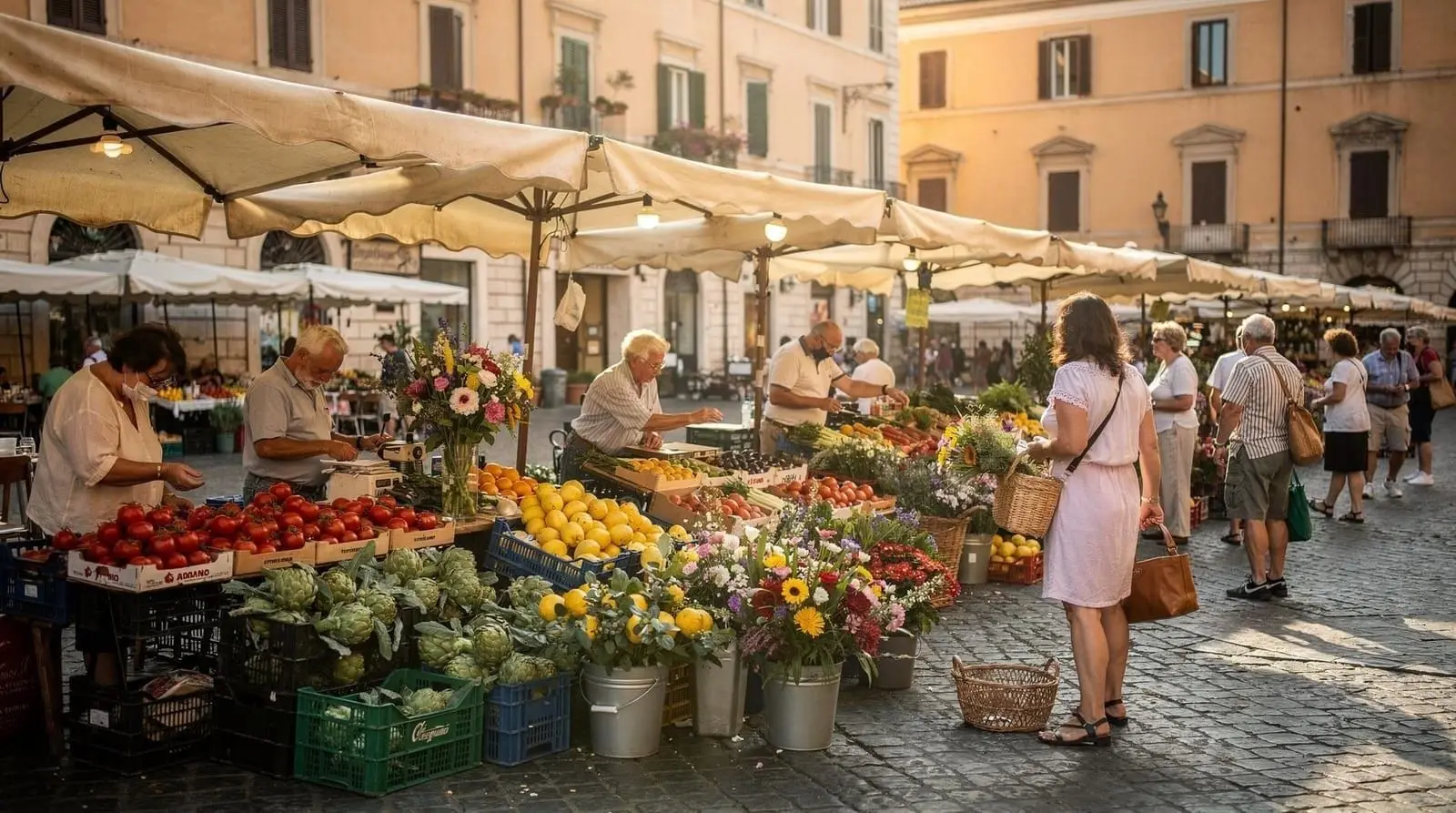
Rome’s best farmers’ market at Circus Maximus also runs on Sunday mornings (09:00–14:00), about 1.5 km from Porta Portese. Starting at Porta Portese before 08:00, spending 90 minutes browsing, then walking or taking a short bus ride to Circus Maximus for the organic market and a second breakfast of artisan cheese and bread makes for an excellent Roman Sunday morning.
See our Rome best markets guide for the full comparison of all major Rome markets.
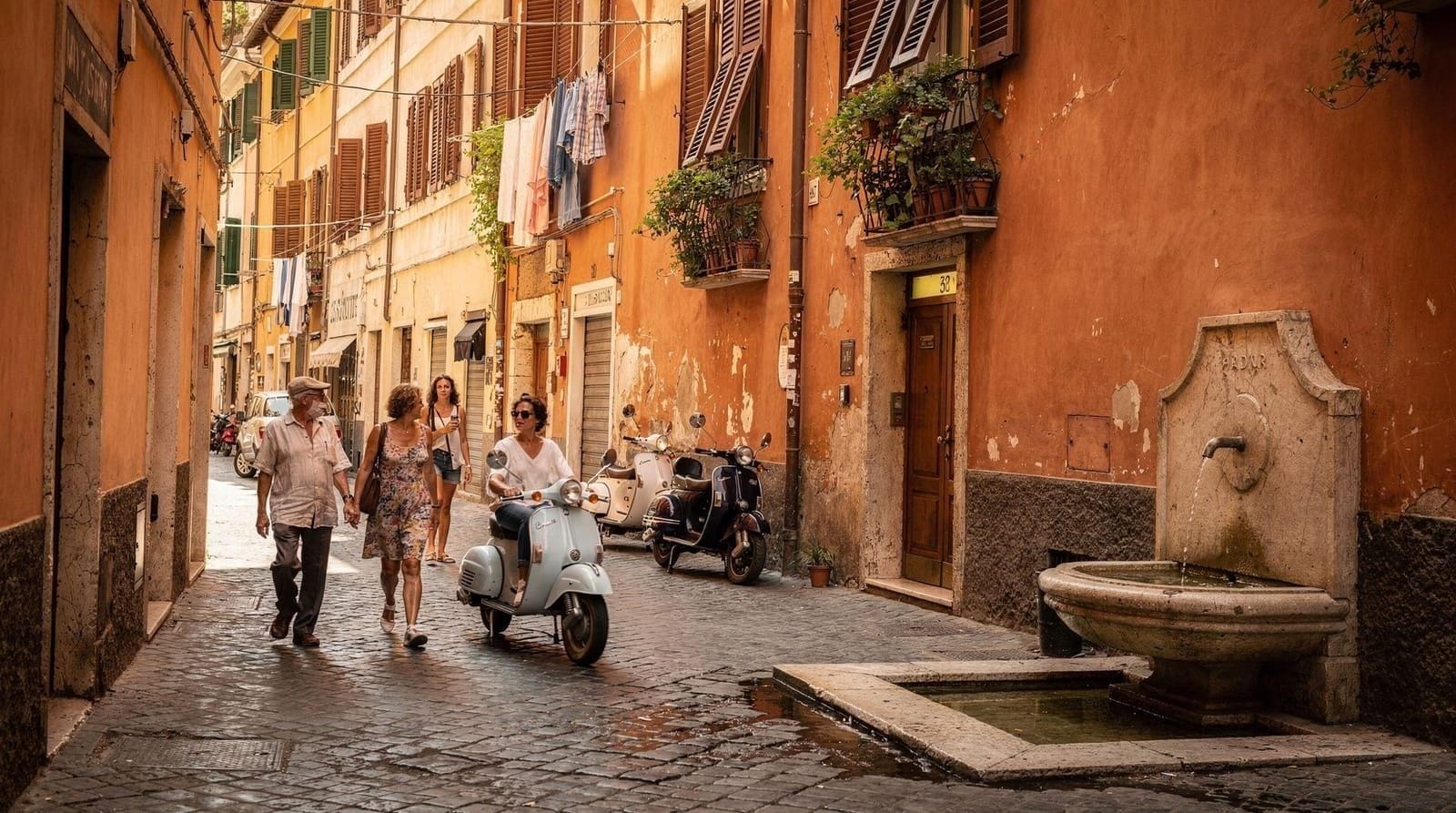
Gourmet food and wine tasting tour in Trastevere — the neighbourhood that borders Porta Portese, equally good for food and drink as for Sunday market browsing.Understanding what you are buying: provenance and authenticity
Porta Portese operates entirely on trust and buyer knowledge — there is no returns policy, no consumer protection on second-hand goods, and no verification of stated provenance. This is standard for flea markets; it is worth stating explicitly before you make significant purchases.
Antiques verification: Italian antiques law does not permit export of objects over 50 years old without a cultural export licence issued by the Ministero della Cultura. For objects of genuine historical significance, this is rarely an issue for standard purchases at Porta Portese (most vendors do not have objects that would qualify); however, if you are buying something genuinely valuable and antique, factor in the export licence process. In practice, ceramics, prints, books and decorative objects under €500 are rarely subject to licensing issues; major furniture pieces, paintings of historical significance, and archaeological objects are a different matter.
Vintage clothing authentication: Italian fashion houses are consistently counterfeited. Without specific expertise, avoiding claimed luxury vintage clothing is the safest approach unless the price reflects reasonable uncertainty about authenticity.
Electrical equipment: Italy operates on 230V/50Hz standard, the same as most of Europe. UK visitors (230V) can use most electrical equipment bought here; US and Canadian visitors (120V/60Hz) will need a voltage converter, not just an adaptor, for most electrical goods.
Porta Portese as a social phenomenon
The market is worth attending even if you have no intention of buying anything. It is a compressed version of Rome’s social range — students hunting vintage, elderly Roman couples with habitual Sunday circuits, dealers with expert eyes, families bringing children for their first flea market experience, and a steady stream of tourists from every major market encountering it as both a spectacle and a functioning commerce.
The vendors who have been coming for decades — sometimes the same family for two or three generations — carry a social continuity that is increasingly rare in European city centres being rebuilt around tourism. The market survives partly by serving both locals and visitors simultaneously, which means it retains genuine local character alongside tourist-oriented stalls.
On a practical level: stay until 12:00–12:30 if you want to see vendors starting to discount to avoid packing goods back up. The hour before closing often produces the best late deals for flexible buyers.
Seasonal variations
Spring (March–May): Good weather brings larger crowds and more vendors. Spring cleaning season means more household goods and furniture appearing. One of the better times for variety.
Summer (June–August): Hot, crowded, and many regular vendors take vacations in August. The market continues but with reduced vendor numbers in August. Early morning arrival is particularly important in summer to avoid peak heat.
Autumn (September–November): Perhaps the most pleasant season for browsing. Comfortable temperatures, post-summer vendor return, and estates clearing goods in anticipation of winter. Good for textiles and winter clothing.
Winter (December–February): The market shrinks in cold or wet weather — fewer vendors, shorter operating time. December has the specific character of Italians clearing space for Christmas; January often sees estate goods from post-holiday clearances. Bundle up and arrive with low expectations and occasional reward.
Season at a glance
| Season | Weather | Vendor turnout | Best for |
|---|---|---|---|
| Spring (Mar–May) | Mild, occasional rain | High | Widest overall variety |
| Summer (Jun–Aug) | Hot, crowded | Reduced in August | Early-morning visits only |
| Autumn (Sep–Nov) | Comfortable | High, post-summer return | Textiles, winter clothing |
| Winter (Dec–Feb) | Cold, sometimes wet | Lower | December pre-Christmas clearances |
What to do if you’re pickpocketed anyway
Despite precautions, it happens. If you notice your wallet or phone missing, act immediately rather than continuing to browse: alert the nearest vendor or the Polizia Municipale officers who patrol the market on Sundays — Porta Portese has enough of a documented problem that they are used to reports and can point you toward the closest station. File a police report (denuncia) as soon as possible, both for any insurance claim and to help cancel cards quickly; most Italian mobile providers and banks have English-language phone lines for blocking a stolen card or SIM. It rarely ruins the morning if you act calmly and quickly — treat it as a known risk of an otherwise rewarding market, not a reason to avoid Porta Portese altogether. For a broader sense of common scams around Rome generally (not specific to this market), see the scams to avoid guide.
Frequently asked questions about Porta Portese flea market: Rome's Sunday treasure hunt
When does Porta Portese open and close?
What can I find at Porta Portese?
How serious is the pickpocket problem?
How do I bargain at Porta Portese?
Is there anything I should definitely not buy at Porta Portese?
How do I get to Porta Portese?
Is Porta Portese open on public holidays?
Can I pay by card at Porta Portese?
Top experiences
Bookable activities with verified prices and instant confirmation on GetYourGuide.