Rome aperitivo and nightlife: an evening guide
Rome: Evening Walking Tour with Aperitif
What is the best area for aperitivo in Rome?
Pigneto and Testaccio offer the most authentic aperitivo at €10–14, while Trastevere and Monti are livelier and more central but pricier at €13–18. The classic hour is 18:30–21:00. Most bars include a snack spread with the drink; a few, especially in Pigneto, do an all-you-can-eat buffet.
Why Rome evenings hit differently
There is a quality of light in Rome at 19:30 in May or September — the Trevi Fountain warming from white to honey, the alleyways of Trastevere losing their crowds, the first Campari Soda of the evening — that is genuinely difficult to replicate anywhere else. Rome is not a city that does nightlife loudly. It does it slowly, warmly, and with food nearby.
Understanding how Roman evenings actually work will save you from arriving in a dead restaurant at 19:00, queuing for overpriced drinks on a tourist-trap terrace, or missing the neighborhoods where the city actually unwinds.
This guide covers everything: what aperitivo means and where it is worth paying for, the bar areas sorted by character and price, how guided evening tours compare, and practical timing for each approach.
| Classic hour | 18:30–21:00 |
| Cost | €10–14 (Pigneto/Testaccio) to €18–28 (rooftop/Centro Storico) |
| Best neighbourhoods | Monti (balanced), Pigneto (local), Trastevere (lively) |
| Booking | Rarely needed, except rooftop bars in high season |
| Best season | April–June and September–October |
What aperitivo actually means in Rome
Aperitivo is not just a drink. In Rome, it is a ritual: a pre-dinner drink accompanied by food, usually somewhere between 18:30 and 21:00. The drink price covers a snack spread — bruschetta, olives, crisps, occasionally pasta salads or small tramezzini. Some bars, particularly in Pigneto, do a more generous buffet-style aperitivo where the food is substantial enough to constitute a light dinner.
The distinction between Milanese-style aperitivo (heavy buffet, included in the drink price) and Roman aperitivo (lighter spread, still eat dinner after) has blurred in recent years. Many Rome bars now offer something in between, especially in younger neighborhoods.
Typical drink choices: Aperol Spritz is the international standard, but Romans skew toward Campari Soda (classic, slightly more bitter), Negroni, Hugo Spritz (prosecco, elderflower, mint, popular in summer), and increasingly natural wine from small Lazio producers.
The price gradient: what you pay where
Budget end (€10–13): Pigneto, Testaccio, Ostiense, Garbatella. These neighborhoods run bars where the aperitivo buffet is serious and the drinks are honest. Freni e Frizioni on Via del Politeama was the Trastevere original that turned aperitivo into a scene; its Pigneto equivalents — Necci dal 1924, Il Sorpasso, Retrogusto — are less self-conscious.
Mid-range (€13–18): Monti, Trastevere, Prati, Campo de’ Fiori area. Bar San Calisto in Trastevere is a local institution (cheap, rough tables on the piazza, great Campari). Il Sorpasso in Prati does excellent aperitivo for the neighborhood. Litro in Monteverde bills itself as a wine bar but runs aperitivo until 21:30 with a proper spread.
Premium (€18–28+): Rooftop bars, Centro Storico terraces, view-focused locations. The Hotel Locarno bar on Via della Penna does a sophisticated aperitivo that justifies the premium. Terrazza Borromini above Piazza Navona has the view, the opera performances on some evenings, and prices to match. Salotto 42 near the Pantheon is expensive but the terrace overlooking the Temple of Hadrian colonnade is one of the best in the city.
Bar areas by character
Trastevere: lively but touristy
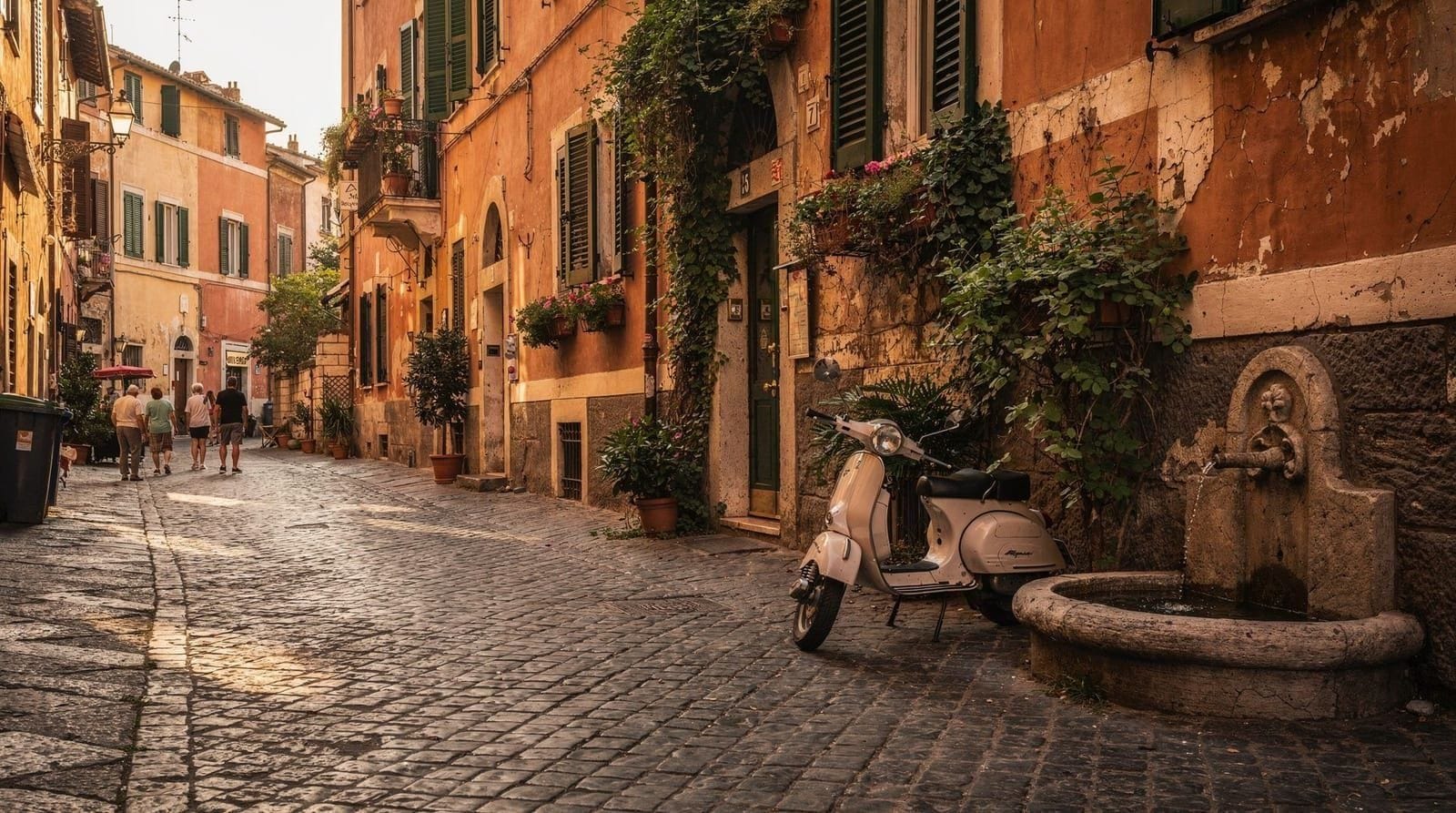
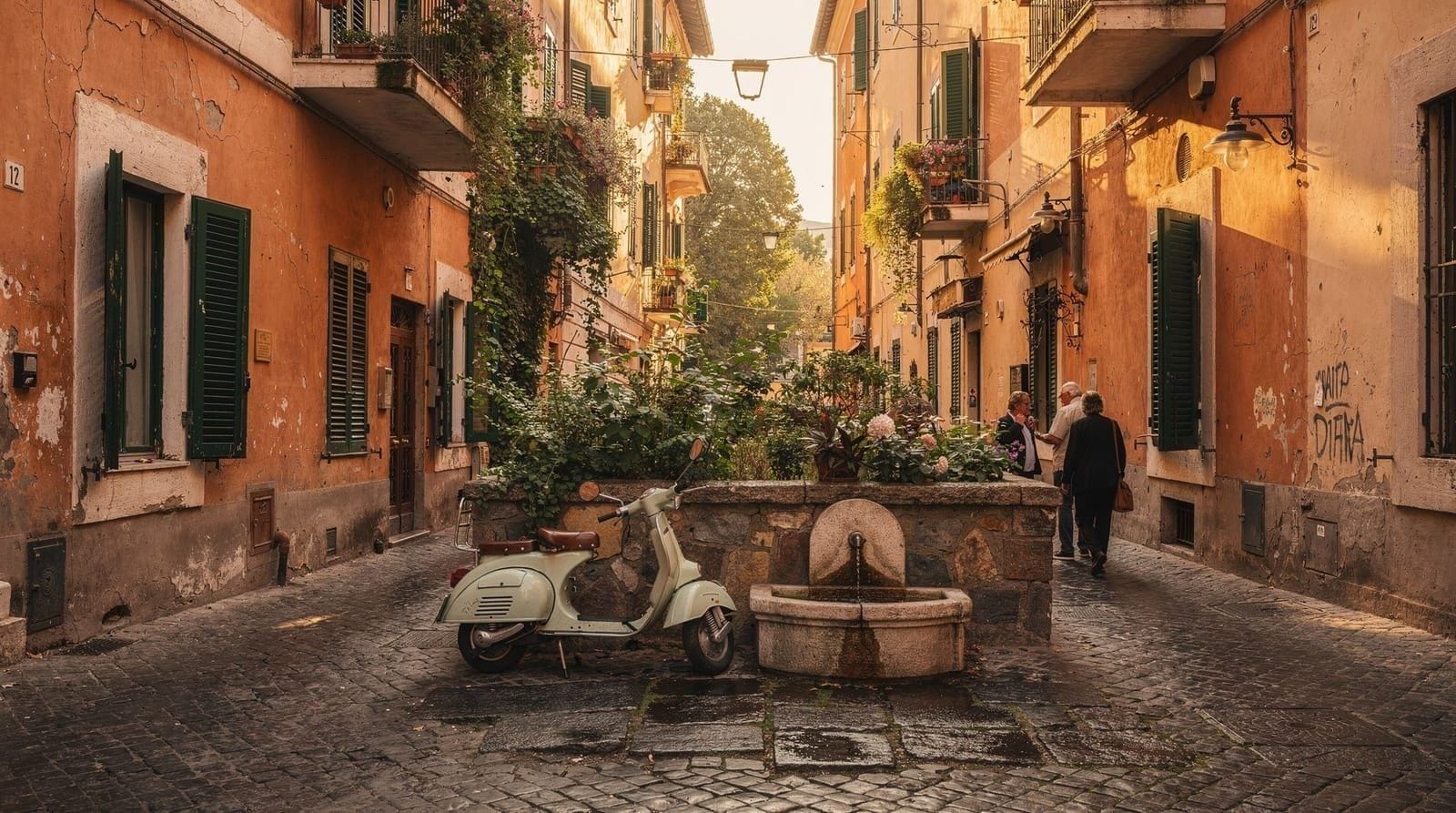
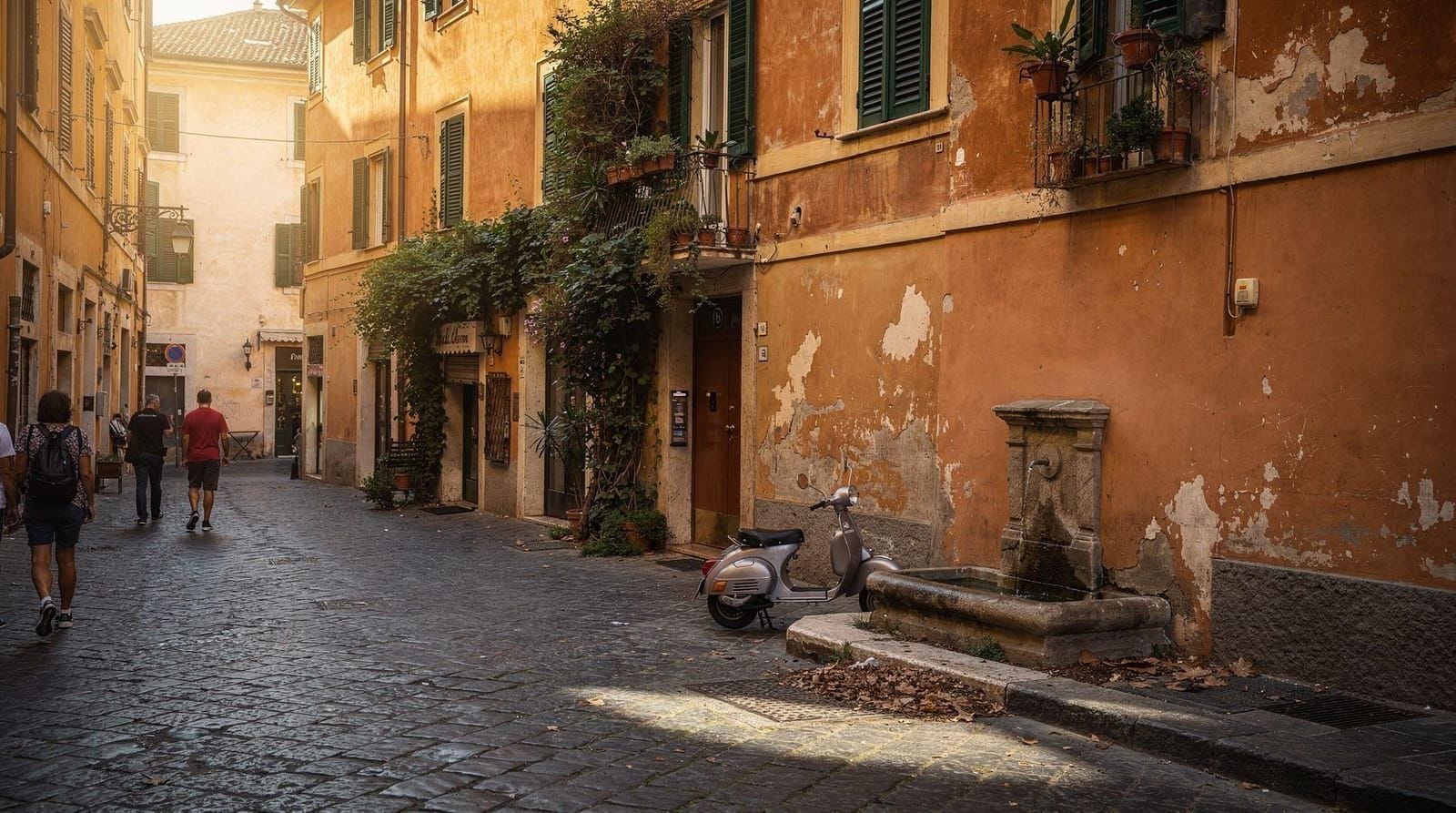
Trastevere has the most concentrated bar scene in central Rome, and the most cameras. By 21:00 on a Friday the main piazzas — Piazza Trilussa, Piazza di Santa Maria — are genuinely packed. This is not a bad thing for a first evening in Rome; the energy is real even if half the crowd is visiting. The cobbled alleys feel like a film set.
Best independent bars: Bar San Calisto (cash only, cheap, beloved by Romans), Freni e Frizioni (aperitivo buffet, garden terrace, expect a queue after 19:30), Ma Che Siete Venuti a Fà (tiny craft beer bar, serious selection, very popular).
See the Trastevere neighborhood guide for the broader picture.
Monti: curated and walkable
Monti is the neighborhood Romans recommend to each other when someone says they want aperitivo without tourists. This is only partly accurate — Monti gets plenty of visitors — but it remains more local in character than Trastevere, and the bars are generally more interesting.
Via dei Serpenti, Via del Boschetto and Piazza della Madonna dei Monti are the core. The piazza fills with young Romans in summer; buy your drinks from the bars at the edge and stand in the square.
Best options: Il Tasso (wine bar, small plates), Mimi e Coco (cocktails, aperitivo spread), Palatium Enoteca (Lazio wines, excellent for a quick glass).
See the Monti neighborhood guide for the full picture.
Pigneto: authentic and genuinely local
Pigneto is where Romans go when they want aperitivo without an audience. The neighborhood — southeast of Termini, roughly 20 minutes by tram from the center — has a working-class history and a creative present. The aperitivo here is the most generous in the city: some bars still run all-you-can-eat buffets with the drink price (€10–12).
Necci dal 1924 on Via Fanfulla da Lodi is the established landmark, a former bar-grocery now serving excellent cocktails and light food from 08:00 to 01:00. Il Sorpasso’s Pigneto sibling, Retrogusto, is worth finding.
Testaccio: food-serious
Testaccio runs aperitivo differently: the bars tend to open later (19:00–20:00), the spread is minimal, and the assumption is that you will eat a proper dinner at one of the neighborhood’s trattorie afterward. The Testaccio market area has outdoor seating in summer. Roscioli Wine Bar is a serious stop for Lazio producers.
See the Testaccio neighborhood guide for context.
Centro Storico and rooftop options
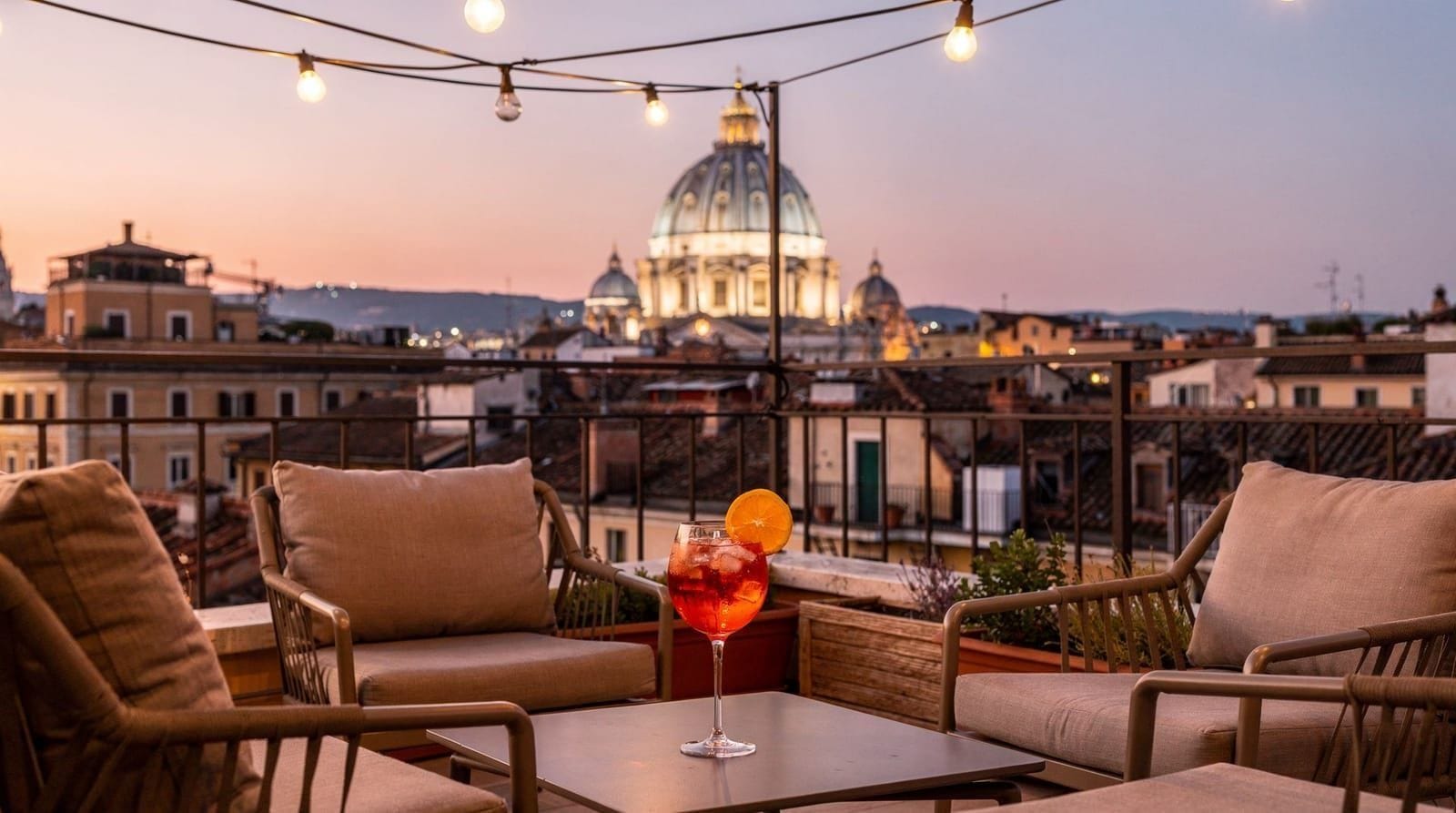
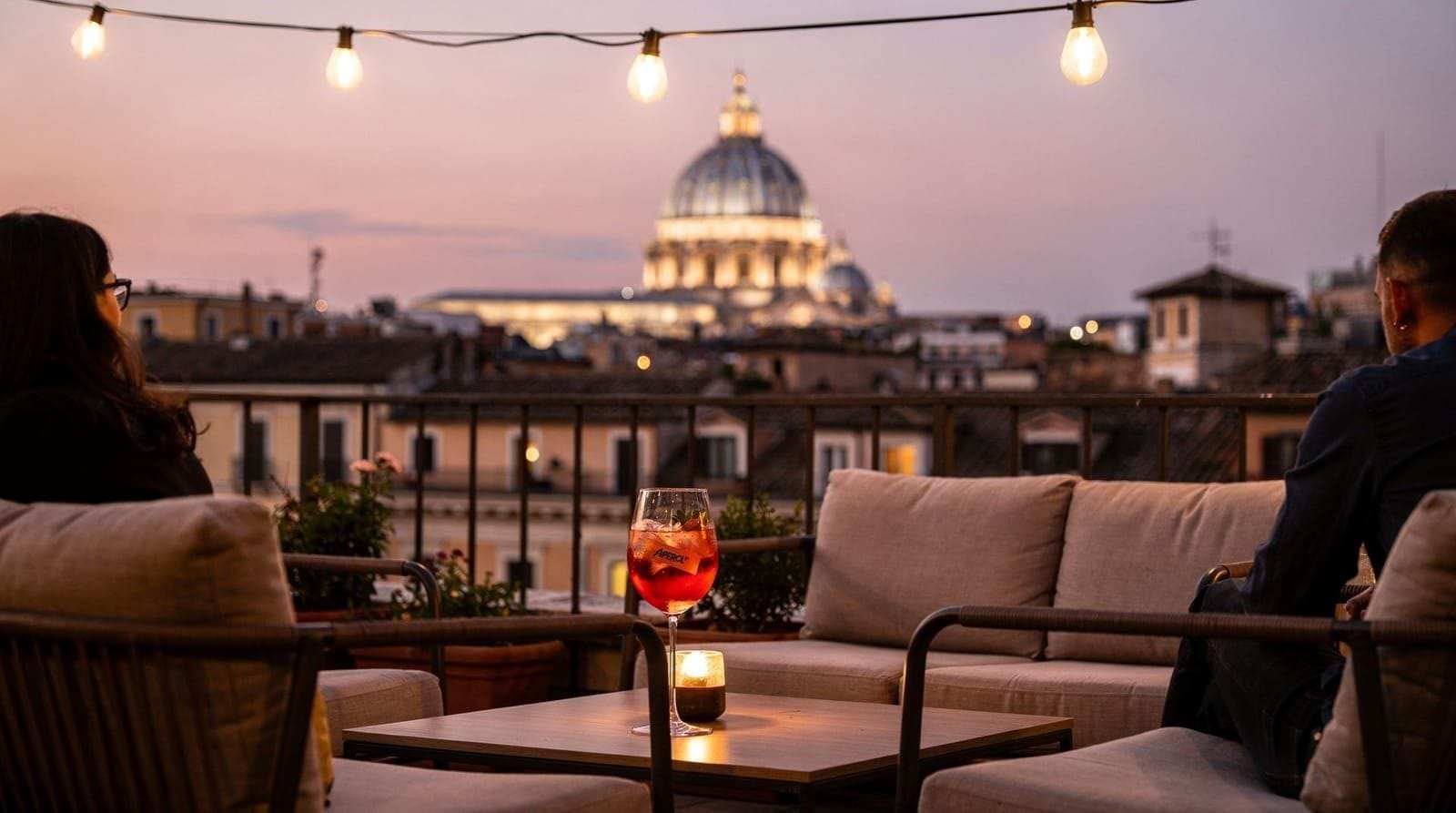
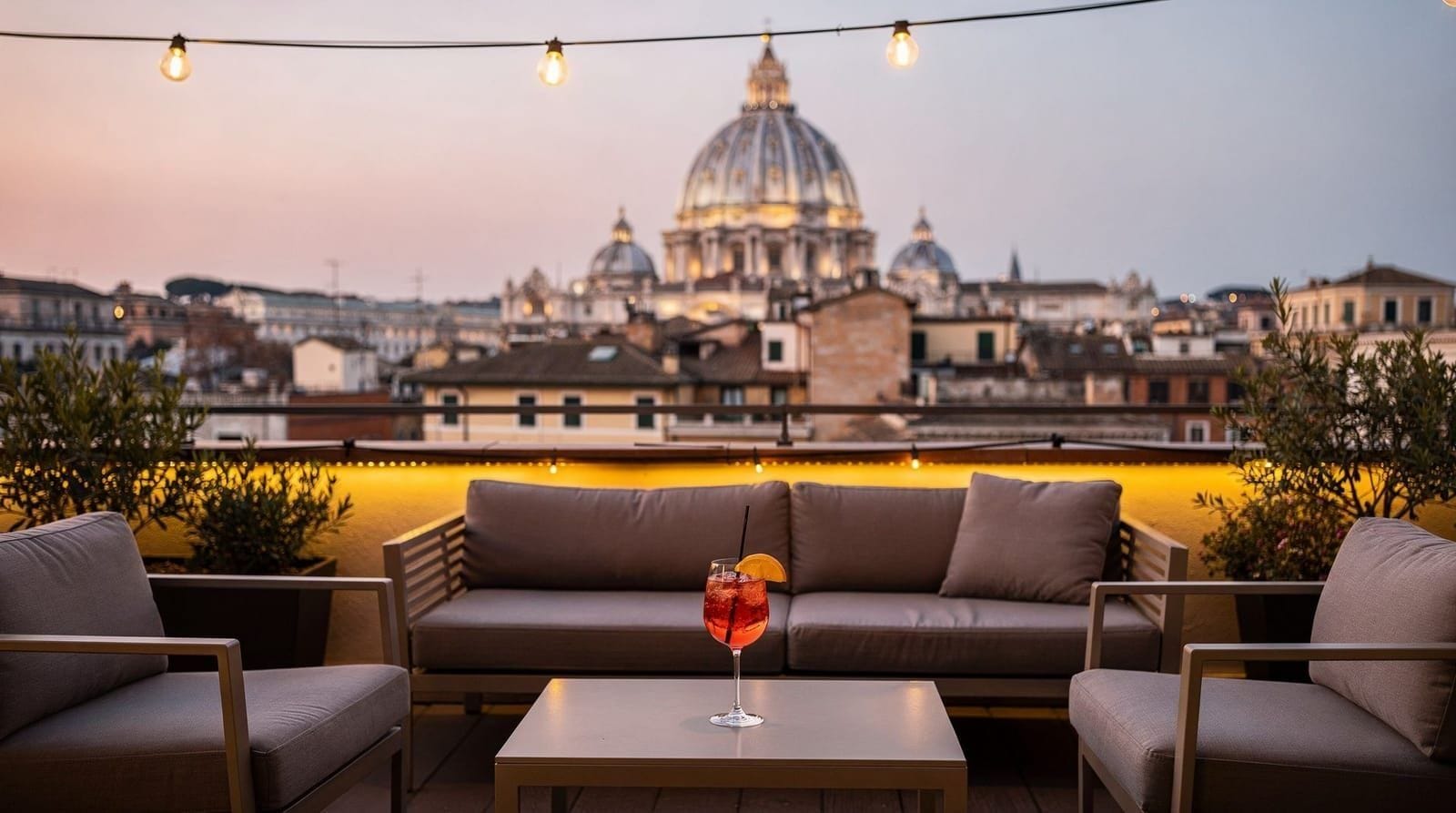
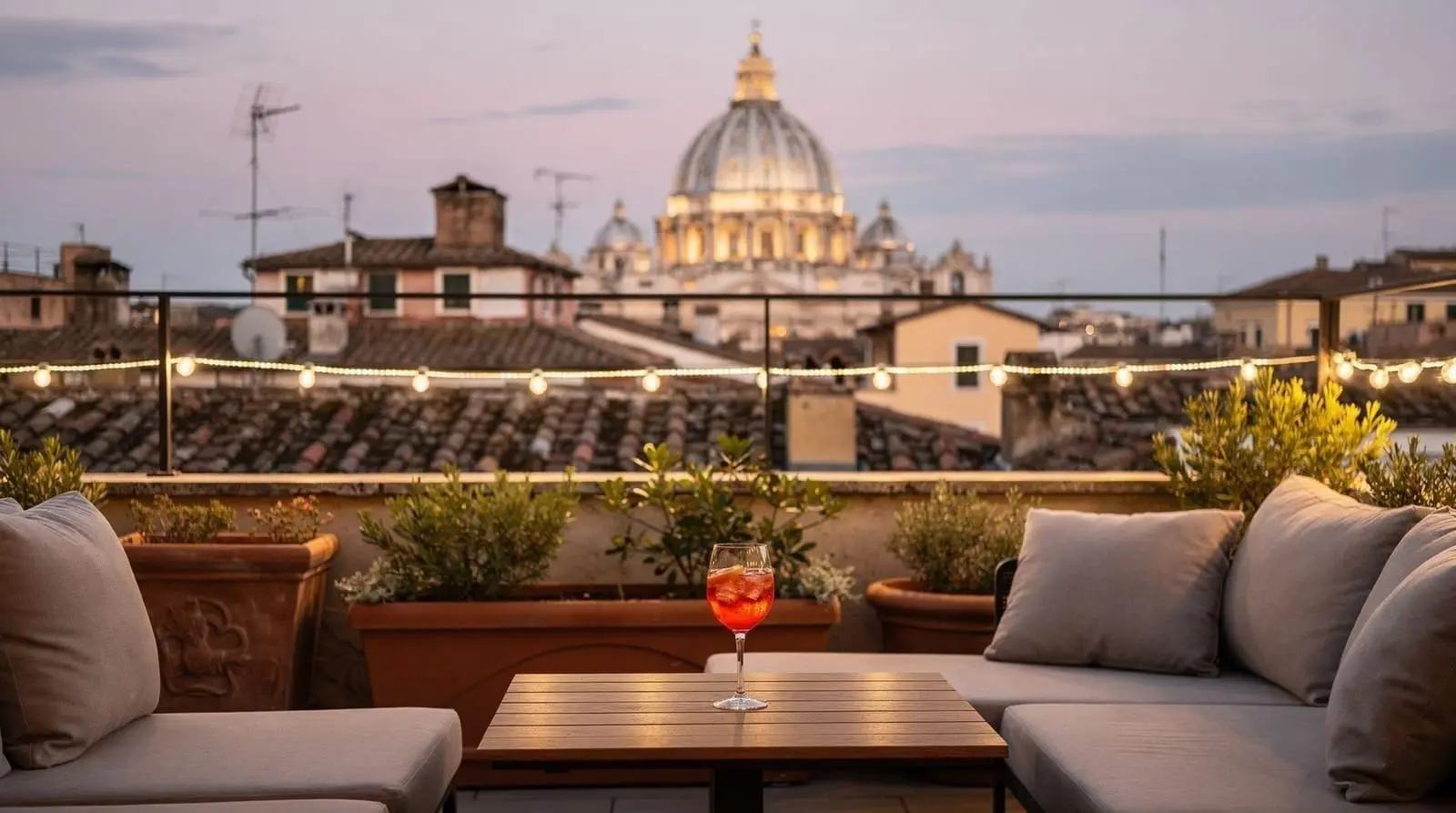
For the most cinematic aperitivo — Pantheon view, Navona lights, Tiber at dusk — you pay a premium. Salotto 42, Della Palma, the rooftops of hotels around Piazza Navona and Campo de’ Fiori all offer views at €18–28 per drink. Not an every-evening option, but excellent for a special night.
The rooftop bars guide covers these in detail with specific prices and honest verdicts on which are worth it.
An evening walking tour of Rome’s historic center with an aperitif included — structured, guided, and a good way to understand the geography of the city at night before exploring independently.After aperitivo: dinner timing and the late-night shift
Rome kitchens open at 20:00, sometimes 20:30. Arriving at 19:30 gets you in before the rush and ensures a table without a reservation at most neighborhood restaurants. Dinner typically runs 20:00–22:30.
After dinner, the scene shifts: bars in Trastevere and Monti stay open until 01:00–02:00 and attract a post-dinner crowd. The Pigneto bars peak between 22:00 and midnight. Via Ostiense and the areas around Testaccio (the old slaughterhouse complex now known as Mattatoio) have the most concentrated club scene if that is what you are after.
In summer, the Tiber banks come alive: Lungo il Tevere Roma is a series of outdoor bars, restaurants and event spaces running from June through September between Castel Sant’Angelo and Ponte Sublicio. Drinks are festival-priced (€12–16 for a cocktail) but the setting — lanterns, river breeze, Rome’s bridges lit up — is hard to beat on a warm night.
An aperitif on the Tiber followed by dinner on the river — a structured evening that gets you both the setting and the food without the hassle of finding a riverside table independently.Guided evening tours vs. going independently
This is a genuine question, and the honest answer depends on what kind of visit you are having.
For first-time visitors: A guided evening walking tour is worthwhile. Rome by night is more beautiful than Rome by day, and an expert guide at Trevi Fountain, Piazza Navona and the Pantheon makes the experience substantially richer. The best evening tours (2–3 hours, €25–40) cover the main squares when the lighting is warm and the crowds have thinned somewhat. The aperitif-included variants add a social dimension.
For repeat visitors or confident travelers: Go independently. Pick one neighborhood — Monti, Trastevere or Pigneto — arrive at 18:30 for aperitivo, walk for an hour, have dinner, and extend the evening from there. The bar areas guide lays out the specific streets and bars.
For special occasions: Consider the Tiber river aperitivo/dinner options, the rooftop opera evenings, or a Vespa sidecar by night tour. These combine sightseeing and food in a way that works well for anniversaries and birthdays.
The evening tours compared guide runs through the specific tour options — what they cost, what they cover, and where they are genuinely better than doing it yourself.
A three-hour guided walking tour of Rome by night, covering the Spanish Steps, Trevi Fountain, Piazza Navona and the Pantheon — the best way to experience Rome’s historic center after dark with commentary.Practical notes for evening Rome
Safety: Rome is a safe city for evening walks. The main pickpocket risk is on public transport (Metro A, buses 40/64) and around Termini station — not in the bar areas of Trastevere or Monti. Keep phones in front pockets; be sensible around crowded fountains where tourists congregate.
Dress code: No formal dress required for bars and neighborhood spots. Smart-casual is enough for rooftop bars and hotel terraces.
Transport: Take Metro A or a taxi to Trastevere (get off at Trastevere–Piramide and walk, or take the tram). Monti is walkable from the Colosseum and Termini. For Pigneto, the tram 5/19 from Piazza Vittorio is the simplest option. Book a taxi or use a ride-share app for the return after midnight.
Noise and August: Many Rome bars and restaurants close for a week or two in mid-August (Ferragosto, around 15 August). Some neighborhood bars run reduced hours. July and August are the least pleasant months for outdoor aperitivo due to heat — but the Tiber events partially compensate. The most pleasant aperitivo season is May–June and September–October.
For a broader picture of the best times to be in Rome, see the best time to visit Rome guide.
Understanding the aperitivo format: what to expect
If you have not experienced Italian aperitivo before, the system can confuse first-time visitors. You order a drink from the bar — a spritz, a Campari Soda, a Negroni, a glass of wine, or increasingly a craft beer. You pay for the drink, which costs somewhere between €10 and €18 depending on the neighborhood and the bar. With the drink, you receive access to a food spread: at minimum, a small bowl of crisps and olives; in many bars, a more substantial arrangement of bruschetta, rice or pasta salads, small sandwiches (tramezzini), cheese and cured meat.
This is not free food. The drink price has been set to cover both the alcohol and the food service. Attempting to take a disproportionate amount of food without ordering additional drinks is considered bad form.
The key question when choosing a bar is: how good is the spread relative to the drink price? In Pigneto and Testaccio, bars still run genuinely generous spreads — sometimes substantial enough to replace dinner, especially at the €10–12 price point. In Trastevere tourist-facing bars, the same €15 drink might come with a small bowl of crisps. Knowing this gradient saves disappointment.
A note on wine: Rome is the center of Lazio wine culture, and the aperitivo hour is increasingly the time to explore it. Frascati DOC (dry white from the Castelli Romani), Est! Est!! Est!!! from Montefiascone, and reds from Cesanese del Piglio are the main Lazio appellations. A glass of local wine at €8–12 as your aperitivo drink — rather than an industrial Aperol Spritz — is worth trying. Palatium Enoteca in Prati and Roscioli Wine Bar both have Lazio wine by the glass on the aperitivo menu.
The bar scene by season
Rome’s outdoor bar culture is intensely seasonal, and the aperitivo experience changes significantly across the year.
April–June: The best months. Temperatures (18–26°C), long evenings (sunset past 20:00 by June), and outdoor terrace culture fully active. Freni e Frizioni’s courtyard, the Piazza della Madonna dei Monti crowd, the Lungo il Tevere beginning around late May. This is when aperitivo in Rome is at its best.
July–August: Heat (32–38°C) pushes the aperitivo outdoors but exhausting. The benefit: later golden hours, Tiber events running at full capacity (Lungo il Tevere Roma), and several Romans leaving the city (Ferragosto around 15 August), which briefly produces a less crowded bar scene. Some neighborhood bars close for 1–2 weeks around Ferragosto — check specific venues. The Pigneto bars are more likely to stay open than the tourist-facing ones.
September–October: Excellent. The heat has broken, the evening light is extraordinary (lower angle, warmer tones), and the bars benefit from the post-holiday reactivation of local life. Harvest period in Lazio means new-vintage wines appearing at the wine bars. The outdoor aperitivo season extends well into late October.
November–March: Indoor aperitivo is the mode. The rooftop options and outdoor terraces thin out, but the interior bar culture continues without pause. Temperatures (8–14°C) are cold enough to make a Negroni by the bar counter appealing rather than the courtyard terrace.
Wine bars worth knowing
Dedicated wine bars (enoteche) deserve separate mention because they offer a different experience from the standard spritz-and-buffet aperitivo: smaller, more focused, with a wine list that reflects the sommelier’s choices rather than what sells fastest.
Roscioli Wine Bar (Via dei Chiavari 34): Arguably the best wine bar in central Rome. Run by the Roscioli family (the same people behind the famous bakery and deli), it has 2,000+ labels on the list with serious Lazio representation. The food — charcuterie, cheese, small dishes — is exceptional. Not cheap (glasses from €12), but genuinely one of the best places to drink in the city.
Litro (Via Fratelli Bonnet 5, Monteverde): A neighborhood wine bar in a residential area west of Trastevere that has developed a loyal following. Natural wines, aperitivo spread until 21:30, a terrace in summer. Worth the slightly longer walk.
Il Sorpasso (Via Properzio 31, Prati): Near the Vatican, well-suited to an evening after a long day at the museums. Cocktails and wine, aperitivo spread, good food if you stay for dinner.
Navigating the late-night options
Rome’s after-midnight scene is smaller than its aperitivo scene, but it exists. A few categories:
Late bars: Most of Trastevere and Monti’s bars continue until 01:00–02:00 and attract a post-dinner crowd from 23:00 onward. Volume increases, the average age decreases, and the atmosphere becomes more purely social rather than food-oriented.
Live music: Several bars in Testaccio (Villaggio Globale, Monk Club) and a few in Trastevere run live music programs, particularly on weekends. Check current listings on 2Night or Romac’è.
Clubs: The main cluster for clubs is Via Ostiense and the Ostiense/Garbatella area — harder to reach without a taxi, higher entry prices (€15–25). The old slaughterhouse complex (Mattatoio, now Città dell’Altra Economia area) has a rotating club scene; also the Circolo Degli Artisti in Pigneto for alternative electronic music.
Late-night street eating: Roman street food culture partly fills the late-night gap. Supplì (fried rice balls), pizza al taglio, and porchetta stands operate late in Testaccio and near Campo de’ Fiori. The cornetto romano (crescent pastry) from a bar that opens for breakfast at 05:30 is the Roman answer to 4am hunger.
Aperitivo with a view: combining bar and sightseeing
One pattern that works particularly well is combining the aperitivo hour with a viewpoint. This is not the same as an expensive rooftop bar (covered in the rooftop bars guide) — it is using the timing of aperitivo to be in the right place as the light changes.
Piazza Navona at 19:00: The golden hour hits the facades and the Fountain of the Four Rivers. Buy a drink from Bar Tre Scalini (overpriced by Roman standards but the position is exceptional) and stand rather than sit — you are paying for the view.
The Pincio terrace in Villa Borghese: Free, no drinks required, but the gelateria and snack bar near the terrace lets you buy something and watch the sunset over Piazza del Popolo. One of the least-crowded sunset views in central Rome.
Campo de’ Fiori at 18:00: The market has finished, the square empties briefly before the evening crowd arrives, and the street vendors and remaining flower stalls create an transitional atmosphere. Several decent aperitivo bars on the square’s edge; avoid the chairs (overpriced) and stand instead.
Aperitivo solo, or with a group
Rome’s aperitivo culture works well whether you are alone, as a couple, or in a larger group, but each has a slightly different practical approach.
Solo travellers: Standing at the bar counter (al banco pricing generally applies to aperitivo too, though less strictly than coffee) is a completely normal way to have aperitivo alone in Rome — nobody will treat it as unusual. Bar San Calisto in Trastevere and the bars around Piazza della Madonna dei Monti are particularly comfortable for solo evenings, since the piazza crowd naturally mixes strangers. A guided evening walking tour is also a practical way for solo visitors to meet other travellers while getting oriented after dark.
Groups of 4 or more: Book ahead for rooftop bars and popular Trastevere spots on weekend evenings, since large groups without a reservation can wait 20–30 minutes for table space. Freni e Frizioni and the Piazza Trilussa bars fill fastest. For groups, splitting between two smaller bars rather than trying to fit everyone at one crowded counter often works better.
Couples: The romantic Rome guide has a dedicated evening-planning section that layers aperitivo into a fuller date-night sequence, including the Tiber cruise and rooftop opera options covered above.
What actually makes a good aperitivo bar
Beyond price and location, a few signals separate a genuinely good aperitivo spot from a mediocre one dressed up for tourists. A generous, freshly replenished food spread — rather than a static bowl of stale crisps sitting out since 18:00 — is the clearest tell. A bar with a mixed-age local crowd rather than an exclusively international one usually means the food-to-price ratio is honest. And a bar that lets you linger without pressure to order a second drink within twenty minutes respects the actual pace of aperitivo, which is meant to be slow.
Frequently asked questions about Rome aperitivo and nightlife: an evening
How much does aperitivo cost in Rome?
What time does aperitivo start in Rome?
Is Rome lively at night compared to other Italian cities?
Do I need to book a bar in Rome for the evening?
Are guided evening tours worth it in Rome?
What is a spritz in Rome?
Can I do a Tiber river aperitivo?
Top experiences
Bookable activities with verified prices and instant confirmation on GetYourGuide.