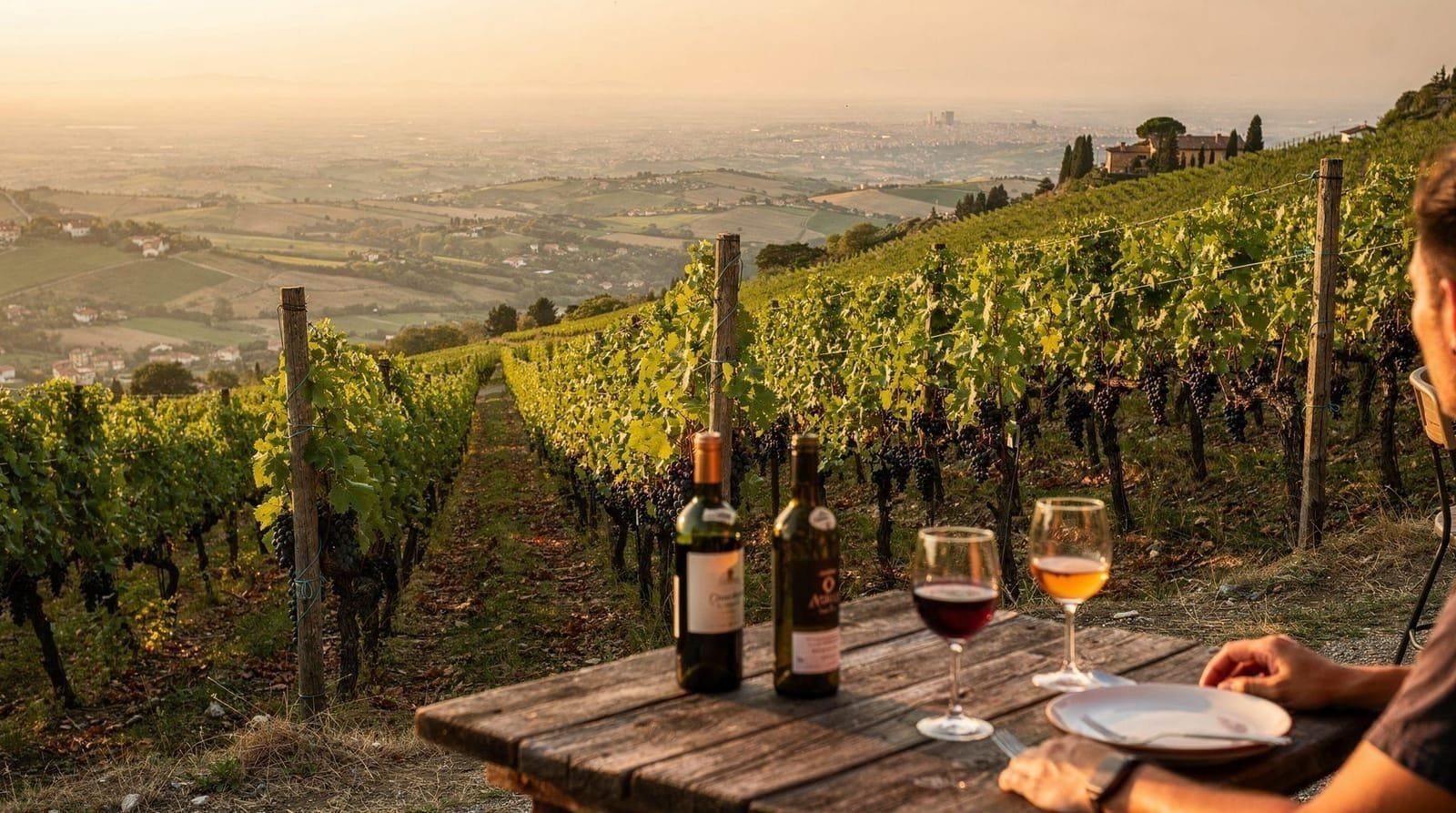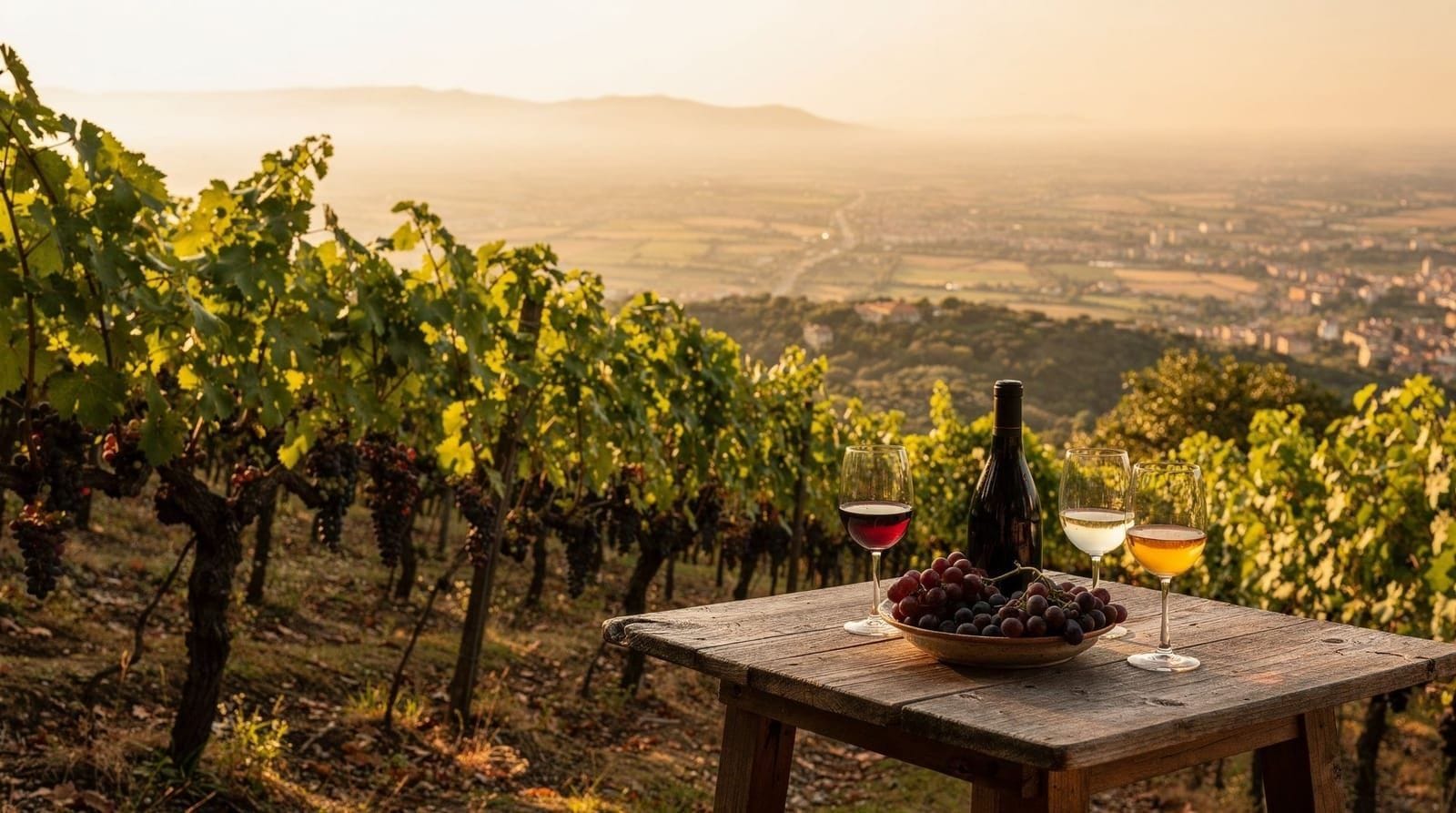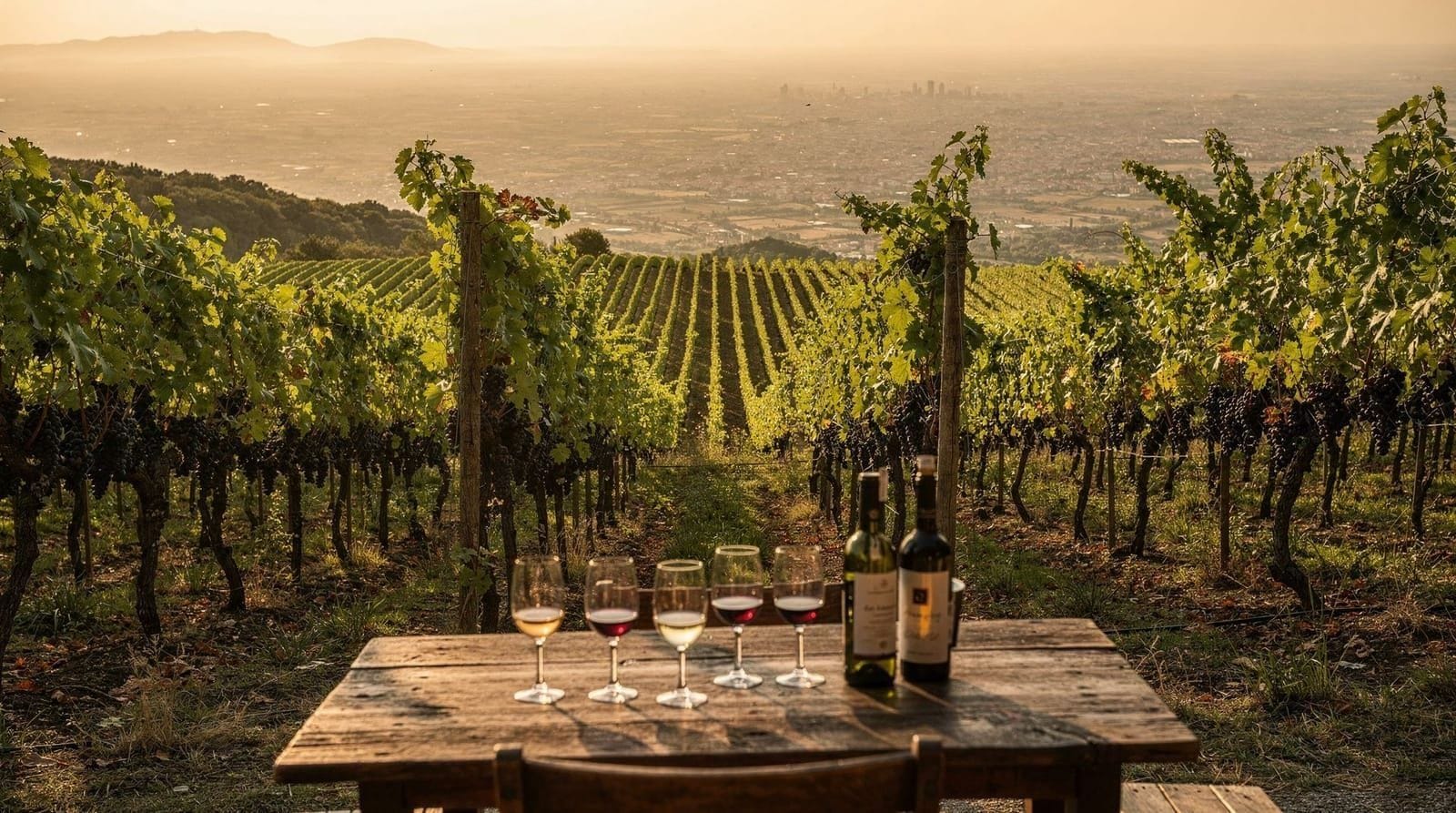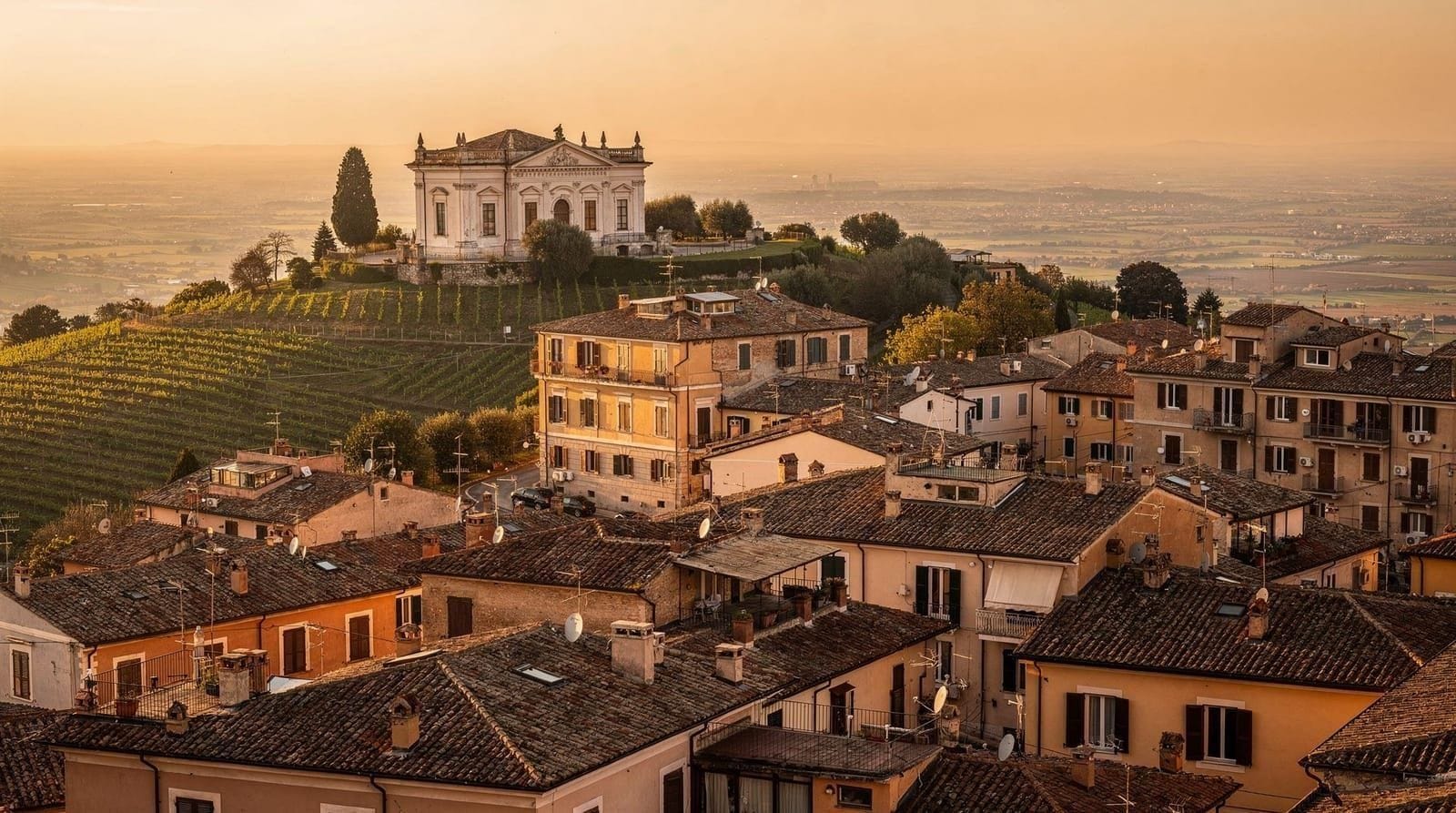
Lazio wine guide: the region's grapes, DOCs and where to taste
Wine Tasting & Medieval Town Visit at Castelli Romani
What are the most important wines of Lazio?
Frascati Superiore DOCG (white, Malvasia-based, from the Castelli Romani hills), Cesanese del Piglio DOCG (red, from the Ciociaria hills east of Rome), and Est! Est!! Est!!! di Montefiascone DOC (white, northern Lazio) are the headline appellations. Marino DOC and Colli Albani DOC complete the main white wine zone around Rome. Increasingly, Bellone and other indigenous white varieties grown near the coast produce wines of real character.
Lazio wine: a region finally getting credit
Lazio is not the first name that comes up in discussions of Italian wine. Tuscany, Piedmont, Campania, Alto Adige — all carry more prestige in the international market. Lazio’s reputation has historically been built on Frascati, a name associated in many markets with cheap carafe white served in plastic wine bars.
That reputation is changing. The region has a DOCG for Frascati Superiore and another for Cesanese del Piglio; serious producers across multiple appellations are making wines worth genuine attention; and the rediscovery of indigenous varieties like Bellone and Cesanese di Affile is generating interest from Italian wine writers who spent the previous decade obsessing over Barolo.
For visitors in Rome, Lazio wine is also a practical subject — you are going to drink it regardless. Understanding what is in the glass makes the experience better.
| Where | Castelli Romani (closest), Ciociaria, northern Lazio/Bolsena, coastal Pontine hills |
| Cost | Enoteca glass ~€5–8; estate tasting tour ~€90–140/person |
| Time needed | A tasting evening in Rome, or a full day at the source |
| Getting there | Train to Frascati for Castelli Romani; car needed for Ciociaria and the north |
| Best time | April–June and September–October for estate visits |
The wine geography of Lazio
Lazio is a large region, stretching from the Apennines east of Rome to the Tyrrhenian coast, and from Tuscany in the north to Campania in the south. Wine is produced throughout, but the significant zones are concentrated:
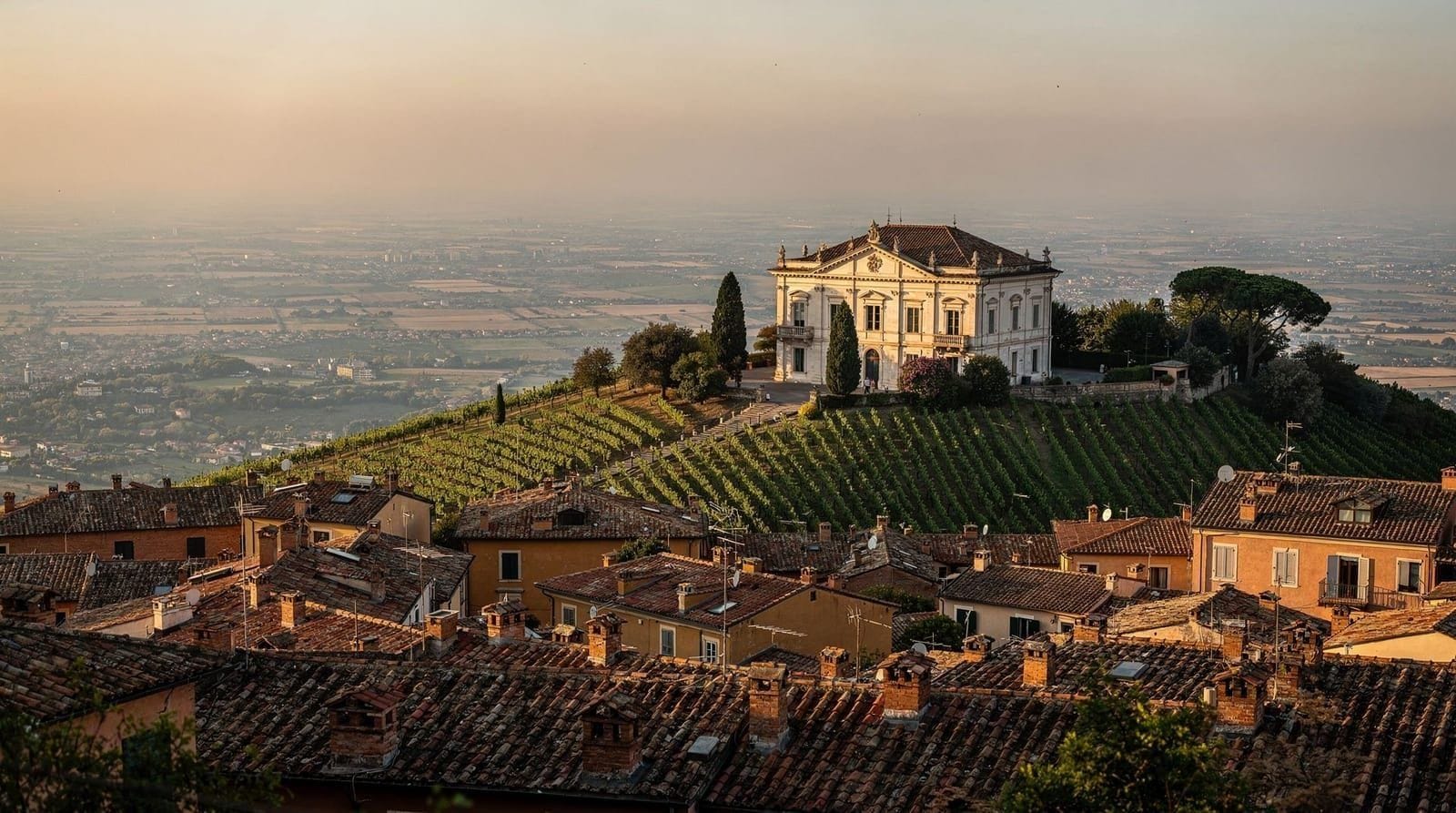
Castelli Romani (Rome’s hills): The volcanic Alban Hills and surrounding slopes southeast of Rome — the historic Colli Albani zone. This is where Frascati DOC/DOCG, Marino DOC, Colli Albani DOC, Colli Lanuvini DOC and Velletri DOC are produced. Predominantly white wine from Malvasia and Trebbiano varieties, though Velletri includes reds.
Ciociaria (eastern Lazio): The rugged hill country of Frosinone province east of Rome, centering on the towns of Piglio, Affile and Olevano Romano. This is Cesanese country — the best Lazio red wine zone. The landscape is dramatically different from the gentle Castelli Romani: steeper, more isolated, with a wilder feel.
Northern Lazio (Tuscia/Viterbo province): Lake Bolsena dominates the geography; Est! Est!! Est!!! di Montefiascone DOC and Aleatico di Gradoli DOC (sweet red wine from Aleatico grapes, aged on the lake’s shores) are produced here. Increasingly, producers in the Orte and Viterbo areas are making interesting wines from Grechetto and Trebbiano varieties.
Coastal Lazio (Pontine plains and hills): The area around Anzio, Nettuno and into the Pontine hills has producers working with Bellone and Nero Buono di Cori. Casale del Giglio near Aprilia is the best-known estate — their Satrico Bellone is one of the wines that changed the conversation about Lazio white wine.
Comparing the four zones at a glance:
| Zone | Distance from Rome | Main wines | Access without a car |
|---|---|---|---|
| Castelli Romani | 20–40km | Frascati, Marino, Cesanese-adjacent | Yes — train to Frascati |
| Ciociaria | ~80km | Cesanese del Piglio (red) | No — car essential |
| Northern Lazio/Bolsena | 100–120km | Est! Est!! Est!!!, Aleatico | No — car essential |
| Coastal/Pontine | ~50–70km | Bellone, Nero Buono di Cori | Limited — car recommended |
For most visitors without a car, Castelli Romani is the only realistic in-person option — which is exactly why it dominates the rest of this guide’s practical advice.
The main appellations
Frascati Superiore DOCG
The flagship appellation of the Castelli Romani and one of the most historically important wine zones in Italy. Malvasia del Lazio (Malvasia Puntinata) and Malvasia Bianca di Candia form the backbone; Trebbiano Toscano and Greco Bianco are permitted. Frascati Superiore must achieve at least 11.5% alcohol, lower yields than standard Frascati DOC, and demonstrates more structure and longevity. The top producers — Poggio Le Volpi, Casale Marchese, Castel de Paolis — make wines with genuine complexity: stone fruit, bitter almond, mineral notes and enough acidity to age two to four years.
Cannellino di Frascati DOCG is the sweet version, from late-harvested or partially dried grapes. Production is tiny; it rarely appears outside the production zone.
Marino DOC
Immediately adjacent to Frascati on the Castelli Romani hillside, Marino DOC produces dry and semi-dry whites on similar volcanic soils. The wines are structurally comparable to Frascati but often have a slightly more savoury character. The Cantina Sociale Cooperativa di Marino is the major producer; Paola Di Mauro (Colle Picchioni) makes more ambitious single-vineyard versions.
The Marino Sagra dell’Uva (Grape Festival) in early October, during which the town fountain runs with wine, is one of the Castelli Romani’s most exuberant annual events.
Cesanese del Piglio DOCG
The best Lazio red wine appellation, centered on Piglio in the Frosinone hills. Pure Cesanese Comune or Cesanese di Affile grape varieties, with a maximum 10% other approved varieties. Styles range from dry to amabile (semi-sweet), with the dry Superiore version the most serious for table wine purposes.
Coletti Conti is the benchmark producer: their “Hernicus” Cesanese del Piglio is consistently Italy’s most-cited Cesanese. Casale della Ioria makes reliable versions at more accessible price points. Terenzi is a newer arrival making interesting natural interpretations.
Cesanese has the characteristics of a variety worth discovering before wider markets find it: medium body, red cherry, dried tobacco, leather, with the high-acid structure that makes Italian reds food-compatible.
Est! Est!! Est!!! di Montefiascone DOC
Northern Lazio, centered on Montefiascone above Lake Bolsena. Trebbiano Toscano and Malvasia varieties. The wine’s name is more interesting than most of the wine, which ranges from forgettable to pleasantly drinkable. Seek out Falesco’s version — Riccardo Cotarella and Renzo Cotarella’s estate makes the most consistently serious interpretation.
Aleatico di Gradoli DOC
A small appellation on the shores of Lake Bolsena producing sweet red wine from Aleatico grapes — a variety related to Muscat, producing distinctly floral, rose-and-berry wines with noticeable sweetness. Produced in both regular and liquoroso (fortified) versions. The fortified style can age decades. Production is tiny and you will not find it easily outside the zone, but it is worth seeking out if you visit northern Lazio.
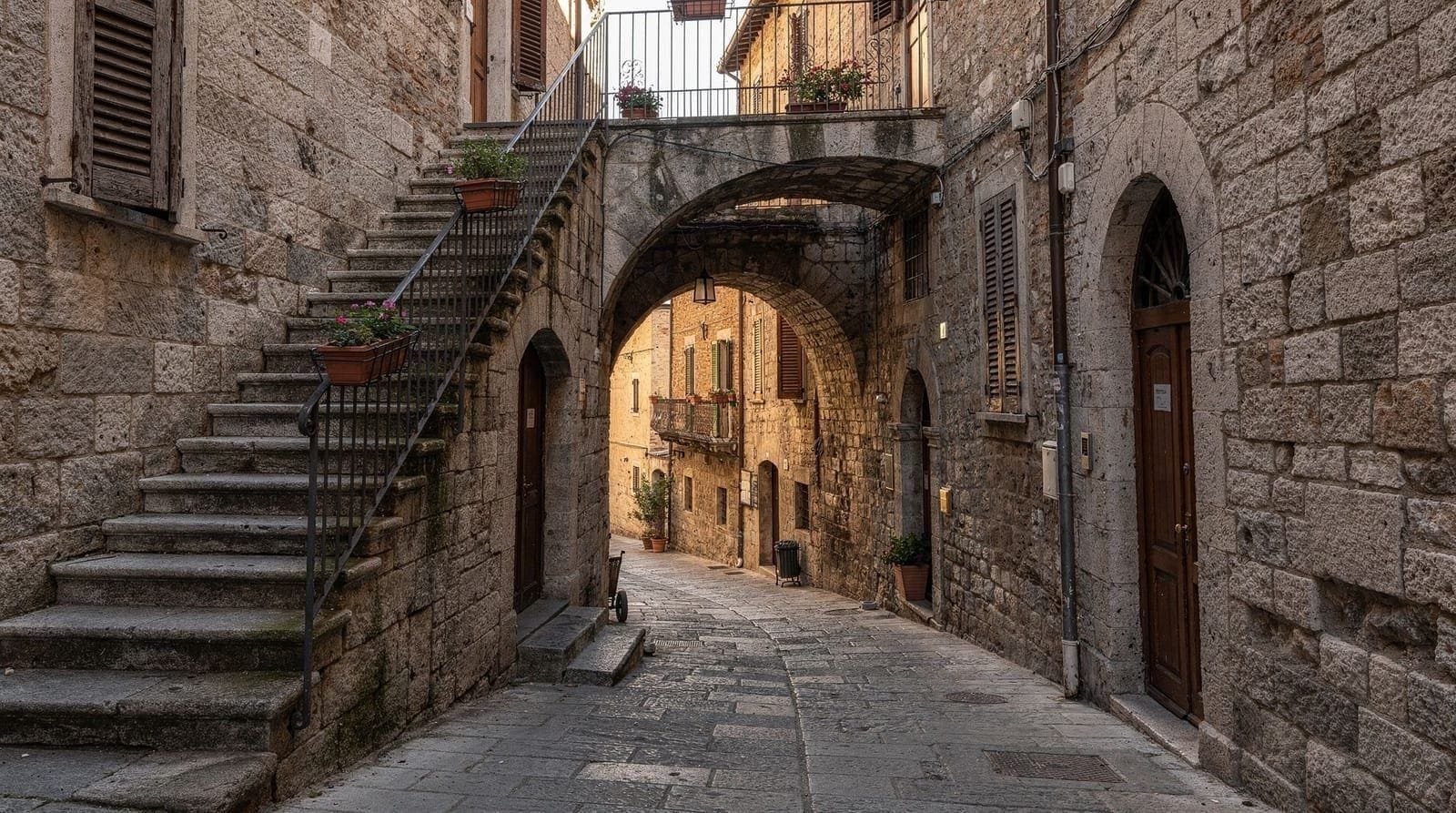
Wine tasting and medieval town visit at Castelli Romani — a practical afternoon combining a Frascati estate tasting with the hill town atmosphere.Indigenous varieties to seek out
Lazio’s wine renaissance is partly driven by the rediscovery of varieties that survived in small vineyards while the main DOC zones focused on Malvasia and Trebbiano:
Bellone: An ancient white variety grown near Cori and in coastal Lazio. Produces wines with distinctive mineral notes, good acidity and a slightly saline quality from coastal proximity. Casale del Giglio’s Bellone is the most widely available version; Cincinnato’s “Cori Bianco” is a co-operative version worth trying.
Greco (not Greco di Tufo): Lazio’s Greco is distinct from the Campanian variety. Planted primarily in the Viterbese zone; Sergio Mottura at Civitella d’Agliano makes the most ambitious interpretations.
Nero Buono di Cori: An obscure red variety from the Pontine hills, used in blends and occasionally in solo bottlings. Medium body, tobacco and cherry character, good acidity. Very limited production.
Bombino Bianco (Trebbiano di Soave): Present in several Lazio DOCs as a blending component; occasionally vinified solo. Neutral in lesser hands, but can express appealing freshness.
Where to taste Lazio wine in Rome
The city has several wine bars and enoteche that take Lazio wine seriously — see our Rome wine bars and enoteche guide for specific addresses. For a quick summary:
Trimani (Via Goito, Nomentano): Rome’s oldest wine shop, founded 1821. The selection of Lazio wine is unmatched in the city. By-the-glass service and a full shop. Roscioli Salumeria con Cucina (near Campo de’ Fiori): Outstanding Cesanese del Piglio list alongside a national selection. Il Sorì (Trastevere): Natural Lazio wines from small producers; rotating selection. Spirito DiVino (Trastevere): Local focus with good Frascati Superiore and Cesanese options.
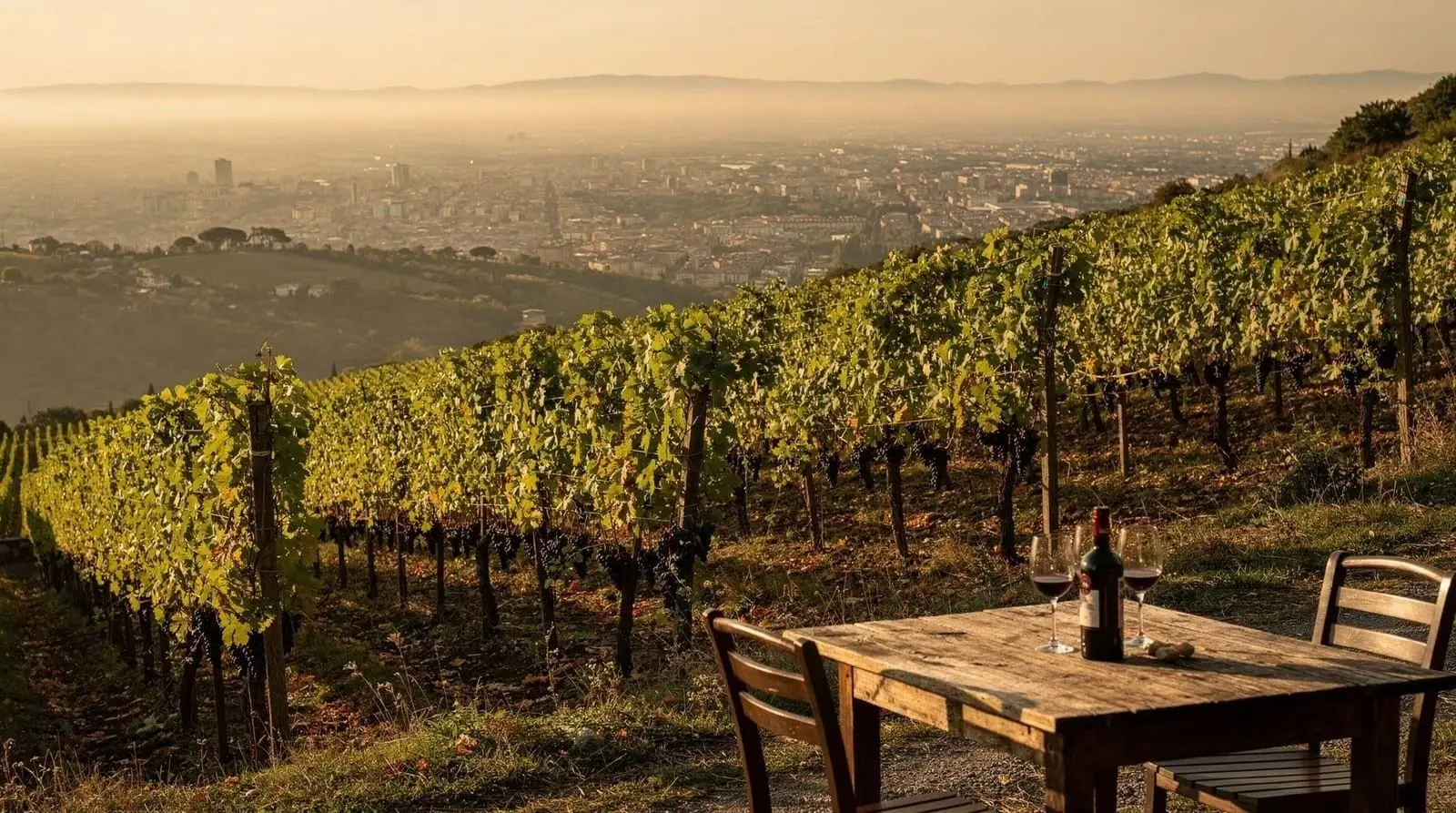
Full-day food and wine tour of the Frascati countryside from Rome — includes estate tasting and lunch, the easiest way to experience Lazio wine at the source.Visiting the wine regions
Castelli Romani is the most accessible — regional trains from Termini reach Frascati in 40 minutes. The town itself has enotecas; wine estates require a car or tour. See our Frascati and Castelli Romani wine guide and Castelli Romani day trip guide for full planning detail.
Ciociaria (Cesanese country) is about 80 km southeast of Rome via the A1/E45 motorway to Frosinone, then SS155 to Piglio. No practical public transport option to wine estates. Best approached by car with a day to spend in the Ciociaria hills — combine with the medieval town of Fumone or the ruins at Anagni.
Northern Lazio / Lake Bolsena is about 100 km north via Via Cassia or the A1 to Orte. The drive takes 90 minutes to 2 hours from central Rome. Combine with a visit to Viterbo (medieval city, Papal Palace) or Civita di Bagnoregio — see our Viterbo and Tuscia day trip guide. Falesco’s estate is near Montefiascone; Sergio Mottura’s estate is near Civitella d’Agliano.
Private Frascati and Castelli Romani wine tour from Rome — tailored pace and access to estates not available to walk-in visitors.Lazio wine and food pairing: the natural relationships
Lazio wine evolved to accompany Lazio food, which is Roman food. The pairings are not theoretical.
Frascati Superiore with: cacio e pepe, gricia, Jewish artichokes (carciofi alla giudia), bruschetta, white fish from the Lazio coast. The wine’s acidity and bitter almond finish cut through pasta fat and complement the slightly bitter artichoke.
Cesanese del Piglio with: abbacchio alla romana (lamb), rigatoni alla pajata, coda alla vaccinara, grilled porcini. The wine’s red-fruit and tobacco character, with its firm acidity, handles Rome’s robust offal and meat dishes correctly.
Marino DOC with: antipasto di campagna (salumi, olives, local cheeses), vegetable-based primi. The wine is a step-down from Frascati Superiore in structure but a step-up in approachability — honest table wine.
Aleatico di Gradoli with: cantucci, dark chocolate, aged hard cheeses. The sweet red style is unusual enough that it is worth ordering specifically for the pairing experience.
Understanding Lazio wine in its food context transforms what might otherwise be a quick glass at dinner into something that makes better sense of Rome’s eating culture. The wine grew up alongside the food; they belong together.
Why Lazio’s reputation lagged for so long
It is worth understanding why a region producing genuinely interesting wine spent decades with a mediocre international reputation, because it explains what to expect when ordering. For most of the 20th century, Frascati’s proximity to Rome meant enormous demand for cheap, high-volume wine to supply the capital’s trattorias — quantity over quality was the rational economic choice for many producers, and the reputation that built has been slow to shift even as serious estates emerged. Cesanese suffered the opposite problem: geographic isolation in the Ciociaria hills meant limited production reached markets outside the immediate area, so almost nobody outside Lazio had the chance to form an opinion of it either way. Both patterns are changing — DOCG status for Frascati Superiore and Cesanese del Piglio pushed minimum quality standards up across both zones, and a new generation of producers with international training has raised ambitions further. The result is a region now producing wine that consistently outperforms its lingering reputation, which is precisely the situation worth exploiting as a visitor: you can drink genuinely good Lazio wine at prices that haven’t yet caught up to the quality.
Buying Lazio wine to take home
Lazio wine is significantly underrepresented in international export markets — what appears in London, New York and Amsterdam is a fraction of what is produced, and mostly the larger commercial producers. Buying at source represents genuine value.
Best shops in Rome for Lazio wine:
Trimani (Via Goito 20, near Termini): The city’s oldest wine merchant, founded 1821. The Lazio section is comprehensive — every major Frascati producer, multiple Cesanese del Piglio estates, northern Lazio whites. By-the-glass service available; the shop is open afternoon and evening. Knowledgeable English-speaking staff.
Volpetti (Via Marmorata 47, Testaccio): Primarily a food delicatessen but with a serious wine cellar covering Lazio and Italy broadly. The olive oil section alongside is excellent for Sabina DOP.
Enoteca Costantini (Piazza Cavour, Prati): A large-format wine shop near Castel Sant’Angelo with broad Italian coverage including Lazio depth. Good for comparing prices across producers before deciding what to bring home.
Directly from producers: If you visit the Castelli Romani on a day trip, buying from the producer shop is the most direct option. Most Frascati estates price their wines below equivalent retail in Rome; you also have the context of having tasted where the wine was made.
Lazio wine producers to know by name
A short list of producers whose wines consistently appear in serious Italian wine coverage:
Poggio Le Volpi (Monte Porzio Catone): Benchmark Frascati Superiore, particularly “Epos.” Also makes interesting Lazio reds.
Castel de Paolis (Grottaferrata): Biodynamic. “Vigna Adriana” Frascati Superiore is their signature. Unusual Syrah-based reds for the zone.
Casale del Giglio (Aprilia, coastal Lazio): The producer most responsible for rehabilitating the conversation about Lazio white wine. Their Bellone “Satrico” is widely cited.
Coletti Conti (Anagni, Cesanese del Piglio DOCG): The reference producer for Cesanese. “Hernicus” is the flagship.
Casale della Ioria (Piglio): Good Cesanese del Piglio at accessible prices. Reliable across vintages.
Sergio Mottura (Civitella d’Agliano, northern Lazio): Works with Grechetto to produce ambitious whites from the Orvieto zone boundary. Not widely known but respected by Italian wine professionals.
Falesco (Montefiascone): Renzo Cotarella’s estate, producing the most serious interpretation of Est! Est!! Est!!! and interesting work with Montiano (100% Merlot) and other varieties.
These are the names to ask for in enoteche and to look for at producers’ shops. They represent the quality end of what Lazio produces; the region has more potential than its international reputation suggests.
Frequently asked questions about Lazio wine guide: the region's grapes, DOCs and where to taste
Does Lazio produce good red wine?
What is Cesanese and where does it come from?
What is the story behind Est! Est!! Est!!! wine?
Are there good Lazio wines available in Rome's shops and restaurants?
What indigenous white grapes should I look for in Lazio?
Can I visit Lazio wine regions on a day trip from Rome?
Top experiences
Bookable activities with verified prices and instant confirmation on GetYourGuide.