The five Roman pastas: carbonara, cacio e pepe, amatriciana, gricia, and the alfredo myth
Rome: Fresh Pasta-Making Class with Italian Chef and Wine
What are the classic Roman pastas?
The canonical four are cacio e pepe, gricia, carbonara and amatriciana — all built on guanciale (cured pork cheek) and pecorino romano. Alfredo is a pale tourist invention, not a Roman classic. Learn what goes into each and which restaurants get them right.
What makes Roman pasta different from the rest of Italy
Italy has hundreds of pasta traditions. Rome has four — and it guards them jealously. The canonical Roman quartet is built on two ingredients that appear across every dish: guanciale (cured pig’s cheek) and pecorino romano (aged sheep’s milk cheese). Everything diverges from there.
The simplicity is the point. Roman cooks did not have the cream, butter and rich dairy traditions of Emilia-Romagna. They had cured pork, sharp aged cheese, eggs from the farm, dried pasta, and black pepper from trade. The four great Roman pasta dishes are exercises in doing more with less — and they are harder to execute correctly than they look.
This guide covers each dish: what’s actually in it, what the most common mistakes are (in Roman restaurants and abroad), the history where it’s genuinely interesting, and where to find honest versions in Rome today.
| The four dishes | Cacio e pepe, gricia, carbonara, amatriciana |
| Shared base | Guanciale (cured pork cheek) and pecorino romano — never cream |
| Typical price | around €12–18 for a well-made bowl at a serious trattoria |
| Best neighborhoods | Testaccio and Trastevere for consistently honest versions |
| Skip | ”Alfredo” as an authentic Roman dish — it’s a tourist-era invention |
The four dishes compared
| Dish | Contains | No egg/tomato version? | Classic shape |
|---|---|---|---|
| Cacio e pepe | Pecorino, pepper | Base recipe, no meat at all | Tonnarelli |
| Gricia | Guanciale, pecorino, pepper | The “white” version — no egg, no tomato | Rigatoni |
| Carbonara | Guanciale, egg yolk, pecorino, pepper | Adds egg to gricia | Rigatoni or spaghetti |
| Amatriciana | Guanciale, tomato, pecorino, pepper | Adds tomato to gricia | Bucatini |
Reading down this table left to right is effectively reading Roman pasta history in order: cacio e pepe as the meatless base, gricia adding guanciale, then carbonara (egg) and amatriciana (tomato) as two different directions taken from the same starting point.
Cacio e pepe — the most minimal
What’s in it: Pecorino romano, black pepper, pasta, pasta water. Nothing else. No butter, no olive oil, no cream, no garlic. The fat in the sauce comes entirely from the cheese and the starchy cooking water.
The name means “cheese and pepper.” The execution involves creating a smooth emulsion at the right temperature — if the cheese hits water that’s too hot, it clumps into a grainy mass. If the water is too cold, the cheese won’t melt properly. Roman cooks spend years getting this right. Restaurants that cut corners add a little butter or cream to mask poor technique.
What to look for: A sauce that coats the pasta smoothly, dark flecks of freshly cracked black pepper (not the dusty pre-ground kind), and a sharp-salty-peppery finish. The traditional shape is tonnarelli — a thick square spaghetti made from egg pasta, which holds the sauce better than regular spaghetti. Rigatoni is an acceptable alternative.
What to avoid: Gluey clumping, a floury texture, or a sauce that tastes of dairy fat rather than sheep’s milk sharpness. If it comes to the table in a hollowed-out Parmesan wheel with theatrics, the €22 price is mostly for the theater.
Where to eat it in Rome: Da Enzo al 29 (Via dei Vascellari 29, Trastevere) is the consistent local choice. Book ahead for dinner — it seats about 30 people and fills quickly. Tonnarello (Via della Paglia 1-2, Trastevere) is louder and more accessible without a reservation. Expect to pay €12-15 for a bowl done properly.
Gricia — the oldest of the four
What’s in it: Guanciale, pecorino romano, black pepper, pasta. No egg, no tomato. This is what Roman shepherds ate before tomatoes arrived from the Americas — and possibly before eggs were added to create carbonara.
Gricia is sometimes called “white amatriciana” or the predecessor to carbonara. The guanciale is rendered until golden and lightly crispy, and the fat carries the flavor into the sauce. The pecorino adds salt and sharpness. The result is rich, porky, sharp — and honest.
Why it matters: Gricia is the dish that shows you whether a kitchen actually understands Roman pasta. Because it’s less famous than carbonara or cacio e pepe among tourists, restaurants cut fewer corners. If a kitchen does gricia well, the other three will be solid.
What to look for: Rigatoni is the standard shape, with irregular strips of rendered guanciale clinging to the tubes. The sauce should have visible guanciale fat coating the pasta. If it comes with uniform pink cubes that look like pancetta, ask — the substitution degrades the dish.
Where to eat it: Flavio al Velavevodetto (Via Monte Testaccio 97, Testaccio) does an excellent gricia. So does Osteria degli Amici (Via Nicola Zabaglia 25, also Testaccio). These are the kinds of places that haven’t changed their pasta recipes in decades.
Carbonara — the most misunderstood
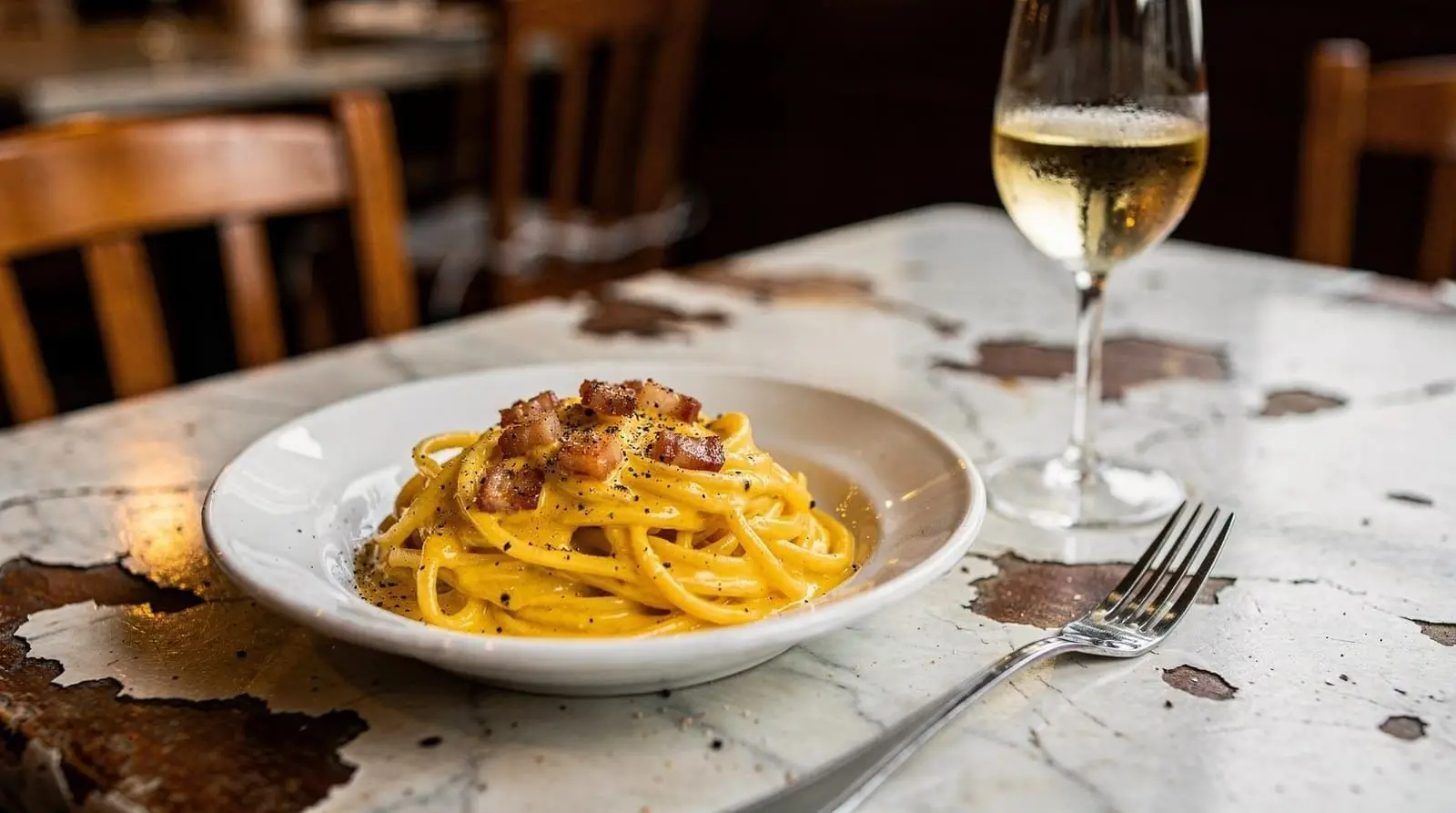
What’s in it: Guanciale, egg yolk, pecorino romano (sometimes blended with Parmesan), black pepper, pasta.
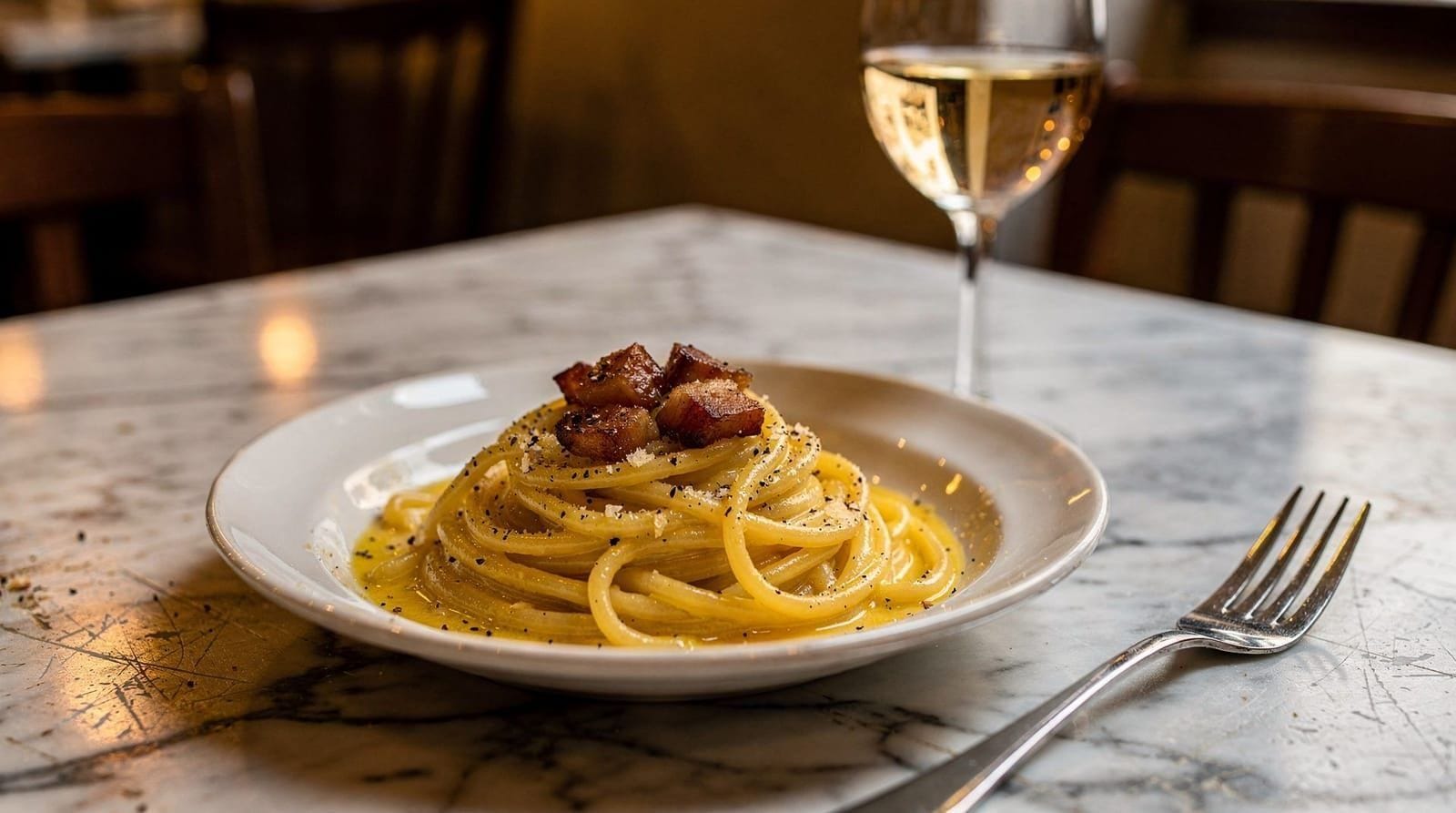
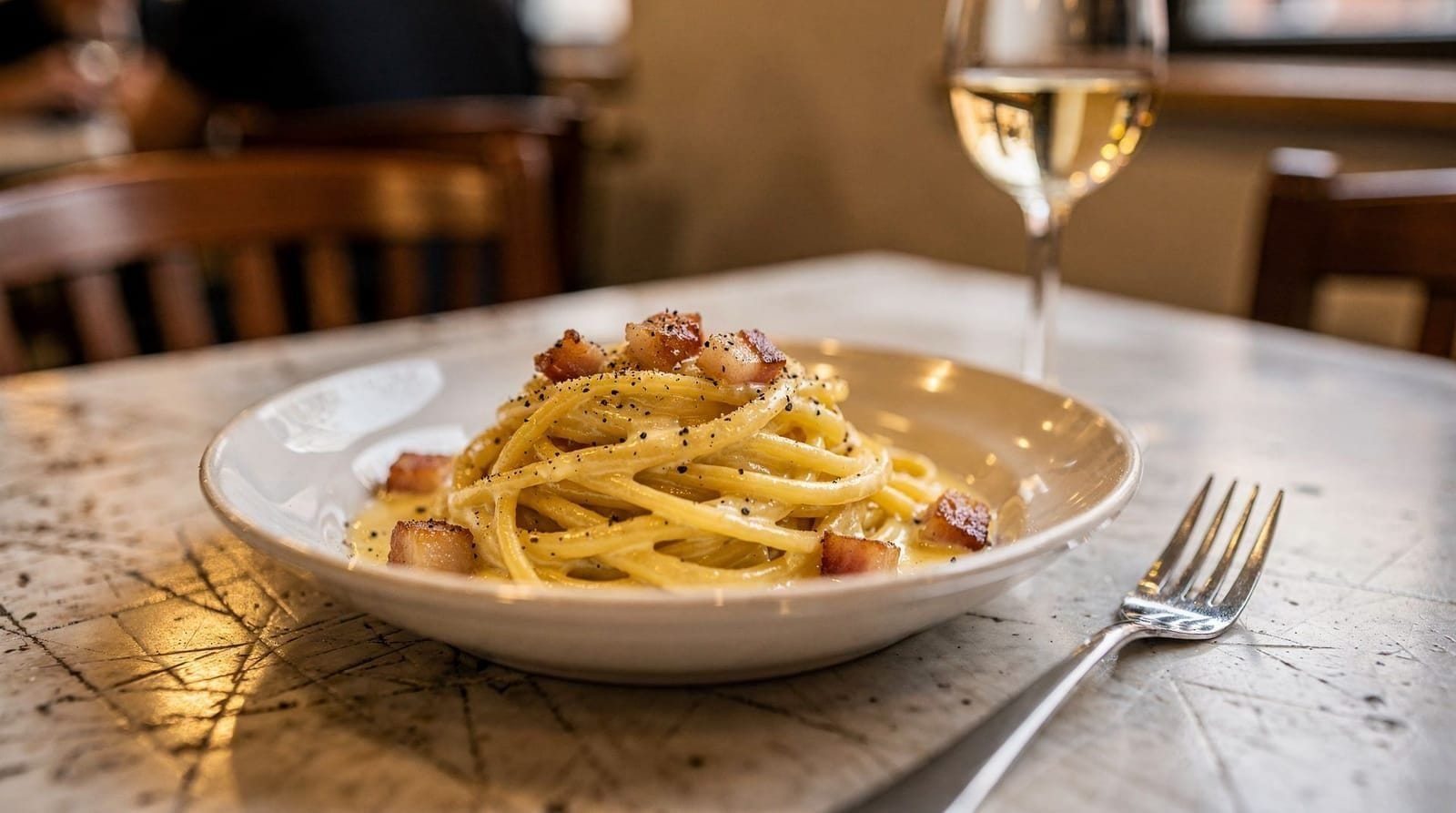
What is emphatically not in it: Cream. Not then, not now. The silkiness of a proper carbonara comes from tempering the egg yolk with guanciale fat and pasta water off the heat. The proteins in the yolk set gently at low temperature, creating a sauce that coats without scrambling. It is technically demanding and it is not difficult to ruin.
The origin story is contested. The most credible version places its invention in the postwar period, possibly with American GI influence (dried eggs, bacon), adapted by Roman cooks who substituted guanciale and pecorino. The name likely comes from “carbonaro” (charcoal maker) — whether because it was eaten by coal workers or because of the black pepper resembling coal flecks depends on who you ask.
The cream question: If a carbonara has cream, it is not carbonara. It may taste pleasant. It may even taste creamy-eggy-pork-ish in a general way. But it is not the dish. This applies everywhere in the world, including Italy — some restaurants add cream to “stabilize” the sauce for high-volume cooking, which is an admission that they cannot do the technique.
Where to eat it: Flavio al Velavevodetto (Testaccio) does carbonara on rigatoni that is technically correct — glossy, coating, black-peppered, rich. Roscioli (Via dei Giubbonari 21, near Campo de’ Fiori) is famous for its version, which uses a high yolk-to-white ratio and very good guanciale. Expect a queue or a reservation. Tonnarello in Trastevere is reliable for a casual lunch carbonara.
Learn to make carbonara and other Roman pasta dishes from scratch with an Italian chef — this hands-on class near the city center covers technique, sauce science and a meal with wine afterward.Amatriciana — the one with tomato
What’s in it: Guanciale, peeled tomatoes (San Marzano DOP if you’re doing it right), pecorino romano, black pepper, white wine (optional, for deglazing), dried chili flakes. The traditional pasta shape is bucatini — a thick hollow spaghetti — or rigatoni.
The dish comes from Amatrice, a mountain town in the Rieti province of Lazio, where shepherds made a simpler version called gricia (see above) before tomatoes became available. As tomatoes spread through the Italian peninsula from the 18th century onward, the Amatrice version evolved. The dish became Roman when migrants from the area brought it to the capital’s restaurants.
The 2016 earthquake that devastated Amatrice turned amatriciana into a point of civic solidarity — restaurants across Italy added it to their menus and donated proceeds to reconstruction. Ordering it still carries that weight for Italian diners.
What to look for: A sauce that has a bright, slightly sharp tomato flavor — not sweet or heavily reduced. The guanciale should be visible in irregular strips, not dissolved into the sauce. Bucatini is traditional; if you see it on rigatoni, that’s a Roman adaptation. Pecorino is required; Parmesan is not.
Where to eat it: Osteria Fernanda (Via Crescenzo del Monte 18, Trastevere) serves an excellent amatriciana on bucatini (€15). Da Enzo al 29 is another safe choice. Any restaurant in Testaccio with a handwritten pasta list is a reasonable bet.
The alfredo myth — why Romans don’t eat it
The dish exists. The restaurant exists. Alfredo alla Scrofa (Via della Scrofa 104, near the Pantheon) invented fettuccine al burro in the early 20th century, became famous when American silent film stars Mary Pickford and Douglas Fairbanks visited in the 1920s, and has been serving it to tourists ever since.
Romans do not eat it. It is not on the menus of trattorias, not on the menus of osterie, not something a Roman would order at a dinner party. It is a tourist dish that became famous among Americans and was then exported worldwide as “Italian pasta” — which is why alfredo sauce in a jar exists in American supermarkets and nowhere in Italy.
If you want to try it as a historical curiosity, Alfredo alla Scrofa is the place. The tableside mixing with golden fork and spoon is genuine, the butter and Parmesan are good quality, and the theater is real. But go in knowing what you’re eating: a dish made for foreign visitors a century ago, not a Roman culinary tradition.
What Romans actually eat instead of alfredo: cacio e pepe (which achieves a similar simplicity with more character), or pasta al burro e salvia (butter and sage) at home when they want something quick and mild. Neither of these is on tourist menus because neither of these generates the folklore that alfredo did.
The cooking class option
If you want to understand these dishes technically, cooking them is the most direct route. Rome has a strong market for pasta-making classes, ranging from professional kitchen setups to intimate apartment sessions.
This city-center fettuccine class covers fresh pasta making from the dough stage through saucing — a good foundation for understanding why technique matters. The pasta-making class near the Pantheon covers multiple shapes and sauces with wine throughout — a full afternoon that ends with eating what you made.Practical eating notes
Guanciale identification: Look at the fat distribution and texture. Guanciale has irregular streaks of fat through the lean; the fat is whiter and more abundant than pancetta belly. When rendered, guanciale strips become translucent and develop a lacy, slightly crispy texture. Pancetta cubes stay pinkish and more uniform.
Pasta starch: All four dishes depend on starchy pasta water as a binding agent. Restaurants that drain pasta too thoroughly before saucing will struggle with texture. You can sometimes see this: the pasta looks too dry when it arrives at the table.
Coperto and pricing: A table-service cover charge of €1-3 per person is standard and legally required to appear on the menu. It’s not a scam. What is questionable is a coperto of €5+ plus a separate “servizio” line item — ask for clarification before you order.
What to order with pasta: Romans typically eat pasta as a primo (first course), not as a complete meal. A secondo of abbacchio (roasted lamb), coda alla vaccinara (oxtail stew), or trippa (tripe) follows at a proper sit-down trattoria. If you’re eating for value and curiosity, try both.
Lunch pricing: Most trattorias charge the same menu price at lunch and dinner. The practical advantage of lunch is a shorter wait for tables and a faster kitchen rhythm — arrive at 12:30 rather than 13:15.
For the neighborhood context around each of these restaurants, see our guides to Testaccio and Trastevere, and our deep guide to where to eat in Rome by neighborhood.
How to order pasta in a Roman restaurant
Knowing the dish is half the equation. Knowing how to navigate the restaurant ritual is the other half.
Arrive at the right time: Romans eat lunch from 13:00 to 14:30 and dinner from 20:00 to 22:00. Showing up at 19:00 for dinner will technically get you a table but the kitchen may not be running at full capacity and the atmosphere will be subdued. The best Roman restaurants come alive between 20:30 and 21:30.
Order pasta as a primo: The Roman meal structure is: antipasto (optional) → primo (pasta or risotto or soup) → secondo (meat or fish) → contorno (vegetable side, ordered separately from the secondo) → dolce (dessert). Pasta is not the whole meal. If you order only pasta, that’s acceptable but Romans will notice. If you want a secondi, order it when you order the pasta — the kitchen needs to know.
Ask about the day’s specials: Roman trattorias often have seasonal dishes not written on the printed menu. Ask “cosa c’è di speciale oggi?” (what’s the special today?) — this frequently produces the kitchen’s best work.
Bread and coperto: Bread arrives automatically in most restaurants and is included in the coperto (table cover charge). Don’t ask for olive oil to dip — this is not standard in Rome. The bread is for mopping (fare la scarpetta) at the end of the pasta course, which is correct Roman behavior.
Wine: Romans drink house wine (vino della casa) with pasta — either white or red. House wine at a proper trattoria is typically a Frascati (local white) or a Lazio red and costs €8-14 per half-liter carafe. Don’t overthink wine with Roman pasta.
The seasonal dimension
Roman pasta, like all Italian cooking, is seasonal in ways that the printed menu doesn’t always reflect.
Spring (March-April): Carciofi (artichoke) pasta, pasta with fresh peas and guanciale (pasta ai piselli), pasta with spring zucchini. These appear as specials at quality trattorias; ask.
Summer (June-August): Pasta with fresh tomatoes (pasta al pomodoro fresco), pasta with clams and bottarga (coastal influence), lighter preparations. The heavy guanciale dishes remain on menus but lighter alternatives appear.
Autumn (September-November): Pasta with porcini, pasta with chestnuts, dishes incorporating winter squash. Roman autumn is one of the better eating seasons.
Winter (December-February): Abbacchio season (Roman lamb is best in winter), broccoli romanesco with pasta, and the full guanciale-heavy dishes — carbonara and amatriciana are particularly satisfying in cold weather.
Dietary adaptations: what’s realistic
All four classic dishes are built on cured pork, so vegetarian versions are genuine departures rather than simple substitutions — a vegetarian cacio e pepe is authentic (it has no meat in the original recipe), but a “vegetarian carbonara” or “vegetarian amatriciana” is a modern restaurant invention, sometimes made with mushrooms or smoked tofu standing in for guanciale. These can be good dishes in their own right, but do not expect them to taste like the original; the guanciale fat is structurally part of the sauce, not a flavoring you can swap out cleanly. Gluten-free diners will find fresh egg pasta versions of some dishes at better restaurants, though dried gluten-free pasta shapes (bucatini in particular) are harder to source than gluten-free spaghetti. See the Rome gluten-free and dietary guide for restaurants that handle this well rather than treating it as an afterthought.
Taking the lessons home
The technical aspects of Roman pasta are learnable and worth learning — not because you’ll replicate a restaurant-quality carbonara in your first attempt, but because the understanding changes how you eat.
When you know that cacio e pepe depends on temperature control, you appreciate why the €12 version at a good trattoria tastes different from the €8 version at a tourist spot. When you understand the guanciale vs. pancetta question, you start tasting for it. The knowledge makes the eating more active.
Rome’s cooking classes are particularly good for this. The best ones don’t just have you roll pasta — they explain the sauce technique, the ingredient rationale and the regional context. A useful test when choosing between competing class options: ask whether the class covers cacio e pepe specifically, since its temperature-sensitive emulsion is the single best teacher of why these four dishes are harder than a home cook expects, even for people who already make pasta regularly at home.
A city-center pasta class that covers the dough-making and sauce techniques used across multiple Roman pasta dishes — good groundwork if you want to cook these dishes at home.For the specific restaurants discussed in this guide, see our carbonara and cacio e pepe restaurant guide for the full detail on where to eat each dish. The Roman pasta food tour guide covers the guided tour options if you want expert navigation of the food scene.
Where these dishes fit into a wider Rome food trip
None of these four pastas needs to be eaten in isolation from the rest of Rome’s food culture. Pairing a serious pasta lunch with a wander through the Testaccio food guide or the Trastevere food guide rounds out the meal with market context, gelato stops, and aperitivo options in the same neighborhoods where the best trattorias operate. If you are building a full day around food rather than a single meal, the Rome street food guide and Jewish Ghetto food guide cover the wider landscape beyond sit-down pasta, including the fried and Roman-Jewish traditions that complete the picture of what Romans actually eat day to day.
Frequently asked questions about The five Roman pastas: carbonara, cacio e pepe, amatriciana, gricia, and the alfredo myth
What is the difference between carbonara and gricia?
Does authentic carbonara have cream?
What pasta shape goes with each Roman sauce?
What is guanciale and why can't I substitute it?
Is fettuccine Alfredo a Roman dish?
How do I spot a bad version of cacio e pepe?
Where should I eat these pastas in Rome?
What does pecorino romano taste like and can I use Parmesan instead?
Top experiences
Bookable activities with verified prices and instant confirmation on GetYourGuide.