Rome, Florence & Tuscany: 7 Days
Day Trip to Florence by High-Speed Train From Rome
Quick answer: Seven days that cover the essential arc of central Italy: three days in Rome for the ancient core and Vatican, then a 1h30 high-speed train to Florence for Renaissance art and the Uffizi, followed by a day in Siena and the Chianti hills. A car is useful for the Tuscany leg; for Rome and Florence, public transport is faster.
| Where | Rome (3 nights) → Florence (2-3 nights) → optional Chianti night |
| Cost | Mid-range; add €25-60 for the high-speed train and €50-80/day for the Tuscany car |
| Time needed | 7 days, one travel day (Day 4) between cities |
| Getting between cities | Frecciarossa/Italo high-speed train, 1h30, book 3-4 weeks ahead for best fares |
| Booking priority | Borghese Gallery, then Vatican, then Colosseum, then Uffizi |
This is the trip most people come to Italy to do, and it works. Rome and Florence are complementary in the best way — one is the city of empire and the Church, the other is the city of art and money, and the contrast makes both more legible. The Chianti day adds landscape, wine, and the particular pleasure of a walled hilltop town.
The logistics are straightforward. High-speed trains (Trenitalia Frecciarossa or Italo) run Rome Termini to Florence Santa Maria Novella in 1h30 roughly every 30 minutes. Book ahead for the best prices; walk-up tickets work but cost more. In Tuscany, a rental car gives you freedom that no tour bus can match — the Chianti roads are designed to be driven slowly with the windows open.
Rome vs Florence: what each day actually delivers
| Rome (Days 1-3) | Florence (Days 4-7) | |
|---|---|---|
| Character | Ancient empire, papal power, layered history | Renaissance art, merchant wealth, compact walkability |
| Anchor bookings | Colosseum, Vatican, Borghese | Uffizi, Duomo dome |
| Pace | Spread across a larger city, more transit | Dense historic centre, mostly on foot |
| Day trip potential | None built in here | Siena and Chianti (Day 6) |
If seven days feels tight once you’re planning it in detail, the standalone central Italy 10-day itinerary adds Tivoli, Orvieto and Assisi between Rome and Florence — worth considering if Umbria interests you as much as Tuscany does. If seven days feels like too much city and not enough Rome depth, the rome in 3 days itinerary covers the Rome leg here almost exactly and can simply be extended with your own Florence add-on.
Day 1: Rome — Ancient Rome
Arrive in Rome and settle in. The first day belongs to the ancient city.
Morning: Colosseum and Roman Forum
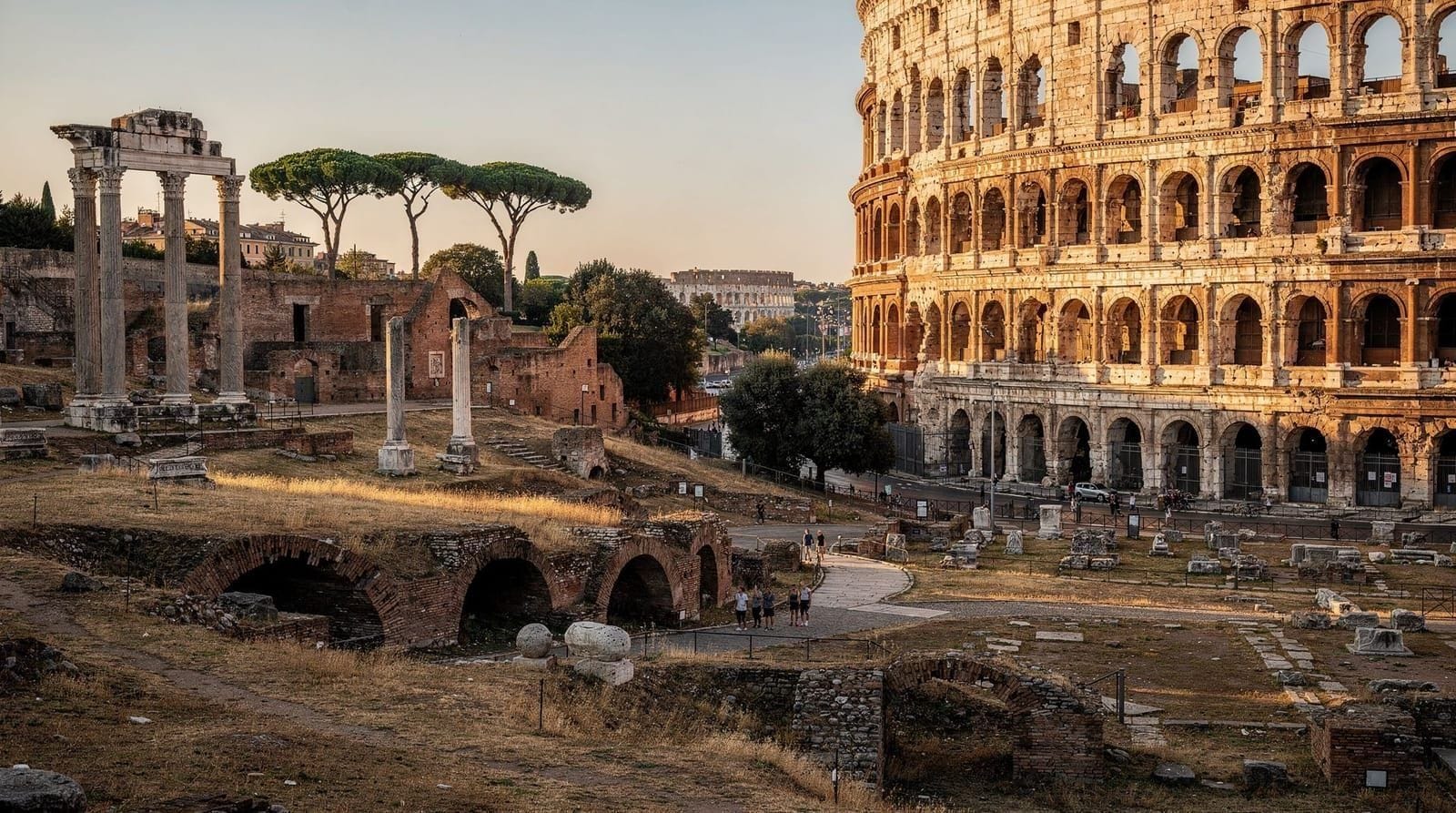
Book your Colosseum slot well in advance — the Colosseum requires a timed ticket with a named reservation (the Roma Pass does not exempt you from this). The standard ticket covers the Colosseum interior, the Roman Forum, and Palatine Hill. A guided tour is worth the money here: the Forum’s ruins are confusing without context.
Colosseum, Roman Forum and Palatine Hill guided tourAllow three to four hours for the full complex. The sequence is Colosseum first (arrive on time — they are strict about slots), then cross to the Forum via the Via Sacra, then climb Palatine Hill for the view over the valley below.
Afternoon: Capitoline Hill and Circus Maximus
Walk up to the Capitoline Hill — Michelangelo’s piazza, the Capitoline Museums, and the best view of the Forum from the terrace. The museums hold the original Marcus Aurelius equestrian statue and the Capitoline Wolf. Allow two hours.
From there, walk down through the Circus Maximus — the track itself is freely accessible, and it is still the largest public space in the ancient world — before heading to Testaccio for dinner. The Roman pasta dishes are best here: carbonara, amatriciana, cacio e pepe. Trattoria Da Remo (pizza al taglio) and Flavio al Velavevodetto (full menu) are both reliable without being tourist traps.
Day 2: Rome — Vatican and centro storico
Morning: Vatican
The Vatican requires planning. The Vatican Museums and Sistine Chapel receive up to 30,000 visitors daily and the queues for walk-up tickets can consume two hours. A skip-the-line ticket or a guided tour with pre-purchased entry is essential.
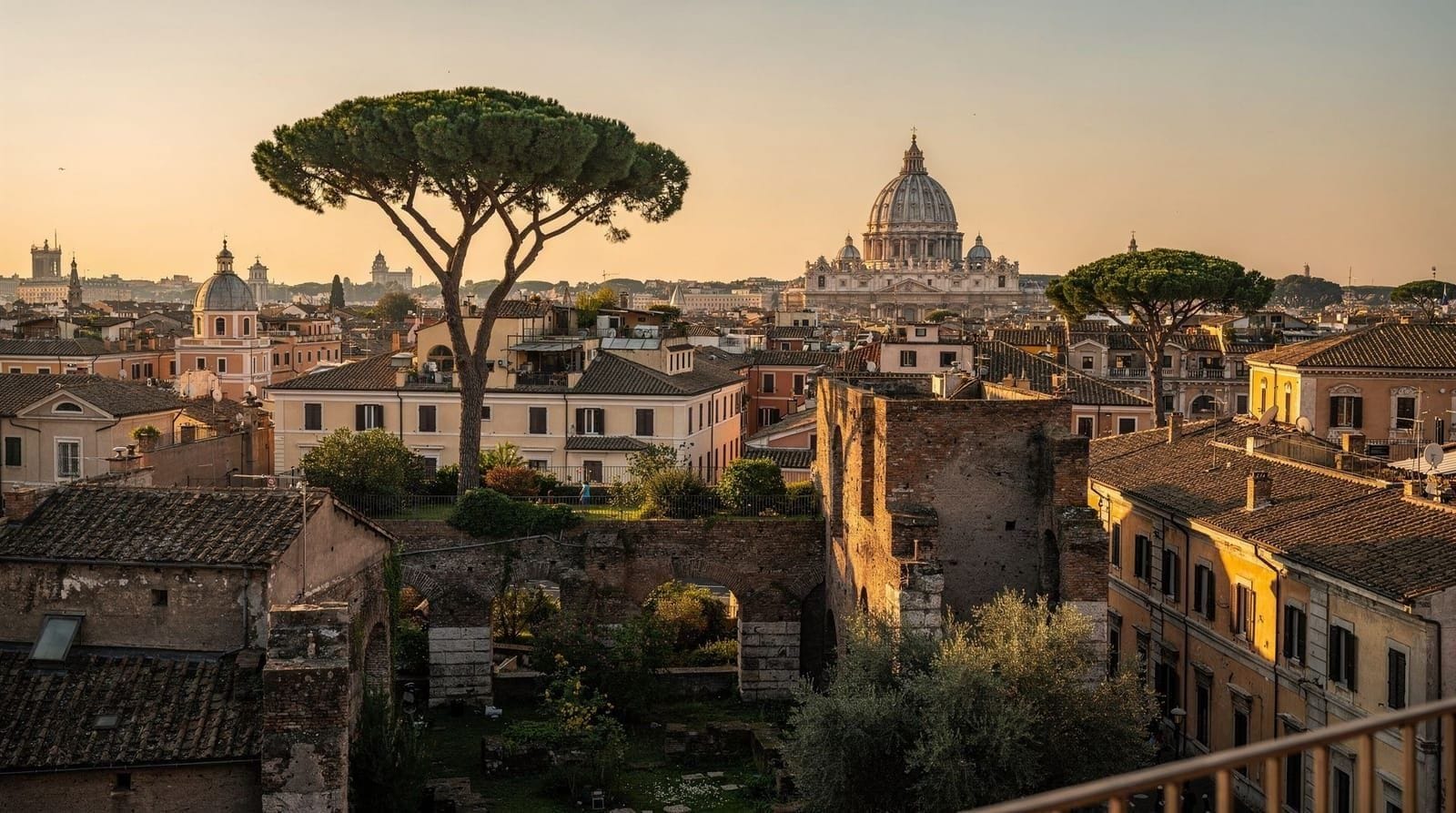
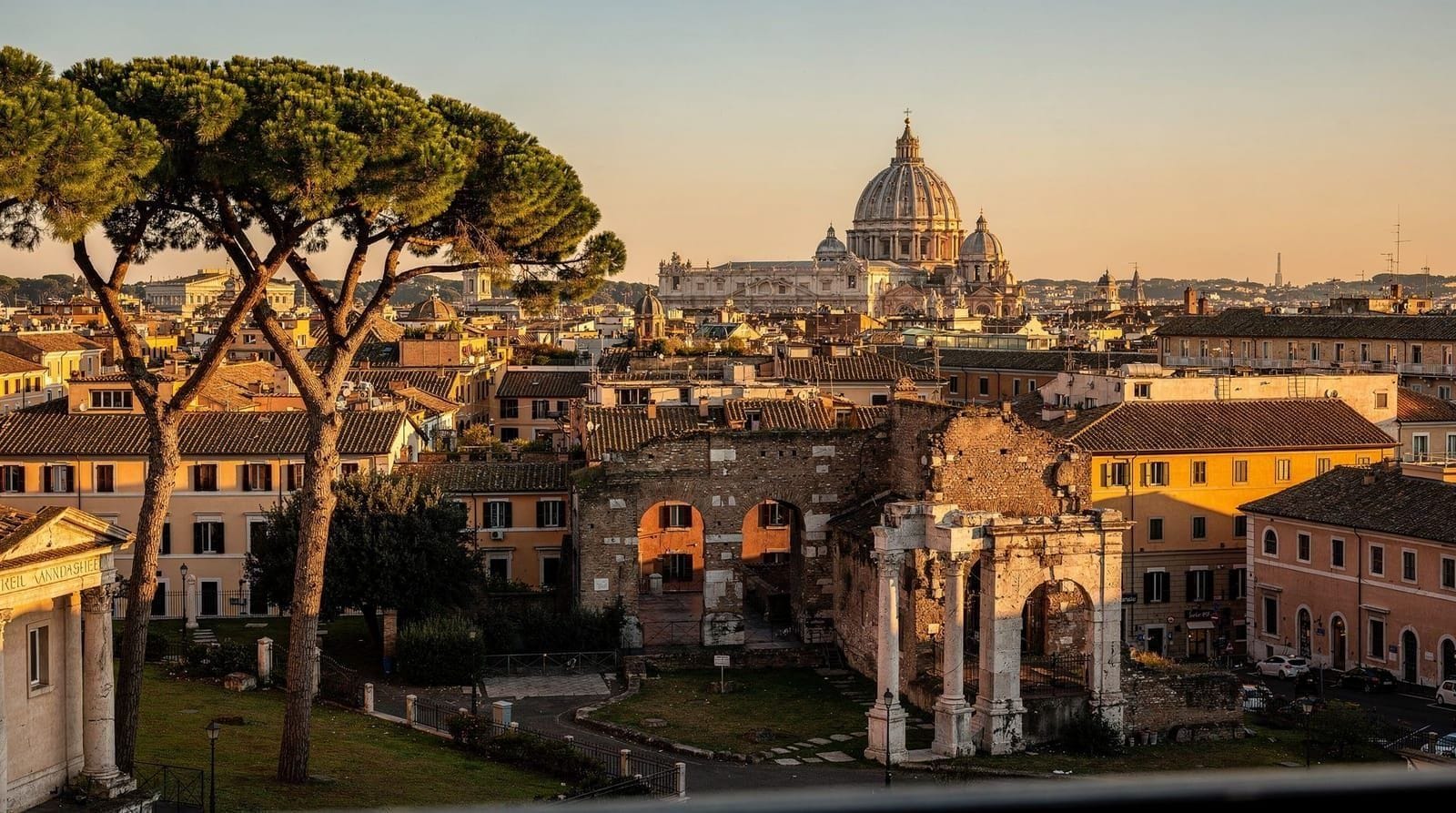
Vatican Museums and Sistine Chapel skip-the-line entryThe route through the museums is one-way and clearly signed. Allow a minimum of two hours; three is more comfortable. The Sistine Chapel is at the end of the route — the ceiling is Michelangelo’s 1508-1512 frescoes, and the Last Judgement on the altar wall is his later, darker revisit. St. Peter’s Basilica is free and adjacent; the dome climb (€8 stairs, €10 with lift) gives the best aerial view of Rome. Dress code is enforced: covered shoulders and knees required for everyone.
Afternoon: centro storico on foot
After lunch in Prati (the neighborhood just west of the Vatican, reliable and reasonably priced), cross the Tiber and spend the afternoon walking the centro storico. The route from the Pantheon through Piazza Navona to the Campo de’ Fiori is Rome’s greatest pedestrian sequence. The Pantheon now requires a timed ticket (€5); book online at coopculture.it for a specific slot.
Trevi Fountain is best visited early morning or late evening — it is genuinely spectacular but genuinely unpleasant in the middle of the day with 2,000 people in front of it. A coin thrown over the left shoulder into the water is the tradition; the proceeds fund a city soup kitchen.
Evening: trastevere
Cross the river to Trastevere for the evening. The neighborhood is touristy but the streets are genuinely beautiful at night, the restaurants are plentiful, and the atmosphere on Via della Scala and Piazza di Santa Maria in Trastevere is hard to beat. The Basilica di Santa Maria in Trastevere has twelfth-century gold mosaics that glow under evening lighting.
Day 3: Rome — Borghese Gallery and Monti
Morning: Borghese Gallery
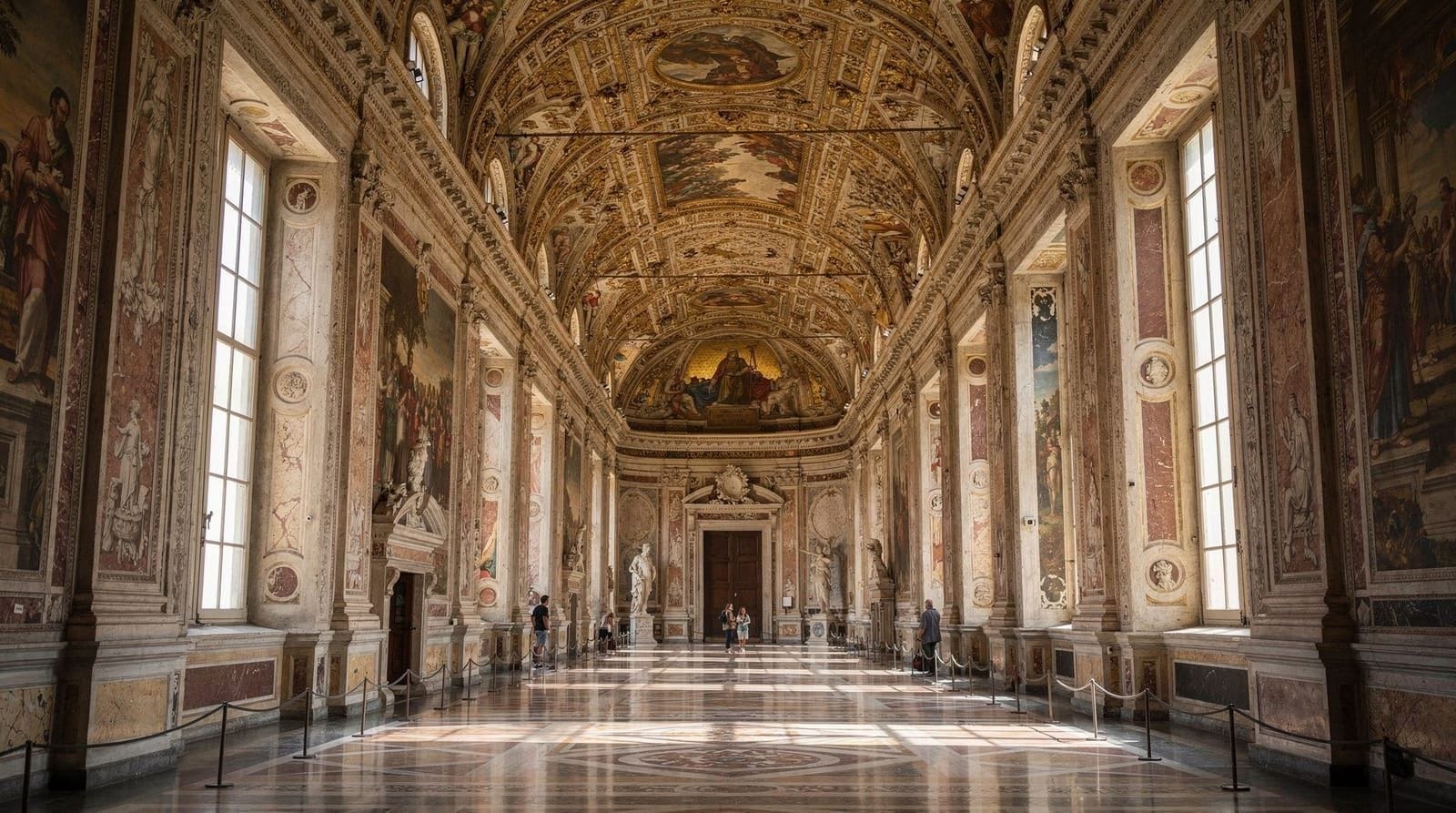
The Borghese Gallery is Rome’s finest museum and one of the more difficult to enter: timed tickets in 2-hour slots, maximum 180 people at a time, often booked 10-14 days out. Book through the official website (galleriaborghese.it) as soon as you confirm your dates. Inside: Bernini’s early sculptures (Pluto and Persephone, Apollo and Daphne, David — all carved when he was in his early twenties), Raphael’s Deposition, Titian’s Sacred and Profane Love. Two hours feels inadequate; it is what you get.
The gallery is in the Villa Borghese gardens, which are free to wander after your visit. The park also contains the Galleria Nazionale d’Arte Moderna and the Museo Etrusco di Villa Giulia if you want to extend.
Afternoon: Monti neighborhood
Spend the afternoon in Monti, the most pleasant of Rome’s inner-city neighborhoods. The streets around Piazza della Madonna dei Monti fill with students and local residents at aperitivo hour in a way that is still largely unscripted. Browse the vintage and independent shops on Via del Boschetto and Via Panisperna, stop for a coffee at one of the small bars, and have your last Roman dinner at your leisure. The food scene here runs from excellent pizza al taglio to white-tablecloth.
Day 4: Travel to Florence
Take a morning Frecciarossa or Italo train from Roma Termini to Florence Santa Maria Novella. The journey is 1h30 at 300 km/h and costs €25-60 depending on how far ahead you book. Trains run every 30-60 minutes; the 8:00-10:00 window is convenient.
Afternoon: first impressions of Florence
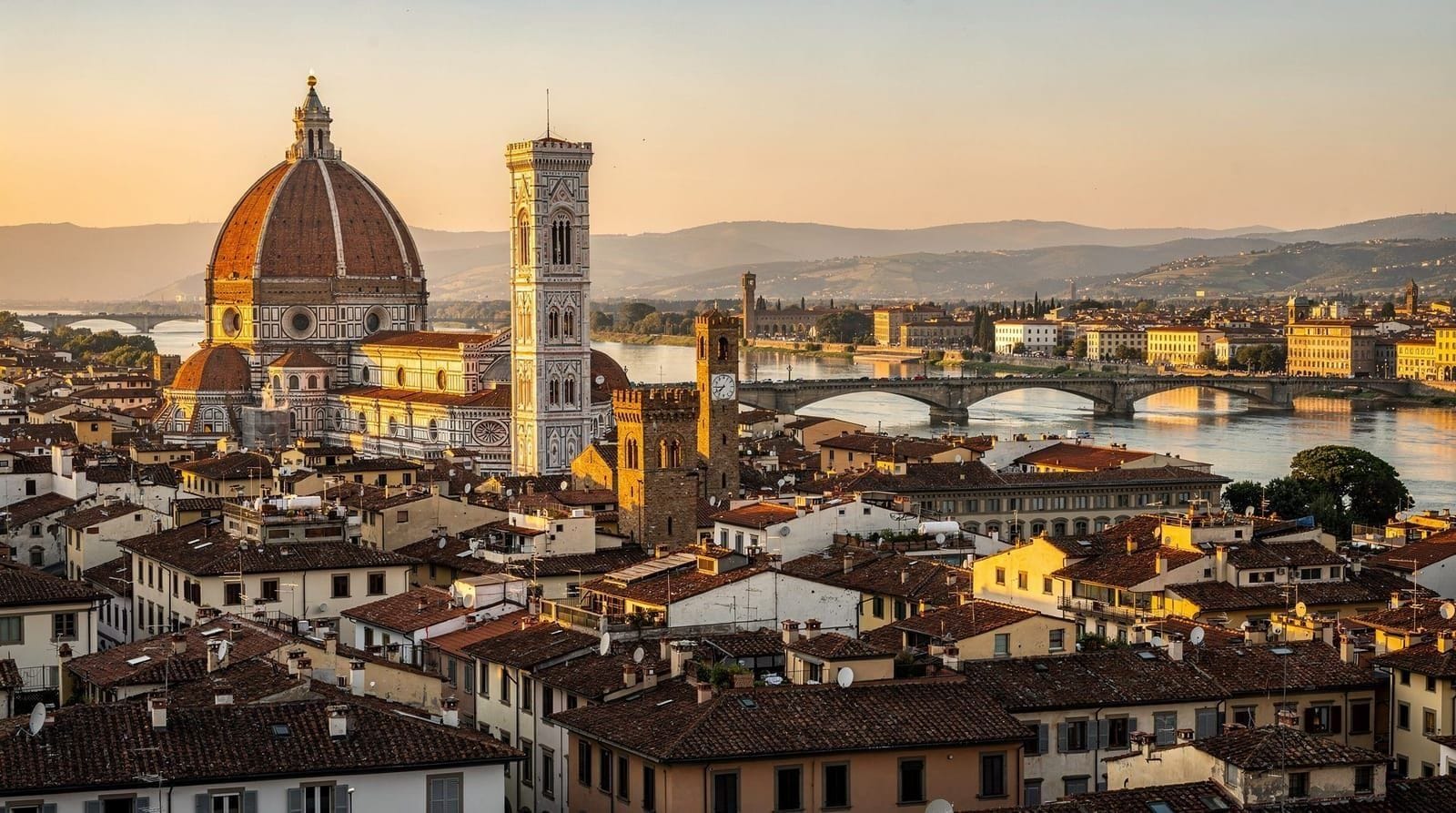
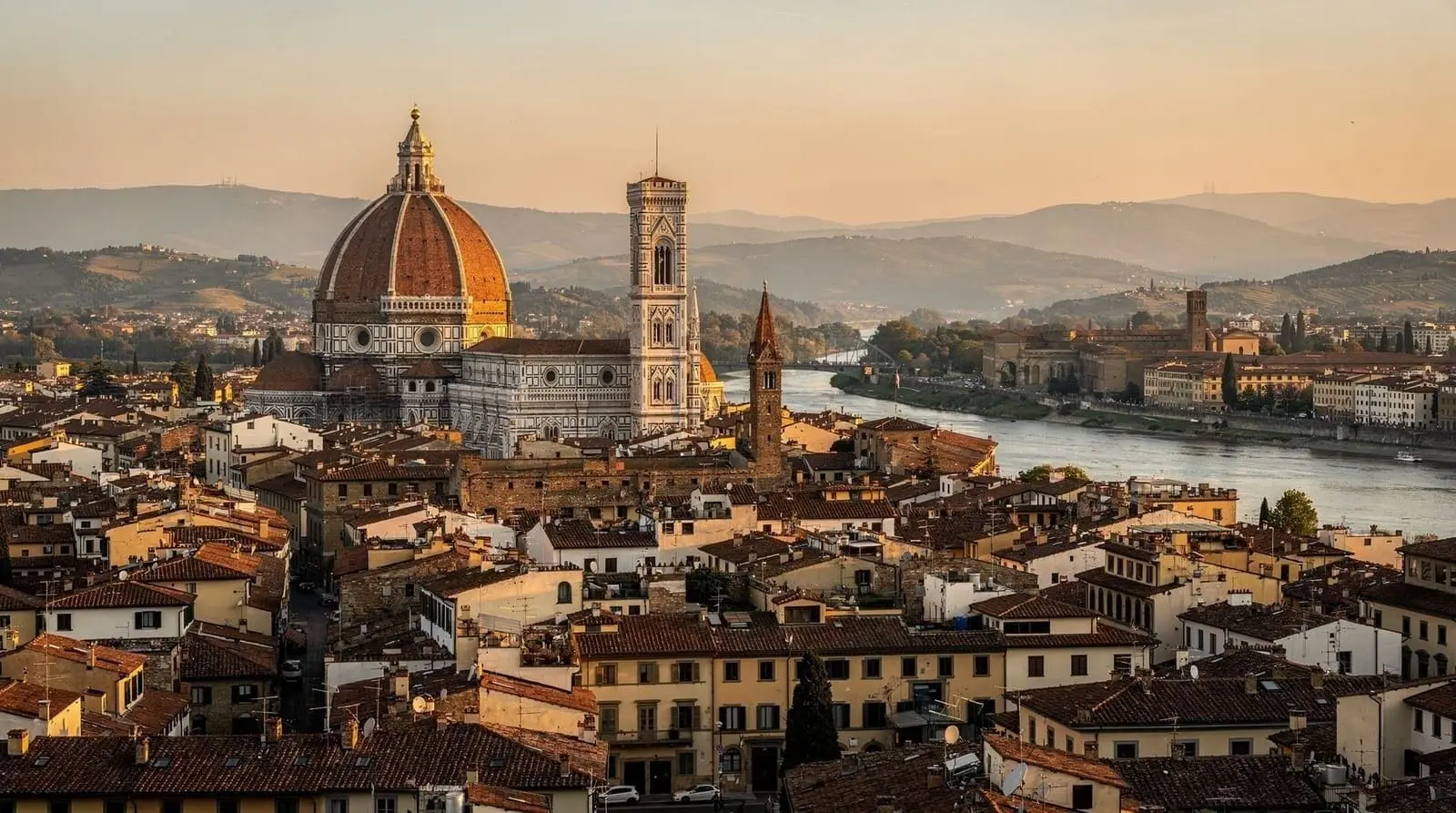
Check into your hotel, then spend the afternoon walking the core: across the Piazza della Repubblica, through the Piazza della Signoria with the Palazzo Vecchio and the open-air Loggia dei Lanzi sculpture gallery, down to the Arno river and across the Ponte Vecchio (the medieval bridge still lined with goldsmiths’ shops, as it has been since the 14th century). From the other bank, walk up to the Piazzale Michelangelo for the panorama over the city — all the orange rooftiles, Brunelleschi’s dome, the river. Late afternoon is the best time.
Dinner in the Oltrarno (the south bank) neighborhood — Buca Mario, Trattoria Sostanza or Il Latini for traditional Florentine cooking, including bistecca alla fiorentina if the budget allows (it is sold by the kilo, and it is worth it).
Day 5: Florence — the Uffizi and the Duomo
Morning: Uffizi Gallery
The Uffizi is the world’s great Renaissance collection and requires advance booking. The permanent collection spans from Cimabue and Duccio through Botticelli (the Birth of Venus and Primavera are on the second floor, often with a crowd), Leonardo (the unfinished Adoration of the Magi), Raphael, Michelangelo, Titian, Caravaggio. Allow three to four hours minimum; the building is large and the collection is not small.
Train to Florence with Uffizi skip-the-line ticketsAfternoon: Duomo complex
The Duomo complex — the cathedral itself, Brunelleschi’s dome, Giotto’s Campanile, the Baptistery — is Florence’s architectural centerpiece. The exterior of the cathedral is free; climbing the dome requires a pre-booked ticket (€30, includes all elements of the complex). The dome climb is 463 steps with no lift and a narrow passage near the top — claustrophobes should take the Campanile instead for a similar view with fewer people.
The Baptistery’s gilded bronze east doors by Lorenzo Ghiberti (the originals are inside; the copies face the cathedral) were described by Michelangelo as worthy to be the Gates of Paradise. That is not hyperbole.
Evening: Oltrarno
Return to the Oltrarno for the evening. The neighborhood around Piazza Santo Spirito has the best concentration of non-tourist-facing bars in Florence. An evening food tour covers the covered Mercato di Sant’Ambrogio and the local food shops with tastings.
Florence day trip from Rome by high-speed train — bookable as a guided day if you prefer a structured visit.
Day 6: Siena and Chianti wine country
Pick up a rental car in Florence (book from the train station for convenience) and drive south into Tuscany. The SS2 Via Cassia and the Chiantigiana (SR222) are the scenic options; the A1 autostrada is faster if time is short.
Morning: Siena
Siena is 70 km south of Florence — about 75 minutes by road. Arrive early and walk the car park outside the medieval walls up to the Piazza del Campo, the shell-shaped piazza that is arguably Italy’s most beautiful public space. The Palazzo Pubblico on the south side contains the Sala del Mappamondo with Ambrogio Lorenzetti’s Allegory of Good and Bad Government (c.1338), one of the most extraordinary secular frescoes in existence. The Torre del Mangia alongside is climbable for the rooftop view (500 steps; book at the tourist office).
The Duomo — black and white striped marble, an extraordinary inlaid marble floor (unveiled October-November), Nicola Pisano’s pulpit, a Donatello bronze — deserves an hour. The adjacent Piccolomini Library has Pinturicchio’s narrative fresco cycle of the life of Pope Pius II.
Lunch at a trattoria on one of the streets near the Campo — the Sienese pasta specialty is pici (thick hand-rolled spaghetti) with various sauces.
Afternoon: Chianti wine country
Drive north on the Chiantigiana through the Chianti Classico zone — the stretch between Greve in Chianti and Panzano is the most scenic, with stone farmhouses, olive groves, and the terraced vineyards producing the Sangiovese-based wine with the black rooster label. Several estates offer drop-in tastings; Castello di Verrazzano, Lamole di Lamole, and Fontodi (Panzano) are reliably good.
Siena, Chianti and wine tasting with lunch from RomeReturn to Florence by early evening or continue directly to Rome: the A1 autostrada runs Florence to Rome in 2h45-3h, or you can drop the car in Florence and return by train.
Day 7: Florence or return to Rome
If returning to Rome for a flight, the first trains from Santa Maria Novella run from 5:30am and reach Termini by 7:00-7:30. Afternoon and evening flights allow a final Florence morning — the Accademia for Michelangelo’s David (book ahead; the queue without a ticket is long), or the quieter Palazzo Davanzati museum, a medieval Florentine merchant’s house preserved intact.
Where to stay
Rome: Stay in Monti (quiet, central, walkable to both the Colosseum and the centro storico) or Prati (quiet, convenient for the Vatican). Avoid the very center around Navona or the Campo de’ Fiori unless noise is not a concern — they are beautiful but loud at night.
Florence: The Oltrarno (south bank) neighborhood has better-value hotels than the tourist core and more interesting independent restaurants. For the best location, the area between the Duomo and the Ponte Vecchio puts everything within ten minutes on foot.
Siena/Chianti: If adding a night in Tuscany rather than returning to Florence, agriturismos in the Chianti hills (Relais Vignale in Radda in Chianti; Castello di Spaltenna) offer the full Tuscan experience and make the wine country feel less rushed. Siena itself has several good three-star options within or just outside the walls.
A note on train bookings: book high-speed trains 3-4 weeks out for the best prices. The cheapest non-refundable tickets sell first; buy flexibly if your plans may change.
Rome or Florence first? And other trip-order questions
Doing Rome first, as this itinerary does, is the better sequence for most travellers: it front-loads the more physically demanding city (more walking, more heat exposure in summer, longer museum routes) while energy is highest, and it means the Tuscany leg — the most relaxed part of the week — lands at the end rather than the middle. The reverse order works if you’re flying into Florence directly, but plan a lighter Day 1 in that case since jet lag plus the Uffizi’s dense collection is a demanding combination. Either way, comparing Rome and Florence directly is worth reading before you fix the order, since the two cities reward genuinely different kinds of attention.
FAQ
Do I need a car for the whole week, or just the Tuscany day? Just Tuscany. Rome and Florence are both faster and cheaper on foot, metro and the high-speed train between them; a car in either historic centre adds ZTL fine risk and parking cost for no real benefit. Pick the rental car up in Florence on the morning of Day 6 and drop it off there (or in Siena) the same evening or the next morning.
Is one day really enough for both Siena and Chianti? It’s tight but workable if you keep Siena to a focused morning (Piazza del Campo, Duomo, one museum) and treat the Chianti afternoon as two or three tasting stops rather than a full wine-region tour. If you want a slower Chianti day with more estates, consider adding a night in the hills and pushing Day 7 back — the central Italy 10-day itinerary shows how that extra time gets used.
What’s the biggest booking mistake on this specific trip? Leaving the Uffizi for a walk-up visit. It sells out its timed slots as reliably as the Colosseum does, and unlike the Colosseum there’s no equivalent “arrive extra early” workaround — the museum simply will not admit unbooked visitors past capacity. Book it in the same session as your Rome tickets, not once you arrive in Florence.
Top experiences
Bookable activities with verified prices and instant confirmation on GetYourGuide.