Capitoline Hill and Campidoglio: the civic heart of Rome
Rome: Guided Tour of Colosseum, Roman Forum & Palatine Hill
What is the difference between the Capitoline Hill, Campidoglio and the Capitoline Museums?
Capitoline Hill (Campidoglio) is one of Rome's seven hills — the smallest but historically most significant. The Campidoglio refers specifically to the hilltop piazza designed by Michelangelo in the 16th century. The Capitoline Museums (Musei Capitolini) are the world's oldest public museums, housed in two palaces flanking the piazza, with the famous Marcus Aurelius equestrian statue, the Capitoline Wolf, and the best elevated view of the Roman Forum. Entry costs €15.
The hill above the Forum
Capitoline Hill is Rome’s smallest hill by area — and arguably its most symbolically loaded. It was the site of the ancient citadel, the Temple of Jupiter Optimus Maximus (the most important temple in the Roman state religion), the Tabularium (state archive), and the place where Roman generals returned in triumph. Its name, Capitolium, gave us “capital” — the political centre of a state.
Today the hilltop is entirely occupied by the Campidoglio piazza and the Capitoline Museums, flanked by the Church of Santa Maria in Aracoeli and the enormous white marble Vittoriano (Altare della Patria) monument that dominates the view from below.
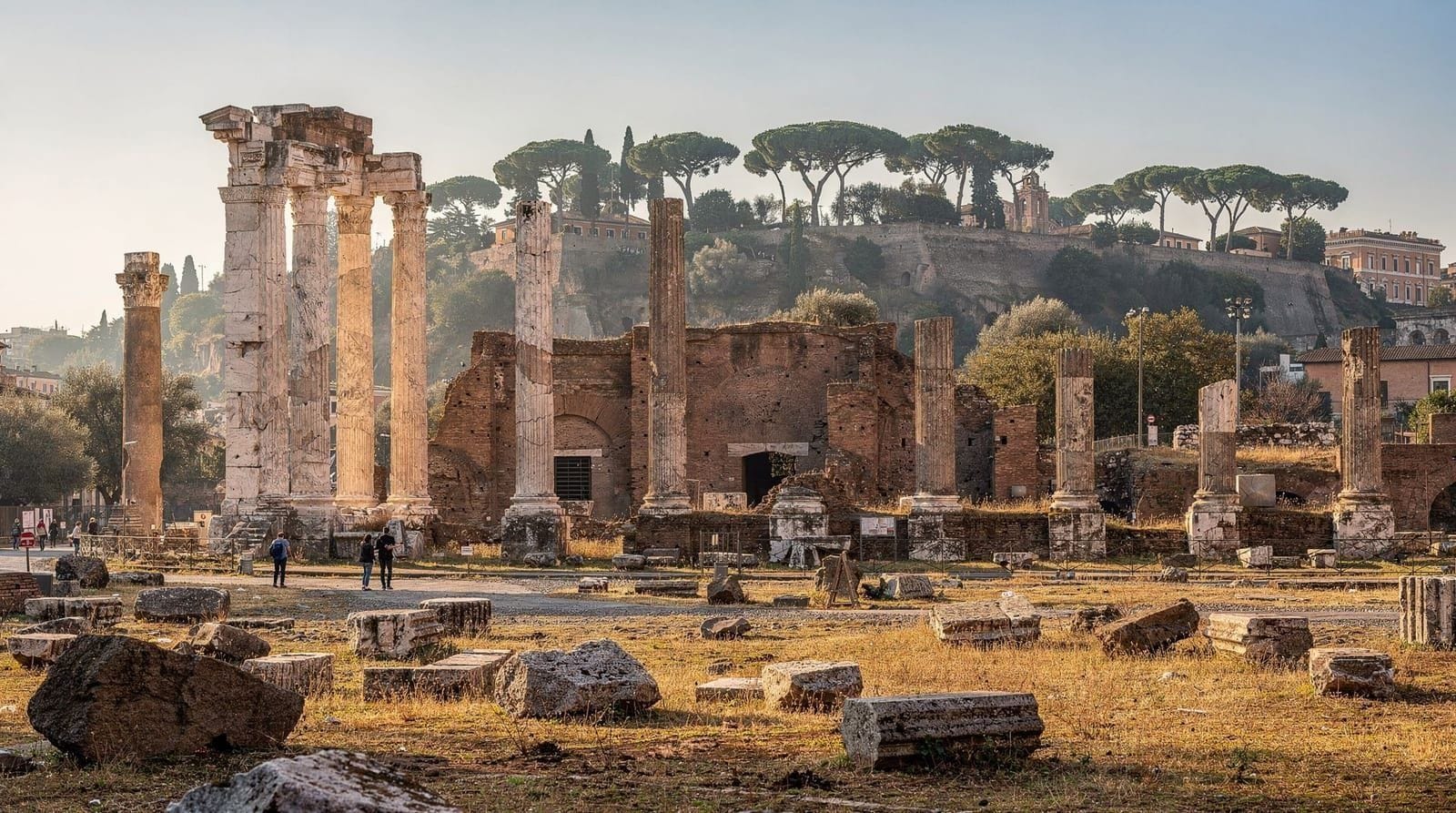
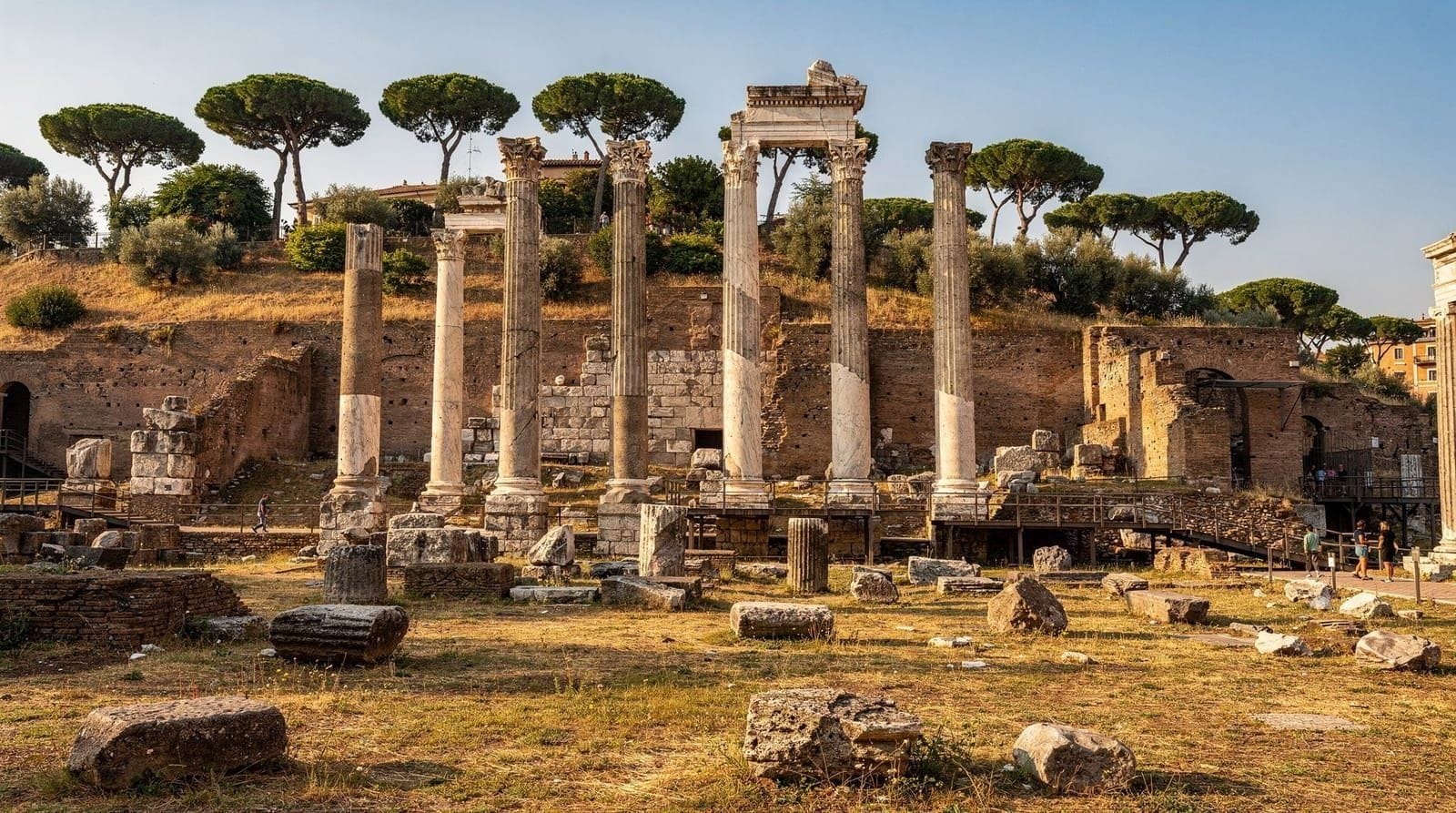
The Capitoline Hill sits directly above the western end of the Roman Forum, making it both a viewing platform and the logical culmination of a Forum visit.
| Where | Capitoline Hill, above Piazza Venezia, 5 min walk from the Roman Forum |
| Cost | Free piazza and Forum terrace; museums €15 |
| Time needed | 15 minutes for the free terrace, 2 hours for the full museums |
| Getting there | Bus 40/64/85/87/95 to Piazza Venezia, or 15-min walk from Metro Colosseo |
| Best time | Weekday afternoon (14:00-17:00) for the museums; early morning for piazza photos |
Michelangelo’s Campidoglio
The piazza was redesigned by Michelangelo from 1536 following Pope Paul III’s request to create a dignified space for the visit of Holy Roman Emperor Charles V. Michelangelo did not live to see it completed (the project continued after his death in 1564), but the design is substantially his.
Key elements:
- The ovoid paving pattern (an elliptical star motif in travertine and grey stone) centred on the equestrian statue of Marcus Aurelius — one of the most geometrically sophisticated piazza designs ever executed.
- The three flanking palaces (Palazzo Senatorio at the rear, Palazzo dei Conservatori on the right, Palazzo Nuovo on the left) form a visual ensemble that is slightly asymmetric — Michelangelo adjusted the angle of the lateral palaces to compensate for the non-perpendicular approach from below.
- The cordonata (ramped staircase with shallow steps designed for horses, not just feet) leading up from the Piazza d’Aracoeli below.
- The dioscuri (Castor and Pollux) flanking the top of the cordonata — ancient sculptures brought here from the Ghetto area.
The piazza is free to enter at any time. The best time for photography is early morning (clear light, no tourist crowds) or at dusk when the piazza is softly lit.
The Capitoline Museums: what is inside
The Capitoline Museums (Musei Capitolini) are housed in both the Palazzo dei Conservatori (right side of the piazza) and Palazzo Nuovo (left), connected by an underground passage through the ancient Tabularium archive.
Ticket: €15 adult (€13 reduced, free for EU under 18 and over 65 in some cases). Open Tuesday–Sunday 9:30–19:30 (last entry 18:30). Closed Monday.
Highlights:
Equestrian statue of Marcus Aurelius: The original (the figure in the piazza is a copy) is in the museum’s Exedra. The only ancient equestrian bronze to survive in Rome — others were melted down, but this was preserved through the Middle Ages because people believed it depicted Constantine the Great (a Christian emperor). Up close, the detail of the horse’s musculature and the emperor’s expression are extraordinary.
Capitoline Wolf (Lupa Capitolina): The famous bronze she-wolf suckling Romulus and Remus — one of Rome’s most reproduced images. The two infant figures were added in the Renaissance; the wolf itself was long believed to be Etruscan (5th century BCE) but recent analysis suggests it may be medieval, 11th–12th century. The attribution debate continues; the quality of the bronze is undeniable either way.
The Capitoline Brutus: A bronze bust from approximately 300 BCE — one of the finest surviving examples of Roman Republican portraiture. Haunting, specific facial features that feel almost photographic.
Marble Thorn Puller (Spinario): A small bronze of a boy removing a thorn from his foot — an ancient favourite that influenced countless Renaissance sculptors, including Verrocchio.
The Tabularium passage and Forum view: The underground passageway connecting the two museum buildings runs through the ancient Tabularium (state records building, 78 BCE). The main hall has a large window overlooking the Roman Forum directly below — without entering the Forum, this is the closest you can get to an elevated view of the Temple of Saturn, the Arch of Septimius Severus, and the Via Sacra. Included in the museum ticket.
Palazzo dei Conservatori paintings: Upper floors house important paintings including Caravaggio’s “St. John the Baptist in the Desert” (c.1602) and works by Rubens, Tintoretto, and Van Dyck. Less visited than the ancient sculpture, well worth 30 minutes.
The free Forum view from outside the museum
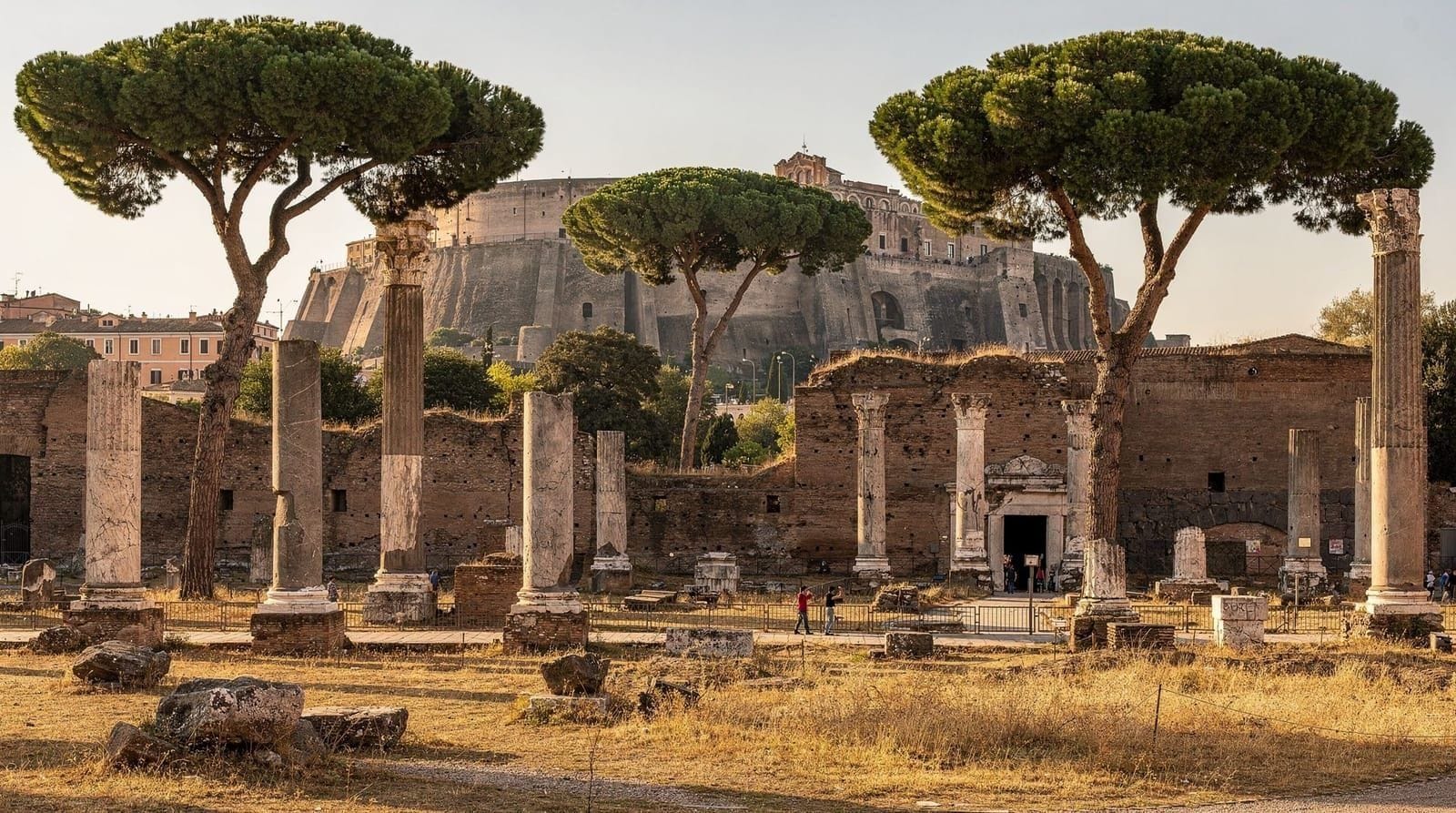
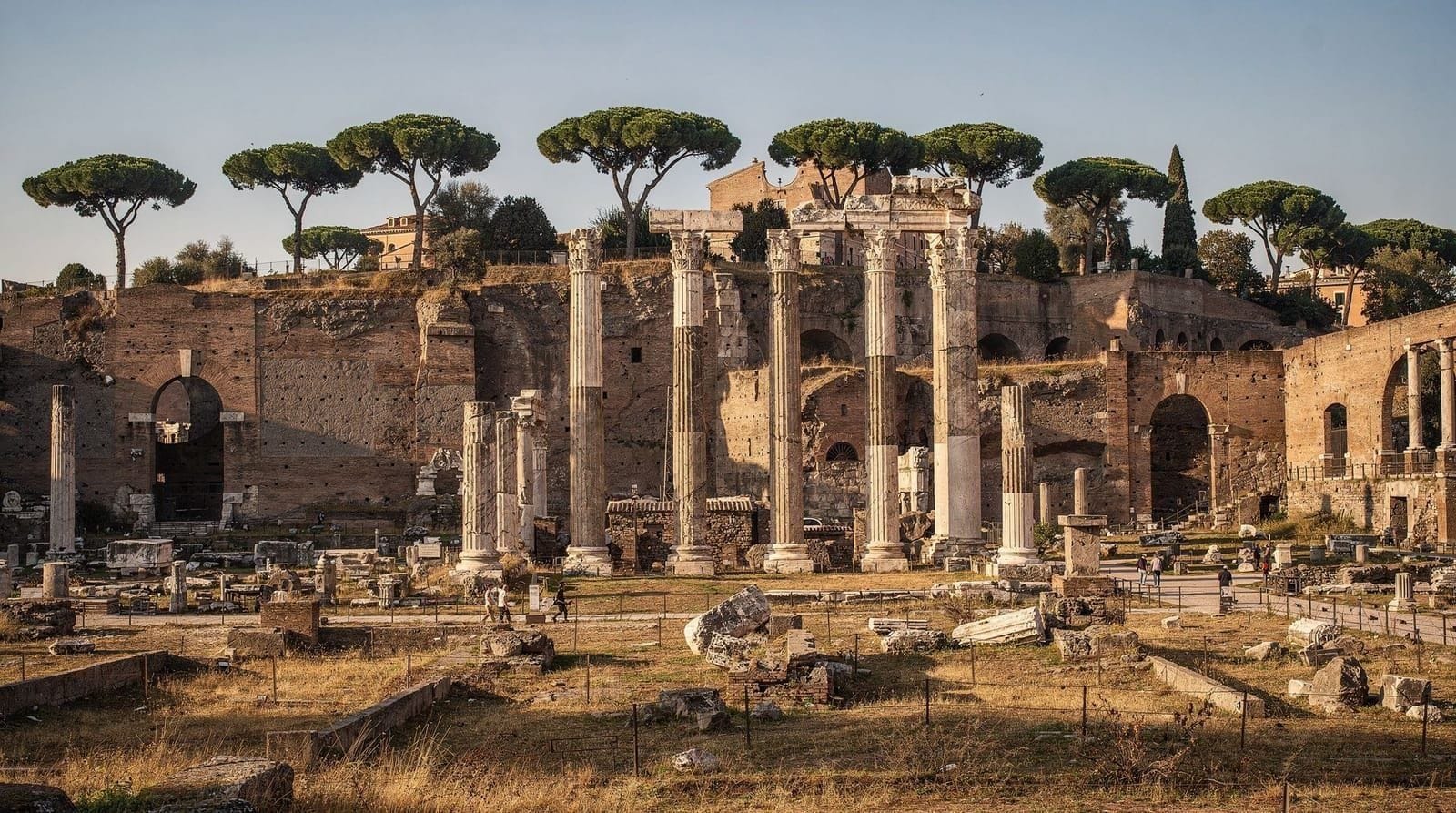
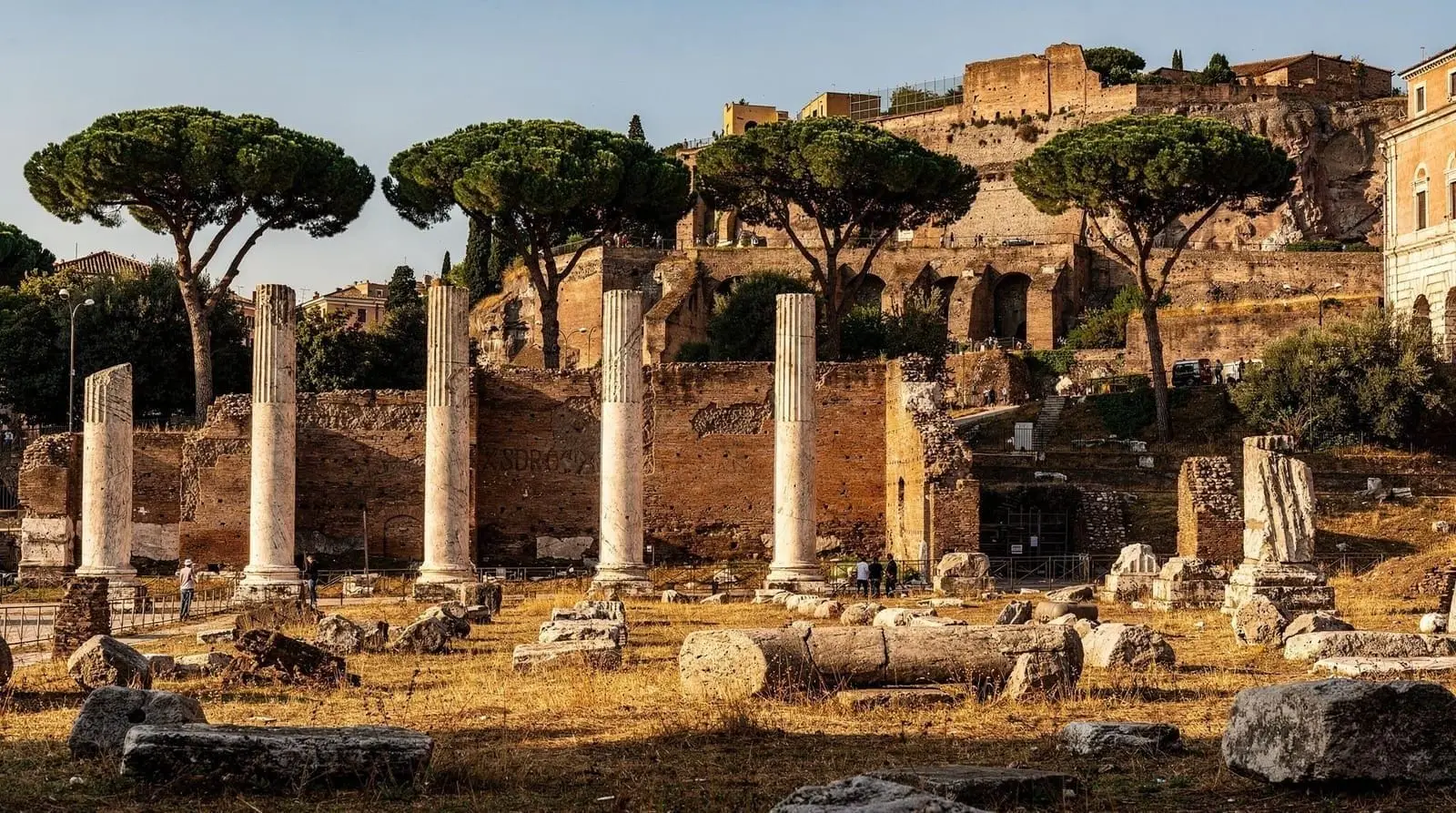
The terrace behind Palazzo Senatorio (the central palace, which is the current Rome City Hall and not open to visitors) overlooks the Forum and Palatine Hill from the western end. This is the best free view of the Roman Forum available anywhere — visible from outside the museum, without paying entry.
Approach via the Campidoglio piazza, walk around the left side of Palazzo Senatorio to the terrace. The view opens onto the Temple of Saturn, the Forum floor, the Arch of Septimius Severus, and the Palatine Hill beyond. Best in mid-morning light (9:30–11:00) for east-facing visibility.
The Vittoriano (Altare della Patria): adjacent, free, vertigo-inducing
The white marble monument looming over Piazza Venezia below the Capitoline Hill — officially the Monumento Nazionale a Vittorio Emanuele II, known locally as the “typewriter” or “wedding cake” — is free to enter the lower levels. It houses the Tomb of the Unknown Soldier and a national military museum.
The elevator to the top terrace (€7) provides Rome’s most dramatic 360-degree panoramic view. This is arguably the best aerial view of Rome — looking north toward Piazza Venezia, east toward the Forum and Colosseum, south toward the Circus Maximus, and west toward the Vatican. The elevator runs until approximately 19:00 in summer.
Practical tips for the Capitoline Hill area
Getting there: Bus routes 40, 64, 85, 87, 95 to Piazza Venezia; then 5 minutes’ walk up the cordonata. Metro Line B to Colosseo (15 minutes’ walk northwest).
Crowds: The piazza is busy from 10:00 onward in peak season; the museums are significantly less crowded than the Vatican or the Colosseum. Weekday afternoons (14:00–17:00) are the quietest time.
Combine with: Roman Forum (directly below, 5 minutes’ walk) — see our Roman Forum guide. Capitoline Hill + Forum + Colosseum is a natural full-day combination. See our ancient Rome in one day guide.
The Church of Santa Maria in Aracoeli: Free to enter; top of the long staircase on the right side of the Campidoglio approach. Contains a famous medieval mosaic (apse), important Pinturicchio frescoes (1485), and a revered gilded figure of the Christ Child (Santo Bambino). Steep staircase (124 steps) as an alternative ascent; beautiful interior.
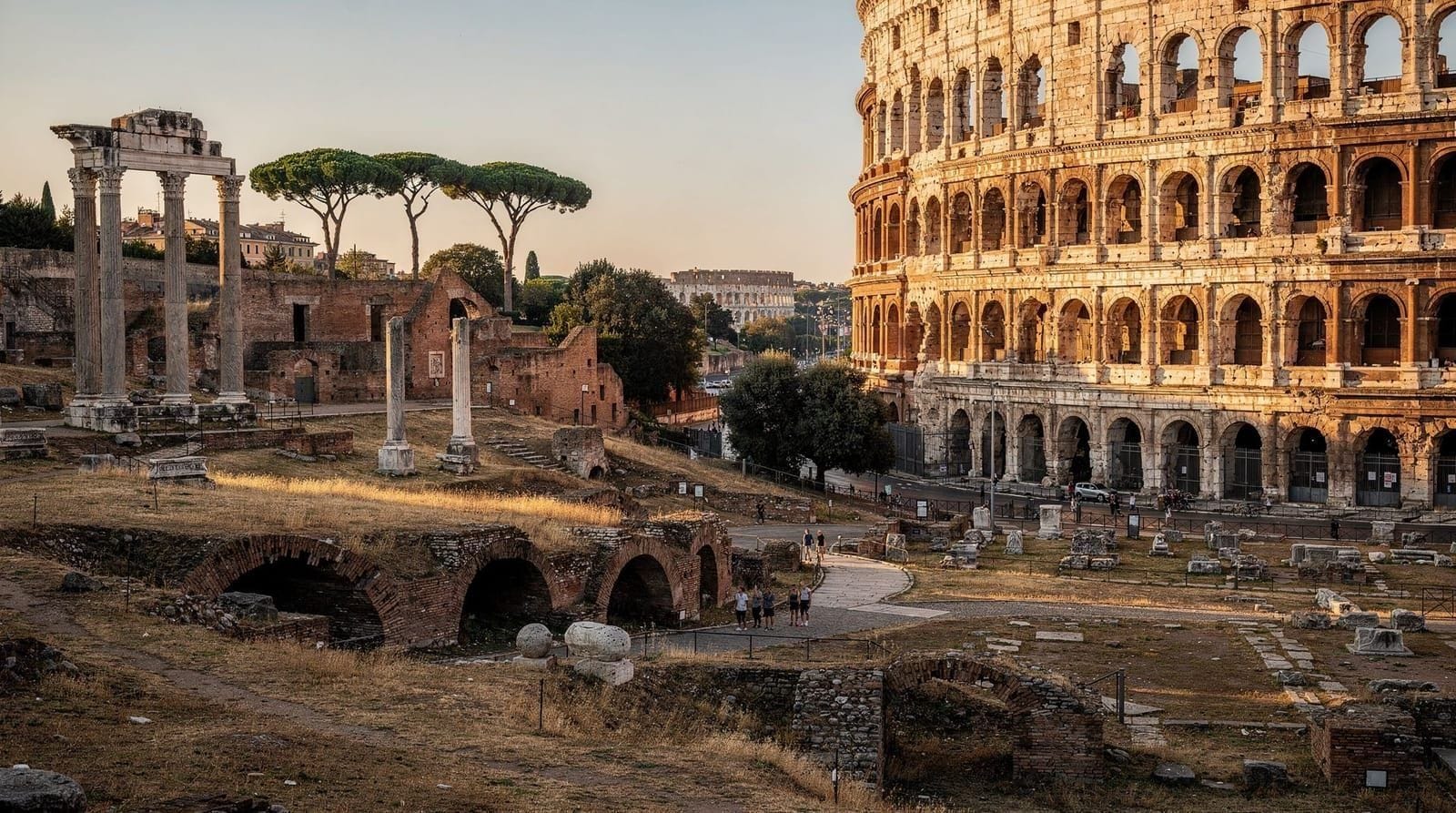
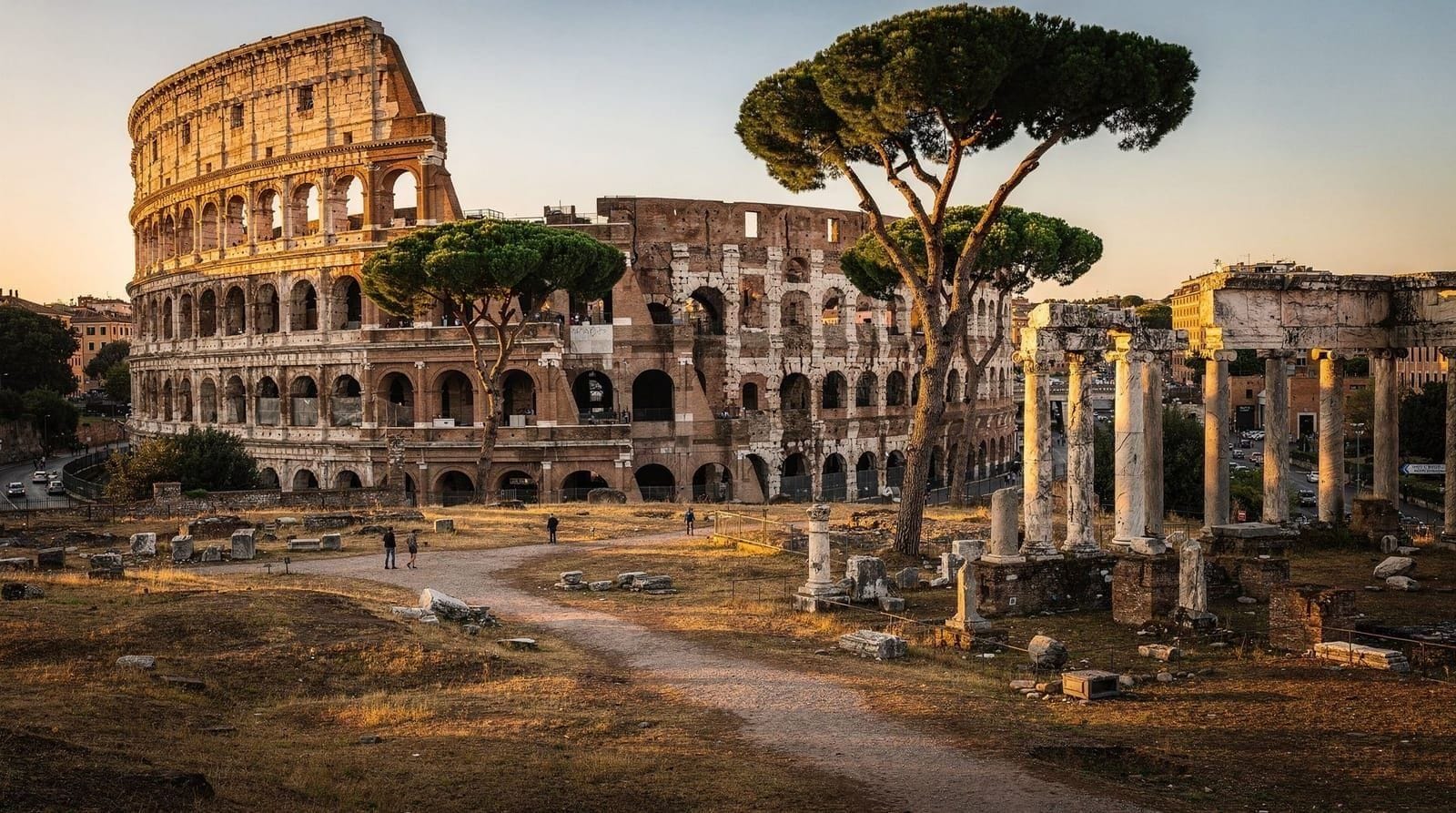
A guided Colosseum, Forum and Palatine tour that also covers the Capitoline Hill area context — efficient for first-timers who want the full ancient Rome narrative in one guided session.Why the Capitoline was sacred in ancient Rome
The ancient Romans treated the Capitoline Hill with a reverence that bordered on superstition. The Temple of Jupiter Optimus Maximus (Greatest and Best) occupied the southern summit — the Arx — from approximately 509 BCE (coinciding with the founding of the Republic). This was Rome’s state temple: the endpoint of triumphal processions, where generals offered their laurels and where the Senate met on ceremonial occasions.
The hill was considered the centre of the world — literally. Roman documents refer to “the Capitoline” in phrases we would use for “Rome” or “the state.” Coins minted with the image of the Capitoline hill circulated throughout the empire as a symbol of Roman authority.
Practical consequence: the hill was heavily built upon and rebuilt over millennia, so the ancient temple footprint is now largely beneath the current palaces. The Capitoline Museums excavation beneath the Palazzo dei Conservatori has revealed sections of the temple podium; these can be seen in the museum basement (included in the ticket).
Piazza Venezia: the view nobody photographs well
The piazza immediately below the Capitoline Hill, dominated by the Vittoriano monument, is one of Rome’s most-photographed spots from outside — but terrible to photograph from within. The Vittoriano itself reads as an imposing piece of bombastic nationalism that most Romans alternately mock (the “typewriter” nickname is affectionate) and ignore.
What the piazza actually contains:
Palazzo Venezia (left/west side): 15th-century palace that briefly belonged to Venice (hence the name), later occupied by Mussolini, who delivered speeches from its balcony. Now a museum of medieval and Renaissance decorative arts (second-tier collection, usually uncrowded — €8 entry).
Church of Santa Maria di Loreto and Santissimo Nome di Maria: Two centrally-planned churches flanking the street leading to the Forum — architecturally interesting, rarely visited, free entry.
The traffic: Piazza Venezia is one of Rome’s major traffic nodes — six roads converge here. The traffic policeman (vigile) who directs it manually from a raised platform is something of a Roman institution. Give yourself 5 minutes at the Vittoriano base to observe this efficiently choreographed chaos.
The Capitoline Wolf’s contested history
The Lupa Capitolina — the bronze she-wolf that has been Rome’s civic symbol since the medieval period — has a disputed origin that is genuinely unresolved.
The traditional dating was Etruscan, 5th century BCE, based on stylistic analysis. The twin infants (Romulus and Remus) were added by the Renaissance sculptor Antonio Pollaiolo around 1471 — not controversial.
In 2006, a team led by Anna Maria Carruba used radiocarbon dating and technical analysis of the casting technique to argue the wolf is medieval, most likely 11th–12th century CE, not Etruscan. This dating is based on the single-cast bronze technique (multi-piece casting was standard in the Etruscan period; this wolf was cast whole) and the carbon dates of small samples taken from the bronze.
The controversy has not been definitively resolved. The museum labels the wolf as “traditionally attributed to Etruscan bronzesmiths, dating contested.” This is honest uncertainty, not institutional obfuscation. The wolf’s quality — regardless of date — is exceptional.
The Tabularium and the transition between ancient and medieval Rome
The Tabularium (state archive, 78 BCE) at the western end of the Forum is physically incorporated into the current Palazzo Senatorio. Walking through the Capitoline Museums’ underground connection, you pass through the ancient archive’s main hall with its direct Forum view.
This physical connection — the medieval palace built on top of the ancient archive — is characteristic of Rome’s entire urban history. Nothing in Rome is purely one period; every significant building sits on or incorporates earlier structures. The Capitoline Hill compresses this layering more dramatically than almost anywhere: Etruscan to Republican to Imperial to medieval to Renaissance to Baroque to modern, all on the same hilltop.
The Capitoline Museum collections in detail
The Capitoline Museums are the world’s oldest public museums, opened in 1471 when Pope Sixtus IV donated a collection of bronze statues to the Roman people. The opening inventory included the Capitoline Wolf, the Spinario, and the head of a colossal bronze Constantine. The collection has grown continuously since.
The museums now span two palaces connected by an underground gallery through the ancient Tabularium, plus the Centrale Montemartini satellite museum (industrial-era power station housing an overflow collection of ancient sculpture — the juxtaposition of ancient marble and 1920s turbines is deliberately spectacular and often less crowded than the main site).
Key works beyond the main highlights:
Capitoline Gaul (2nd century BCE copy): A dying Gallic warrior, portrayed with extraordinary anatomical accuracy and emotional weight — his imminent death conveyed through posture rather than expression. Part of a series of Pergamene bronzes commemorating the defeat of the Galatians.
Rape of the Sabine Women (from the Horti Sallustiani, 2nd century CE): The large marble group of a Sabine woman being carried off. The compositional elegance — three interlocked figures in a spiral — influenced Giambologna’s famous Renaissance version in Florence.
Hall of the Emperors: A long gallery lined with portrait busts of Roman emperors in chronological sequence — from Julius Caesar through late antiquity. Walking the sequence is a compressed visual history of how Roman portrait conventions evolved from Republican verism (unidealized, every wrinkle preserved) through Imperial idealization to the late antique spiritual abstraction.
Palazzo Caffarelli Terrace: The open-air terrace at the rear of the Palazzo dei Conservatori, with views across the Trastevere and Aventine hills toward the Baths of Caracalla. Less visited than the Forum-side terrace; excellent late afternoon light.
The Exedra of Marcus Aurelius: The glass-enclosed modern room housing the original equestrian statue. The room itself was designed by Carlo Aymonino in 1997 — contemporary architecture in confident dialogue with a 2nd-century bronze. The window behind the statue frames the Forum below.
The Campidoglio at night
The Campidoglio piazza is spectacular at night. The paving pattern is lit from below, the cordonata is illuminated, and the piazza is quiet after 22:00 when tourist traffic drops off. The Forum terrace view at night — looking down at the illuminated Forum ruins — is one of Rome’s most atmospheric free views.
Practical: The piazza and terrace remain accessible until late (technically always open, though the nearby roads close to traffic around midnight). The Vittoriano elevator sometimes runs until 21:00 in summer.
The seven hills connection
Capitoline Hill is one of Rome’s famous seven hills. A self-guided walk connecting all seven hills in a single day is achievable (approximately 8–10 km) and one of Rome’s most satisfying non-tourist experiences. The Capitoline–Palatine–Aventine sequence in the south is the most historically coherent.
For an efficient way to cover multiple hills in sequence, the e-bike and golf cart tours that operate the seven-hills route are significantly less tiring than walking — particularly useful in summer when hill climbing in heat is punishing.
A skip-the-line ancient Rome tour that includes the Forum context and guide commentary on the Capitol area — useful anchor if combining museum, Forum and Colosseum in a single day.Capitoline Museums vs Rome’s other major museums
| Museum | Ticket price | Crowd level | Best for |
|---|---|---|---|
| Capitoline Museums | €15 | Low to moderate | Ancient Roman sculpture, free Forum view |
| Borghese Gallery | €17 | Very high booking pressure | Bernini and Caravaggio in a fixed 2-hour slot |
| Vatican Museums | From €21 | High | Sistine Chapel, unmatched scale |
The Capitoline is the least crowded of Rome’s three major museum experiences and, unlike the Borghese, does not require booking weeks ahead — a useful fallback if your other museum slots didn’t line up. See our Rome best museums guide for the fuller comparison across the city, and our dedicated Capitoline Museums guide for a full room-by-room visit plan.
For visitors building a longer ancient-Rome itinerary around the Capitoline, the hill pairs naturally with the Circus Maximus and Baths of Caracalla further south — both free or low-cost, both far less crowded than the Colosseum, and both walkable in the same afternoon if you’re already in the area. Our Rome history guide puts the Capitoline’s civic role in the wider context of how the city’s ancient, medieval and Renaissance layers connect. None of these three sites require the timed-entry booking pressure of the Colosseum or Vatican, which makes them a genuinely relaxing counterpoint to a morning spent queuing.
Photographing the Campidoglio and the Forum terrace
The piazza’s geometric paving and the Forum terrace view are two of the most rewarding photo opportunities in central Rome, and both are free. Early morning gives the cleanest light on the ovoid paving pattern before crowds fill it; the Forum terrace is best around 9:30-11:00 when the eastern light falls directly onto the ruins below. Our best photo spots in Rome guide has the fuller timing breakdown for this and dozens of other Rome viewpoints.
Frequently asked questions about Capitoline Hill and Campidoglio: the civic heart of Rome
Is the Capitoline Hill worth visiting if I only have one day for ancient Rome?
Can I visit the Capitoline Museums and the Roman Forum on the same ticket?
Top experiences
Bookable activities with verified prices and instant confirmation on GetYourGuide.