Rome's Byzantine mosaics: where to see the city's golden art
Trevi, Pantheon & Spanish Steps Guided English Walking Tour
Where are the best mosaics in Rome?
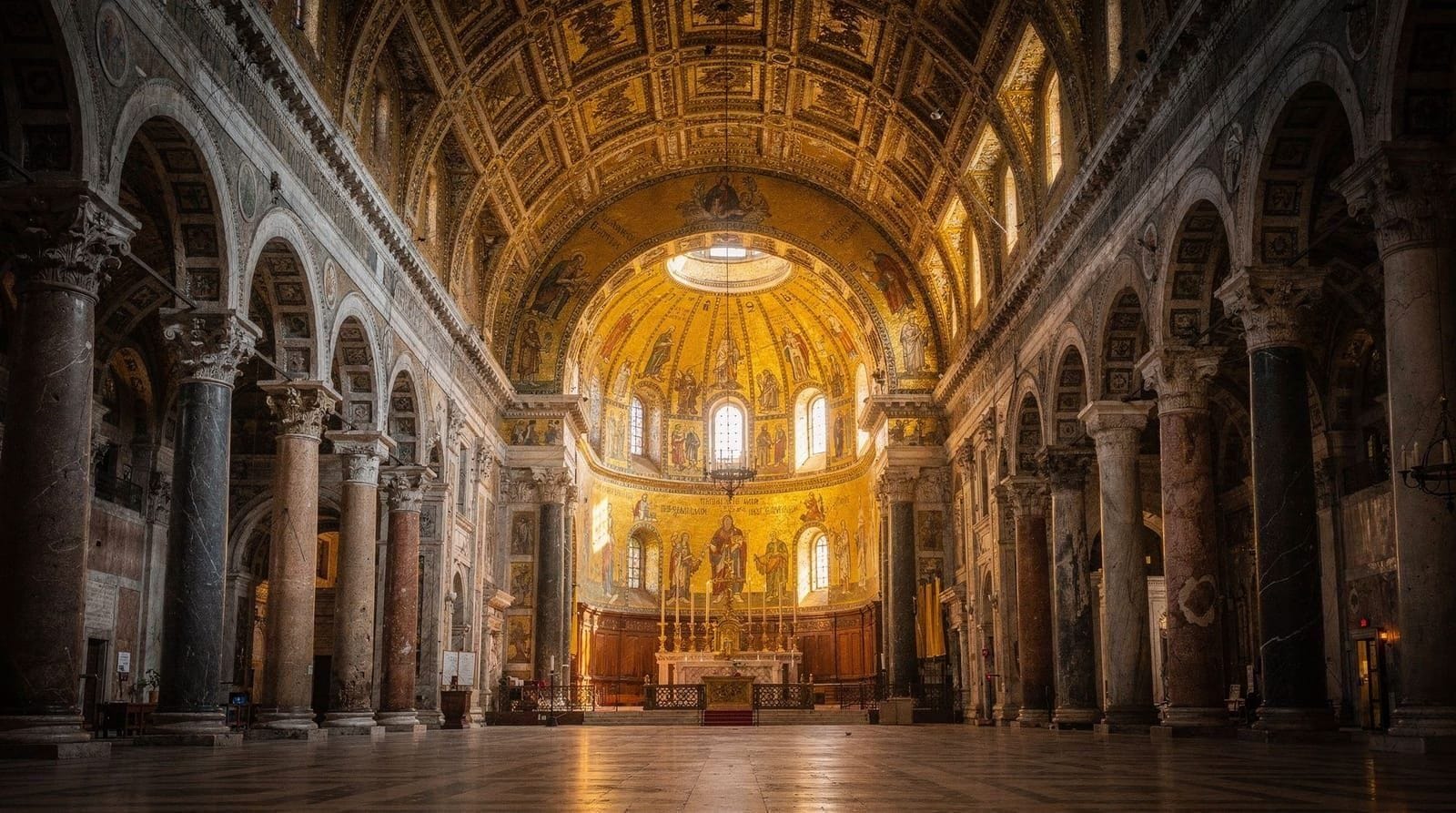
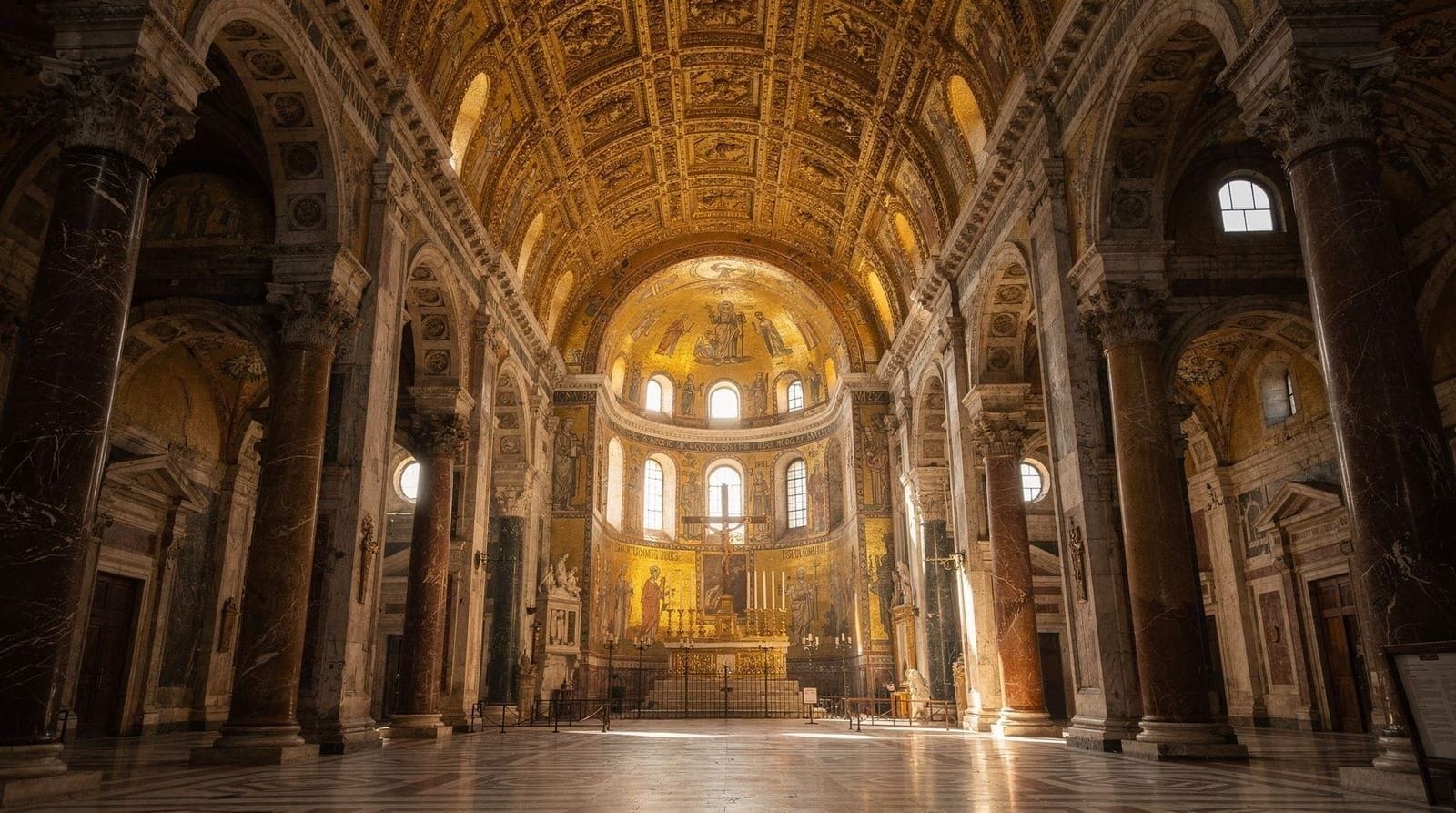
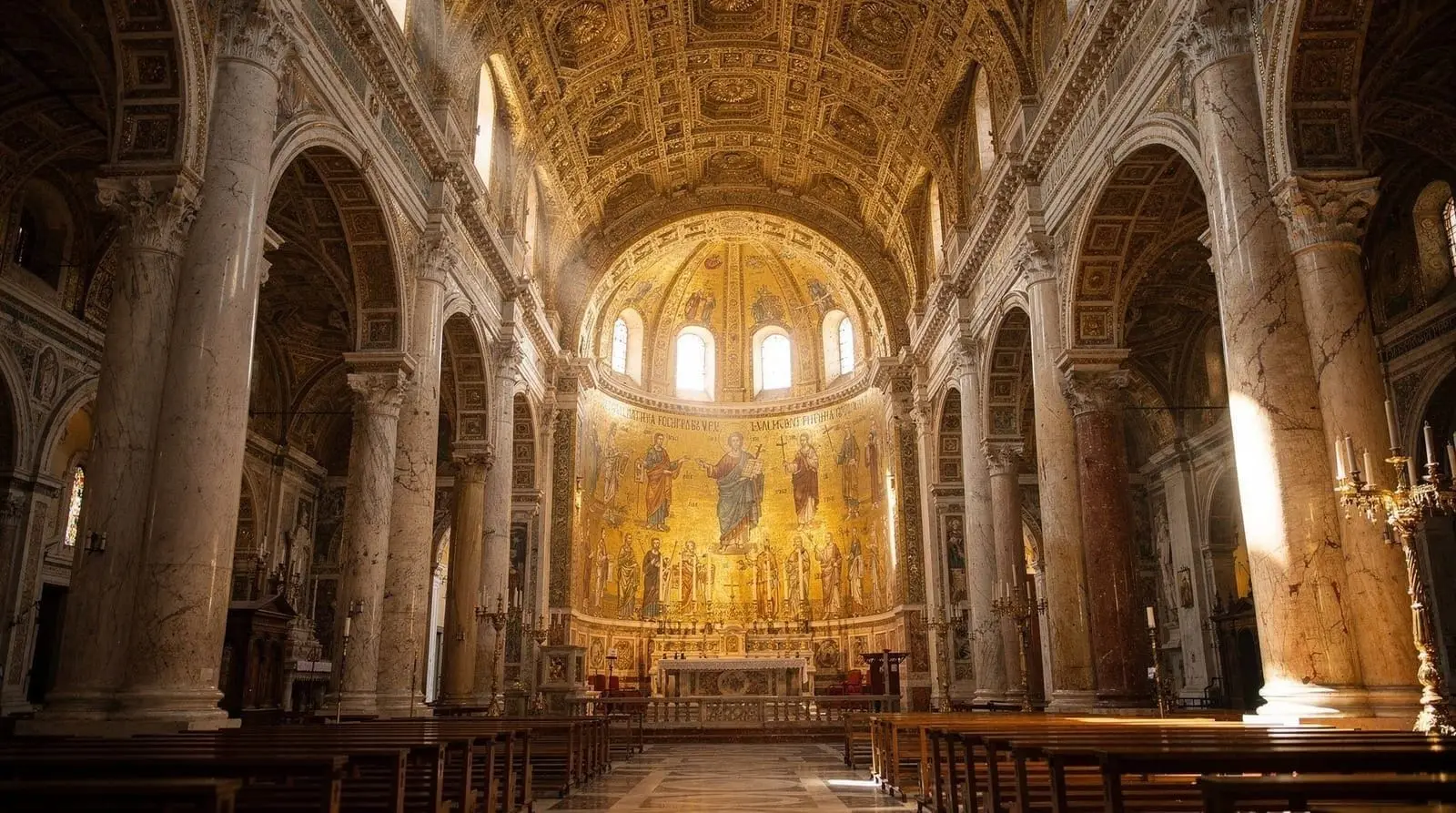
Santa Maria Maggiore (5th-century nave panels, oldest surviving), Santa Prassede (9th-century Byzantine chapel glittering gold), Santa Maria in Trastevere (12th-century apse, richest composition), Santi Cosma e Damiano (6th-century apse, fiery sky), and Santa Cecilia in Trastevere (9th-century apse). All free, all in churches. The best single hour of mosaic viewing in Rome: Santa Maria Maggiore followed by the five-minute walk to Santa Prassede.
Rome’s other great art form
Michelangelo’s Sistine ceiling. Raphael’s School of Athens. Caravaggio’s San Luigi dei Francesi canvases. These are the art works most visitors come to Rome to see.
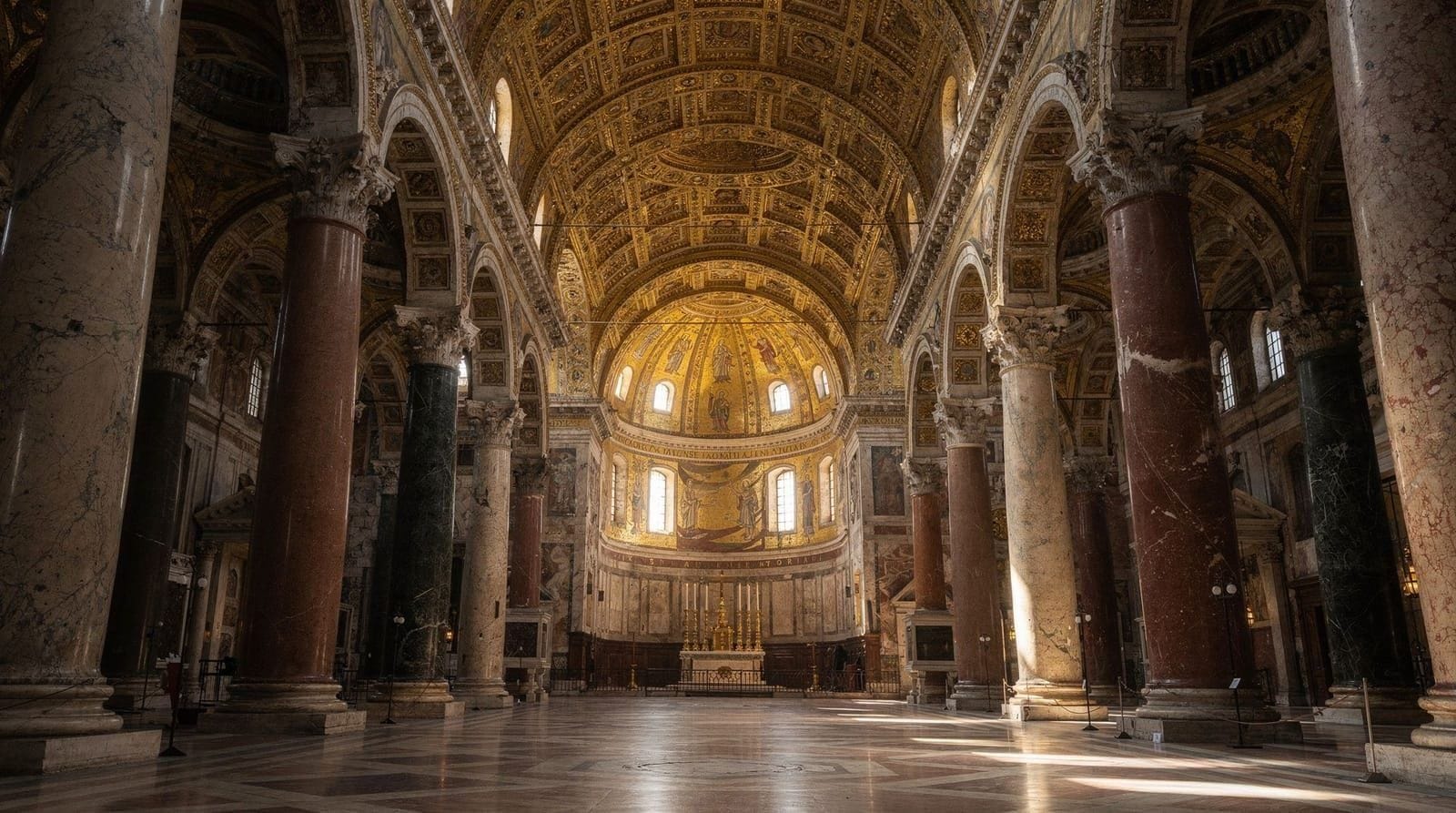
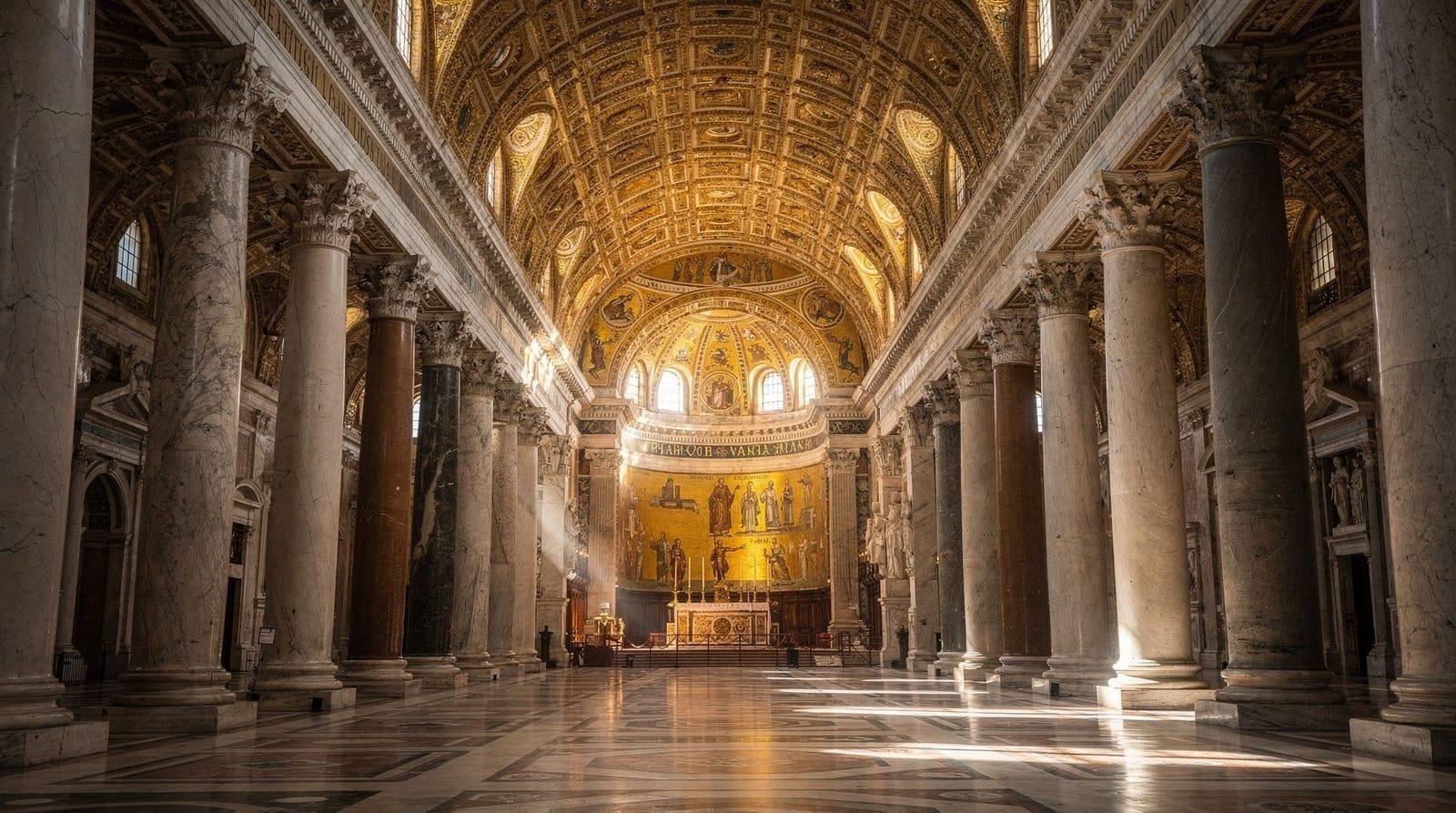
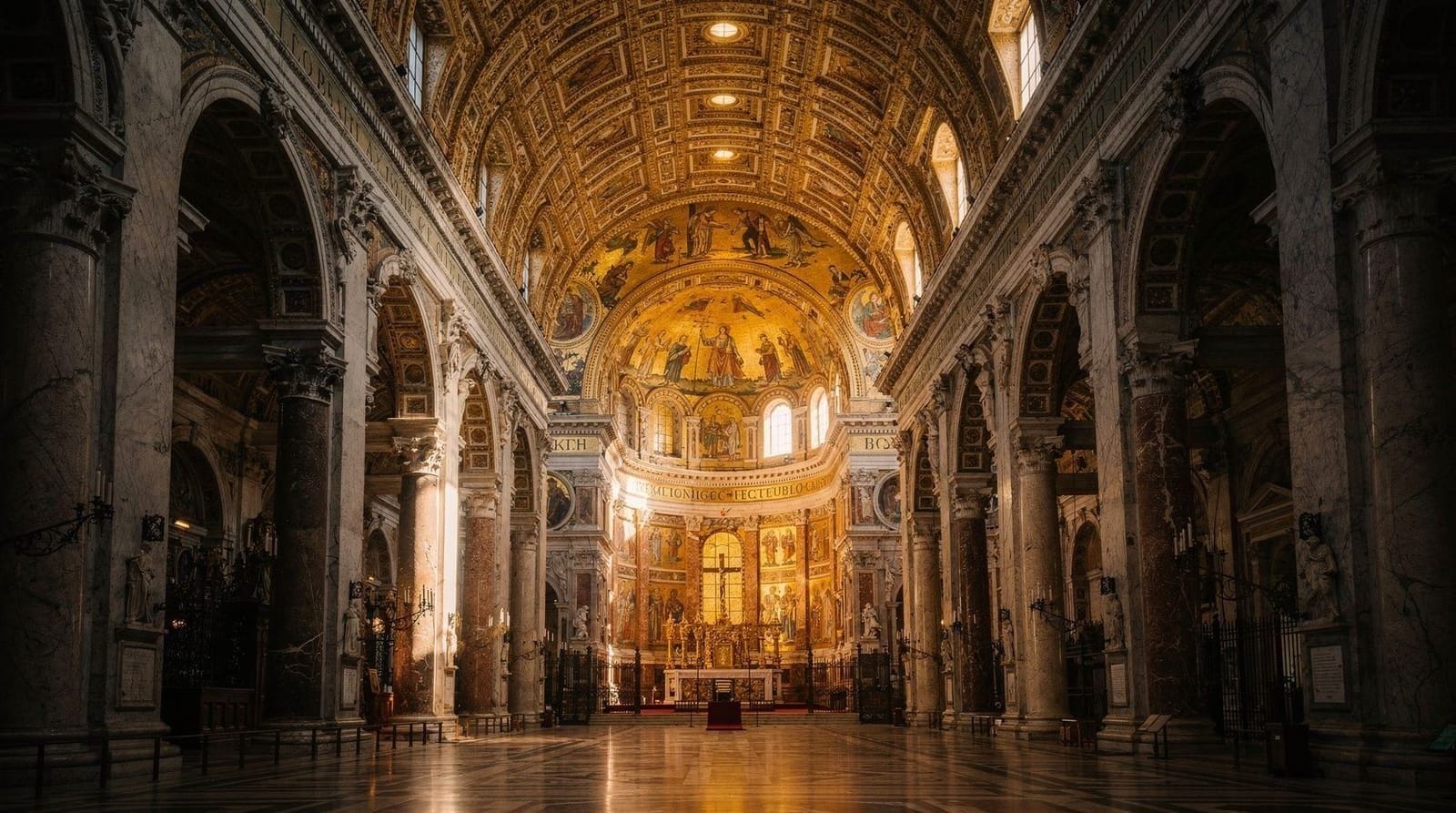
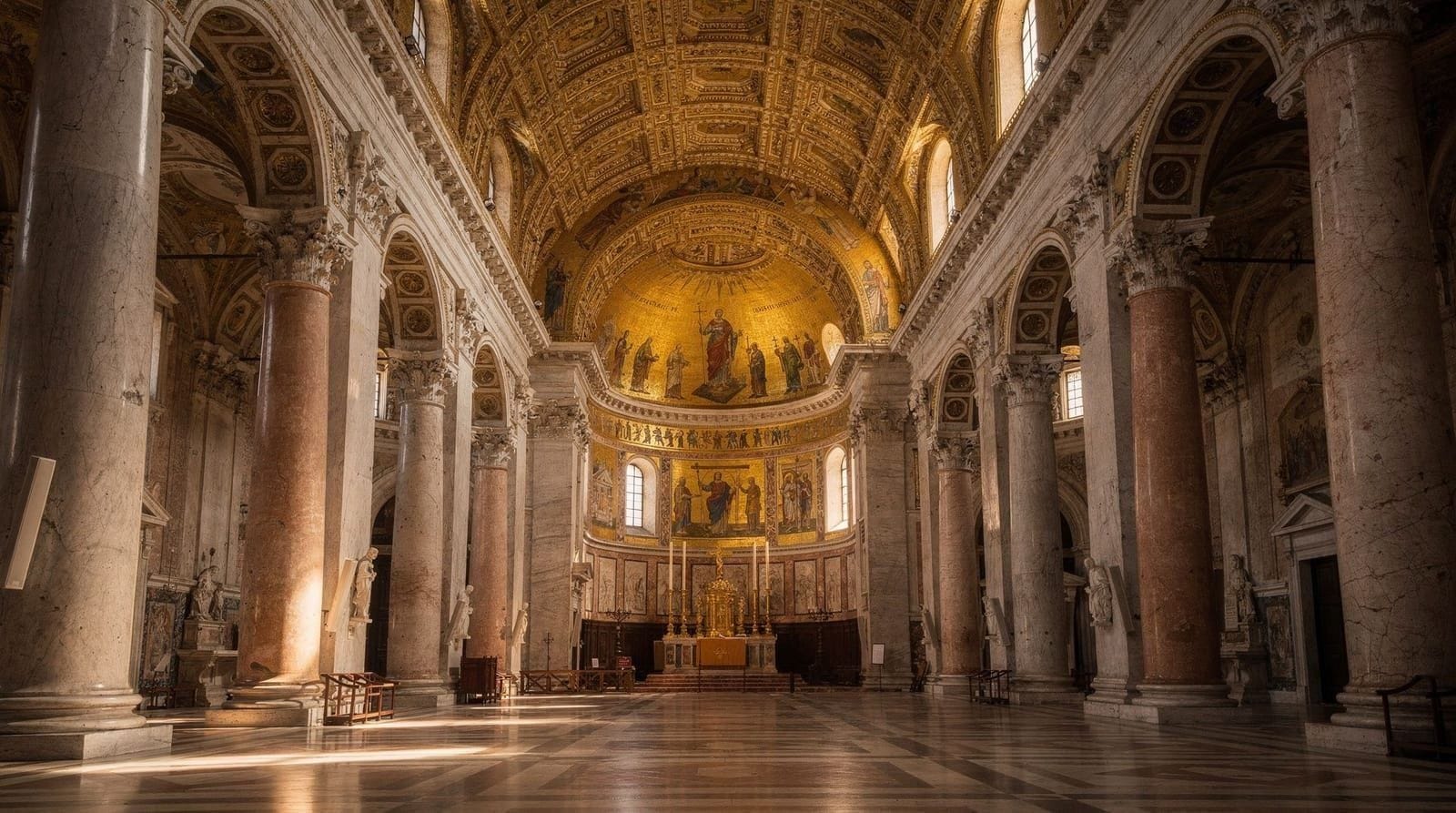
But Rome has another artistic tradition of equal age and, in certain rooms, equal power: the Byzantine mosaic. Not the floor mosaics of the classical period (those survive mostly in museums) but the great wall and apse mosaics of early Christian and medieval churches — gold-ground compositions in which saints and apostles stand in frontal hieratic poses against shimmering backgrounds, their faces individualized within a stylistic convention of extraordinary formal elegance.
Unlike the Renaissance paintings, which are concentrated in a few museums and the Sistine Chapel, Rome’s mosaics are distributed across approximately 20 churches across the city, most of them free to enter, most of them largely uncrowded. The oldest survive from the 4th century. The most recent major programme was completed in the 1290s.
This guide covers the best — what they are, where they are, what makes each one significant, and how to visit efficiently.
| Cost | Free at most churches; ~€2-3 for the Zeno Chapel |
| Time needed | 3-4 hours for the full half-day circuit |
| Getting there | Walking plus one bus/taxi hop to Trastevere |
| Bring | Small binoculars (8x) and €1 coins for lighting |
| Best time | Late morning, avoiding church midday closures |
| Church | Date | Highlight |
|---|---|---|
| Santa Maria Maggiore | 432-440 CE / 1295 | Oldest nave panels + Torriti apse |
| Santa Prassede (Zeno Chapel) | c. 817 CE | Most intense gold-ground room in Rome |
| Santi Cosma e Damiano | 526-530 CE | Best-preserved early Byzantine apse |
| Santa Maria in Trastevere | c. 1140 / 1291 | Richest composition + Cavallini panels |
| Santa Cecilia in Trastevere | 817 CE | Apse mosaic + Cavallini Last Judgment |
The technical context: how Byzantine mosaics are made
To understand what you are looking at in these churches, a brief technical note is useful.
Byzantine religious mosaics use smalti — glass tesserae backed with gold leaf. To make a gold smalto: a layer of gold leaf is placed on a base of molten glass, then covered with a thin clear glass layer and fused at high temperature. The result is a tesserae that reflects light from any angle, regardless of the light source’s position. This is why Byzantine mosaic apses appear to glow — the hundreds of thousands of gold tesserae in a typical apse composition each reflects light from slightly different angles simultaneously, creating a luminosity that no painted surface can replicate.
Stone tesserae are used for figures (flesh, clothing, architectural elements) where chromatic precision matters. Glass tesserae in colors — red, blue, green, white — supplement the stone for brilliant colour areas. The combination of cold stone and hot glass, laid at carefully controlled angles into the setting mortar, requires both technical mastery and the ability to compose and read from a distance of 10–20 metres.
The workshops that made Rome’s mosaics were expert practitioners of an art form transmitted continuously from classical antiquity through the medieval period. The Cosmati and Vassalletti family workshops of 12th–13th century Rome were the last significant Roman representatives of this tradition.
Santa Maria Maggiore: the oldest and most extensive
The 5th-century nave mosaics
The 36 Old Testament narrative panels running along both walls of the nave at Santa Maria Maggiore, dating from approximately 432–440 CE under Pope Sixtus III, are the oldest and most complete surviving large-scale Christian mosaic programme in any church. They predate the famous mosaics of Ravenna’s San Vitale (547 CE) by over a century.
The scenes depict stories from the lives of Abraham, Jacob, Moses, and Joshua — the patriarchal and liberation narratives of the Hebrew Bible. The style is late antique: figures are recognizably human with some naturalistic detail, placed against simple architectural or landscape backgrounds on blue or white grounds. The Byzantine gold ground (standard from the 5th century onward) is not yet consistently used here; this is a transitional moment between classical illusionism and Byzantine abstraction.
At this height (approximately 15 metres above the floor) and this scale (each panel approximately 1.2 metres wide), binoculars are useful for detailed examination.
The 13th-century apse mosaic
Jacopo Torriti’s 1295 apse mosaic — commissioned by Pope Nicholas IV — is compositionally more elaborate than the 5th-century nave panels: a Coronation of the Virgin in which Christ and Mary are seated together on a golden throne, surrounded by angels, apostles, and donor figures in a vast semi-circular composition approximately 18 metres wide. The Torriti mosaic represents the summit of the 13th-century Roman mosaic tradition, just before Giotto’s revolution (beginning c.1305) redirected Italian art toward naturalism.
For the full story of the basilica and what else to see there, see our Santa Maria Maggiore guide.
Getting there: Metro A to Termini, 10 minutes’ walk; or the basilica is visible from Piazza Vittorio Emanuele II.
Santa Prassede: the Zeno Chapel
Location and context
Santa Prassede is a small church on Via Santa Prassede, approximately three minutes’ walk from the south side of Santa Maria Maggiore — and almost completely overlooked by visitors who do not know what it contains.
Pope Paschal I (817–824 CE) built the church over the house of the martyr Prassede and immediately created the most extraordinary mosaic room in Rome. The church and its decoration were a statement of papal ambition in a period when the papacy was asserting its independence from the Byzantine empire and its cultural authority over the western church.
The apse mosaic
The main apse mosaic (c.817 CE) shows Christ flanked by Saints Peter and Paul, with Pope Paschal I (identified by his square halo — indicating a living person, as distinct from the round halo of saints) on the right. The style is Byzantine but executed by Roman craftsmen working in the Byzantine mode — the figures are more rigid and formal than the 5th-century panels at Santa Maria Maggiore, but the gold ground and the frontal presentation are fully Byzantine in manner.
The Cappella di San Zenone
The Zeno Chapel is behind a door at the back right of the nave. Built by Paschal I as a mausoleum for his mother Theodora around 817 CE, the chapel is approximately 4 metres square. Every surface — the four walls, the entrance arch, the vault — is covered in 9th-century Byzantine mosaics on gold ground.
The entrance arch shows Christ in a golden mandorla flanked by saints. The vault mosaic over the altar depicts Christ with four angels bearing a cosmic wreath. The walls show standing saints in Byzantine formal poses. Two antique porphyry columns flank the inner entrance.
The effect of standing inside is difficult to describe accurately. The room is small enough that you are within 2 metres of mosaic on all sides; the gold smalti are at eye level and above, reflecting light from multiple angles simultaneously. It is one of the most intense concentrations of Byzantine art outside of Istanbul and Ravenna.
A small fee (approximately €2–3) may be charged for the chapel. Bring coins.
Santi Cosma e Damiano: the fiery sky
Location and history
The Basilica of Santi Cosma e Damiano (Saints Cosmas and Damian) was created by Pope Felix IV in 526–530 CE by converting two rooms of the Imperial Roman Forums — one of the first clear examples of a Roman administrative building being repurposed as a Christian church. The entrance is from Via dei Fori Imperiali, independent of the paid archaeological zone.
The apse mosaic
The 6th-century apse mosaic is the best-preserved very early Byzantine mosaic in Rome and one of the most dramatically beautiful. Christ descends on clouds against a sky of extraordinary expressionist intensity — the sky is not blue or gold but a sequence of colored bands from orange-red through purple to deep blue, suggesting fire, dawn, and cosmic drama simultaneously. Christ extends his right hand in a gesture of address or blessing.
Flanking him: Saints Peter and Paul, presenting the titular martyrs Cosmas and Damian. Pope Felix IV is visible as a smaller figure holding a model of the church — the donor portrait convention standard in early Christian and Byzantine church decoration.
The mosaic’s condition is exceptional for its date — the original 6th-century tesserae survive in most of the composition without significant later restoration. The color intensity, particularly the sky bands, has been maintained for nearly 1,500 years.
Access: Free, from Via dei Fori Imperiali.
Santa Maria in Trastevere: the 12th-century masterpiece
Location
Santa Maria in Trastevere occupies the central piazza of the Trastevere neighbourhood — the main piazza where tourists and locals mingle in the evenings. The church is always visible; its mosaic facade (a rare case of exterior mosaics) is visible from the piazza.
The apse mosaic (12th century)
The main apse mosaic dates from approximately 1140 CE, commissioned by Pope Innocent II. The composition shows Christ and the Virgin enthroned together — a “Maria Regina” (Queen Mary) programme asserting the Virgin’s co-regency alongside Christ, a doctrinally ambitious statement for the period. Gold ground, frontal figures, Byzantine formal conventions adapted to Roman sensibility.
The scale is generous: the apse is approximately 15 metres wide, and the figures are life-size or larger. The gold smalti are in good condition. Coin-operated lighting helps; the natural light in the church is inconsistent depending on time of day.
The Cavallini panels (1291)
Beneath the main apse mosaic, six rectangular panels by Pietro Cavallini depict the Life of the Virgin in a compositional style that represents a critical moment in the history of Italian painting. Cavallini (active approximately 1273–1308) worked in Rome as a mosaicist and fresco painter a generation before Giotto, and his Santa Maria in Trastevere panels are the clearest surviving evidence of the pre-Giotto naturalistic revolution in Rome.
The figures have weight, volume, and spatial relationships that classical Byzantine mosaics do not attempt. The drapery falls realistically. The faces are individualized. Cavallini was doing in Rome, in 1291, broadly what Giotto was doing in Padua in 1305 — and doing it earlier. Art historians debate the exact relationship between the two artists; what is clear is that Cavallini’s panels here are historically significant and technically impressive.
Walking tour of central Rome — passes through the Piazza Navona area and toward the historic centre, complementing a mosaic-focused church circuit starting from Trastevere or Santa Maria Maggiore.Santa Cecilia in Trastevere: the 9th-century apse
The church
Santa Cecilia in Trastevere is a 9th-century church built over the traditional site of the house and martyrdom of Saint Cecilia (patron of music), approximately 10 minutes’ walk from Santa Maria in Trastevere. The church has been modified significantly but preserves important medieval elements.
The apse mosaic (817 CE)
Pope Paschal I — the same pope who built Santa Prassede — also restored and remosaiced Santa Cecilia, creating the apse mosaic (c.817 CE) that survives today. The composition is similar to Santa Prassede’s apse: Christ flanked by saints, with Paschal I identified by a square halo as a living donor. The style is consistent with the Paschal I mosaic workshop, which may have been the same team responsible for Santa Prassede and the Zeno Chapel.
Cavallini’s Last Judgment (1293)
The convent choir at Santa Cecilia (accessible by special arrangement, typically Monday and Thursday mornings with a small fee) preserves what remains of Pietro Cavallini’s famous fresco cycle depicting the Last Judgment. Most of the fresco was destroyed when the choir was modified in the 16th–17th centuries, but what survives — particularly the row of seated Apostles at Christ’s judgment seat — is considered Cavallini’s finest fresco work and one of the most important pre-Giotto paintings in existence.
Santa Maria in Aracoeli: the gold ceiling and Pinturicchio
Location and context
Santa Maria in Aracoeli sits atop the Capitoline Hill, reached by 124 steps from the Piazza d’Aracoeli below (or from the back via the Piazza del Campidoglio). The church has been on this hill — the summit of ancient Rome — since the medieval period. The Franciscans acquired it in the 13th century; the current building dates largely from the 13th–14th centuries.
What to see
The gilt wooden ceiling (1572–1575): Installed to commemorate the Battle of Lepanto, the ceiling coffers are gilded in gold and display the Aracoeli’s heraldic devices. The quality is comparable to Santa Maria Maggiore’s ceiling.
Pinturicchio frescoes (Cappella Bufalini, c.1484–1486): Scenes from the life of Saint Bernardino of Siena, painting in the late-Quattrocento style with rich color and detailed architectural backgrounds. Pinturicchio worked simultaneously in the Sistine Chapel and here; the Aracoeli series is considered equal or superior to his Sistine work.
Though not mosaics, these frescoes are part of the same free-church-art tradition and are easily combined with a morning at the Capitoline Hill.
The practical mosaic circuit
A focused half-day (3–4 hours)
Start at Santa Maria Maggiore (no midday closure): 40–45 minutes for the nave mosaics and apse. Take binoculars for the 5th-century panels.
Walk 3 minutes to Santa Prassede: 30 minutes for the apse mosaic and Zeno Chapel. Bring coins and small bills for the chapel fee.
Bus or taxi to Trastevere (20 minutes): 40 minutes at Santa Maria in Trastevere for the apse and Cavallini panels. Coins for lighting.
Walk 10 minutes to Santa Cecilia in Trastevere: 20 minutes for the apse mosaic.
Total: approximately 3 hours, covering four major mosaic programmes across six centuries (432–1295 CE).
Adding Santi Cosma e Damiano
If combining with a Colosseum or Roman Forum visit, Santi Cosma e Damiano (access from Via dei Fori Imperiali) adds the finest early Byzantine mosaic programme in Rome to a day that already includes the ancient ruins.
Vatican Museums and Sistine Chapel — the Vatican contains the Early Christian Art collection in the Vatican Pinacoteca, with mosaic fragments and early Christian objects complementing the church circuit covered in this guide.Binoculars and coins: the two essentials
Every experienced church visitor in Rome carries a small pair of binoculars (8x magnification, pocketable) and a supply of €1 coins. The binoculars are for the apse mosaics — which are typically 8–18 metres above floor level, too distant for detailed examination without optical aid. The coins are for the lighting machines that illuminate the apses and specific chapel areas.
Without binoculars at Santa Maria Maggiore, the 5th-century nave panels are small rectangles at ceiling height. With binoculars, the individual figures, gestures, and surviving detail become legible. The transformation is significant.
Beyond the churches: mosaics in Roman museums
Rome’s museums also contain important mosaic works:
Capitoline Museums: Significant floor mosaics from the imperial period, including the famous Doves mosaic (2nd century CE) and a large polychrome fragment from Hadrian’s Villa at Tivoli.
Vatican Museums: The Vatican Pinacoteca contains early Christian mosaic fragments, and the Museo Pio-Clementino has exceptional examples of Hellenistic and Roman floor mosaics.
Palazzo Massimo (National Roman Museum): Some of the finest Republican and Imperial period floor and wall mosaics in existence, displayed in an excellent museum context.
These are complementary to — not substitutes for — the in-situ church mosaics. The difference between a mosaic panel in a museum case and an apse mosaic visible in the church it was made for, with the light entering through windows the builders designed to fall on it from specific angles, is not a small one.
For the full context of Rome’s church art — Caravaggios, Michelangelo sculptures, and the papal basilicas — see our complete guide to Rome’s churches and free masterpieces.
Two more mosaic rooms worth the detour
Beyond the five churches in the core circuit, two further sites reward mosaic enthusiasts willing to go slightly out of the way. San Clemente, 300 metres from the Colosseum, has a 12th-century apse mosaic (the Triumph of the Cross, with the cross sprouting acanthus vines populated by animals and figures) at ground level in the upper church — easily combined with the underground layers the San Clemente basilica guide describes in full. San Giovanni in Laterano’s apse, though heavily restored in the 19th century, preserves the underlying composition of a much older mosaic and is worth ten minutes if you are already at the Lateran basilica for its cloister and baptistery. Neither is essential to the core circuit above, but both fit naturally into a longer, two-day version of the mosaic trail for visitors with a specific interest in the period.
Timing your visit around church hours and light
Several churches on this circuit observe a midday closure (typically 12:30-15:30 or 12:00-16:00, varying by church and season) for services and staff breaks — arriving at 12:45 expecting Santa Prassede or Santa Cecilia to be open is a common and avoidable disappointment. Late morning, starting around 09:30-10:00, is the most reliable window across all five churches, and it also happens to be when natural light is strongest for the mosaics that rely partly on window light rather than coin-operated lamps alone. Santa Maria Maggiore is the one exception on this circuit with no midday closure, which is one more reason it works well as the fixed starting point for the half-day route above.
Combining the circuit with a wider Esquilino or Trastevere visit
The mosaic circuit sits within two neighbourhoods that reward a slower visit beyond just the churches themselves. Santa Maria Maggiore and Santa Prassede sit in Esquilino, a genuinely mixed, unpolished part of central Rome with some of the city’s best-value ethnic food alongside the traditional Roman trattorias, worth an hour of wandering before or after the mosaics rather than treating the neighbourhood as a pass-through to the churches. Santa Maria in Trastevere and Santa Cecilia sit within easy reach of Trastevere’s better-known cobbled lanes, and a lunch stop there between the two churches turns the second half of the circuit into a genuinely pleasant few hours rather than a checklist of two more stops. Building either neighbourhood into the day, rather than treating the mosaics as an isolated errand, is what separates a rushed circuit from a satisfying one.
Travellers with only a morning to spare, rather than a full half-day, should consider splitting the circuit across two shorter visits instead of compressing all five churches into a rushed few hours — Santa Maria Maggiore and Santa Prassede as one morning’s outing, Santa Maria in Trastevere and Santa Cecilia as a second, ideally on a different day of the same trip. This also solves the midday-closure problem entirely, since each half of the split circuit can be timed to its own late-morning window without the bus transfer forcing an awkward midday arrival at the second pair of churches.
Frequently asked questions about Rome's Byzantine mosaics: where to see the city's golden art
What is the difference between Byzantine and Roman mosaics?
Are Rome's church mosaics free to see?
When were the earliest Christian mosaics in Rome made?
What are tessarae and smalti?
Is Ravenna or Rome better for Byzantine mosaics?
Where is the Zeno Chapel and why is it special?
Top experiences
Bookable activities with verified prices and instant confirmation on GetYourGuide.