Siena & the Chianti
Siena is 2h+ from Rome by bus or tour. Here's the honest breakdown: what to see in Siena, what Chianti wine country delivers, and why a tour beats the
Siena & San Gimignano Day Tour & Wine Tasting from Rome
Quick facts
- Distance from Rome
- ~230 km north
- Train from Rome
- No direct train; Siena requires a change at Chiusi (total ~3h) or coach
- By coach (FlixBus / Sena)
- ~3h direct from Tiburtina station
- By organised tour
- ~2.5–3h drive, leaving 5–6 hours on site
- Day trip feasibility
- Possible via guided tour; complex independently
- Best time
- April–June and September–October (harvest season beautiful)
Why Siena is harder to reach than Florence — and worth it differently
Florence is the obvious Tuscany day trip from Rome. Siena is the deeper one.
Florence has world-class museums and Renaissance art. Siena has the medieval city intact — the Piazza del Campo, one of the most beautiful public squares in Europe; the Gothic Duomo with its black-and-white marble striping; the sense that relatively little has changed in 600 years. The Sienese say they lost the race to become a Renaissance power centre when plague and war hit in the 14th century. What they got instead was preservation.
The practical difference: Florence is 1h30 from Rome by Frecciarossa. Siena has no high-speed train connection. The fastest independent route (train via Chiusi, changing platforms) takes 2h45–3h15 depending on connections. Coaches from Tiburtina (FlixBus, Sena) run direct in about 3 hours. Neither is impossible, but neither is as clean as the Florence route.
For Siena, an organised tour from Rome is genuinely the most practical option for a day trip — especially if you also want to stop in the Chianti countryside or San Gimignano.
Siena: what to see and how long you need
Piazza del Campo is Siena’s centrepiece — a fan-shaped medieval square that slopes gently toward the Palazzo Pubblico. It’s one of those places where the reality exceeds the photographs. Allow 30–45 minutes here, ideally in early morning before the tour groups arrive. The Palazzo Pubblico (town hall) houses the Museo Civico — Simone Martini’s Maestà and Ambrogio Lorenzetti’s Allegory of Good and Bad Government frescoes are among the most significant secular medieval paintings in existence (€10, opens 10 am most days).
The Duomo is a 13th–14th century Gothic cathedral of extraordinary ambition. The interior floor is a mosaic of 56 marble panels depicting scenes from the Old Testament — usually covered with protective matting but uncovered for a period each year (typically August–October). The cathedral itself is free; the expanded Opa Si Pass (€15–€20) includes the panorama from the Facciatone and various adjacent museums.
Contrade (city districts): Siena is divided into 17 contrade, each with its own symbol, colours, and identity. The Palio horse race, run in Piazza del Campo on July 2 and August 16, is the culmination of this system — one of the most intense sporting and cultural events in Italy. If you’re in Rome during Palio season and are considering a day trip to watch: expect enormous crowds, very limited accommodation (book months ahead), and an experience that is completely unlike anything else in Italy.
Time budget: a focused visit to Siena — Piazza del Campo, Duomo, a walk through the medieval streets — takes 3–4 hours. Add the Museo Civico and you need 4.5–5 hours. This is tight for a day trip that also includes Chianti.
San Gimignano: the walled town of towers
Most organised day tours from Rome pair Siena with San Gimignano, a medieval hilltop town 30 km northwest. It’s famous for its 14 surviving towers (72 originally), which give it a distinctive Manhattan-in-Tuscany silhouette.
San Gimignano is smaller than Siena (walkable in 1–2 hours) but extremely well-preserved and photogenic. The Vernaccia di San Gimignano, a crisp white wine made from a local grape variety, is DOC-certified and worth trying at the local wine bars.
Tourist trap note: San Gimignano has a significant gelato industry. Gelateria Dondoli in Piazza della Cisterna has genuinely won the Gelato World Championship multiple times — but the queue is real and the prices are tourist-zone (€3.50–€5 per serving). The gelato is good. Whether it’s worth the wait depends on your threshold.
The Chianti countryside
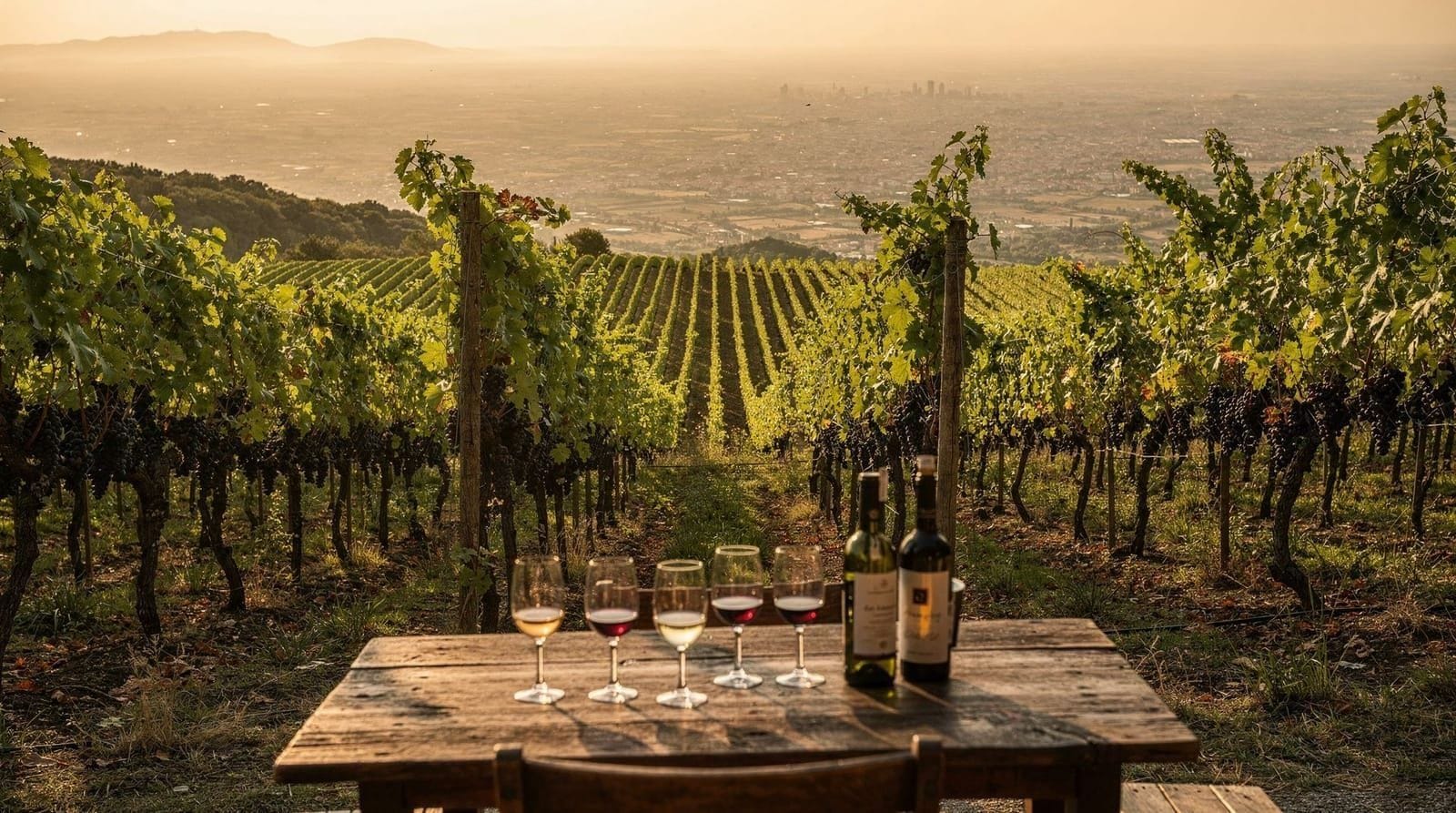
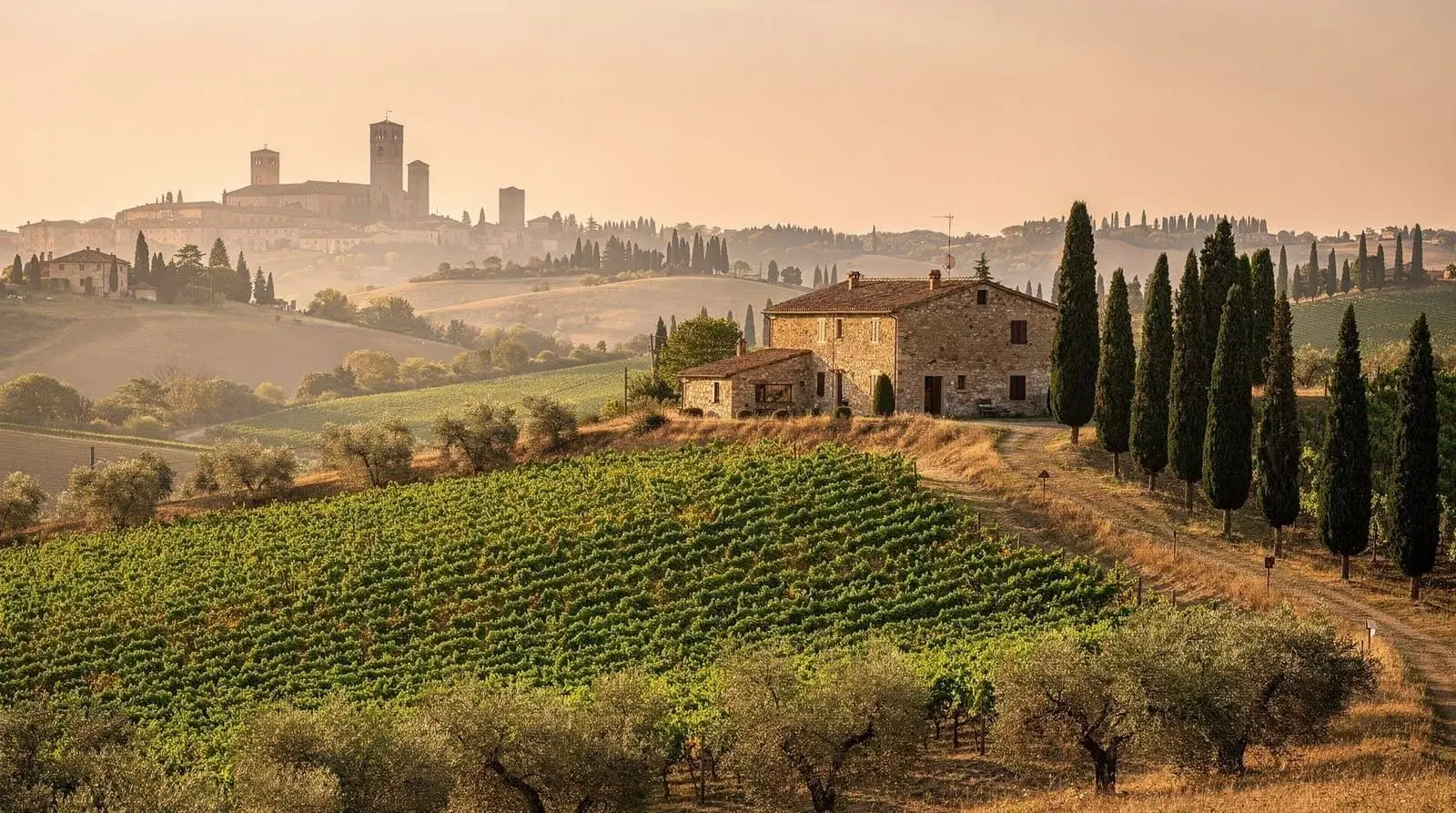
Chianti Classico is produced in the hills between Florence and Siena — the Gallo Nero (Black Rooster) consortium area. The landscape is the Tuscan postcard: cypress alleys, stone farmhouses, golden hills. In September–October during harvest, the vines turn red and the wineries are in full production.
What a Chianti wine experience involves:
- A typical winery visit (cantina) includes a tour of the estate and cellar, followed by a tasting of 3–5 wines (Chianti Classico, Riserva, sometimes a Supertuscan) with local accompaniments (salumi, cheese, bread).
- Duration: 1.5–2 hours at the winery.
- Cost when included in a day tour: €10–€15 supplement, or folded into the tour price.
- Going independently to Chianti without a car is very difficult — the estates are spread across country roads not served by public transport.
Notable wine estates: Badia a Coltibuono, Castello Brolio (Ricasoli), Fattoria di Vignamaggio. Tours need to be booked directly with estates in advance.
Organised tours: the practical choice
For Siena and Chianti from Rome, a guided tour handles the transport and timing that makes independent travel genuinely difficult on this route.
The Siena, San Gimignano, and Tuscan wine day tour from Rome is the standard option — covers both towns and includes a winery stop with Chianti tasting. Approximately 12–14 hours total.
For a more wine-focused experience, the Siena and Chianti wine tasting with lunch spends more time in the wine country and less rushing between towns. Better for people whose main interest is the vineyard experience.
The full-day Tuscany tour covering Siena, San Gimignano, and wine is the most comprehensive option, with a guided walk in Siena and a semi-private format.
Independent note: if you decide to go independently, the coach (Sena/FlixBus from Tiburtina) is the most direct route to Siena. From Siena, TRA-IN buses connect to San Gimignano (75 minutes, €6). Chianti wineries require a car or taxi — there’s no good public transport option.
The Palio: if your dates align
The Palio di Siena happens on July 2 and August 16. It is a bare-bareback horse race of 3 laps around Piazza del Campo, lasting 75–90 seconds, preceded by 5–6 hours of medieval pageantry. Each race is preceded by weeks of neighbourhood rivalry, political manoeuvring, and horse-drawing ceremonies.
If your Rome trip overlaps with Palio dates and you’re interested: accommodation in Siena must be booked 6–12 months ahead. Viewing spots in the Campo’s inner ring (standing, free) require arriving at 7:00 am and not leaving — no bathroom breaks. Balcony rental (if you can find it) costs €150–€400 per person.
The Palio is one of the most authentic and intense popular festivals in Europe. It is not a tourist show — it is deadly serious for the Sienese. Watching respectfully means understanding that context.
Where to eat in Siena
Siena is not an expensive food city by major Italian destination standards, but the main tourist zone around Piazza del Campo charges accordingly.
Where to eat:
- Osteria Le Logge (Via del Porrione 33): widely regarded as the best traditional Sienese restaurant. Pici al ragù di cinghiale (thick pasta with wild boar), ribollita. Booking essential. €30–€45 per person.
- Trattoria Papei (Piazza del Mercato 6): family-run, no fuss, generous portions. Pici cacio e pepe, grilled meats. €15–€25 per person.
- Bar/Pasticceria Nannini (Via Banchi di Sopra 24): the most famous Sienese pastry shop, in operation since the 19th century. Ricciarelli (almond biscuits), panforte (spiced fruit cake), cantucci. For coffee and a pastry, not a meal.
Don’t skip: panforte is the Sienese speciality — a dense, spiced cake made with dried fruit and nuts. Nannini’s version is the benchmark. Available in all shops; cheaper in a pasticceria than in a tourist shop.
Wine beyond Chianti: what else to drink in Tuscany
If the wine is the main draw, the Chianti Classico is the headline but not the only interesting wine in the region.
Brunello di Montalcino: produced around Montalcino, 40 km south of Siena. Italy’s most prestigious and age-worthy red wine, made from Sangiovese Grosso. Day tours don’t typically reach Montalcino (it’s an extra 40-minute drive from Siena), but Brunello is available at enotecas throughout Siena.
Vino Nobile di Montepulciano: another DOCG, produced around Montepulciano (east of Siena). The Nobile is a more approachable alternative to Brunello at better prices. The town of Montepulciano itself is beautiful.
Vernaccia di San Gimignano: the white wine produced around San Gimignano — crisp, mineral, slightly citrusy. Best consumed young. The DOCG (Italy’s first white wine DOCG, established 1966) ensures a quality floor.
Vin Santo and cantucci: throughout Tuscany, the dessert tradition is Vin Santo (a sweet, amber dessert wine) served with hard almond biscotti (cantucci). You dip the biscuit. This pairing is as embedded in Tuscan café culture as tiramisu is in Venice.
Siena’s black-and-white identity: the contrade system explained
Siena is divided into 17 contrade (city districts), each with a centuries-old identity, symbol, and colour scheme. The contrade are Aquila (Eagle), Bruco (Caterpillar), Chiocciola (Snail), Civetta (Owl), Drago (Dragon), Giraffa (Giraffe), Istrice (Porcupine), Leocorno (Unicorn), Lupa (She-Wolf), Nicchio (Shell), Oca (Goose), Onda (Wave), Pantera (Panther), Selva (Forest), Tartuca (Turtle), Torre (Tower), and Valdimontone (Ram).
Every Sienese is born into a contrada and remains a member for life. Marriages between rival contrade members have historically required negotiation. The contrada museums — scattered around the city — display centuries of racing flags, horse equipment, and ceremonial costumes. Most are open only by appointment or on specific days, but several (Oca, Tartuca, Torre) have intermittent public access.
The rivalry is completely sincere. If you spend time talking to local Sienese people, the Palio and the contrade will come up within 10 minutes.
Walking medieval Siena: practical route
Most visitors to Siena arrive at the bus station (Piazza Gramsci, northern edge of the old town) or via a tour coach, then walk down toward Piazza del Campo and Piazza del Duomo. The city is compact — you can walk from the northern gate to the Duomo in 20 minutes — but it’s on hills, and the streets are paved in unevenly-set stone. Comfortable walking shoes are not a suggestion.
Practical walking route (3–4 hours):
- Arrive at Piazza Gramsci or the Fortezza Medicea (parking/bus terminal). Enter through Porta Camollia.
- Walk south down Via di Camollia and Via Banchi di Sopra — this is the terzo (third) of Città, one of the three main districts. Pass Piazza Salimbeni (13th-century palace, now a bank) and the church of San Cristoforo.
- Arrive at Piazza del Campo (30 minutes). Take time here — find a bench, watch the slope, understand the layout.
- Walk west up Via di Città to the Duomo complex (Piazza del Duomo, 15 minutes from Campo).
- Visit the Duomo and Cappella di San Brizio (1.5–2 hours).
- Descend via Banchi di Sotto and Via dei Rossi back toward Piazza del Campo.
- Lunch in the streets south of the Campo (Via dei Pispini, Via di Pantaneto — quieter than the main tourist routes).
- Optional: walk north to Santa Maria della Scala (the former medieval hospital, now a major museum complex, €8) and the Pinacoteca Nazionale for Sienese painting collection.
Mobility note: Siena’s old town has significant gradients. The escalators (scale mobili) from the Fortezza and several car parks connect to the historic centre — useful for people with mobility limitations or heavy bags.
Planning the logistics: coach vs. private tour vs. car rental
Coach tours from Rome: the practical baseline. Comfortable, guided, handle all connections. Typical format: 7:30 am departure from Rome, drive to Chianti for winery at 10:30 am, lunch at 1:00 pm, Siena 3:00 pm, San Gimignano 5:30 pm, return to Rome 9:30 pm. Total around 14 hours.
Car rental from Rome: the most flexible option. The A1 autostrada from Rome reaches the Chianti hills in about 2.5 hours. You can design your own route — Greve in Chianti (the main commercial town), any estate you’ve booked, Siena for the afternoon. Return via different route. Budget €70–€100/day for car rental + fuel + tolls. Parking in Siena requires leaving the car outside the ZTL zone (the historic centre is restricted) and walking or taking a shuttle bus in.
Siena by coach from Tiburtina: if you specifically want Siena without Chianti, the direct FlixBus or Sena service from Roma Tiburtina is the simplest independent option — one vehicle, no changes, ~3 hours. Buy tickets at tiburtina.com or the bus operator’s website.
Practical schedule: a full Siena and Chianti day
For visitors taking an organised tour (the most practical format), here’s what a typical day looks like:
7:30 am: coach departs Rome (typically Piazza Venezia or a hotel pick-up area).
10:00–10:30 am: arrival at a Chianti winery. Tour of cellars (30 minutes), seated wine tasting of 3–4 wines with salumi and cheese (45 minutes).
12:00–1:00 pm: arrive in San Gimignano. Walk the towers, have a gelato (Gelateria Dondoli or similar), visit the Collegiata (the main duomo, which has extraordinary 14th-century frescoes).
1:00–2:00 pm: lunch, typically included in the tour or at a partner restaurant.
2:30 pm: arrive in Siena. Typically 3–4 hours here.
2:45–4:30 pm: Duomo and Cappella di San Brizio (book the chapel ticket in advance if possible — it can sell out).
4:30–5:30 pm: Piazza del Campo, Palazzo Pubblico exterior, walk Banchi di Sopra.
5:30–6:00 pm: depart Siena by coach.
8:30–9:00 pm: arrive back in Rome.
For independent travellers in a rental car, the same sequence but with more flexibility — stop longer at the winery, eat where you choose, and stay in Siena until sunset.
Key booking: Cappella di San Brizio inside the Duomo (Signorelli frescoes) can be booked at operaduomo.siena.it. Book at least a week ahead in April–October. Entry is included in the Opa Si Pass (€15 approx).
A Siena-only day, if Chianti isn’t your priority
Not every visitor wants wine country bundled into the day. If Siena’s medieval city is the actual draw and you’d rather skip the winery stop and San Gimignano entirely, a Siena-focused itinerary is both simpler and cheaper.
By coach independently: the direct Sena or FlixBus service from Roma Tiburtina to Siena runs about 3 hours each way with no changes. A typical structure: depart Rome around 7:00–7:30 am, arrive Siena by 10:30 am, spend 6–7 unhurried hours in the city (Piazza del Campo, the Duomo and Cappella di San Brizio, the Museo Civico, a proper sit-down lunch, and a walk through the quieter southern streets around Via di Pantaneto), then a late-afternoon coach back, arriving Rome by 9:00–9:30 pm.
What this buys you that the standard tour doesn’t: time. A Siena-only day gives you 6–7 hours in the city instead of the 3–4 hours a combined Siena-Chianti-San Gimignano tour typically allows, enough to see the Museo Civico’s frescoes properly, visit Santa Maria della Scala, and eat an unrushed lunch away from the main tourist streets rather than at a scheduled tour stop — genuinely enough time to feel like a visitor to the city rather than someone passing through it on a schedule.
What it costs you: the Chianti winery visit and San Gimignano’s towers, both of which need a car or an organised tour to reach sensibly. If you’ve already done a Tuscany wine day elsewhere in your trip, or simply prefer medieval architecture to vineyards, this trade is an easy one to make — and it leaves the option of a proper Chianti day open for a future visit rather than a rushed 90-minute stop this time. Budget for this version of the day is also simpler: coach tickets plus Siena entry fees typically run less than half of a combined organised tour, since you’re not paying for the winery visit, guide, and multi-stop logistics.
Siena vs Florence: which Tuscan day trip fits your trip
Both are commonly done as day trips from Rome, but they demand different levels of commitment and reward different interests:
| Siena & Chianti | Florence | |
|---|---|---|
| Travel from Rome | ~3h by coach or tour, no direct train | 1h30 direct high-speed train |
| Draw | Medieval city, contrade culture, wine country | Renaissance art (Uffizi, Accademia), architecture |
| Independent travel | Difficult without a car | Easy — book train + museum tickets |
| Best format | Organised tour | Independent or tour, either works well |
| Feasible on a tight schedule | Only via tour | Yes, even solo |
If your time in Rome is limited and you want maximum independence, Florence is the simpler choice — see the 7-day Rome, Florence, and Tuscany itinerary for how to combine both properly rather than picking just one. If wine country and medieval Tuscany (rather than museums) is the priority, Siena and Chianti reward the extra travel time, provided you book an organised tour rather than trying to piece together buses and trains. Cost is broadly comparable between the two once transport and any museum or tasting fees are counted, so the decision usually comes down to what you actually want from the day rather than budget. The best day trips from Rome guide and the train versus tour comparison both cover this decision in more depth.
Extending into wine country beyond a day tour
Most Rome-based day tours only skim Chianti — a single winery stop of 90 minutes to two hours. If wine is genuinely your priority rather than an add-on to Siena sightseeing, consider a dedicated Chianti-focused day or, better, an overnight in the region. The Chianti wine from Rome guide goes deeper on estate options, tasting formats, and how to structure a wine-first itinerary rather than a sightseeing-first one with a wine stop bolted on. Montalcino (for Brunello) and Montepulciano (for Vino Nobile) both sit within a wider day’s drive of Siena but are rarely included on standard Rome day tours — worth knowing if those specific wines are what draws you, since a standard Siena-Chianti-San Gimignano tour won’t reach them. Travellers who want to taste all three appellations properly generally need either a private driver for the day or, more realistically, an overnight base in Tuscany rather than a single long day trip from Rome.
Siena, San Gimignano, and Tuscan wine day tour from Rome is a solid all-round choice if you want a single tour that balances the towns and the vineyards without over-committing to either.
Frequently asked questions about Siena & the Chianti
How do you get from Rome to Siena?
There is no direct high-speed train from Rome to Siena. Options: (1) Train from Roma Termini to Chiusi-Chianciano Terme, then regional train to Siena — total 2h45–3h15. (2) Coach from Roma Tiburtina via FlixBus or Sena — approximately 3 hours direct. (3) Organised day tour by coach from Rome — most practical for a day trip.
Can you do Siena and Chianti in one day from Rome?
Yes, on an organised tour that handles transit. A typical tour leaves Rome at 7:00–8:00 am, spends 2–3 hours in Siena, 1–2 hours at a winery, and 1–2 hours in San Gimignano, returning to Rome by 9:00–10:00 pm. It’s a full day. Going independently, you’d need to choose between Siena and Chianti — doing both without a car in one day is very difficult.
When is Chianti wine harvest season?
Harvest (vendemmia) runs from mid-September to mid-October depending on the year. Visiting then means seeing the vines at their most dramatic (red and gold foliage), and some estates are in active production. However, some estates limit tours during harvest. Spring (April–May) is also excellent for vineyard visits with the hills green.
What is Chianti Classico vs plain Chianti?
Chianti Classico is a DOCG designation for wine produced in the original Chianti zone (the hills between Florence and Siena). It uses mostly Sangiovese grapes and is generally considered higher quality and more age-worthy than generic Chianti. The Gallo Nero (Black Rooster) on the label indicates Classico. The Riserva is aged for at least 27 months.
Is San Gimignano worth combining with Siena?
Yes, if you’re already in the area. San Gimignano adds 1.5–2 hours on most tours and gives you a different type of medieval Tuscany — smaller, more compact, instantly recognisable from the towers. On a tight schedule, Siena is the priority; San Gimignano is the bonus.
What’s the Palio di Siena and should I plan a trip around it?
The Palio is one of Italy’s most extraordinary events — a bare-bareback horse race run on July 2 and August 16 in Piazza del Campo. Accommodation must be booked many months ahead. If you’re in Italy during those weeks and medieval Italian pageantry interests you, it’s worth planning around. If you’re already committed to a Rome-only trip, it’s not worth a detour — the Palio is a 90-second race, but the preparation takes days.
Should I choose Siena or Florence if I only have one Tuscan day trip from Rome?
Choose based on interest rather than fame. Florence is easier to reach independently and delivers world-class Renaissance art; Siena and Chianti deliver medieval city character and genuine wine country, but essentially require an organised tour. See the comparison table above for the full breakdown.
Can I visit Chianti wine country without going to Siena at all?
Yes, though most Rome-based tours bundle the two together. A wine-focused day or overnight based purely in Chianti (Greve in Chianti is a common base) is possible with a rental car, and the Chianti wine from Rome guide covers how to structure that kind of trip.
Top experiences
Bookable activities with verified prices and instant confirmation on GetYourGuide.