Florence
The Frecciarossa covers Rome–Florence in 1h30. Here's what to do with a day, why overnight beats rushing, and which tours are worth it.
Day Trip to Florence by High-Speed Train From Rome
Quick facts
- Train from Rome
- Frecciarossa / Italo, ~1h30 (Roma Termini → Firenze S.M.N.)
- Train cost
- €19–€65 each way (book early)
- Day trip feasibility
- Yes — 7–8 hours on the ground if you catch the 7 am train
- Currency
- EUR
- Best time
- April–May and September–October
- Advance booking needed
- Uffizi & Accademia — book online 1–2 weeks ahead
Why Florence makes sense as a day trip from Rome — and when it doesn’t
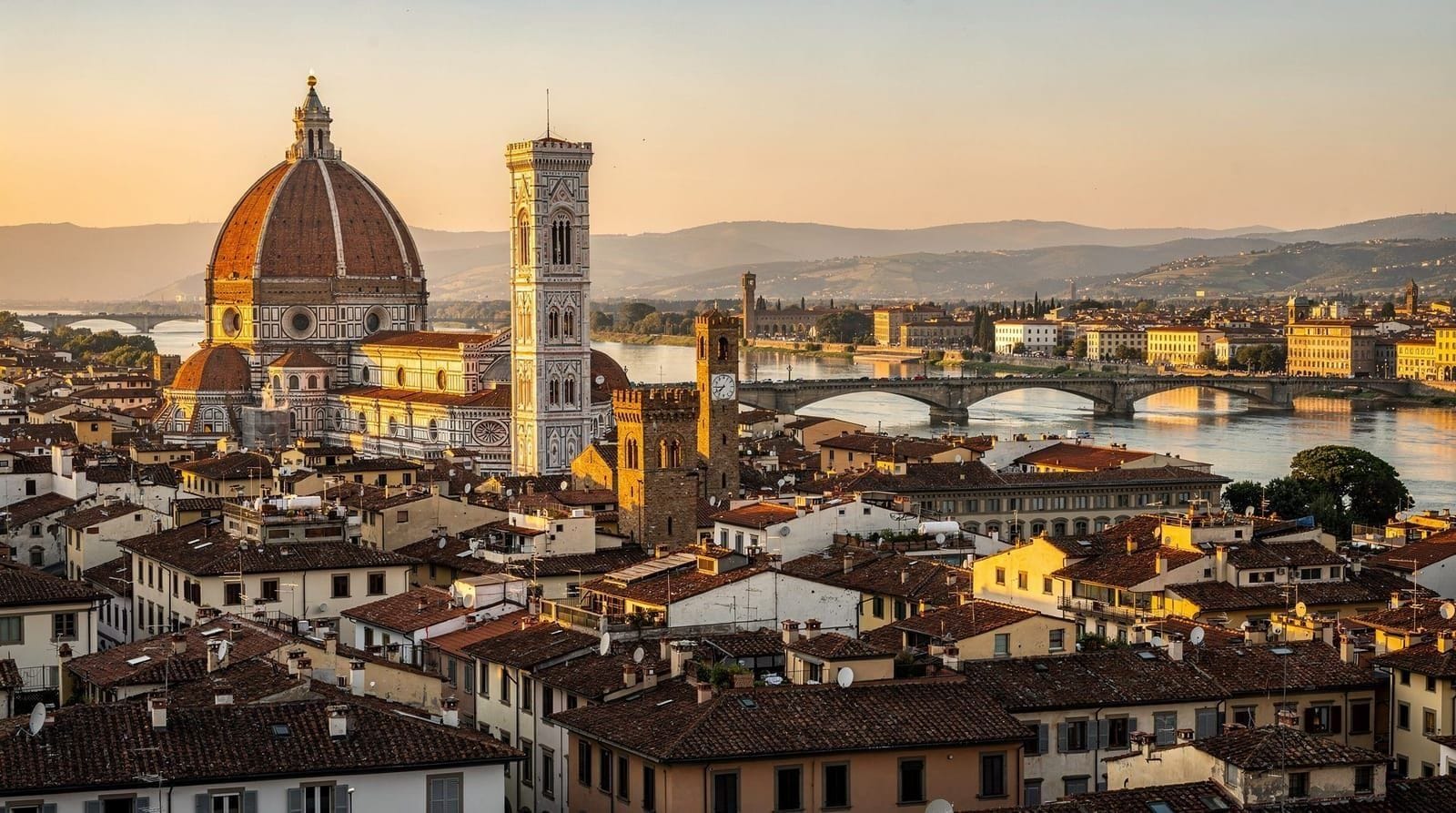
Florence is the most popular day trip from Rome for good reason: the Frecciarossa high-speed train covers 280 km in just 1 hour and 30 minutes, dropping you at Santa Maria Novella station a 10-minute walk from the Duomo. You can realistically leave Rome at 7:00 am, spend 7–8 hours exploring, and be back by 9:00 pm.
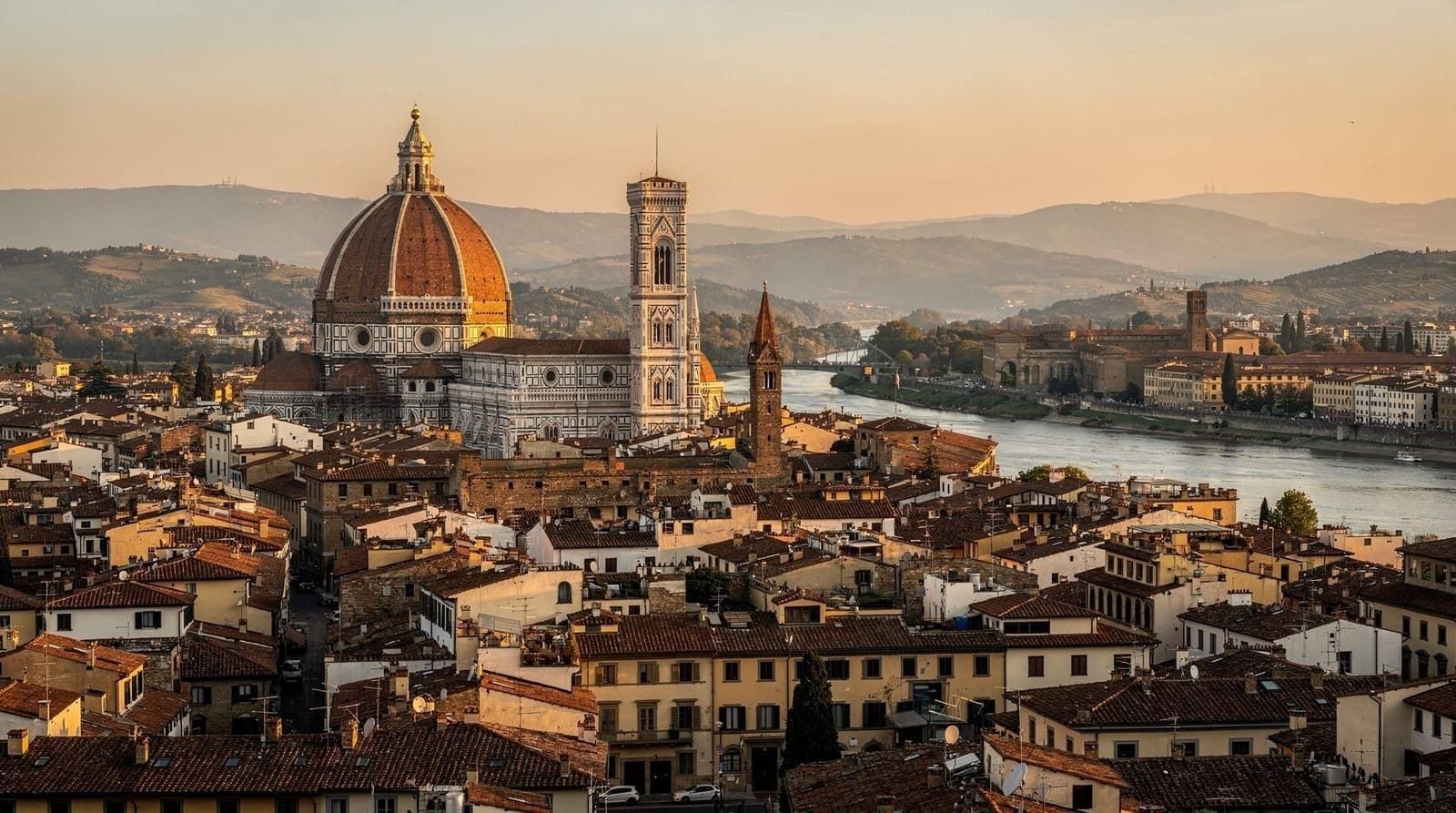
That said, a single day in Florence is always a compromise. The Uffizi alone could absorb three hours; the Accademia (Michelangelo’s David) another 90 minutes. Add the Duomo, a proper lunch at a trattoria on Via dei Benci, a climb up to Piazzale Michelangelo — and you’re already out of time. If your trip is 5 nights or longer, seriously consider spending at least one night in Florence instead. Hotel rates are reasonable by European standards (€100–€180 for a 3-star near the centre), and the city at dusk — when the day-trippers leave and the gold light settles on the Arno — is genuinely different from the midday crush.
This guide is honest about both scenarios: what a smart day-tripper can achieve, and how to structure an overnight if you decide to upgrade.
Getting there: trains, times, and prices
From Roma Termini to Firenze Santa Maria Novella
Both Trenitalia (Frecciarossa) and Italo operate high-speed services at roughly 30-minute intervals throughout the day, typically from 5:45 am to around 9:00 pm. Journey time is 1h25–1h35 depending on stops.
Prices: Book at least 2–3 weeks ahead for the best fares. Early booking can get you as low as €19 each way; flexible tickets run €35–€65. Avoid buying on the day — prices spike to €80+.
Booking: Trenitalia at trenitalia.com, Italo at italotreno.it. Both sell directly online with no booking fee. Avoid third-party resellers who add margins for no reason.
Recommended departure times for a day trip:
- 7:00 am or 7:30 am from Termini → arrive Florence 8:30–9:10 am
- Return at 7:30 pm or 8:00 pm → back in Rome by 9:00–9:30 pm
At Florence station: Santa Maria Novella (S.M.N.) puts you 500 m from the Duomo. Taxis from the rank outside the station charge metered fares (roughly €8–€12 to most central sites). Avoid anyone offering fixed unofficial fares inside the station.
What to prioritise — an honest look at the top sites
The Uffizi Gallery
The Uffizi is world-class: Botticelli’s Birth of Venus and Primavera, Raphael’s portraits, Caravaggio’s Medusa. But it’s also enormous — 45 rooms across two floors — and you cannot see it all in 2 hours. A focused 2.5-hour visit covering the highlights on the top floor (rooms 10–14 for Botticelli, rooms 25–34 for High Renaissance) is more satisfying than a rushed lap.
Book tickets in advance. Walk-up queues in summer regularly run 90 minutes and the gallery often sells out entirely. Official site: uffizi.it. Prices start at €25 for adults.
The Accademia and Michelangelo’s David
The Accademia is smaller and less overwhelming than the Uffizi — most visitors spend 1–1.5 hours. The David is genuinely extraordinary: 5.17 metres of marble, veins visible in the hands, the tension in the neck. Budget 45 minutes in that room alone.
Again, book ahead at gallerieaccademia.it (€16). The gallery frequently sells out same-day.
Practical note: the two museums are 15 minutes on foot. Plan one in the morning, the other after lunch. Don’t try to do both before noon and rush.
The Duomo complex
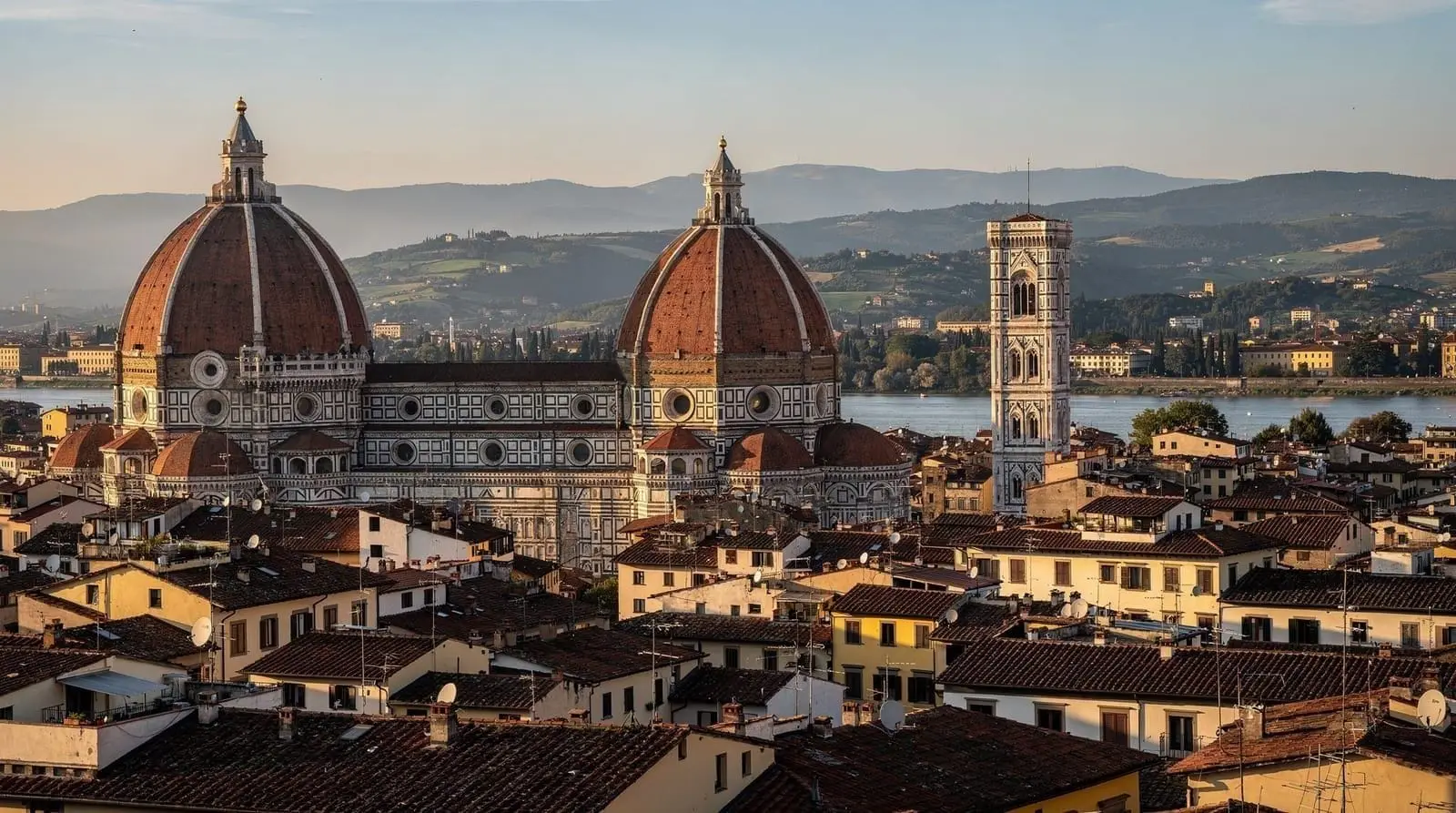
The cathedral exterior is free to admire and spectacular — Brunelleschi’s dome (built 1420–1436) still looks improbable up close. Entering the cathedral itself is free but requires a reservation (florence-cathedral.org). The dome climb (463 steps) requires a timed ticket (€30 for the full Duomo complex pass, includes baptistery and Giotto’s bell tower). The view from the top over the terracotta rooftops is worth it if you’re comfortable with heights and spiral staircases.
Avoid the queue trap: Piazza del Duomo gets congested by 10:00 am. Arrive by 8:30 am or after 4:00 pm.
Piazzale Michelangelo and San Miniato al Monte
A 20-minute walk south of the Arno (or bus 12/13 from the centre), Piazzale Michelangelo delivers the classic Florence panorama — the Duomo, the Arno, the hills. Go in late afternoon when the light is golden and the tour buses have thinned. The Romanesque church of San Miniato al Monte, 5 minutes higher up the hill, is serene and free.
The Ponte Vecchio and Oltrarno
The Ponte Vecchio is beautiful but the gold jewellery shops are mostly mid-range tourist traps. Walk across and spend the real time in Oltrarno — the district south of the river. Piazza Santo Spirito has a daily market and good aperitivo bars. The Bardini gardens (€10) are far less crowded than the Boboli and offer equally good views.
Where to eat without getting ripped off
Florence has a well-developed tourist circuit for restaurants — they exist, and they charge accordingly.
Reliable choices near the historic centre:
- Trattoria Mario (Via Rosina 2, near San Lorenzo market) — cash-only, communal tables, no-frills ribollita and lampredotto. Lunch only. Get there at 11:45 am or expect a wait.
- Il Latini (Via dei Palchetti 6) — loud and festive, shared tables, classic Tuscan menu. Book ahead.
- Buca Mario (Piazza degli Ottaviani 16) — historic, reliable; not cheap but fair for what it is.
- All’Antico Vinaio (Via dei Neri 65R) — queued, cramped, and the focaccia sandwiches (schiacciata) are worth it. Take away and eat by the Arno.
Budget lunch: a lampredotto (tripe) sandwich from one of the market stalls at Mercato Centrale costs €4–€6 and is thoroughly Florentine. You’ll either love it or learn something about yourself.
Organised tours: when they’re worth it
A guided day trip from Rome by train makes sense if you want commentary at the major museums and don’t want to manage train bookings, entry tickets, and routing yourself. Most tours include the high-speed train, museum admission, and a guide for 3–4 hours on the ground.
The standard Rome–Florence day trip by high-speed train covers the Uffizi and/or Accademia and leaves the afternoon free. Check what’s included before booking — some tours include museum entry, others only the train transfer.
For a fuller experience including the Accademia (and Michelangelo’s David) specifically, the Florence day trip with Accademia access is the more focused option.
If Tuscany as a wider region interests you more than Florence’s museums, the Florence and Tuscany combination by high-speed train includes a Chianti wine stop.
Honest note: organised tours use fixed morning trains, which means you don’t get the early-morning solo advantage. If you’re comfortable navigating Italian rail and booking museum tickets online, going independently gives you more flexibility and costs about the same.
Day trip vs overnight: the honest assessment
| Day trip | Overnight | |
|---|---|---|
| Uffizi | Possible (2.5 hrs) | Relaxed |
| Accademia | Possible (add 90 min) | Relaxed |
| Duomo dome | Tight | Yes |
| Piazzale Michelangelo | Late afternoon only | Yes, sunset |
| Oltrarno exploration | 1 hour max | Multiple hours |
| Evening atmosphere | Missed (back at 9 pm) | Best part |
| Total cost (add hotel) | — | +€90–€180 |
If you have 4 nights or fewer in Italy, the day trip is fine. If you have 5+ nights and Florence genuinely interests you (not just ticking the box), one night there makes the trip substantially better.
Practical logistics
Luggage storage: Deposit Bags operates near Santa Maria Novella station (around €6/day). Several shops in the centre also offer storage.
Getting around Florence: the historic centre is very walkable — most key sites are within 1 km of the Duomo. Taxis exist but are rarely necessary for typical tourist circuits.
Water: Florence tap water is safe. Refill at any fountain. Bottled water on the street costs €2–€3 — unnecessary.
Wi-Fi: most cafés offer free Wi-Fi. The train has Wi-Fi but it can be patchy.
Pickpockets: Florence is safer than Rome in this regard but the Uffizi queue and the Ponte Vecchio remain standard targets. Standard precautions apply.
The Oltrarno and Boboli: Florence beyond the Uffizi
Most day-trippers never cross the Arno. That’s where you find the best walking.
Ponte Vecchio to Palazzo Pitti: the route from the Ponte Vecchio south to the Palazzo Pitti (15 minutes on foot) passes through streets that feel genuinely untheatrical: butchers, dry-cleaners, hardware shops between the tourist-facing ceramics stores. The Palazzo Pitti houses multiple museums (Palatine Gallery, Costume and Fashion, Modern Art, Porcelain) — too many for a day trip, but the Palatine Gallery (€16) on the piano nobile has an impressive Raphael collection in its own right.
Boboli Gardens (entry from Palazzo Pitti, €10): 45 acres of formal Italian gardens rising up the hillside behind the palace. The Neptune fountain, the amphitheatre, the porcellain museum at the top. In summer it’s one of the few genuinely cool places in the city. In April or October, it’s exceptional.
Piazza Santo Spirito and Oltrarno artisan workshops: the neighbourhood between the Ponte Vecchio and the Palazzo Pitti is Florence’s most artisan-dense area. Bookbinders, goldsmiths, furniture restorers — workshops with their shutters open and the actual work visible. Via Maggio is the antiques dealer street; Via dei Serragli has some of the better cafés. The Saturday market in Piazza Santo Spirito (8:00 am–2:00 pm) sells local produce, handmade goods, and lunch at affordable prices.
Florence in summer vs shoulder season
April and May: the ideal time. Museums are open, the wisteria is blooming in the Boboli, temperatures are 18–23 °C. Crowds are building but not yet at peak. The Uffizi queue is manageable with advance booking.
June–August: Florence in August reaches 33–37 °C and feels very different from the spring city. The heat concentrates inside the museum rooms, many local restaurants close for two weeks around Ferragosto (August 15), and the city’s mostly tourist economy operates at full throttle. If you’re visiting in summer, stay hydrated, wear light clothes, and start very early.
September–October: often the best month. The light is warm, temperatures drop to 20–28 °C, and the harvest season brings white truffles and new wine into restaurants. October is particularly good — the tourists thin and the Uffizi is less pressured.
November–March: low season, low prices. Some attractions have shorter hours. The city has a quieter, more residential character. Florence in winter, with fog in the Arno valley and few tour buses, is a different place.
The Accademia vs the Uffizi: which to choose if you can only do one
This is the most common dilemma for first-time visitors on a tight schedule.
The Uffizi (3 hours minimum): the world’s greatest collection of Italian Renaissance paintings. The Botticellis, Raphaels, Titians, Caravaggios, Leonardos. If your interest is painting history and you have time, this is the non-negotiable choice.
The Accademia (1.5 hours): one major work (the David), supplemented by Michelangelo’s unfinished Prisoners (four extraordinary sculpted figures of slaves trapped in marble), a collection of Florentine paintings, and musical instruments. Much smaller, much faster, and the David alone makes it worthwhile.
If you have one morning for one museum: The Uffizi, without hesitation — unless you are visiting specifically to see the David, in which case the Accademia is obviously your priority. The David is the world’s most famous sculpture; you should see it if you can. But the Uffizi covers more of what Florence means artistically.
A common practical solution: take the 7:00 am train, open the Accademia at 8:15 am (get the David done in 60–90 minutes), then walk to the Duomo (free exterior, climb if you’ve booked), lunch in Oltrarno, and spend 2.5 hours in the Uffizi from 1:00 pm. Possible in a long day; requires pre-booking both museums.
Key practical details for day-trippers
Money and prices: Florence is not a cheap city. Museum entry adds up fast if you want Uffizi + Accademia + Duomo dome climb (€25 + €16 + €30 = €71 in tickets). Factor this into your planning.
Tourist Passes: the Firenzecard (€85, 72 hours, covers 72 museums) is only worthwhile if you’re spending 2+ days. For a single day-trip, just pre-book the specific sites you want.
Water and heat: Florence tap water is safe. The city has fewer nasoni (free water fountains) than Rome but cafés will refill your bottle. In summer, a small bottle of water from a supermarket costs €0.50; from a vending machine near the Duomo it costs €2.50.
Restrooms: the municipal toilets near Piazza della Repubblica (€1 coin) are clean. Major museums have free facilities for ticketed visitors.
Getting around: Florence’s centre is very compact and the key sites are all walkable. The tram connects the station area to the outskirts but you won’t need it for a standard tourist day. Taxis exist and are metered — use them if you need to get from the Accademia to the Palazzo Pitti with heavy bags.
Language: in tourist areas everyone speaks some English. In small local restaurants and bars (the good ones), a buongiorno and per favore go a long way.
Florence with a Chianti add-on
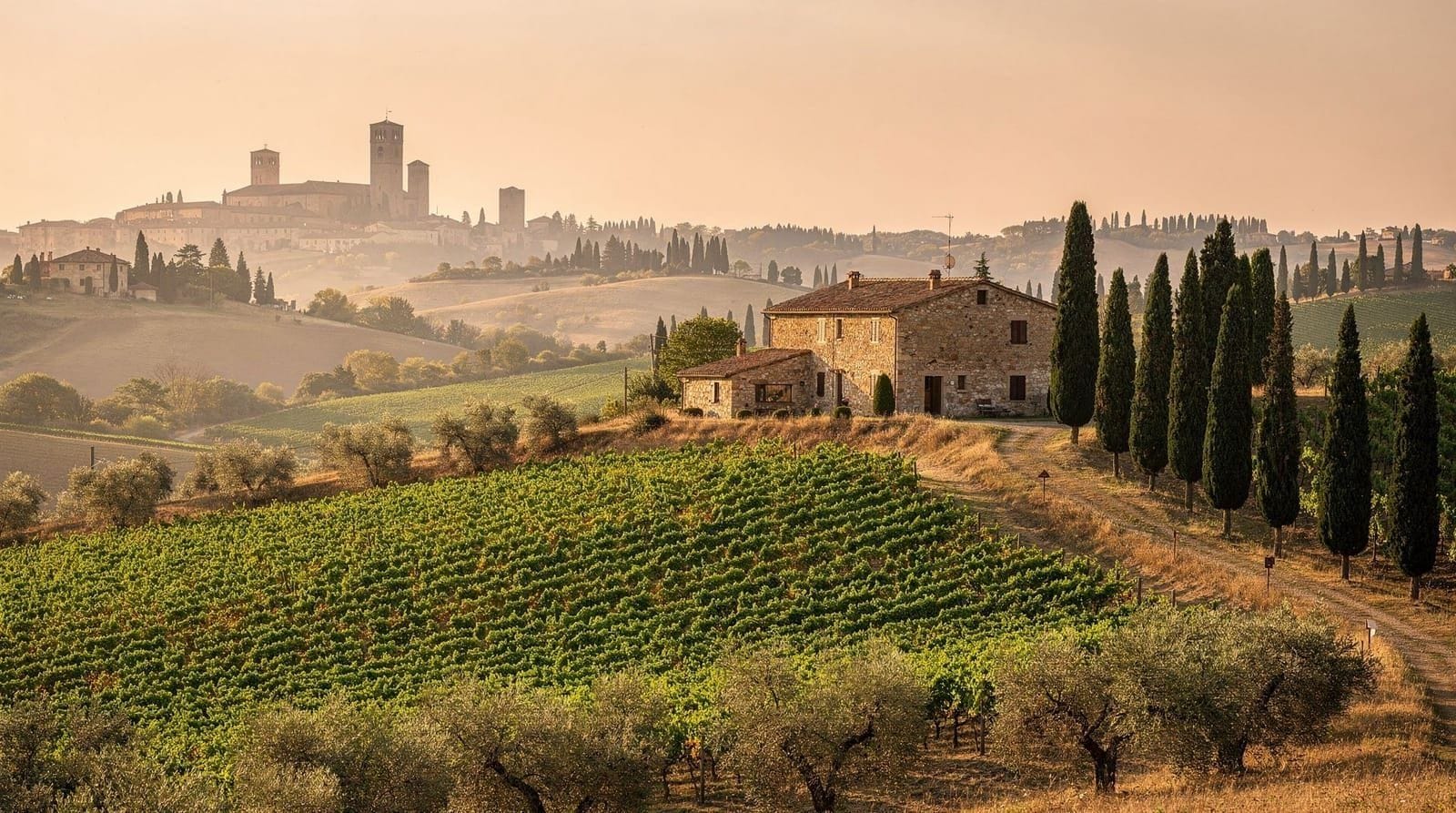
Florence and Chianti sit close enough together that combining them is genuinely practical, not just a tour-brochure pairing. If wine and countryside matter as much to you as Renaissance painting, consider swapping the Uffizi-and-Accademia day for a Florence-plus-Chianti itinerary instead: a morning in the historic centre (Duomo exterior, a walk through Oltrarno, lunch at a trattoria), then an afternoon among the vineyards south of the city. The hill towns of Siena and the Chianti countryside are a further hour beyond Florence, so doing both properly in a single day from Rome is unrealistic — but a Florence-and-Chianti combination in one day is not.
Florence and Chianti wine day trip by high-speed trainIf Tuscany as a whole (Florence, Siena, San Gimignano, Chianti) appeals more than any single city, the central Italy 10-day itinerary and the Rome–Florence–Tuscany 7-day plan both build in the extra nights that make this kind of combining possible rather than rushed.
Florence versus Rome’s other day trips
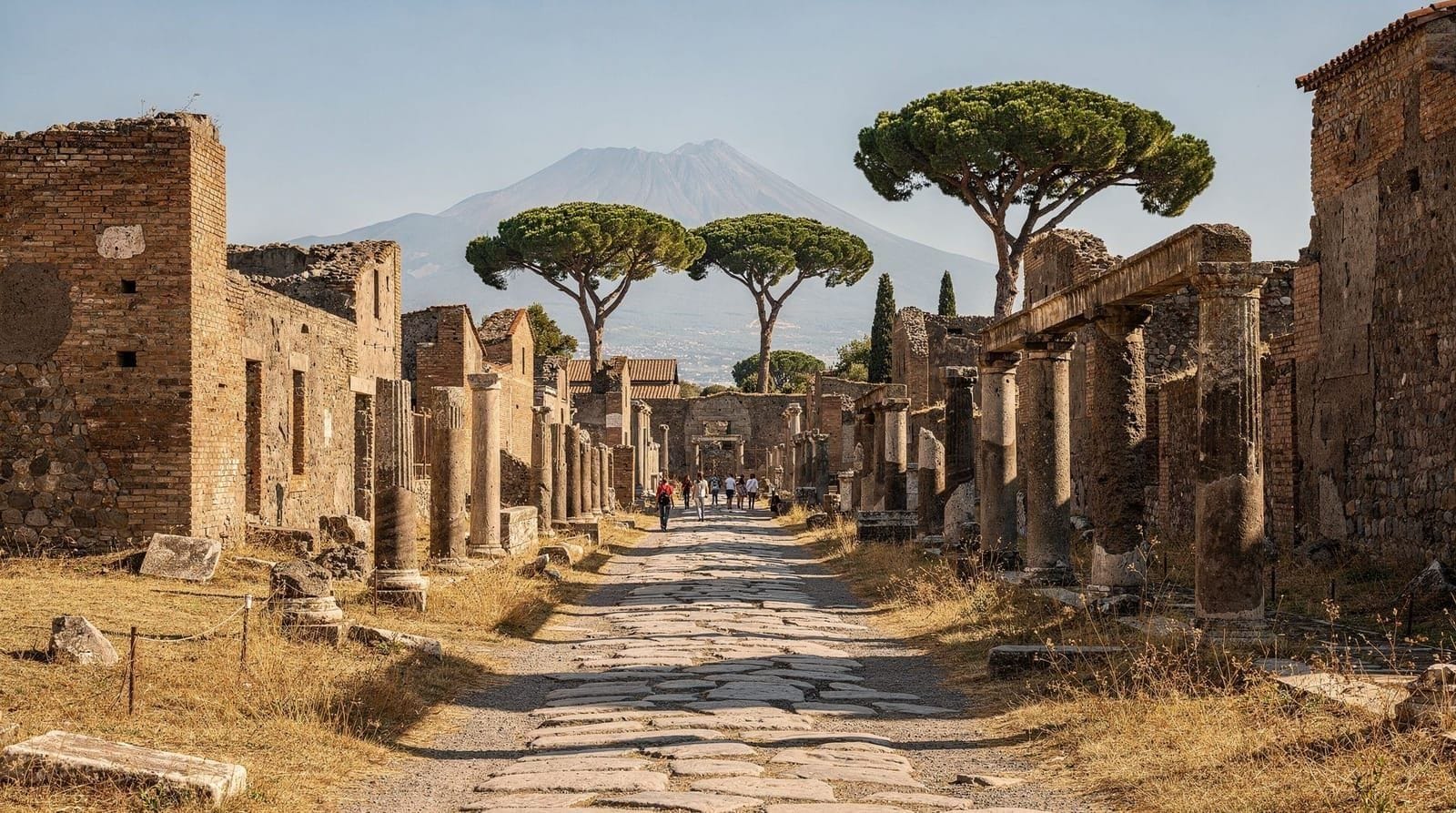
Florence is the best-known day trip from Rome, but it isn’t automatically the right one for every traveller. If your priority is ancient history rather than Renaissance art, Pompeii or a Naples day trip may suit you better; if you want something closer and less museum-heavy, Tivoli’s villas and gardens fit into half a day. The honest comparison:
| Florence | Pompeii | Tivoli | |
|---|---|---|---|
| Train time from Rome | ~1h30 | ~2h20 (via Naples) | ~50 min |
| Museum-heavy? | Yes (Uffizi, Accademia) | No — open-air ruins | No — villas and gardens |
| Feasible in a half day? | No | No | Yes |
| Best for | Art and architecture | Ancient Roman life | Gardens and fountains |
For a broader view of how these options stack up, the best day trips from Rome guide and the day trips by train overview both cover the full shortlist, and the guided-tour-versus-independent-train comparison is worth reading before you book anything.
Cost is part of the honest comparison too. A Florence day trip runs roughly €106–€146 per person once train fares and two museum tickets are counted, which is meaningfully more than a Tivoli half-day (largely just a modest entry fee and a short regional train or coach) and broadly similar to a guided Pompeii day. If budget matters as much as subject matter, weigh the museum-ticket cost specifically — it’s the part of the Florence day that Tivoli and most other Rome day trips simply don’t have.
Frequently asked questions about Florence
Is Florence worth visiting as a day trip from Rome?
Yes, particularly for art and architecture enthusiasts. The Frecciarossa makes it genuinely practical — 1h30 each way. You’ll need to prioritise (Uffizi or Accademia, not both in depth) and book museum tickets in advance, but a well-planned day trip is satisfying. Those wanting more time and the evening atmosphere should consider an overnight stay.
How early should I leave Rome for a Florence day trip?
Take the 7:00 or 7:30 am train from Roma Termini. Arriving in Florence by 8:30–9:00 am lets you reach the Uffizi at opening (8:15 am) or the Accademia (8:15 am) before the peak crowds. Leaving Florence at 7:30 pm gives you 8+ hours on the ground.
Do I need to book Uffizi tickets in advance?
Yes, especially April–October. The Uffizi regularly sells out same-day. Book at least 1–2 weeks ahead at uffizi.it. Timed entry slots fill fast in summer. The Accademia (gallerieaccademia.it) should also be pre-booked.
How much does the Florence day trip cost in total?
Budget roughly €50–€80 for the train (round trip, booked 2–3 weeks out), €25 for the Uffizi, €16 for the Accademia if you want both, plus €15–€25 for lunch. Total: €106–€146 per person for a solid independent day trip. Organised tours typically range €90–€150 including train and museum entry.
Can I do the Uffizi and the Accademia in the same day?
Technically yes, but rushing both in one day means seeing neither properly. If you must do both: Accademia at 8:15 am (1.5 hours), quick lunch, Uffizi at 1:00 pm (2.5 hours). That leaves no time for the Duomo, Ponte Vecchio, or any wandering. Better to choose one and explore the city more freely.
What’s the difference between guided day tours and going independently?
Guided tours handle logistics, provide commentary, and often include skip-the-line access. Independent travel gives you flexibility on timing and costs similar amounts when you factor train + museum tickets. If you’re unfamiliar with Italian rail booking and museum pre-booking, a guided tour removes stress. If you’ve done this kind of trip before, going solo is easy.
Is Florence better as a day trip than Pompeii or Tivoli?
It depends on your interests, not on which is objectively “better.” Florence suits art and architecture lovers who can commit to a museum properly. Pompeii suits those drawn to ancient Roman daily life and open-air ruins, while Tivoli is the easiest half-day option if you want gardens and fountains without museum queues. See the best day trips from Rome guide for a full comparison.
Can I combine Florence with Chianti in a single day from Rome?
Yes, if you treat it as Florence-plus-countryside rather than trying to add Siena as well. A morning in central Florence followed by an afternoon Chianti wine stop is realistic on the high-speed train; adding Siena and San Gimignano properly needs its own separate day.
Top experiences
Bookable activities with verified prices and instant confirmation on GetYourGuide.