Rome for First-Timers: 3 Days
Rome: Guided Tour of Colosseum, Roman Forum & Palatine Hill
Quick answer: First-time in Rome? Three days is the right amount of time, and this itinerary is built specifically around the mistakes first-timers make most often: showing up at the Colosseum without a booked ticket, not knowing that Borghese Gallery caps entries at 180 people per slot, and wasting two hours in the Vatican’s early galleries when the Sistine Chapel is the point. Book all three in advance, follow this sequence, and you’ll leave having seen what Rome is actually about.
| Where to base yourself | Monti (10 minutes from the Colosseum, well-connected to everything else) |
| Cost | Around 250-350 € per person for 3 days of entries, food and local transport |
| Time needed | 3 full days, moderate-heavy walking each day |
| Booking priority | Borghese Gallery first, then Vatican, then Colosseum |
| Best time to visit | April-May or late September-October for comfortable heat |
This itinerary is not a compressed version of the standard 3-day guide. It is built around first-timer logic: what to prioritise, what to skip, which mistakes to avoid, and how to book the things that genuinely require advance booking before you arrive. It also covers the traps — fake gladiators outside the Colosseum, overpriced restaurants on Piazza Navona, taxis without meters, and the coperto system — so nothing comes as a surprise.
The core structure covers Rome’s three unmissable bookable experiences: the Colosseum and Roman Forum (day one), the Vatican Museums and St. Peter’s (day two), and the Borghese Gallery (day three). Around these anchors you get the Centro Storico piazzas, Trastevere, and the best neighbourhood eating in the city.
Booking checklist before you arrive:
- Colosseum timed entry: book at least 7 days ahead at coopculture.it or via a tour operator. Standard ticket 18 €.
- Vatican Museums: book at least 2-4 weeks ahead. Early morning slots (8:00) are the most valuable. Entry 20 €.
- Borghese Gallery: book at least 10-14 days ahead. This is the one most visitors fail to book. The gallery caps at 180 visitors per 2-hour slot — there are no exceptions. Entry 15 € plus booking fee.
- Pantheon: 6 € online; book the day before at minimum.
Three days at a glance
| Day | Anchor booking | Also covers |
|---|---|---|
| 1 | Colosseum, Forum, Palatine (7+ days ahead) | Pantheon, Piazza Navona, Trevi, Spanish Steps |
| 2 | Vatican Museums + Sistine Chapel (2-4 weeks ahead) | St. Peter’s, dome climb, Castel Sant’Angelo, Trastevere |
| 3 | Borghese Gallery (10-14 days ahead) | Villa Borghese, Piazza del Popolo, Testaccio, Aventino keyhole |
If this itinerary’s pace feels too full for a first trip, the rome in 2 days itinerary drops the Borghese day and keeps only the Colosseum and Vatican anchors — the honest trade-off is losing the Bernini sculptures and the Villa Borghese park in exchange for a lighter schedule. Conversely, if you have more time, the rome in 5 days itinerary adds the Appian Way catacombs and a Tivoli day trip once the essentials here are covered.
Day 1: The Ancient City — and how to survive the Colosseum
The single most important thing about the Colosseum
Do not arrive at the Colosseum without a booked timed-entry ticket. The walk-up queue in 2026 runs 2-3 hours in peak season. The ticket costs the same amount either way (18 €). Book online. This is not a tip, it is a prerequisite.
Also: the people dressed as Roman gladiators outside the Colosseum are not official staff. They will offer photographs and demand 20-30 € after. Step past them.
7:30 — Breakfast in Monti
Monti is your home base. Standing breakfast at any bar on Via dei Serpenti — cappuccino and cornetto for 2-3 €, consumed at the counter. This is how Romans do it. Sitting at a terrace table doubles the price.
8:00 — Colosseum (1 hour)
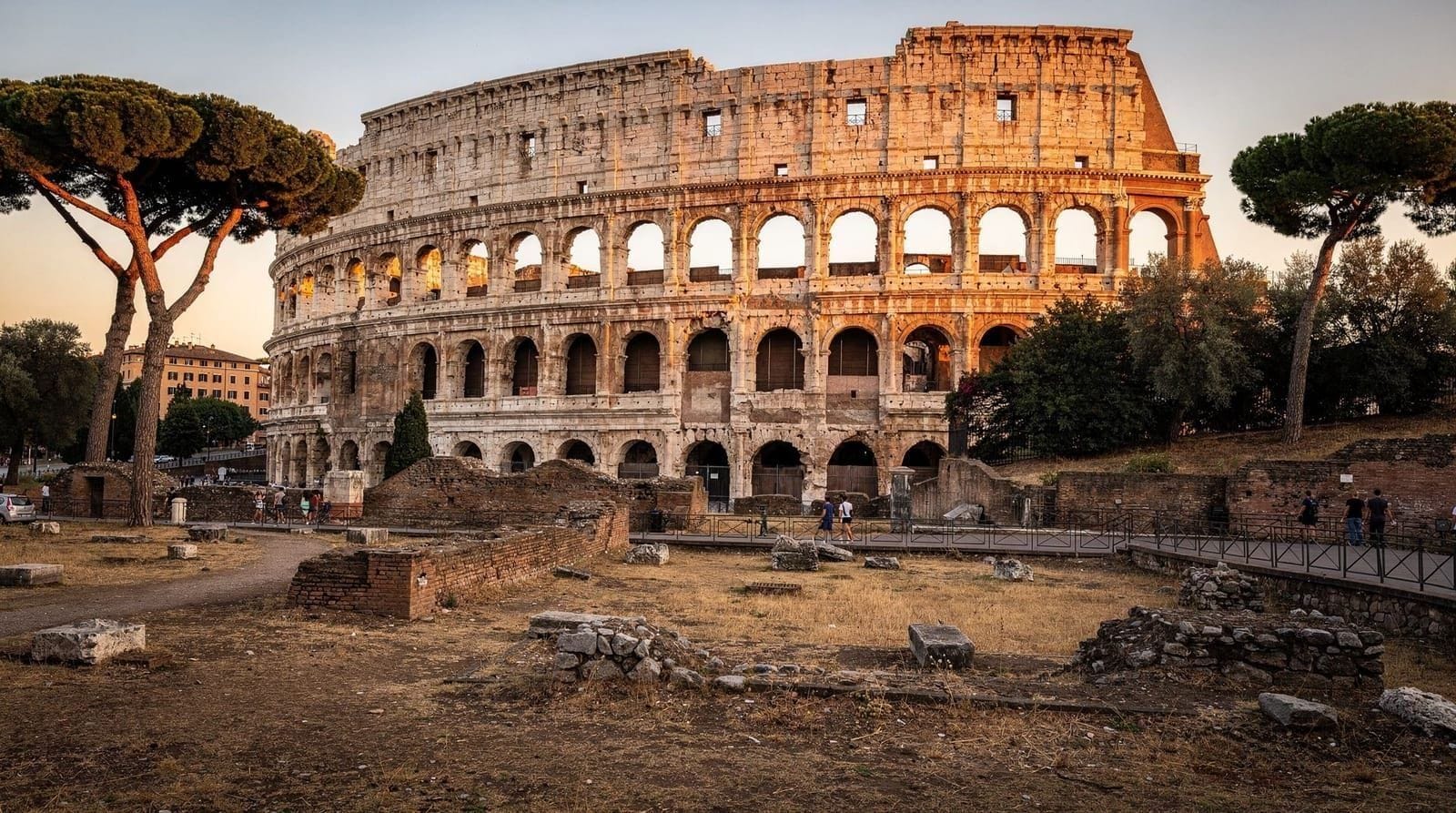
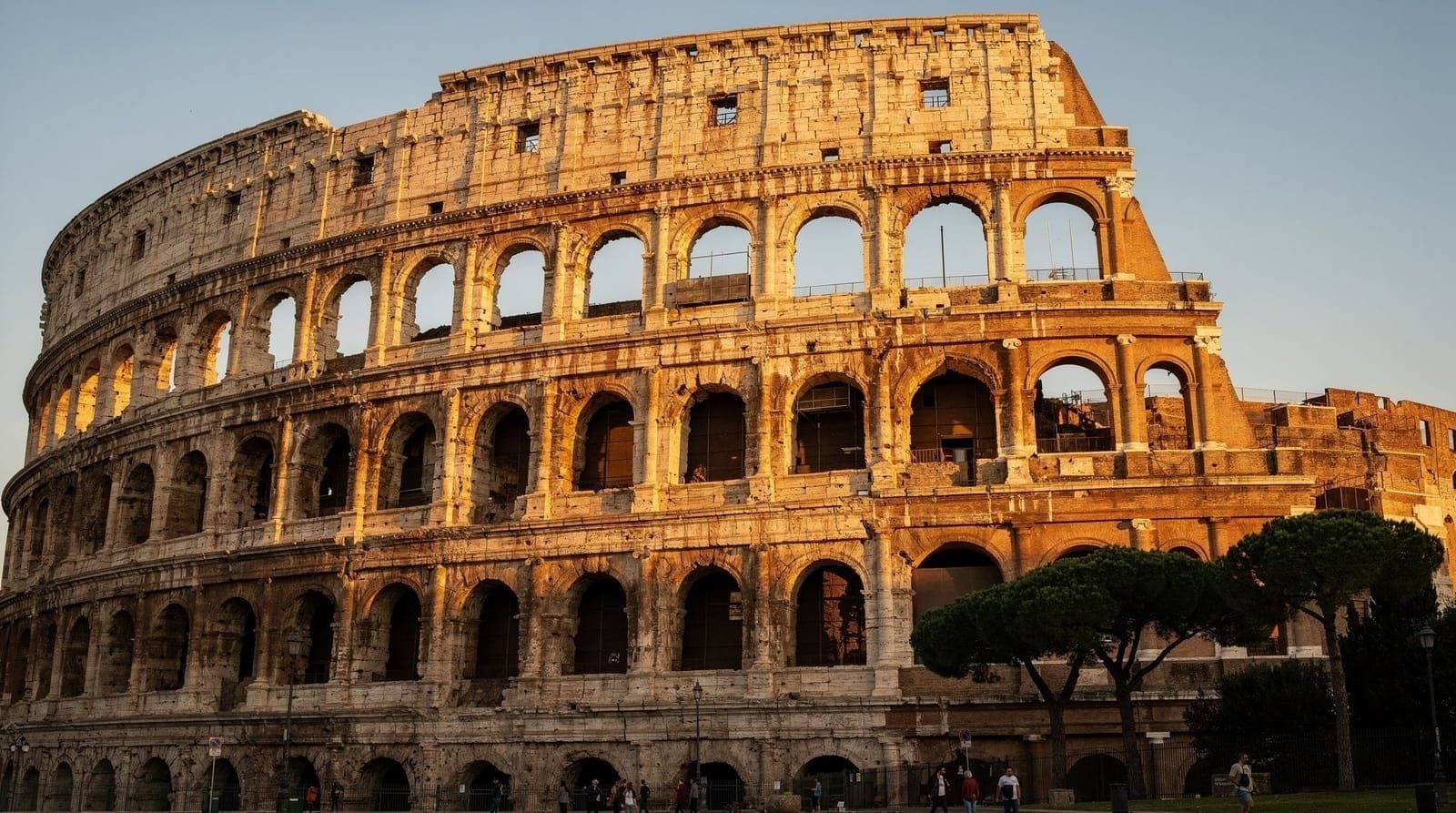
The Colosseum itself takes about an hour on the standard ticket. Walk the lower tier, look across the arena floor to the network of underground chambers (the hypogeum), and climb to the upper tier for the elevated view across to the Palatine. The arena floor and underground are separate add-ons (worth booking for a second visit; skip them today).
A guided skip-the-line Colosseum, Forum and Palatine tour is the first-timer’s best option: timed entry included, a guide who makes the building’s history legible, and a structured route through all three sites.
9:15 — Roman Forum (75 minutes)
Exit the Colosseum through the northwestern gate and descend into the Roman Forum. The Via Sacra runs the length of the Forum from the Arch of Titus (southeast) to the Arch of Septimius Severus (northwest). Walk the whole length. The Temple of Vesta, the Temple of Saturn, and the Basilica of Maxentius are the key structural pieces. The Forum is more impressive than it looks in photographs — the sense of layered history, with medieval churches built directly on Roman temple foundations, is one of Rome’s strangest and most powerful experiences.
10:30 — Palatine Hill (30-40 minutes)
Climb to Palatine Hill above the Forum. The view east across the Circus Maximus and west over the Forum is the best perspective on both. The Republican and Imperial palace ruins on the hill are extensive but not signposted in detail — the view is the point.
12:00 — Lunch in Monti
Walk north through Monti for lunch. The neighbourhood between the Colosseum and Centro Storico is the best-value eating zone in central Rome. Order the house pasta (cacio e pepe, amatriciana, or carbonara — the three Roman classics). Budget 15-22 €. Tip: a coperto (cover charge, 1-3 € per person) is normal and legal; it appears on the bill automatically.
14:00 — Pantheon and Centro Storico piazzas
Walk 2.2 km north to the Pantheon (6 € entry, book online). 45 minutes inside. The dome is 43 metres across and was the world’s largest concrete span for 1,300 years. Then Piazza Navona (5 minutes west) for Bernini’s Fontana dei Quattro Fiumi — one of the finest baroque sculptures anywhere. Then Trevi Fountain (10 minutes east) — it’s crowded, genuinely spectacular at close range, and worth seeing even with the crowds.
17:00 — Spanish Steps
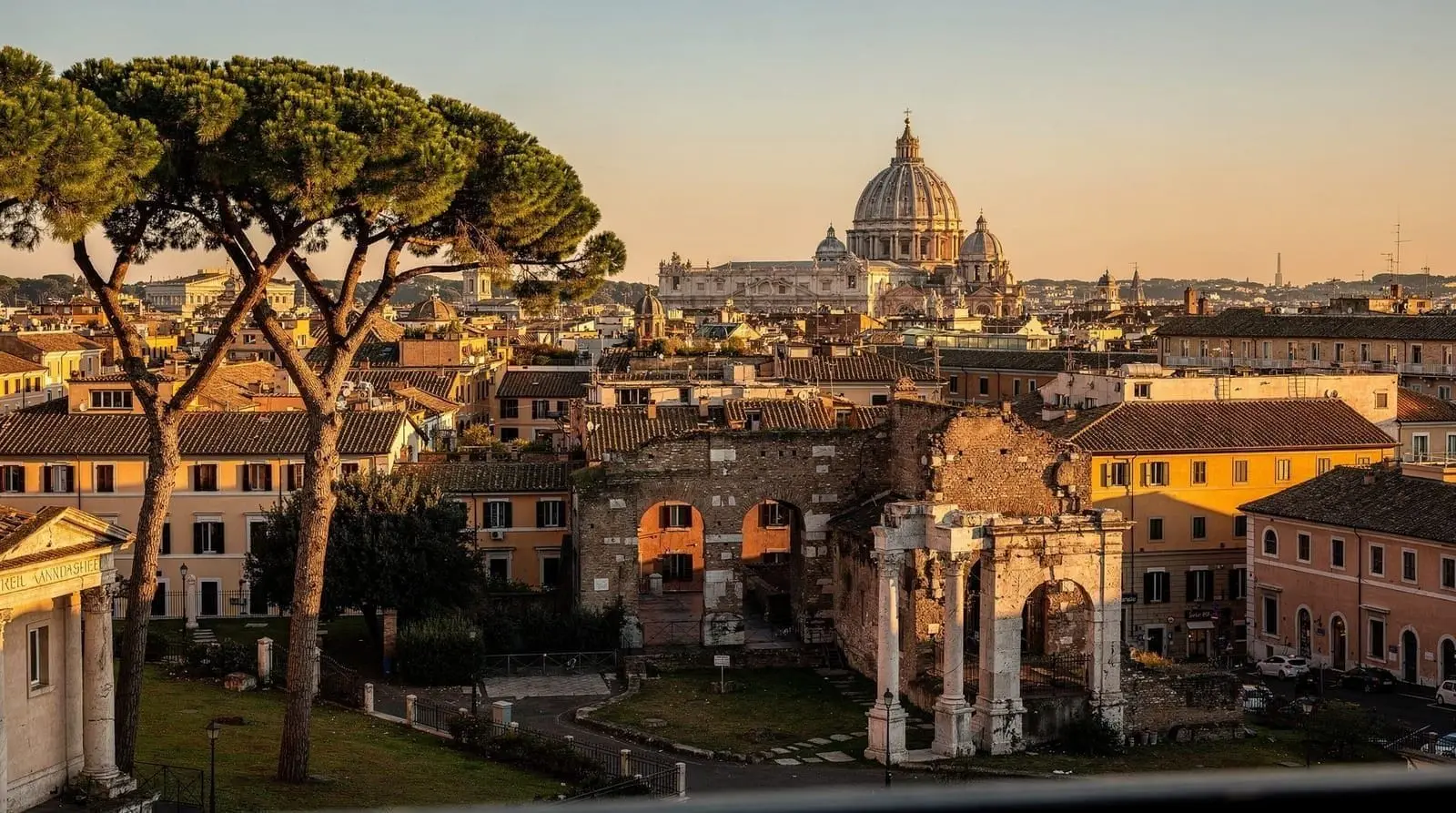
10 minutes northwest to the Spanish Steps. Climb all 135 steps to the Trinità dei Monti church; the view back down Via Condotti is classic Rome. Continue 5 minutes to the Pincio Terrace: the best free panorama of the city’s roofline.
First-timer trap alert: restaurant touts
Any restaurant on Piazza Navona itself, any restaurant on Piazza di Spagna, and any restaurant whose staff is standing outside waving illustrated menus at passers-by: do not go in. These are tourist traps. The streets one block back from the main tourist piazzas have the same food at 40-50% less.
19:30 — Aperitivo
Campari spritz or Aperol spritz is the standard aperitivo. Good bars in Monti charge 8-10 € including snacks. The time to drink it is 18:30-20:00; Romans eat late.
20:30 — Dinner
Your first proper Roman dinner. Go to Centro Storico — Via del Governo Vecchio or Via della Pace, both between Piazza Navona and Campo de’ Fiori. Budget 30-40 € per person with wine.
A guided evening walking tour of Rome’s Centro Storico is a good first-night option if you want the historical context alongside the atmospheric walk through the illuminated streets.
Day 2: Vatican — what to book, what to prioritise
The most common Vatican mistake
First-timers book the Vatican Museums and then spend so much time in the earlier galleries (Egyptian antiquities, Etruscan section, Greek and Roman sculptures) that they arrive at the Sistine Chapel exhausted with 20 minutes before closing. The Raphael Rooms and the Sistine Chapel are the reason you came. Navigate directly toward them.
7:30 — Early breakfast in Prati
Prati is the Vatican neighbourhood: wide streets, quiet in the early morning, excellent bars. Standing breakfast on Via Cola di Rienzo. Do not eat at any café visible from Via della Conciliazione — these are tourist traps.
8:00 — Vatican Museums (3.5-4 hours)
Your 8:00 timed slot is the best time to be inside. Before 9:30 the Sistine Chapel is significantly less crowded than it becomes once the 10:00 and 11:00 slot groups arrive.
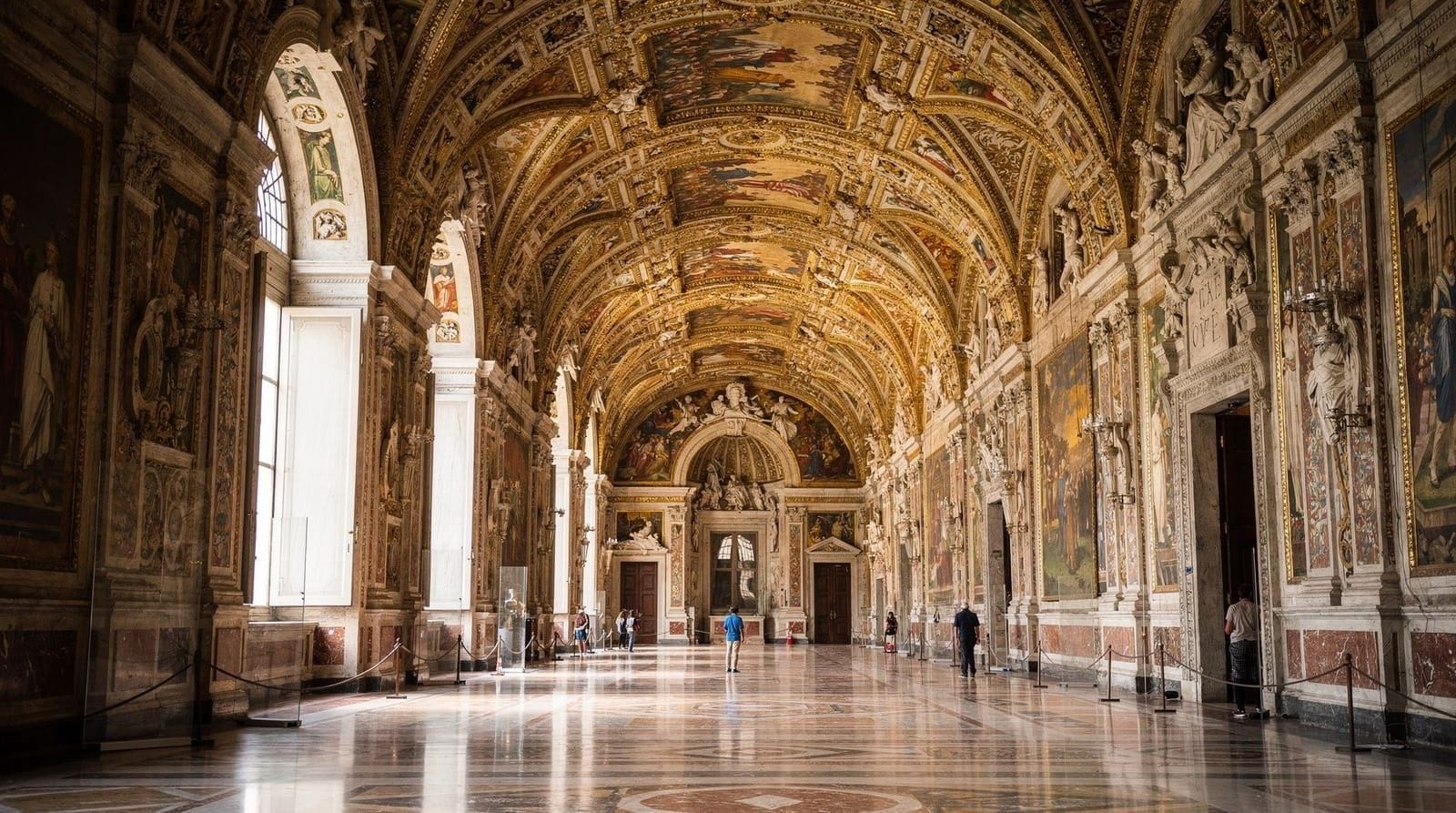
A guided Vatican Museums, Sistine Chapel and St. Peter’s Basilica tour with early entry is the most efficient approach for a first-timer: the guide navigates the 7 km of galleries to the most important works without detours, explains the Raphael Rooms (the School of Athens, the Disputation of the Sacrament, the Liberation of St. Peter), and gives you proper time in the Sistine Chapel.
Photography in the Sistine Chapel is technically prohibited, but enforcement varies. Do not use flash regardless.
12:30 — St. Peter’s Basilica and dome
St. Peter’s entry is free. Queue at the security checkpoint on the left side of the colonnade (the entry is free and there is no booking; the queue is for the security search). Allow 60-90 minutes inside: Michelangelo’s Pieta in the first right chapel is the first thing to find.
The dome climb (8 € by stairs, 10 € by lift + stairs) is worth it on a first visit. The lift takes you to the interior drum of the dome; 300 more steps reach the lantern. The view from the lantern is one of the best in Rome.
First-timer trap alert: Vatican area restaurants
Avoid all restaurants visible from the Piazza San Pietro or Via della Conciliazione. Walk into the Prati streets behind the square instead — Via Cola di Rienzo and the surrounding streets have honest restaurants at normal prices.
14:30 — Castel Sant’Angelo (optional)
15 € entry, 1.5 hours. The cylindrical fortress on the Tiber bank is Hadrian’s converted mausoleum; the connection to the Vatican by the elevated Passetto corridor is visible from the ramparts. Good option if energy permits; skip if you want more Trastevere time.
15:30 — Trastevere afternoon
Cross the Tiber and explore Trastevere. Walk to the Basilica di Santa Maria in Trastevere for the 12th-century gold mosaics and the piazza outside — Rome’s most lived-in square. Nasoni water fountains are throughout the neighbourhood; drink from them freely.
19:00 — Trastevere dinner
A Trastevere food tour covers the neighbourhood’s eating culture over 3 hours — supplì (fried rice balls), carciofi alla giudia (Jewish-style artichokes), local wine, and Roman pasta at genuine neighbourhood spots. For a restaurant: Tonnarello (no reservation needed, long tables, good value), or book Da Enzo al 29 ahead.
Day 3: Borghese Gallery — book this before everything else
The single most overlooked booking in Rome
The Borghese Gallery caps entries at exactly 180 visitors per 2-hour slot. There is no walk-up, no standby, no exceptions. Most first-time visitors arrive in Rome not knowing this exists. Book at least 10 days ahead; in April, May, September, and October, 14 days minimum. The booking fee is small. The cost of arriving without a ticket is that you cannot go in.
9:00 — Borghese Gallery (2 hours)
The gallery occupies a Renaissance villa in the middle of the Villa Borghese park. What’s inside: Bernini’s Apollo and Daphne (the nymph transforming into a laurel tree, carved from a single block of marble, technically the most astonishing thing in Rome), the Pluto and Proserpina, and six Caravaggio paintings. Two hours is the fixed limit; they enforce it gently but absolutely.
Borghese Gallery skip-the-line entry with timed reservation handles the mandatory booking — the single logistical step that defeats most first-timers.
11:00 — Villa Borghese gardens and Pincio
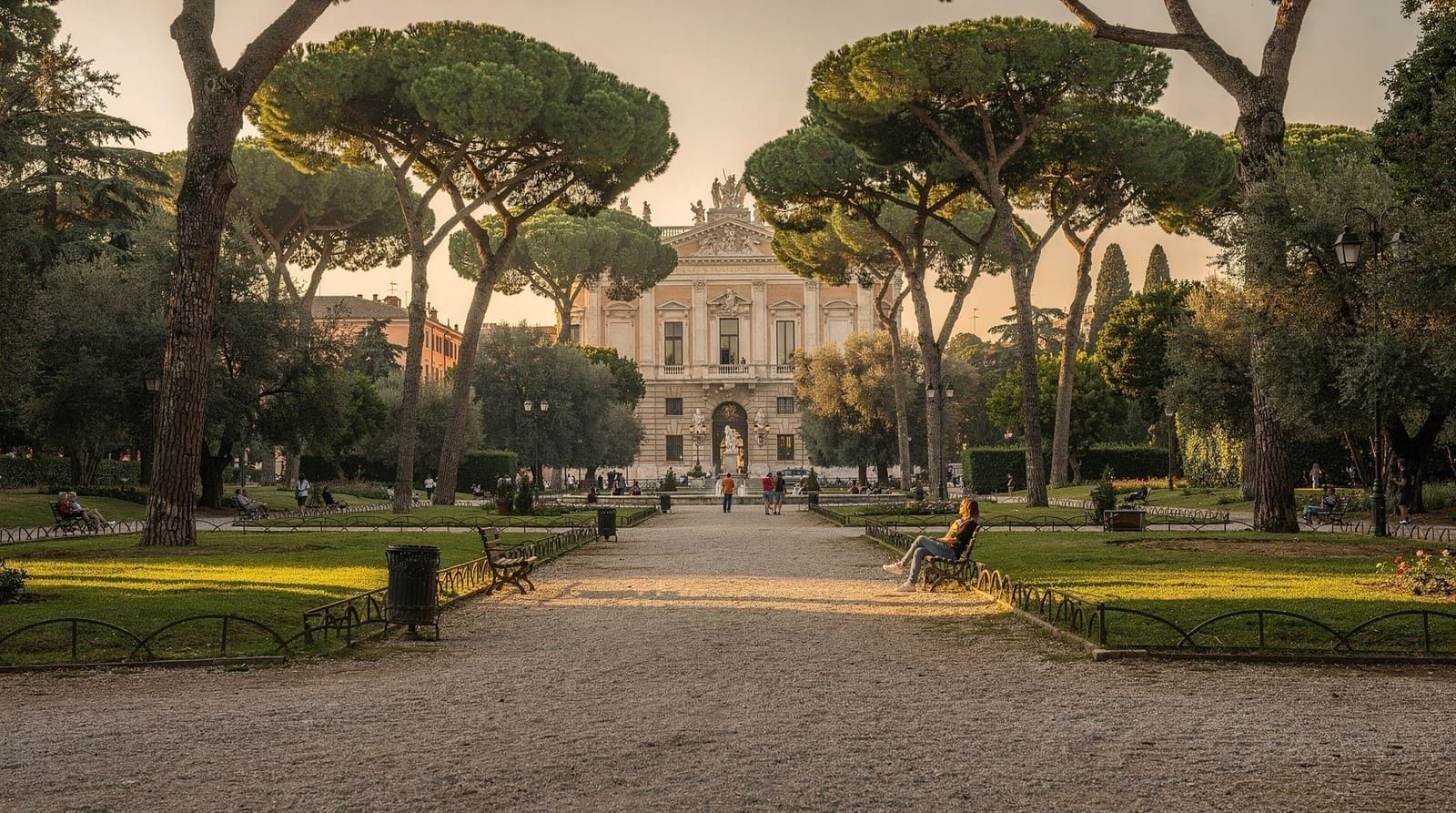
After the gallery, walk through the Villa Borghese park to the Pincio Terrace (15 minutes). The park is Rome’s most pleasant green space — free, spacious, and genuine relief from the monument circuit. The Pincio panorama faces south and west over Piazza del Popolo and the city’s historic roofline.
13:00 — Piazza del Popolo, Santa Maria del Popolo, lunch
Descend to Piazza del Popolo. Look into Santa Maria del Popolo for the Caravaggio Cerasi Chapel (free): two large canvases, the Conversion of St. Paul and the Crucifixion of St. Peter. Lunch near the piazza: 20-30 €.
15:00 — Free afternoon in Monti or Testaccio
Use the final afternoon without obligation. Monti for browsing the independent boutiques on Via del Boschetto and Via dei Serpenti, or Metro B south to Testaccio for Rome’s most local neighbourhood — the Mercato di Testaccio (if before 14:00, Tuesday to Saturday), the Non-Catholic Cemetery (Keats and Shelley), and the Monte dei Cocci.
The Aventino keyhole detour
From Testaccio, a 10-minute walk to the Aventino hill and the Knights of Malta keyhole on Via di Santa Sabina: look through the bronze door keyhole at the end of a hedge-lined avenue and see St. Peter’s dome perfectly framed in the distance. One minute of your time, completely free, one of Rome’s most satisfying small secrets.
20:00 — Final dinner
End in Monti — three nights here means you’ve had enough time to find a table you like and want to return to. Budget 35-45 € for a final proper Roman dinner with wine.
What first-timers get wrong about pacing
The biggest planning error first-timers make is not a booking mistake — it’s assuming Rome can be “done” at the pace of a checklist. Each of the three anchor days above already includes 6-8 hours of walking and standing, on top of heat, cobblestones, and jet lag if you’ve just arrived. Build in a genuine café break mid-afternoon on at least one of the three days rather than pushing straight through from breakfast to dinner. First-timers who skip this tend to remember the last two hours of each day as exhaustion rather than Rome. If you arrive with under 48 hours’ notice before your Colosseum slot, check Rome’s skip-the-line ticket options — some operators hold small allocations that release closer to the date, though you should never count on this as your primary plan.
Practical notes for first-timers
Taxis: Take only official white taxis with meters. Flat rate from FCO airport to central Rome is 55 €. If anyone quotes a different price without a meter, refuse. The Uber app also works in Rome for licensed taxis.
Metro: Lines A and B are useful for this itinerary. Colosseo stop (B) is directly below the Colosseum. Barberini (A) is close to Trevi. Ottaviano (A) is near the Vatican. Buy single tickets (1.50 €) or a 24-hour pass (7 €) at machines.
Water: Rome’s nasoni — small iron street fountains — provide free municipal water throughout the city. Carry a refillable bottle. Never buy bottled water at outdoor tourist spots; it’s 3-5 € for something the fountain gives you free.
Heat: July and August in Rome hit 32-38 °C regularly. This itinerary involves significant outdoor walking; plan accordingly. April, May, late September, and October are dramatically more comfortable.
Pickpockets: Primary risk areas are Metro A between Termini and Ottaviano (change for the Vatican), Termini station itself, and buses 40 and 64. Keep phones and wallets in front pockets or a front-facing bag.
Where to stay
Monti is the right neighbourhood for a first visit. It puts you 10 minutes from the Colosseum, well-connected to the Vatican (Metro B to A with a Termini change), close enough to Centro Storico to walk everywhere in the evening, and surrounded by the city’s best neighbourhood restaurants. Book 2-3 months ahead for spring and autumn. Expect to pay 130-200 € per night for a decent double. For a fuller comparison of neighbourhoods beyond Monti, see where to stay in Rome alongside this itinerary’s assumptions.
FAQ
Is three days really enough for a first visit to Rome? Yes, if you accept you won’t see everything. Three days covers the Colosseum and Forum, the Vatican Museums and St. Peter’s, and the Borghese Gallery — Rome’s three genuinely unmissable bookable experiences — plus the Centro Storico piazzas and Trastevere. What it doesn’t cover: the Appian Way catacombs, day trips to Tivoli or Ostia Antica, and a slower pace. Those are reasons to come back, not signs you did it wrong.
Which of the three big bookings should I make first? Borghese Gallery, because its 180-visitors-per-slot cap makes it sell out fastest — often 10-14 days ahead in spring and autumn. Book the Vatican next (2-4 weeks ahead ideally), then the Colosseum, which has the most flexible booking window at 7+ days ahead.
What if I only booked the Colosseum and forgot the other two? Check availability immediately — the Borghese Gallery in particular may already be full for popular dates. If Borghese is unavailable, treat it as your reason to return rather than trying to force a walk-up visit, which simply isn’t possible. The Vatican Museums usually retain some availability further out than Borghese, so prioritise rebooking that first.
Top experiences
Bookable activities with verified prices and instant confirmation on GetYourGuide.