Mithraeum sites in Rome: the secret cult underground
Rome: Catacombs and Capuchin Crypt Guided Tour with Transfer
Where can I visit a mithraeum in Rome?
The three main accessible mithraea in Rome are: the mithraeum beneath the Basilica of San Clemente (best preserved and most visited), the Mithraeum of Circus Maximus (one of the largest, with the original altar still in situ), and the mithraeum at the Baths of Caracalla (accessible via the underground tour). A fourth significant site — the Mithraeum of Barberini — is occasionally open for special visits.
The secret religion beneath Rome
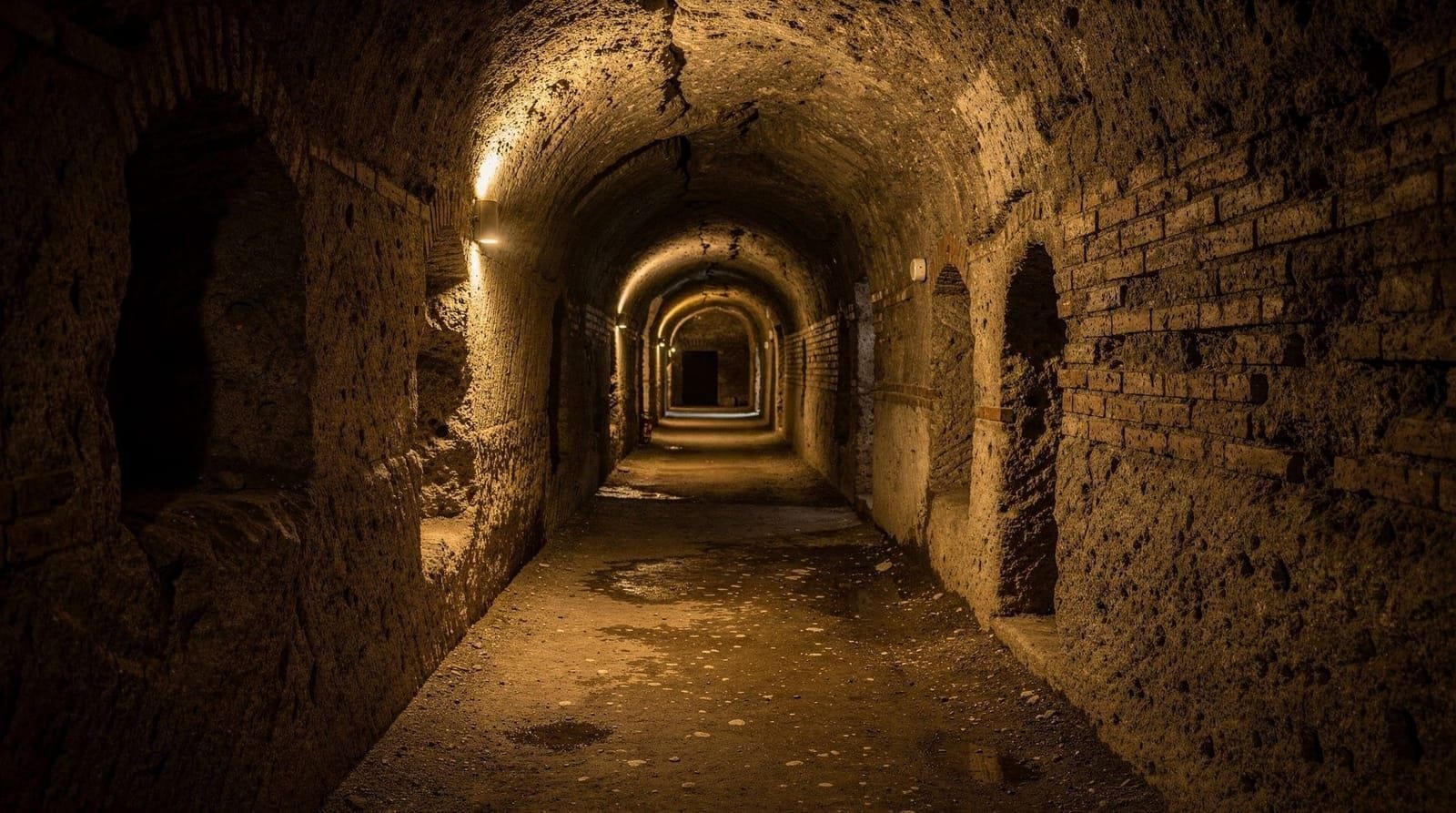
Between roughly 100 and 400 CE, a mystery cult with origins in Persian mythology spread across the Roman Empire and became one of the dominant religious forces in military and urban commercial life. Followers of Mithras — the Mithraic mysteries — gathered in underground rooms designed to resemble the cave in which their deity performed his central act: the ritual killing of a cosmic bull.
They left no theological texts. The practices of the Mithraic cult were kept secret by initiates, and no Mithraic equivalent of the Gospels or the Upanishads survives. What we know, we know from archaeology: the physical remains of over 400 mithraea across the Roman Empire, including more than 100 in Rome alone.
Walking through one of Rome’s preserved mithraea is an encounter with a religion that no living person practises and that no text fully explains. The silence of the Mithraic tradition — its deliberate secrecy — persists across two millennia. You are looking at the physical infrastructure of beliefs that were never written down.
| Where | San Clemente (Celio), Circus Maximus (Aventino), Baths of Caracalla |
| Cost | San Clemente underground ~€10; Caracalla underground tour separate booking |
| Time needed | 30–45 minutes per site |
| Getting there | Metro B (Colosseo for San Clemente, Circo Massimo for the others) |
| Best time | Weekday mornings, least crowded at all three sites |
Understanding what you are seeing: the elements of a mithraeum
Before visiting the specific sites, it helps to understand what the mithraea were built to contain and how they functioned.
The tauroctony
Every mithraeum had, at its focal point, a representation of the tauroctony — the bull-slaying. Mithras, typically shown wearing a Phrygian cap (a pointed cap associated with Eastern origin), kneels over a bull and drives a knife into its neck. A dog and a snake leap upward toward the wound; a scorpion attacks the bull’s testicles; a raven sits above; two torch-bearers (Cautes and Cautopates) flank the scene.
The cosmic symbolism of this image is extensively debated. Modern astronomical interpretations suggest it may encode a star map — each creature corresponding to a constellation, the bull’s killing representing the precession of the equinoxes. Whether or not this reading is correct, the tauroctony was clearly not simply a religious scene but a complex symbolic diagram understood differently by initiates at different levels of initiation.
The triclinia
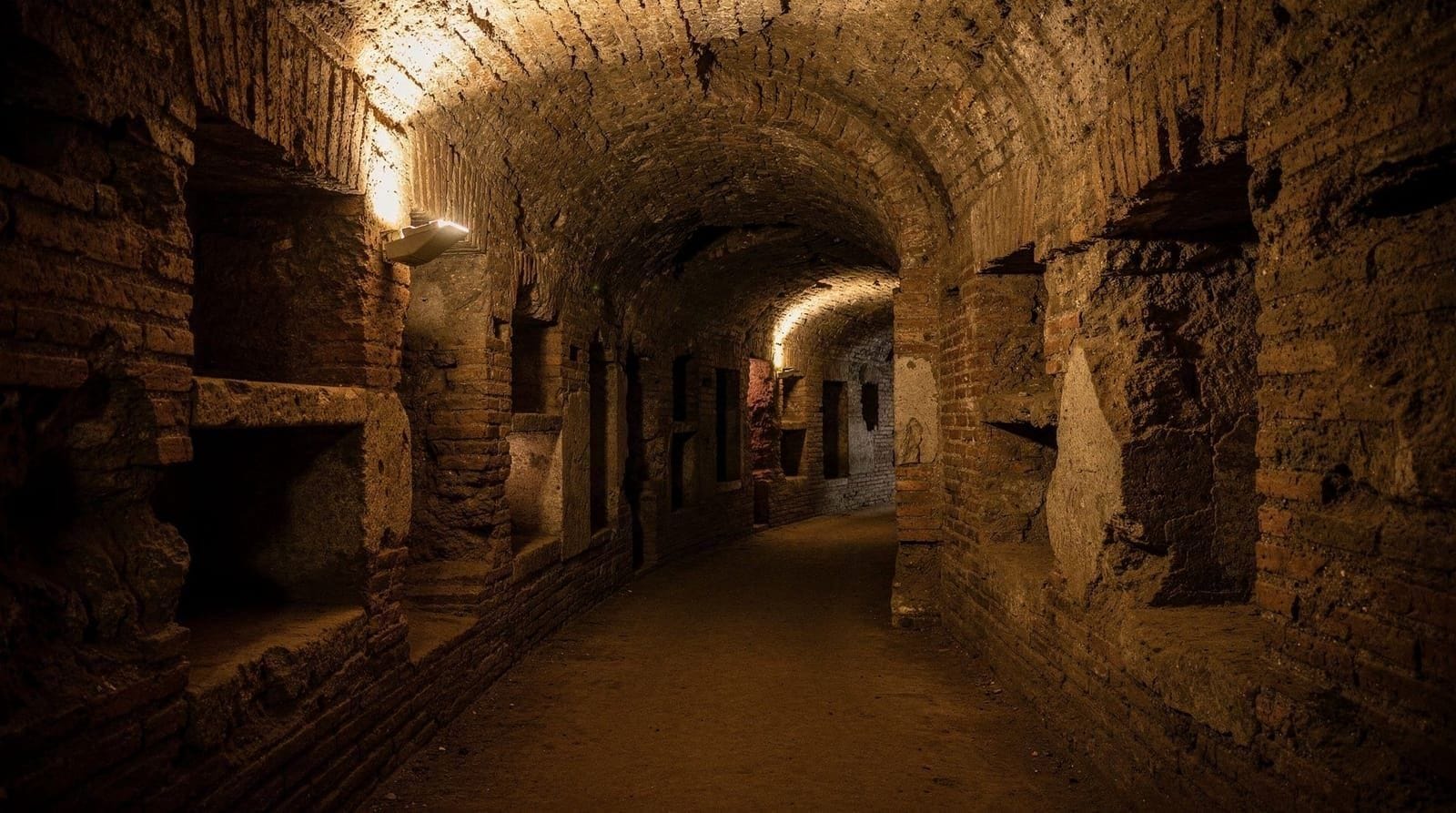
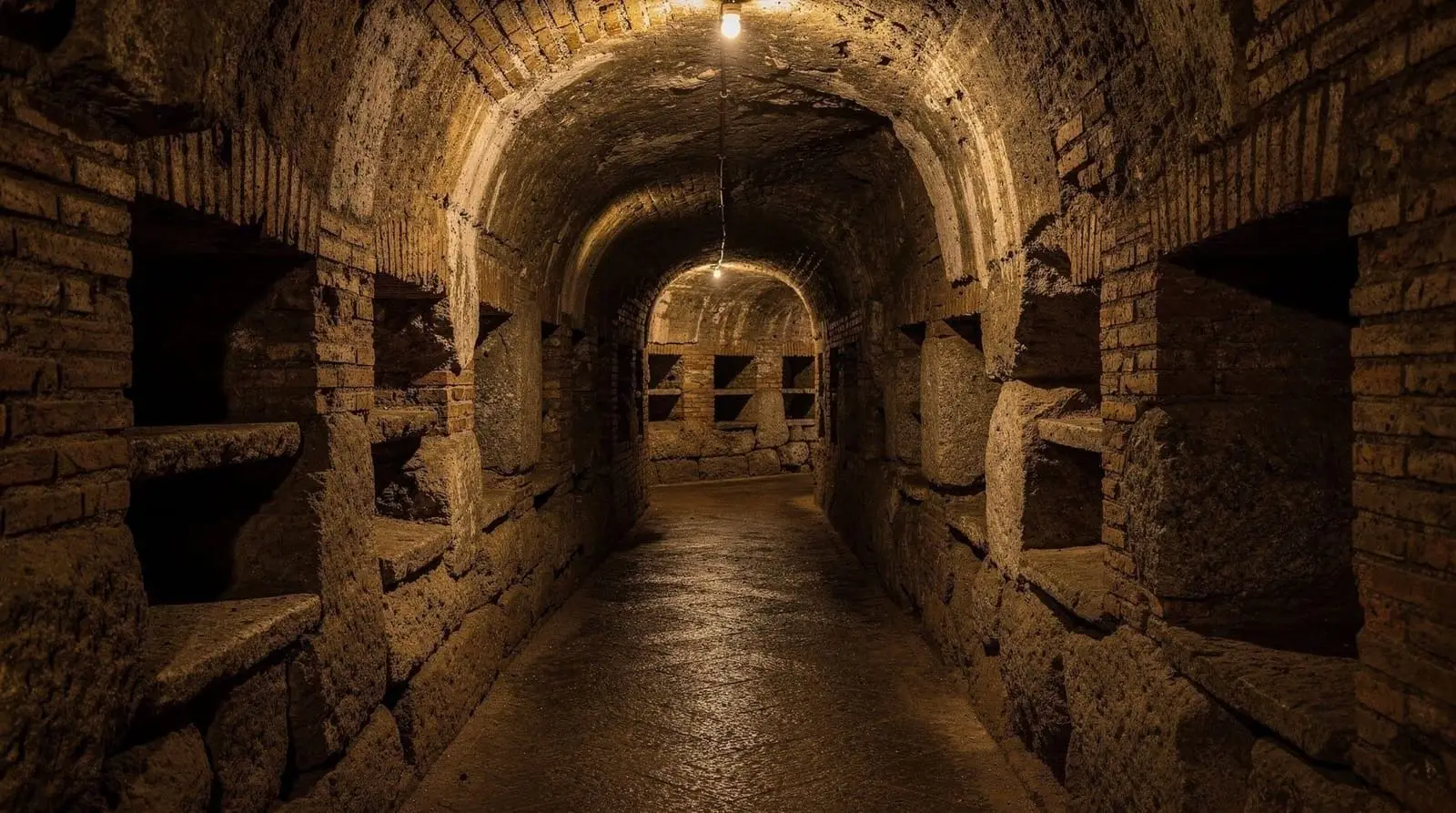
Along both long walls of a mithraeum, raised stone benches — triclinia — provided seating for initiates during ritual communal meals. These meals were a central element of Mithraic practice, possibly symbolically connected to the moment of cosmic creation in the bull-slaying myth. The bench layout, with a central walkway between, is the most immediately recognizable feature of a mithraeum.
The cave form
Mithraea were deliberately built to resemble caves: narrow, low-ceilinged, dark, with the entry at one end and the tauroctony at the other. Natural caves were used where available; in urban settings like Rome, artificial underground rooms were constructed to the same specifications. The experience of entering was clearly intended to feel like descending into another world.
The grade system
Mithraic initiates progressed through seven grades, each associated with a planetary body: Corax (Raven, Mercury), Nymphus (Venus), Miles (Soldier, Mars), Leo (Lion, Jupiter), Perses (Persian, Moon), Heliodromus (Sun-Runner, Sun), and Pater (Father, Saturn). Higher grades had access to more of the cult’s knowledge and presumably participated differently in rituals. This hierarchical structure is one of the reasons Mithraism was particularly attractive to the military, where rank and progression through grades was already an organizing principle of life.
The Mithraeum of San Clemente
The mithraeum beneath the Basilica of San Clemente is the most accessible and best-explained of Rome’s Mithraic sites. Built in the late 2nd or early 3rd century CE, it is installed within a larger Roman building on the Celio hill, approximately 6 metres below the current street level.
What makes it significant
The San Clemente mithraeum is significant for three reasons. First, it is physically intact as a functional ritual space: the triclinia are complete, the apse with the tauroctony relief is in its original position, and the overall spatial experience of being inside a mithraeum — low-ceilinged, narrow, with the tauroctony framed at the far end — is preserved.
Second, the archaeological relationship between the mithraeum and the Christian churches above it is literally visible here. You can descend from a 12th-century basilica to a 4th-century church to the mithraeum, physically tracing the religious transition that transformed Rome. No other site in the city makes this progression as concrete and navigable.
Third, the running water heard in the lowest levels — an ancient Roman drainage channel still carrying water beneath the building — gives the site an atmospheric quality that purely visual archaeology cannot replicate.
Visiting logistics
Entry to San Clemente’s underground is through the upper basilica (free admission), with a separate underground ticket of 10 EUR. The mithraeum is visited as part of the self-guided exploration of the lower levels — there is no mandatory guide, but information panels in English explain the features throughout. See the full San Clemente underground guide for complete details.
Underground Rome tour including San Clemente — guided exploration of the catacombs and the multilayered San Clemente complex in one excursion.The Mithraeum of Circus Maximus
Beneath the buildings that line the northern bank of the Circus Maximus, archaeological excavation has revealed one of the largest mithraea in Rome. The site dates from the early 3rd century CE and was in use until the late 4th century, when Mithraic practice was suppressed following the Edict of Thessalonica.
What was found
The Circus Maximus mithraeum is exceptional for its size — approximately 23 metres long, large enough to accommodate a substantial community of initiates — and for the preservation of its decorative program. The original altar is still in situ, a rare survival. Several architectural terracotta elements from the decorative scheme were recovered during excavation.
An important inscription was found here naming an adherent of the Grotta di Mitra (Cave of Mithras) and providing prosopographic evidence for the cult’s membership in the Aventine/Circus Maximus area, which was one of Rome’s major commercial and residential districts in the imperial period.
Visiting logistics
The Circus Maximus archaeological park includes access to parts of the underground area, though the mithraeum itself has had variable access over recent years as excavation and consolidation work has continued. Check current access conditions before visiting — the site has been expanding its underground visitor circuit progressively. See the Circus Maximus guide for general visiting information and current access details.
The Mithraeum at the Baths of Caracalla
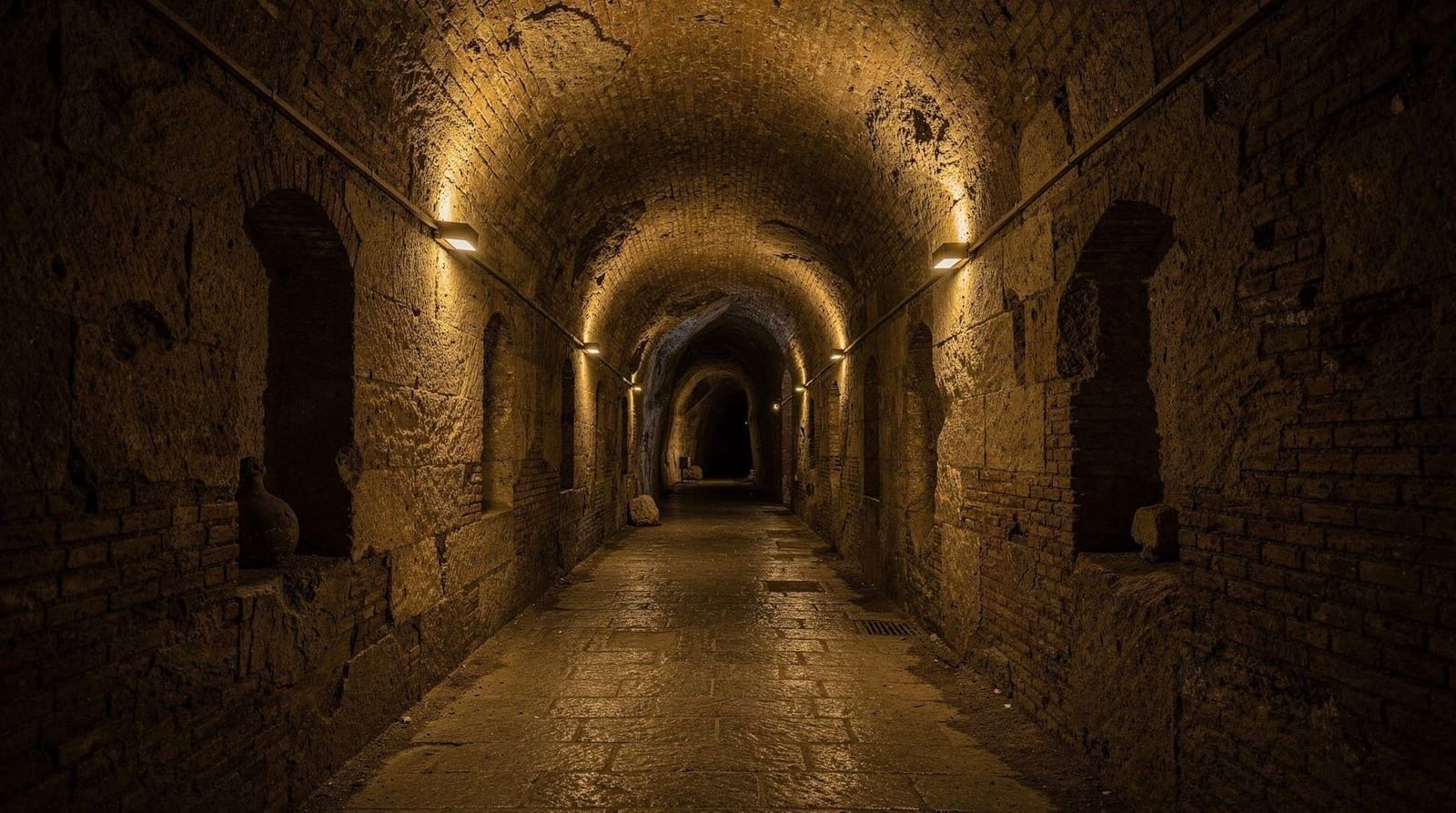
The Baths of Caracalla, built between 212 and 217 CE during the reign of Caracalla, are one of the largest surviving Roman structures in Rome. Beneath the baths — in a service corridor that the bath complex required for fuel and maintenance — a mithraeum was installed, taking advantage of the permanently dark and cave-like tunnel environment.
What was found
The Caracalla mithraeum was discovered during 19th-century excavations of the baths’ underground service level. The site preserves painted decoration on the curved tunnel ceiling and a cult niche where the tauroctony would have been displayed. The tauroctony itself was removed and is now in the Vatican Museums; the physical space is what remains accessible.
The Caracalla mithraeum is one of the larger cult rooms known in Italy, which together with its location in the baths’ service area suggests it may have served the substantial population of workers, freedmen, and imperial slaves who maintained the complex.
Visiting logistics
The Baths of Caracalla include an underground tour that accesses the service level and the mithraeum. This tour requires booking separately from the standard surface-level visit. See the Baths of Caracalla guide for full details. The combination of the impressive above-ground ruins and the mithraeum below makes Caracalla one of the most layered single-site visits in Rome.
The Mithraeum of Barberini
The Mithraeum of Barberini, beneath a private building near Piazza Barberini, is one of the best-known mithraea in Roman scholarship primarily because of its exceptional tauroctony marble relief, now in the Vatican Museums. The physical site — a well-preserved tunnel and cult room — is not routinely open to the public but is occasionally included in special open-house days organized by the Soprintendenza Speciale di Roma or by specialist archaeological tour operators.
If this site is a priority, check the Giornate FAI (Italian heritage open days, typically held in March and October) and similar events — the Barberini mithraeum occasionally appears on these lists.
The Mithraeum of Santa Prisca
The Mithraeum of Santa Prisca on the Aventine Hill, beneath a church of the same name, is one of the most archaeologically significant mithraea in Rome, though it is not currently open for regular visits. Discovered in the 1930s, it contains remarkable painted decoration — including a rare Mithraic procession scene — and inscriptions that provide evidence for the ritual practices of the cult in unusual detail.
Access is occasionally possible via the church or through specialist archaeo-cultural organizations. Check with the Pontificio Istituto di Archeologia Cristiana, which has historical involvement with the site.
How to plan a mithraeum visit
For most visitors, San Clemente is the essential mithraeum visit: accessible, explained, and set in the unmissable context of the layered basilica. Add the Circus Maximus mithraeum if you are visiting the Aventine/Circo Massimo area. Add the Caracalla underground if you are visiting the baths complex, which is worthwhile in its own right.
The three sites together form a coherent picture of Mithraic practice across different social settings: the San Clemente mithraeum served an urban Celio neighborhood community; the Circus Maximus site served a large commercial district; the Caracalla site served the infrastructure workforce of an imperial monument.
For a comparative view of all underground Rome’s sites and practical advice on combining them, see the underground Rome tours compared guide.
The three accessible sites compared:
| Site | Preservation | Guide required? | Best paired with |
|---|---|---|---|
| San Clemente | Excellent — intact triclinia and apse | No, self-guided with panels | Celio neighbourhood, Colosseum |
| Circus Maximus | Good — original altar in situ | Access varies, check current status | Aventino keyhole, Circus Maximus |
| Baths of Caracalla | Good — painted tunnel ceiling | Yes, separate underground tour | The baths’ main ruins above |
If you can only visit one, San Clemente is the clearest and most consistently accessible choice — it also requires no separate booking beyond the basilica’s own underground ticket.
The disappearance of Mithraism
One of the most striking facts about the Mithraic cult is the speed of its disappearance. In 380 CE, the Edict of Thessalonica made Christianity the official religion of the Roman Empire and began active suppression of competing cults. Within a few decades, Mithraism had effectively ceased to exist as a practised religion. The mithraea were sealed, smashed, or built over.
Some were converted to Christian use — the early church often found it expedient to consecrate sites already associated with sacred practice, just as it converted Roman temples into churches. San Clemente is the most famous case, but it is far from unique.
The disappearance of Mithraism left archaeology as the only window into the religion. No Mithraic scriptures were preserved; no theological works, no commentaries, no hymns. What the initiates believed, what the rituals meant to them in the first person, what the seven grades of initiation promised — all of this is lost, visible only in inference from the physical remains.
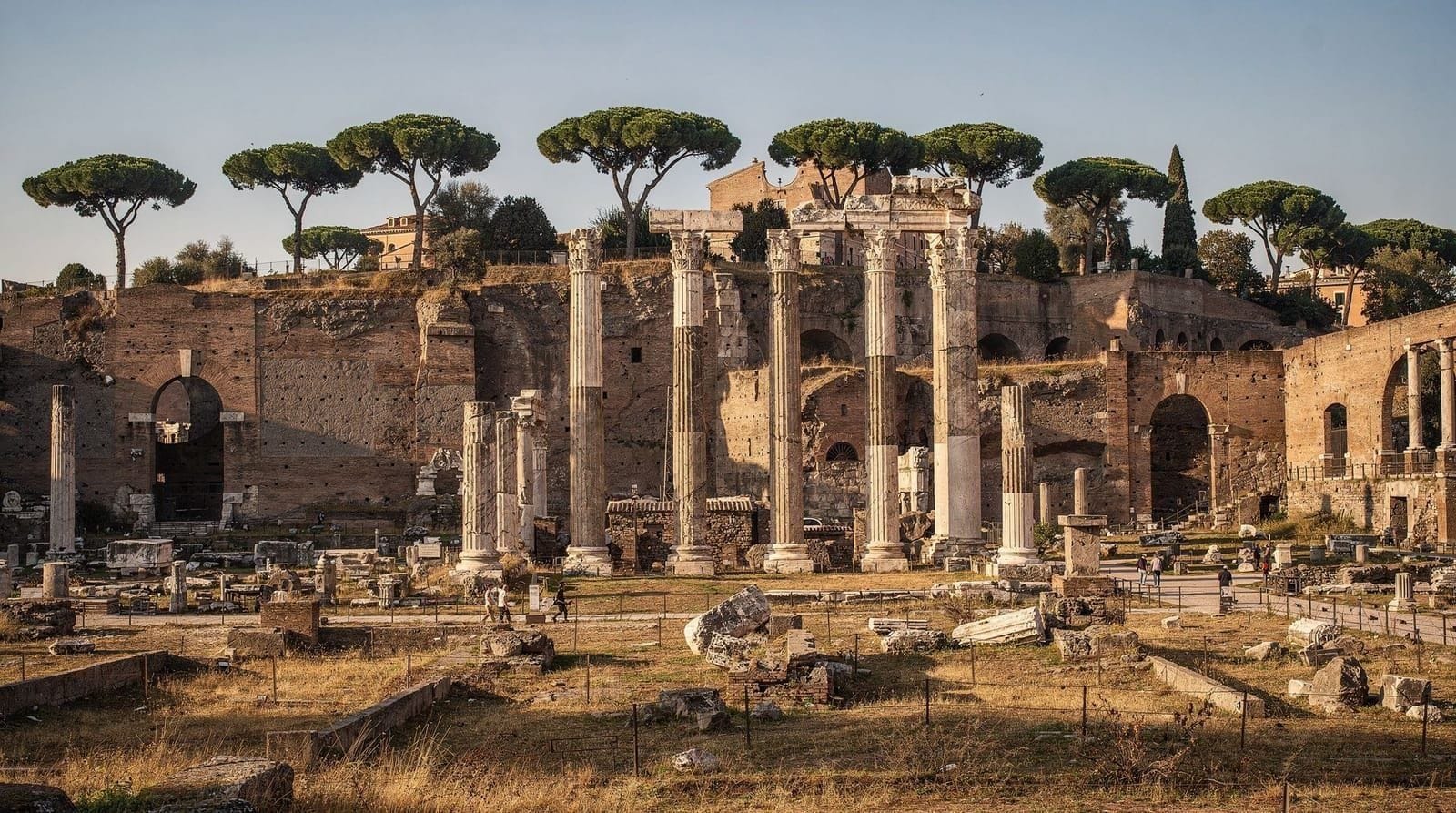
Walking through a mithraeum is therefore a different kind of historical experience from walking through the Forum or the Colosseum. Those sites are richly documented; we know who built them, why, and how contemporaries understood them. The mithraea are fundamentally mysterious in a way that the public monuments of Rome are not. They are the trace of a religion that chose, by its own principles, to keep no record.
For historical context on Rome’s ancient religions, see the Rome history guide and the Roman mythology and sacred sites guide.
How archaeologists rediscovered a lost religion
Almost everything known about Mithraism has been pieced together from physical remains rather than surviving texts, which makes the archaeology itself part of the story worth understanding before a visit. Nineteenth- and early twentieth-century excavations — often incidental, uncovered while building foundations, sewers or roads through the ancient city — turned up the majority of Rome’s known mithraea, San Clemente’s among them, found during renovation work in the 1860s led by an Irish Dominican priest. Franz Cumont’s early twentieth-century scholarship first attempted a systematic account of Mithraic religion from this scattered archaeological record, though later historians have revised many of his conclusions as more sites were excavated and inscriptions reassessed. The ongoing excavation at Circus Maximus is a reminder that this process is not finished — new sections of the site have been opened to varying degrees over the past decade as conservation work progresses, meaning the accessible picture of Mithraism in Rome is still, in a real sense, being assembled.
After-hours underground Rome tour — an evening visit to the crypts, catacombs, and bone chapel when crowds have thinned and the atmosphere is most intense.Frequently asked questions about Mithraeum sites in Rome: the secret cult underground
What is a mithraeum?
Was Mithraism a competitor of early Christianity?
Why are mithraea always underground?
Who followed Mithras in Rome?
How many mithraea are there in Rome?
Is photography allowed in the mithraea?
Top experiences
Bookable activities with verified prices and instant confirmation on GetYourGuide.