Doria Pamphilj Gallery: Rome's grandest private collection
Rome: Guided City Center Evening Sightseeing Walking Tour
What makes the Doria Pamphilj Gallery worth visiting in Rome?
The Doria Pamphilj holds approximately 400 paintings and a suite of ornate state apartments inside a palazzo still owned and lived in by the Doria Pamphilj family. The star piece is Velázquez's Portrait of Pope Innocent X (1650), considered one of the greatest painted portraits in European art. Admission is €16 adult; no advance booking required; significantly less crowded than Rome's other major museums. Allow 1.5–2 hours.
A living palazzo that Rome’s crowds have not yet discovered
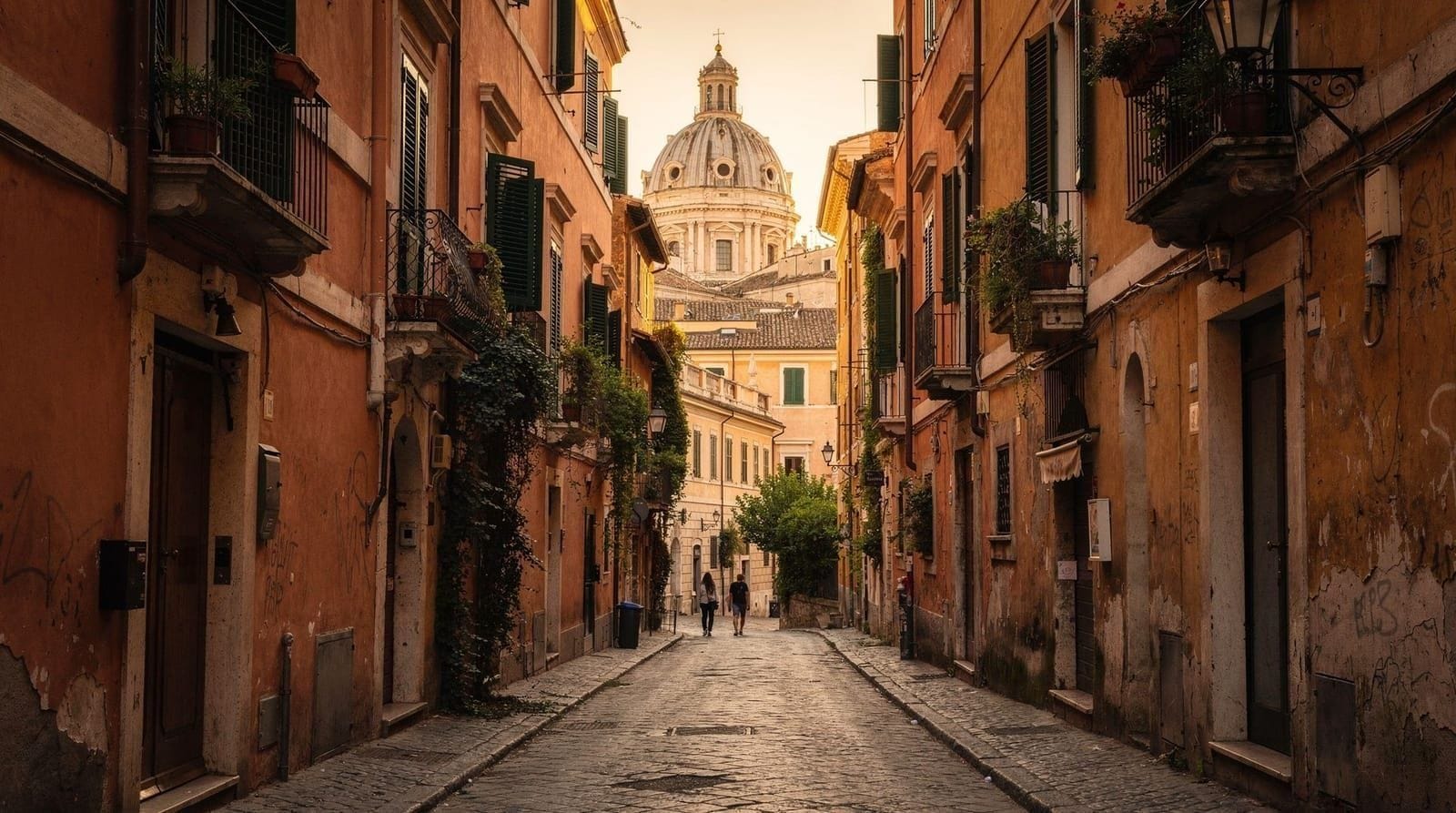
The Palazzo Doria Pamphilj stands on Via del Corso, Rome’s main north-south thoroughfare, with a façade so long (the entire block between Piazza del Collegio Romano and Via della Gatta) that most pedestrians walk past without registering it as anything other than an ordinary building. Inside is one of Rome’s most significant private art collections — still owned and partially inhabited by the family that assembled it — and one of the city’s most chronically undervisited major attractions.
| Where | Via del Corso 305, Centro Storico |
| Cost | around €16 adult, audio guide included |
| Time needed | 1.5–2 hours |
| Booking | not required — walk-up entry almost always available |
| Best time | weekday afternoons for the quietest visit |
The gallery contains approximately 400 paintings and sculptures spanning the 15th through 18th centuries. The collection’s centrepiece is Diego Velázquez’s Portrait of Pope Innocent X (1650), one of the most discussed painted portraits in Western art history. It hangs in the gallery accompanied by Gian Lorenzo Bernini’s preparatory terra-cotta bust of the same pope — the contrast between Velázquez’s painted psychological study and Bernini’s sculptural idealisation is one of the most intellectually stimulating pairings in any Rome museum.
The Pamphilj family and the making of the collection
The Pamphilj family rose to prominence through Giovanni Battista Pamphilj’s election as Pope Innocent X in 1644. Like virtually all papal families of the period, the Pamphilj used the pope’s reign to consolidate wealth, commission art, and acquire property. The Piazza Navona complex — Sant’Agnese in Agone church and the Pamphilj palace on the piazza — was the family’s most visible urban intervention.
The Palazzo Doria Pamphilj on Via del Corso grew through a series of mergers and purchases over the 16th and 17th centuries. The Doria name was added in the 18th century through marriage with the Genoese Doria maritime family. The combined Doria Pamphilj family retained the collection through the 19th and 20th centuries when many comparable Italian aristocratic collections were sold to the state or broken up — a significant act of stewardship that means the gallery retains its original character as a private collection rather than a reconstructed or curated public one.
Jonathan Pamphilj, whose voice narrates the English audio guide, is a current family member. The narration covers not just art history but family stories and context — the kind of information that printed panels cannot easily convey.
The Velázquez portrait: what makes it extraordinary
Diego Velázquez painted the Portrait of Pope Innocent X during an extended visit to Rome in 1649–1650. He had been in Rome once before (1629–1631) and used the second visit primarily to study ancient sculpture and Raphael’s works. The Innocent X portrait was arguably the unplanned masterwork of the trip.
The portrait shows the 76-year-old pope three-quarter length, seated, dressed in white and red vestments. The red tonality is extraordinary — the crimson of the chair, the deeper red of the mozzetta (shoulder cape), the warm tones of the velvet background. Within this saturated field, the face emerges with forensic clarity.
The expression is the famous problem. Innocent appears simultaneously authoritative, suspicious, cunning, and old. The eyes do not make comfortable contact; they assess. The mouth is set. The hands — one gloved, one holding a letter — are painted with remarkable economy. This is not a diplomatic portrait designed to project papal grandeur; it is a study in character.
Velázquez reportedly made a preparatory portrait of the pope’s barber, Juan de Pareja (now in the Metropolitan Museum, New York), before tackling the pope himself — a practice piece to readjust his eye after years spent at the Spanish court painting what the court wished to see rather than what was actually there.
The papal reaction — “troppo vero,” too true — captures the portrait’s quality precisely. It has been too true for five centuries.
The Bernini bust comparison
Immediately near the Velázquez portrait (depending on the current gallery hang), the gallery displays Bernini’s terra-cotta bust of Innocent X, made as a preparatory model. The comparison reveals everything about the difference between Velázquez’s painted psychology and Bernini’s sculptural diplomacy.
Bernini’s Innocent is pope-like: weighty, authoritative, benign. Velázquez’s Innocent is a man with history behind his eyes. Both are products of the same brief period (Velázquez visited Rome in 1650; Bernini had access to the pope over a longer period through his work on the piazza and church). Both are masterworks in their medium. The difference in the characterisation of the same face is a permanent lesson in how medium and purpose shape representation.
Caravaggio in the Doria Pamphilj
The two early Caravaggios — The Rest on the Flight into Egypt and The Penitent Magdalene — date from approximately 1595–1596, when Caravaggio was in his early twenties and beginning to develop the style that would transform European painting.
The Rest on the Flight into Egypt shows the Holy Family resting during the escape to Egypt, with a winged angel playing violin from a music score held by the elderly Joseph. The angel’s back is turned toward the viewer; the sheet music is readable — scholars have identified it as a motet by Franco-Flemish composer Noel Bauldewijn. The sleeping Madonna and Christ child have a tenderness unusual for Caravaggio; this is not yet the confrontational realism of his mature work. The detail of the musical score and the natural quality of the sleeping figures point toward the direction his art was about to take.
The Penitent Magdalene shows a woman (later identified as Mary Magdalene through tradition) seated on the floor with downcast eyes, jewellery on the ground beside her — the trappings of her previous life abandoned. The model is the same young woman who appears in several early Caravaggio works. The figure’s ordinariness is the point: this is not a celestial vision of the Magdalene but a recognisable Roman woman in a moment of private emotion. Cardinal Francesco Maria Del Monte, Caravaggio’s first significant patron, reportedly owned this painting.
For the full Caravaggio context in Rome, see our Caravaggio trail guide — covering all the sites where his work can be found across the city’s churches and museums.
The state apartments
The gallery visit includes access to the ornate state apartments — four rooms decorated in the 18th century to the highest standards of aristocratic display. These are not reconstructed period rooms; they are original spaces with original furniture, still maintained by the family.
Sala dei Velluti (Velvet Room): Named for the velvet wall coverings, this room contains portrait paintings of family members and visitors to the palazzo over several centuries — an aristocratic portrait gallery of the kind that is becoming increasingly rare as country houses and palaces are sold or opened to broader institutional management.
Sala Gialla (Yellow Salon): The yellow damask walls and gilded furniture represent a late-18th-century decorative scheme. The room functions as a formal reception space and contains several Flemish landscape panels.
Galleria degli Specchi (Hall of Mirrors): Modelled on Versailles (as virtually every 18th-century European state apartment was), with floor-length mirrors alternating with windows on the garden side. The views into the interior courtyard garden are pleasant; the decorative detail of the ceiling is worth examining.
Sala da Ballo (Ballroom): The grandest room, used for receptions and still occasionally for family and cultural events. The scale is intimate by palace standards — this is an urban palazzo, not a country house, and the proportions are calculated for a city setting.
Rome evening walking tour — explores Centro Storico including Piazza Navona and Via del Corso, the historic context for understanding the Pamphilj family’s urban influenceThe painting galleries: the full collection
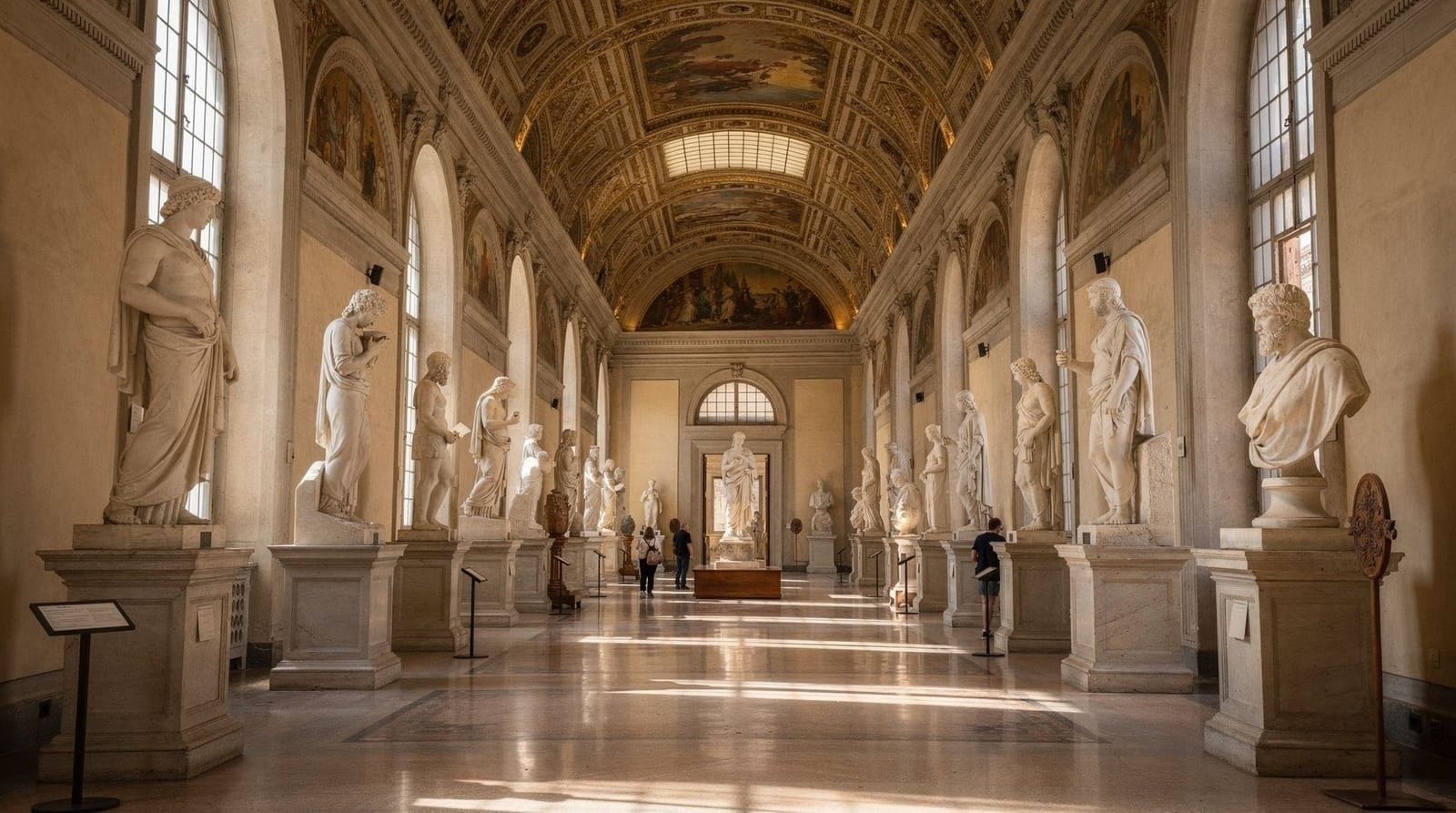
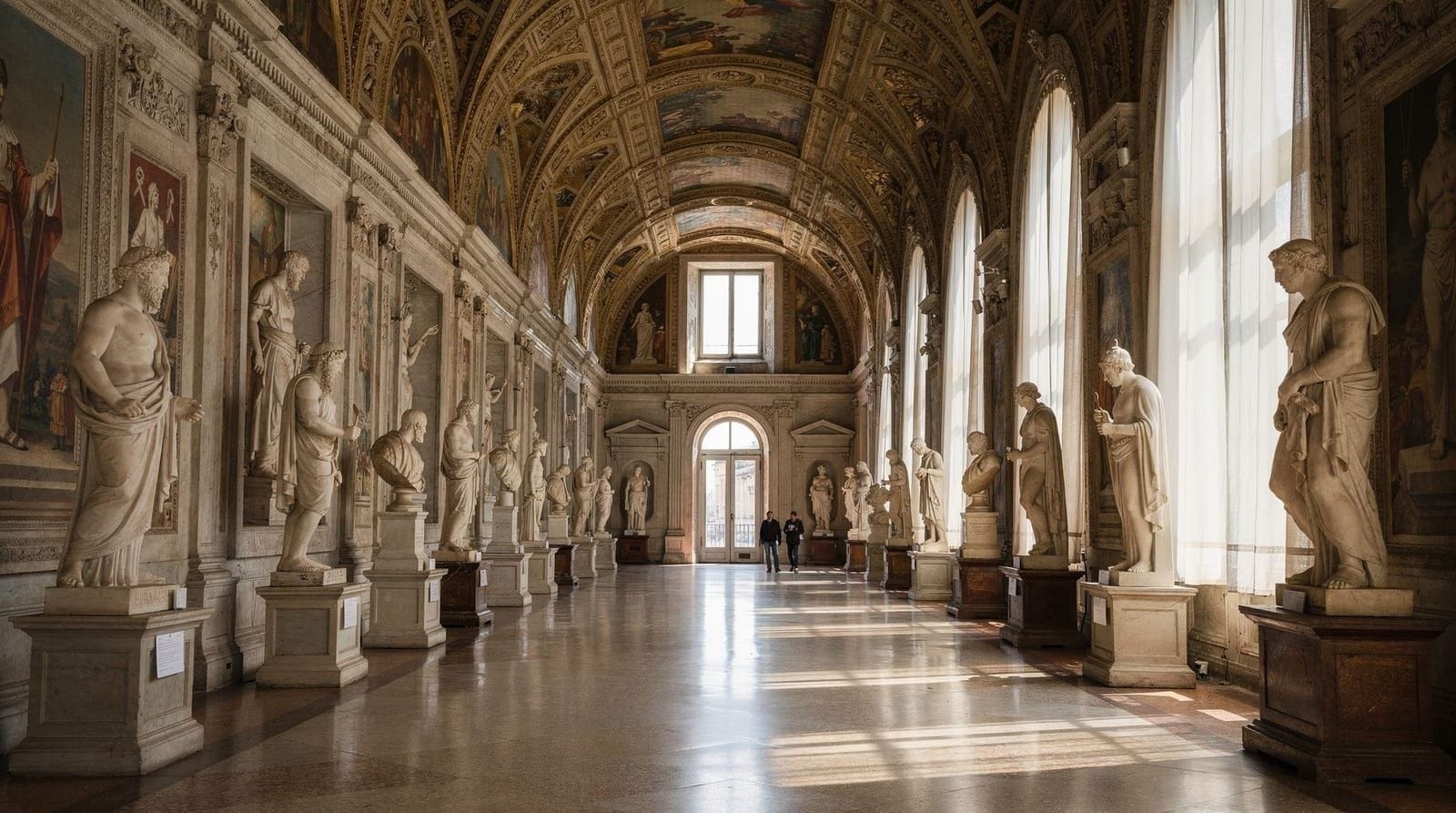
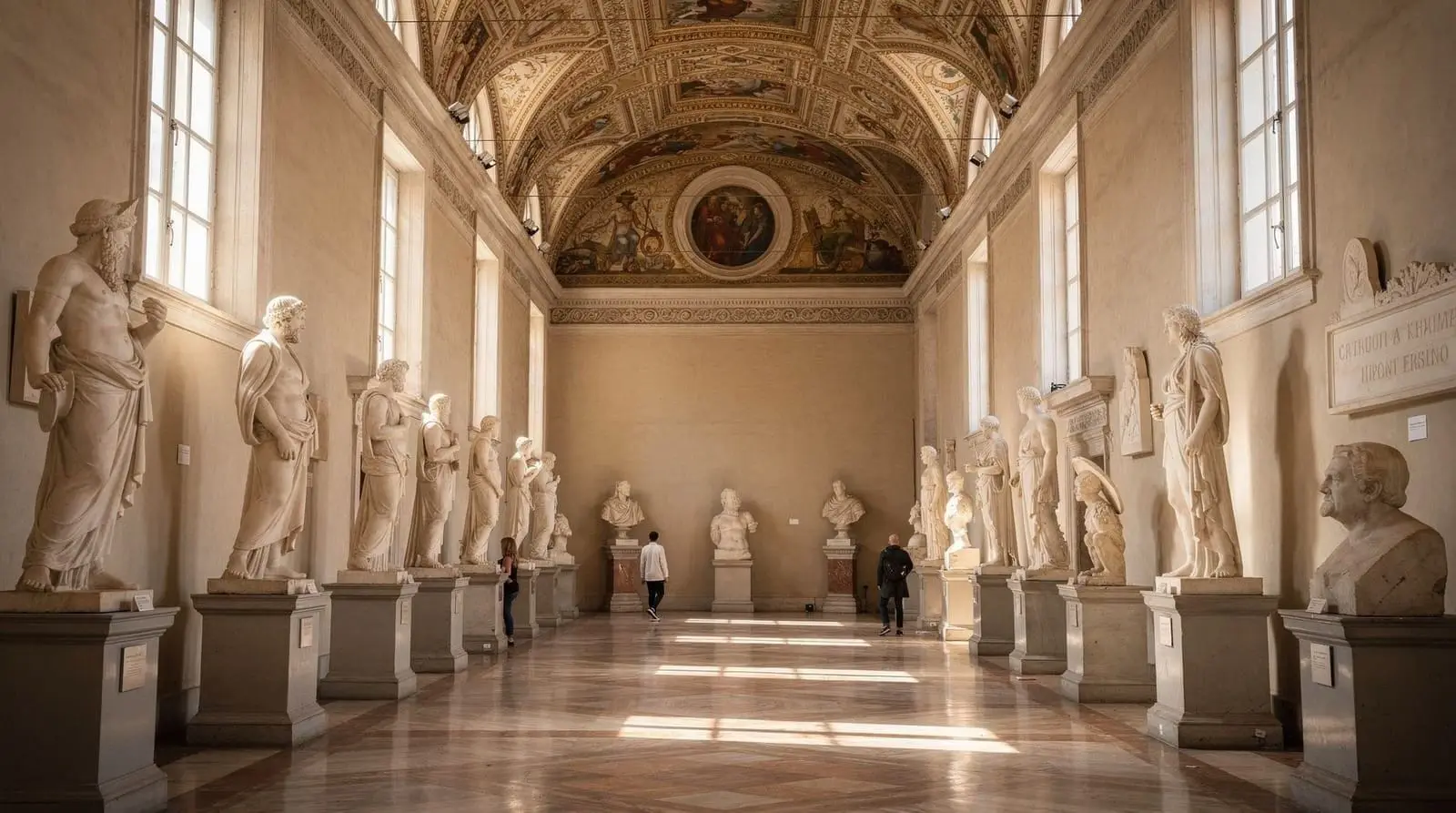
Beyond the star works, the Doria Pamphilj collection rewards systematic exploration. The gallery is hung in approximately the way it would have been in the 18th century — works stacked multiple rows high, salon-style, in large interconnected rooms. This density can be initially overwhelming but becomes rewarding once you stop expecting to engage with every piece and instead move systematically toward what interests you.
Flemish and Dutch section: Jan Brueghel the Elder’s small panel paintings of landscapes and village scenes are exceptional — meticulous in detail, sophisticated in their use of atmospheric light. The Doria Pamphilj Brueghels are some of the finest examples of his work in Italy.
Italian Renaissance paintings: A Portrait of a Young Man attributed to Raphael and several works by Parmigianino and Sebastiano del Piombo provide a pre-Baroque context for the Caravaggio works.
Annibale Carracci: Several large works by the Bolognese master who was Caravaggio’s principal contemporary and rival for defining the direction of 17th-century painting. Carracci’s approach (classical composition, idealised form) versus Caravaggio’s (confrontational realism, chiaroscuro) represents the fork in the road of Western painting.
Doria Pamphilj vs Rome’s other major galleries
Visitors with limited time often ask which private-collection museum to prioritise. This comparison should help.
| Gallery | Signature work | Booking | Crowds | Best for |
|---|---|---|---|---|
| Doria Pamphilj | Velázquez’s Innocent X | Not required | Light | Paintings, no-booking spontaneity |
| Borghese Gallery | Bernini sculpture, 6 Caravaggios | Mandatory, timed slots | Heavy | Sculpture, first-time visitors |
| Capitoline Museums | Capitoline Wolf, Marcus Aurelius | Not required | Moderate | Ancient sculpture, Roman history |
If you can only fit one private-palazzo museum into a short Rome trip and sculpture matters more to you than paintings, choose the Borghese Gallery and book weeks ahead. If you would rather walk in without planning and spend unhurried time with paintings, Doria Pamphilj is the better fit — and it pairs naturally with a Centro Storico afternoon in a way the Borghese, set in its own park, does not.
Who should skip it
Doria Pamphilj is not for every visitor. If your Rome time is limited to 2 days and you have not yet seen the Vatican Museums, the Colosseum, or the Borghese Gallery, prioritise those first — Doria Pamphilj is a rewarding second or third museum, not a must on a first visit unless painting history specifically interests you. Visitors travelling with young children who tire quickly of gallery-hopping may find the dense salon-style hang overwhelming; cap the visit at 60–75 minutes for that audience. For Rome’s best museums overview, see how this fits against the city’s full museum landscape.
Why the collection stayed intact
Many comparable Italian aristocratic collections were broken up, sold piecemeal, or nationalised across the 19th and 20th centuries as families faced financial pressure or political upheaval. The Doria Pamphilj collection’s survival as a coherent private holding — rather than being dispersed across auction houses and foreign museums, as happened to several other Roman noble collections — is itself notable. The family opened the gallery to paying visitors in the 20th century specifically as a way to fund the collection’s maintenance without selling individual works, a model that has kept the Velázquez, the Caravaggios, and the rest of the 400-piece collection together and viewable in their original setting rather than scattered across institutions worldwide. This is part of why the gallery feels different from a state museum: every object remains where a specific family placed it, often generations ago, rather than being arranged by a curator for didactic effect.
Practical information for 2026
Ticket: €16 adult; no booking fee; no timed-entry system. You can arrive and purchase tickets at the door. The gallery is almost never sold out — this is one of the few major Rome museums where spontaneous visits are consistently feasible.
Hours: Daily 09:00–19:00 (last entry 18:00). Open Monday (unlike many Rome museums). Closed Christmas Day and New Year’s Day.
Audio guide: Included in the ticket price — the narration by Jonathan Pamphilj is one of the most compelling audio guides in Rome and is strongly recommended as the primary interpretive tool for the visit.
Getting there: Via del Corso 305, in the Centro Storico. Nearest metro: Spagna (Line A) or Barberini (Line A), both about 15 minutes’ walk. Bus stops on Via del Corso (many routes). From the Pantheon, approximately 5 minutes’ walk east along Via del Seminario then north. From Piazza Navona, approximately 10 minutes’ walk east.
Photography: Permitted without flash in the gallery; rules on the state apartments may differ — check signage.
Crowds: Among Rome’s most pleasant museum experiences precisely because visitor numbers are modest. Even in high season, the gallery rarely feels crowded. Weekend mornings (10:00–12:00) are slightly busier; weekday afternoons are the quietest.
Combining Doria Pamphilj with a Centro Storico afternoon
The gallery’s Via del Corso location puts it in the middle of Rome’s most walkable historic core. A half-day combining the gallery with the surrounding neighbourhood is one of Rome’s most satisfying low-key culture days.
Morning at Doria Pamphilj (09:00–11:30): The gallery’s 2-hour self-guided visit leaves the morning free for a second activity.
Lunch near Campo de’ Fiori (20 minutes’ walk): The market area around Campo de’ Fiori has several good trattorias — try the area streets rather than the campo itself where prices are tourist-elevated.
Afternoon at the Pantheon (10 minutes from Doria Pamphilj): The Pantheon is the obvious pairing — Rome’s best-preserved ancient building, with tickets now required (€5 standard, more for guided access). The Pantheon guide covers what to look for.
Early evening: Piazza Navona (15 minutes’ walk from Pantheon): The piazza’s best quality is in the early evening when the light is golden and the crowds thin marginally. Bernini’s Fountain of the Four Rivers in the piazza’s centre was commissioned by Pope Innocent X — the same pope whose portrait is in the Doria Pamphilj gallery. See our Piazza Navona guide for the full Bernini context.
For neighbourhood context and local recommendations around the gallery, see the Centro Storico destination guide.
Trevi, Pantheon and Piazza Navona walking tour — covers the Centro Storico sites adjacent to the Doria Pamphilj in a guided 2-hour walkFrequently asked questions about Doria Pamphilj Gallery: Rome's grandest private collection
Who was Pope Innocent X and why is the Velázquez portrait so famous?
Is the Doria Pamphilj Gallery still a private residence?
What Caravaggio works are in the Doria Pamphilj collection?
How does the Doria Pamphilj compare to the Borghese Gallery?
What else is displayed in the Doria Pamphilj Gallery?
Are children welcome at the Doria Pamphilj Gallery?
Top experiences
Bookable activities with verified prices and instant confirmation on GetYourGuide.