Ostia Antica day trip: Rome's best-kept ancient site
From Rome: Ostia Antica Guided Half-Day Trip by Train
Duration: 4 hours
How do you get to Ostia Antica from Rome?
Take Metro B to Piramide, then the Roma-Lido regional train to Ostia Antica station (one stop after Ostia Lido Centro). The whole journey takes about 45 minutes from Termini. The same standard ATAC €1.50 ticket covers the full journey. Site entry is around €12. Total cost for the day is under €30 including lunch.
The ancient city most visitors to Rome never find
Ostia Antica is the kind of place that makes you feel the travel guides are keeping a secret. Rome’s ancient port city sits 23km west of the city centre, reachable by a regular commuter train for €1.50, and it offers something genuinely rare: a complete Roman city, largely unexcavated by tourist standards, almost always far quieter than Pompeii, and containing some of the best-preserved Roman apartment buildings, mosaics, and civic infrastructure anywhere in the world.
It is not a highlight reel of famous monuments. It is a neighbourhood — a whole functioning city that you walk through, street by street, as the Romans did for five centuries.
| Getting there | Metro B to Piramide + Roma-Lido train, around 45 min |
| Cost | Around €1.50 transport + €12 entry |
| Time needed | Half day (3–4 hours); a full day if thorough |
| Crowds | Consistently quiet, even in high season |
| Best for | Roman apartment buildings, guild mosaics, an unhurried ancient city |
Getting to Ostia Antica from Rome
The route: Metro B to Piramide station, then the Roma-Lido regional train to Ostia Antica station. The train journey takes about 35–40 minutes; total journey from central Rome is around 45 minutes.
The ticket: A standard ATAC single ticket (€1.50, valid 100 minutes) covers the Metro and the Roma-Lido train in a single transaction. Validate at the Metro turnstile before boarding. Do not assume a new ticket is required at Piramide — the same validated ticket is valid for the Roma-Lido train within the 100-minute window.
Frequency: Trains run every 15–20 minutes during the day. Buy a return ticket before you board at Piramide (you cannot rely on phone signal at Ostia Antica station for purchasing).
Exit the train at Ostia Antica — not Ostia Lido Centro or Lido di Ostia, which are further along the line toward the beach. The archaeological site entrance is a 5-minute walk from the station.
By car: The Via del Mare (SS8) runs directly from Rome to Ostia Antica. Parking is available outside the site. Do not drive from the historic centre — ZTL restrictions cover most central areas, and camera-issued fines are charged automatically to rental cards. See the Rome driving and ZTL guide for details.
What you will find at Ostia Antica
Ostia was founded in the 7th century BCE, according to Roman tradition, as Rome’s first colony. By the 1st and 2nd centuries CE it had grown into a city of 50,000–100,000 people, serving as the main commercial port and supply hub for Rome. It was not a leisure town or imperial retreat — it was a working city, full of merchants, sailors, slaves, tradesmen, and their families.
This commercial reality is what makes Ostia different from sites like Tivoli or the Roman Forum. You are walking through a place that was entirely ordinary by Roman standards — which is extraordinary for us.
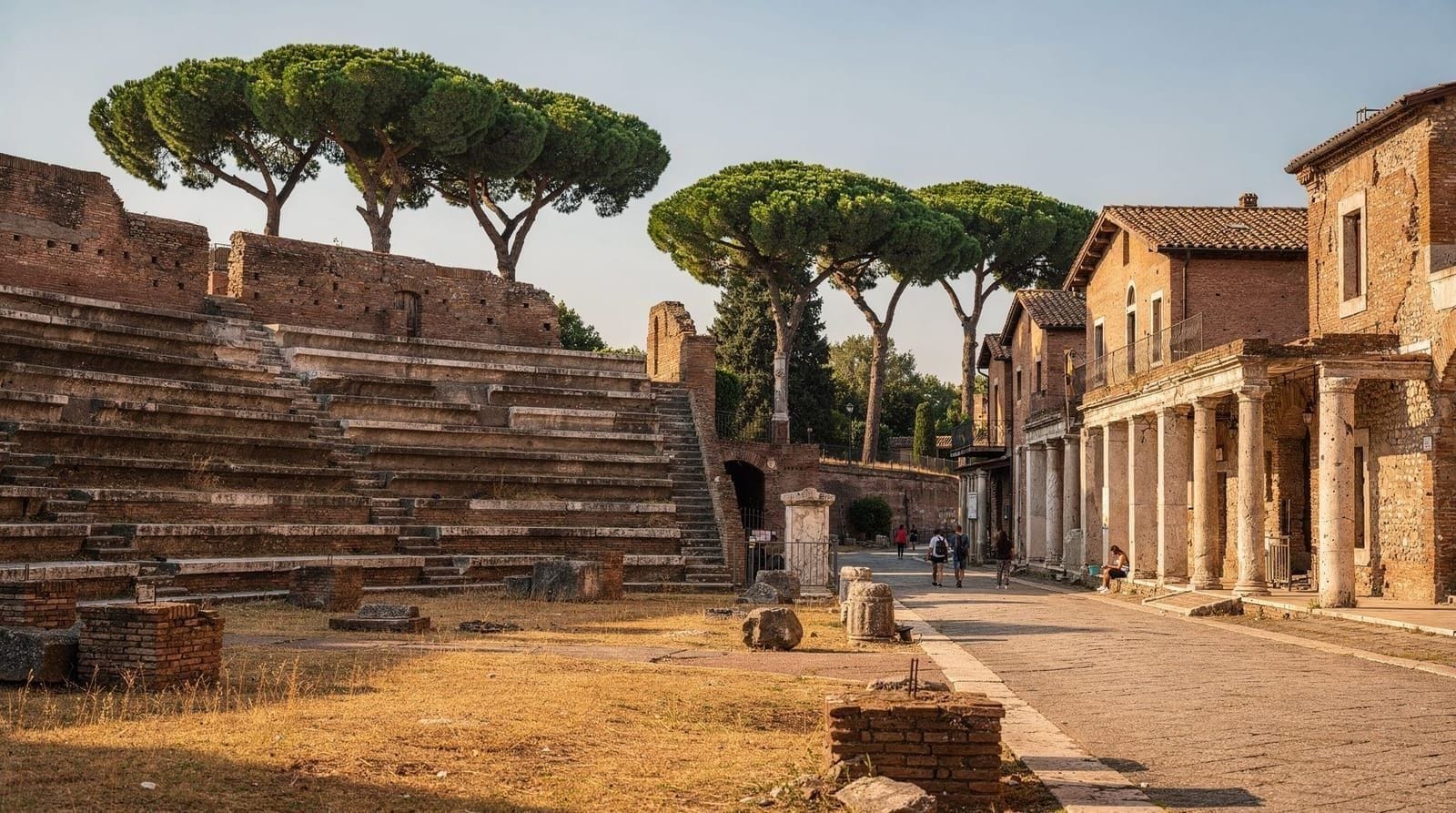
The Decumanus Maximus: The main street of Ostia, running east–west for about 1.5km. Walking its full length is the backbone of any visit. The paving stones are original Roman stone, worn smooth by two millennia. On either side, the facades of shops, taverns, apartment buildings, and public buildings press in continuously.
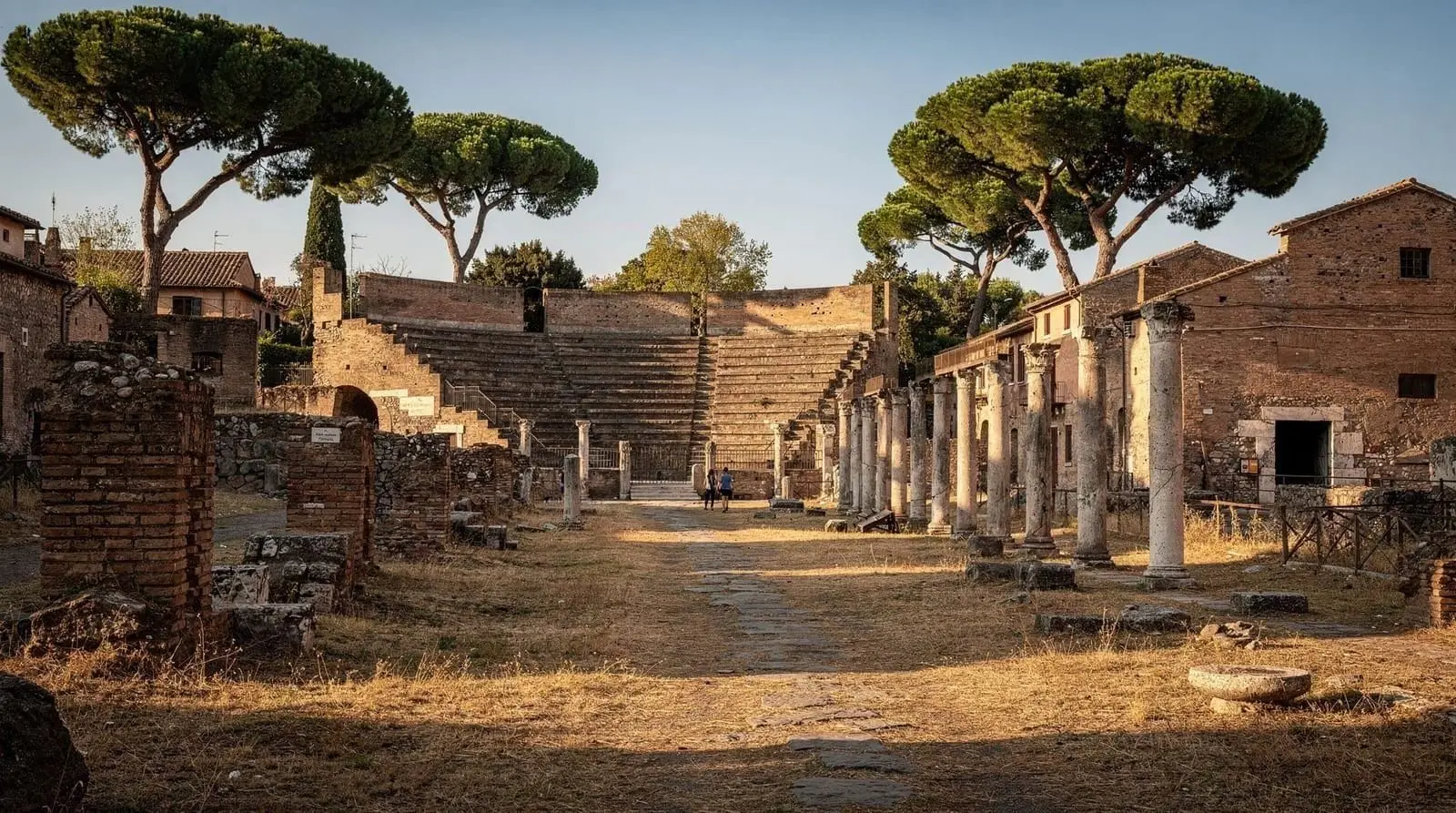
The Theatre (Teatro di Ostia): Built under Augustus (around 12 BCE) and expanded to hold 3,000 spectators. The stage and seating tiers are largely intact. Standing on the stage facing the rows of seats gives a visceral sense of Roman civic entertainment. In summer, the theatre is occasionally used for live performances.
Piazzale delle Corporazioni (Square of the Guilds): The headquarters of the commercial guilds that operated Ostia’s import-export trade. The floor of the colonnaded square is covered in black-and-white mosaic cartouches depicting each guild’s specialty — an elephant for ivory traders, a lighthouse for grain merchants, a dolphin for fishers, an anchor for sailors. The imagery is specific, commercial, and visually vivid. This is one of the finest mosaic floors in Italy and it receives a fraction of the attention of the Vatican mosaics.
Insulae (apartment buildings): Ostia preserves several multi-storey apartment buildings — the insulae that housed the Roman urban poor — better than anywhere else in the Roman world. The Insula di Diana (near the central part of the site) stands three storeys, with central light shaft, ground-floor taverns, and the original staircase. This is how the vast majority of Romans actually lived, and it is not easy to see this at Pompeii (a wealthier, more villa-centric town) or in Rome itself.
The Baths of Neptune: One of the largest bath complexes in Ostia, with spectacular geometric black-and-white mosaics on the floor of the entrance hall — Neptune driving his sea-horse chariot among marine creatures. The mosaics are preserved in place, uncovered, walked around on boardwalks.
The Forum and Capitolium: Ostia’s main civic forum, with the Capitolium temple (dedicated to Jupiter, Juno, and Minerva) dominating its northern end. The temple is the largest and best-preserved structure in the city.
The Thermopolium (ancient fast-food counter): A preserved taberna with its marble serving counter still in place, complete with carved-out circular holes where terracotta pots of food were kept warm. The walls retain their painted menu — a vivid, unsentimental window into Roman daily commercial life.
Train vs guided tour: the honest assessment
Going independently is perfectly viable. A good site map (available at the entrance) and the on-site information panels cover the main highlights. The Roma-Lido train costs €1.50 each way; entry is €12. Total spend is around €15 for transport and entry, plus lunch.
The case for a guided tour: Ostia Antica lacks the interpretive density of Pompeii. Many of the side streets, smaller mosaics, and building interiors are unlabelled or labelled only in Italian. A licensed guide — particularly one with an archaeological background — reveals a layer of context invisible to independent visitors. The mosaics of the Piazzale delle Corporazioni, for example, are individually identifiable by guild if you know what you are looking at; without that knowledge, they are decorative but cryptic.
A half-day guided tour from Rome costs approximately €35–65 per person and typically includes transport and entry. For archaeology enthusiasts, this is worth considering. For general visitors, independent is fine.
Guided half-day trip to Ostia Antica by train from Rome — includes entry ticket and licensed guideSuggested route through the site
The site entrance is on the eastern side; the Decumanus Maximus runs west from the entrance toward the Forum.
1. Baths of Neptune (entrance area): The mosaics are immediately visible from the upper viewing path. Start here before crowds build.
2. The Theatre and Piazzale delle Corporazioni: Walk through the theatre, then cross to the guild square. Spend 20–30 minutes reading the mosaics.
3. The Insulae district (Insula di Diana, Casa di Diana): Turn north off the Decumanus to see the apartment buildings. The Insula di Diana has a ground-floor tavern with a marble counter and a small courtyard.
4. The Forum and Capitolium: The civic heart of the city. Climb the Capitolium stairs for a view over the forum.
5. The Thermopolium: On the southern side of the Decumanus near the centre of the site — a short detour worth making.
6. The western baths and suburban areas: If time allows, the western half of the site becomes progressively quieter and more atmospheric. The House of Amor and Psyche (west end) has particularly well-preserved marble floors.
Practical: The site has a cafe near the theatre (basic sandwiches, coffee, cold drinks). Opening hours are generally 09:00 to approximately one hour before sunset. Wear walking shoes; the site is entirely unpaved outside the main street.
What most visitors miss
The mosaics beyond the Piazzale delle Corporazioni. The site contains dozens of mosaic floors in private houses and baths away from the main tourist route. A site map marks them; most are accessible during regular opening hours without a guide.
The Mitreo of the Seven Spheres. Ostia has more surviving Mithraic temples (mithraea) than anywhere else in the Roman world — partly because Mithraism was popular with the merchant and military classes who lived here. The Mitreo of the Seven Spheres (off the Decumanus toward the southern edge of the site) has a partially preserved mosaic floor with the symbolic spheres of the Mithraic initiation grades. Usually quiet and often overlooked.
The horrea (warehouses). The massive storage warehouses along the south of the site give the best sense of Ostia’s commercial function — enormous high-walled complexes that received the grain, oil, and wine shipments from across the Mediterranean before redistribution to Rome.
The view from the Capitolium steps. Looking south over the Forum from the Capitolium gives the best sense of the urban layout — the colonnaded forum, the surrounding temples, the layout of the city grid behind. A good spot for a quiet ten minutes.
Comparing Ostia Antica and Pompeii
If you are choosing between Ostia Antica and Pompeii, the honest comparison runs like this. See also the best day trips from Rome overview for the full ranking.
Pompeii is more dramatic — preserved by volcanic catastrophe at a single moment, with painted rooms, plaster casts of victims, and a narrative of sudden destruction that is emotionally powerful. The journey is longer (2h10 each way) and the site is considerably more crowded.
Ostia Antica is less famous but often more interesting to serious visitors. The preserved apartment buildings, the guild mosaics, and the commercial character of the site show a different and equally important face of Roman urban life. The journey is 45 minutes and the site rarely feels crowded. Cost is significantly lower.
You do not need to choose — if you have a week in Rome, both are worth doing. See the Pompeii from Rome guide for the full logistics, and the trains from Rome day trips guide for booking both rail journeys. The Ostia Antica destination page has local context on the area beyond the archaeological site.
Guided tour of Ostia Antica from Rome — walking the ancient streets with a specialist guideCombining Ostia Antica with the beach
The Roma-Lido line continues past Ostia Antica to Ostia Lido, the beach suburb of Rome. In summer, a morning at Ostia Antica followed by an afternoon at the beach is a natural combination. The beach at Lido di Ostia is urban and functional rather than beautiful — private lidi (beach clubs) charge €15–25 per person for a sun lounger and umbrella; a small public beach is available for free at Lungomare Paolo Toscanelli.
The beach is not spectacular. The ruins are. Prioritise accordingly.
If combining both, plan the ruins for the morning while temperatures are lower and the light is better for photography, then head to the beach in the afternoon once the site starts to feel more thoroughly explored. Bring a separate bag for beach items, since the archaeological site has no lockers.
Practical information
- Getting there: Metro B to Piramide, Roma-Lido train to Ostia Antica. 45 minutes total from central Rome. See Rome metro guide for Metro B orientation.
- Ticket price: €1.50 each way (standard ATAC ticket). Site entry approximately €12 full, €2 reduced.
- Opening hours: 09:00 to approximately one hour before sunset. Closed Mondays.
- Audio guide: Available at the entrance desk (approximately €5). Download offline before arriving if relying on a smartphone guide app.
- Facilities: Cafe and toilets near the theatre (centre of site). Toilets also at the entrance.
- Best months: April–June, September–October. See best time to visit Rome for seasonal planning.
- Guided tours: Half-day tours from Rome cost approximately €35–65 per person. See also our best day trips from Rome guide and day trips by train from Rome.
- Combine with: Tivoli day trip on a separate day for a complete ancient-Rome day-trip programme.
Frequently asked questions
Is Ostia Antica better than Pompeii?
Different, not better or worse. Ostia is closer (45 minutes vs 2h10), cheaper, and significantly less crowded. It shows Roman commercial and residential life with exceptional clarity. Pompeii is more dramatically preserved and more emotionally charged. If you can only do one, Pompeii is marginally more rewarding for most first-time visitors; if you are returning to Rome or have extra time, Ostia Antica is the better day trip by most practical measures.
Do I need to book tickets to Ostia Antica in advance?
Advance booking is not essential for most visits — Ostia Antica rarely sells out. In peak season (July–August weekends), booking online at coopculture.it avoids a small queue. If you are joining a guided tour, entry is handled by the tour operator.
Can I walk from Ostia Antica station to the site?
Yes — the station exit is about 400m from the site entrance. Turn left out of the station and follow the signs along Via dei Romagnoli. There is no shuttle.
How does Ostia Antica compare to Tivoli as a half-day option?
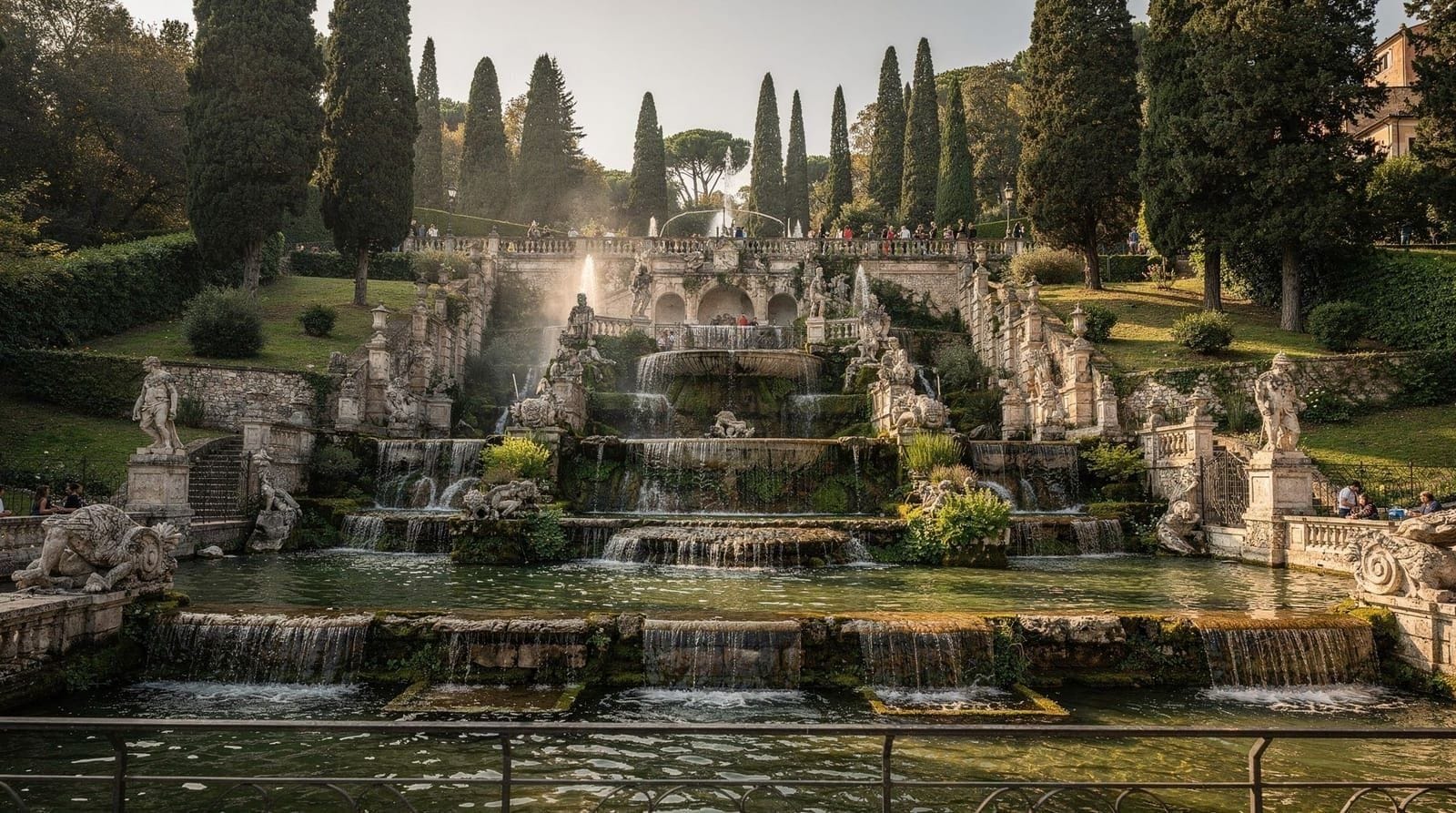
Both are under an hour from central Rome, but they show different sides of Roman life. Ostia Antica is a complete ancient city — streets, apartments, shops — while Tivoli centres on imperial and Renaissance villas (Hadrian’s Villa and Villa d’Este). See our dedicated Tivoli vs Ostia comparison for a full breakdown, but as a rule of thumb: choose Ostia for urban Roman life and mosaics, Tivoli for villa architecture and gardens.
A closer look at daily life in Ostia
What separates Ostia Antica from a typical ruins visit is how legible ordinary Roman life becomes once you know what to look for. The latrines near the Forum (a communal, multi-seat public toilet with a continuous water channel beneath) are a small but vivid detail that consistently surprises visitors — Roman public sanitation was social rather than private, and the room’s layout makes that immediately clear. Nearby, the firehouse of the Vigiles (Ostia’s fire brigade barracks) shows how the city organised emergency services for its densely packed insulae, a genuinely modern-feeling piece of civic infrastructure.
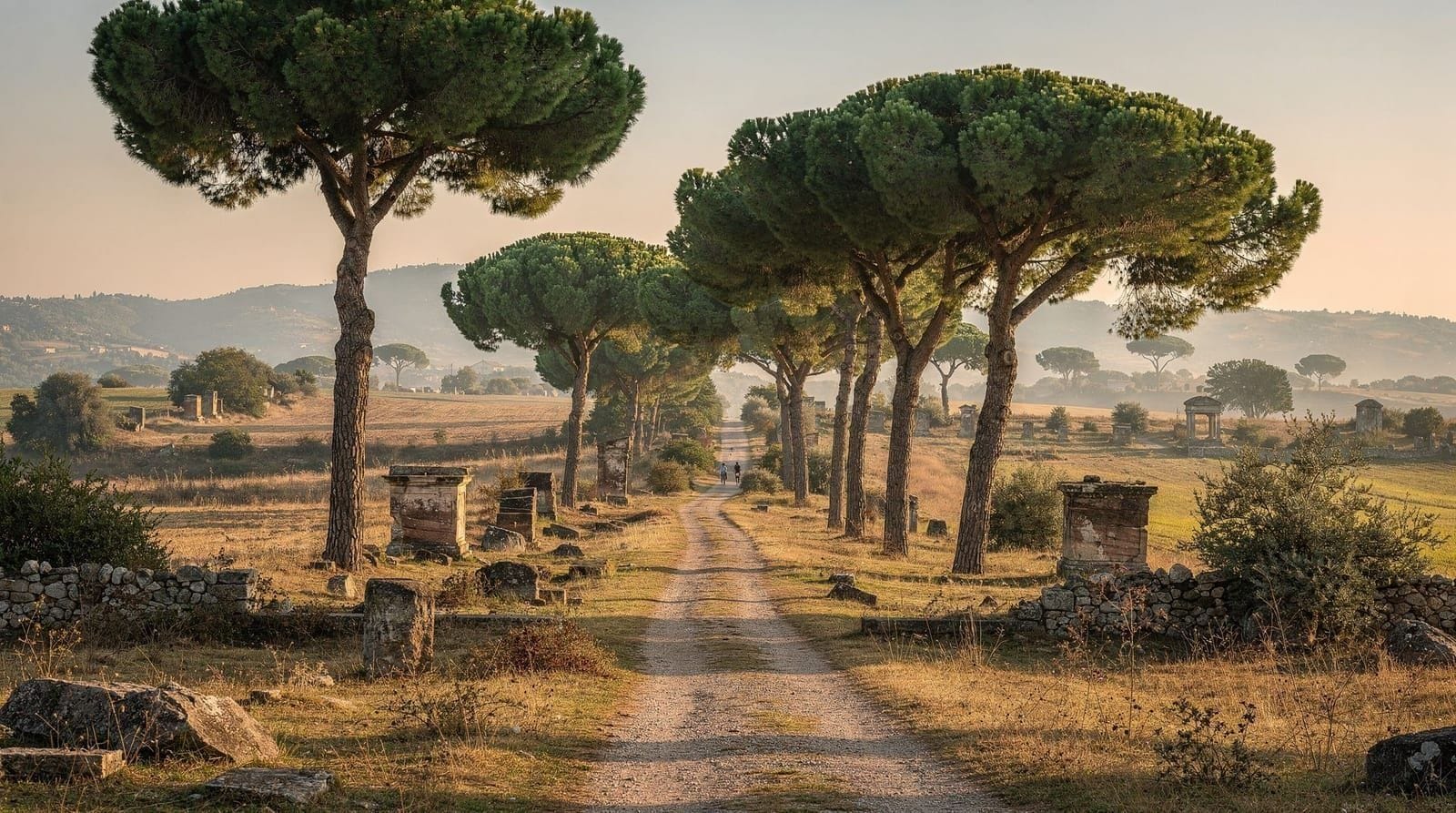
The necropolis outside the Porta Romana (the city gate nearest the modern entrance) is often skipped entirely, but it contains a dense concentration of Roman tombs and sarcophagi lining the ancient road — a reminder that Roman cities, by law, buried their dead outside the walls, and that this particular stretch of road was itself a kind of processional gallery for the dead as travellers approached the city.
For a genuinely quiet half hour, the site’s western fringe near the Marine Gate and the ancient shoreline (the coast has since receded several kilometres due to silting from the Tiber) gives a sense of Ostia’s original relationship to the sea that is easy to miss if you stay in the busier eastern half of the site.
Top experiences
Bookable activities with verified prices and instant confirmation on GetYourGuide.