The catacombs of Rome: which one to visit and how
Rome: Catacomb of St. Callixtus and Appian Way Guided Tour
Which catacombs in Rome are best to visit?
The Catacombs of St. Callixtus are the most historically significant and best-organized for visitors — tour the Crypt of the Popes, early frescoes, and burial niches on a 30-40 minute guided visit. For the best fresco art, choose Domitilla. For the apostolic connection (Sts. Peter and Paul), choose St. Sebastian. All require guided tours; none allow photography inside.
Choosing your catacomb: a decision that matters
Rome has at least six major catacomb complexes open to visitors — and they are not interchangeable. Each has a distinct historical character, different quality of fresco preservation, different tour lengths, and different logistical considerations. Choosing blindly and ending up at a less significant or less well-organized site is a real risk, particularly if the catacombs are a principal reason for your visit.
This guide compares the four main sites honestly: St. Callixtus, Domitilla, St. Sebastian, and the less-visited Priscilla complex on the north side of the city. It also covers the Jewish catacombs for context.
| Where | Via Appia Antica (main sites) or Via Salaria (Priscilla, north Rome) |
| Cost | Around €8-10 adult, guided tour included |
| Time needed | 30-45 min per site; 2.5-3 hrs total with travel |
| Getting there | Bus 118 from Circo Massimo, taxi (~€15-20), or guided transfer |
| Booking | No advance ticket needed at most sites; tours depart every 15-20 min |
The Catacombs of St. Callixtus: the first choice for most visitors
Why St. Callixtus
The Catacombs of St. Callixtus are the most historically significant catacomb site in Rome. Established around 200 CE, they served as the official burial site of the Bishop of Rome — the proto-papal cemetery — for much of the 3rd century. The result is that several of the most important figures in early Christianity are documented here.
The Crypt of the Popes is the highlight. A gallery approximately 12 metres long contains the original burial inscriptions of nine popes, most dating from the 3rd century: Pontian, Anterus, Fabian, Lucius I, Stephen I, Sixtus II, Dionysius, Felix I, and Eutychian. The inscription quality varies — some are original stone carved in Greek, others are modern reproductions on the original sites. The archaeological context is clear and the explanatory commentary on all English-language tours is good.
Adjacent to the papal crypt is the Crypt of St. Cecilia, where the early Christian martyr and patron saint of music was buried before her body was transferred to the Trastevere basilica in 820 CE. A copy of Stefano Maderno’s famous reclining sculpture (the original is in the Basilica of Santa Cecilia in Trastevere) marks the spot.
What you will see on the tour
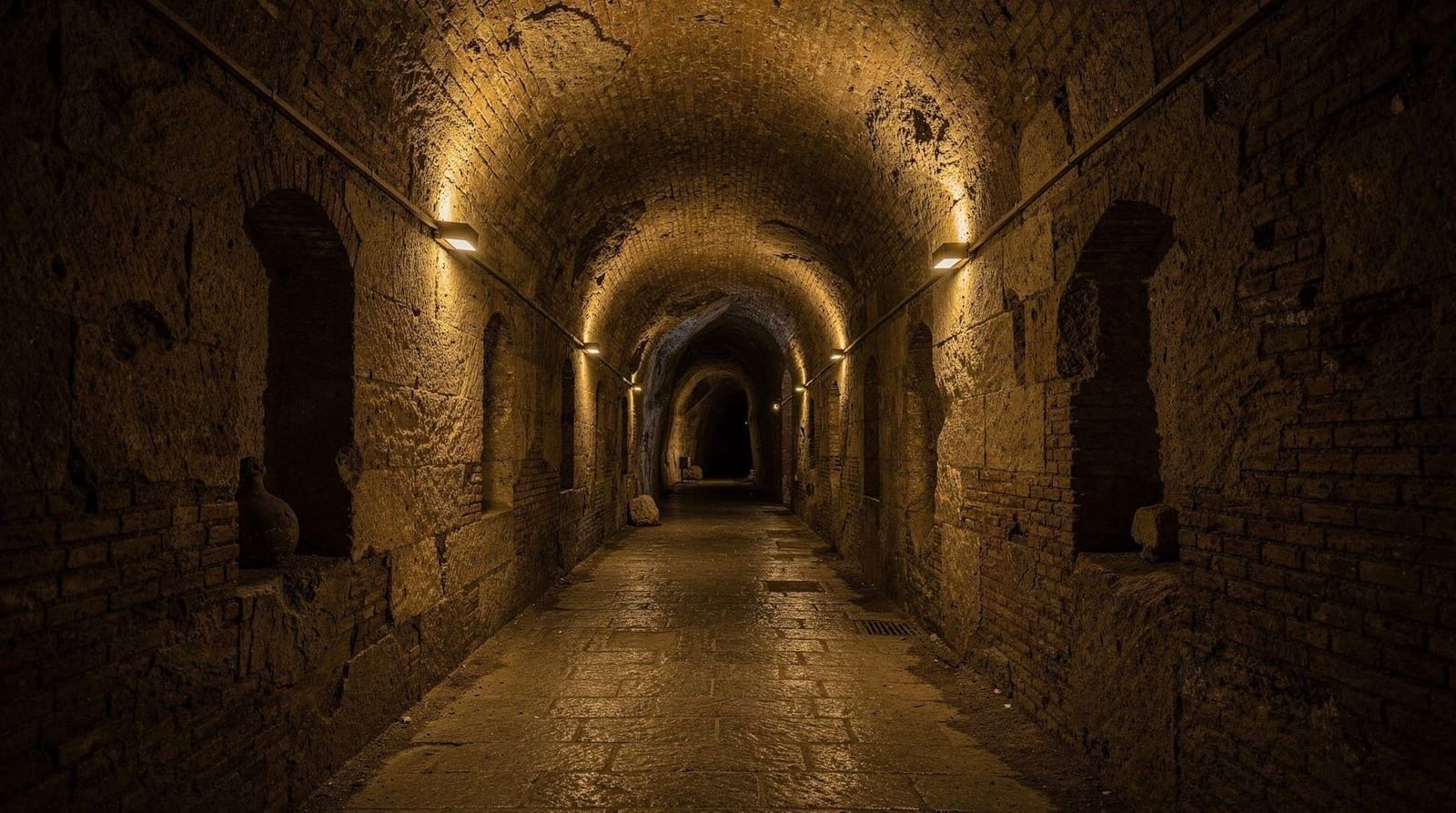
Tours follow a fixed route through approximately 500 metres of tunnel on two levels, covering:
- The Crypt of the Popes
- The Crypt of St. Cecilia
- The Sacrament Cubicles — small chambers with the oldest surviving Christian fresco cycles on the site (3rd century)
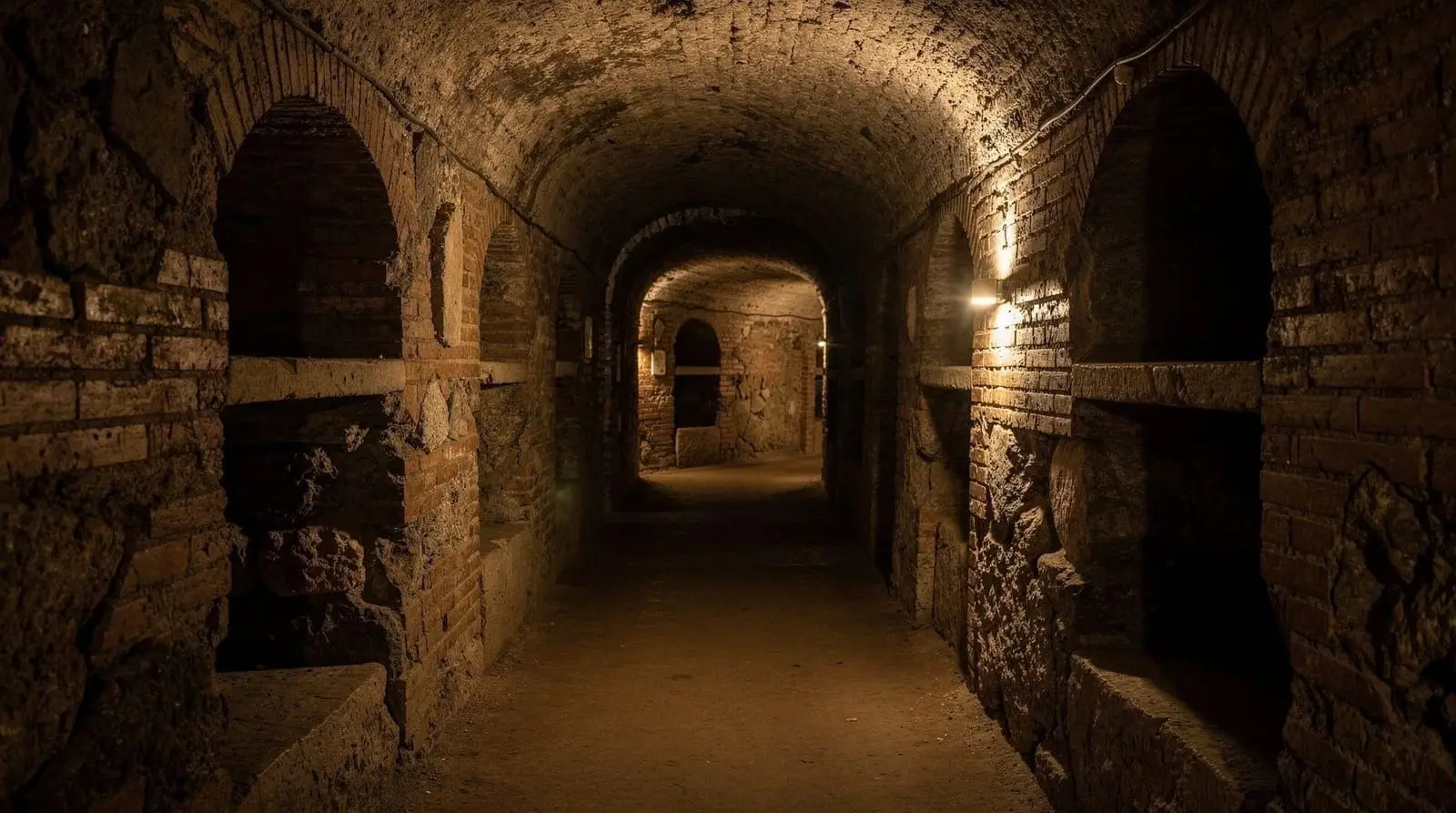
- Loculi (burial niches) lining the tunnel walls
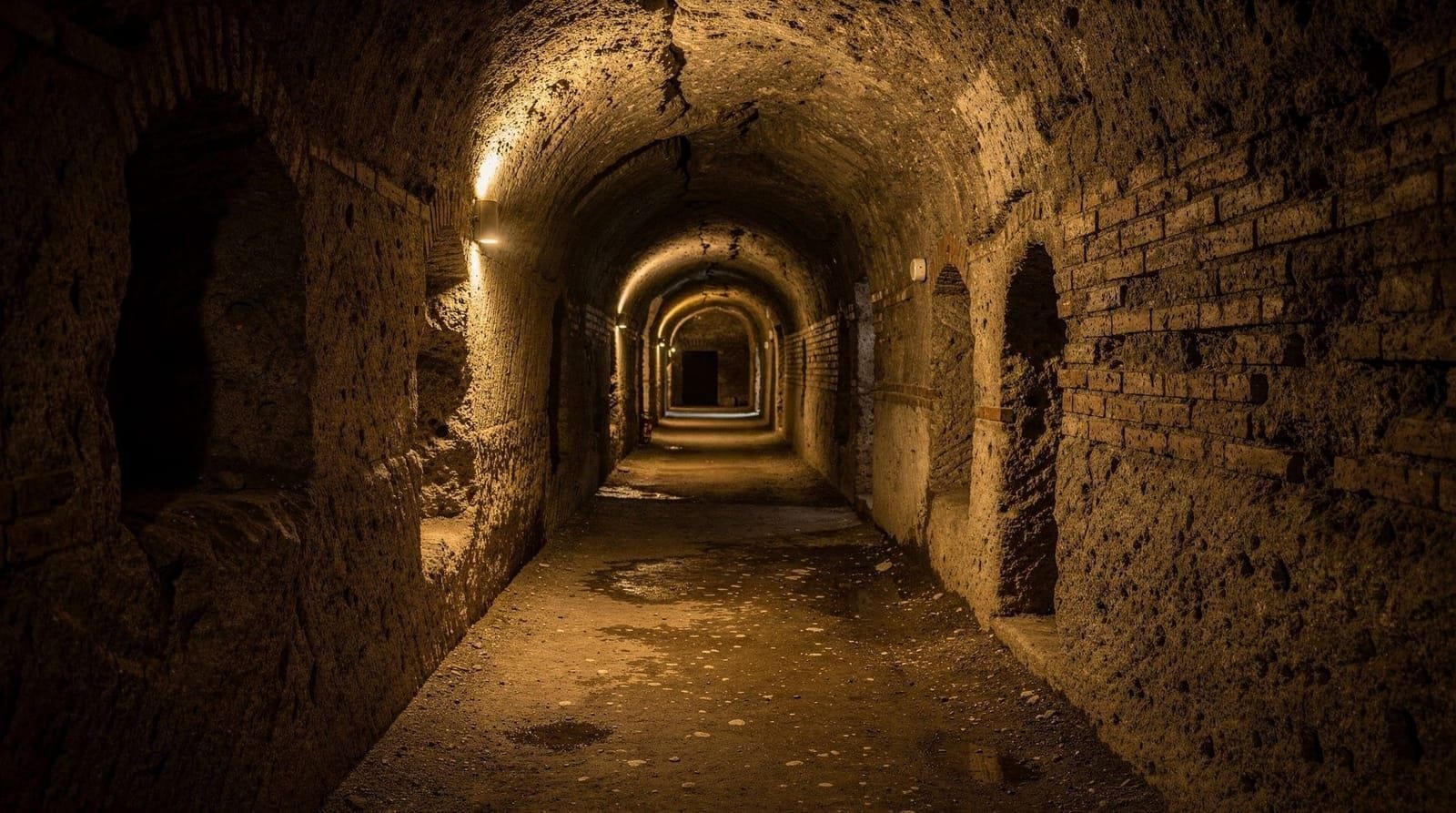
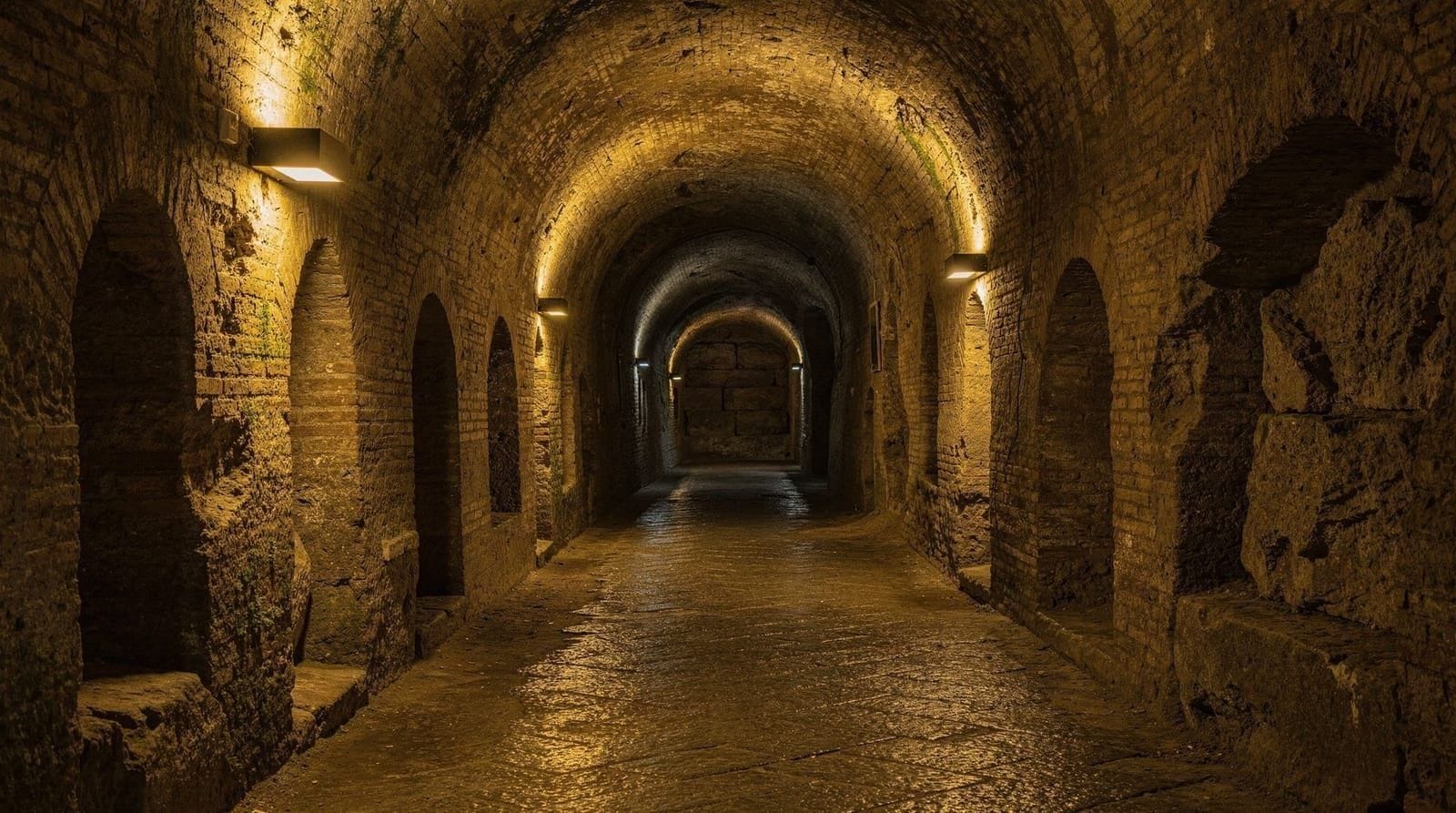
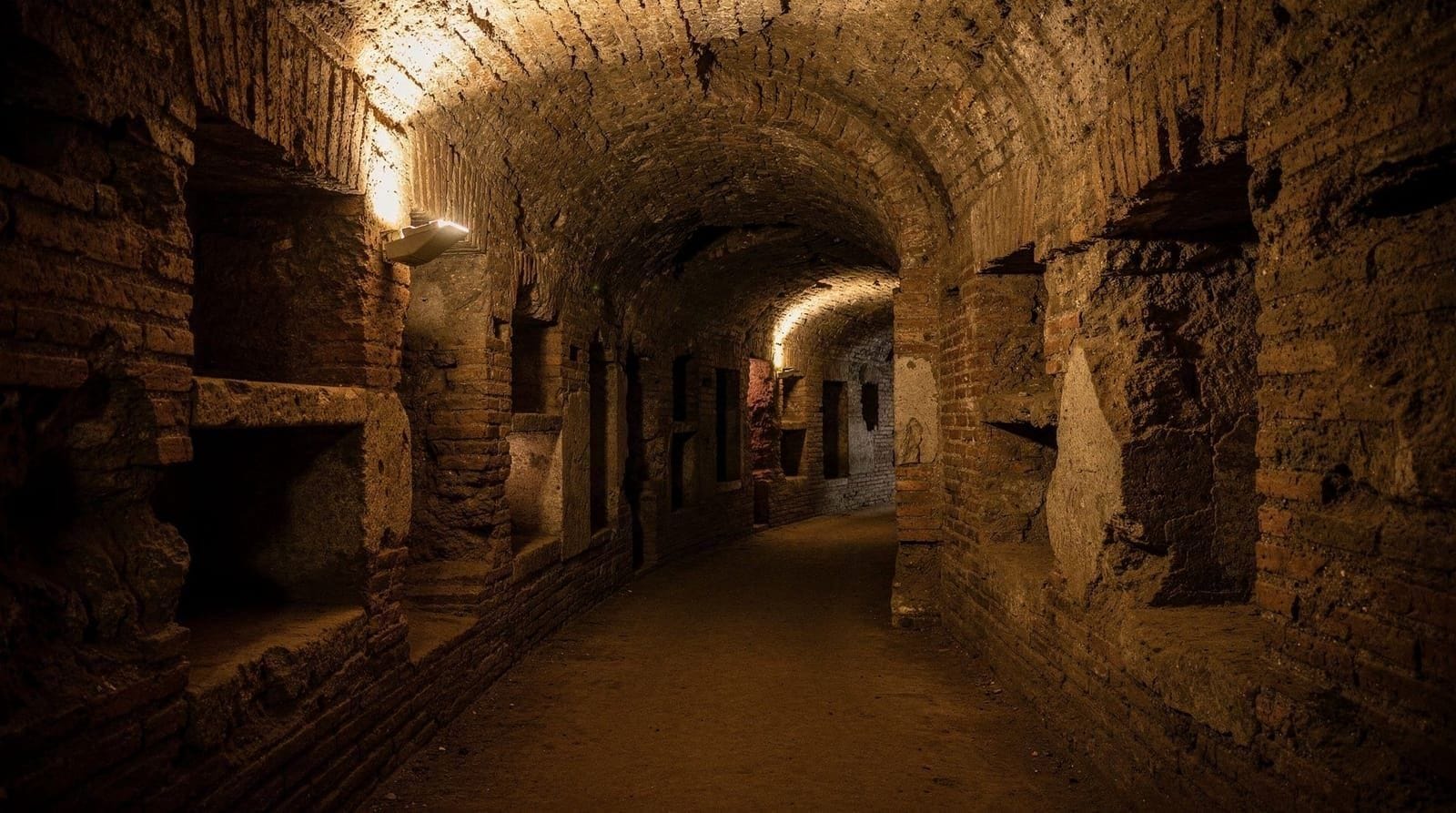
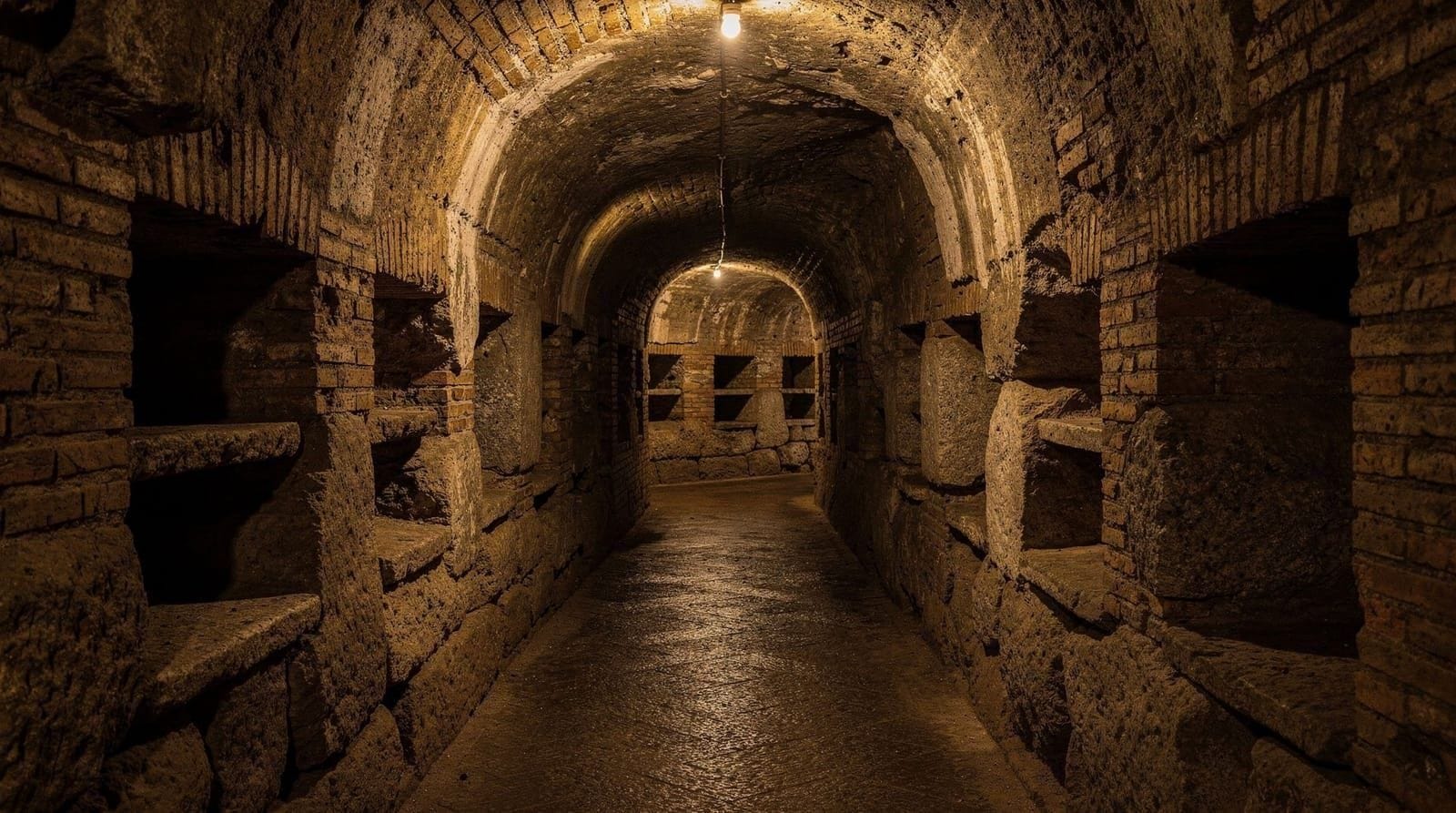
- An explanation of the different burial types: the loculi for ordinary burials, arcosolia (arched niches) for more prestigious individuals, and cubiculi (small rooms) for family groups
The tour runs approximately 30-40 minutes. Group sizes can be large in peak season — up to 30 people — but the professional guides manage this well.
Closure and access
Closed on Wednesdays. Open the rest of the week, including Sundays. The site is reached via Via Appia Antica — see transport options below.
Catacombs of St. Callixtus guided tour with entry ticket — expert English commentary on the papal burial gallery and early Christian art.The Catacombs of Domitilla: best for fresco art
Why Domitilla
If early Christian fresco painting is your primary interest, the Catacombs of Domitilla are the right choice. The site contains some of the best-preserved painting of any catacomb complex in Rome, spanning from the late 1st century CE through the 4th century.
The catacombs are named for Flavia Domitilla, a niece of Emperor Domitian who appears to have converted to Christianity — making these potentially the earliest catacomb site in Rome, with an aristocratic founding rather than an ecclesiastical one.
The distinctive feature here is the entry through the Basilica of Nereus and Achilleus, a 4th-century church built above the tombs of two Roman soldier martyrs. The basilica’s original apse and substantial portions of the structure are preserved, giving the visit a different architectural quality from the other sites — you descend from an ancient church rather than a ticket booth.
Highlights of the fresco collection include:
- A Good Shepherd fresco in an unusual youthful guise — among the earliest representations of this iconographic type
- An Orant (praying figure) from the 2nd century — one of the most frequently reproduced images in early Christian art scholarship
- A scene of Orpheus playing the lyre amid animals, used by early Christians as a symbolic parallel to Christ calming the world
- Late 4th-century scenes from the Old and New Testament with sophisticated compositional skill
Closure and access
Closed on Tuesdays. The Domitilla catacombs are approximately 200 metres further along Via Appia Antica from St. Callixtus, making it practical to visit both on the same day if you start early.
The Catacombs of St. Sebastian: apostolic connections
Why St. Sebastian
The Catacombs of St. Sebastian have a unique historical distinction. During the mid-3rd century — a period of intense Roman persecution of Christians — the remains of both St. Peter and St. Paul were temporarily moved here from their usual resting places (now the Vatican and the Basilica of San Paolo fuori le Mura respectively). The reason is not definitively known; some scholars suggest the transfer was protective, others that it was linked to a specific religious commemoration.
The evidence for this is exceptional: a wall of the site is covered in ancient graffiti — Latin and Greek inscriptions from the 3rd century — in which visitors invoked both apostles together by name. The phrase “Petrus et Paulus” appears repeatedly. This wall is one of the most remarkable epigraphic discoveries in Christian archaeology.
The site also includes three well-preserved pagan mausoleums from the 2nd century CE, predating the Christian use. These give a clearer picture of how the underground burial tradition evolved from Roman pagan customs into Christian practice — a progression that is harder to visualize at St. Callixtus or Domitilla, where the Christian evidence dominates.
Closure and access
Closed on Sundays. The Basilica of San Sebastiano above the catacombs is one of the seven traditional pilgrimage churches of Rome and is worth a visit before or after the catacombs.
The Catacombs of Priscilla: oldest frescoes on the north side
Why Priscilla
The Catacombs of Priscilla on Via Salaria, north of the centre, are less visited than the Appian Way sites but contain potentially the oldest Christian fresco in existence: the Annunciation scene in the so-called “Greek Chapel” (Cappella Greca), dated by many scholars to the late 2nd or early 3rd century. It is one of the first known images of the Virgin Mary.
The Priscilla catacombs are managed by the Benedictine order and have a different atmosphere from the more touristically organized Appian Way sites — smaller groups, more contemplative pace.
The disadvantage for most visitors is location: Via Salaria is on the north side of the city, not easily combined with any other major sight. It makes most sense as a dedicated visit rather than part of a broader day itinerary.
Catacombs and Appian Way guided day tour — the most comprehensive way to explore the ancient road and its burial monuments together.Choosing between the sites: a decision guide
| Priority | Best choice |
|---|---|
| Historical importance (papal burials) | St. Callixtus |
| Fresco art quality | Domitilla |
| Apostolic connections (Peter and Paul) | St. Sebastian |
| Oldest Christian imagery | Priscilla (north Rome) |
| Combining two sites in one day | St. Callixtus + Domitilla (closest together) |
If you can only visit one, St. Callixtus is the default recommendation for the combination of historical significance, tour quality, accessibility, and consistent English-language coverage.
Large group vs small group: the standard entrance tour at any site can mean joining a group of up to 25-30 people during peak midday hours, with a guide relying on a portable speaker to be heard at the back. A pre-booked small-group tour caps numbers much lower and generally times the visit outside the busiest midday window, which matters more here than at most Rome sights because acoustics underground are poor and a large group means straining to hear the commentary that gives the tunnels their meaning.
Getting to the Appian Way catacombs
The main catacomb sites (St. Callixtus, Domitilla, St. Sebastian) are on or near Via Appia Antica, approximately 3 kilometres southeast of the Circo Massimo metro station.
Bus 118 from Circo Massimo (Metro Line B): the most economical option. The bus runs infrequently — check the ATAC app for current schedules before departing. Journey approximately 25 minutes. Note that bus 118 can be very crowded with tourists on weekends in peak season.
Taxi from the historic centre: approximately 15-20 EUR one-way. For the return journey, taxis do not always pass via the Appia Antica — arrange pickup in advance or call for one via the official Rome taxi app (ItTaxi).
Guided tour with transfer: the most practical option. A tour operator handles transport to and from your central meeting point, eliminating the bus and taxi logistics entirely. This is particularly worthwhile if you are visiting the catacombs without a full Appian Way exploration in mind.
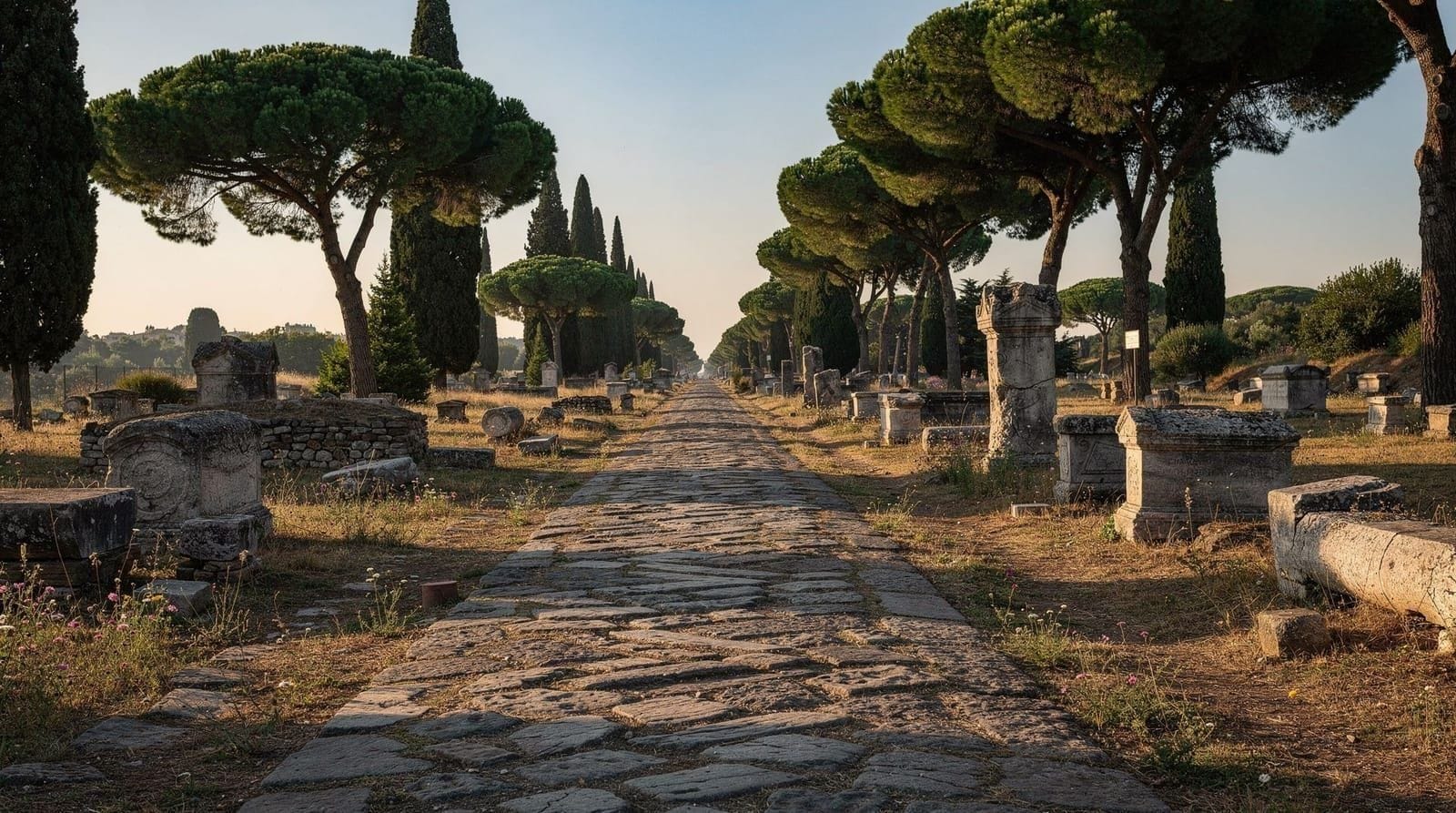
E-bike or bicycle: Via Appia Antica is car-free on Sundays. Renting a bike and riding out to the catacombs — covering the ruined tombs along the roadside, the Tomb of Cecilia Metella, and potentially the aqueduct park beyond — is one of the most atmospheric half-days in Rome. See the Appian Way and aqueducts guide for the full itinerary.
What to wear and bring
- Jacket or warm layer: the catacombs maintain a constant 15°C underground, which feels cold if you arrive sweaty from summer heat. This is non-negotiable regardless of the surface temperature.
- Comfortable shoes: the tunnels are paved but uneven in places. Heels or sandals without grip are uncomfortable.
- No camera: photography is strictly prohibited inside all the major catacombs. This includes mobile phones. The rule is enforced.
- Cash: the ticket booths at most catacombs prefer cash; card acceptance is inconsistent. Have 10-15 EUR per person in cash ready.
How the catacombs fit into a wider Rome itinerary
The Appian Way catacombs are typically a half-day excursion from the centre. The most effective combinations:
With the Appian Way and aqueducts: The ancient road itself has substantial ruins above ground — the Tomb of Cecilia Metella, the Villa dei Quintili, the Circus of Maxentius — that significantly enrich the visit. Allow a full day if you want to explore the Appia Antica as an archaeological landscape, not just the catacombs.
With the Capuchin Crypt: Logistically awkward as the Crypt is on Via Veneto in the opposite direction from the catacombs. Do one in the morning and the other in the late afternoon, or use it as a separate afternoon activity from a central base.
With San Clemente: San Clemente is easy to combine with a Colosseum visit (they are 10 minutes apart) — a strong natural pairing. Keep the Appian Way catacombs for a different day.
For how all underground sites compare and which combinations work best as tours, see underground Rome tours compared.
For the broader context of the Appia Antica neighbourhood and what else is visible along the road, see the destination guide.
The catacombs and early Christian Rome: context
The Christian catacombs are not primarily where early Christians hid from Roman persecution — a popular misconception driven by Victorian-era religious literature. They are cemeteries. Early Christians used them for burial because Roman law forbade burial within the city limits, and because the communal underground space allowed the community to maintain a shared burial culture during a period when Christian practice was technically illegal but practically inconsistently persecuted.
The period of active catacomb use corresponds roughly to the 2nd-5th centuries CE. After the Edict of Milan (313 CE) made Christianity legal, above-ground burial became possible, and the catacombs gradually transitioned into pilgrimage sites rather than active cemeteries. The veneration of martyrs buried in the catacombs was a major driver of early medieval Christian pilgrimage to Rome.
Understanding this context transforms the visit from an encounter with morbid curiosity into an encounter with the actual archaeology of how a minority community built its institutions, maintained its dead, and preserved its identity during a politically precarious period. The story of Rome underground is, in many ways, the story of how Rome became Christian.
For historical background, see the Rome history guide and the Roman Empire explained.
Guided catacombs tour with transfers from central Rome — transport both ways included, English-language expert guide.Why the “hiding from persecution” myth persists
Part of the reason the misconception is so durable is 19th-century Romantic art and fiction — paintings of huddled Christians praying in candlelit tunnels while soldiers search above made for compelling imagery, and 19th-century novels about early Christian Rome leaned on it heavily. The archaeological reality is less cinematic but more interesting: burial law, not fear, dictated the underground cemeteries, and the catacombs functioned openly enough that Roman authorities knew exactly where they were. Persecution did happen, and catacomb sites do include martyr burials, but the tunnels themselves were a legal and practical solution to a housing-of-the-dead problem within a city that banned intramural burial, not a secret hideout. Guides at St. Callixtus and Domitilla generally correct the myth early in the tour, which is itself part of what makes those two sites worth prioritising over a less well-guided visit.
For a wider look at how the Rome-underground sites — catacombs, the Capuchin Crypt, San Clemente’s excavated basilica, the Mithraeum — fit together as a theme, see Rome catacombs and underground and ancient Rome in one day for combining the surface sights with an underground stop.
Frequently asked questions about The catacombs of Rome: which one to visit and how
How much do the Rome catacombs cost?
How long does a catacomb visit take?
Are the catacombs open year-round?
Is a guided tour mandatory in the catacombs?
What are the Jewish catacombs of Rome?
Can I visit the catacombs without a tour operator, independently?
Are the catacombs suitable for children or people with claustrophobia?
Can I combine two catacomb sites in the same visit?
Top experiences
Bookable activities with verified prices and instant confirmation on GetYourGuide.