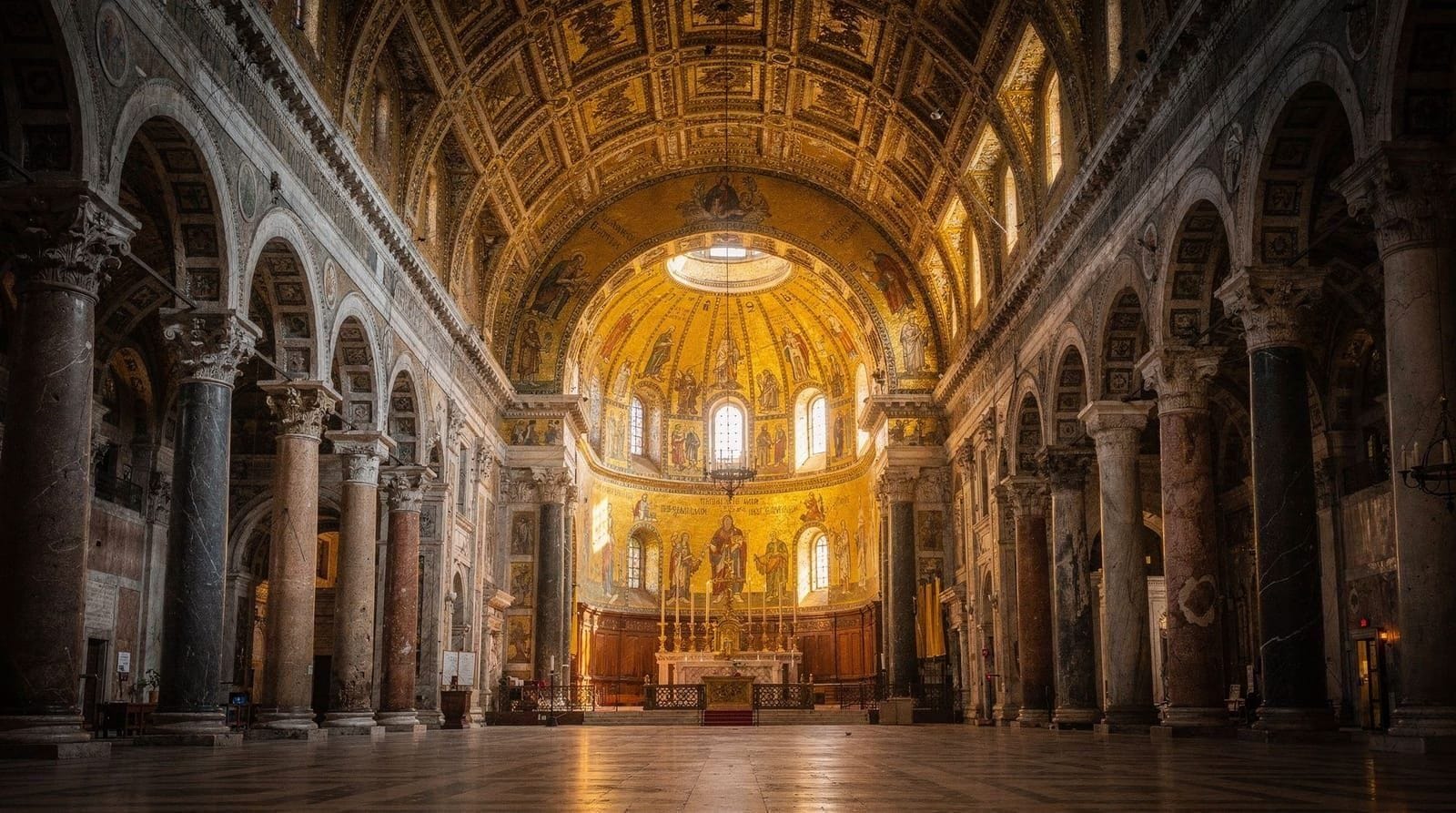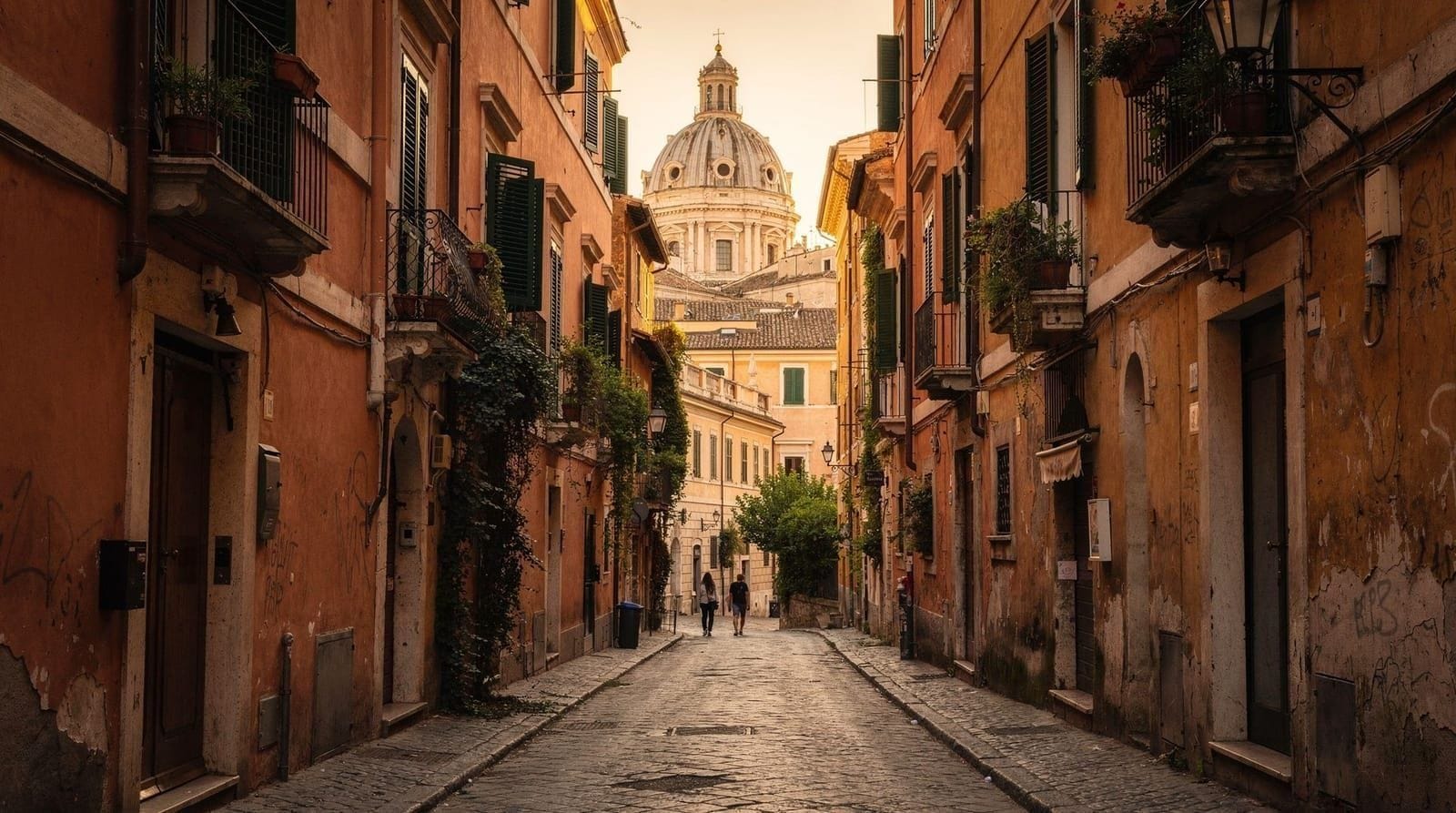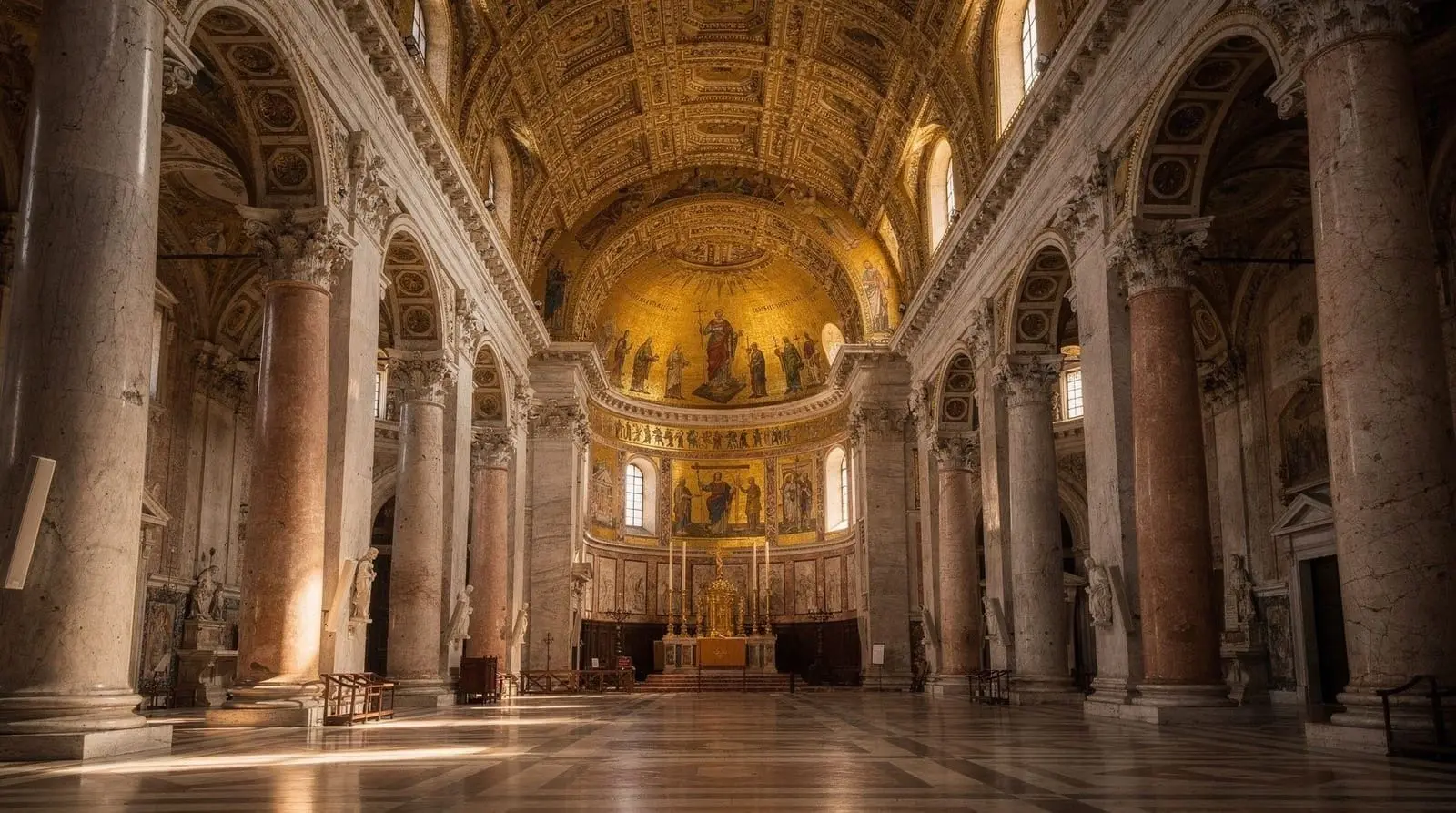
Rome's hidden churches: masterpieces with no queue
Trevi, Pantheon & Spanish Steps Guided English Walking Tour
Which hidden churches in Rome are most worth visiting?
San Pietro in Vincoli (Michelangelo's Moses, near the Colosseum), Santa Maria sopra Minerva (Gothic interior, Michelangelo statue, Fra Angelico tomb), Sant'Ignazio di Loyola (illusionistic ceiling fresco, stunning false dome), Santa Sabina (oldest intact basilica in Rome), and San Luigi dei Francesi (three Caravaggio canvases). All are free and typically uncrowded. Bring €1 coins for lighting.
| Cost | Free (voluntary donations only) |
| Crowds | Minimal — most see fewer than 5% of Colosseum foot traffic |
| Best time | Weekday mornings before 10:30, or 16:30–18:30 |
| Watch for | Midday closures, roughly 12:30–15:30 at smaller churches |
| Bring | €1 coins for coin-operated lighting, a scarf for dress code |
The churches no one is queuing for
On a typical weekday morning in Rome, approximately 4,000 people are queuing to enter the Vatican Museums. Another 2,000 are in line for the Colosseum. Borghese Gallery is at capacity. And in a Gothic church five minutes’ walk from the Pantheon, Fra Angelico is buried beneath a stone slab in the floor, a genuine Michelangelo sculpture stands in the sanctuary, and on most days there are more pigeons in the piazza outside than visitors inside.
That church is Santa Maria sopra Minerva. It is typical of what this guide is about: extraordinary Roman art in buildings that most first-time visitors walk past on the way to somewhere else.
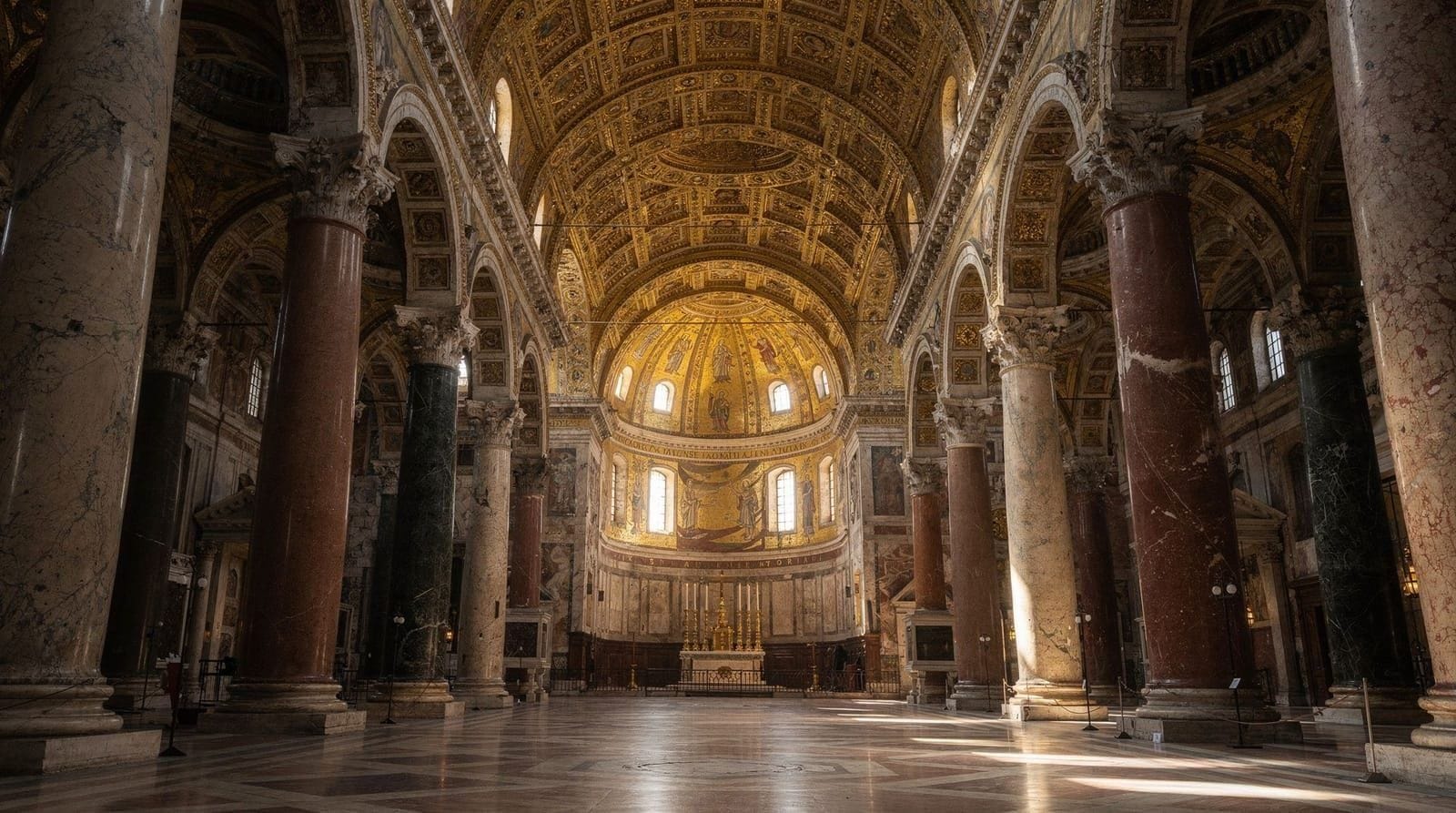
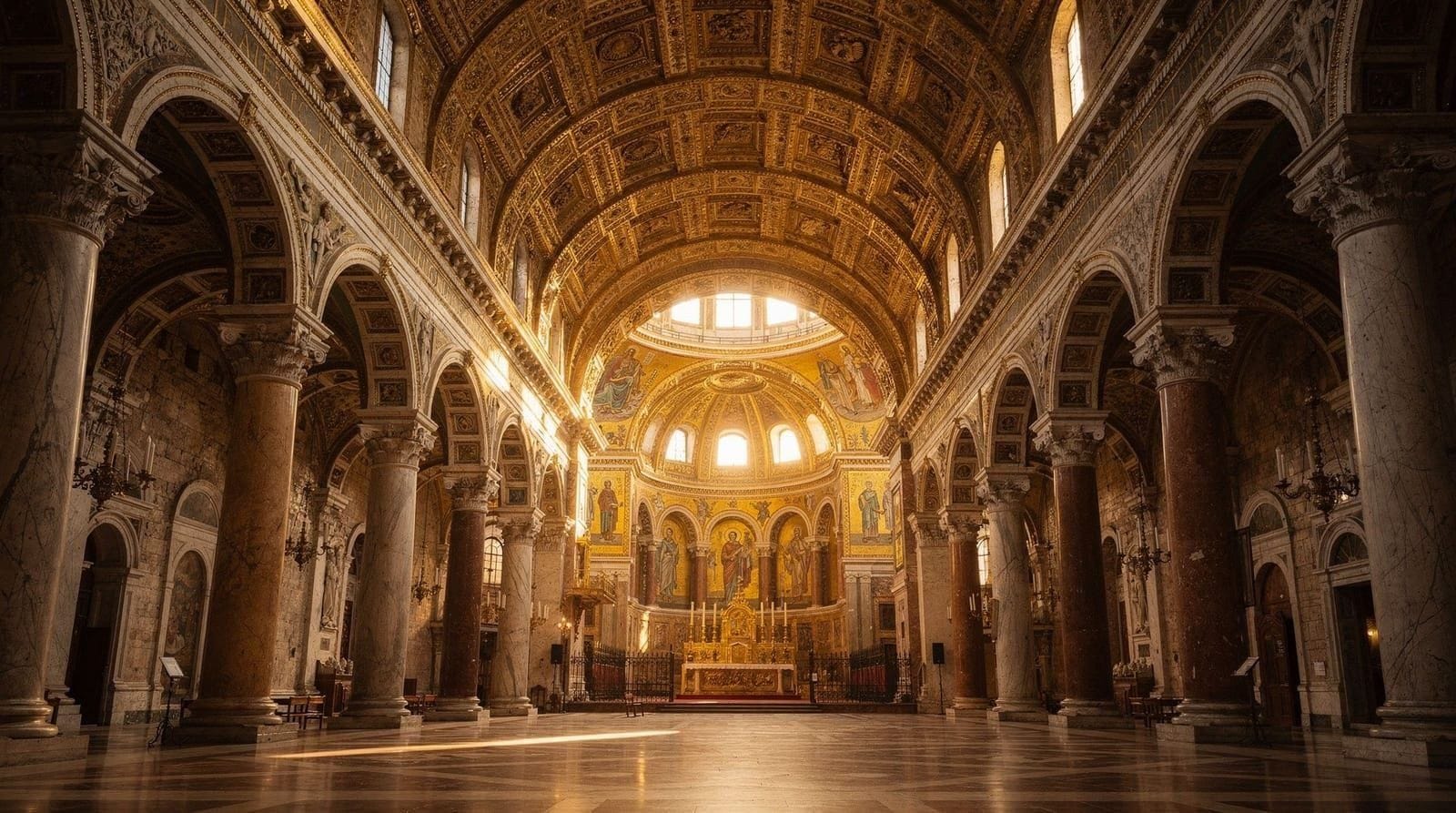
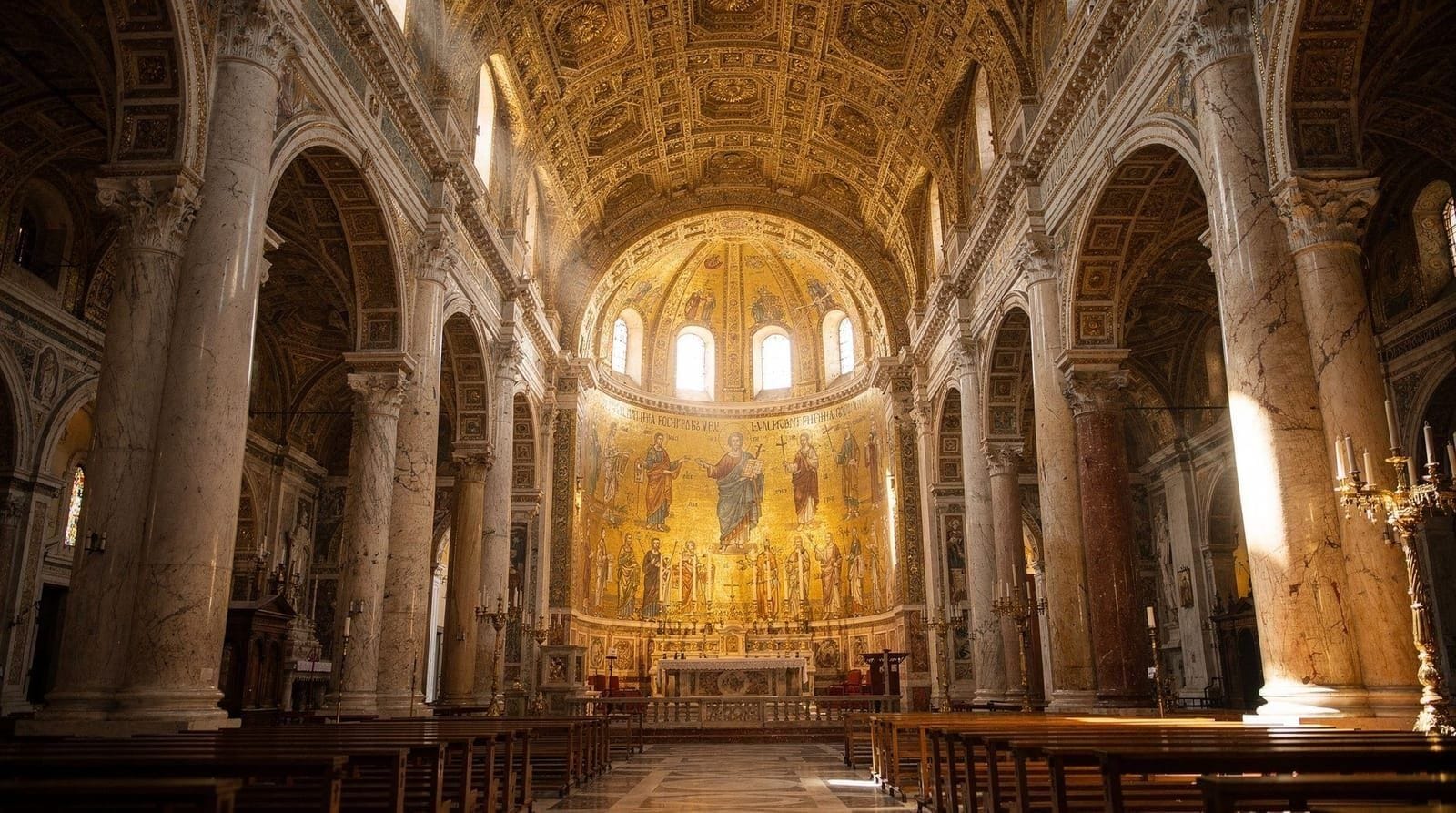
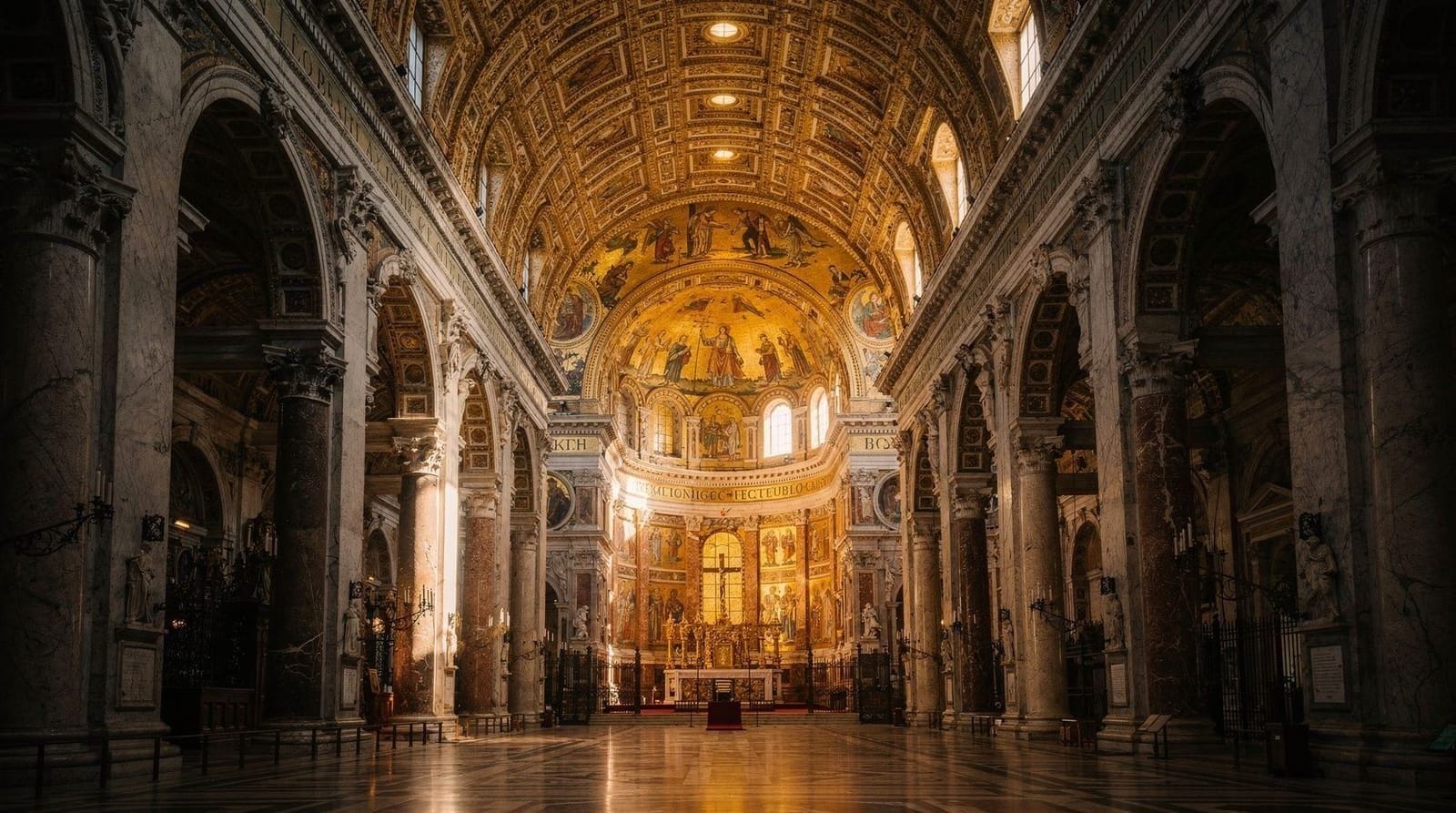
This guide covers the best of Rome’s lesser-known churches — defined not as small or obscure, but as significant places most visitors miss. Each one is free, each one has something worth going specifically for, and none has a meaningful queue.
Bring €1 coins (for coin-operated lighting) and cover your shoulders and knees.
San Pietro in Vincoli: Michelangelo’s Moses
What it is
The Basilica of San Pietro in Vincoli (Saint Peter in Chains) takes its name from the relic it preserves: the chains that allegedly bound Saint Peter during his imprisonment in Jerusalem and later in Rome, visible in a reliquary beneath the altar. The church dates from the 5th century (original construction under Empress Eudoxia around 442 CE) and was repeatedly modified.
But visitors come for Michelangelo.
The Moses
In the right transept stands the tomb monument of Pope Julius II — or rather, the fragment of a tomb monument that was never completed as Michelangelo intended. Julius II commissioned a vast freestanding tomb in 1505 that would have involved 47 life-sized figures and stood 10 metres tall. Over the next 40 years, as the project was repeatedly scaled back, commissioned away, and changed by Julius’s heirs, Michelangelo produced only three finished figures for the final, much reduced version erected in 1545.
The central figure is Moses — seated, holding the tablets of the Law, about to rise. The sculpture is approximately twice life size. Moses looks right and slightly down, caught in a moment of focused anger (traditionally interpreted as the moment he sees the Israelites worshipping the golden calf). His horns — a traditional feature of medieval and Renaissance Moses imagery, derived from a mistranslation of the Hebrew word for “rays of light” — are visible above his forehead.
The detail of the carving is extraordinary: the veins on the back of the hands, the tendons in the forearms, the individual strands and curls of the beard, the texture of the cloth. Stendhal — who described in his memoir the overwhelming physical sensation he experienced when viewing Florentine art (now called “Stendhal Syndrome”) — wrote specifically about the Moses at San Pietro in Vincoli as producing this reaction.
The flanking figures (Rachel and Leah, symbolizing contemplative and active life) were finished by Michelangelo’s studio; only the Moses is entirely his hand.
Location and access
San Pietro in Vincoli is a 5-minute walk north of the Colosseum, on Via delle Sette Sale in the Monti neighbourhood. Metro Line B to Colosseo, then walk up the steps of the Clivo di Scauro. There is no charge; a voluntary donation box is present.
Hours approximately 08:00–12:30 and 15:00–18:00. Midday closure observed.
Santa Maria sopra Minerva: the Gothic church
What it is
Uniquely among Rome’s major churches, Santa Maria sopra Minerva is Gothic. Rome’s Dominican order built it in the French Gothic style in the late 13th–early 14th century — pointed arches, ribbed vaulting, blue ceiling with gold stars — while the rest of Rome was building in the Romanesque. It stands behind the Pantheon, its plain facade giving no hint of the interior.
It is built on the ruins of a temple to Minerva (goddess of wisdom) — hence the name — which is probably why the Dominicans chose this specific location for their major Roman church.
What to see
Fra Angelico’s tomb: The painter Fra Angelico (c.1395–1455), one of the most significant artists of the early Italian Renaissance, died in Rome while working on frescoes in the Vatican. He is buried here beneath a floor slab near the entrance of the nave. The tomb is marked and often overlooked by visitors walking past on the way to the Michelangelo statue.
Michelangelo’s Risen Christ (1519–1521): In the sanctuary (left side), a life-size marble figure of Christ carrying the Cross. Michelangelo carved the original in Florence; discovering a black vein in the marble that ran through the face, he sent the figure to Rome to be completed by his assistant Pietro Urbano, who made alterations Michelangelo found unacceptable. The current figure was completed by Michelangelo himself but is considered inferior to the more finished version in the church of San Vincenzo Martire in Bassano Romano. The bronze cloth added later was not Michelangelo’s intention but was felt necessary for propriety.
Cappella Carafa (right transept): Frescoes by Filippino Lippi (1488–1493) depicting the Assumption and Annunciation, commissioned by the powerful Cardinal Oliviero Carafa. These are considered among the finest examples of late 15th-century fresco painting in Rome — more accomplished and better preserved than most. The perspectival illusionism and the richness of the costume detail reward close examination.
The blue ceiling: Walk back toward the entrance and look up. The 19th-century neo-Gothic renovation painted the vaulted ceiling deep blue with gold stars — a completely different atmosphere from Rome’s typical cream-and-gold Baroque interiors.
Hours approximately 07:00–19:00 (no reliable midday closure reported, but verify).
Sant’Ignazio di Loyola: the illusionistic ceiling
What it is
Sant’Ignazio is the mother church of the Jesuit order in Rome, completed in 1685. From the outside it looks like a standard large Baroque church. From the inside, two of the most extraordinary optical illusions in European art are visible from the floor for free.
The ceiling fresco
The nave ceiling fresco by Andrea Pozzo (painted 1691–1694) depicts the Entry of Saint Ignatius into Paradise — a conventional enough subject. But Pozzo painted the fresco as a trompe l’oeil continuation of the church’s actual architecture: columns, arches, and barrel vaulting that appears to rise far above the actual flat ceiling, dissolving into an open sky filled with figures ascending toward the heavens. The effect from the floor is of a church with a nave double the actual height.
Find the marble disc set into the floor of the nave — there is a yellow marker or inscription near the centre of the nave. Stand on it. From this exact spot, the perspective is perfect: the painted columns align with the real columns, the painted entablature continues the real entablature, and the entire nave appears to extend upward into the sky. Step two paces off the disc and the illusion collapses into obvious foreshortening. The precision of Pozzo’s perspective calculation is remarkable.
The false dome
Sant’Ignazio was originally designed with a dome but the funds ran out (or the adjacent monastery objected to light entering from the dome). Pozzo solved the problem by painting a flat circular canvas and installing it in the crossing — a trompe l’oeil dome that reads as a real three-dimensional structure from the nave. Find the second marked disc on the floor (there is usually a small sign) for the correct viewing angle.
No coins needed — the ceiling is the ceiling, permanently visible.
Hours approximately 07:30–19:00 (no midday closure generally reported).
Walking tour of central Rome’s historic centre — passes through the neighbourhood of Santa Maria sopra Minerva and Sant’Ignazio, ideal as an introduction before a self-guided church exploration.Santa Sabina: the oldest intact basilica
What it is
Santa Sabina on the Aventine Hill is the oldest surviving basilica in Rome to retain its original interior plan substantially intact — built around 422–432 CE by Peter of Illyria, a Dalmatian priest. The building has been modified but never radically rebuilt, meaning the proportions, the nave colonnade, and the general layout of a 5th-century basilica are visible here as nowhere else in Rome.
What to see
The interior: 24 Corinthian columns of proconnesian marble, salvaged from a 2nd-century pagan temple, support the nave walls. The windows above are filled with translucent selenite (gypsum crystal) rather than glass — creating a warm, diffused light that no later restoration has replaced. The effect is unlike any other Roman church interior.
The original wooden doors (c.422–432 CE): On the left in the narthex (entrance vestibule), the church’s original cypress wood doors survive — among the oldest surviving carved wooden doors in the world. Eighteen relief panels depict scenes from the Old and New Testaments, including what is possibly the earliest surviving image of the Crucifixion in Western art (the scene is debated by historians but the early dating is accepted). The doors are protected behind a modern case but visible.
The Aventine view: The church’s garden adjoins the Giardino degli Aranci (Garden of Oranges), one of Rome’s best-elevated viewing points — a terrace looking west over the Tiber toward St. Peter’s dome and the Janiculum hill. Free to enter, open during daylight hours, excellent for photography.
For the broader Aventino neighbourhood, see our Aventino guide.
Hours approximately 07:30–12:30 and 15:30–18:00.
Sant’Andrea della Valle: Rome’s second largest dome
What it is
Sant’Andrea della Valle on the Corso Vittorio Emanuele II — the principal road between the Vatican area and the historic centre — is famous to opera audiences as the setting for Act One of Puccini’s Tosca. Its dome is the second highest in Rome after St. Peter’s (though dramatically smaller in absolute terms; St. Peter’s dome at 136 metres versus Sant’Andrea’s 60 metres).
Fewer than 5% of visitors to the Piazza Navona area make the 3-minute detour.
What to see
The ceiling frescoes (1621–1628): By Giovanni Lanfranco and Domenichino, the nave and apse frescoes of the Assumption of the Virgin and scenes from the life of Saint Andrew are among the most important early Baroque fresco cycles in Rome. The two artists worked simultaneously and in bitter rivalry — Lanfranco on the dome, Domenichino on the apse and pendentives. The stylistic difference is visible: Lanfranco anticipates the swirling, illusionistic Baroque fresco of Cortona and Gaulli, while Domenichino’s work remains tied to Annibale Carracci’s classicism.
The Strozzi Chapel (left nave): Houses bronze copies of Michelangelo’s figures from the Medici tombs in Florence — Rachel and Leah, the same types used for San Pietro in Vincoli. The originals remain in Florence; these are 17th-century casts, still remarkable in quality.
Hours approximately 07:30–12:30 and 16:00–19:30.
Santo Stefano Rotondo: Rome’s circular church
What it is
Santo Stefano Rotondo al Celio, in the Celio neighbourhood near the Colosseum, is Rome’s oldest circular church — a rotunda built around 468–483 CE, probably originally designed as a martyrdom memorial. The circular plan with inner colonnades and an outer ambulatory is the closest surviving equivalent to early Christian rotunda structures.
The fresco cycle
In the 16th century, Pope Gregory XIII commissioned Niccolò Circignani (Pomarancio) and Matteo da Siena to fresco the inner walls with 34 scenes of the martyrdoms of early Christian saints. These frescoes are among the most graphically violent in any Roman church — decapitations, impalements, dismemberments, burning — depicted in full narrative detail. They were used as propaganda for the Counter-Reformation, reminding the faithful of the price of their faith.
The combination of the early Christian architecture and the graphic 16th-century frescoes is unusual and somewhat disturbing — it is not a cheerful visit, but it is an unforgettable one.
Hours approximately 09:30–12:30 and 14:00–17:00.
Rome evening guided walking tour — covers the historic centre’s main piazzas and streets, providing orientation for a next-day self-guided church exploration.Santa Prassede: the Byzantine mosaic chapel
What it is
Santa Prassede, a short walk from Santa Maria Maggiore in the Esquilino neighbourhood, is unassuming from the street and easy to walk past entirely. Inside, the Chapel of San Zeno (built around 822 CE under Pope Paschal I) is covered floor to ceiling in gold-ground Byzantine mosaics of a quality and completeness rare outside Ravenna and Constantinople itself.
What to see
The Chapel of San Zeno: Commissioned as a burial chapel for Paschal I’s mother, Theodora, the small barrel-vaulted space is entirely mosaic — saints, Christ in majesty, and a portrait of Theodora herself with a square halo (indicating she was alive when the mosaic was made, a rare and specific convention). The density and preservation of the gold-ground mosaic in such a small, enclosed space creates an intensity that larger, more famous mosaic cycles elsewhere in Rome don’t quite match.
The apse mosaic: The main church’s apse mosaic, also 9th century, depicts Christ flanked by saints Peter, Paul, Prassede and Pudenziana against a deep blue and gold ground, a slightly earlier and more restrained composition than the San Zeno chapel.
A €0.50–1 coin in the light box illuminates the San Zeno chapel properly — without it, much of the detail is lost in shadow. This is one of the clearest examples in Rome of why carrying coins matters for this kind of visit. The Rome mosaics guide covers Santa Prassede alongside Rome’s other major mosaic cycles in more depth.
Hours approximately 07:30–12:00 and 16:00–18:30. Midday closure strictly observed.
Quick reference: hidden churches at a glance
| Church | Standout feature | Neighbourhood | Coin needed? |
|---|---|---|---|
| San Pietro in Vincoli | Michelangelo’s Moses | Monti/Colosseum | No |
| Santa Maria sopra Minerva | Michelangelo’s Risen Christ, Fra Angelico’s tomb | Centro Storico | No |
| Sant’Ignazio di Loyola | Illusionistic ceiling and false dome | Centro Storico | No |
| Santa Sabina | Oldest intact basilica interior | Aventino | No |
| Sant’Andrea della Valle | Second-largest dome, Lanfranco/Domenichino frescoes | Centro Storico | No |
| Santo Stefano Rotondo | Circular plan, graphic martyrdom frescoes | Celio | No |
| Santa Prassede | Byzantine gold-ground mosaics | Esquilino | Yes |
Planning your hidden churches day
Morning circuit (3–4 hours)
A practical sequence combining the main sites:
07:30: Start at Sant’Agostino (opens early, has a Caravaggio — see our Caravaggio trail guide)
08:30: Walk to Santa Maria sopra Minerva (5 minutes)
09:30: San Luigi dei Francesi (opens 09:30, three Caravaggios)
10:30: Sant’Ignazio di Loyola (10 minutes on foot)
11:15: Sant’Andrea della Valle (10 minutes further along Corso Vittorio Emanuele II)
12:00: Stop for lunch before churches close at 12:30
Afternoon:
15:30: San Pietro in Vincoli (near Colosseum, reopens 15:00)
17:00: Santa Sabina on the Aventino (combined with the Giardino degli Aranci view)
Neighbourhood groupings
Historic centre cluster (Piazza Navona area): Sant’Agostino, San Luigi dei Francesi, Santa Maria sopra Minerva, Sant’Ignazio, Sant’Andrea della Valle — all within 15 minutes on foot.
Colosseum / Celio cluster: San Pietro in Vincoli, San Clemente (underground, €10 — see our guide), Santo Stefano Rotondo — all within 10 minutes of each other.
Aventine cluster: Santa Sabina, Sant’Anselmo, Santa Prisca — a quieter afternoon walk with the Giardino degli Aranci view as reward.
What to bring
- €1 coins (10–15 for a full church day)
- Scarf for dress code (shoulders)
- Comfortable flat shoes (marble floors, standing)
- Binoculars optional but useful for mosaics and ceiling frescoes
For the full picture of Rome’s free church art including the Caravaggio churches and the papal basilicas, see our Rome basilicas and Caravaggio guide.
Frequently asked questions about Rome's hidden churches: masterpieces with no queue
What counts as a 'hidden' church in Rome?
Do Rome's hidden churches charge admission?
Are Rome's lesser-known churches open to visitors?
Is the Aventine Keyhole a church?
What is the best time to visit Rome's smaller churches?
What is Santa Maria sopra Minerva and why is it significant?
What is the Chapel of San Zeno at Santa Prassede?
How many hidden churches can I realistically visit in one day?
Top experiences
Bookable activities with verified prices and instant confirmation on GetYourGuide.