Ancient Rome in one day: the optimised, honest itinerary
Rome: Guided Tour of Colosseum, Roman Forum & Palatine Hill
Can you do ancient Rome in one day?
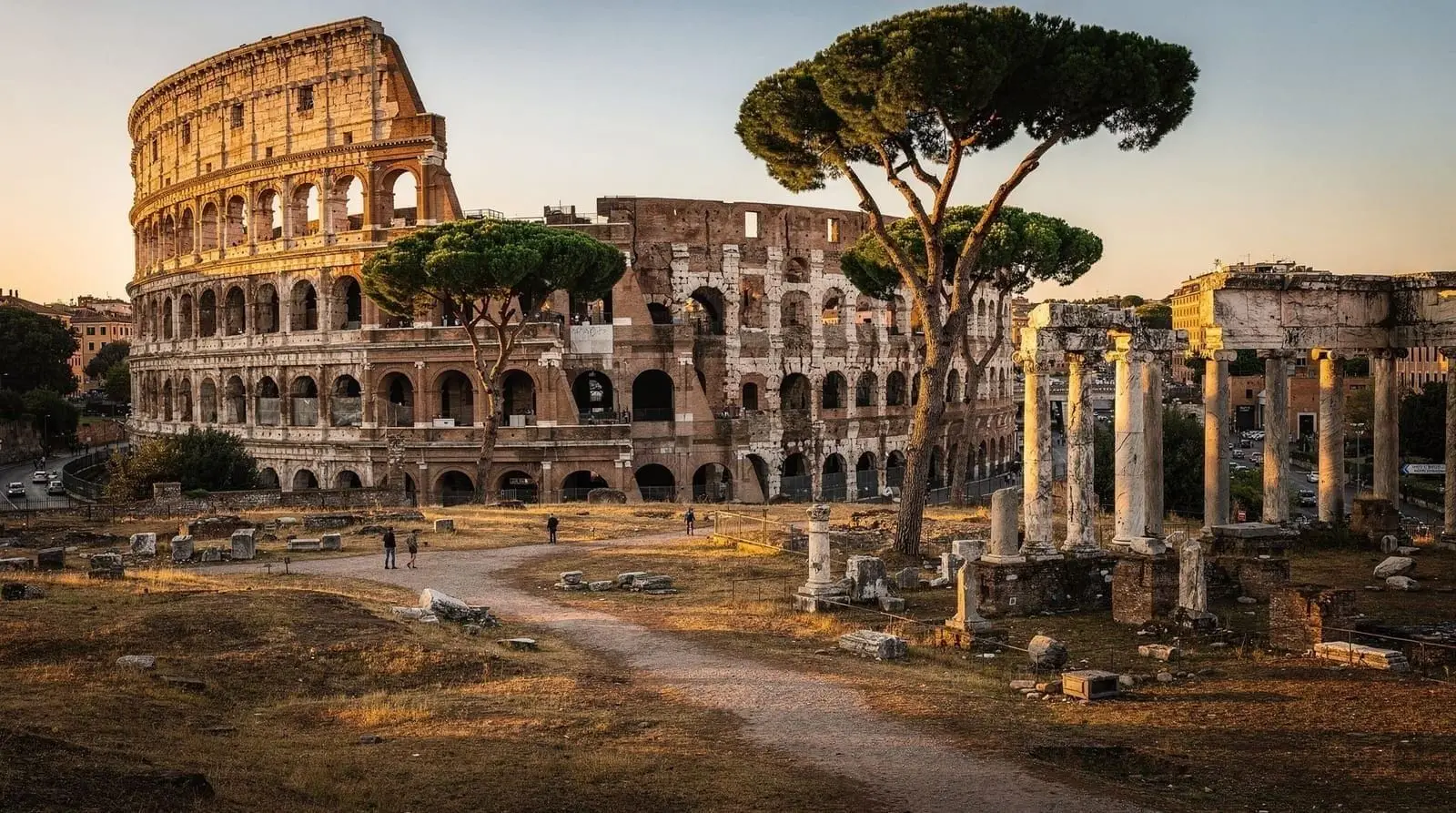
Yes — the Colosseum, Roman Forum, Palatine Hill and Capitoline Hill are walkable in a single day if you book a 9:00 Colosseum entry and manage the order correctly. Add the Baths of Caracalla and Circus Maximus in the afternoon if energy holds. You will not see everything, but you will see everything that matters.
The honest state of affairs
Ancient Rome in one day is achievable, but only with advance planning. The Colosseum requires a timed-entry reservation booked weeks ahead; without it, you will spend 1–2 hours queuing and potentially miss your preferred entry time entirely. The Roman Forum and Palatine Hill are on the same ticket and accessible without separate reservations — but understanding the sequence matters. For the ticket mechanics themselves, see our Colosseum tickets guide.
This itinerary is based on a 9:00–18:00 day, starting from central Rome (Centro Storico, Monti, or Termini area). It is tested and realistic.
| Where | Colosseum, Roman Forum, Palatine Hill, Capitoline Hill |
| Time needed | Full day, roughly 9:00–19:00 |
| Cost | Combined ticket around €18–24; Capitoline Museums extra ~€15 |
| Booking | Colosseum timed entry 4–8 weeks ahead in peak season |
| Getting there | Metro Line B to Colosseo |
| Best time | Start at 9:00 to stay ahead of the crowd curve |
Quick itinerary summary
| Time | Stop | Duration |
|---|---|---|
| 8:30 | Breakfast near the Colosseum | 30 min |
| 9:00 | Colosseum | 60–150 min |
| 10:30–11:00 | Roman Forum | 60–90 min |
| 12:00–12:30 | Palatine Hill | 45–60 min |
| 13:00–14:00 | Lunch (Testaccio or Monti) | 60 min |
| 14:30 | Capitoline Hill | 20–90 min |
| 16:00 | Baths of Caracalla (optional) | 45 min |
| 17:30 | Circus Maximus + Aventino walk (optional) | 30–45 min |
| 18:30–19:00 | Return / aperitivo | — |
Before you go: the booking requirements
Non-negotiable advance bookings:
- Colosseum timed entry — at least 4–8 weeks ahead in peak season (April–October). Nominative ticket (your name on each ticket). Official site: coopculture.it. Choose the 9:00 slot if available.
- Colosseum Full Experience (underground + arena floor) — if you want this, book separately and simultaneously; slots sell out faster than standard tickets.
Optional advance bookings: 3. Domus Aurea (if adding this to the day) — requires separate booking at coopculture.it; morning slot recommended. 4. Guided tour operators often have allocated entry slots that bypass the main online queue — a practical option if the official site shows limited availability.
If you have not yet booked and are less than 2–3 weeks from your visit, a licensed guided tour may be your most reliable option for Colosseum access.
The guided Colosseum, Forum and Palatine group tour covers all three sites with a licensed guide in approximately 3 hours — skip-the-line entry included. Best single booking for the core ancient Rome day.The one-day ancient Rome itinerary
8:30 — Breakfast near the Colosseum
Stay away from the tourist bars immediately facing the Colosseum (prices inflated 30–50%). Walk one block into Monti or toward the Celio neighbourhood: Bar San Calisto style trattorias and bar-pasticcerie (proper espresso and cornetto for €1.50–2) are common. The area around Via Labicana has several honest options.
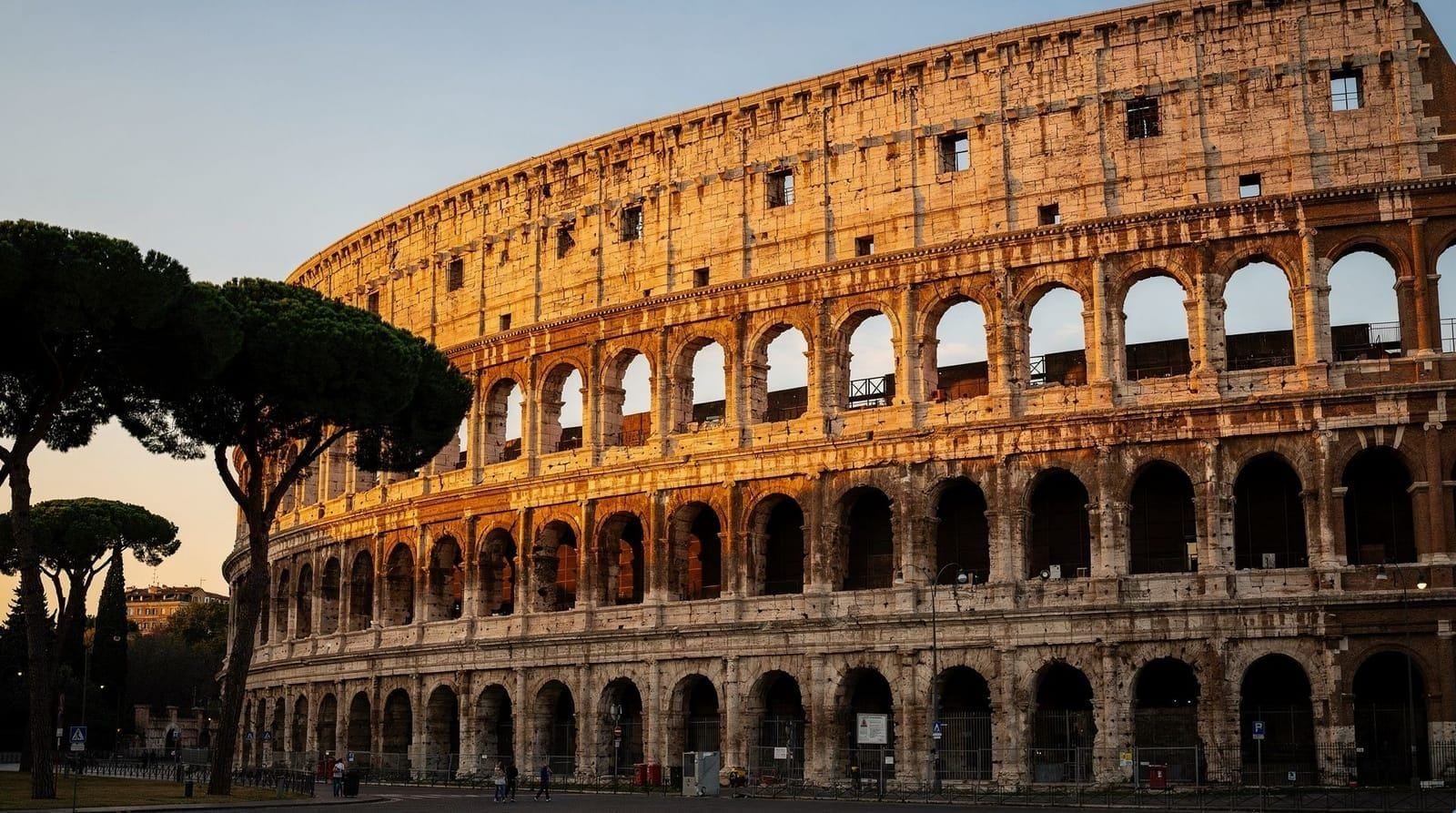
9:00 — Colosseum entry
Arrive 10 minutes early. The entrance is on the north side of the building (facing Via Sacra and Via dei Fori Imperiali). Bring your QR code with screen brightness high and your ID.
Time allocation:
- Standard ticket (tiers 1–2): Allow 60–90 minutes.
- Full Experience (underground + arena floor): Allow 2–2.5 hours. The underground tour has a fixed time (check your booking for the exact slot — usually 20–30 minutes after your main entry time).
Priority inside: Tier 2 for the best overview photographs; the arena floor view from tier 1 for scale understanding; the underground if you have the Full Experience ticket.
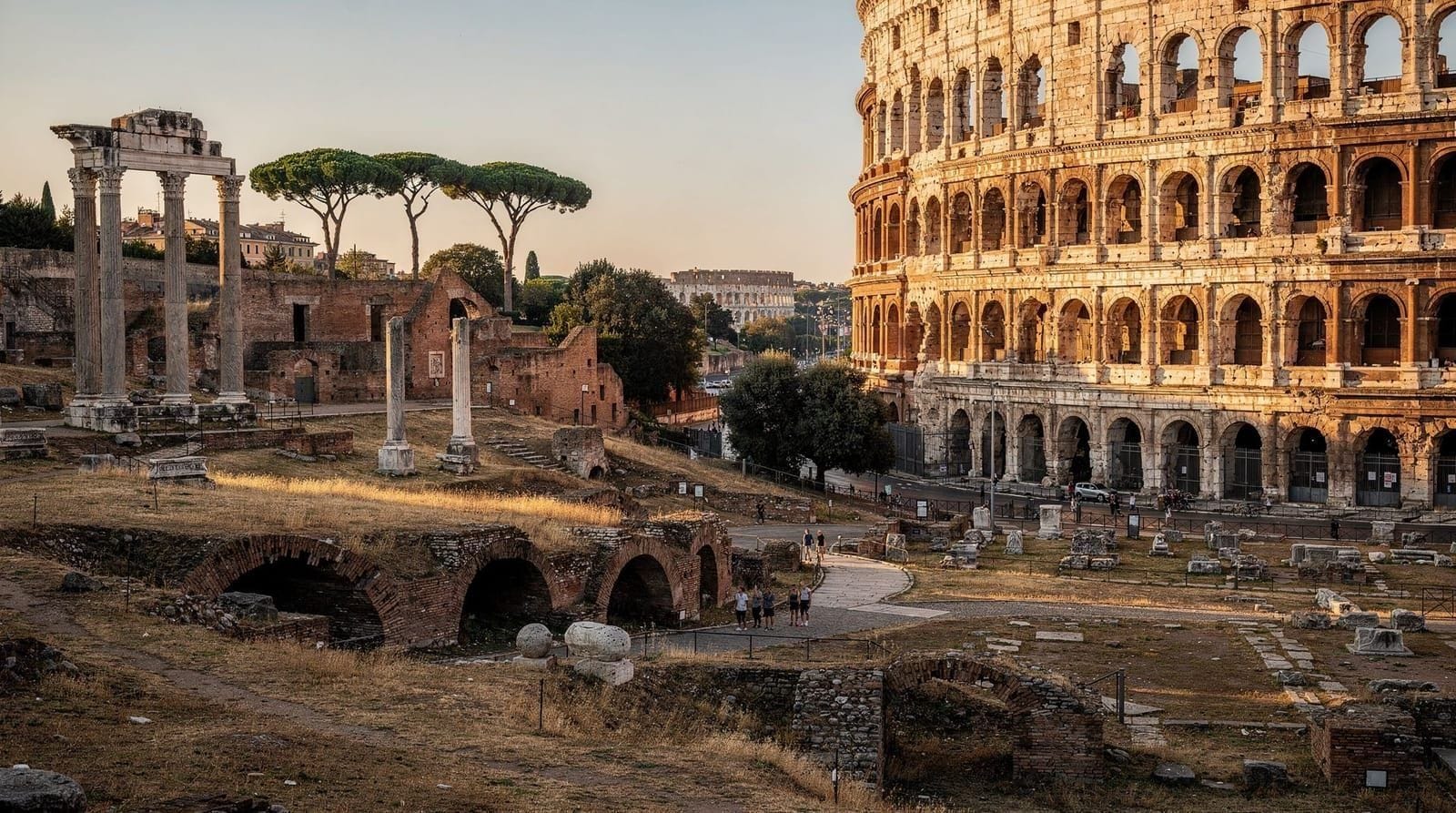
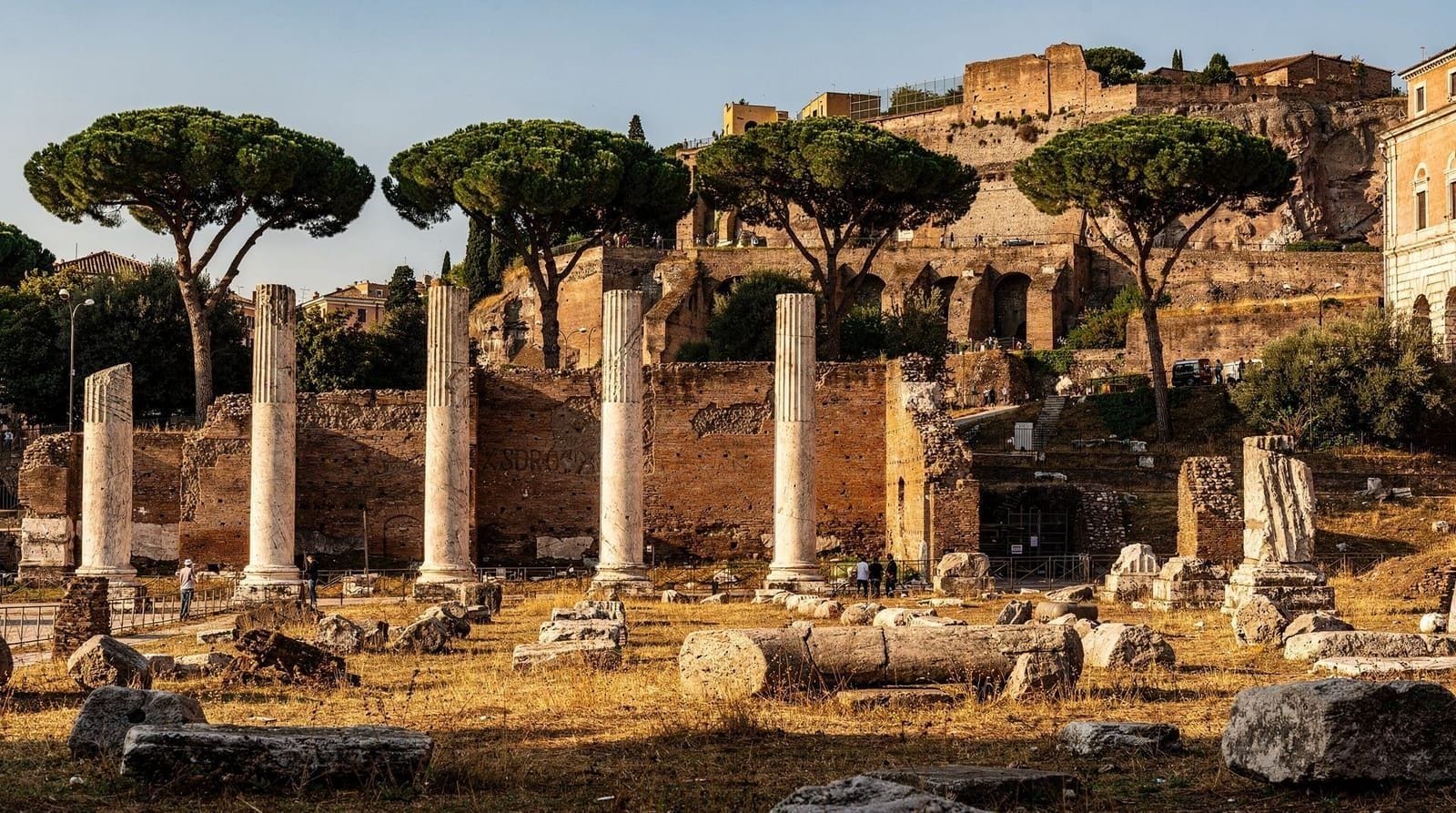
10:30–11:00 — Roman Forum entry
Exit the Colosseum via the Forum entrance (signposted inside). Do not exit onto Via dei Fori Imperiali — you want the connecting path to the Forum, not the external street.
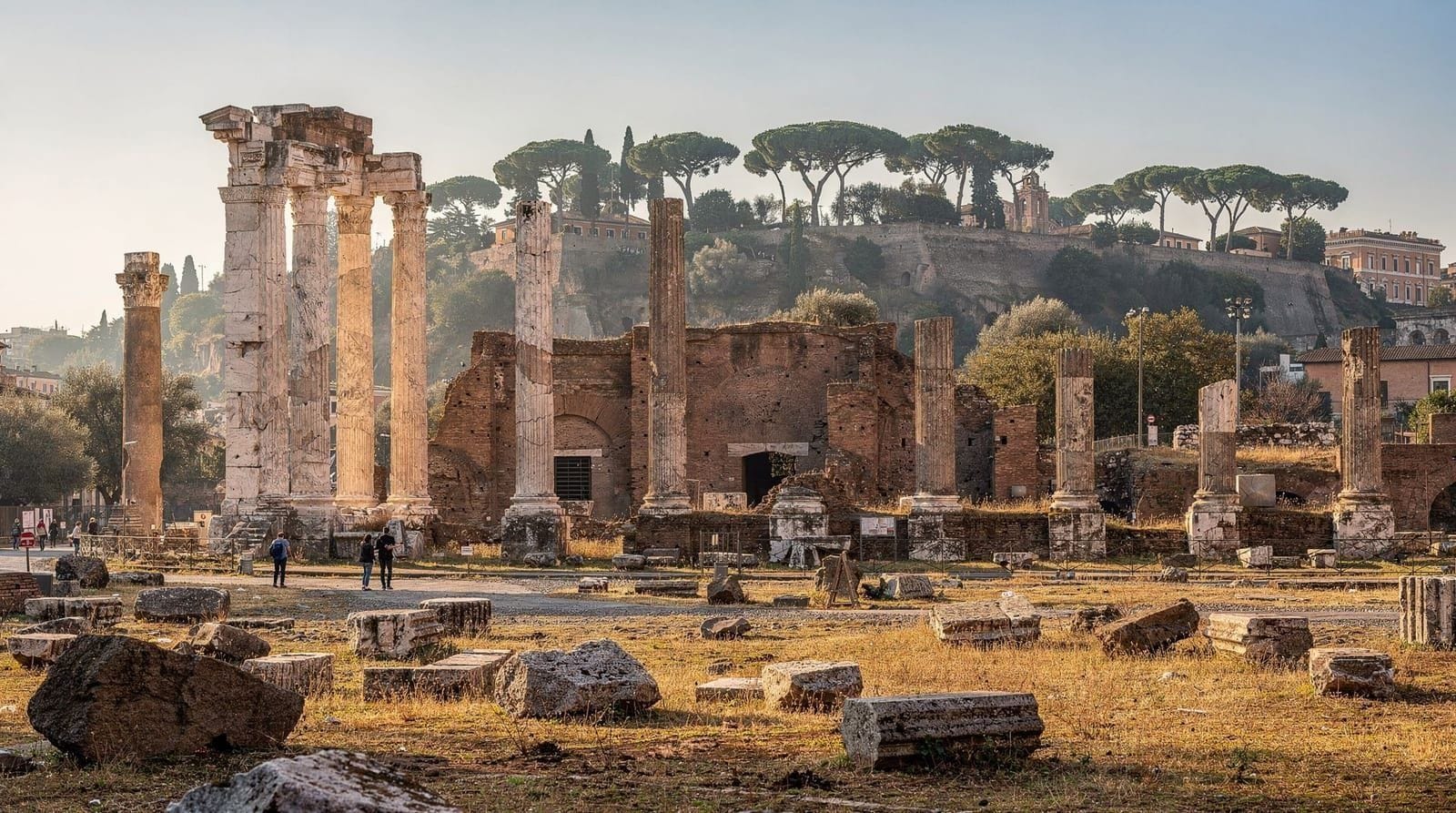
Suggested Forum route (east to west):
- Enter at the Arch of Titus — spend 5 minutes on the reliefs.
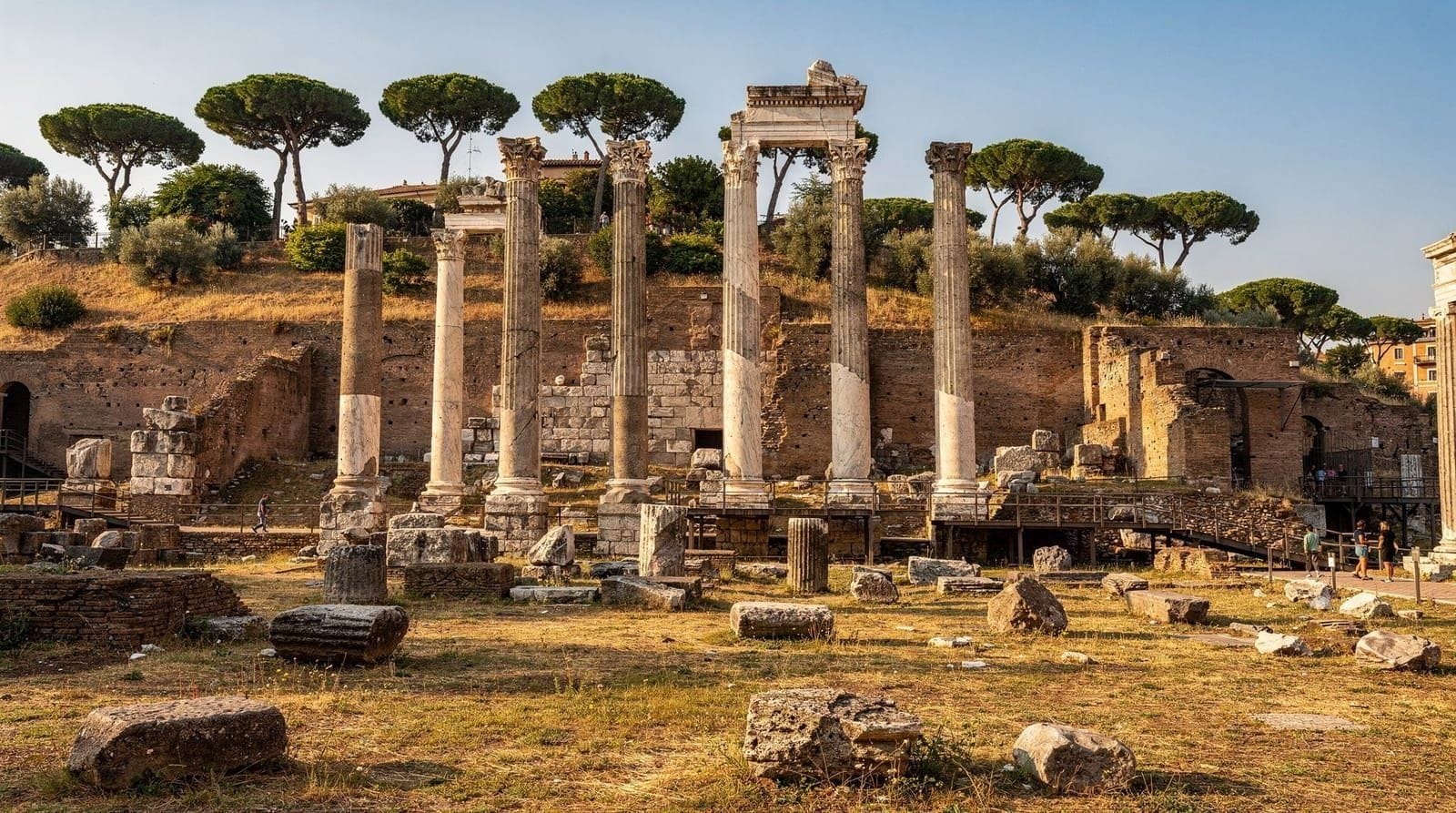
- Temple of Vesta and Vestals’ house — 10 minutes.
- Basilica of Maxentius — walk through the three bays, 10 minutes.
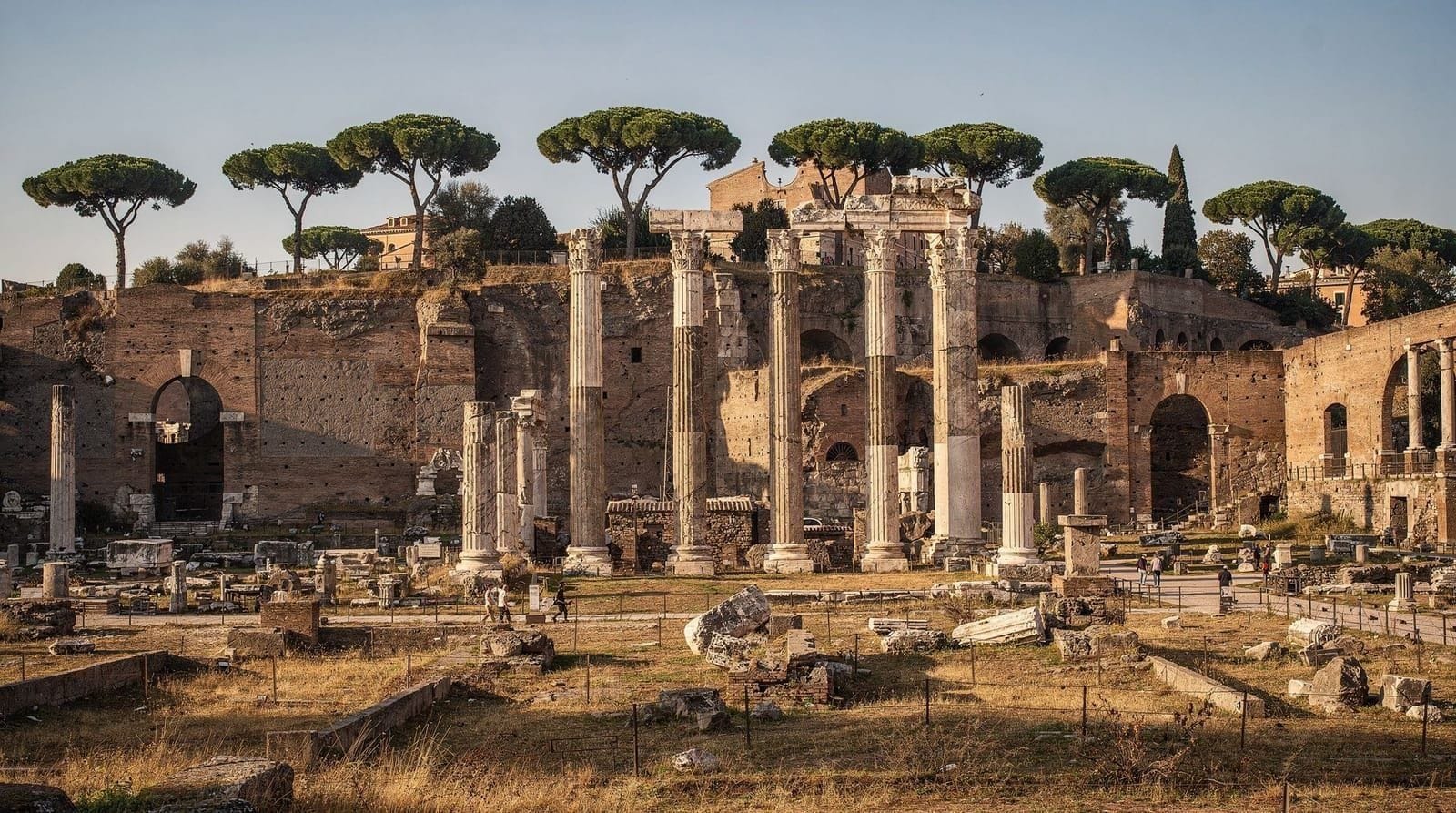
- Temple of Castor (three columns) — 5 minutes.
- Curia Julia — look inside, 5 minutes.
- Rostra and Column of Phocas — 5 minutes.
- Temple of Saturn columns — 5 minutes.
- Exit toward Palatine Hill footpath.
Total Forum time: 60–90 minutes. Do not try to see everything; the items above cover the chronologically and visually essential moments. For a slower, deeper visit on a future trip, our Roman Forum guide goes building by building.
12:00–12:30 — Palatine Hill
Take the footpath up from the Forum floor (signposted near the Temple of Vesta, or at the western end near Saturn). The climb takes 5–8 minutes.
Priority on Palatine:
- Farnese Gardens terrace — the view over the Forum is the best in the entire complex. 15 minutes minimum here.
- Palatine Museum — 20 minutes for the Augustan frescoes and the archaeological sequence.
- Domus Augustana sunken garden — 15 minutes.
Total Palatine time: 45–60 minutes. Our dedicated Palatine Hill guide covers the full site if you want more than the highlights above.
13:00–14:00 — Lunch break
Exit the Palatine complex via the Circo Massimo exit (southern slope, onto Via del Circo Massimo). Testaccio is 15 minutes’ walk west — the most honest eating neighbourhood in Rome. Specific options:
- Osteria Flavio al Velavevodetto (Via di Monte Testaccio 97): old-school Roman trattoria, excellent rigatoni all’amatriciana, €12–16 per pasta dish.
- Roscioli Salumeria con Cucina (Via dei Giubbonari, slightly farther at 20 minutes): world-class cured meats and cheese, busy, book ahead for sit-down.
- Mercato di Testaccio (Via Galvani): the covered market with food stalls; Box 66 (supplì, carciofi, porchetta) for a standing lunch at €8–12 total.
Alternatively, the streets immediately behind the Colosseum (toward Celio/Monti) have trattorie at honest prices: try Via Celimontana or Via dei Santi Quattro Coronati.
14:30 — Capitoline Hill
From Testaccio, bus 23 or 44 to Piazza Venezia (15 minutes) or walk 20 minutes north along Via del Teatro di Marcello. The cordonata (ramped staircase) leads up to the Campidoglio.
If doing the Capitoline Museums (€15, allow 90 minutes):
- Marcus Aurelius equestrian statue
- Capitoline Wolf
- Tabularium Forum view window (best elevated Forum view, afternoon light)
- Brutus bust and Spinario
If time is limited (free, 20 minutes):
- Walk through the Campidoglio piazza and take the terrace view from behind Palazzo Senatorio — free, and still excellent.
- Walk up to the Vittoriano top (€7 elevator, 10 minutes, extraordinary 360-degree view).
Our full Capitoline Museums guide covers the collection room by room if you want to plan the 90-minute version in detail.
16:00 — Baths of Caracalla (optional, strong recommendation)
Bus 118 from Piazza Venezia or Circo Massimo takes 10–15 minutes. Entry €8; open until sunset. If this is your first time in Rome, even 45 minutes here reframes the scale of Roman ambition dramatically.
See: The caldarium arch sequence, the surviving mosaic floor sections, the overall footprint scale from the palaestraground level.
17:30 — Circus Maximus and Aventino walk (optional)
The Circus Maximus is 5 minutes from the Baths. Walk the perimeter (free, 20 minutes) and continue to the Aventine Hill for the Knights of Malta keyhole view — the hedge tunnel framing St. Peter’s dome. This is one of Rome’s least-known and most rewarding free moments. See our Aventino neighborhood guide and our dedicated Circus Maximus guide for the site’s own history.
18:30–19:00 — End of day
Return via metro (Circo Massimo, Line B) to Termini, or walk 25–30 minutes back to the Colosseum/Monti area for aperitivo. The bars in Via Leonina, Via della Madonna dei Monti (Monti neighborhood) do honest aperitivo with free snacks from 18:00 onward.
What to do if you have only half a day for ancient Rome
Priority order:
- Colosseum (mandatory booking, 1.5 hours minimum)
- Roman Forum (45 minutes, walk-through)
- Palatine Hill Farnese terrace (15 minutes for the view)
Skip the Capitoline Museums, Baths of Caracalla and Circus Maximus — these work better on a second day or as a separate afternoon.
Practical logistics for the day
Metro: Line B to Colosseo (start and end of day). Line B to Circo Massimo (for Testaccio, Baths, Circus Maximus). Single ticket €1.50; 100-minute pass valid for all buses/metro within the window.
Water: Carry a refillable bottle. Rome’s nasoni street fountains provide free, safe, cold drinking water throughout the historic area. There is one near the Arch of Titus and several along Via dei Fori Imperiali.
Heat management (July–August): Start at 9:00, be done with the Forum and Palatine by 12:30, take shelter during 13:00–15:00 (lunch in a cool trattoria, or the air-conditioned Capitoline Museums). Resume with the Baths of Caracalla at 16:00 when heat begins to ease.
What to wear: Comfortable walking shoes (cobblestones throughout), light layers (the Forum has no shade; Palatine has more). No specific dress code for the ancient sites (unlike churches and the Vatican).
The Colosseum arena floor and underground guided tour — the most complete Colosseum experience and a good anchor for the full ancient Rome day if you want expert commentary on the most significant stop.Managing energy across the day
Nine hours of ancient Rome on foot is physically demanding. The total walking distance of the core itinerary (Colosseum → Forum → Palatine → Capitoline → Baths → Circus Maximus) is approximately 7–8 km, with significant elevation changes on Palatine and Capitoline.
Energy management strategies:
The 13:00–15:00 lunch break is structural, not optional. The Forum has no shade and summer temperatures regularly reach 30–35 °C. Even in spring, the Forum exposes you to direct sun for extended periods. A full sit-down lunch in a cool trattoria (not a standing sandwich) restores both hydration and concentration.
The Colosseum morning vs afternoon debate: Colosseum in the morning is standard advice, and it is correct — the crowd trajectory runs from manageable at 9:00 to dense by 11:00 to heavy by 13:00. But consider the reverse order (Forum first, Colosseum last) if your Colosseum slot is unavoidably afternoon: the Forum is less regulated by entry time, so you can enter at any point.
Shoes matter significantly. The Via Sacra in the Roman Forum is paved with original basalt — the same material as the original Roman road surface. It is beautiful and completely unforgiving on feet in thin-soled shoes after 4–5 hours. Padded soles, ideally with ankle support.
What guides explain that panels don’t
The Roman Forum is notoriously hard to read without expert help. The panels and information boards are descriptive but not interpretive — they tell you what a building is, not why it matters in relation to everything else around it.
The things a good licensed guide explains that the panels do not:
- The visual sightlines designed into the Forum: the Temple of Saturn aligns with the Curia Julia and the Capitoline Hill beyond in a deliberate power axis. Processions were designed to read this axis.
- The chronological layering: the Temple of Romulus (4th century CE), sitting next to the Temple of Castor (484 BCE), next to medieval church interventions — the panels identify them separately but don’t explain the 800-year span they represent.
- The political choreography of the Rostra: who spoke there, what was displayed there (the executed Cicero’s hands and tongue were nailed to the Rostra by Mark Antony in 43 BCE — an event Appian describes in detail), what the spatial relationship to the crowd below implied about power.
- The water: the Forum valley flooded regularly before drainage works in the Etruscan period. The Cloaca Maxima (great sewer, 6th century BCE) is the engineering that made the Forum possible; its outlet on the Tiber is still visible today.
A guided tour (2.5–3 hours covering all three sites) is particularly effective for first-time visitors who want to leave the Forum understanding it as a system rather than a collection of named ruins.
The Palatine Hill view: practical photography notes
The Farnese Gardens terrace — the best photo spot in the entire Colosseum-Forum-Palatine complex — is most effective in specific conditions:
Morning light (9:30–11:00): The Forum is lit from the east (the Colosseum side). Shadows are long, the Temple of Saturn columns glow amber, and the Arch of Septimius Severus reads well in silhouette. The Forum floor is still relatively empty.
Late afternoon (16:00–18:00, April–October): Golden hour light from the southwest illuminates the brick facades and the standing columns. The Palatine terrace faces north-northeast, so the sun is behind you in the afternoon — favorable for photography of the Forum floor below.
Midday (12:00–14:00): Direct overhead sun creates harsh shadows and flat lighting on the ruins. This is the worst light for photography of the Forum; use this time for the shaded interior of the Palatine Museum instead.
Honest assessment: what will surprise you
The Colosseum is smaller than most people expect. The external footprint is 188 × 156 metres — large, but not the stadium-city that photographs suggest. The interior is dramatic; the exterior less overwhelming in person than in images. First-time visitors frequently comment on this.
The Forum is larger than most people expect. If you approach it thinking “I’ll just quickly walk through,” you will be wrong. The site is 300+ metres long with significant depth in all directions; the buildings are at various distances from the main Via Sacra; and the Palatine Hill above adds another 30 minutes of mandatory time.
Palatine Hill will be your favourite part. This is consistent feedback from visitors who do the full combined visit. The combination of quieter crowds, better shade, higher vantage point, and the Augustan frescoes in the museum makes it the most personally absorbing of the three sites — and it is the one everyone arrives at expecting least.
Ancient Rome over multiple days
This guide covers the core sites achievable in one day. For a deeper ancient Rome programme spread over 2–3 days:
- Day 2 additions: Domus Aurea (morning, separate booking) + Capitoline Museums (afternoon) + Appian Way and catacombs (half-day). See our Domus Aurea guide and Appian Way guide.
- Day 3: Ostia Antica day trip (half-day, 45 minutes from Rome) — see our Ostia Antica vs Pompeii comparison.
For a broader Rome multi-day plan (combining ancient sites with Vatican and Centro Storico), see our 3-day Rome overview.
Skip-the-line ancient Rome tour — an efficient guided option for the Colosseum and Forum that handles the booking complexity and gives you a knowledgeable guide for both sites.Frequently asked questions about Ancient Rome in one day: the optimised, honest itinerary
Do I need separate tickets for the Colosseum, Forum and Palatine Hill?
What is the biggest mistake people make trying to see ancient Rome in one day?
Top experiences
Bookable activities with verified prices and instant confirmation on GetYourGuide.