Aventino neighborhood guide: the keyhole, orange garden and quiet Rome
Rome: E-Bike Tour of the Seven Hills
Duration: 3 hours
What is Aventino known for in Rome?
Aventino is Rome's quietest central hill, famous for three free attractions: the Knights of Malta keyhole (Piazza dei Cavalieri di Malta) where you look through a tiny aperture and see St. Peter's dome perfectly framed by a corridor of hedges; the Orange Garden (Giardino degli Aranci) with one of Rome's best panoramic views across the city; and the Rose Garden (Roseto Comunale) open free in spring. The hill also has Santa Sabina, one of Rome's oldest and most beautiful basilicas.
The most peaceful hill in central Rome
The Aventino (Aventine Hill) is one of Rome’s seven classical hills, and the most striking counterpoint to the tourist density of the city below. While the Colosseum queues stretch through the heat and the Vatican fills with 25,000 visitors daily, the Aventino receives a fraction of that traffic — yet contains some of Rome’s most unusual free sights, a 5th-century basilica of extraordinary quality, and the most serene hour-long walk you can take without leaving the city center.
This is not a hidden gem in the Instagram sense — the keyhole is well-known, and occasionally you will find a queue of 8–10 people. But the scale is entirely different from the major monuments. On a Tuesday morning, you may have the Orange Garden almost entirely to yourself.
| Where | Aventine Hill, above Testaccio and the Circus Maximus |
| Cost | Free — keyhole, Orange Garden, Santa Sabina, Rose Garden (seasonal) |
| Time needed | 2–2.5 hours for the full circuit |
| Getting there | Metro Circo Massimo (Line B), then 10-minute walk uphill |
| Best time | Weekday morning for the basilica; late afternoon for the Orange Garden view |
| Pair with | Testaccio for lunch, Circus Maximus and Baths of Caracalla afterward |
The Knights of Malta keyhole
Piazza dei Cavalieri di Malta is a formal baroque square designed by Giambattista Piranesi in 1765, on the highest point of the Aventine Hill. The square was created to honor the Knights of Malta (now the Sovereign Military Order of Malta), whose priory — the Villa del Priorato di Malta — sits behind the main gate.
The keyhole itself is on that main gate: a standard bronze door lock. You bend slightly and look through it.
What you see: a long corridor of precisely trimmed cypress hedges, converging in perfect perspective, with the dome of St. Peter’s Basilica — which is actually 2 kilometers away across the Tiber — perfectly centered and framed at the end of the corridor as if it were designed as a telescope. The dome appears much closer than it is because of the hedge alignment, and the effect is startling.
The story behind it: whether this alignment was intentional by Piranesi, or a geometric accident, or a myth that accumulated after the fact, is genuinely disputed. Some historians argue it was a deliberate symbolic statement about the relationship between the Knights of Malta (guardians of the Catholic military order) and St. Peter’s (the seat of the papacy). Others suggest the coincidence is real but coincidental. The view is undeniable regardless.
Practical notes: Free. No ticket, no booking, no tour required. Simply walk to the gate at Piazza dei Cavalieri di Malta and look through the keyhole. The priory itself is not open to the public. Best light for the view is morning to midday when St. Peter’s is in good light. The dome photograph through the keyhole is possible but requires a steady hand and patience — a phone pressed flat against the door (angled slightly) works better than trying to hold it at a distance.
The Orange Garden (Giardino degli Aranci)
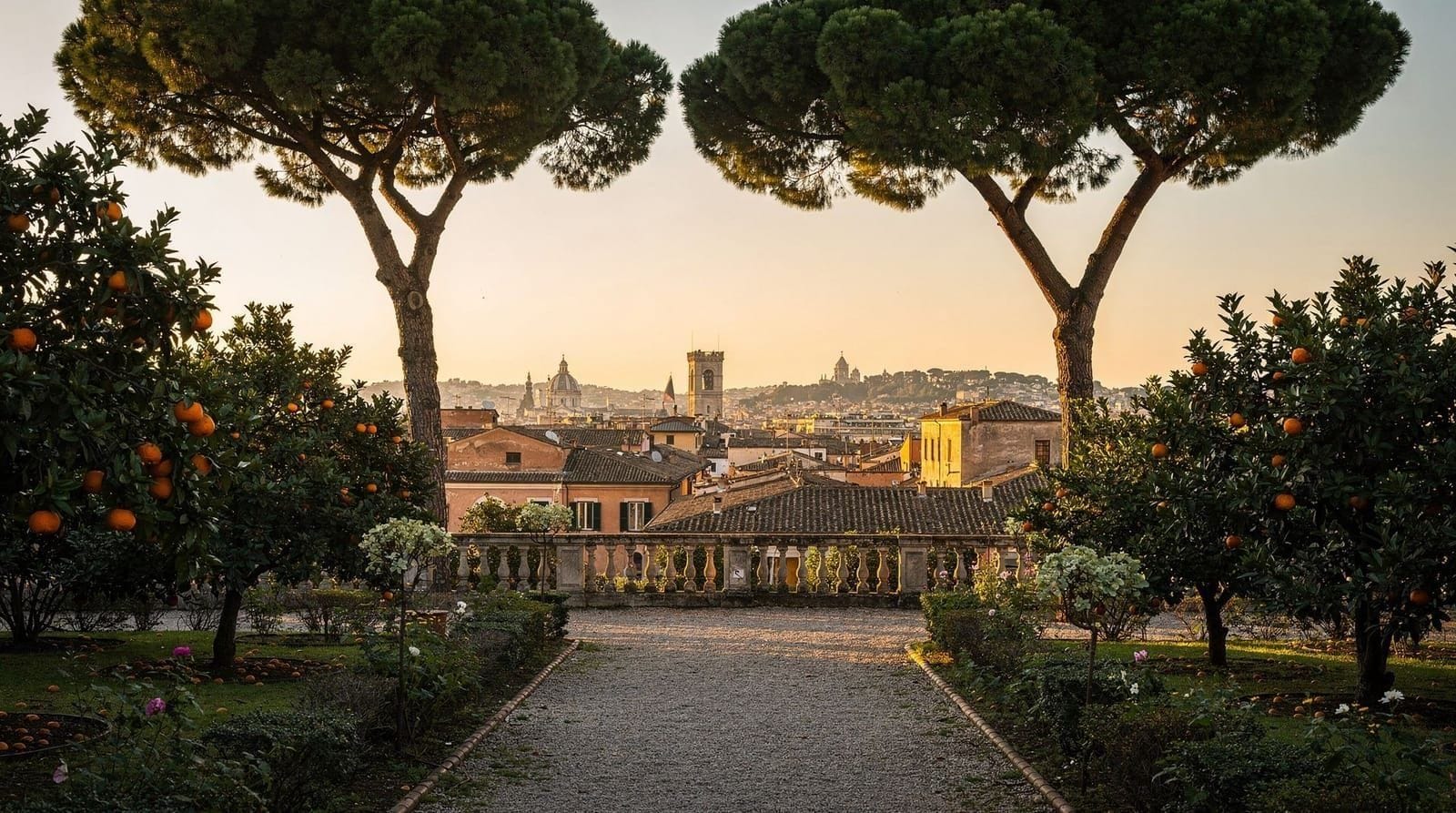
A short walk along via di Santa Sabina from the Piazza dei Cavalieri di Malta brings you to the entrance of the Giardino degli Aranci — the Orange Garden, formally Parco Savello.
The garden occupies the site of a medieval fortification (the Savello fortress, which explains the thick walls around the perimeter) and was converted into a public park in 1932. The bitter orange trees (from which the garden takes its name) are not decorative — they are the source of the bergamot oil used in Acqua di Colonia fragrances, planted here in the Middle Ages.
The garden is compact but the main draw is the belvedere terrace along the southern wall, from which the view extends across the Tiber valley to Vatican and St. Peter’s dome, with the roofline of Trastevere and the cupolas of Centro Storico laid out below. This is arguably the best free panoramic view in Rome — better, many argue, than the Gianicolo (more popular) because the angle is different and the garden setting is more intimate.
What to see here:
- The terrace view, naturally. Best at sunset (the garden closes at dusk).
- The medieval wall structure — the crenellated perimeter tells you this was once a fortification.
- A modest fountain in the central path, mostly for orientation.
- The orange trees themselves, in rows — they bloom in April and May with a very strong fragrance.
- A rose-covered pergola along one path, particularly good in late spring.
Practical notes: Free. Open daily from 7 am to approximately sunset (seasonal). No food or vendors inside. The nearest coffee is on via Marmorata (10 minutes downhill) in Testaccio, which is where you should head for lunch after the Aventino circuit.
Santa Sabina: one of Rome’s oldest and least visited basilicas
Positioned directly between the keyhole and the Orange Garden, Santa Sabina all’Aventino (422–432 CE) is one of the best arguments for walking slowly and looking up when you pass what seems like just another Roman church.
The basilica was built on the site of a Roman house, possibly that of a Roman matron named Sabina, during the pontificate of Celestine I. Unlike most Roman basilicas that have been heavily rebuilt, expanded, and decoratively overlaid through the centuries, Santa Sabina retains the essential structure and character of a 5th-century early Christian church. The long nave, white Corinthian columns recycled from a temple of Juno, and the uncluttered interior communicate what the first generation of publicly built Christian churches looked like.
What to look for:
The wooden doors (5th century): The main entrance doors are the oldest-known carved wooden doors in existence, dating to the original construction. Eighteen panels survive (out of an original 28), carved in cypress wood, depicting scenes from the Old and New Testaments. Panel 16 is one of the earliest-known representations of the Crucifixion in Christian art — and it is startlingly different from later iconography: Christ is shown with arms raised but no cross visible, flanked by the two thieves in a composition more Roman than medieval. Look for it in the upper left section of the door.
The nave columns: 24 Corinthian columns from a pre-existing classical temple — still in their original marble, still carrying the weight they were designed to carry 2,000 years ago.
The 5th-century mosaic inscription above the main entrance inside: one of the few early Christian mosaic inscriptions surviving in Rome.
The Orange Tree of St. Dominic: In the adjacent courtyard (accessed separately, adjacent to the priory), a famous orange tree is held to have been planted by St. Dominic himself in the early 13th century when he lived here. The basilica has been under Dominican administration since 1221. The courtyard is not always accessible.
Practical notes: Free entry. Open daily 7:30 am–12 pm and 3:30–6 pm. Dress code enforced (shoulders and knees covered). Usually uncrowded — 10–20 people maximum on a normal morning, often fewer.
The Rose Garden (Roseto Comunale)
On the slopes of the Aventine Hill facing the Circus Maximus, the Roseto Comunale di Roma contains over 1,100 varieties of roses in a terraced hillside garden of approximately 10,000 square meters.
The garden’s history is unusual: it occupies the site of the medieval Jewish cemetery of Rome. When the community was required to relocate the cemetery in the 19th century, the municipality eventually established the rose garden here in 1931. Some accounts note that roses were chosen as a plant associated with mourning and remembrance in multiple traditions.
The roses bloom in late April through mid-June. During this period the garden is open daily (roughly 9 am to sunset) and entry is free. The views down to the Circus Maximus from the upper terraces are excellent.
Outside the blooming season, the garden is closed.
If you only have an hour: what to prioritise
| Sight | Time | Priority |
|---|---|---|
| Knights of Malta keyhole | 5–10 min | Do first — quick, free, unmissable |
| Santa Sabina basilica | 20–30 min | High — genuinely rare early Christian interior |
| Orange Garden view | 20–30 min | High — best free panorama, especially late afternoon |
| Rose Garden (seasonal) | 15–20 min | Only if visiting late April–mid-June |
| Sant’Alessio church | 10 min | Optional — for Cosmatesque floor enthusiasts |
Why the hill has this character: a quick history
The Aventine has carried a symbolic weight in Roman history since the earliest Republic. It was the hill of the plebeians — ordinary citizens who, according to Roman tradition, staged the first “secession” here in 494 BCE, withdrawing from the city in a labour-dispute-like protest against patrician rule until their grievances were addressed with the creation of the office of tribune of the plebs. For centuries afterward, the Aventine remained associated with the common people rather than the aristocracy that dominated the Palatine across the valley. That character shifted over the medieval and modern periods as the hill became a quiet, high-status residential address — the diplomatic and upper-middle-class neighbourhood it is today — but the contrast with the Palatine’s imperial history is a detail worth knowing if you visit both hills on the same trip: two adjacent hills, one built for emperors, one historically associated with ordinary Romans asserting their rights.
Aventino’s secular sights and the neighborhood character
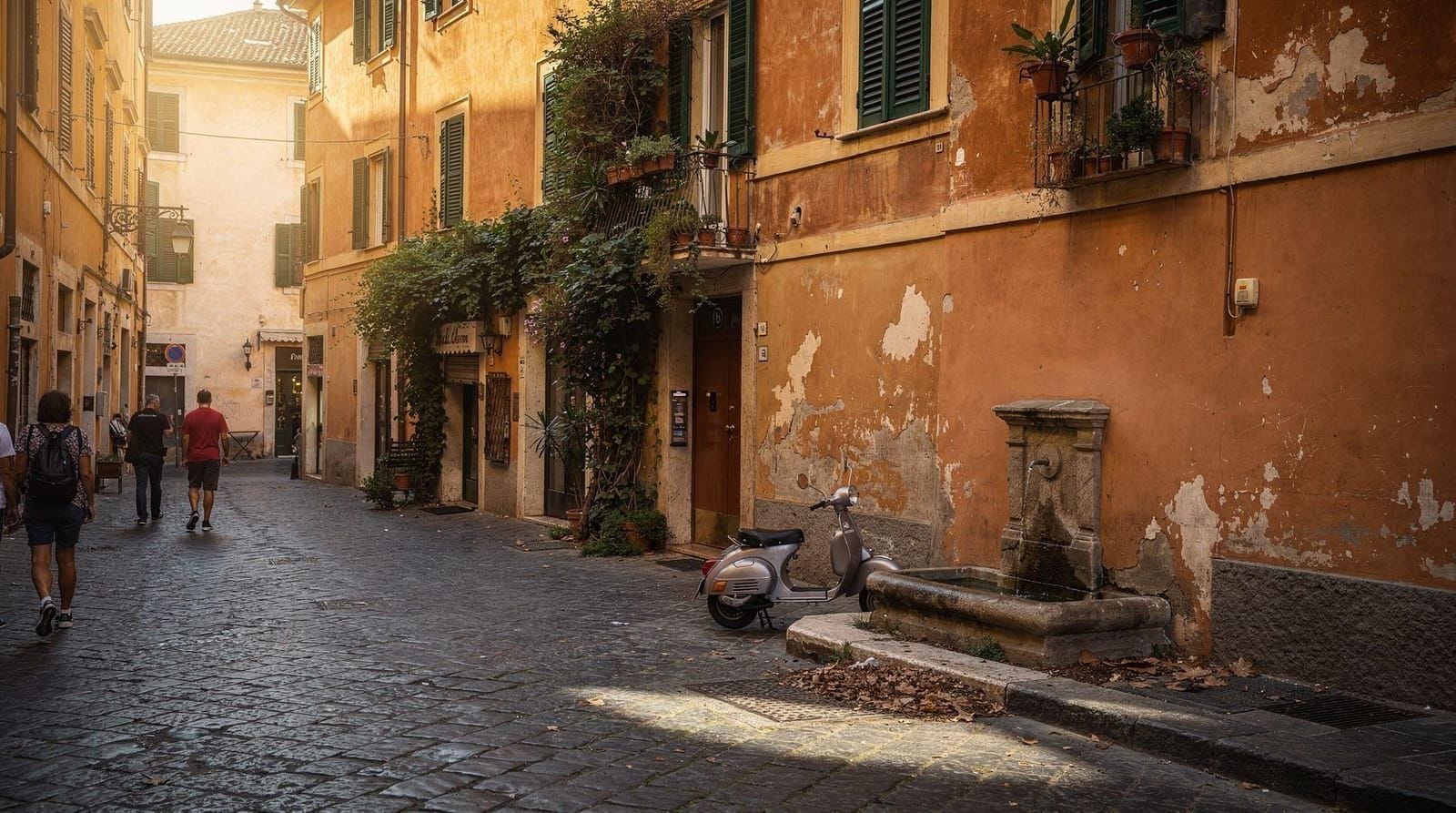
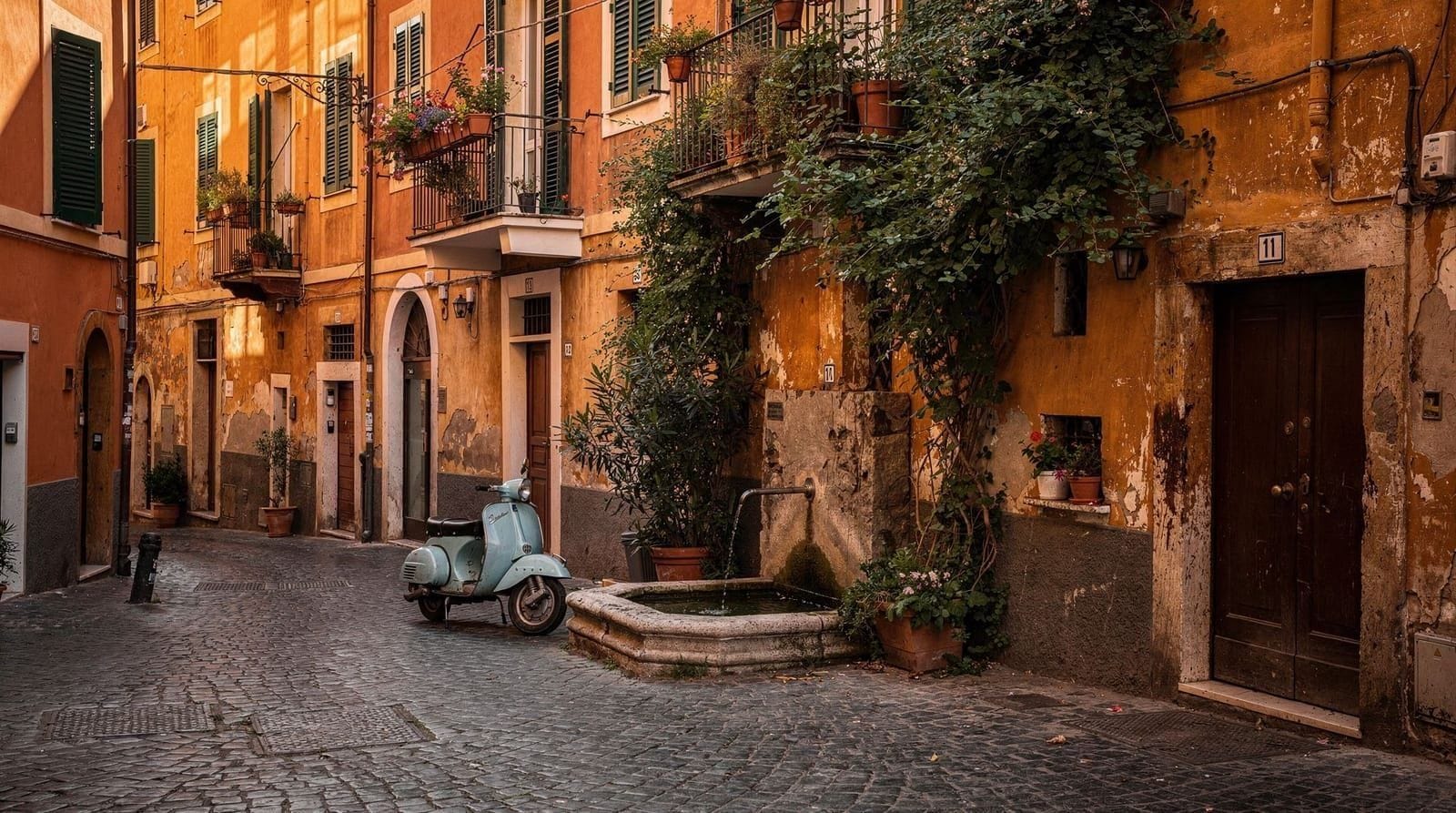
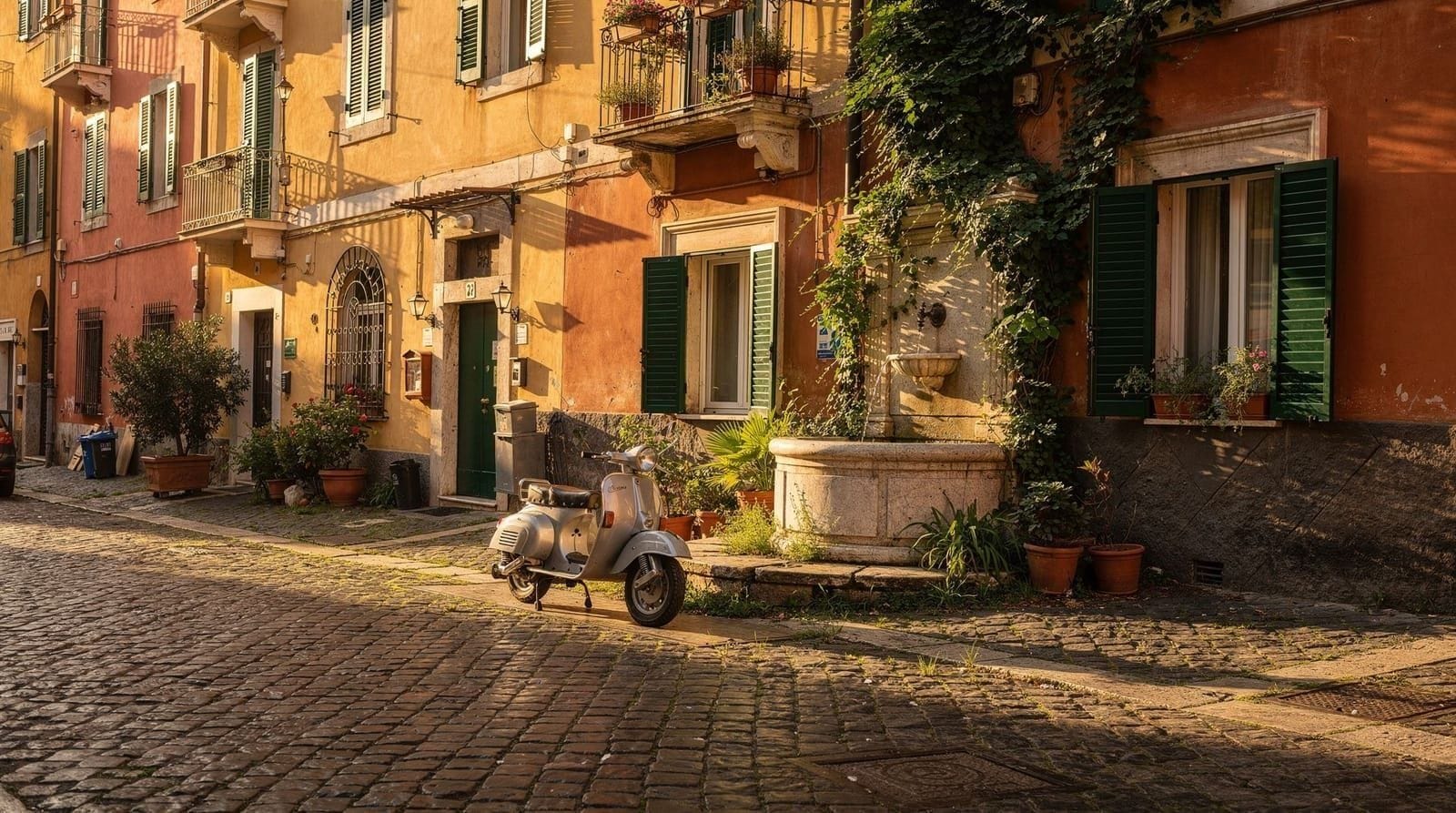
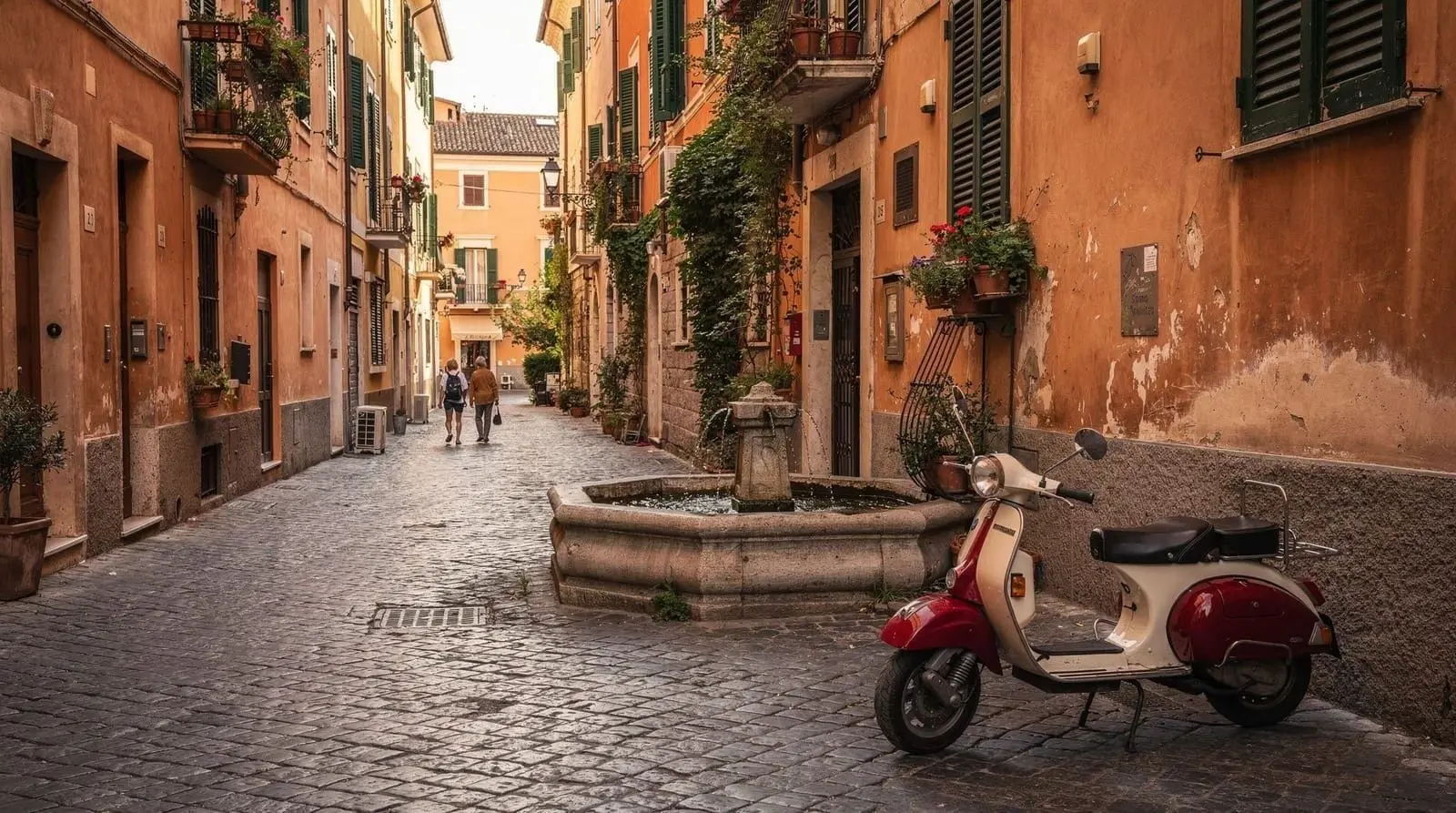
The Aventino hill itself is one of Rome’s most expensive and residential neighborhoods — upper-middle-class Romans, diplomats, and the occasional ministerial address. Streets like via Raimondi and via Aventina pass villas and apartment buildings with no shops, no tourist cafés, and almost no foot traffic. This is not a neighborhood with a food or nightlife scene (that is Testaccio, directly below), but rather a genuinely residential urban area.
Sant’Alessio church (via di Sant’Alessio): Smaller than Santa Sabina but worth a quick visit for its 11th-century Cosmatesque marble floor — the geometric inlay work typical of medieval Rome. Usually open with minimal visitors.
The Priory of Malta park entrance: The priory garden is occasionally accessible via appointment for garden visits, though scheduling is inconsistent. Check current availability if you are particularly interested.
Via di Santa Sabina walk: The main path connecting the keyhole, Santa Sabina, and the Orange Garden is itself pleasant — shaded by umbrella pines, relatively quiet, with views toward the Circus Maximus through gaps in the wall on the eastern side.
Rome’s e-bike Seven Hills tour covers the Aventino along with the other six classical hills in 3 hours — the most efficient way to understand how the hills relate to each other geographically and historically, including the Palatine, Capitoline, and Janiculum.Combining Aventino with nearby areas
The Aventino sits above Testaccio to the north and west, and above the Circus Maximus to the east. A natural half-day circuit:
Morning: Testaccio Market (open until 2 pm daily) for breakfast and market food. Walk up via Marmorata to the Aventino (15 minutes). Circuit: keyhole, Santa Sabina, Orange Garden. Time: 2–2.5 hours at a relaxed pace.
Midday: Descend to Testaccio for lunch at Flavio al Velavevodetto (Piazza della Bolivia) or Da Remo pizzeria — both are genuinely good and local. The Testaccio food guide has the full rundown.
Afternoon: From Testaccio, the Circus Maximus and Baths of Caracalla are 10–15 minutes’ walk. The Circus Maximus guide covers what the vast site actually contains.
The Appian Way is 20–25 minutes south by bus or taxi — the logical next step for an ancient Rome day that starts with Aventino. The Baths of Caracalla are also nearby, just off the Aventino’s eastern base.
Getting to Aventino
Aventino has no metro station. The nearest metro stops are:
- Circo Massimo (Line B): 10-minute walk uphill via via della Valle Murcia or via di Sant’Anselmo.
- Piramide (Line B): 15-minute walk — slightly further but passes the Protestant Cemetery.
Bus options:
- Bus 175 from Termini → Circus Maximus → Aventino.
- Bus 23 from Lungotevere along the river, stops on via Marmorata at the base of the hill.
- Tram 3 from the Colosseum area to via Marmorata.
On foot from Trastevere: 20–25 minutes via Ponte Aventino (Sublicio) and up via della Fonte Meravigliosa.
On foot from the Colosseum: 25 minutes via the Circus Maximus.
Taxis and rideshare: Given the lack of a direct metro stop, a taxi to Piazza dei Cavalieri di Malta or the top of via di Santa Sabina is a reasonable option for visitors with limited mobility or time — typically €10–15 from Termini or the Colosseum area. Drivers know the piazza by name.
Who Aventino is best for
Aventino rewards travelers who have 2–3 days in Rome and want at least one half-day that feels genuinely different from the Colosseum and Vatican crowds. The neighborhood combination of free unusual sights (keyhole, Orange Garden), an exceptional early Christian basilica, and the proximity to Testaccio’s food culture makes it one of the most satisfying half-days available in Rome — particularly if you are trying to build a trip that has moments of calm within it.
For a broader picture of where Aventino sits in relation to the rest of the city, see the Rome neighborhoods overview and the full Aventino and Circus Maximus destination page. To understand how Aventino fits into a broader Rome itinerary, see best areas to stay in Rome and the Rome for first-timers guide. For the ancient site immediately below the hill, see the Circus Maximus guide which covers what the vast arena site contains today.
A Vespa sidecar tour of Rome’s highlights covers the Aventino area along with the city’s major landmarks — a scenic way to see the seven hills and understand the city’s topography, with commentary from a local guide.What Aventino lacks (so expectations are honest)
There are no restaurants, bars, or shops of note directly on the hill itself — this is by design, since it is a genuinely residential area rather than a tourist circuit. Do not expect to find lunch, a gelato stand, or a souvenir shop anywhere along the keyhole-to-Orange-Garden walk; the nearest options are down in Testaccio, ten minutes away. There are also no public toilets on the hill itself, so plan accordingly before you climb up. None of this detracts from the visit, but arriving expecting a Trastevere-style stroll with cafés at every corner will disappoint — Aventino’s appeal is precisely that it has resisted that kind of development.
Frequently asked questions about Aventino neighborhood guide: the keyhole, orange garden and quiet Rome
Is the Knights of Malta keyhole free?
What is the best time to visit the Orange Garden on Aventino?
Is Aventino a good area to stay in Rome?
How do I get to Aventino from the Colosseum?
Is the Rose Garden on Aventino always open?
What is special about Santa Sabina basilica on Aventino?
Top experiences
Bookable activities with verified prices and instant confirmation on GetYourGuide.