Viterbo & the Tuscia
Viterbo is the best-preserved medieval city in Lazio — papal quarter, thermal baths, and Etruscan necropolis nearby. 1h30 from Rome by bus. Honest guide.
From Rome: Bagnoregio & Orvieto Day Trip with Wines & Lunch
Quick facts
- Distance from Rome
- ~100 km northwest
- Bus from Roma Saxa Rubra
- 1h30, Cotral coach, ~€6 each way
- Medieval quarter
- San Pellegrino — one of Italy's best-preserved
- Thermal baths
- Terme dei Papi — €20–28 per session
- Best day
- Weekdays or early weekends (avoid August)
The medieval city that out-popes Rome
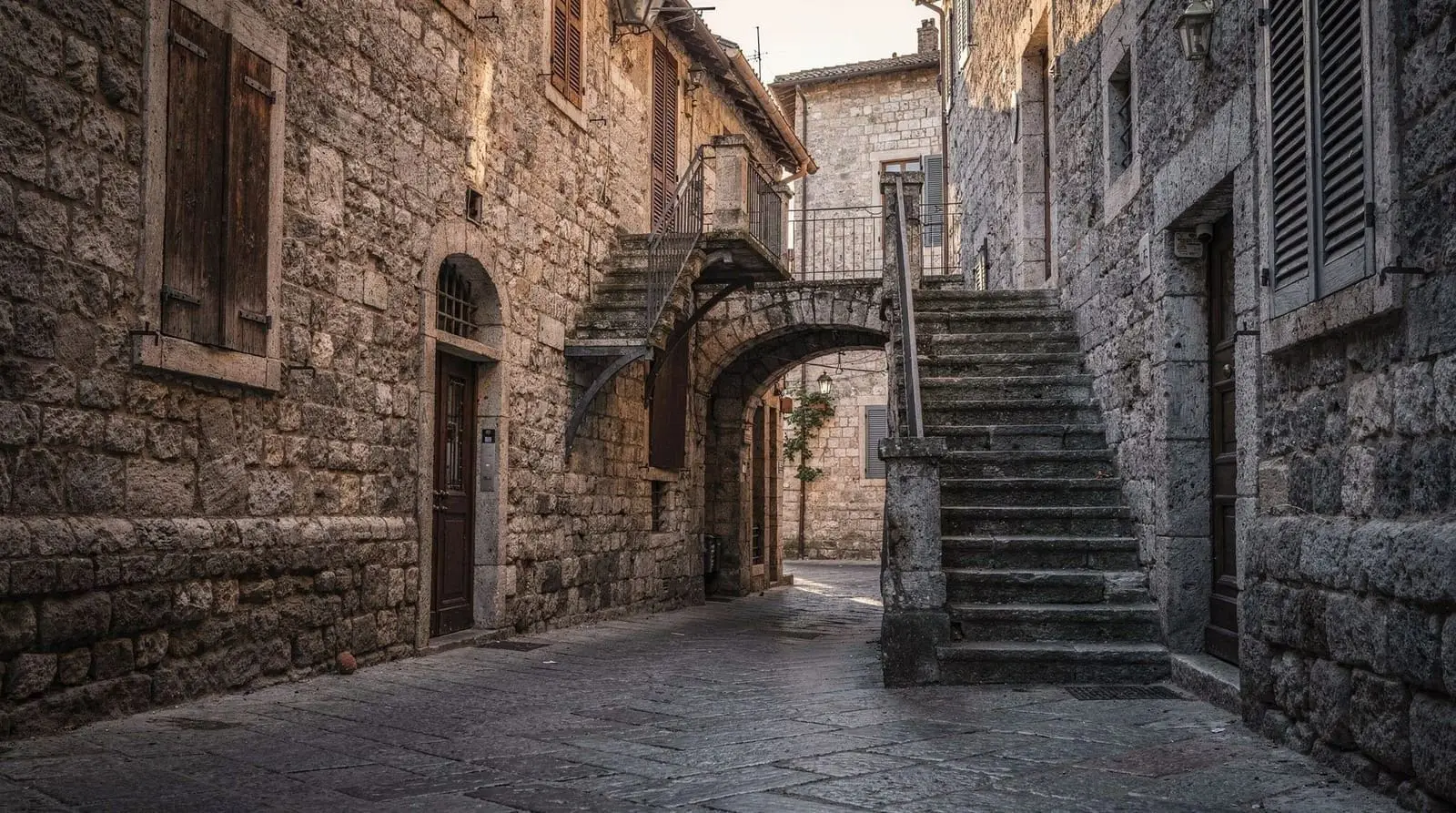
In the 13th century, Viterbo briefly out-ranked Rome as the seat of the papacy — five popes died here, and the historic papal quarter (Quartiere San Pellegrino) survives almost entirely intact. It is an extraordinary piece of medieval urbanism: loggias, external staircases, towers, and dark stone passages that look exactly as they did in the 1200s. No reconstruction, no tourist overlay. Just a working Italian city that happens to have one of the finest medieval street plans in the country.
Viterbo is the capital of the Tuscia (the old Etruscan territory of northern Lazio), and the landscape around it is correspondingly ancient — Etruscan necropolises, volcanic lakes, and thermal springs dot the countryside. The city itself is manageable as a day trip from Rome, though it rewards a relaxed pace more than a rushed sprint through the highlights.
| Where | ~100 km northwest of Rome, northern Lazio (Tuscia) |
| Getting there | Cotral coach from Roma Saxa Rubra, ~1h30, around €6 each way |
| Cost | Free to walk; thermal baths around €20–28; meals €20–25 |
| Time needed | A full day |
| Best time | April–June or September–October; go early if visiting in summer |
Getting to Viterbo from Rome
By bus (recommended)
The most practical option is the Cotral regional coach from Roma Saxa Rubra (on the FL1 line from Roma Ostiense/Roma San Pietro, about 30 min from central Rome). The coach to Viterbo takes approximately 1h30 and costs around €6 each way. Services run several times daily — check current Cotral timetables before you go, as the schedule varies by day of the week.
This is slower than a direct Rome–Viterbo drive but deposits you at Viterbo’s coach terminal, which is a short walk from the old town walls.
Alternative: There is a train service from Roma Ostiense or Roma Trastevere via the FL3 line to Viterbo (Porta Fiorentina station), but it requires a change and takes 2h or more. The bus is generally faster and simpler.
By car
About 1h–1h15 via the A1 motorway north to Orte, then the SS675 to Viterbo. Driving gives you flexibility to also visit Civita di Bagnoregio (30 km southeast) on the same day — a logical combination if you start early.
Parking: The large Parking Riello outside the Porta Fiorentina is free and a 5-minute walk from the San Pellegrino quarter.
For a tour that combines northern Lazio countryside, wine, and the Civita di Bagnoregio viewpoint in one organized day from Rome, this is the most efficient option.What to do in Viterbo
Quartiere San Pellegrino
This is the reason to come. The medieval quarter occupies a block southeast of the main piazza and contains the highest concentration of intact 12th–13th century domestic architecture in Lazio. External stone staircases lead to raised loggias; the lanes are too narrow for cars; cats sleep on medieval doorsteps.
The church of San Pellegrino (interior open irregularly) and the Palazzo degli Alessandri are the formal anchors, but the real experience is simply walking the quartiere without a map and looking up. Budget at least 45–60 minutes here.
Palazzo dei Papi (Papal Palace)
The 13th-century Papal Palace sits at the edge of the medieval quarter overlooking the valley. It was here that the longest papal conclave in history took place (1268–1271) — the cardinals argued for nearly three years to elect Pope Gregory X. According to the story, the frustrated citizens of Viterbo eventually locked the cardinals in, removed the roof, and reduced their food rations to force a decision. The word “conclave” (from Latin “with key”) originates here.
The loggia and the Gothic hall are open for visits. Entry is modest (€3–5; check current tariff). The terrace view over the valley is excellent.
Piazza del Plebiscito and the city centre
The main square has a handsome 15th-century Palazzo dei Priori (the seat of government, still functioning) and several outdoor bars. The city centre around this piazza has been pedestrianized, and it is genuinely pleasant for sitting with a coffee and watching life. The covered Mercato di Viterbo runs nearby on weekday mornings — local produce, pecorino, and chestnuts in season.
Terme dei Papi
Three kilometres outside the city walls, the Terme dei Papi spa complex sits on top of hot volcanic springs that the popes themselves used — the water reaches 58–60 °C at the source, cooled to 38–42 °C in the pools. It is a legitimate thermal facility, not a tourist attraction: entry to the outdoor pools costs around €20–28 per session; the indoor spa treatments cost more. Open to walk-ins on most weekdays; book online for summer weekends. The outdoor pool is large, the setting pleasant, and it pairs well with a Viterbo afternoon.
For the free alternative: The wild thermal spring at Bullicame (a 20-minute walk northwest of the city walls) flows into open-air pools with no entry fee. The water is milky-white with sulphur, the setting is slightly lunar, and it works. Bring an old towel.
Around Viterbo: the Etruscan territory
The Tuscia around Viterbo is littered with Etruscan remains. Within practical reach by car:
Necropoli di Norchia (25 km west): Rock-cut Etruscan tombs carved into volcanic tufa, partially overgrown, with a medieval castle ruin on top. Atmospheric and rarely visited; dirt track access, bring good shoes.
Civitella Cesi (30 km south): Tiny medieval village on a tufa cliff with good Roman-period remains.
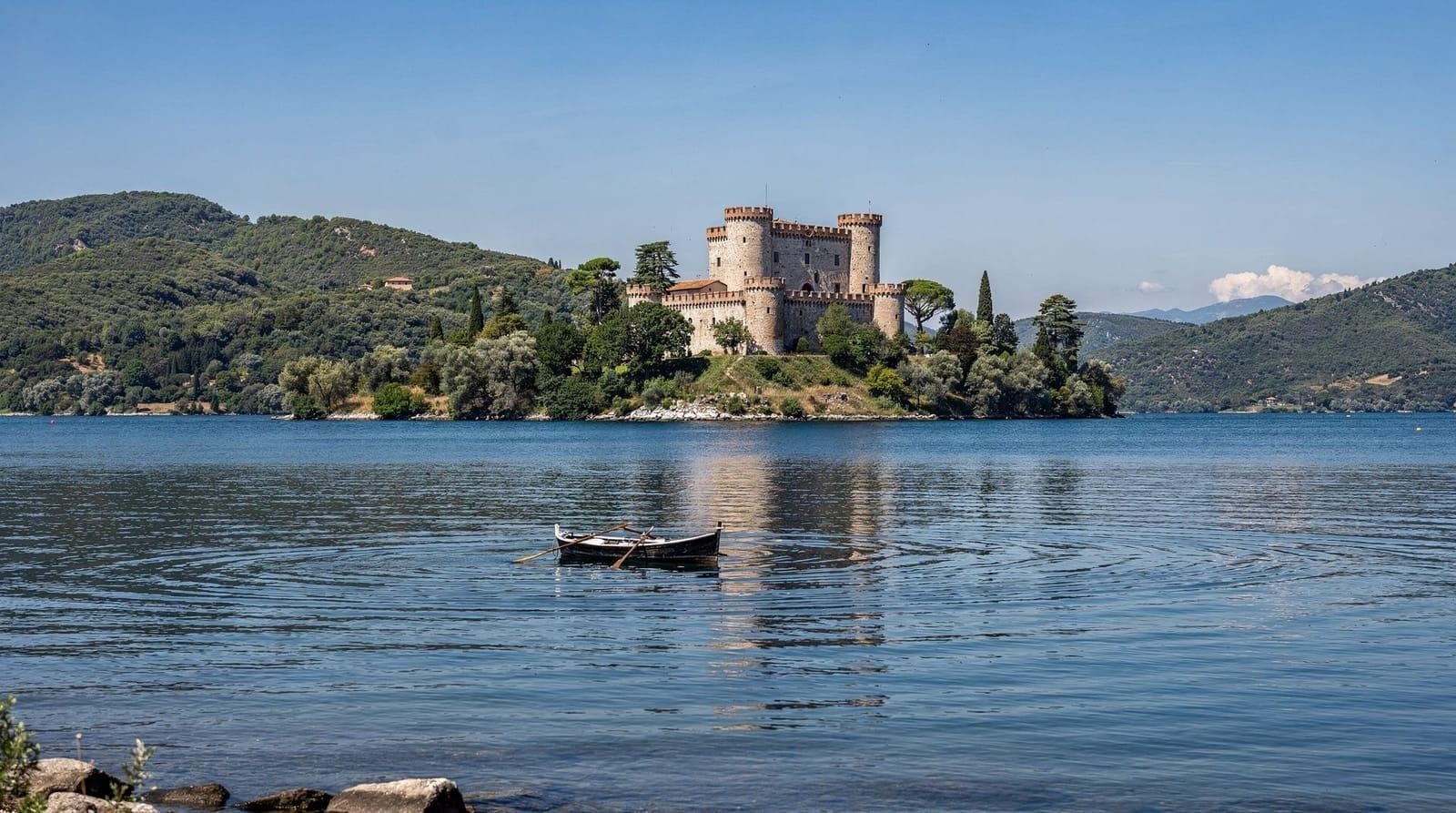
Lago di Bolsena (40 km north): The world’s largest volcanic lake of its type, in a caldera. The lakeside town of Bolsena has good fish restaurants and a castle. Reachable by car in under an hour from Viterbo.
Where to eat in Viterbo
Viterbese cuisine leans heavily on legumes, chestnuts, and pork — heartier than Roman food. Look for lombrichelli (thick hand-rolled pasta, the local equivalent of pici) with wild boar sauce or mushrooms, and acquacotta (a simple vegetable soup, literally “cooked water”).
Osteria del Vecchio Orologio (Via Orologio Vecchio, old town) serves straightforward local food at honest prices — lombrichelli with ragù, grilled meats. Around €20–25 per person for a full meal with wine. Il Grottino near the Palazzo dei Papi is useful for a quick lunch (grilled panini, local salumi) without sitting down.
The papal history of Viterbo
From 1257 to 1281, Viterbo was the seat of the papacy — a period that produced some of the most extraordinary events in church history. The city offered the popes refuge from the political chaos of 13th-century Rome (the Guelph-Ghibelline conflict, noble family violence) and proximity to their central Italian territories.
Five popes died in Viterbo: Alexander IV, Urban IV, Clement IV, Gregory X, and John XXI. The deaths of Clement IV (1268) and Gregory X (1271) were separated by the longest papal vacancy in history — 2 years, 9 months, and 2 days. The College of Cardinals, assembled in Viterbo, simply could not agree. The citizens of Viterbo, frustrated with the economic and reputational cost of hosting a stalled conclave, eventually locked the cardinals inside the Palazzo dei Papi, removed the roof to expose them to the elements, and reportedly reduced their food to bread and water.
The result was Gregory X and the Council of Lyon (1274), which formalized the rules of papal election including the sealed conclave process — still in use today. The word conclave (Latin: cum clave, “with a key”) originates directly from this Viterbo episode.
For visitors interested in medieval church history, Viterbo is an extraordinarily specific site: this is where the modern papal election process was invented, under coercion, in a building that is still standing and visitable.
Viterbo’s markets and local products
Mercato di Viterbo (Piazza della Rocca, weekday mornings): A functioning local produce market — not a tourist attraction. Seasonal vegetables, local pecorino, salumi from the Tuscia, honey, and mushrooms in autumn. The autumn months (September–November) bring porcini and ovoli mushrooms in abundance; the truffle season for the Lazio and Umbrian variety runs October–December and the Viterbo area is within the truffle zone.
Castagne (chestnuts): October is chestnut season across northern Lazio. Vendors roast them on street corners in the old town; the Sagra delle Castagne (chestnut festival) in nearby Vallerano (15 km north) takes place in mid-October with tastings and local products.
Ceramics: The Tuscia has a significant ceramic tradition, particularly in the town of Viterbo’s artisan workshops along Via Roma and the medieval quarter. The style is rustic earthenware — not the refined Deruta style of Umbria, but rougher and more characterful.
Day trip logistics and honest time expectations
From Rome, the total round-trip travel time to Viterbo (bus + FL1 train combination) is approximately 4 hours. With 5–6 hours in Viterbo, you have time for:
- San Pellegrino quarter (45–60 minutes, essential)
- Palazzo dei Papi and loggia (45 minutes)
- Piazza del Plebiscito and lunch (1.5 hours)
- Terme dei Papi or Bullicame thermal baths (2 hours for the thermal experience)
- Brief market visit if it is a weekday morning
That is a genuinely full day. Do not try to add Civita di Bagnoregio by public transport — the connections are impractical. With a car, the combination works well; without one, choose one destination.
The major pitfall for day-trippers: checking Cotral bus schedules in advance. The return service from Viterbo to Roma Saxa Rubra runs several times in the afternoon but the evening gaps can be 90 minutes apart. Know your last viable bus before you arrive.
Combining Viterbo with Civita di Bagnoregio
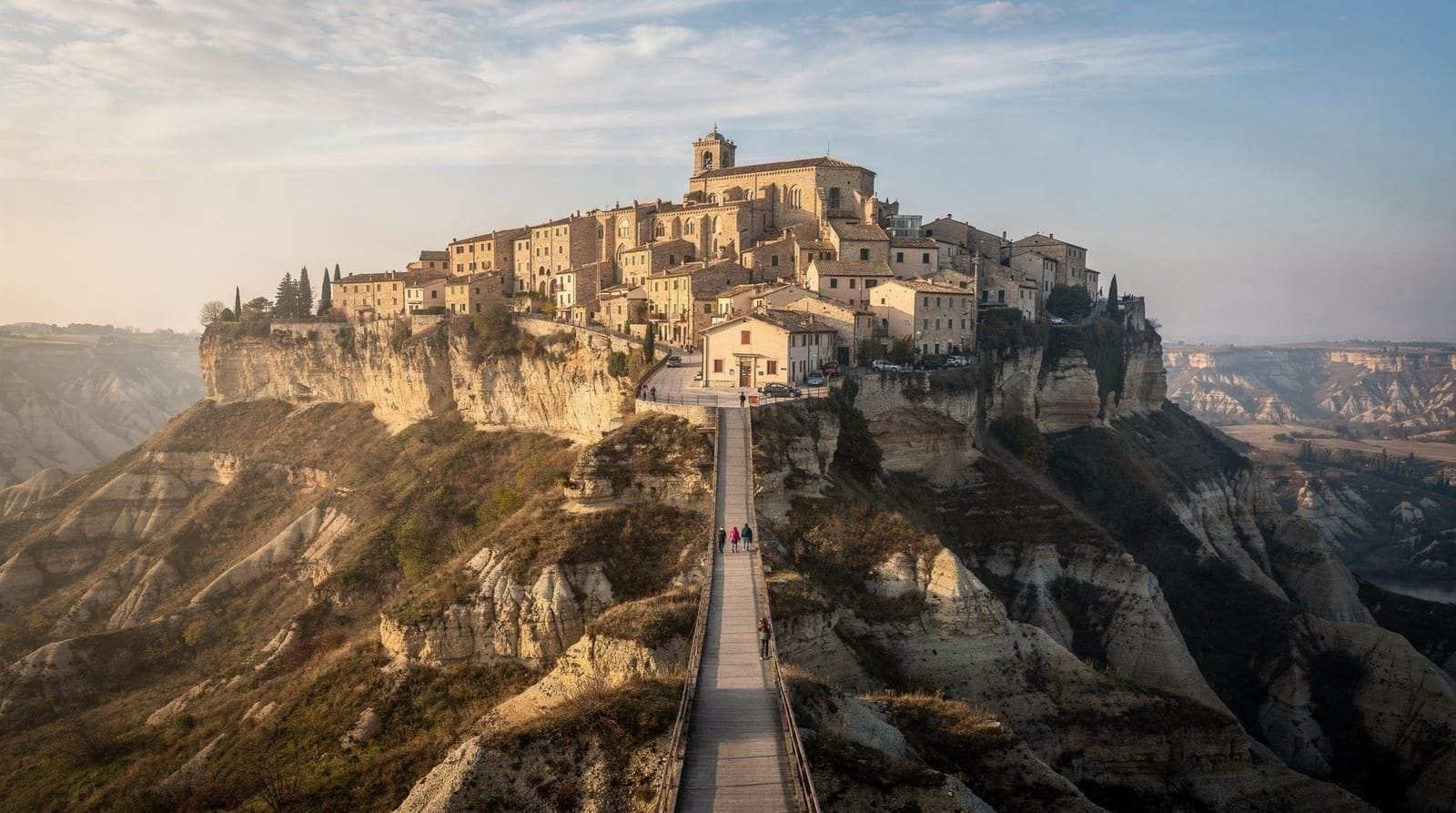
If you have a car, adding Civita di Bagnoregio (30 km southeast of Viterbo) makes for the definitive northern Lazio day trip. Leave Rome by 8:00, arrive Viterbo by 9:30, spend three hours in the medieval quarter, have lunch, then drive 40 minutes to Civita for the late afternoon golden light. Return to Rome by 20:00. It is a long day but highly rewarding.
Without a car, choose one or the other — Viterbo by bus, or Civita di Bagnoregio via an organized tour that handles the access logistics.
The Macchina di Santa Rosa: Viterbo’s spectacular festival
Every year on 3 September, Viterbo stages one of the most extraordinary religious festivals in Italy: the Trasporto della Macchina di Santa Rosa. A 30-metre-tall illuminated tower, weighing approximately 50 tonnes, is carried through the darkened medieval streets of the city by 100 men (the Facchini di Santa Rosa) on their shoulders, walking in synchronized steps.
The Macchina (literally “the machine”) changes design each time it is built — the current generation of structures dates to the 20th century but the tradition goes back to the 17th century, commemorating the translation of the body of Viterbo’s patron saint, Rosa (died 1252), from the church of Santa Maria in Poggio to the more prestigious Santa Rosa church. The procession takes about 70 minutes; the route goes through the San Pellegrino quarter and the main streets of the centro storico.
The Macchina di Santa Rosa was inscribed on UNESCO’s Intangible Cultural Heritage list in 2013. For visitors who happen to be in central Italy on 3 September, this is one of the most visually dramatic popular religious events in the peninsula. Hotels in Viterbo fill months in advance for this date.
Orvieto: a 30-minute drive away
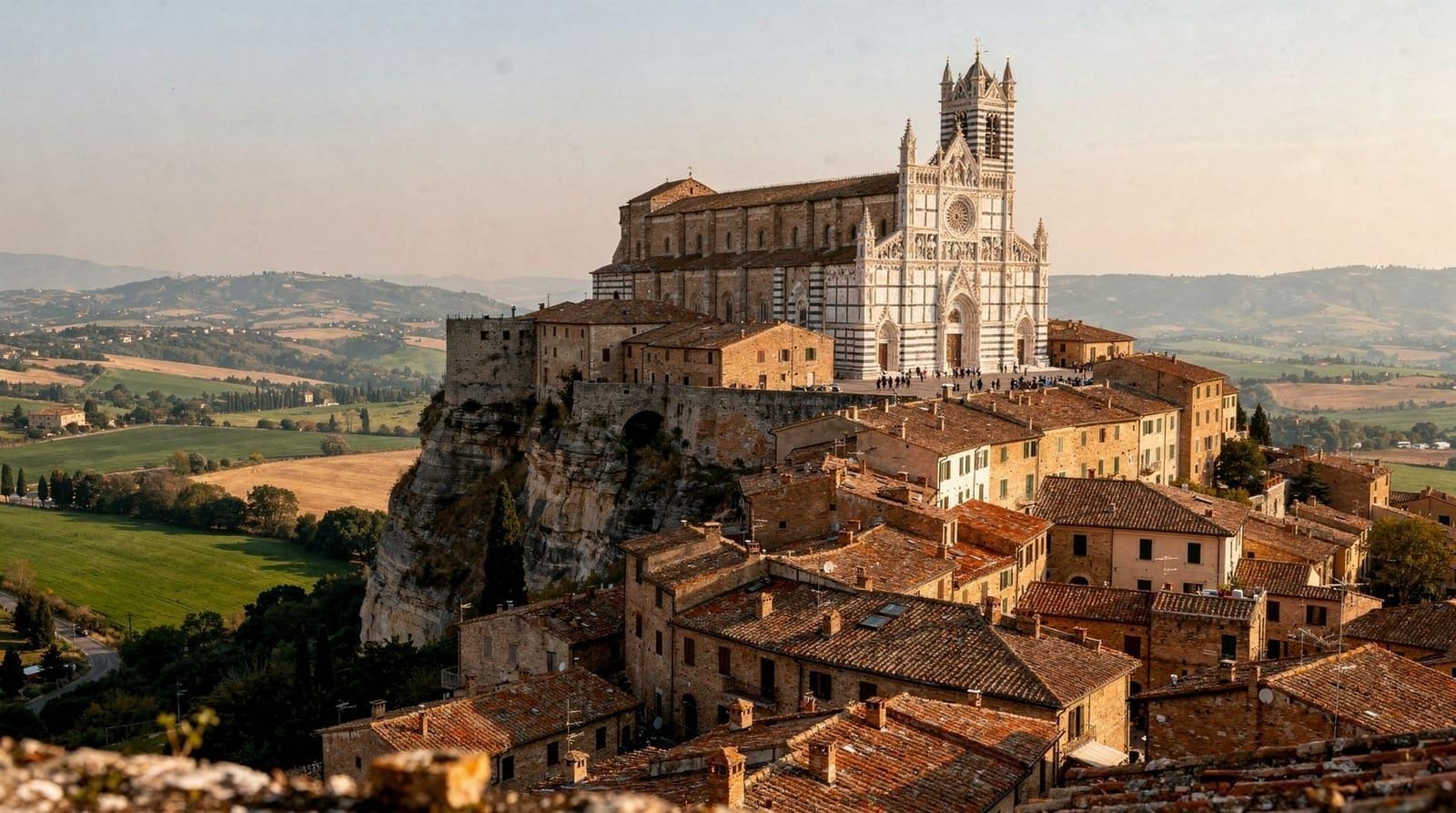
Orvieto is the Umbrian counterpart to Viterbo — another clifftop medieval city in the volcanic landscape, 50 km north on the A1 motorway and accessible by direct train from Roma Termini in 75 minutes. The two cities are different in character: Viterbo is Lazio, papal, and rougher around the edges; Orvieto is Umbrian, polished, and dominated by its extraordinary Gothic Duomo facade.
If you are deciding between Viterbo and Orvieto for a northern Lazio day trip from Rome, both have a direct train option (Orvieto is actually easier — direct Trenitalia service from Termini with no change). Viterbo offers the thermal baths, the living papal quarter, and a less tourist-oriented experience. Orvieto offers the Duomo facade (one of the finest in Italy), the underground city, and easier navigation.
The ideal is both in one day by car — Viterbo in the morning, Orvieto in the afternoon via the A1. See the Rome day-trip guide for how to structure a northern Lazio circuit.
If you prefer an organized approach to the Orvieto and Civita di Bagnoregio circuit, this day trip from Rome handles all transport and pairs both highlights efficiently.Viterbo vs other Rome day trips
Viterbo is one of several northern Lazio and Umbria options that regularly compete for the same day-trip slot in a Rome itinerary:
| Viterbo | Orvieto | Civita di Bagnoregio | Tivoli | |
|---|---|---|---|---|
| Distance from Rome | ~100 km / 1h30 by bus | ~120 km / 75 min direct train | ~140 km, no direct transit | ~30 km / 1h by bus |
| Character | Living medieval city, thermal baths | Clifftop Umbrian city, Gothic Duomo | Tiny “dying” hilltop hamlet | Roman/Renaissance villas |
| Tourist crowds | Low | Moderate | High at midday (day-trippers) | Moderate-high |
| Best for | Medieval history + thermal relaxation | Architecture, easier transit | Photography, a short atmospheric visit | Villa d’Este gardens, Hadrian’s Villa |
| Public transport ease | Good (bus, one change) | Best (direct train) | Poor (car recommended) | Good (direct bus) |
If you only have one northern Lazio/Umbria day free, Viterbo suits travelers who want thermal baths and a real, still-lived-in medieval town rather than a postcard hilltop stop. See the best day trips from Rome guide and day trips by train from Rome for the full comparison across all the region’s options.
Train, bus or organized tour?
Viterbo does not have a direct train from central Rome — the FL1 train plus Cotral coach combination, or a full Cotral bus connection, is the only public-transport route, which puts it a notch more complicated than train-direct destinations like Orvieto or Tivoli. Independent travelers comfortable navigating regional transport save money going it alone; anyone short on time or nervous about the connections is better served by an organized tour that also folds in Civita di Bagnoregio, since public transport there is genuinely impractical. The train vs. tour day trips guide and Viterbo & Tuscia day trip guide go through the trade-offs in more depth.
When to go: weather and crowds
| Season | Weather | Crowds | Notes |
|---|---|---|---|
| Apr–Jun | Mild, occasional rain | Low | The best overall window |
| Jul–Aug | Hot, 34–38°C | Low (Viterbo stays uncrowded even in peak season) | Go early; midday heat in the stone streets is punishing |
| Sep–Oct | Warm, settling | Low | Excellent, with the added bonus of chestnut and mushroom season |
| Nov–Mar | Cold, occasional rain | Very low | Thermal baths are especially appealing in cold months |
Viterbo’s big advantage over more famous day trips is that its crowd levels barely change with the seasons — this is one Lazio destination where visiting in August doesn’t mean fighting tour groups. See the Rome weather month by month guide for how this fits a wider Rome trip, and the Rome on a budget guide for how a Viterbo day fits a tighter travel budget — a bus ticket, thermal entry and lunch can be done for under €50 per person.
Frequently asked questions about Viterbo
How do you get from Rome to Viterbo by public transport?
Take the FL1 regional train from Roma Ostiense or Roma Trastevere to Roma Saxa Rubra (about 30 minutes), then a Cotral coach to Viterbo (~1h30, ~€6 each way). Check current Cotral schedules before going — frequency varies by day. Total travel time from central Rome to Viterbo is approximately 2 hours each way.
What is the San Pellegrino quarter and why is it worth seeing?
San Pellegrino is Viterbo’s 12th–13th century medieval neighbourhood — one of the best-preserved in Italy. It has external stone staircases, loggias, and narrow lanes that survive intact because Viterbo never had the same destruction and rebuilding pressure as Rome. Budget at least 45–60 minutes to walk it properly.
Is Viterbo worth it as a day trip from Rome?
Yes, particularly for travellers who enjoy medieval history, authentic Italian town life, and the option of a thermal bath session. Viterbo sees almost no international tourism — it functions as a real city, not a visitor spectacle. If you want the opposite of the Colosseum experience, this is it.
What are the thermal baths at Viterbo?
Terme dei Papi is the main formal spa complex (€20–28 for outdoor pool access), built over the same volcanic springs that medieval popes used. The Bullicame natural spring (free, 20-minute walk from the city walls) offers a no-cost alternative with a more elemental feel. Both are sulphurous and volcanic — the water is genuinely therapeutic.
Can you combine Viterbo and Civita di Bagnoregio in one day?
Yes, by car — they are 30 km apart. Leave Rome by 8:00 for three hours in Viterbo, then drive to Civita di Bagnoregio for the afternoon. The combination is one of the best day trips from Rome in northern Lazio. Without a car, it is impractical — choose one destination.
What food is Viterbo known for?
Local pasta is lombrichelli — a thick hand-rolled pasta served with ragù, wild boar sauce, or mushrooms. Acquacotta (a simple vegetable soup) is a winter staple. Chestnuts and local pecorino also feature heavily. Good restaurants in the old town run €20–25 per person for a full meal.
Is Viterbo doable on a budget?
Yes — it’s one of the cheaper day trips from Rome. A round-trip Cotral bus ticket runs around €12 total, thermal bath entry is €20–28 if you go, and a full lunch is €20–25. A full day including the baths can be done for under €60 per person; skip the baths and it drops well under €30. See the Rome on a budget guide for how this compares with other day trips.
Top experiences
Bookable activities with verified prices and instant confirmation on GetYourGuide.