Sperlonga & the Lazio coast
Sperlonga is Lazio's most beautiful coastal village — whitewashed cliffs, Roman emperor's grotto, and clean water. 1h20 from Rome by train. Honest guide.
Rome: Pompeii Tour with Wine and Lunch by High Speed Train
Quick facts
- Distance from Rome
- ~120 km south
- Train from Roma Termini
- 1h15–1h25 to Fondi-Sperlonga, then bus/taxi 10 min
- Best months
- May–June, September
- Beach season
- June–September
- Tiberius's Villa & Grotto
- Free entry (national monument)
The whitewashed cliff-top village that Romans keep to themselves
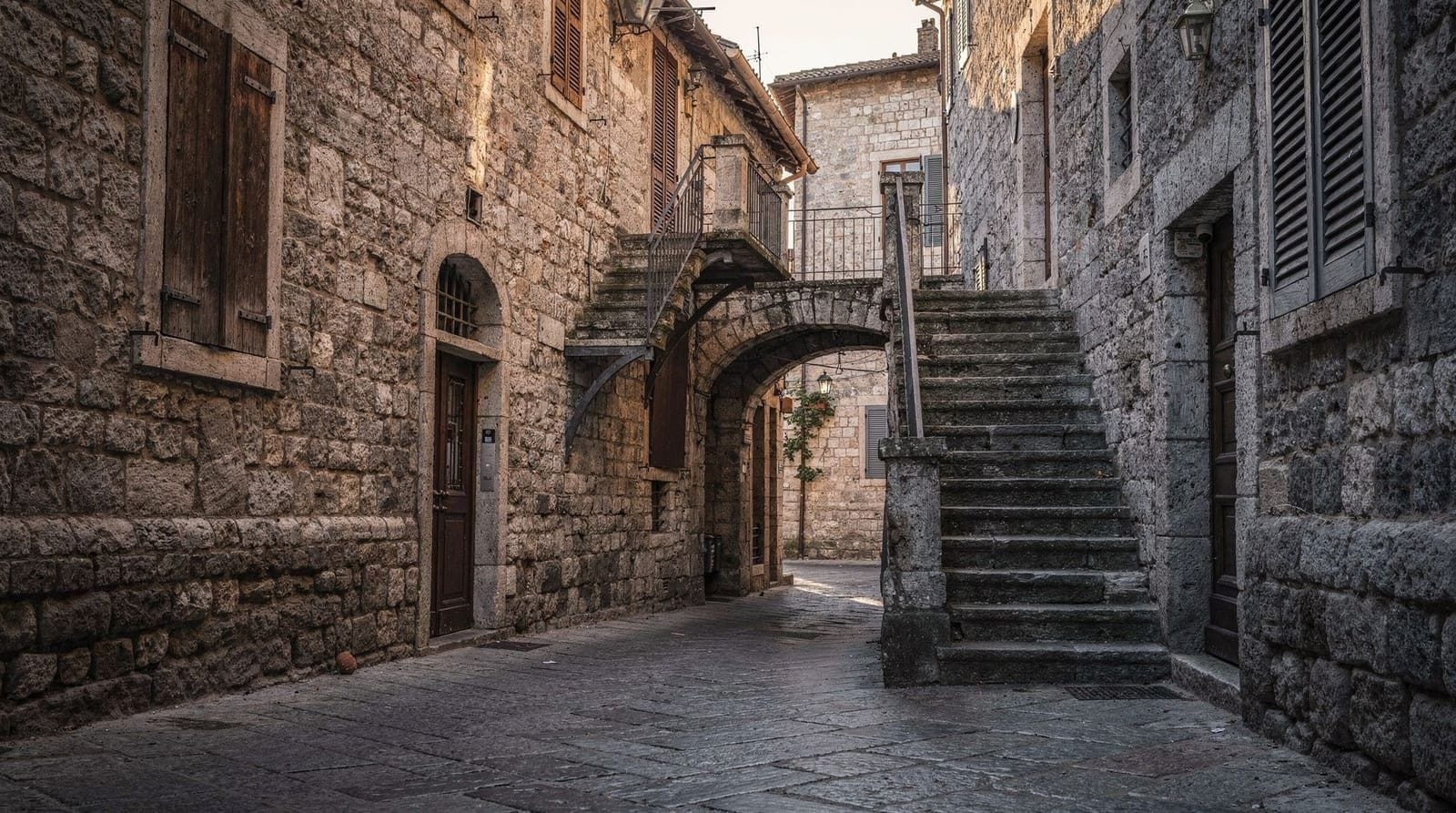
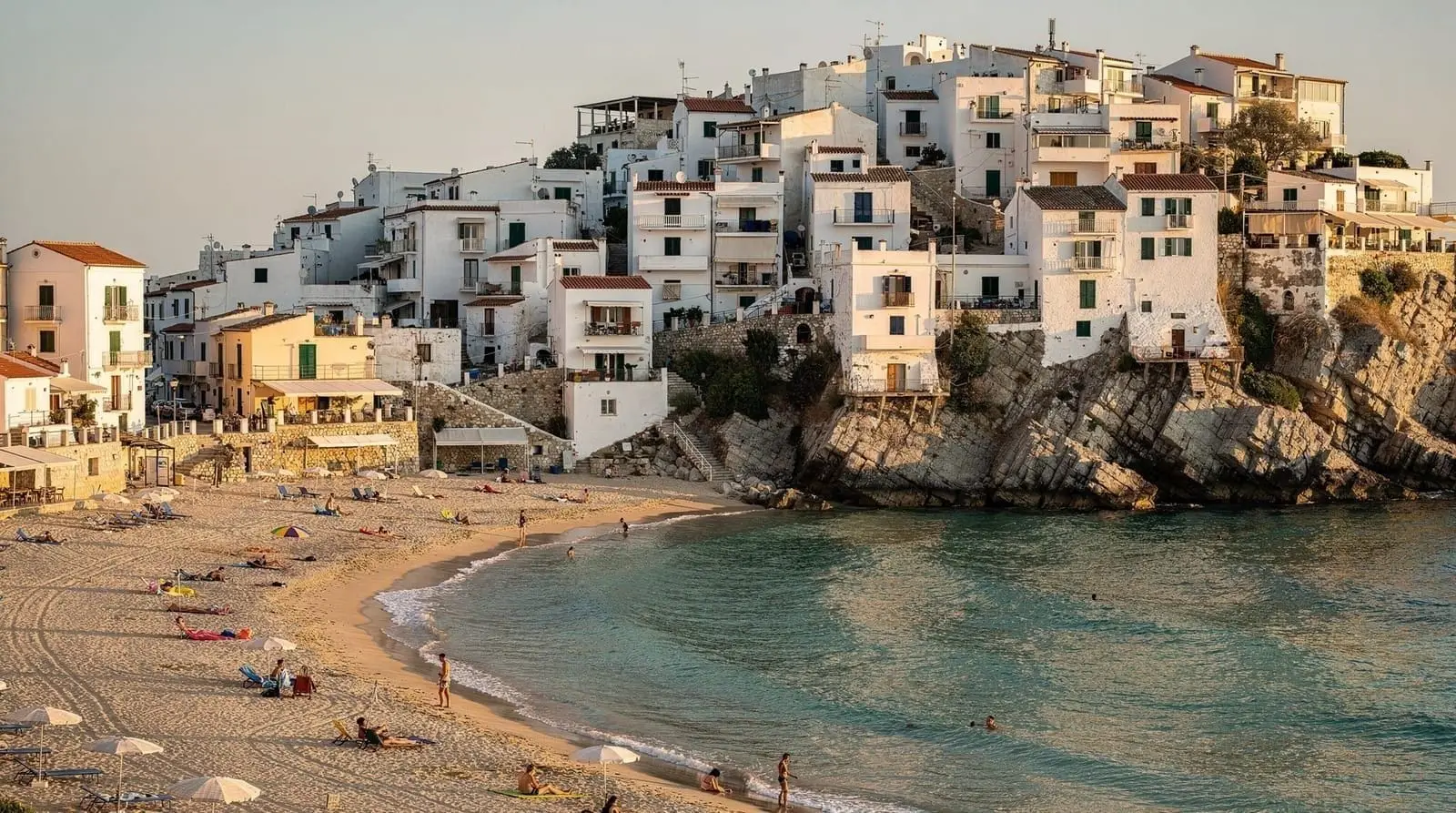
Sperlonga sits on a rocky promontory between two sandy beaches, 120 km south of Rome along the Tyrrhenian coast. The old town — all narrow whitewashed lanes, bougainvillea, and arched passages — cascades down a limestone cliff above the Tirrenian Sea. Below it, the Villa of Tiberius stretches along the shore, its ancient fish ponds still visible, its main cave-grotto now housing a remarkable museum of imperial-era sculpture.
This is not the Amalfi Coast. There are no ferry queues, no Instagram crowds at sunrise, no €35 cocktails. Sperlonga remains largely Italian in character: the summer crowd is mostly Lazio and Campania families who rent apartments by the week, supplemented by Romans doing exactly what you should do — catch a morning train and spend the day here.
The combination of an genuinely beautiful village, a serious Roman archaeological site, and clean accessible beaches makes Sperlonga arguably the best coastal day trip from Rome that most international visitors never find.
Getting to Sperlonga from Rome
By train (recommended for day trips)
Trains on the Rome–Naples coastal line (via Formia) stop at Fondi-Sperlonga station, which is about 7 km from the village. Frequency and journey times vary:
- Intercity trains from Roma Termini: approximately 1h15–1h25, fares around €9–14. These stop at Fondi-Sperlonga.
- Regional trains: slower, more frequent, around 1h45–2h, fares under €8.
From Fondi-Sperlonga station to the village: local buses run on a limited schedule (check Cotral timetables before leaving — the return options can be sparse). A taxi costs around €12–15 and is the more reliable option for day-trippers. Book your return train before you leave — evening services back to Rome can fill on summer weekends.
By car
Driving allows you to park at the beachfront south of the village (easier than the old town) and potentially visit Gaeta (20 minutes north) or Formia on the same day. The A1 motorway south from Rome, then the SS7 coastal road, takes about 1h30.
Organized tours
There are no major organized day tours specifically to Sperlonga from Rome. The Campania-focused tours departing for the Amalfi Coast and Positano pass through this stretch of coast but do not stop. Sperlonga is a self-directed trip.
If you are considering the broader Campania coast — Sorrento, Positano, and Pompeii from Rome in one organized day — this train-based VIP tour is a practical option.What to do in Sperlonga
The old town
The medieval centre sits 82 metres above sea level. It was built high specifically to be defensible from sea raids — the whitewashed buildings, tight lanes, and lack of wheeled access were features, not quaintness. Wander for an hour: the main belvedere overlooks both beaches and on clear days you can see the island of Ventotene.
There are a handful of good restaurants and wine bars here, plus artisan ceramics shops. Prices are tourist-level in July–August but reasonable outside peak season.
The Villa of Tiberius and the Grotto
Below the village, stretching south along the beach, are the ruins of Villa di Tiberio — emperor Tiberius’s coastal retreat, believed to have been used in the 1st century AD. The villa included elaborate fish ponds and a large natural sea cave (the Grotta di Tiberio) that the emperor converted into a monumental dining room, decorating it with large sculptural groups.
The cave collapsed at some point in antiquity, burying the sculptures. They were excavated in 1957 and are now displayed in the Museo Nazionale Archeologico di Sperlonga (the Grotto Museum), which is built into the hillside above the cave itself.
Entry: Free for EU citizens under 18 and over 65; €5–8 for adults (check current tariffs — state museum pricing changes). The museum houses four major sculptural groups depicting scenes from the Odyssey, including a famous Laocoon-type composition that rivals anything in Rome’s museums. It is genuinely extraordinary and almost always quiet.
Opening hours are typically Tuesday–Sunday, 8:30–19:30, but confirm at the Polo Museale del Lazio website before visiting.
The beaches
Sperlonga has two beaches framing the promontory:
Spiaggia Nord (north beach): Wider, with more organized lido sections (chairs and umbrellas available for hire at around €15–20 for two). More shaded in the morning. Calmer water, good for families.
Spiaggia Sud (south beach): Stretches south past the Villa of Tiberius ruins. Less organized, more free public access. Wilder-feeling, with the grotto visible from the waterline. The sand here is coarser.
Water clarity is consistently rated excellent by Italian environmental monitoring — far better than most beaches in the Rome–Ostia area, and noticeably clearer than the more heavily trafficked stretches of coast further south toward Naples.
Where to eat in Sperlonga
The old town has several restaurants worth sitting down at. Prices rise significantly in August — plan for €15–25 per person for a pasta course outside peak season, €25–35 in summer.
Gli Archi (Via Ottaviano, old town) serves straightforward local seafood — spaghetti alle vongole, grilled orata — at honest prices. Il Tirreno on the south beach road has outdoor tables facing the grotto and decent fresh fish at fair rates. Avoid anywhere on the main piazza with laminated menus translated into four languages — the quality drops sharply.
For coffee and pastries in the morning before the beach: the bar at the entrance to the old town is frequented by locals and charges standard Italian prices (€1.20–1.50 for an espresso at the counter).
Planning the day
A logical structure for a Sperlonga day trip from Rome:
- 08:00–08:30: Catch the morning Intercity from Roma Termini. Confirm your return train before boarding (buy both tickets at the machine).
- 09:30–10:00: Arrive Fondi-Sperlonga, taxi or bus to the village.
- 10:00–11:00: Walk the old town, check out the belvedere, buy water.
- 11:00–12:30: Visit the Grotto Museum and the Villa of Tiberius ruins (free or low cost, chronically undervisited).
- 12:30–14:00: Lunch in the old town or at a beach restaurant.
- 14:00–17:00: Beach time on whichever coast suits your mood.
- 17:30–18:00: Taxi back to Fondi-Sperlonga station for the return train.
Total: a very full, thoroughly rewarding day for well under €100 per person including train, taxi, museum, lunch, and a lido chair.
History of Sperlonga: why this village exists
Sperlonga’s position — a fortified cliff-top town above two beaches — was a deliberate defensive strategy. The medieval settlement was built high to give defenders line-of-sight over the sea in both directions, allowing time to prepare against raids from North African pirates that plagued this coastline through the medieval period. The name may derive from spelunca (Latin for cave), referencing the great sea cave below — the same cave that Roman Emperor Tiberius converted into a dining room in the 1st century AD.
The Greek influence here predates even the Romans. This stretch of the Tyrrhenian coast was heavily colonized by Greeks from the 7th century BC; the harbour at Gaeta (20 km north) was a significant Greekport, and the entire coast from Sperlonga south to the Bay of Naples was culturally Greek before it was Roman. The Villa of Tiberius represents the later Roman appropriation of what was already an ancient coastline.
The village’s modern revival began in the 1950s when the archaeologists who uncovered Tiberius’s grotto brought academic attention to the area. Artists and intellectuals from Rome followed; Sperlonga gradually became a weekend retreat for the Roman intelligentsia rather than a purely working fishing village. Today it maintains that dual character — real local life in the winter months, with significant tourist and second-home pressure in summer.
Practical notes on timing and crowds
Sperlonga is primarily a summer destination for Italians, and this shapes the visitor experience considerably:
June and September are the sweet spot for international day-trippers. The water is warm enough to swim comfortably (sea temperature ~22–24 °C), the village is operating normally, and the beaches are busy but not at capacity. Restaurant tables are available for walk-in lunch.
July and August: The village effectively switches to a holiday-rental economy. Weekly and fortnightly rentals dominate; the restaurants run fuller versions of their menus, beach clubs charge full-season rates (€15–25 per lido setup), and the narrow lanes of the old town become genuinely congested in the evenings. Walking past the belvedere at sunset in August means navigating a crowd. Still worth visiting, but manage expectations and arrive early.
April and May: Cooler for swimming but excellent for the village, the museum, and the coastal walks. Most restaurants are open; lido infrastructure may not yet be set up. The sea temperature is around 15–18 °C — too cold for most.
October to March: Many restaurants close; the village is quiet. The museum and Tiberius’s ruins are open year-round (check current hours). Autumn light on the tufa cliffs is beautiful for photography.
Gaeta: the worthwhile detour north
Gaeta (20 km north of Sperlonga, 15 minutes by car or regional bus) is a larger town that merits at least 2 hours if you are travelling this way by car. It has three distinct parts:
Gaeta moderna (the modern port and commercial area): functional, largely uninteresting to visitors.
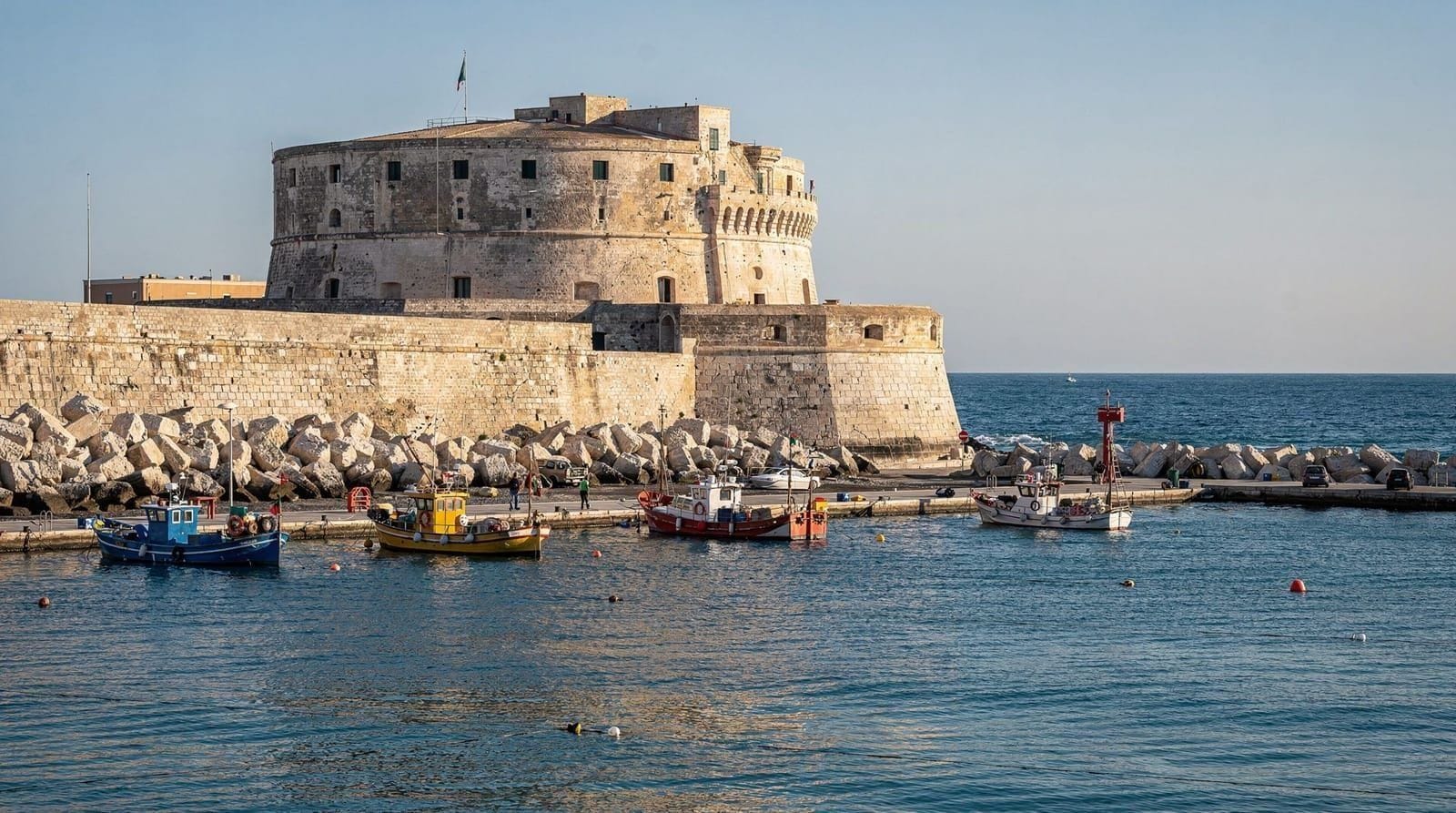
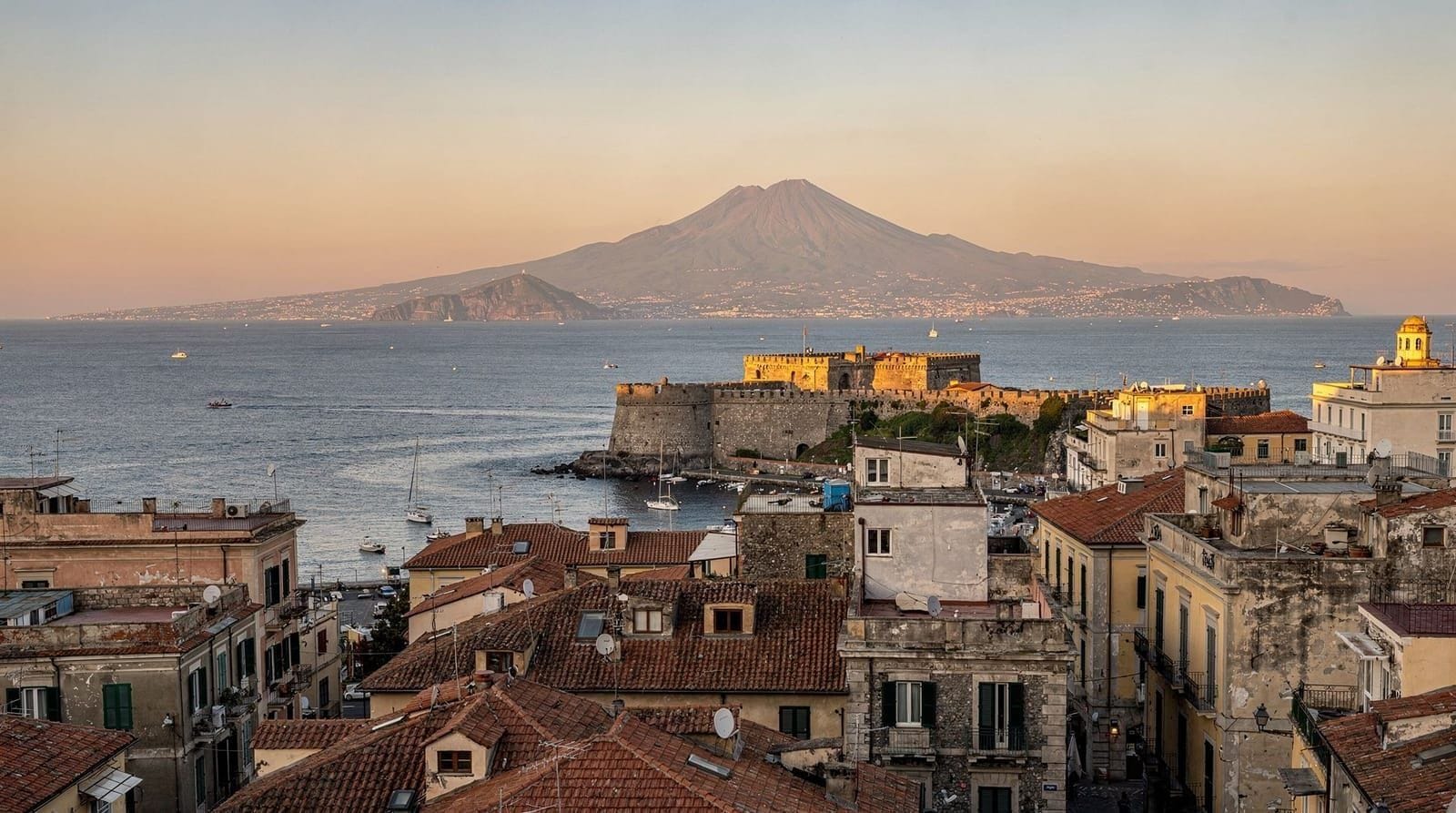
Gaeta medievale (the medieval upper town on the promontory): compact with the Cathedral of Sant’Erasmo (built over a Roman temple, interior has good medieval mosaic work), the Sanctuary of the Montagna Spaccata (a rock cave sanctuary reached by steep steps down a cliff face — the rock reportedly split at the moment of Christ’s crucifixion; geological reality is more prosaic but the site is dramatic), and the Castello Aragonese on the headland with views over the bay.
Serapo beach: A long sandy beach on the western side of the promontory with reliably clean water and good facilities. More exposed than Sperlonga but larger.
Gaeta’s fishing quarter (Porto Salvo) has several excellent seafood restaurants. Trattoria il Maruzzaro (Via Emanuele Filiberto) and Osteria del Porto near the fishing dock serve the local speciality: tiella di Gaeta (a filled baked pastry with various combinations of octopus, onions, olives, or chard — a recipe of genuinely local origin, rarely found outside the area). A tiella and a glass of local white wine is a €10 lunch at a bar counter; a full seafood meal is €25–35.
Beyond Sperlonga: the Lazio archipelago
The Pontine Islands — Ponza, Ventotene, and smaller islets — lie in the Tyrrhenian Sea west of the Sperlonga coast. They are visible from the cliffs on clear days.
Ponza is the most significant: a volcanic island with Roman-era fish ponds, sea caves accessible by boat, and several good restaurants. Hydrofoils connect from Formia (30 minutes south of Sperlonga) and from Anzio (accessible from Rome by train). A Ponza day trip from Rome involves approximately 4 hours of total travel (Rome to Formia by regional train ~1h30, hydrofoil to Ponza 30–40 min each way) — tight but possible for an early-starting July or August day. Better as an overnight.
Ventotene is quieter, smaller, and more remote — famous for housing political prisoners under Mussolini (including Sandro Pertini, later President of Italy) and for the 1941 Manifesto di Ventotene, one of the founding documents of European federalism. The ferry takes longer than to Ponza. More of a specialist interest.
If the Lazio coast interests you beyond a single day, the combination of Sperlonga plus a Ponza overnight is one of the most underrated short escapes from Rome in the summer months.
The wider Lazio coast
Sperlonga is the highlight of the southern Lazio coastline, but the area has more to offer if you are driving:
Gaeta (20 km north of Sperlonga): A larger town with a dramatic split rock — the Montagna Spaccata — said to have cracked at the moment of Christ’s crucifixion. The old town is a genuine working port with authentic (and cheap) seafood restaurants.
Terracina (30 km north of Sperlonga): Has a long sandy beach and the ruins of a Temple of Jupiter Anxur on the cliff above. More developed as a beach resort, less characterful than Sperlonga.
Ponza island: Reachable by hydrofoil from Anzio or Formia, this small volcanic island is the most beautiful in the Lazio archipelago. It is a 2–3 hour round trip from Rome just to get there and back — better suited to an overnight or a long July–August weekend if the ferry gods cooperate.
If you are comparing coastal options from Rome, Ostia Antica is much closer and more easily reached by train, but it is archaeology rather than beach. Civitavecchia is the cruise port rather than a beach destination. For beaches with Roman history combined, Sperlonga is the strongest option in Lazio.
Photographing Sperlonga well
Sperlonga is one of the most photogenic villages within day-trip range of Rome, and a little timing planning goes a long way. The classic shot — whitewashed lanes framed by bougainvillea, with the sea glimpsed through archways — works best in the soft morning light before 10:00 am, when the narrow streets are still in shade and largely empty of other visitors. The belvedere at the top of the old town is the obvious viewpoint for both beaches at once, and it’s genuinely worth the short climb even if you don’t linger long.
For the Villa of Tiberius and the grotto, late afternoon light (after 4:00 pm in shoulder season) rakes across the ruins and the sea beyond in a way that flat midday sun doesn’t. If you’re combining photography with a swim, plan your beach time around midday when the light is least flattering for photos anyway, and save the golden hours at either end of the day for walking the old town and the shoreline path past the fish ponds. A wide-angle or phone panorama from the belvedere captures both beaches and the grotto headland in a single frame better than any single close-up shot, and it’s the image most visitors come away wishing they’d taken more carefully.
Sperlonga vs Rome’s other coast-and-lake day trips
Sperlonga competes for attention with a few other Lazio escapes that promise a break from the city. The honest comparison:
| Sperlonga | Lake Bracciano | Castelli Romani | |
|---|---|---|---|
| Train from Rome | 1h15–1h45 to Fondi-Sperlonga | 40–50 min to Bracciano | No direct train — bus/car |
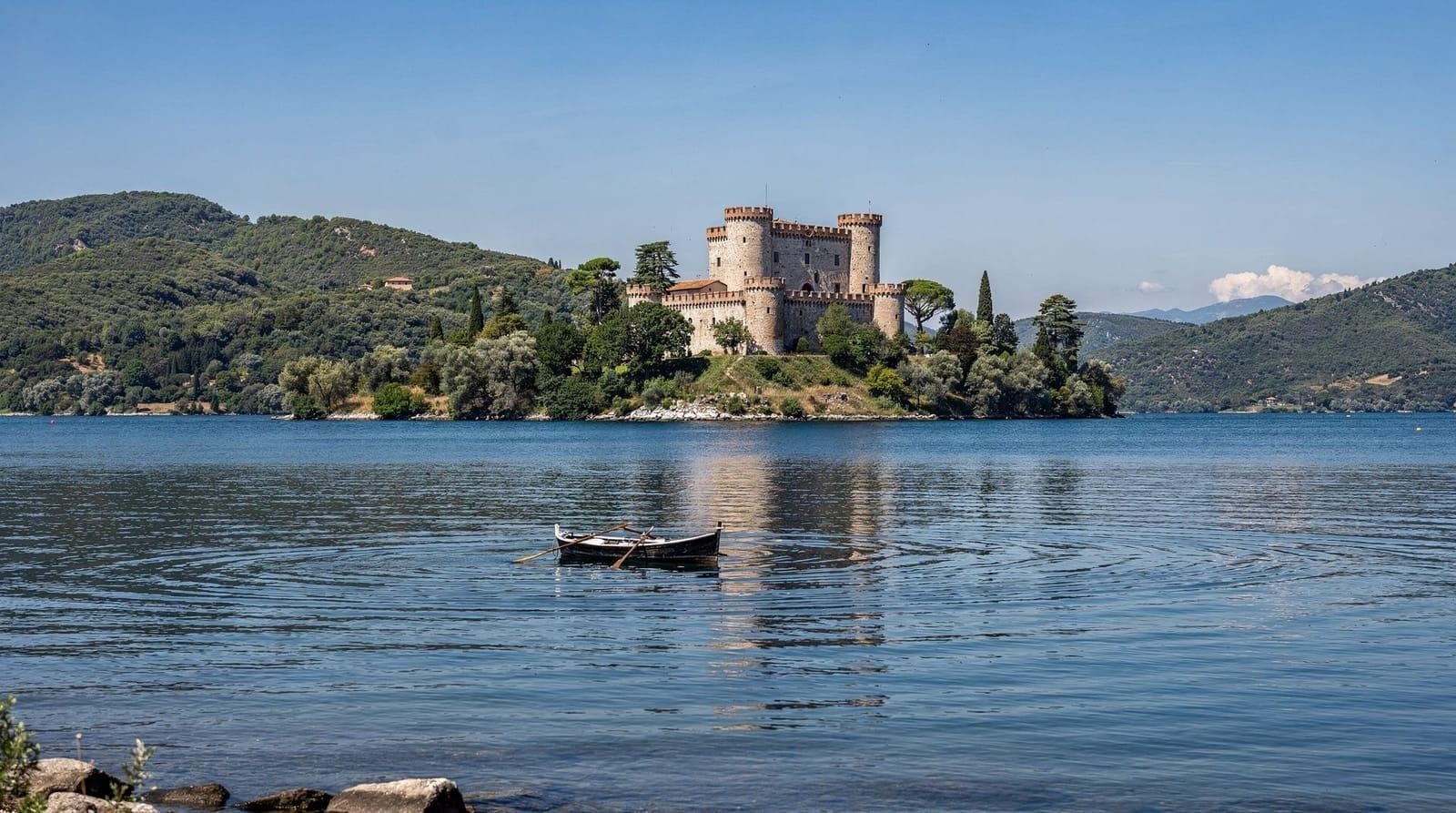
| What it delivers | Sea beach + Roman villa/museum | Freshwater swimming + medieval castle | Wine, hill towns, no beach |
| Swim season | June–September | June–September | None |
| Crowd level | Moderate, mostly Italian | Moderate, mostly Roman weekenders | Moderate |
| Best for | Beach day with real archaeology | Easy lake swim, families | Wine, food, hilltop towns |
If a genuine sea beach with warm water is what you want, Sperlonga is worth the longer train ride; if a closer, cheaper freshwater alternative appeals more, Lake Bracciano is 40 minutes away instead of 75+. If wine and hill towns matter more than swimming, Castelli Romani is the better fit — none of the three is a straightforward upgrade on the others; they simply answer different questions about what kind of day you want. The best day trips from Rome guide covers the full shortlist for comparison.
A shorter version, if a full day feels like too much
Sperlonga rewards a full day, but a half-day version works if you’re combining it with something else or simply have less time. Prioritise the Grotto Museum and Villa of Tiberius (1–1.5 hours, genuinely world-class and rarely crowded) and a walk through the old town (45 minutes), skipping the beach chair rental and a full sit-down lunch in favour of a quick bite from the bar near the old town entrance — the same bar that serves the village’s morning coffee crowd at proper Italian counter prices. This compressed version fits comfortably into 4–5 hours including the train, making it viable even with a later morning departure from Rome than the full-day schedule above assumes. It also works well as a shoulder-season plan (April, or October–November) when swimming isn’t the point anyway and the archaeology and village walk are the genuine draws.
If Sperlonga’s timing doesn’t fit your trip, this full-day Naples and Amalfi Coast tour from Rome covers a different stretch of coast with organised transport, useful if independent train-and-taxi logistics aren’t for you.
Frequently asked questions about Sperlonga
How do you get from Rome to Sperlonga by public transport?
Take an Intercity or regional train from Roma Termini to Fondi-Sperlonga station (1h15–1h45, around €8–14). From the station, take a taxi (€12–15, ~10 min) or check local Cotral bus schedules. Book both legs of the train journey in advance, especially on summer weekends when trains fill up.
Is the Villa of Tiberius museum worth visiting?
Yes — it is one of the most underrated archaeological museums in central Italy. The sculptural groups recovered from the Grotto include Odyssey scenes of remarkable quality and scale. Entry is free or low cost, the museum is rarely crowded, and the walk along the beach past the fish ponds takes 20 minutes. Budget 1–1.5 hours here.
What are the beaches in Sperlonga like?
Two beaches flank the village promontory. The north beach is wider with organized lido facilities (chair hire ~€15–20). The south beach stretches past the Villa of Tiberius ruins, with more free public access and a wilder feel. Water quality is rated excellent by Italian environmental standards. The beaches are sandy with some pebble sections near the grotto.
When is the best time to visit Sperlonga?
May, June, and September offer the best combination of warm weather, good water temperature, and manageable crowds. July and August are peak Italian holiday season — the village functions on weekly rentals, beach space is limited, and restaurant prices rise. April is fine for history and walking, too cold for comfortable swimming.
Can you combine Sperlonga with Pompeii in one day?
Not comfortably. Sperlonga and Pompeii are in opposite directions from Rome (Sperlonga is 120 km south on the Lazio coast; Pompeii is 240+ km southeast via Naples). Each deserves a separate day. For a broader southern Italy experience, the Campania options — Pompeii and Naples — make sense as a separate trip.
Is Sperlonga good for a solo traveller?
Yes. The village is safe, the old town is walkable in under an hour, and the beaches have organized sections where a solo visitor can settle comfortably. The Grotto Museum works well alone. The one practical challenge is the taxi transfer from the station — worth confirming a taxi number in advance for the return leg.
Is Sperlonga or Lake Bracciano the better swim-focused day trip from Rome?
Depends on how much travel time you want to spend. Lake Bracciano is closer (40–50 minutes) and freshwater; Sperlonga is further (75+ minutes) but delivers a genuine sea beach plus a serious Roman archaeological site. See the comparison table above for the full picture.
Can I do a shorter half-day version of Sperlonga?
Yes. Prioritise the Grotto Museum and Villa of Tiberius plus a walk through the old town, skipping the beach chairs and a long lunch. That compressed version fits into 4–5 hours including the train, making it workable even with a later start from Rome, and it suits a shoulder-season visit when swimming isn’t the goal anyway.
Top experiences
Bookable activities with verified prices and instant confirmation on GetYourGuide.