Viterbo and the Tuscia day trip: medieval Lazio off the radar
Day Trip from Rome to Orvieto & Civita di Bagnoregio
Is Viterbo worth a day trip from Rome?
Yes — especially if you want a genuinely local Italian city that receives almost no international tourism. The journey takes 1h30–2h from Rome (direct train from Roma Ostiense or Roma San Pietro, or faster connection via Orte). Viterbo has an exceptionally preserved medieval quarter (San Pellegrino), a remarkable Papal Palace, and the nearby Terme dei Papi thermal baths. The surrounding Tuscia region adds Etruscan necropoli, volcanic lakes, and the extraordinary Villa Lante garden at Bagnaia.
| Where | Northern Lazio, ~90km / 1h40–2h by train from Rome |
| Cost | Train ~€5–14 return; sights €4–25 each |
| Time needed | Full day (08:00–20:00 realistic) |
| Getting there | Train via Orte or direct via Capranica |
| Best time | Spring/autumn; October for chestnut festivals |
Viterbo: the papal city that most tourists overlook
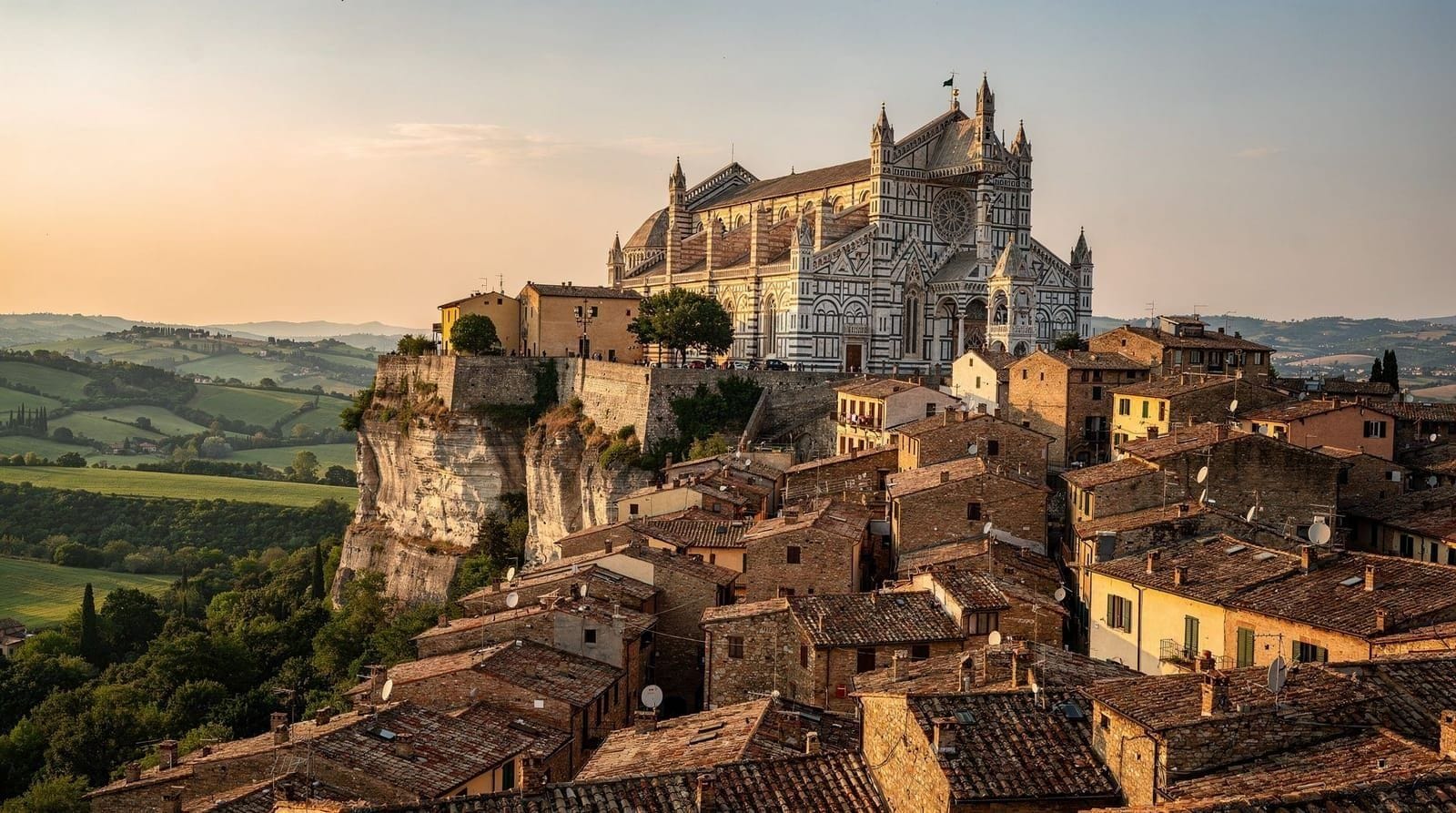
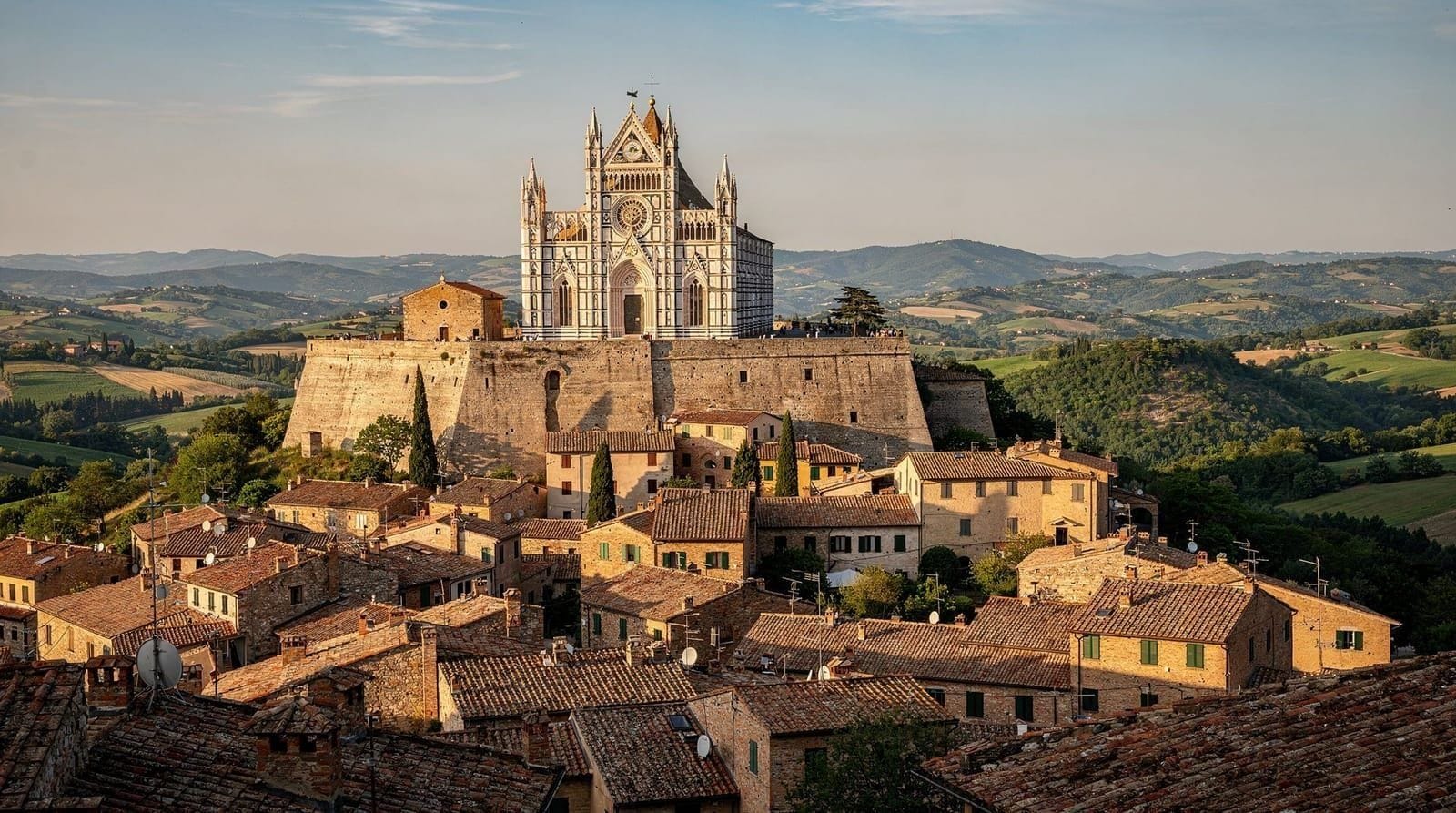
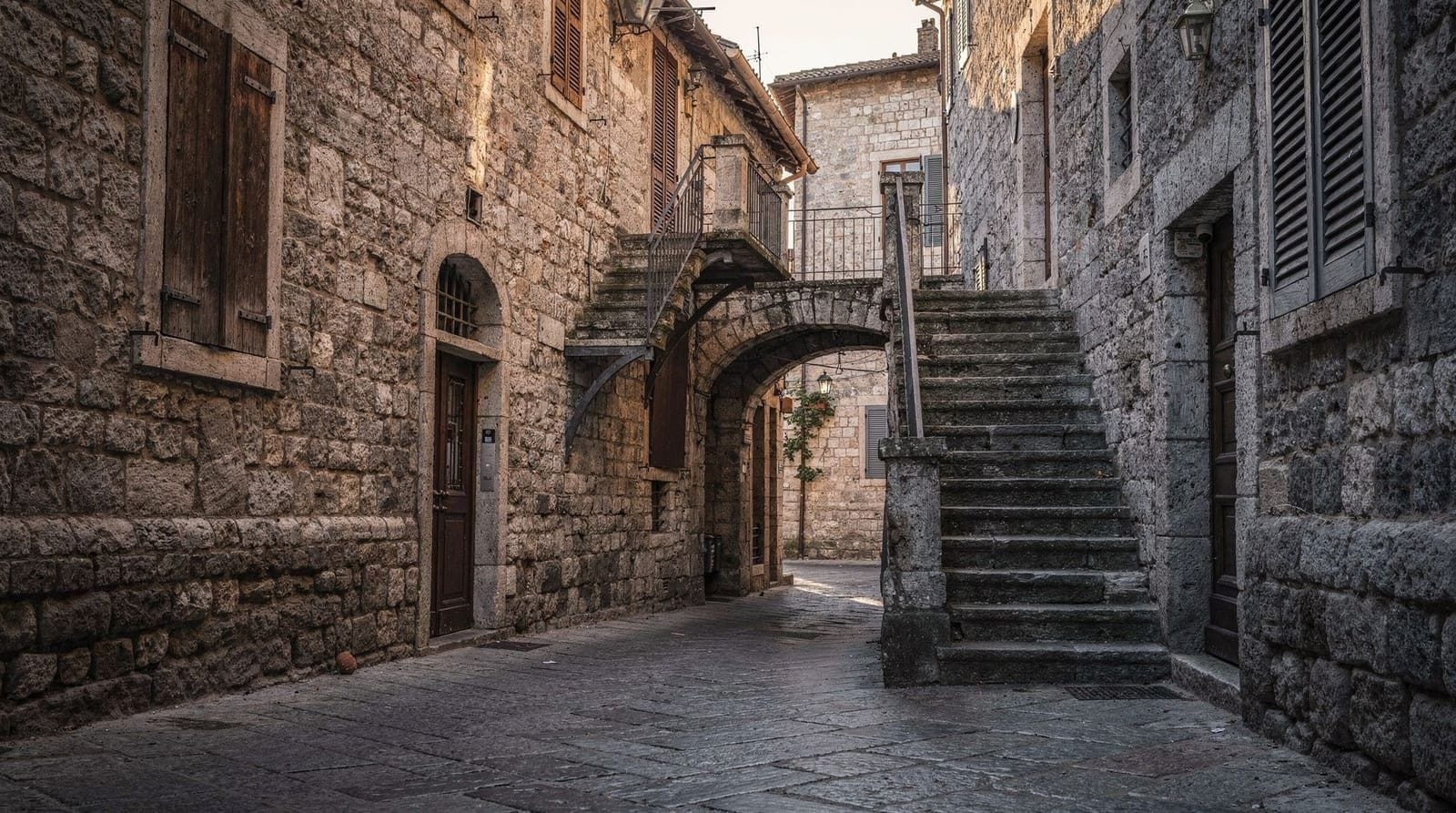
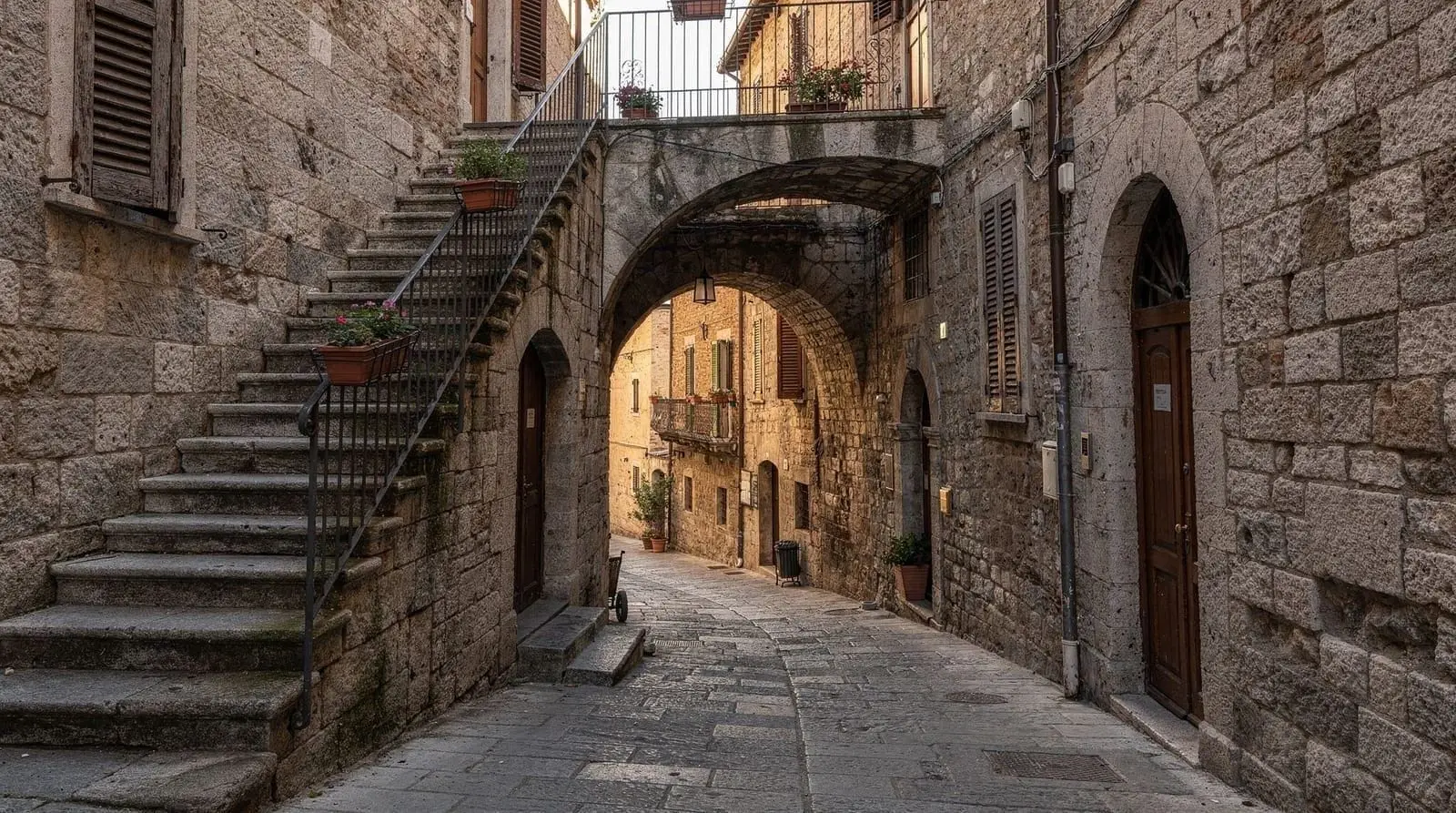
Viterbo is one of those Italian cities that genuinely surprises visitors who find it. The medieval quarter of San Pellegrino — a complete 13th-century urban neighbourhood with external staircases, flying arches, stone towers, potted plants on every balcony, and a church on every corner — is among the best-preserved medieval streetscapes in Italy. Better, arguably, than better-known examples in Tuscany, and almost entirely free of international tourism.
The Papal Palace on the Piazza San Lorenzo is historically significant — it was here that the papacy relocated during conflicts with Rome in the 13th century, and here that the first conclave in church history took place (1268–1271). The loggia overlooking the rooftops of the city is excellent.
From Rome, Viterbo is 1h40–2h by train — closer than Assisi, further than Orvieto, and far less visited than either. If you want to see a genuine Italian provincial city functioning normally rather than performing for tourism, Viterbo is an excellent choice.
Getting to Viterbo from Rome
Route 1: Via Orte (faster, 1h40–2h total)
Roma Termini → Orte by Trenitalia intercity or regional (approximately 1h, €7–14 depending on service). At Orte, change for the regional train toward Viterbo (approximately 30–40 minutes, €3). This is the fastest rail option. Check connection times carefully — Orte is a junction town with trains in multiple directions; confirm the Viterbo platform.
Route 2: Direct via Capranica (scenic, 2h–2h20)
Roma Ostiense or Roma San Pietro → Capranica-Sutri → Viterbo on the direct regional line through northern Lazio. Slower but no connection required. The route passes through the volcanic Cimino hills. Cheaper (approximately €6–9). Good option if you want simplicity over speed.
By car
Approximately 90 km north via A1 then SS2 (Via Cassia). Journey time 1h15–1h30 with light traffic. A car is useful for adding Villa Lante at Bagnaia, the Bomarzo monster park, or a drive through the Cimino hills. Parking in Viterbo is available outside the historic walls.
By bus
Cotral buses run from Roma Saxa Rubra (end of Line 2 tram) to Viterbo. Journey approximately 1h30–2h depending on stops. Less convenient than the train for most visitors but an option.
What to see in Viterbo
Quartiere San Pellegrino
The medieval quarter on the north side of the historic centre is the absolute priority. Walk Via San Pellegrino from the small piazza at one end to the other — the street is a continuous sequence of 12th–14th century buildings in dark tufa stone, with external staircases leading to upper floors (a distinctive Viterbo architectural tradition), Gothic arches spanning the street, and multiple small fountains. This neighbourhood was built for ordinary medieval urban life and has changed remarkably little since.
The Fontana Grande (1206–1279, with later additions) in the centre of the medieval quarter is the oldest and largest medieval fountain in Lazio — an octagonal Gothic basin with dragon heads and heraldic lions, still functioning. It is the emblem of Viterbo.
Palazzo dei Papi (Papal Palace)
On the south side of the cathedral square, the Gothic palace (mid-13th century) has a striking external loggia — five Gothic arches on slender columns overlooking the Piazza San Lorenzo and the valley beyond. The interior rooms include the Great Hall where the first conclave was held. The story of that conclave is extraordinary: after nearly three years of inconclusive voting, the citizens of Viterbo locked the cardinals inside, removed the palace roof to expose them to the elements, and reduced their food supply. Gregory X was eventually elected. The conclave rules established here remain the basis of papal election procedure today.
Entry approximately €4. Open most days during tourist hours; check locally for exact times.
Duomo di San Lorenzo
Adjacent to the Papal Palace, the cathedral has a Romanesque–Gothic nave and contains the tomb of Pope John XXI (the only Portuguese pope, who died in 1277 when the palace roof collapsed onto him — an event that contributed to the conclave reforms). The interior is relatively plain but the apse and tomb are worth seeing.
Piazza del Plebiscito and the civic centre
The main civic square has the Palazzo dei Priori (town hall, 1460), with a courtyard decorated with frescoes of local history, and the municipal fountain. The square is the functional centre of the city — market days, local events, and ordinary Italian life in an unfashionable but proud provincial capital.
Museo Nazionale Etrusco della Rocca Albornoz
Housed in a 14th-century fortress, the museum contains Etruscan finds from the Tuscia region — pottery, bronze objects, terracotta sarcophagi, and materials from several local necropolises. The collection is excellent but less famous than the equivalent Etruscan museums in Tarquinia and Cerveteri. Entry approximately €6.
The Tuscia beyond Viterbo
Villa Lante at Bagnaia (5 km from Viterbo)
The Villa Lante gardens (begun 1568 by Cardinal Gambara, completed by Montalto) are one of the finest examples of Renaissance Italian garden design — a series of water terraces descending a wooded hillside, with a continuous cascade linking fountains, grottos, and pools. The design predates the better-known Villa d’Este at Tivoli by a generation, and in some respects surpasses it for coherence. Entry approximately €5. Reachable by local bus from Viterbo bus station (approximately 15 minutes).
Terme dei Papi (3 km from Viterbo)
The thermal spa complex north of Viterbo uses the same spring water that the medieval popes bathed in. The large outdoor thermal pool (38°C) is a genuine Italian experience — not a luxury spa, but a warm sulfurous pool popular with local families and older Italians taking the waters for therapeutic reasons. Day entry approximately €15–25. Bring your own towel and swimwear. Reachable by bus from Viterbo (approximately 15 minutes) or taxi (approximately €8).
If you have a full day and want to do both Villa Lante and the thermal baths, the logistics work: train to Viterbo, bus to Bagnaia for Villa Lante, bus back to Viterbo, taxi or bus to Terme dei Papi, then bus or taxi back to the station for the return train. Long but manageable.
Bomarzo: the Parco dei Mostri (20 km from Viterbo)
The Sacro Bosco (Sacred Grove) at Bomarzo — a late 16th-century garden of bizarre stone monsters, tilted houses, and grotesque sculptures commissioned by Duke Pier Francesco Orsini — is one of the strangest Renaissance sites in Italy. It requires a car from Viterbo (no regular bus service). Entry approximately €13. Worth a detour if you have independent transport.
Etruscan necropoli in the Tuscia
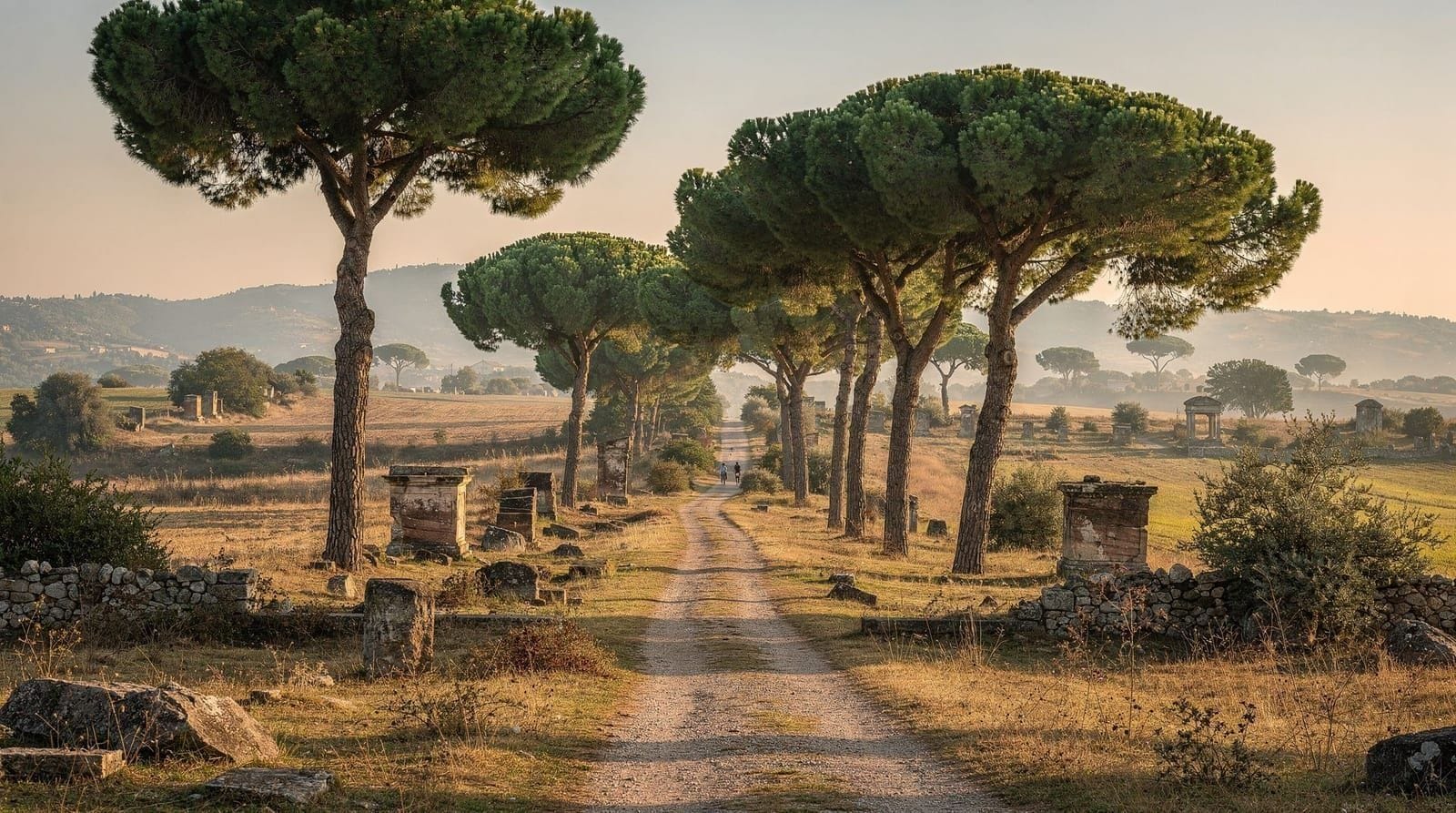
The most accessible Etruscan site near Viterbo is the necropolis of San Giuliano (near Barbarano Romano, 20 km south) — a dramatic complex of rock-cut tombs along a tufa gorge. Requires a car. The larger and more famous Etruscan necropolises at Tarquinia and Cerveteri (both UNESCO) are better covered as separate day trips from Rome; our destinations section covers them.
Viterbo day trip itinerary
07:30–08:00 — Train from Roma Termini toward Orte
09:30–09:45 — Arrive Viterbo. Walk to San Pellegrino quarter.
10:00–11:30 — Explore the medieval quarter: Via San Pellegrino, Fontana Grande, external staircases, market if present.
11:30–12:30 — Palazzo dei Papi and Duomo.
12:30 — Bus from Viterbo to Bagnaia (15 minutes). Villa Lante gardens (1h).
13:30 — Lunch in Bagnaia (simple trattoria options) or back in Viterbo centre.
15:00 — Optional: Museo Nazionale Etrusco or a walk through the Piazza del Plebiscito area.
15:30 — Bus or taxi to Terme dei Papi (optional, 30 minutes in the thermal pool, then return).
17:30–18:00 — Return train toward Rome (via Orte connection).
19:30–20:00 — Arrive Roma Termini.
Viterbo vs Orvieto: choosing between Lazio and Umbria
Viterbo and Orvieto are both medieval hill towns in northern Lazio and Umbria respectively, both reachable from Rome in under 2 hours. The comparison:
Viterbo: More city than town, with a working municipal life, less known to international tourists, more authentic in its ordinariness. The San Pellegrino quarter is architecturally superior to anything in Orvieto’s historic centre. The Papal Palace has a better story. The surroundings (Villa Lante, Bomarzo, thermal baths) are more varied.
Orvieto: Better single visual spectacle (the Cathedral facade is extraordinary), easier to navigate for first-time visitors, better organised for tourists, slightly closer to Rome. The Orvieto underground and the wine are excellent.
If you have only one day for northern Lazio and want something genuinely off the international tourist circuit, Viterbo is the better choice. If you want a simpler day with one clear sight and you are less interested in wandering medieval streets, Orvieto is more efficient. Our Orvieto from Rome guide covers that option in detail.
Practical details for 2026
Train timetable: Trenitalia regional trains — check trenitalia.com. Not all times work for a comfortable day trip; the connection via Orte requires attention. The direct line via Roma San Pietro is more reliable for avoiding missed connections but slower.
Language: Very little English spoken in Viterbo — more than a village, but provincial Italian pace. A phrasebook app or Google Translate is useful for menus and asking directions.
Market days: Viterbo has a produce market most mornings in Piazza del Plebiscito. Saturday is the largest and most varied.
October visit: The Sagra del Fagiolo con le Cotiche (bean and pork rind festival) and the Sagra delle Castagne in October are worth timing a visit around. Viterbo in autumn is at its most atmospheric.
Walking: The historic centre is compact and walkable. The streets are cobbled — flat sandals or high heels are difficult. The only significant slope is the approach to the Papal Palace from the main piazza.
For a wider view of northern Lazio day trips and how they compare to other Rome excursions, see our best day trips from Rome guide and day trips by train from Rome guide.
How Viterbo compares to other Lazio day trips
Viterbo is one of several worthwhile excursions north of Rome, and it is worth knowing how it stacks up before committing a full day.
| Day trip | Distance/time | Best for |
|---|---|---|
| Viterbo & Tuscia | 1h40–2h | Medieval streets, thermal baths, off-radar |
| Castelli Romani | 45min–1h | Wine, lake towns, easiest logistics |
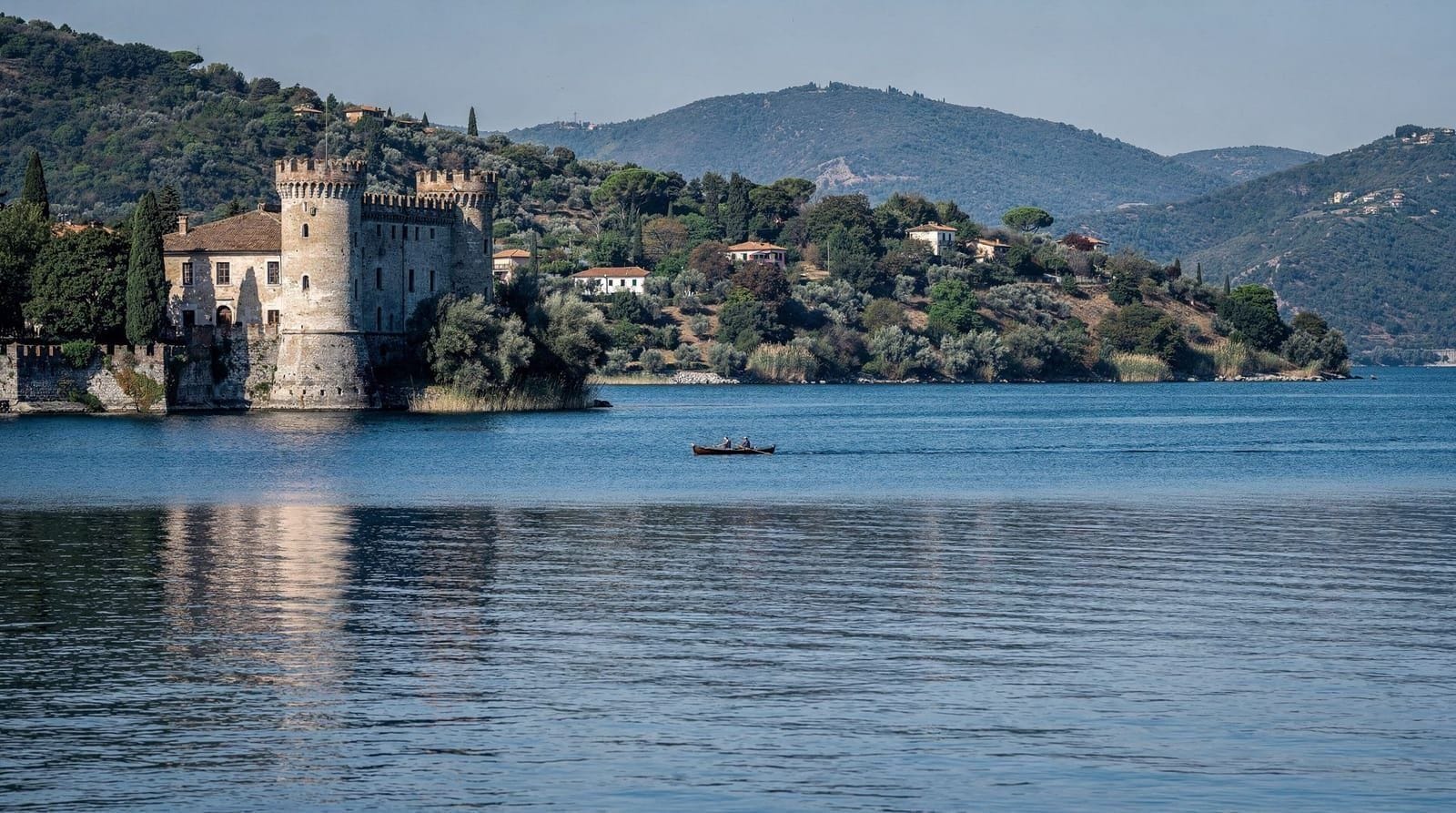
| Lake Bracciano | 1h | Volcanic lake, castle, swimming in summer |
| Tivoli | 1h | Renaissance and Roman-era villas, gardens |
| Civita di Bagnoregio | 2h+ | Single dramatic viewpoint, less to fill a day |
If your priority is a genuinely local Italian city with almost no other international visitors, Viterbo wins outright. If you want the least logistically demanding day out, Castelli Romani or Lake Bracciano are closer and simpler.
Getting around once you arrive
Viterbo’s historic centre is compact and entirely walkable, but reaching Villa Lante, the Terme dei Papi or Civita di Bagnoregio requires local buses or a taxi — there is no metro or tram network this far from Rome. If you are relying on public transport for the whole day, build in buffer time between connections; rural Lazio bus schedules are less frequent than anything in central Rome. For the general logistics of getting around the region by train, see our trains from Rome day trips guide, and for city-centre transport once you are back in Rome, see getting around Rome.
Frequently asked questions about Viterbo and the Tuscia day trip: medieval Lazio off the radar
How do I get from Rome to Viterbo by train?
What is the Tuscia region?
What is the Papal Palace in Viterbo?
What are the Terme dei Papi thermal baths?
Is Viterbo safe and tourist-friendly?
Can I combine Viterbo with Villa Lante at Bagnaia?
What is Civita di Bagnoregio and can I visit it from Viterbo?
What should I eat in Viterbo?
Is Viterbo better than Castelli Romani or Lake Bracciano as a first day trip from Rome?
Do I need a car to see the Tuscia region properly?
Top experiences
Bookable activities with verified prices and instant confirmation on GetYourGuide.